
















Two weeks in Portugal: palaces, ocean and islands
Portugal fits between the ocean and Spain. In one trip you can see the capital, mountains, and volcanoes. Distances between cities are short: on the map, Lisbon to Porto is about three hours by train. This guide is for those planning a route on their own and wanting to understand distances, seasons, and prices.
Ad: this article contains affiliate links, we earn a commission if you book through them, at no extra cost to you.
Planning a trip to Portugal
The season makes a big difference. In spring and fall, the south is warm and lines at palaces and museums are shorter. In July and August, the Algarve gets hot, so tours are best scheduled for the morning. Big-wave lovers need November or February, when Nazaré gets stormy.
Getting around the country is easy by train. Lisbon, Coimbra, and Porto are connected by lines running hourly. In the south, in the Alentejo, and in the mountains, it's hard without a car: buses run infrequently and with transfers.
Buy train and bus tickets in advance on carrier websites: in season, seats sell out several days ahead. In big cities, the metro and tram will be enough, and for mountain roads get a car with full insurance. Withdraw cash from ATMs, because village cafés sometimes only take cash.
Plan two weeks to see the country. Give Lisbon and Porto two days each, and Sintra, Coimbra, and Évora one each. The Algarve with its caves takes another three days, and the islands are better saved for a separate trip. Otherwise you'll be constantly moving.
💡 In short:
- Split the route into two parts: the north (Porto, Guimarães, Braga, Peneda-Gerês) and the south (Lisbon, Sintra, Évora, Algarve).
- Take the train between Lisbon and Porto, and rent a car for the south and the mountains.
- Book tickets for palaces, funiculars, and boats in advance: in summer, slots are gone a week out.
- Prices and opening hours: 09/2026, verified on the official Pena Palace website
1. Lisbon
Lisbon sits on hills, and there's no avoiding climbs here. The historic center is divided into two parts: Baixa with its squares and Bairro Alto with its bars and restaurants. A historic tram runs through the narrow streets, and a ride on it becomes an excursion in itself. Take an early departure: by midday the cars are packed.
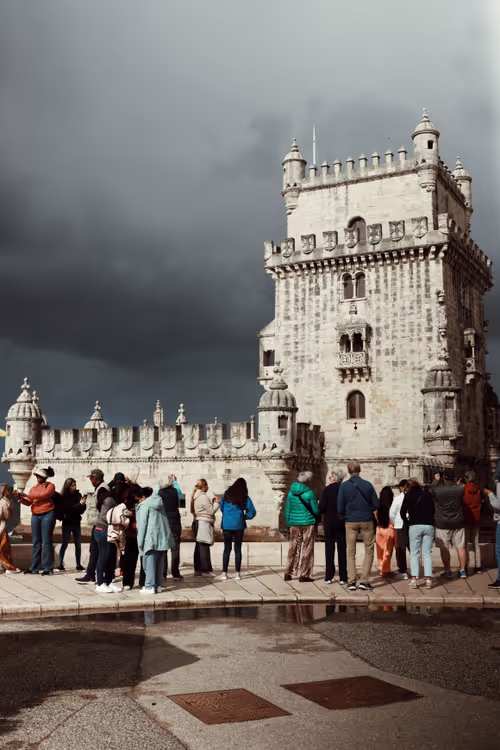
The second must-see area, Belém, stretches along the Tagus. There you'll find Belém Tower, the Jerónimos Monastery, and the Monument to the Discoveries, and nearby they sell pastéis de Belém. A suspension bridge spans the river, reminiscent of the Golden Gate Bridge in San Francisco. On the other bank rises the Christ the King statue: its viewing platform offers the best view of the city and the bay.
In the evening, the city moves to Bairro Alto, where music spills from open bar doors. Get the pastries warm, with cinnamon, at the café near the monastery.
- How to get there: the metro and tram connect the center with Belém; by map, the trip takes about half an hour.
- How much time: two days for the city including Belém.
- The catch: in summer the center is hot and crowded; arrive when museums open.
- Who it's for: for those who love cities with history and a view of the water.
2. Sintra
Sintra lies about thirty kilometers from Lisbon, and it takes a full day. The old town and palaces are on the UNESCO World Heritage list, so the flow of tourists never stops year-round.
Pena Palace is recognizable by its red and yellow towers on the rock. Admission costs 20 € for adults and 12 € for children and teenagers (as of 09/2026, official ticket page). We checked prices and time slots on 09/12/2026 on the official website. Tickets are sold for a specific time, so get them in advance and don't be late for your entry.
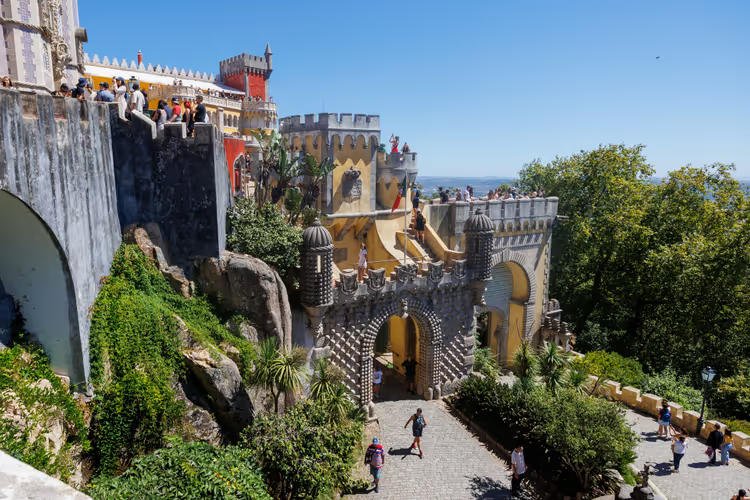
Pena Palace grew up in the mid-nineteenth century on the ruins of an old monastery, and the royal family lived there until the beginning of the last century. Bavarian King Ludwig II took this as a model for his Neuschwanstein Castle, so guests from Germany recognize the towers at first glance. Pena Palace is open to visitors year-round. In high season, buses between the palaces run full, and tickets are sold for specific intervals, so allow an extra hour for travel.
The second stop, Quinta da Regaleira, is interesting for its park with lakes, grottoes, and underground tunnels. The estate has five floors, with neo-Gothic battlements, gargoyle downspouts, and an octagonal tower. The façade was designed by an Italian architect who mixed different historical styles. The park has a chapel, bridges, and long underground passages, so the walk takes half a day. The main rarity, the well with a spiral staircase, descends in a helix.
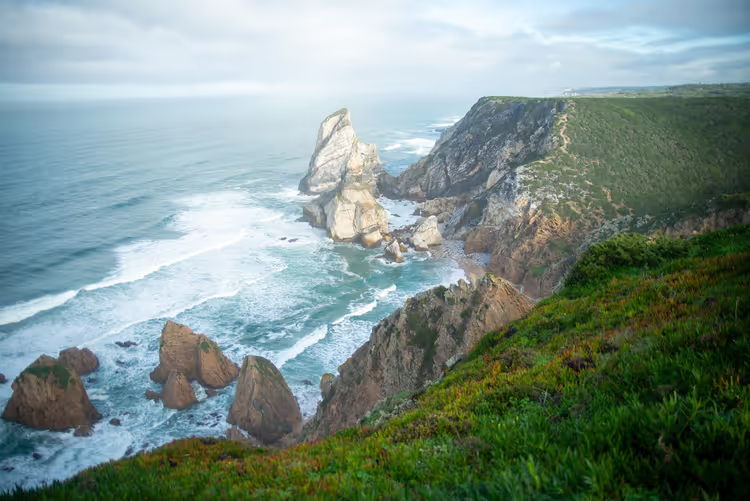
Next, it's worth driving to Cabo da Roca, the westernmost point of mainland Europe. The road passes through the Sintra-Cascais Natural Park, where cliffs drop into the ocean and the wind is strong in any season. Bring a jacket even in July and check the bus schedule in advance: in the evening there are fewer departures, and you'll end up waiting for a taxi.
- How to get there: suburban train from Rossio station, then buses to the palaces.
- Cost: combined tickets for several sites are cheaper.
- The catch: lines at Pena Palace and morning fog; arrive at opening time.
- Who it's for: for families with children and for palace lovers.
3. Surfing on the coast: Ericeira, Peniche, and Nazaré
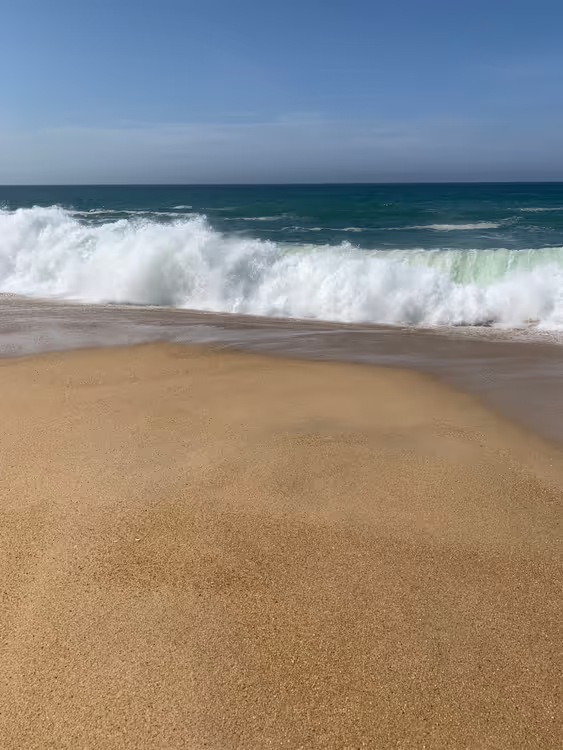
The Atlantic coast north of Lisbon lives for surfing. The wind here is constant, the waves work almost year-round, and surfers with boards shuttle between the towns.
Ericeira was the first place in Europe to receive World Surfing Reserve status and has hosted world-class competitions. Schools operate here, and Ribeira d'Ilhas beach is considered the most consistent spot in the region. The shore offers a view of the bay and cliffs, so even beginners get good shots.
Peniche sits on a peninsula that used to be an island. The connection to the mainland appeared only in the fifteenth century, and since then the town has become a peninsula. Waves at Supertubos beach break against the harbor walls, and competitions are held here in season. Locals recommend getting in the water at low tide.
Nazaré is known for winter storms. An underwater canyon several thousand meters deep lies off the coast, and it's what pushes the water to record sizes: waves grow over twenty meters high. The best place to watch them is from the headland by the lighthouse. Don't swim on those days, even if you're confident in your abilities.
- When to go: for big waves in winter, for calm water to learn in September and October.
- How to get there: a car is more convenient; buses are slow and require transfers.
- Not for: beginners in Nazaré; it's better to learn in Ericeira.
4. Coimbra
Coimbra lies on the Mondego River between Lisbon and Porto. It's a university city, and the rhythm here is set by students in black capes.
The university was founded in the thirteenth century and is among the oldest in Europe. Tourists come to the Joanina Library with its gilded shelves and climb the clock tower. Nearby stands the old twelfth-century cathedral, and admission is free.
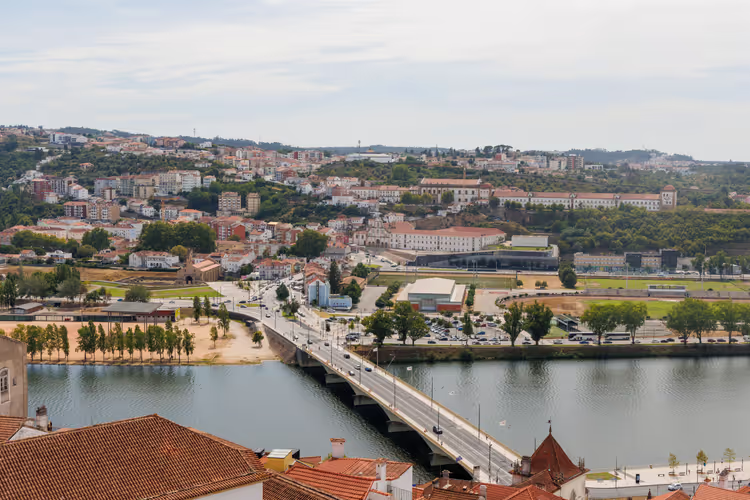
The first settlements on the banks of the Mondego were left by the Celts, and the medieval quarters have survived almost entirely intact. The university grew up on the site of a former palace. In the old town's narrow streets, houses are clad in azulejos, and in the evenings student songs drift from open windows. If you happen to be there for a university festival, the city will show you a different side of itself.
- Getting there: by train from Lisbon or Porto, about an hour with a railcard.
- How much time: half a day for the university and the old town.
- The catch: the library is sometimes closed for restoration, check the hours.
- Who it's for: those who love student cities and old libraries.
Lisbon to Coimbra train tickets
5. Porto
Porto sits at the mouth of the Douro and is considered the country's second city. The historic center is a UNESCO World Heritage Site, and seeing it takes a full day.
The Ribeira quarter slopes down to the water with its colorful facades. Fishermen once lived here; now restaurants, cafes, and wine shops line the streets. A walk along the waterfront takes an hour, and in the evening it's worth heading up to the viewpoint near the bridge.
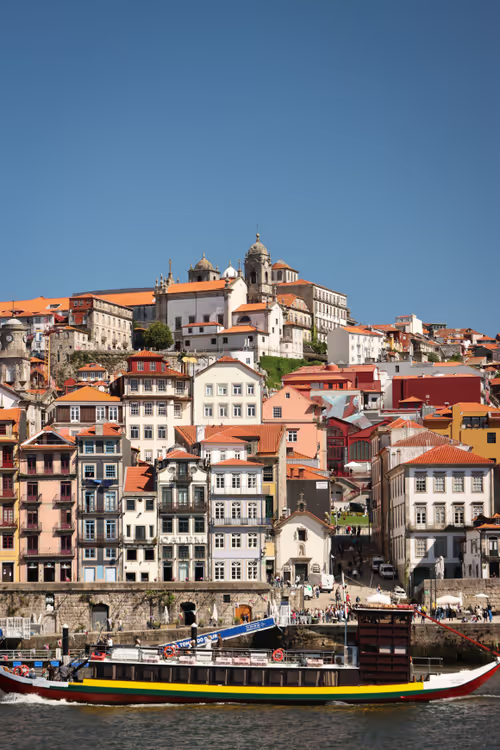
A two-level bridge spans the river, carrying trains and pedestrians. The upper level offers the best view of the city, but in strong wind it's better to head down to the lower level. The bridge connects Ribeira with Vila Nova de Gaia, where port wine is stored and aged. The cellars offer tastings, so book your spot in advance.
From Coimbra to Porto is about 150 kilometers on the map, and the road runs along the coast. East of the city begins the Alto Douro wine region, also a UNESCO site. If you're interested in the history of port wine, it's worth making a detour to see the vineyard terraces.
- Getting there: train from Lisbon, about three hours on the map.
- Cost: tastings in the cellars are paid, entry to most churches is free.
- The catch: port at tastings is poured generously, so don't drive afterward.
- Who it's for: those taking a weekend trip from Lisbon.
6. Guimaraes
Guimaraes is called the cradle of the nation. Portugal's first king was born here, and the city was once the country's first capital. The old center is a UNESCO World Heritage Site.
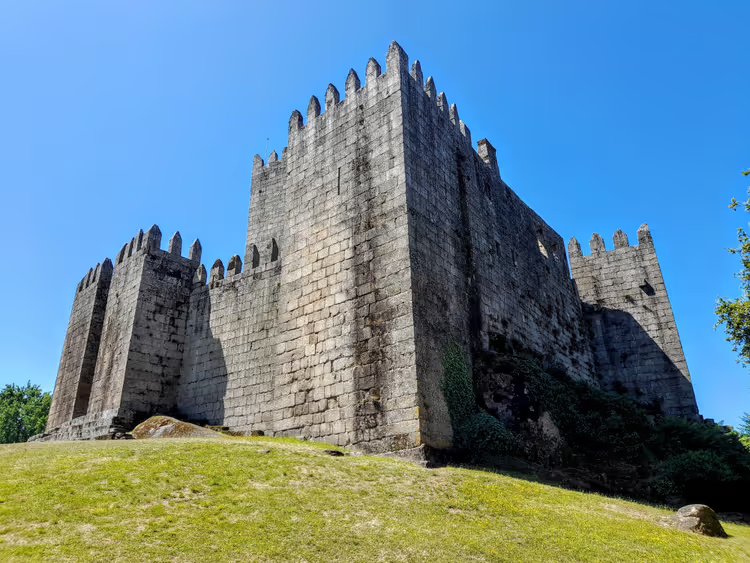
The main sight on the hill is a medieval castle. It was built in the tenth century to defend the city and monastery from attacks. Today the fortress is considered one of the best preserved in the country, and access to the walls is free. Nearby stands the ducal palace with tall chimneys visible from anywhere in the city.
Festivals happen here all year round. In August there's Gualterianas, in December the student Nicolinas, and in July the four-day Romaria Grande de Sao Torcato. In December, for the Santa Luzia festival, men give their chosen ones phallus-shaped cookies, an old local tradition.
In the old town's narrow streets, houses are decorated with azulejos, and students gather in the squares. Seeing the center takes half a day; allow another two hours for the castle and palace.
- Getting there: bus or train from Porto, under an hour on the map.
- Cost: castle entry is free, the palace ticket is paid.
- Who it's for: those combining Porto with a trip through the north.
- The catch: in summer the hill is hot and there's almost no shade.
tours in Guimaraes on GetYourGuide
7. Peneda-Geres National Park
Peneda-Geres, Portugal's only national park, lies in the north near the Spanish border. It covers more than 70,000 hectares and spans several mountain ranges.
Rivers flow through the valleys and waterfalls roar. The cascade at Portela do Homem draws tourists in summer, and the water in mountain streams stays cold even in the heat. Garranos, small wild ponies, graze on the plateaus. They're used to people and come close to the roads, but you shouldn't feed them.
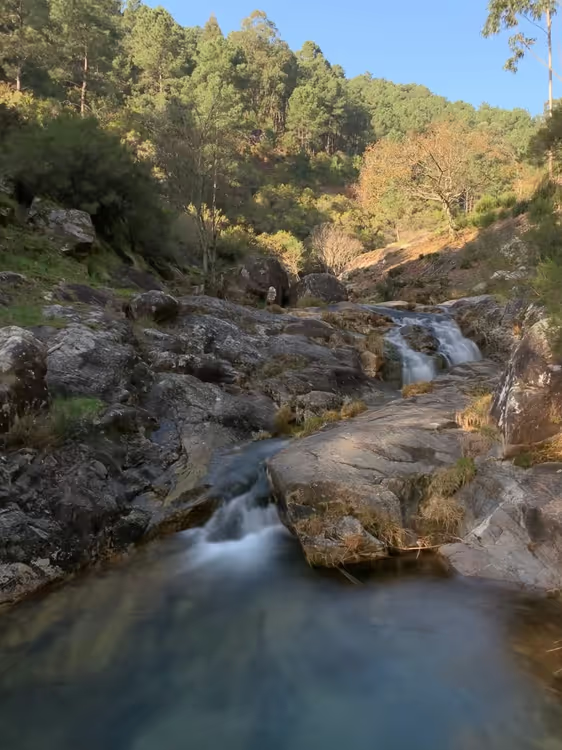
The park is horseshoe-shaped and connects several ranges, with villages tucked between them. Besides the cascade, tourists head to the Celtic settlements of Castro Laboreiro and Caledonia and to the monastery at Pitoes das Junias. You can hike the trails on foot or paddle the rivers by kayak and raft.
The park preserves settlement ruins, old monasteries, and chapels. It's best to explore on foot along marked trails: that way you'll see what drivers miss. Campsites are set up for overnight stays, wild camping is prohibited, and vehicle entry requires a small fee.
- Getting there: car only; public transport barely runs.
- Who it's for: hikers and those seeking quiet.
- The catch: the weather changes within an hour, so bring a raincoat and a warm layer.
car rental for a trip to the park
8. Bom Jesus do Monte and Santa Luzia
Two pilgrimage churches stand north of Porto. Both are easy to reach from Braga, Guimaraes, or Peneda-Geres National Park.
Braga is called the city of archbishops. Its cathedral is the oldest in the country, and the stadium is built right into the walls of a former quarry. A pilgrimage route passes through the city, so there are more hotels here than you'd expect.
Five kilometers from Braga stands the Bom Jesus do Monte sanctuary. A staircase of nearly six hundred steps with fountains and chapels leads up to it. If you're not up for the climb, take the funicular: it reaches the top in three minutes and is considered the oldest operating water-counterweight lift in the world.
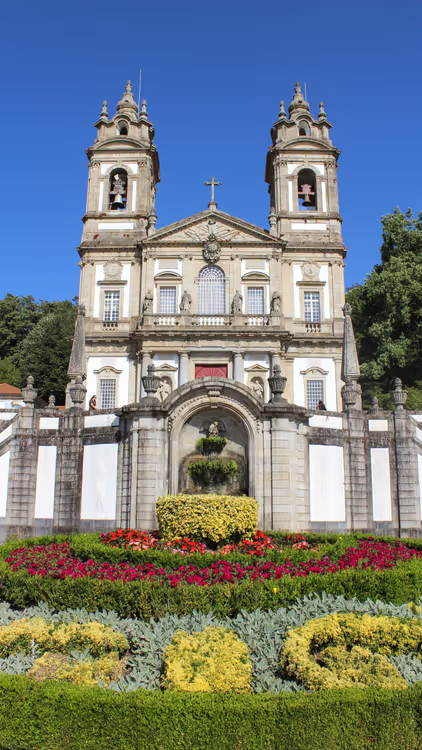
The sanctuary sits on a slope, and the upper terrace offers a view of the city. The complex is a national monument and a World Heritage Site. The second church, the Basilica of Santa Luzia, rises above Viana do Castelo on the ocean shore. It was built in the middle of the last century, and its rose windows are second in size only to those of the cathedral in Mallorca.
- Getting there: train to Braga, then taxi or bus.
- Cost: sanctuary entry is free, the funicular is paid.
- The catch: on Sundays and holidays there are many pilgrims.
- Who it's for: those traveling through the north of the country.
9. Evora
Evora stands among the olive groves of the Alentejo, and it's worth stopping here on the way to the Algarve. The city is older than Lisbon and noticeably calmer than the capital.
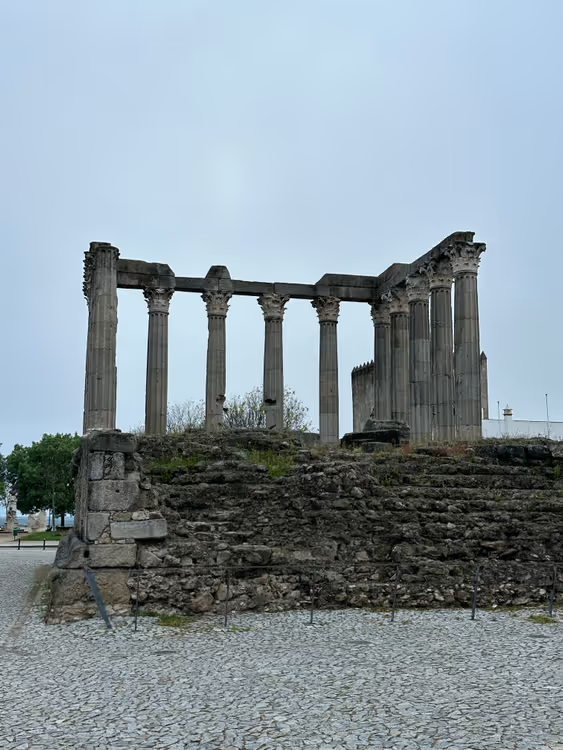
People lived here as far back as the Stone Age, as numerous megalithic tombs attest. The largest of them lies southwest of the city near a small river. The Romans left a temple, a fortress, and an aqueduct, while the Moors were expelled by the Order of Aviz, which built the surviving wall.
In the center stands a Roman temple known as the Temple of Diana. Nearby rises the cathedral, and the historic center has been a UNESCO World Heritage Site since the mid-1980s.
The main reason to come is the Chapel of Bones (Capela dos Ossos). The interior walls are lined with the bones and skulls of monks, and visitors are asked to keep quiet. The ticket costs €7 and gives access to the other rooms of the Church of St. Francis (as of 09/2026, official website). We verified the price on 12.09.2026 on the church's official website.
- How to get there: bus from Lisbon, about an hour and a half on the map.
- How much time: half a day for the old town.
- The catch: the chapel is small, and it gets stuffy inside in summer.
- Who it's for: for those who want to see Roman and medieval Portugal.
10. Faro
Faro, the capital of the Algarve, sits by the Ria Formosa lagoon. The city is small and easy to cover on foot in half a day.
The old town is surrounded by a wall and is called Vila Adentro. Inside stand the cathedral and eighteenth-century houses, some of which are empty. The former convent of Nossa Senhora da Assunção houses an archaeological museum: it displays finds from the Roman villa of Milreu, ceramic azulejos, and church paintings.
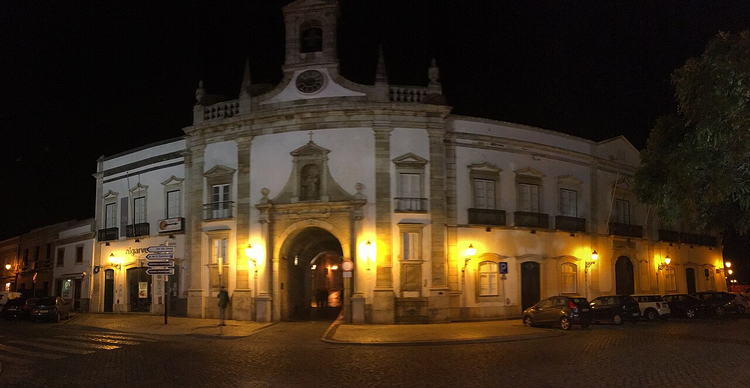 © Sergei Gussev · CC BYPhoto: Sergei Gussev, CC BY (https://creativecommons.org/licenses/by/2.0), Wikimedia Commons
Faro doesn't feel like the resort towns of the Algarve: around sixty thousand people live here, and the pace is calmer. The city is sheltered by the Ria Formosa lagoon, which is considered one of the country's natural wonders. Birds nest in the lagoon, and fishing boats travel along its channels.
Faro Beach lies on a sand spit about ten kilometers from the center. You can get there by ferry or bus; leave your car on the mainland. A walk along the spit is worth combining with birdwatching, and in the evening head back to the city's waterfront.
- How to get there: the airport and train station are close to the city.
- Who it's for: for families and for those visiting the Algarve in winter.
- The catch: in summer the spit gets strong winds, so bring a windbreaker.
11. Benagil Cave
Benagil Cave lies in the rocky part of the Algarve. You can only get inside from the water, so a boat or paddleboard is essential.
From above, from the cliffs, the cave doesn't look as impressive. At Praia de Benagil beach you can rent a SUP: rental costs around thirty euros for forty-five minutes, and you'll paddle to the cave entrance in five minutes. Boat tours also show you neighboring grottos that aren't visible from the shore.
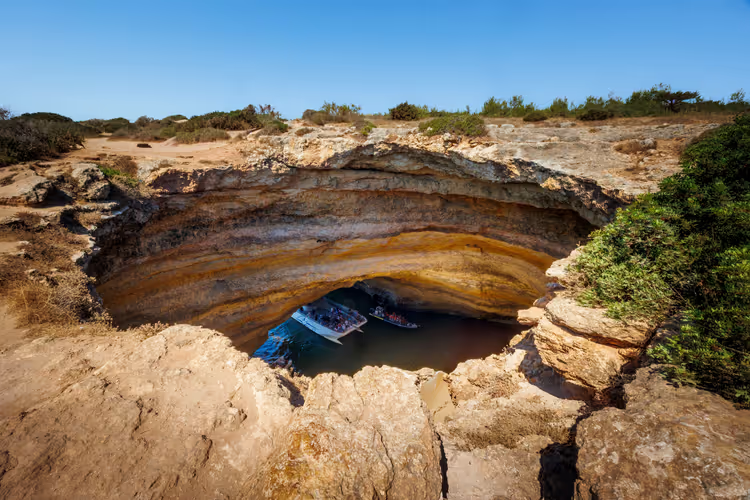
The cave's signature feature is the opening in the ceiling. Light falls through it, and the water below glows blue and gold. Shots come out best in the morning, when the sun is high.
The cave is no longer a secret spot. By morning there are already dozens of boats here, so come for the first launch of the day or choose evening tours. Swimming inside isn't a good idea: boats come in one after another, and the waves push water up against the rocks.
- How to get there: only by water, by boat or paddleboard.
- Who it's for: for those who are confident on the water.
- The catch: crowded, and boat trips get canceled when it's windy.
boat tours to the cave on GetYourGuide
12. Ponta da Piedade Cliffs
The Ponta da Piedade cliffs are near Lagos and are considered the most beautiful coastline in the Algarve.
Twenty-meter cliffs form arches, grottos, and small coves. The water color shifts from blue to green, and at sunset the rocks turn golden. You can get down to the water via a stone staircase to the left of the lighthouse. On the map, the walk from Lagos takes about half an hour, and there's a parking area nearby.
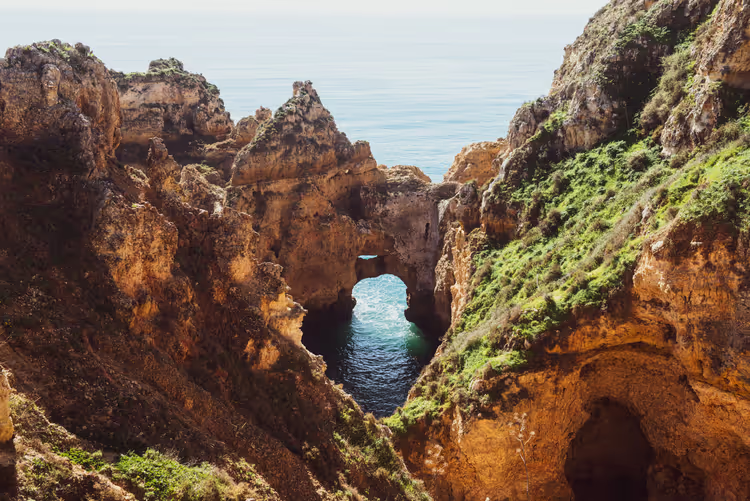
Boat tours on former fishing boats depart from Lagos, and the trip lasts about an hour. If you want to see the farther grottos, book a departure at low tide: at high tide some of the caves are closed off.
Farther along the coast are the beaches of Canavial, Porto Mós, and Praia do Camilo. Each successive cove is less crowded than the last, but the path down is steeper. Wear shoes with non-slip soles, because the steps near the water stay wet all day.
- How to get there: on foot from Lagos or by car to the parking lot by the lighthouse.
- Cost: access to the water and beaches is free, boat tours are paid.
- The catch: at sunset, tour buses pull up to the lighthouse.
boat tours from Lagos on GetYourGuide
13. Cape St. Vincent and Sagres Fortress
The route leads to Cape St. Vincent (Cabo de São Vicente), the southwesternmost point of Europe. The cliffs drop seventy meters into the ocean, and the wind here almost never lets up.
The lighthouse on the cape is considered the most powerful in Europe: its light is visible far out at sea. The site was sacred even in ancient times, and later it was consecrated in honor of Saint Vincent, the patron saint of sailors. At the parking lot by the cape there's a kiosk selling "the last sausage before America": with your purchase you get a certificate confirming your visit to the extreme point.
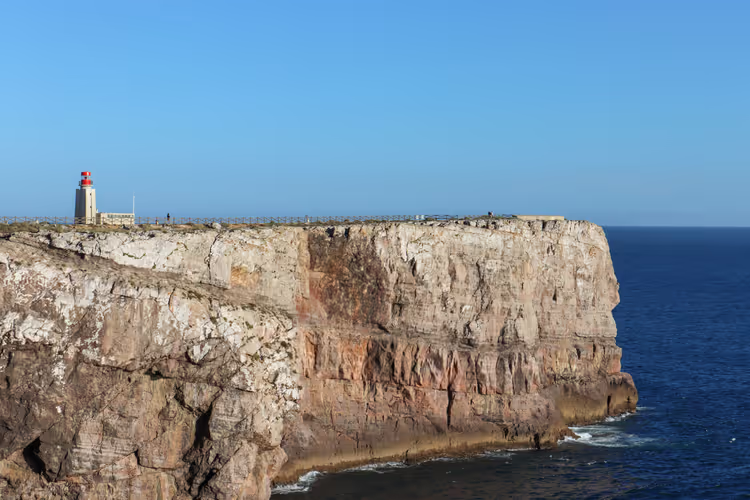
People usually reach the cape by bus from Portimão via Lagos and Sagres, but a car gives you the freedom to stay until sunset. A European hiking route crosses the peninsula, so backpackers come here too. Nearby lies Sagres Fortress: the remains of the fort and a viewpoint overlooking the cape. The sunset at the cape is worth staying for, but bring a warm jacket even in August.
- How to get there: bus from Lagos, then on foot or by car.
- Cost: fortress entry is paid, but inexpensive.
- The catch: it's constantly windy on the cape.
14. Madeira
Madeira lies in the Atlantic, a two-hour flight from Lisbon. The island is known as the island of flowers, and it's where Cristiano Ronaldo was born.
Dozens of trails crisscross the island. Paths lead to the highest point, Pico Ruivo, to waterfalls, and to the Caldeirão do Inferno gorge. Wear comfortable shoes: a cloud often hangs over the cliffs, and the rocks stay wet year-round.
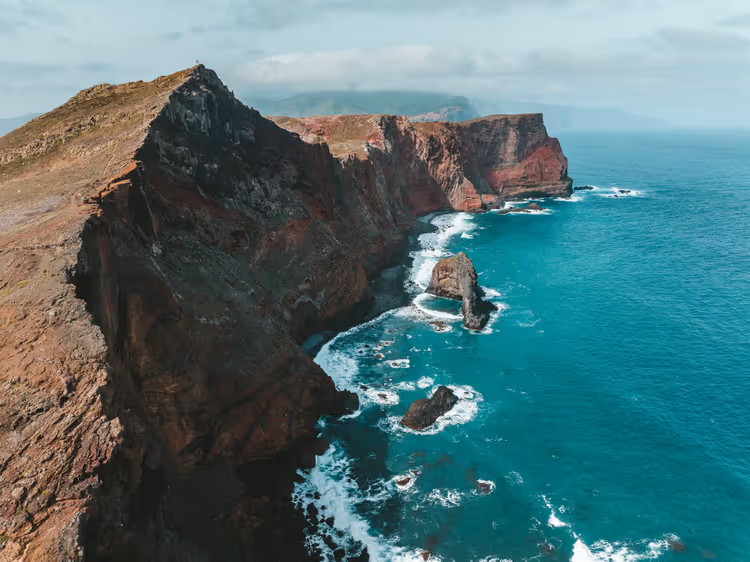
The Laurisilva laurel forests are a UNESCO World Heritage site. In the fog they look like a movie set, so bring a rain jacket and don't count on panoramic views every day of your trip.
For water sports, the island offers diving, kayaking, and boat trips to see dolphins. Some hiking routes follow the levadas, water channels that run through the mountains. The capital, Funchal, is home to museums, fortresses, a cathedral, and a botanical garden. Buses run from there across the whole island, and you can rent a bike on the waterfront.
- How to get there: flights from Lisbon and Porto, with direct flights also available from Germany.
- Who it's for: for hiking and for those traveling in winter.
- The catch: in the mountains, the weather changes within an hour.
15. The Azores
The Azores lie far out in the Atlantic, about a two-hour flight from the mainland. The archipelago consists of nine large islands and several small ones.
The climate here is milder than in mainland Portugal. Travelers can expect volcanoes, crater lakes, and green cliffs. São Miguel offers the most options: hot springs, a lake in the crater of an extinct volcano, and viewpoints over the ocean. On several islands, whale-watching trips are organized.
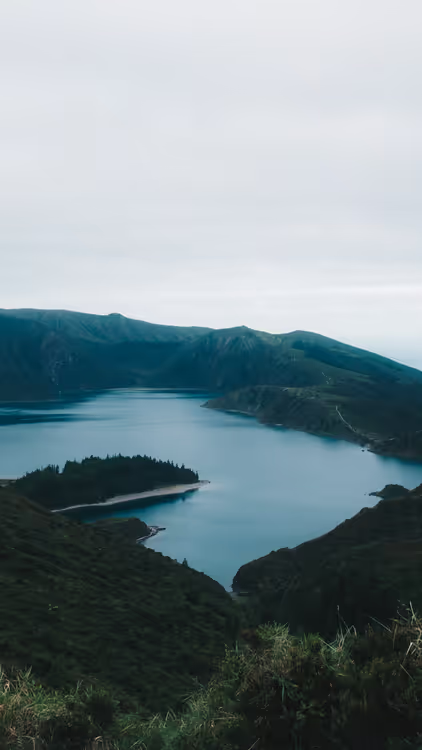
In the central group stands Pico, with the country's highest peak. Santa Maria and the uninhabited Formigas islets form the southeastern group, and the archipelago is rounded out by Corvo and Flores in the northwest. On Terceira, the UNESCO-listed capital Angra do Heroísmo has been preserved. All the islands in the archipelago are of volcanic origin.
- How to get there: flights from Lisbon and Porto, with flights also available between islands.
- Cost: book inter-island flights in advance.
- The catch: there are almost no beaches; you'll be swimming in the ocean or in pools.
hotels in the Azores on Trip.com
⁉️🤔 Frequently asked questions
How many days do you need for a Portugal itinerary?
Plan for two weeks. Two days for Lisbon, a day for Sintra, a day for Coimbra, two days for Porto. Guimarães and Braga are easy to combine, and leave three days for the Algarve with Lagos and Benagil Cave. It's better to make the islands a separate trip, otherwise you'll be moving every day.
When is the best time to go to the Algarve?
The mildest months are May, June, and September. The water is warm then, and the heat is easy to handle. In July and August, the beaches of Faro and Lagos are crowded, and prices are higher. In winter, the Algarve is warm during the day, but you'll need a jacket in the evening, and some boats to the caves don't run because of the wind.
Do you need a car in Portugal?
Between Lisbon, Coimbra, and Porto, it's more convenient to travel by train. A car is needed in the south and in the mountains: buses to Cape St. Vincent, Peneda-Gerês National Park, and along the Algarve coast run infrequently. In Lisbon and Porto, parking is paid and finding a spot is difficult, so only rent a car for day trips.
How do you get to Benagil Cave without your own boat?
Boat tours to the cave also stop at neighboring grottos. The second option is renting a SUP at Praia de Benagil beach: the trip to the cave takes just a few minutes. On windy days, departures are canceled, so check the forecast in advance.
What to see in Madeira if you have three days?
Spend the first day in Funchal: the cathedral, fortresses, botanical garden. The second day will go to the hike to Pico Ruivo or the trail through the laurel forests. On the third day, head to the waterfalls and ocean viewpoints. A car or a guided tour is essential, because buses run infrequently.
In short: what's worth booking
If you have a week, go for Lisbon, Sintra, and Coimbra. If you have two weeks, add Porto, Guimarães, Braga, and the Algarve. If you're chasing waves, plan Ericeira and Nazaré for fall and winter. In winter, choose the islands: Madeira and the Azores keep mild weather when the mainland gets chilly.
Check prices and opening hours before your trip, and book palace and boat spots in advance. find a hotel in Portugal on Trip.com

A small editorial team writing guides for independent travel. We travel ourselves, but we haven’t been everywhere, so we check prices, opening hours and how to get there against official sources.