
















Cruise on Oasis of the Seas: cabins, entertainment and routes 2026
A cruise on Oasis of the Seas starts long before boarding. First you choose the season and departure port, then the cabin, and only then do you read about the bars and shows. This is one of the largest cruise ships in the world, and a mistake in choosing the itinerary costs more than overpaying for a cabin.
We have gathered the facts about the ship, the seasonal schedules, and practical details. You will see what is included in the cruise fare and where you will have to pay extra. We will also cover which entertainment options should be booked in advance.
The ship carries about 5,400 passengers, and the crew numbers over 2,000 people (as of 09/2026, Royal Caribbean ship data). That is more than the population of a small town, so onboard logistics matter more than they seem at the time of booking.
Ad: this article contains affiliate links, we earn a commission if you book through them, at no extra cost to you.
About the ship
💡 In short:
- Oasis of the Seas belongs to the Oasis class and is considered one of the largest cruise ships in the world.
- The ship is currently based in New York, at Cape Liberty, and sails to the Bahamas and the Caribbean.
- There are seven themed neighborhoods onboard, including an open-air park and a boardwalk with a carousel.
- Current itineraries and prices: 09/2026, verified on the official Royal Caribbean website.
Oasis of the Seas was launched in 2009, and at the time it was the largest passenger cruise ship in the world (as of 09/2026, Wikipedia). The ship is about 362 m long, has a gross tonnage of approximately 226,838, and a crew of over two thousand people.
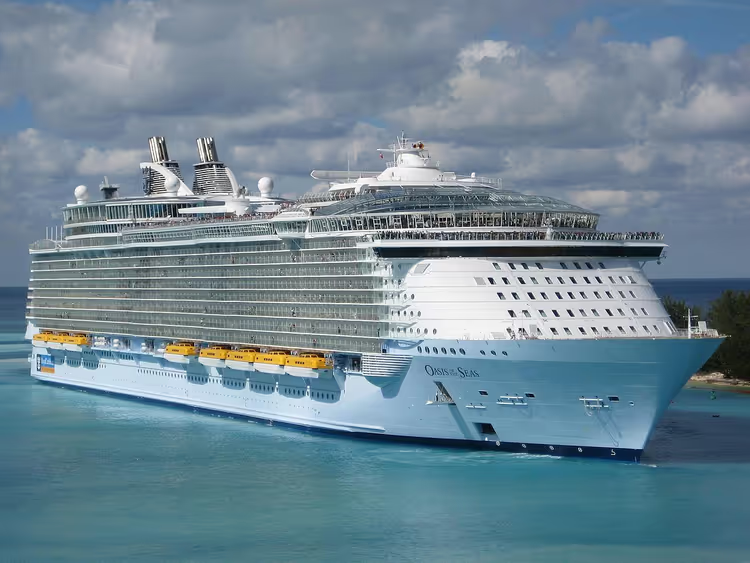 © Baldwin040 · CC BY-SAPhoto: Baldwin040, CC BY-SA (https://creativecommons.org/licenses/by-sa/3.0), Wikimedia Commons
Inside, the ship is divided into seven themed neighborhoods (as of 09/2026, Royal Caribbean). The central area resembles a city park with plants and walkways. Nearby are a boardwalk with a carousel, a pool area, and an aqua show venue at the stern.
This layout helps you avoid feeling the crowd even at full capacity. But without a deck map, you will walk in circles for the first two days. Pick up a diagram at the desk or download it in the app in advance.
Onboard entertainment
The entertainment program runs around the clock. AquaTheater presents water shows, and synchronized swimmers perform right in the open-air pool. This ship was the first to feature a carousel on deck, and it still operates today.
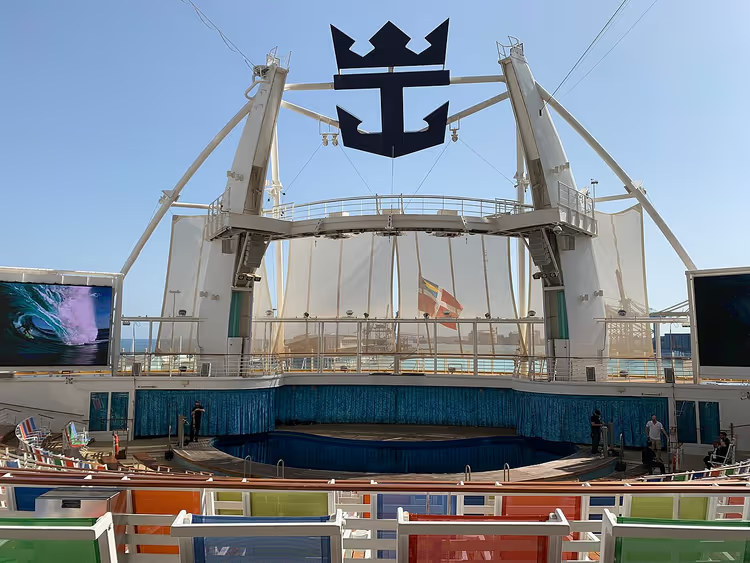 © Saucy · CC BY-SAPhoto: Saucy, CC BY-SA (https://creativecommons.org/licenses/by-sa/4.0), Wikimedia Commons
Information screens in the lobbies show the schedule and help you find your way to the right deck. On sea days, the decks are busy from morning to evening, so book your show seats in the app in advance. Otherwise, you will be left with standing room near the entrance.
The ship is designed for thousands of guests, but the zones are spread across different levels. You will not stand in line for coffee if you move away from the central boardwalk. Check the program the evening before: some shows are performed only once per sailing.
Pools and water park
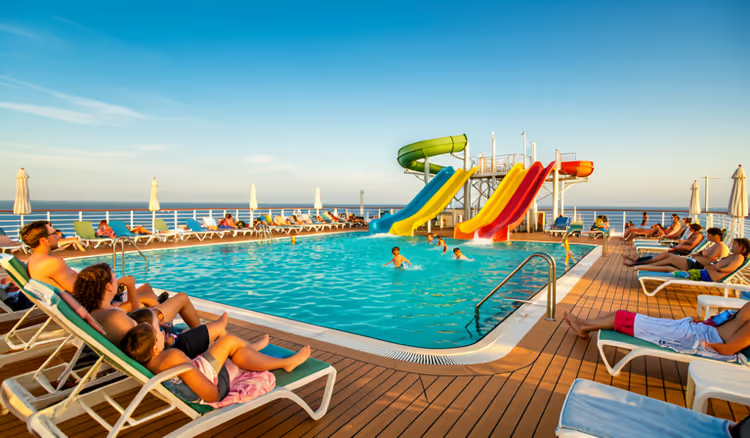 AIIllustrative image: AI-generated
There are several pools onboard and a separate area with loungers. Hot tubs open early in the morning, and in hot weather the water in the outdoor tubs stays cool. Nearby is a water park with slides and water features.
On sea days, grab a lounger before breakfast. By midday, there are almost no free spots near the main pool. Towels are provided at the entrance, so you do not need to bring your own.
Sports and active recreation
Active guests will not be bored. The ship has a rock climbing wall, surf simulators, and a zip line across the central part of the ship. Players have access to basketball and volleyball courts, a mini-golf course, and an ice skating rink.
Sign up for surfing and the zip line right after boarding. Lines grow by mid-cruise, and slots run out. Bring sneakers: you will not be allowed on the rock climbing wall in flip-flops.
Shows, bars, and shops
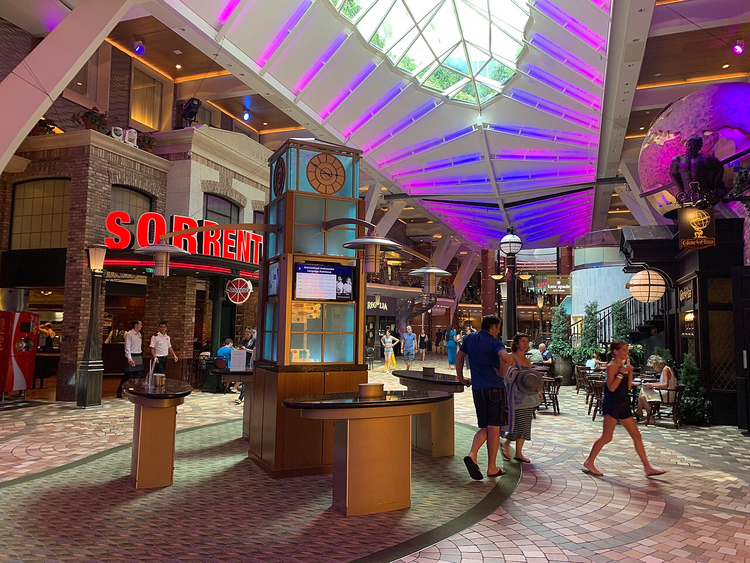 © Saucy · CC BY-SAPhoto: Saucy, CC BY-SA (https://creativecommons.org/licenses/by-sa/4.0), Wikimedia Commons
In the evening, the ship presents musicals, ice shows, and water shows. Some guests opt for social parties, bars, and the casino. Clubs and bars operate around the clock.
Duty-free shops occupy a separate boardwalk. They sell jewelry, perfumes, and branded footwear. The selection varies from sailing to sailing, so compare prices on site.
If you are traveling with children, the entertainment staff keeps them busy in the morning and evening. For adults, this is a chance to quietly go to a show or the spa.
Spa and fitness
The spa offers dozens of treatments: massage, aromatherapy, and a thermal suite. The fitness center has exercise equipment, and instructor-led yoga classes are held there as well.
Book the spa on the first day. Popular slots go quickly. Bring workout clothes; you will not be allowed to train in regular clothing.
Kids clubs and babysitting
For children, there are interest-based clubs and separate age-specific programs onboard. Toddlers participate together with their parents, while older children play under the supervision of counselors. Teenagers get discos and sports tournaments.
If you want to relax as a couple or go on a shore excursion, book a babysitter. The service is reserved in advance through the app or at the desk.
Check the hours of operation for the clubs on the first day.
Dining and restaurants
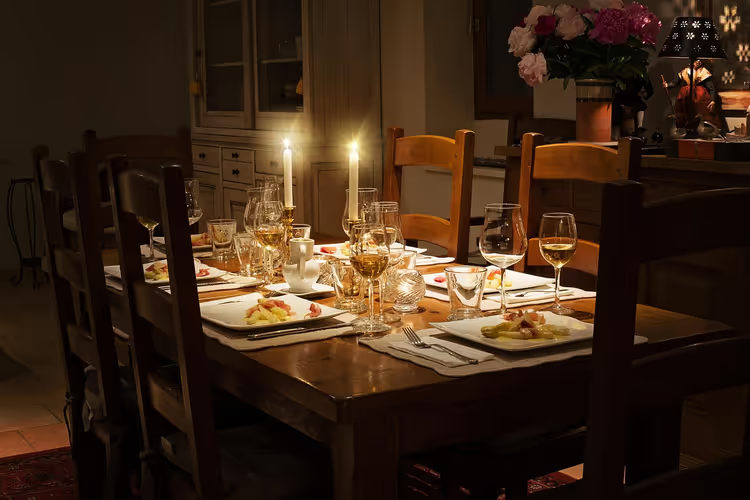
Meals in the main dining room, buffet, and cafes are included in the cruise fare. The dining room operates with a menu, the buffet offers a self-service spread, and there are cafes with light dishes.
Dinner time and table are chosen in advance: early or late, by the window or in the center of the room. Alternative restaurants charge a reservation fee and serve signature dishes from their chefs.
Room service is available around the clock. Order dinner to your cabin if you do not want to follow the dress code. On sea days, the buffet is packed at peak hours, so come at opening or after the main rush.
Gratuities and service charges
Gratuities are added to your onboard account automatically unless you change the rule in advance. The rate is $18.50 per person per day in a standard stateroom and $21 in a suite (as of 09/2026, Royal Caribbean official policies).
Drinks beyond the package come with an 18 percent service charge. The same percentage is added to most additional services. Budget for these amounts ahead of time, as they are not included in the cruise fare.
Gratuities can be prepaid with your booking before departure. That way, on the final evening you will not get an unexpected line on your final bill. You can adjust the amount at the guest services desk.
Dress code and evening restaurants
There is no strict dress code on the ship, but evening restaurants expect guests in smart attire. Bring casual clothes, workout gear, clothes for excursions, and sturdy shoes.
For formal nights, a suit or evening dress will come in handy. If you forget something, you can buy it in the onboard shops.
In ports, wear comfortable shoes: cobblestones and stair climbs tire you out quickly. Bring a light windbreaker, as it gets chilly on deck in the evening.
Staterooms and decks
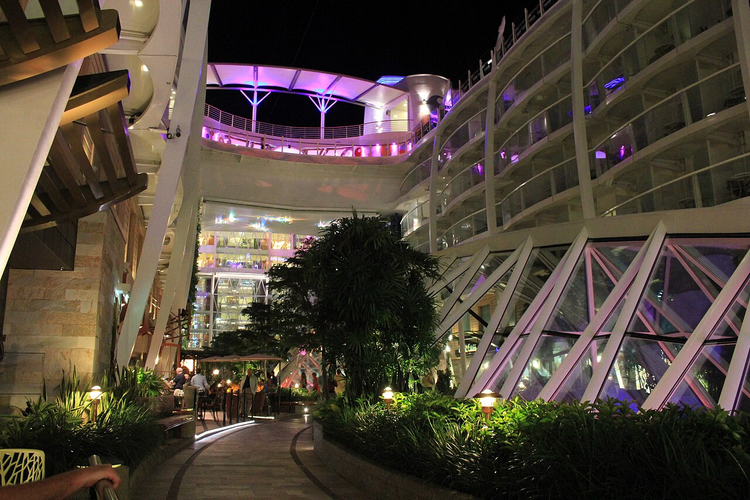 © https://www.flickr.com/photos/navin75/ · CC BY-SAPhoto: https://www.flickr.com/photos/navin75/, CC BY-SA (https://creativecommons.org/licenses/by-sa/2.0), Wikimedia Commons
The ship has 18 decks, and you choose a stateroom based on budget and habits (as of 09/2026, ship page on Wikipedia). Interior staterooms are the cheapest, while balcony staterooms cost more but give you fresh air and an ocean view. Suites add a separate lounge area and priority boarding.
For your first cruise, book a balcony stateroom on a middle deck. Motion is milder there, and elevators are nearby. An interior stateroom works if you only sleep in the room.
Staterooms near elevators and the pool are noisier. Choose a room farther from the central promenade if you are a light sleeper.
Cruises: routes and seasons
Oasis of the Seas has changed regions several times over its career. The ship worked the Caribbean out of Florida, spent summers in the Mediterranean, and for the 2026-2027 season it is based in New York. The seven-day route from Cape Liberty goes to the Bahamas and back (as of 09/2026, official Royal Caribbean route).
Routes differ in length, ports, and season. Below, for comparison, we break down routes from past seasons out of Florida and around the Mediterranean. For the 2026-2027 season, the ship operates only out of New York. Prices depend on the date, length, and cabin, so check the final amount with the cruise line for your travel date.
Length determines how much shore you will see. A short four-night cruise gives you one port stop and three days on board. Week-long routes add three or four ports, while a transatlantic crossing is almost entirely at sea. If this is your first cruise, take seven nights out of New York with a stop in the Bahamas.
Compare regions by ports of call. All regions except New York are from past seasons.
Region | Ports of call |
|---|---|
Mediterranean | Rome (Civitavecchia), Naples, Barcelona, Palma de Mallorca, Marseille, La Spezia |
Western Caribbean | Labadee, Falmouth, Cozumel |
Eastern Caribbean | Charlotte Amalie, San Juan, Philipsburg, Labadee |
Bahamas | Nassau, Charlotte Amalie, Philipsburg |
New York and Bahamas | Orlando, Perfect Day at CocoCay, Nassau |
Transatlantic | San Juan, Philipsburg, Malaga, Barcelona |
Four-night route: Civitavecchia and Barcelona
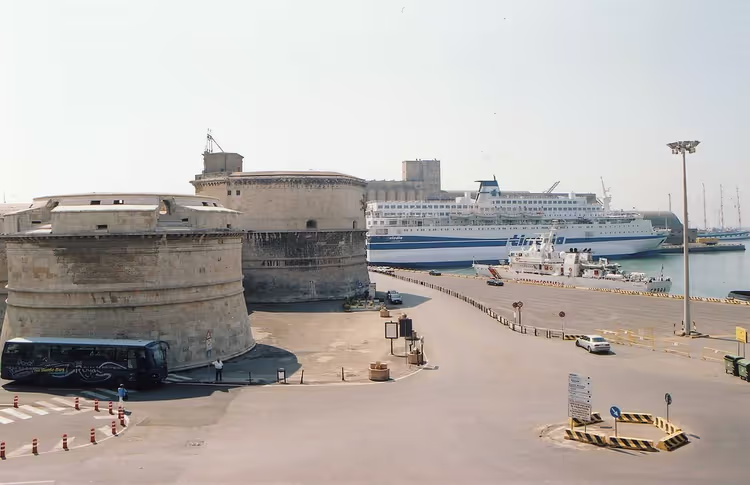
The short Mediterranean route starts at the port of Civitavecchia, about an hour's drive from Rome. Before boarding, you have time for a sightseeing walk around the city: the Colosseum, the Pantheon, and squares with fountains. The ship then heads to Naples and stays there for most of the day.
In Naples, Vesuvius and the ruins of Pompeii are nearby, but they require a separate trip. After that comes one day at sea, and the finale awaits in Barcelona.
- Ports: Civitavecchia, Naples, day at sea, Barcelona.
- The catch: you get one day each for Rome and Naples, so you cannot dig deeper.
Mediterranean loop from Barcelona
 © dronepicr · CC BYPhoto: dronepicr, CC BY (https://creativecommons.org/licenses/by/2.0), Wikimedia Commons
The eight-day loop starts and ends in Barcelona. The ship calls at Palma de Mallorca, Marseille, La Spezia, Civitavecchia, and Naples.
On Mallorca, you will find La Seu Cathedral, the Royal Palace of La Almudaina, and Bellver Castle. In Marseille, the Basilica of Notre-Dame de la Garde stands above the Old Port, with the Borély botanical garden and the Le Panier district nearby.
- Ports: Barcelona, Palma de Mallorca, Marseille, La Spezia, Civitavecchia, Naples, Barcelona.
- The catch: there is only one day at sea between ports, so you get little time to relax on deck.
Eight nights from Civitavecchia via Naples
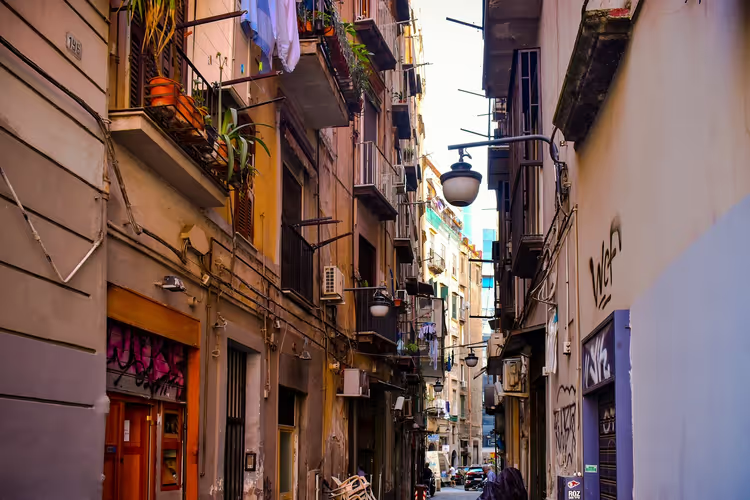
This option starts in Civitavecchia and goes through Naples, Barcelona, Palma de Mallorca, Marseille, and La Spezia. Each call includes a long stop, so you have time for a sightseeing tour.
In Barcelona, see the architecture of Antoni Gaudí; on Mallorca, the Gothic cathedral; near Naples, the ruins of Pompeii. In Marseille, the Château d'If stands near the harbor, and in La Spezia there is the medieval Castle of San Giorgio.
- Ports: Civitavecchia, Naples, Barcelona, Palma de Mallorca, Marseille, La Spezia, Civitavecchia.
- The catch: sightseeing tours are paid, and spots are booked in advance.
Eight-day Caribbean loop from Miami
 © Ahodges7 · CC BY-SAPhoto: Ahodges7, CC BY-SA (https://creativecommons.org/licenses/by-sa/3.0), Wikimedia Commons
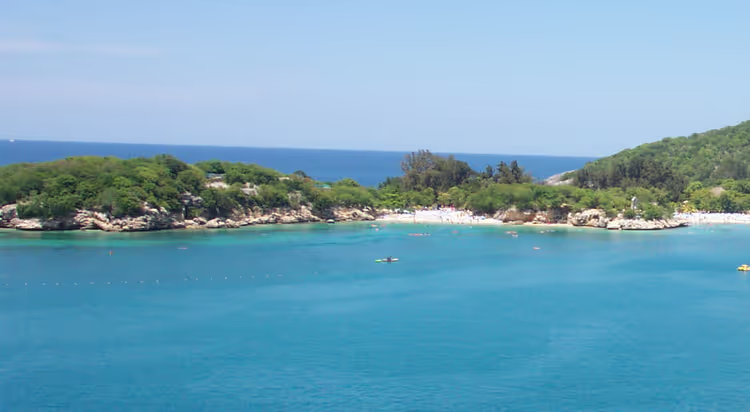
The Caribbean loop from Miami lasts eight days. The ship stops at the private island of Labadee off the coast of Haiti, in Falmouth, Jamaica, and in Cozumel, Mexico.
On Labadee, you have beaches, restaurants, and sports facilities at your disposal. From Falmouth, you can head into the jungle to waterfalls and caves. Cozumel is known for its coral reef and shipwrecks, and dive centers operate there.
- Ports: Miami, sea, Labadee, Falmouth, sea, Cozumel, sea, Miami.
- The catch: three days at sea without stops, and shore begins on the second day.
Eastern Caribbean from Miami: St. Thomas and San Juan
 © Sunil Pereira · CC BY-SAPhoto: Sunil Pereira, CC BY-SA (https://creativecommons.org/licenses/by-sa/3.0), Wikimedia Commons
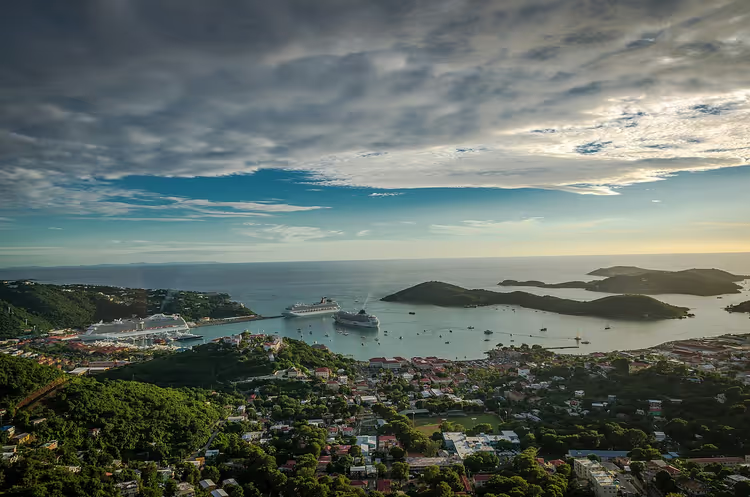
This scenic route covers St. Thomas, Puerto Rico, Haiti, and Miami. The first stop is on St. Thomas: in the capital, Charlotte Amalie, forts, estates, and chapels have been preserved.
In San Juan, you will see hundreds of 16th-century buildings and colorful houses with ornate balconies. The ship then calls at Labadee with its well-kept beaches and shops. The finale awaits in Miami.
- Ports: Miami, two days at sea, Charlotte Amalie, San Juan, Labadee, sea, Miami.
- The catch: stops in San Juan and on St. Thomas are short, so you see the old town at a run.
St. Maarten and San Juan from Miami
 © Dr. Thomas Liptak · CC BY-SAPhoto: Dr. Thomas Liptak, CC BY-SA (https://creativecommons.org/licenses/by-sa/4.0), Wikimedia Commons
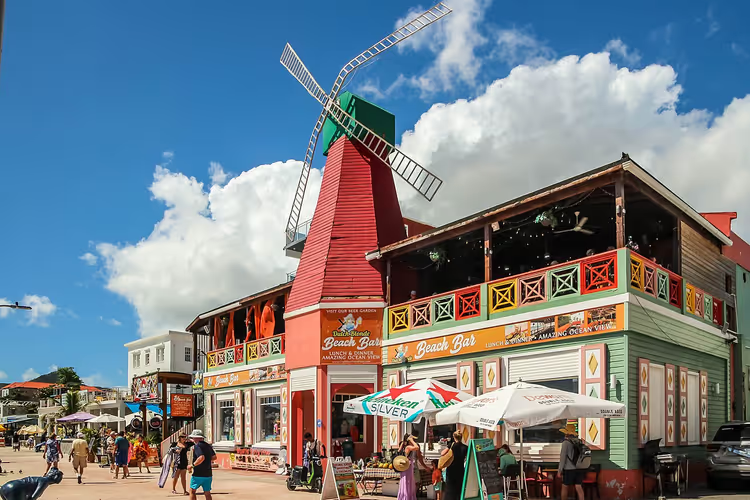
This magical loop from Miami goes to St. Maarten, Puerto Rico, and Haiti. On St. Maarten, the ship docks in Philipsburg, where old chapels, forts, and houses with tiled roofs have been preserved.
Next you reach San Juan and Labadee. The region's history is on display through mansions, fortresses, and narrow quarters. Beaches, tropical forests, and waterfall valleys complete the picture.
- Ports: Miami, two days at sea, Philipsburg, San Juan, Labadee, sea, Miami.
- The catch: two days at sea come at the start of the voyage, and shore begins only on the third day.
Western Caribbean from Port Canaveral
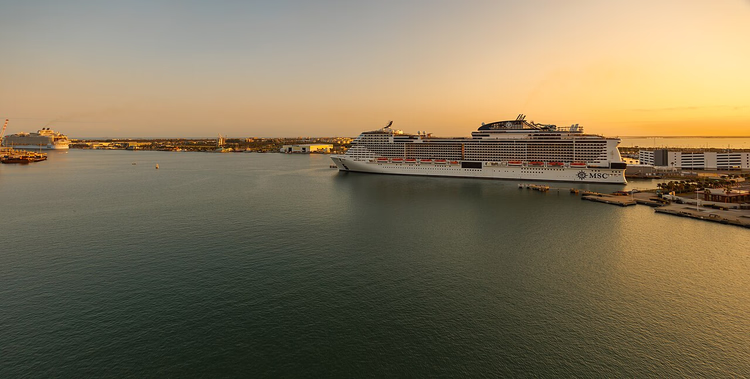 © TerryDOtt · CC BYPhoto: TerryDOtt, CC BY (https://creativecommons.org/licenses/by/2.0), Wikimedia Commons
From Port Canaveral, the ship departs on the same Caribbean loop: Labadee, Falmouth, and Cozumel. The port program is designed so every guest finds something to their taste.
On Labadee, white beaches under palm trees and snorkeling are available. From Falmouth, trips to the jungle and waterfalls are organized. On Cozumel, there are national reserves with archaeological sites and zoos.
- Ports: Port Canaveral, sea, Labadee, Falmouth, sea, Cozumel, sea, Port Canaveral.
- The catch: three days at sea without stops, but you get time for pools and shows.
Nassau and Charlotte Amalie from Canaveral
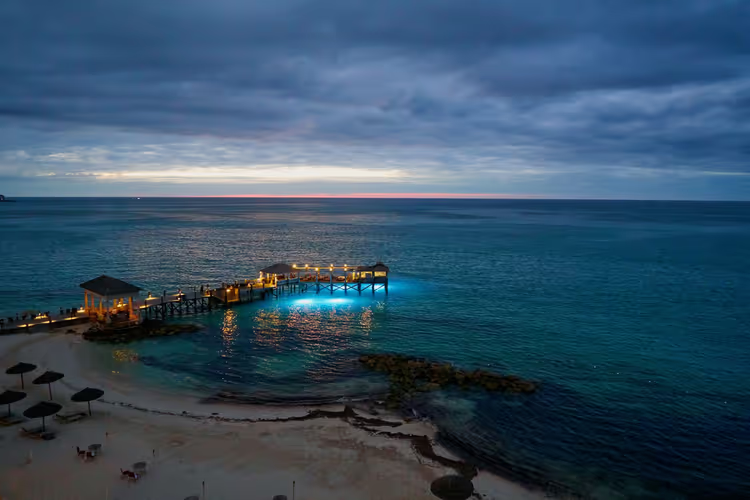
Eight nights from Port Canaveral include stops in Nassau, Charlotte Amalie, and Philipsburg. In Nassau, beaches, nightclubs, and casinos await, and the Old Town has houses with colorful facades.
A fort stands on a hilltop with a view over the harbor. On St. Thomas, fortifications and Blackbeard's Castle have been preserved. In Philipsburg, the art gallery, botanical garden, and sandy beaches are worth a look.
- Ports: Port Canaveral, Nassau, sea, Charlotte Amalie, Philipsburg, two days at sea, Port Canaveral.
- The catch: two nights in a row at sea at the end of the voyage, but you get time for shows.
Short four-night cruise from Miami
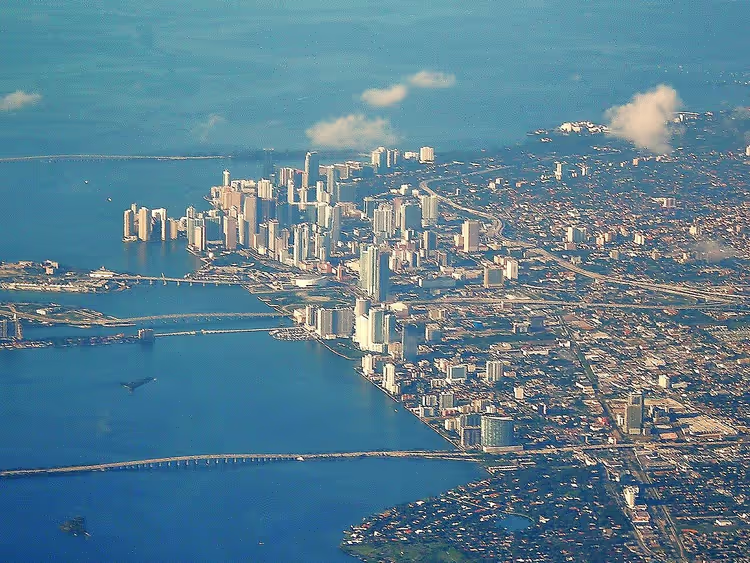 © Marc Averette · CC BY-SAPhoto: Marc Averette, CC BY-SA (https://creativecommons.org/licenses/by-sa/3.0), Wikimedia Commons
A short cruise from Miami goes to the Bahamas with a long stop in Nassau. Four nights is enough to get a feel for the ship without spending too much time.
In Nassau you will see the old architecture, relax on the beach, and visit a water park, a dolphinarium, and an aquarium. A separate attraction is the Queen's Staircase, carved into the rock.
- Ports: Miami, Nassau, sea, Miami.
- The catch: only one shore stop, the rest of the time you spend on board.
Transatlantic crossing from Florida to Barcelona
 © Anónime · CC BY-SAPhoto: Anónime, CC BY-SA (https://creativecommons.org/licenses/by-sa/4.0), Wikimedia Commons
A transatlantic crossing lasts about two weeks. The ship leaves Port Canaveral, calls at San Juan and Philipsburg, and then crosses the ocean to Barcelona.
Along the way Malaga awaits: the cathedral, the Alcazaba fortress, museums, and beaches. You spend most of the voyage at sea, so bring books, board games, and a workout plan.
- Ports: Port Canaveral, two days at sea, San Juan, Philipsburg, seven days at sea, Malaga, sea, Barcelona.
- The catch: seven consecutive days at sea, with no port stops on that stretch.
A crossing appeals to those who care about the ship itself rather than a rotation of beaches.
In practice: ports of call and what is nearby
Civitavecchia. Trains run between the port and Rome, but head back with time to spare. It is better not to test the road at rush hour, because the ship does not wait for latecomers.
Naples. The historic center begins right next to the pier, and beyond it lie the Royal Palace and narrow quarters. You can reach Vesuvius and the ruins of Pompeii by bus or on a tour. Keep your passport with you, because it is sometimes checked in the port.
Barcelona. The ship docks at the pier next to La Rambla, so you can walk to the center. See Gaudi's works in the Eixample district and Park Guell, and get tickets for the Sagrada Familia in advance. The lines at the ticket office are long, and in high season you lose half a day without a time slot.
Palma de Mallorca. The old town with its cathedral climbs from the pier up a hill. A bus goes to Bellver Castle, while walking takes far too long.
Marseille. Boats leave from the Old Port for the islands, and the Panier quarter begins right behind the waterfront. The Notre-Dame de la Garde basilica stands on a hill, and the climb up to it takes time. The Borely Botanical Garden is away from the center, so it is better to take a taxi there.
La Spezia. The medieval Saint George Castle stands not far from the pier, and along the waterfront there are cafes where locals have lunch. You can walk to the historic center from the ship.
Labadee. Loungers and lunch on this private island are included in the cruise fare. It has its own pier, so you go ashore without a tender or waiting for boats.
Falmouth. A trip into the jungle to the waterfalls takes almost the whole day. Book it in advance, because the town itself is small and there is nowhere to linger.
Cozumel. Beginner diving lessons are offered right at the pier.
Charlotte Amalie. The capital of St. Thomas begins right behind the pier, with shops and forts nearby. You reach the viewpoint on the hill by car.
San Juan. The old town sits on a hill, and you walk up from the pier. A flat road leads to the fort.
Philipsburg. The center of St. Maarten can be covered in a couple of hours; beyond it are galleries and a botanical garden, served by a minibus.
Nassau. The Queen's Staircase is carved into the rock and is within walking distance of the pier. A local bus is a convenient way to get to the beach.
Malaga. The cathedral and the Alcazaba fortress stand close to the port. It is a good stop to catch your breath before the final leg of the crossing.
What people praise and complain about
The ship's advantages come from its scale. Several theaters, dozens of bars and restaurants, and separate zones for kids and adults operate on board at the same time. Guests rate the AquaTheater shows and ice productions higher than the standard program on other ships.
The main complaint is also about size. On sea days, lines form at the pools and the buffet, and elevators take a long time. Evening shows and popular restaurants require advance reservations, otherwise there are no spots left.
The second common catch is extra charges. Alcohol, specialty restaurants, the spa, and shore excursions cost extra. The final bill grows faster than people expect, so plan your budget in advance.
What's included in the fare
The cruise fare includes more than it seems at the time of purchase.
Below is a comparison by service.
Service | What's included |
|---|---|
Accommodation | cabin in the selected category |
Dining | main dining room, buffet, light-bite cafe |
Drinks | water, tea, coffee; alcohol at extra cost |
Shows and music | most productions and parties |
Pools and sports | pools, water park, rock climbing wall, ice rinks, courts |
Kids | age-based clubs and morning programs |
Spa and fitness | fitness center; spa treatments at extra cost |
Internet | paid separately |
Shore excursions | paid separately |
Gratuities | charged to your onboard account |
Check what your package includes when booking: some fares have different drink policies. This noticeably changes the final total.
What costs extra
First of all, gratuities: they are added up and charged to your onboard account.
Shore excursions, transfers to the ship, visas, and medical insurance are also not included in the fare. If you plan to take trips in every port, budget for them right away. Arrange insurance in advance, and before buying it's worth comparing the terms of different policies.
Paid services are booked before departure. Don't leave reservations until the last evening.
When to go and what to bring
For the Caribbean and the Bahamas, the best time to go is from December through May. This is the dry season, the sea is calmer, and rain showers are short. From June through November it's humid and tropical storms are possible, so insurance is a must.
The Mediterranean is the opposite: it's more comfortable from May through September, when the water warms up. In the shoulder season there's less heat, but some beach days may be lost.
Useful things to pack include a swimsuit, sunscreen, a light windbreaker, and dressy clothes for evening restaurants. Keep documents, money, and medications in your carry-on.
⁉️🤔 Frequently asked questions
How much does a cruise on Oasis of the Seas cost?
The price depends on the date, itinerary length, and cabin category. An inside cabin costs less than a balcony cabin, and a suite costs the most. You'll see the final total for specific dates when you select a sailing with the cruise line.
What's included in the cruise fare?
The fare includes accommodation, meals in the main dining room and buffet, and most shows and entertainment. Specialty restaurants, alcohol, the spa, internet, and excursions cost extra, and gratuities are charged to your onboard account.
Do I need to book shows and restaurants in advance?
Yes, and ideally before departure. Evening shows take place in several venues, but popular productions fill up. Tables at specialty restaurants also get reserved early. If you didn't book before departure, do it on the first day through the app.
Is the ship good for families with kids?
Yes. There are age-based clubs on board, starting with toddlers, plus a water park, carousel, and ice shows. Parents can book a nanny and go on a shore excursion. Bring comfortable shoes and swimsuits, and plan evening entertainment with extra time to spare.
When is the best time to cruise to the Bahamas?
The most comfortable time is from December through May: it's the dry season, the sea is calmer, and rain showers are short. From June through November it's humid, and tropical storms are possible in the Caribbean basin. In winter, the deck is chilly when departing from New York, so bring warm clothes for the evenings.
In short: what's worth booking
Oasis of the Seas is a ship for those who want maximum entertainment in one trip. Choose your itinerary based on the number of sea days: short cruises give you more time ashore, while a transatlantic crossing gives you more time on board.
- If it's your first trip: take seven nights from New York with a stop in the Bahamas.
- If you're traveling in winter: add a day in New York before departure and book hotels near the port on Trip.com in advance.
- If you want more cities: Mediterranean itineraries from Barcelona or Civitavecchia ran in past seasons, so watch for the new schedule.
- If you're planning excursions: tours on GetYourGuide are worth booking before the trip.
Take care of three things in advance: cabin, gratuities, and insurance. Then on board you can simply relax instead of dealing with the bill.

A small editorial team writing guides for independent travel. We travel ourselves, but we haven’t been everywhere, so we check prices, opening hours and how to get there against official sources.