
















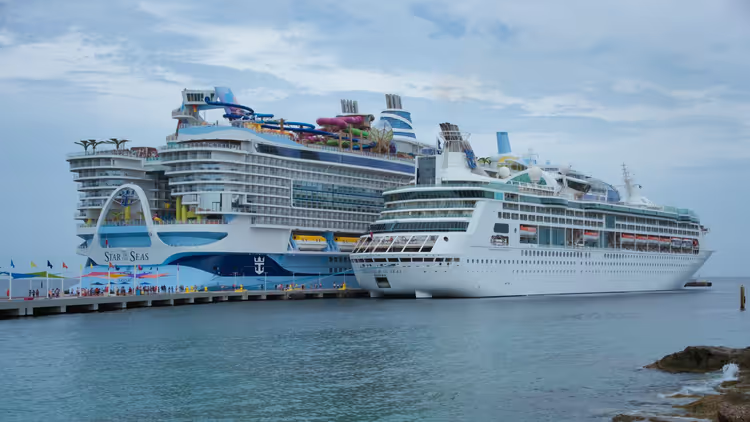
Symphony of the Seas: ten Caribbean itineraries, cabins and fees on board
Symphony has remained one of the world's largest cruise ships for eight years now. Its 18 decks accommodate up to 6,680 guests.
Figuring out a cruise is harder than it seems. Cabins differ in size and view, some meals are included in the fare, and others cost extra. Old schedules have long stopped matching reality.
We've put together ten itineraries for the ship, broken down cabin categories, entertainment, and onboard rules. Below you'll find a comparison of itineraries by port and answers to frequently asked questions.
Ad: this article contains affiliate links, we earn a commission if you book through them, at no extra cost to you.
About the ship
💡 In short:
- Choose a cabin by category: interior from 9 m², balcony from 17 m², suites up to 142 m².
- Budget for the service charge: $18.50 per person per day, $21 in suites (as of 09/2026, Royal Caribbean official site).
Symphony belongs to the fourth generation of Oasis-class ships from Royal Caribbean. The vessel was launched in 2018, is 361 m long, and has a gross tonnage of 228,081 tons (as of 09/2026, Wikipedia). Across 18 decks, 16 of which are open to guests, there are 2,759 cabins. They accommodate up to 5,518 passengers at double occupancy and up to 6,680 at full capacity, with a crew of about 2,200.
Symphony gave up the title of the world's largest cruise ship in 2024. It was taken by Icon of the Seas, with a gross tonnage of 248,663 tons (as of 09/2026, Wikipedia). Our ship still ranks among the largest vessels on the planet and offers the same infrastructure as the newer Oasis-class ships.
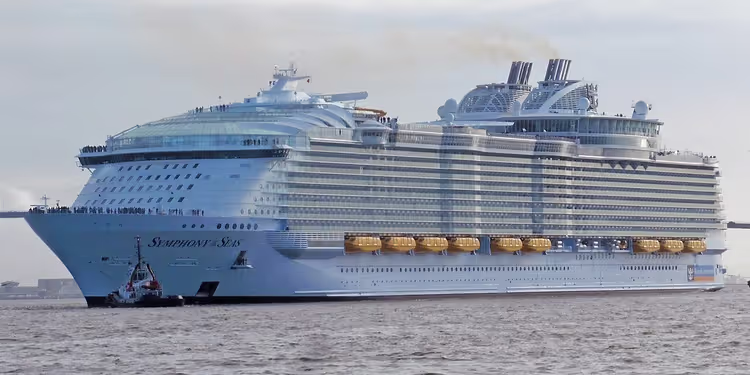 © Darthvadrouw · CC BY-SAPhoto: Darthvadrouw, CC BY-SA (https://creativecommons.org/licenses/by-sa/4.0), Wikimedia Commons
Cabins and decks
Cabins are divided into several categories, and their sizes differ by nearly a factor of two. Interior cabins range from 9 to 24 m² and fall into two groups: those overlooking Central Park and those with a virtual balcony, where a large screen shows a seascape. Furnishings include a bed, an armchair, and a nightstand.
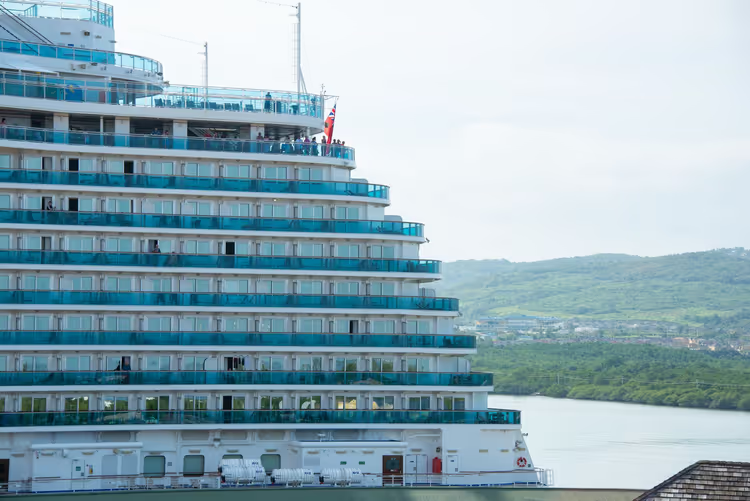
Balcony or ocean-view cabins face directly onto the water. They range from 17 to 25 m² and come with a sofa, a table, a mirror, and luggage space. Every cabin, regardless of category, has a TV, phone, air conditioning, minibar, and safe.
Suites are two-story apartments of up to 142 m². The bedroom is upstairs, and downstairs there's a living room with a dining table and sofas. The private balcony offers sea views, and the bathroom has a jacuzzi.
Entertainment
Onboard you'll find gyms, sports courts, a rock-climbing wall, a zip line, and an ice rink. The water park offers slides with sharp turns, and the pools feature wave simulators, fountains, and waterfalls. A calmer water zone sits on the upper decks, with jacuzzis and sun loungers that extend out over the side of the ship.
In the evening, guests watch water shows, ice performances, theater productions, and Broadway-style musicals. Along the main Royal Promenade you'll find brand shops, photo studios, restaurants, and nightclubs with karaoke. In one of the bars, a robot bartender mixes your cocktail, and Central Park features a real tropical garden with climbing plants and gazebos. Gamblers will appreciate Casino Royale, with slot machines, roulette, and card tables.
Dining
Main dining is already included in the cruise fare. The My Time Dining system lets you come to complimentary restaurants whenever it suits you, and you can approve your dining plan in advance. The menu includes soups, sandwiches, omelets, salads, fruit, and desserts.
Specialty restaurants serving Asian, Italian, Mexican, and American cuisine cost extra. Beyond those, the decks have cafes and bars serving coffee, collectible wines, and cocktails.

Gratuities
The service charge is added automatically on top of the cruise fare. In 2026 it is $18.50 per person per day for standard cabins and $21 for suites (as of 09/2026, Royal Caribbean official site). An additional 18% is charged for drinks at bars and from the minibar, as well as for certain services such as the spa.
Dress code
During the day, casual clothing is appropriate on deck: T-shirts, shirts, trousers, light dresses. For evening events, elegant suits, tuxedos, and cocktail dresses work well. After 6:00 PM, swimwear and shorts are not appropriate in public areas. Jeans and tracksuits look out of place there.
Kids' clubs
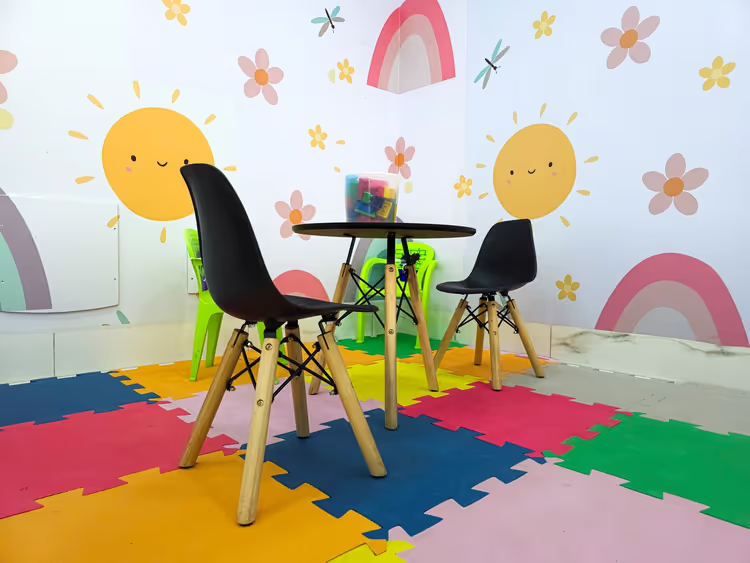
Programs are available for children and teens from 6 months to 17 years old. Kids can enjoy sports areas, a science lab, pool games, discos, art, music, and dance classes, as well as costume shows and theater productions. Babysitting services are offered for children from one year old, and family dinners include a special menu so you can enjoy a relaxed evening.
Cruises
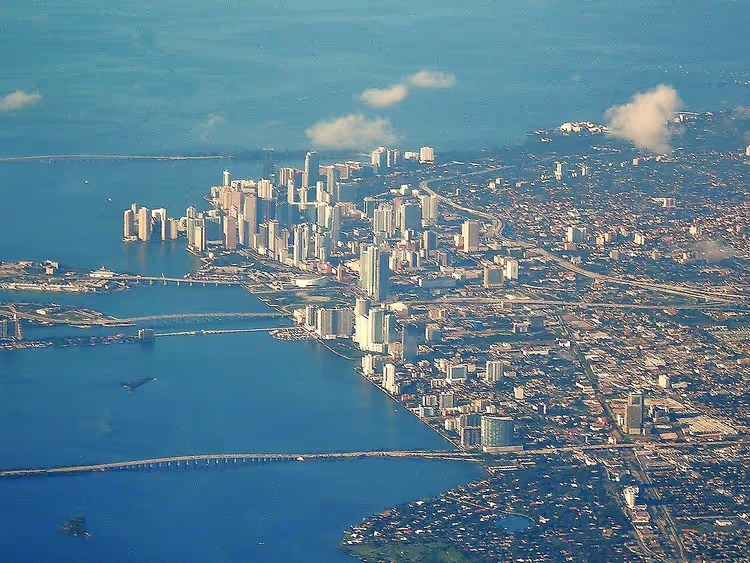
Symphony changes its region by season. The ship has sailed the Caribbean out of Miami, and in other years it has run the Mediterranean out of Barcelona. The Mediterranean program included calls at Palma de Mallorca, Marseille, La Spezia, Civitavecchia, and Naples, while the Caribbean program starts in Miami. You can find current destinations and departure dates on the official Royal Caribbean website.
Get your documents ready in advance. For US itineraries you need a valid US visa or ESTA approval; for European cruises a Schengen visa or visa-free entry works. Check the requirements for your citizenship before buying a ticket.
The cruise price depends on the length, season, and cabin category. Short 4-5 night itineraries cost less than eight-night ones, and balcony cabins cost more than interior ones. Below you will find all ten itineraries with ports of call and relative price level.
 © Marc Averette · CC BY-SAPhoto: Marc Averette, CC BY-SA (https://creativecommons.org/licenses/by-sa/3.0), Wikimedia Commons
No. | Nights | Ports of call | Price level |
|---|---|---|---|
1 | 8 | Basseterre, Charlotte Amalie, Nassau | below average |
2 | 8 | Roatan, Costa Maya, Cozumel, CocoCay | average |
3 | 8 | Basseterre, Charlotte Amalie, CocoCay | average |
4 | 8 | Philipsburg, San Juan, Labadee | above average |
5 | 8 | Philipsburg, San Juan, CocoCay | average |
6 | 4 | Nassau | low |
7 | 5 | Nassau, CocoCay | below average |
8 | 8 | Philipsburg, Charlotte Amalie, Nassau | high |
9 | 8 | Roatan, Costa Maya, Cozumel, Nassau | high |
10 | 8 | Nassau, Charlotte Amalie, Basseterre | high |
1. Eastern Caribbean from Miami
- Itinerary: Miami → Basseterre → Charlotte Amalie → Nassau → Miami
- Length: 8 nights
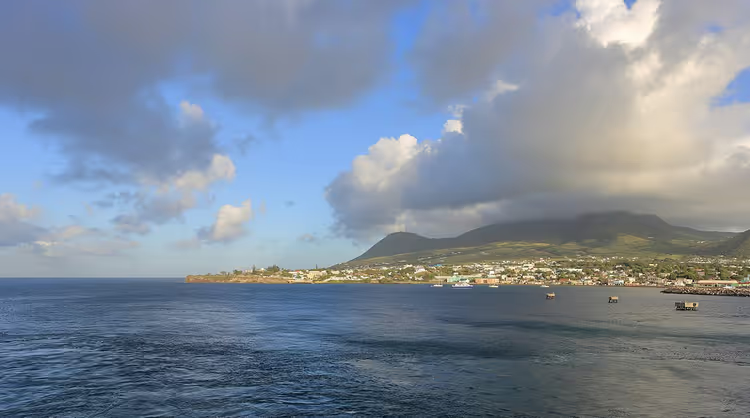
Miami serves as the starting point for most of the ship's Caribbean programs. From here the ship heads to the eastern part of the archipelago and makes its first stop in Basseterre, the capital of St. Kitts and Nevis. There you will find colonial mansions, small churches, and old forts, with volcanic slopes and sandy coves nearby.
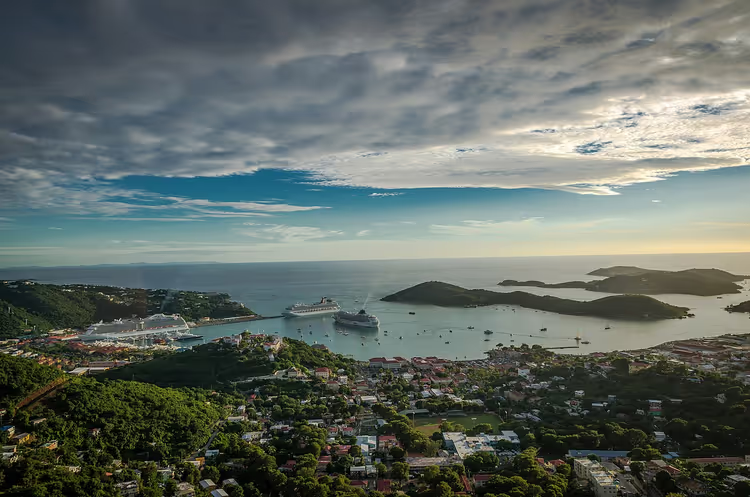
Next the ship calls at Charlotte Amalie on St. Thomas. This is one of the region's convenient ports: the town climbs up the hillsides, and white-sand beaches are a short ride from the pier. On the way back the ship stops in Nassau, where you will have time to spend a day ashore or walk through the historic center.
The price level for this itinerary stays slightly below the average for this selection.
 © Martin Falbisoner · CC BY-SAPhoto: Martin Falbisoner, CC BY-SA (https://creativecommons.org/licenses/by-sa/4.0), Wikimedia Commons
2. Western Caribbean with diving in Roatan
- Itinerary: Miami → Roatan → Costa Maya → Cozumel → CocoCay → Miami
- Length: 8 nights
The western itinerary suits those who want to combine beaches with nature and archaeology. The first stop is the Honduran island of Roatan. It is known for coral reefs that start right off the shore, so divers and snorkelers see fish and turtles without a long trip.
Next the ship calls at the Mexican ports of Costa Maya and Cozumel. Here you will find sandy beaches, jungle, and protected areas with pyramids, temples, and palaces of the Maya. The program wraps up at the private island of CocoCay, where Royal Caribbean has set up a relaxed beach day with loungers and water activities.
The price level for this itinerary is average.
 © Raymondbowen · CC BY-SAPhoto: Raymondbowen, CC BY-SA (https://creativecommons.org/licenses/by-sa/3.0), Wikimedia Commons
3. Cruise with a stop at CocoCay
- Route: Miami → Basseterre → Charlotte Amalie → CocoCay → Miami
- Duration: 8 nights
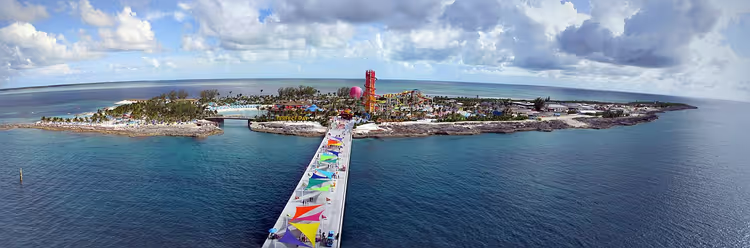
This option almost repeats the eastern route, but instead of Nassau the ship stops at CocoCay. Royal Caribbean's private island is closed to outside vessels, so the beaches here are noticeably quieter than at city ports. You have access to pools, loungers, cafes, and water slides.
Basseterre and Charlotte Amalie give you a sense of the region's colonial past. In Basseterre you'll see old forts and estates, and on St. Thomas you'll climb to lookout points above the bay. Between stops there's time on board: pools, an ice rink, and evening shows.
The price level is average, as with most eight-day programs from Miami.
 © Cbusram · CC BY-SAPhoto: Cbusram, CC BY-SA (https://creativecommons.org/licenses/by-sa/4.0), Wikimedia Commons
4. Philipsburg and old San Juan
- Route: Miami → Philipsburg → San Juan → Labadee → Miami
- Duration: 8 nights
The route heads to the eastern Caribbean and begins with a stop in Philipsburg on St. Maarten. The city's streets are lined with old houses with decorative facades, and modern hotel complexes stand right next to them. You can walk from the pier to the center and explore the colonial architecture.
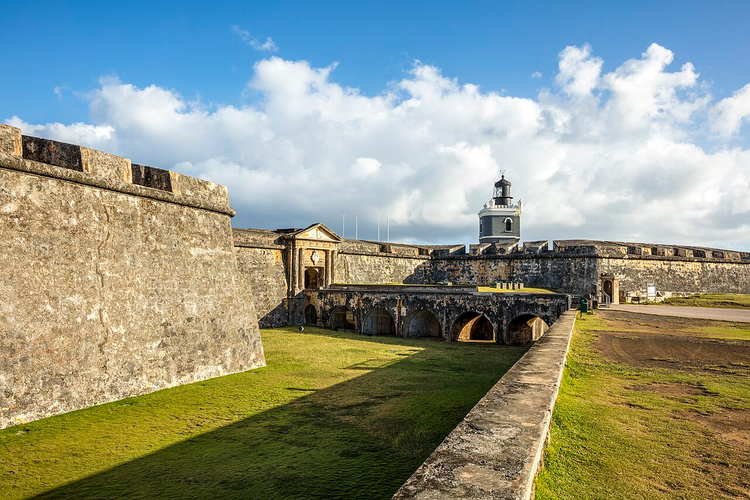
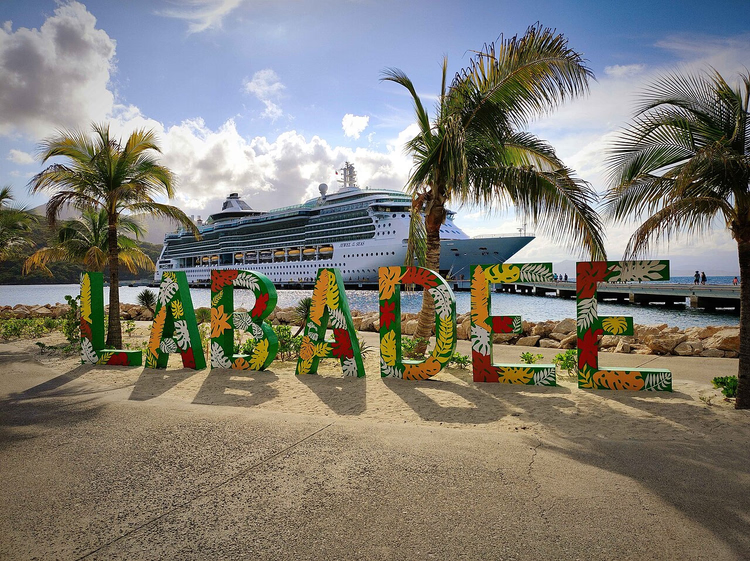
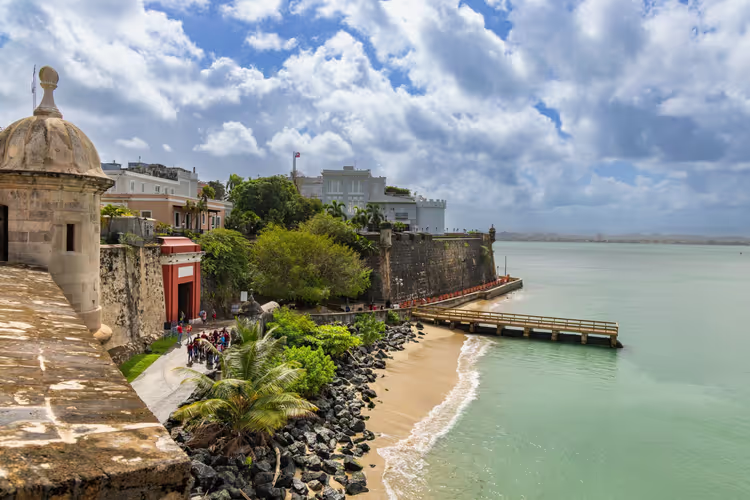
In San Juan, the old city of Puerto Rico awaits you with cobblestone streets, fortress walls, and Catholic basilicas. Ethnographic museums and lookout points over the bay are also here. The last stop is Labadee, Royal Caribbean's private peninsula in Haiti with sandy beaches.
This is one of the more expensive eight-day routes in the selection.
 © Godot13 · CC BY-SAPhoto: Godot13, CC BY-SA (https://creativecommons.org/licenses/by-sa/4.0), Wikimedia Commons
5. St. Maarten, Puerto Rico, and CocoCay
- Route: Miami → Philipsburg → San Juan → CocoCay → Miami
- Duration: 8 nights
 © Pvalerian · CC BY-SAPhoto: Pvalerian, CC BY-SA (https://creativecommons.org/licenses/by-sa/4.0), Wikimedia Commons
This itinerary combines three different types of vacation over eight nights. In Philipsburg you walk through a city with colonial architecture, in San Juan you climb to forts and old quarters, and at CocoCay you switch to the beach. This combination suits those who don't want to spend every day by the water.
The ports are close to each other, so the passages between them take one night, leaving you more time ashore. On board, pools, a water park, and entertainment programs are running during this time. A slow morning on the ship is easy to combine with an afternoon walk on the island.
The route's price level is average.
6. Short four-night cruise to Nassau
- Route: Miami → Nassau → Miami
- Duration: 4 nights
The shortest option in the selection is good for a first introduction to the ship. Four nights are enough to evaluate the cabin, restaurants, and evening shows, and the time at sea takes less than two days. This cruise is easy to combine with a stay in Miami before or after boarding.
The only stop is in Nassau, the capital of the Bahamas. The city began as a pirate republic, and today it combines old forts and mansions with modern entertainment venues. You'll have time to visit a water park, dolphinarium, pirate museum, and botanical garden if you book an organized excursion in advance.
This is the most affordable route on the list.
7. Five nights with Nassau and CocoCay
- Route: Miami → Nassau → CocoCay → Miami
- Duration: 5 nights
The five-day program combines a city port and a private island. In Nassau you see the colonial center and beaches, and at CocoCay you relax under palm trees on Royal Caribbean's private grounds. This format will appeal to those who aren't ready for a long voyage but want to see more than one stop.
Two consecutive stops let you take your time. In the morning you go ashore, in the afternoon you return to the ship for lunch, and in the evening you watch a show or go to a bar. The short passages are hardly tiring, so the route suits families with children.
The stop in Nassau is usually long, so you have time for both the beach and the city. Book an excursion in advance if you want to visit the dolphinarium or water park: spots on popular programs fill up quickly. CocoCay is good for a relaxed day without excursions.
The price level is below average.
8. St. Maarten, St. Thomas, and the Bahamas
- Route: Miami → Philipsburg → Charlotte Amalie → Nassau → Miami
- Duration: 8 nights
 © Quintin Soloviev · CC BYPhoto: Quintin Soloviev, CC BY (https://creativecommons.org/licenses/by/4.0), Wikimedia Commons
The eight-day loop through the eastern Caribbean is designed for those who want to see three countries at once. Philipsburg on St. Maarten is known for its colonial facades and ornate window grilles, while Charlotte Amalie on St. Thomas offers views of the bay and white-sand beaches.
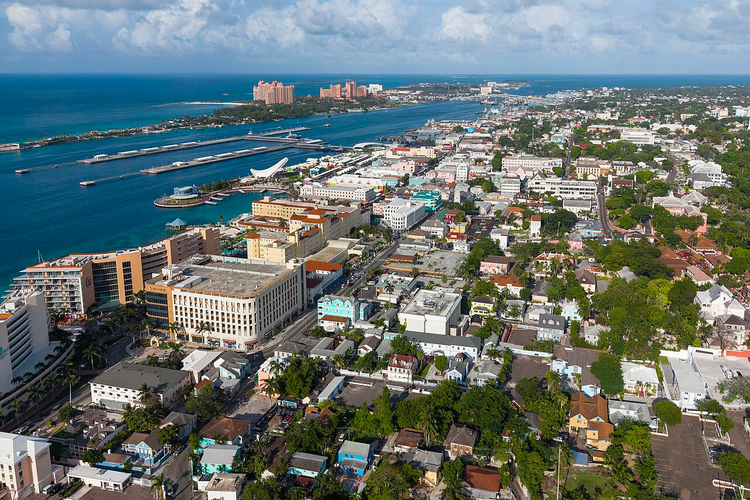
Bahamian Nassau completes the program. Here you'll find old fortresses, colorful estates, and plenty of entertainment centers. Between port calls there's time on board, so the vacation doesn't turn into a string of excursions.
Because of the number of ports, the program is packed. Plan one or two quiet days to rest on board: the pools, ice rink, and evening shows aren't going anywhere. That way you won't be exhausted by the end of the week.
This is one of the most expensive routes in the selection.
 © Sunil Pereira · CC BY-SAPhoto: Sunil Pereira, CC BY-SA (https://creativecommons.org/licenses/by-sa/3.0), Wikimedia Commons
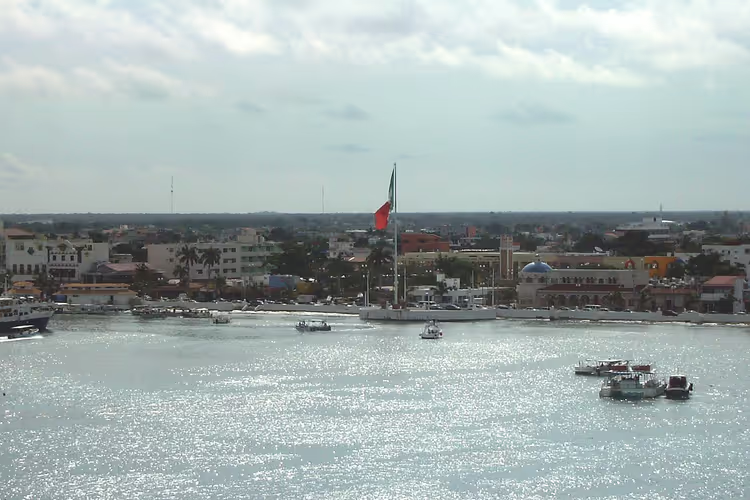
9. Mexico and Honduras plus Nassau
- Route: Miami → Roatan → Costa Maya → Cozumel → Nassau → Miami
- Duration: 8 nights
The four-port program suits those interested in nature and history. On Roatan you'll reach reefs where you can snorkel right from the shore. In Costa Maya and Cozumel, Mayan pyramids, temples, and nature reserves await you, along with cenotes and tropical forests.
The final stop is in Nassau in the Bahamas. After packed excursions, this is a convenient stop for a quiet beach day. The large number of ports makes the route busy, so decide in advance which excursions to take and where to explore on your own.
The route suits those willing to get up early for excursions. If the beach matters more to you than pyramids, choose programs with stops at private islands: the infrastructure there is simpler and the pace is more relaxed.
The price level is high: the length and number of port calls add up.
 © AMAPO · CC BY-SAPhoto: AMAPO, CC BY-SA (https://creativecommons.org/licenses/by-sa/3.0), Wikimedia Commons
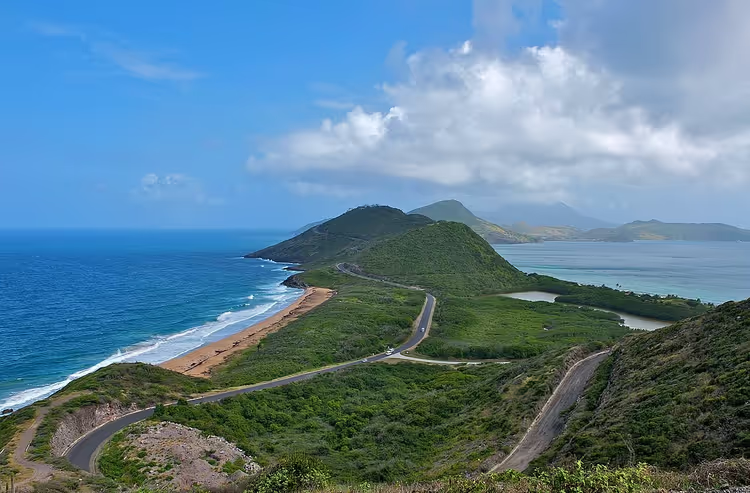
10. Grand loop through three islands
- Route: Miami → Nassau → Charlotte Amalie → Basseterre → Miami
- Duration: 8 nights
This is a mirror version of the first route: the same ports in reverse order. The advantage of this arrangement is that you start with Nassau and finish on St. Kitts, so you can spread excursions across days without rushing. There are three countries involved: the Bahamas, St. Thomas, and St. Kitts and Nevis.
On St. Kitts you'll be greeted by green hills, plantations, and old defensive structures. Between stops the ship sails on the open sea, and you have time for pools, an ice rink, and evening performances. This route is often chosen by those going on a cruise for the second time.
The price level is high.
 © Fred Hsu on en.wikipedia · CC BY-SAPhoto: Fred Hsu on en.wikipedia, CC BY-SA (https://creativecommons.org/licenses/by-sa/3.0), Wikimedia Commons
Mediterranean itineraries
In some summer seasons, Symphony was based in Barcelona and sailed along the coasts of Spain, France, and Italy. The itinerary included five ports: Palma de Mallorca, Marseille, La Spezia, Civitavecchia, and Naples. This route appeals to those who want to combine a cruise with city sightseeing rather than spend the entire vacation on the beach.
Palma de Mallorca opens the itinerary. The capital of the Balearic Islands combines an old town with a cathedral and a long waterfront promenade, so you have time for both a tour and a walk by the water. Marseille showcases the south of France: the old port, narrow neighborhoods, and views of the Mediterranean coast away from the pier.
La Spezia sits at the entrance to Cinque Terre, a stretch of five coastal villages perched on cliffs. From here it is easy to take a train to the terraces and vineyards, which are listed as a UNESCO site. From Civitavecchia, travelers reach Rome, and from Naples they head to Pompeii and the island of Capri if the port call is long enough.
Barcelona serves as the starting and ending point. The city is right at the port, so after the cruise you can stay a couple of extra days and explore Gaudí's neighborhoods without an additional flight. Hotels near the port are also useful before boarding: a taxi from the center to the terminal does not take long, but allow extra time for morning traffic.
Summer weather here is hot, and the passages between ports are short. The ship spends only a few hours at sea, leaving you more time ashore than on transatlantic itineraries. That makes the route easy to combine with independent exploring: bring comfortable shoes and leave the terminal early in the morning.
What is included in the fare
The base cruise fare already covers most of your vacation expenses. You pay once, and on board you only pay extra for certain services.
- accommodation in a cabin of your chosen category;
- main dining in complimentary restaurants, the buffet, and cafés;
- entertainment programs, shows, pools, and sports facilities;
- port fees, taxes, and mandatory charges.
So meals and evening entertainment are included in one bill. Only what you order by choice is charged separately.
What costs extra
A number of services on a cruise are charged on top of the base fare. It is worth factoring them into your trip budget in advance.
- flights to and from the departure port;
- visas and ESTA authorization, if required;
- a service charge for gratuities, billed per night;
- excursions and transfers in ports of call;
- alcohol, the casino, and specialty restaurants;
- the spa, hair salon, and other personal services.
Some extras can be arranged in advance through your online account, so you do not have to deal with them on board.
Traveler reviews
There are plenty of reviews of the ship: over 1,700 on cruiseline.com (as of 09/2026, cruiseline.com). So it makes sense to set expectations based on the size of the vessel rather than on brochure promises. Symphony is designed for thousands of guests at once, and that shapes the overall experience.
- Good fit for: families with children, show lovers, and those who do not want to change hotels every two days.
- Not a good fit for: those seeking quiet, small ships, and personalized service.
- Keep in mind: on a large ship, allow time for lines at the terminal and at popular restaurants.
What to pack
Besides documents and visas, pack for two different roles: beach time ashore and evening events on board. Weather at sea is changeable, so one warm layer will not go to waste.
- several sets of clothing, including a dressy suit or dress;
- comfortable shoes for walking around ports, and a swimsuit;
- chargers, an adapter, and a spare memory card for your camera;
- a first-aid kit with personal medications, sunscreen, and toiletries.
From our travel experience: on board, prices for small items are noticeably higher than ashore, so bring everything in advance. That way you will not overpay for a charger or sunscreen in the ship's shop.
Preparing for the cruise and boarding
The first day starts at the terminal, and it is important to arrive early. Check-in opens several hours before departure, and boarding closes before the ship sails. If you are late, the cruise will leave without you, so keep the exact time handy from the very beginning.
Luggage is checked at the terminal, and suitcases are then delivered directly to your cabin. Keep documents, medications, and a phone charger in your carry-on: luggage delivery sometimes takes several hours. Keep your camera and swimsuit with you too, so you can spend the first hour by the pool while the decks are still empty.
From our travel experience: internet on board is paid and costs more than on land. If you only need connectivity for messaging, compare the ship's package with your carrier's roaming. In ports there is usually a signal, and you can get online there via a local SIM card or a Wi-Fi hotspot in a café.
On the ship, it is convenient to keep all charges on one onboard account. It is linked to your card at check-in, and cash is for ashore: in port shops and cafés, payment depends on the local currency. Dollars and euros are widely accepted, but change is sometimes given in local money, so small bills and coins will come in handy.
If your budget is tight, some services can be prepaid at the time of booking. That will keep your onboard expenses lower.
Keep your documents in one place: passport, visa or ESTA confirmation, boarding pass, and insurance. It is convenient to store copies on your phone and in paper form, because in ports you may need your passport when going into the city.
⁉️🤔 Frequently asked questions
How many people does Symphony hold?
Up to 6,680 guests at full capacity and 5,518 at double occupancy, with a crew of about 2,200. Across 18 decks there are 2,759 cabins. The ship is among the largest in the world, but since 2024 the title of the biggest has belonged to Icon of the Seas.
How much is the service charge on board?
In 2026 it is $18.50 per person per day in standard cabins and $21 in suites (as of 09/2026, Royal Caribbean official website). The charge is added automatically on top of the cruise fare, and an additional percentage is applied to drinks and certain services.
What is included in the cruise fare?
Accommodation in a cabin of your chosen category, main dining in complimentary restaurants and the buffet, entertainment programs and shows, sports facilities, as well as port fees and taxes. Excursions, alcohol, and specialty restaurants cost extra.
Do I need a visa for a Caribbean cruise?
For itineraries from Miami, you need a valid US visa or ESTA authorization unless you hold a passport from a visa-exempt country. For Mediterranean itineraries, a Schengen visa is sufficient. Requirements depend on your citizenship, so check them before booking.
Is the ship suitable for traveling with children?
Yes. On board there are programs for children from 6 months to 17 years, a nursery for toddlers from age one, a kids' water park, an ice rink, and an amusement park. Families also have a special menu and convenient dinner times.
In short: what to book
If you are short on time, take the short four-night cruise to Nassau. If you want to see more countries, choose the eight-night loop with Basseterre and Charlotte Amalie. If nature and diving are your priority, look at the western route through Roatán and Cozumel.
Before boarding in Miami, it is convenient to compare hotels near the port on Trip.com.
For excursions in ports of call, check GetYourGuide, and for museum tickets in Barcelona and Rome, look on Tiqets.

A small editorial team writing guides for independent travel. We travel ourselves, but we haven’t been everywhere, so we check prices, opening hours and how to get there against official sources.