
















25 Places in Turin: palaces, museums and two viewing platforms
Turin is often underrated compared to Rome and Florence. And that's a mistake. It was the first capital of unified Italy with four centuries of Baroque architecture.
In three or four days you'll see royal palaces, two main viewpoints, and the world's oldest museum of Egyptian culture. Below are 25 places with addresses, transport, and a guide to tickets.
As of 09/13/2026, ticket and opening hours information was verified on the Museo Egizio website and Musei Reali.
Ad: this article contains affiliate links, we earn a commission if you book through them, at no extra cost to you.
1. Piazza Castello
💡 In short:
- Start at Piazza Castello: the city's four main streets fan out from here.
- Two viewpoints with Alpine views await you at Mole Antonelliana and on the Superga hill.
- Museums with tickets: the Egyptian Museum, the National Museum of Cinema, MAUTO, and Musei Reali.
- Museum tickets and opening hours: 09/2026, verified on the Museo Egizio hours page.
Our pick: tickets and hours for the main museums (as of 09/2026)
Museum | Ticket | Hours | Closed |
|---|---|---|---|
on the official website | Mon 9:00-14:00, Tue-Sun 9:00-18:30, Sat until 20:00 | none | |
on the official website | daily, exact hours via the link | none | |
on the official website | check the website | Monday | |
single all-day ticket | Tue-Sun, closed Monday | Monday | |
on the official website | Tue-Sun, exact hours via the link | Monday |

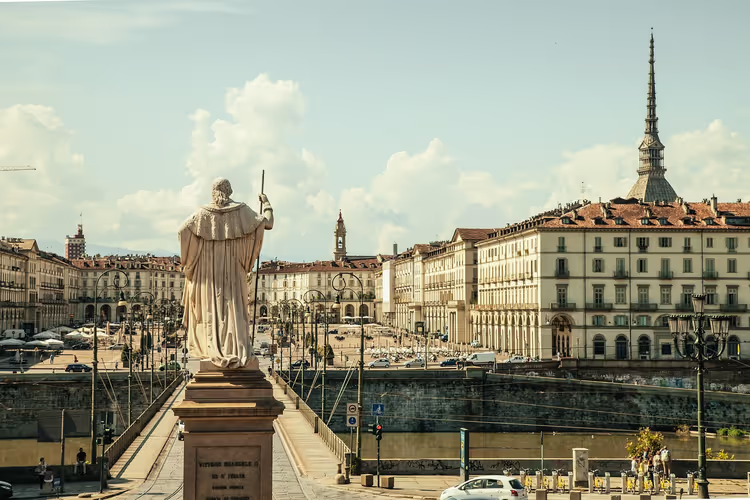
Piazza Castello is considered the heart of Turin, and that is no exaggeration. Four of the city's main streets, including Via Roma, start here. The square was laid out in the late 16th century, and architect Ascanio Vitozzi gave it its baroque look. Its second name, Castle Square, comes from the old castle.
On one side you see Palazzo Madama, on the other the view opens onto the royal palace. The Armory, the palace library, and Teatro Regio all face the square. According to legend, Nostradamus and the Count of Saint Germain spent time here.
- How to get there: trams and buses to the Carlo Alberto stop, or the metro to Porta Nuova.
- The catch: during the day the square is packed with tourists, come around 8-9 am.
2. Piazza San Carlo
 © chensiyuan · CC BY-SAPhoto: chensiyuan, CC BY-SA (https://creativecommons.org/licenses/by-sa/4.0), Wikimedia Commons
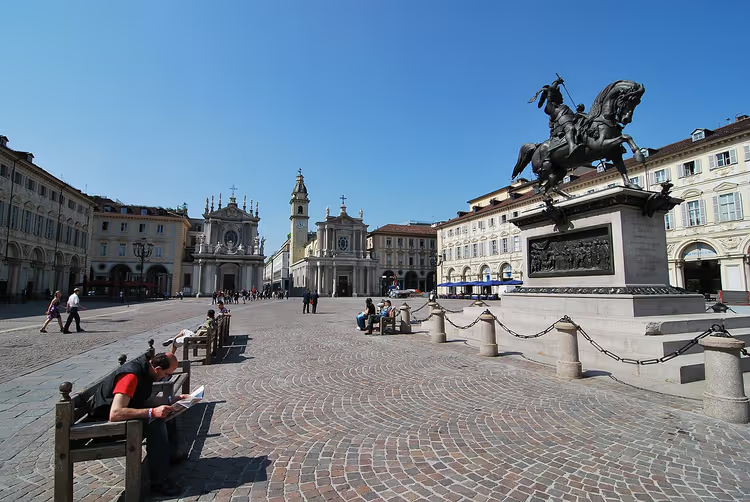
Piazza San Carlo is called the city's living room. The ensemble was created by Carlo di Castellamonte in the mid-17th century. Baroque palaces line the perimeter, along with two churches consecrated in honor of Saints Charles and Christina.
In the center stands a bronze equestrian monument to Duke Philibert of Savoy. It was created by sculptor Carlo Marochetti. Under the arcades you will find historic cafes serving Piedmontese cuisine and desserts. In winter a Christmas market fills the square, and in summer concerts are held here.
The spot is a convenient place to catch your breath between museums. Sit down at a cafe, look at the monument, and decide where to go next. From here it is a stone's throw to Porta Nuova station.
- How to get there: from Piazza Castello walk along the covered Via Roma gallery, about 400 m on foot (on the map).
- The catch: the square is paved with stone, and in summer there is almost no shade here.
3. Mole Antonelliana
 © Gianni Careddu · CC BY-SAPhoto: Gianni Careddu, CC BY-SA (https://creativecommons.org/licenses/by-sa/4.0), Wikimedia Commons
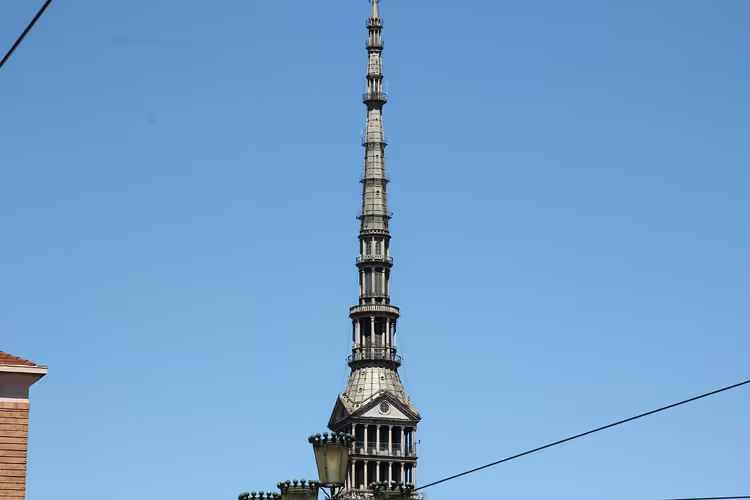
Mole Antonelliana towers over the city and remains the main symbol of Turin. Architect Alessandro Antonelli conceived it as a synagogue, but the building was completed as a museum instead. Until 2011 it was the tallest building in Italy.
A panoramic elevator takes you up to the observation deck at 85 m, while the tower's spire reaches 167.5 m (as of 09/2026, museocinema.it). From the top you see the Alps and the tiled rooftops. The ride up takes less than a minute, but the views are worth every second.
The tower's spire is visible from anywhere in the city, which is why Mole Antonelliana has long served as Turin's main landmark. It was completed after the architect's death, and restorations changed its silhouette several times. From the deck you can see both the old center with its tiled roofs and the green hills to the east. On a clear day, Alpine peaks appear on the horizon.
Inside the tower there is a cinema museum, which we will cover near the end of the list. You cannot walk up, only the elevator operates. It is almost always windy at the top, so bring a jacket even in summer.
- How to get there: tram to the Mole Antonelliana stop in the city center.
- The catch: there can be a line for the elevator, get a morning ticket.
4. Palazzo Reale
 © Benjamin Smith · CC BY-SAPhoto: Benjamin Smith, CC BY-SA (https://creativecommons.org/licenses/by-sa/4.0), Wikimedia Commons
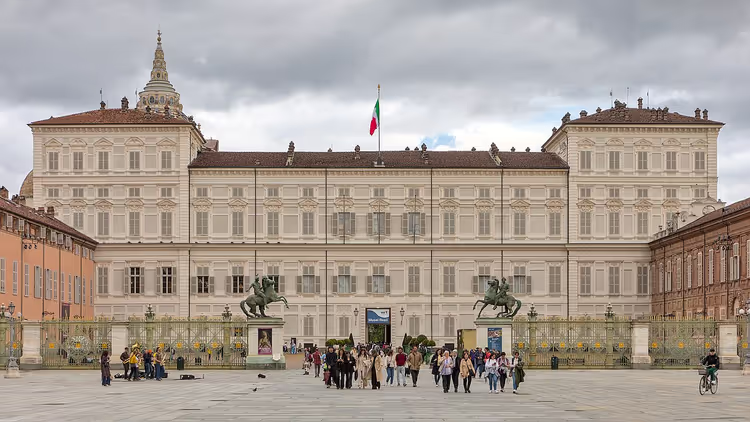
Palazzo Reale was the main residence of the House of Savoy on Piazza Castello. The palace was built in the mid-17th century on the site of the old bishop's palace. Today it is part of the Musei Reali and a UNESCO World Heritage Site.
Inside you will see the Throne Room, the Chinese Cabinet, the royal bedrooms, and the kitchen. The Armory houses armor and weapons, and the Red Hall was used for receiving ambassadors. An underground passage connects the palace to the cathedral, so both sights are easy to visit in one day.
- Ticket: the combined Musei Reali ticket is valid all day (as of 09/2026, Musei Reali website).
- Hours: Tuesday through Sunday, closed on Monday.
- The catch: without an online ticket you may end up waiting in line at the ticket office.
5. Palazzo Madama
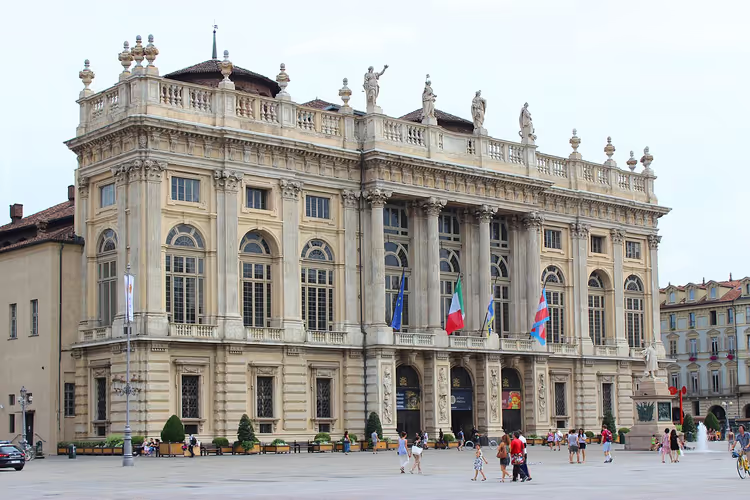 © Federico Spadaro · CC BY-SAPhoto: Federico Spadaro, CC BY-SA (https://creativecommons.org/licenses/by-sa/4.0), Wikimedia Commons
Palazzo Madama looks like two different buildings in one. The corner towers remain from a medieval castle, while the light Baroque facade was created by Filippo Juvarra. The palace got its name in honor of two queens of the House of Savoy.
Inside, the Museo Civico d'Arte Antica displays porcelain, glass, and paintings. It houses the malachite "Medici Vase," a piece so rare it is nearly one of a kind. A separate exhibition shows finds from Gandhara, an ancient kingdom on the border of Afghanistan and Pakistan. The palace courtyard is open freely, and it is a convenient way to reach Piazza Castello.
In different eras, these walls hosted the kingdom's senate, parliament, and supreme court, while the palace itself served as a residence of the House of Savoy. The walls remember receptions, trials, and sessions, and the halls still look ceremonial.
The facades on the four sides are different: medieval walls sit next to Baroque decoration, and you can see this right from the square. Each collection has clear labels, so you do not need a guide.
- Ticket and hours: Tuesday through Sunday, free admission on the first Tuesday of the month (as of 09/2026, palazzomadamatorino.it).
- The catch: the museum is closed on Mondays.
6. Palazzo Carignano
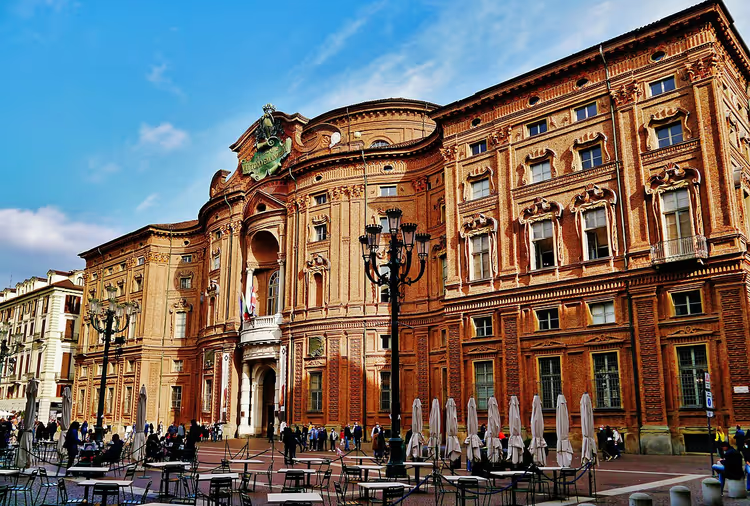 © Zairon · CC BY-SAPhoto: Zairon, CC BY-SA (https://creativecommons.org/licenses/by-sa/4.0), Wikimedia Commons
Palazzo Carignano stands out for its curved facade by Guarino Guarini. The double dome and grand staircase were considered bold innovations for the 17th century. Victor Emmanuel II, the first king of a united Italy, was born here.
On the facade you can spot rare details with faces of Native Americans. These images were given to the king's family after the war in Canada. Inside the palace halls, the Museo del Risorgimento, the museum of Italy's unification, tells the story of the key events and people of that era.
The palace dome is visible from nearby streets, and the ceremonial halls with stucco work have been preserved inside. If you are interested in the history of Italy's unification, allow at least an hour for the visit. The palace is a short walk from the Egyptian Museum, so the two visits are easy to combine.
- Address: Via Accademia delle Scienze, 5, on Piazza Carignano.
- The catch: the facade faces a small square, so you cannot photograph it in full.
7. Castello del Valentino
 © TorinoDoc · CC BYPhoto: TorinoDoc, CC BY (https://creativecommons.org/licenses/by/4.0), Wikimedia Commons
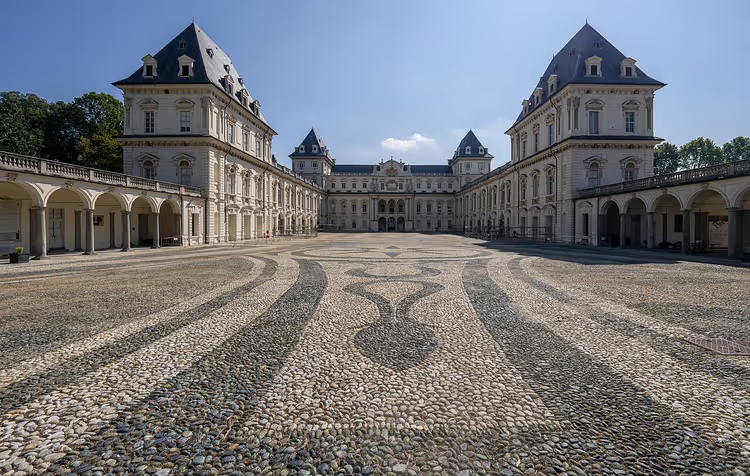
Castello del Valentino stands on the banks of the Po River in Valentino Park. The castle appeared in the 13th century as a fortress of the House of Savoy and was later rebuilt as a Baroque residence. The building's shape resembles a horseshoe.
The river-facing facade is made of red-brown brick and looks beautiful against the greenery. The courtyard features a mosaic of marble slabs. Today the building houses the architecture faculty of the Polytechnic University of Turin, so mostly students get inside.
The park around the castle deserves a separate walk. Locals love to run here, and shady alleys stretch along the river. From here it's easy to walk to the bridge and see the Po from the other bank. Park entry is free.
- Address: Corso Massimo d'Azeglio, in Valentino Park.
- The catch: the interior halls are open only during exhibitions and events.
8. Villa della Regina
 © Eccekevin · CC BY-SAPhoto: Eccekevin, CC BY-SA (https://creativecommons.org/licenses/by-sa/4.0), Wikimedia Commons
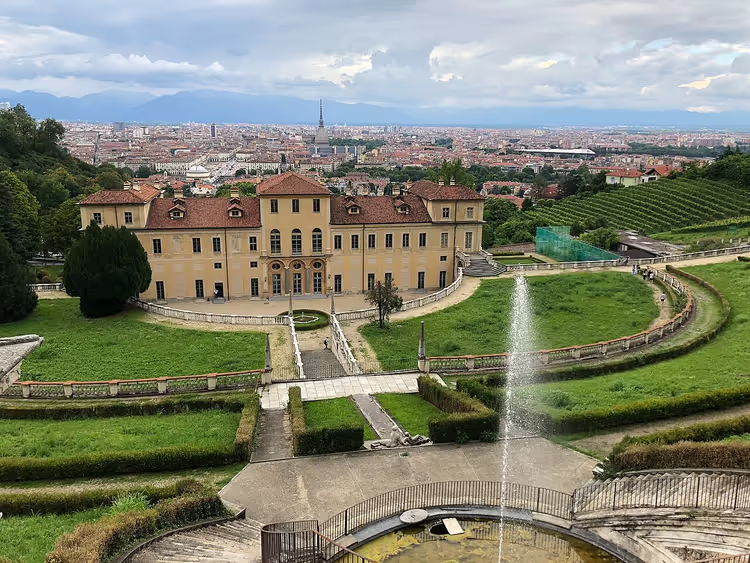
Villa della Regina was built in the 17th century for Queen Anne Marie d'Orléans. Terraced gardens with fountains and grottoes were laid out around it. After a long period of neglect, the villa and park were restored in the late 20th century.
Today it houses a painting museum with frescoes and works by Piedmontese masters. The hill offers a wide view of the city and the Po River. You can combine touring the halls with a walk through the gardens; allow a couple of hours.
- Address: Strada Comunale Santa Margherita, 79, on a hill east of the center.
- Getting there: by bus to the Borgo Po area, then uphill on foot.
- The catch: the climb to the villa is uphill, so it will be difficult with a stroller.
9. Basilica di Superga
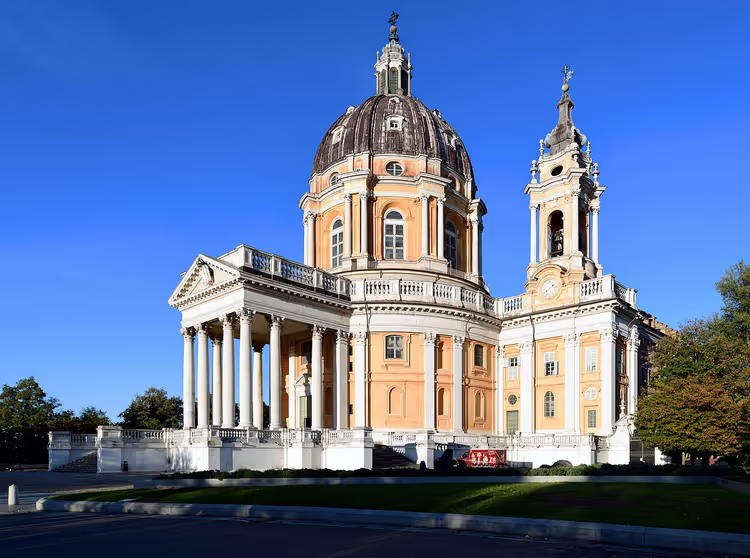 © Paris Orlando · CC BY-SAPhoto: Paris Orlando, CC BY-SA (https://creativecommons.org/licenses/by-sa/4.0), Wikimedia Commons
Basilica di Superga stands on a hilltop with one of the best panoramas of Turin. According to legend, Duke Amadeus II vowed to build a church if he won a victory over the enemy, and he kept his word. Construction began in the early 18th century and took fifteen years.
Inside is the burial vault of nearly all the kings of the Savoy dynasty. A separate chapel commemorates the duke's vow, and a small gallery displays paintings and sculpture. Near the church walls stands a memorial to the Torino footballers who died here in a plane crash.
From the hill you'll see the entire city spread out before you. In clear weather, snow-capped Alpine peaks are visible on the horizon. It's worth coming here in the morning, before the tour buses arrive.
- Getting there: by funicular from the Sassi stop, then on foot or by bus.
- The catch: on clear weekends there's a line for the funicular, so arrive at opening time.
10. Cathedral of Saint John the Baptist
The Cathedral of Saint John the Baptist was built in the 15th century and dedicated to the city's patron saint. It is the only surviving Renaissance monument in Turin. The church's main relic, the Shroud of Turin, is kept here in a closed chapel.
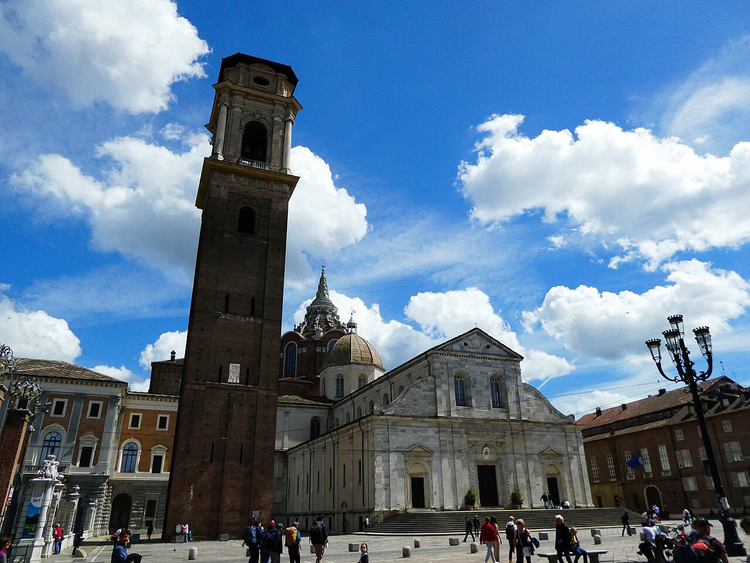 © Syrio · CC BY-SAPhoto: Syrio, CC BY-SA (https://creativecommons.org/licenses/by-sa/4.0), Wikimedia Commons
An exact copy of the relic is displayed for pilgrims in the cathedral chapel. Almost no one sees the original; it is shown rarely and only on special occasions. The cathedral is open every day, and entry is free (as of 09/2026, sindone.org).
Inside, note the white marble, the bronze stars on the floor, and the bright dome. The church stands in the center, near Palazzo Madama and the Royal Palace, so it's easy to include in a walk around Piazza Castello.
- Hours: roughly 9 to 12:30 and 3 to 7 (as of 09/2026, according to the Shroud website).
- The catch: during services, access is limited and tourists are asked not to disturb.
11. Santuario della Consolata
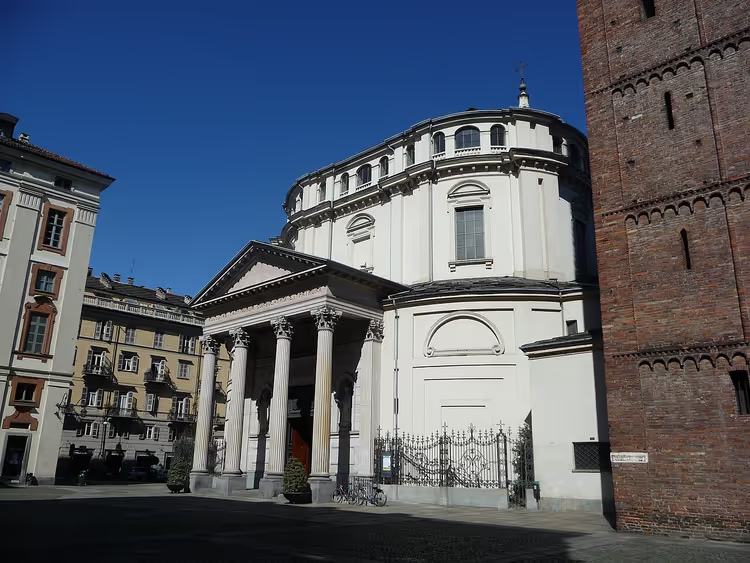
Santuario della Consolata grew on the site of the ancient Church of Saint Andrew. Its current Baroque appearance was created by Guarino Guarini in the mid-17th century. The church's entire history is tied to veneration of a miraculous icon of the Virgin Mary.
Inside, look for the "Solomonic columns," marble sculptures, and Rococo decoration. Saints Leonardo Murialdo and Giuseppe Cafasso are buried here. A viewing terrace on the roof offers city views.
The church facade is adorned with a statue of the Virgin Mary with the infant Jesus. Services are often held under its vaults, and a market operates near the church. You can walk here from Piazza Castello in about ten minutes.
- Getting there: buses to the XVIII Dicembre stop or the metro to the same station.
- Ticket: free entry.
- The catch: the viewing terrace is not always open, so check on site.
12. Gran Madre di Dio
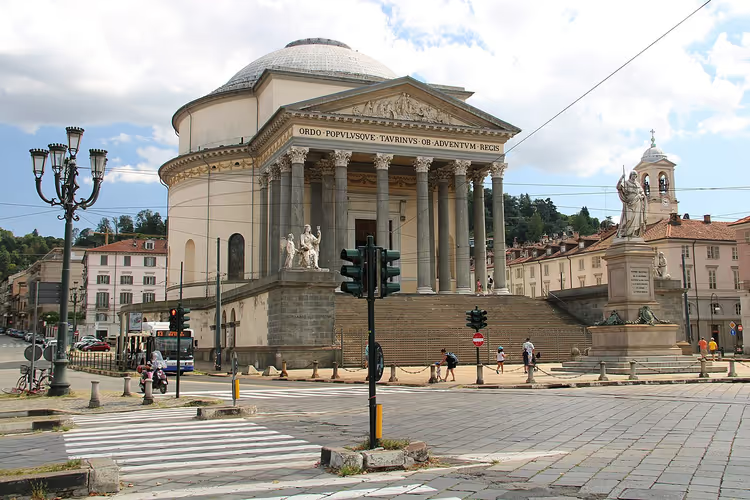 © Mongolo1984 · CC BY-SAPhoto: Mongolo1984, CC BY-SA (https://creativecommons.org/licenses/by-sa/4.0), Wikimedia Commons
Gran Madre di Dio stands at the foot of the Capuchin Hill, on the other bank of the Po. The Neoclassical church resembles the Roman Pantheon and appeared in the first half of the 19th century. It was dedicated to the return of King Victor Emmanuel I.
On the winter solstice, a beam of light passes through a window and illuminates the statues of Faith and Religion. This scene is tied to legends about the Holy Grail, which was supposedly brought to Turin along with the Shroud. Many urban legends circulate about the church's underground chambers.
Money for the church's construction was raised by the entire city. The facade features a portico with columns and statues of saints, and inside stands a statue of Faith holding a chalice.
The square in front of the church offers a view of the bridge over the Po and the opposite riverbank. It's a convenient starting point for a walk along the embankment or up to Capuchin Hill. The spot is quiet, and it's worth coming at sunset, when the stone takes on a warm pink hue.
- Hours: open in the morning and evening; check exact times before visiting.
- The catch: it's an active parish, so entry is restricted during services.
13. Chiesa di San Lorenzo
 © Ste73ve · CC BY-SAPhoto: Ste73ve, CC BY-SA (https://creativecommons.org/licenses/by-sa/3.0), Wikimedia Commons
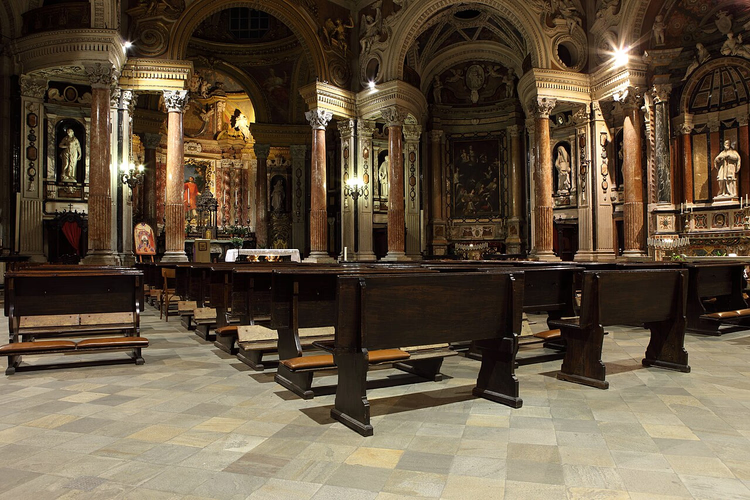
Chiesa di San Lorenzo hides next to Palazzo Reale. From the outside, the building looks like an ordinary house, and you could easily walk right past it. Inside opens up one of the city's boldest domes, the work of Guarino Guarini.
The dome seems weightless, as if floating above the hall. The frescoes and marble make this church one of the most ornate basilicas in Turin. The address is easy to find: Via Palazzo di Città, 4.
- Hours: open daily; guided tours are sometimes available on Saturdays and Sundays.
- Ticket: free entry.
- The catch: the facade is modest, so the street entrance is easy to miss.
14. Porte Palatine
 © rene boulay · CC BY-SAPhoto: rene boulay, CC BY-SA (https://creativecommons.org/licenses/by-sa/3.0), Wikimedia Commons
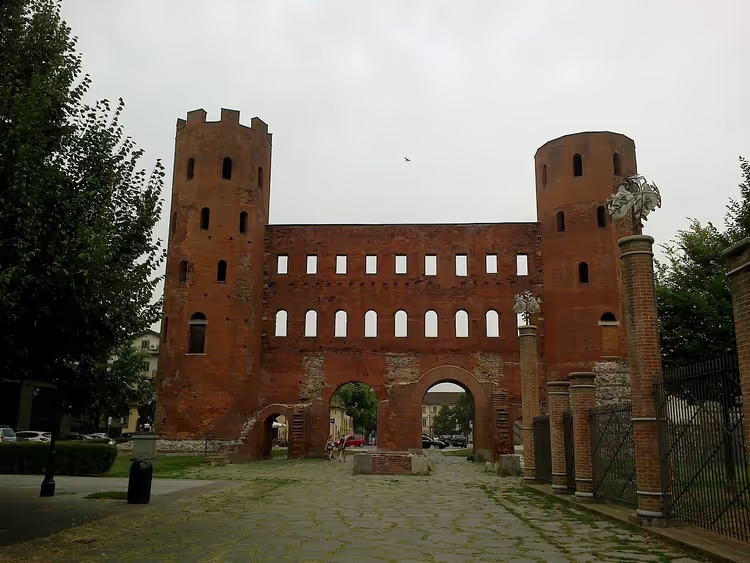
Porte Palatine is an ancient gate preserved from the Roman city walls. The road to the Roman camp passed through it, and the city's history began here. The two corner towers were added in the Middle Ages.
Behind the gate you can see the remains of a guard post and bronze statues of emperors. The site is wrapped in urban legends about underground passages beneath the towers. Address for navigation: Piazza Cesare Augusto.
- Getting there: on foot from Piazza Castello, about 5 minutes (per the map).
- The catch: only part of the structures survive; the rest is hidden beneath modern buildings.
15. Teatro Regio
 © Iron Bishop · CC BY-SAPhoto: Iron Bishop, CC BY-SA (http://creativecommons.org/licenses/by-sa/3.0/), Wikimedia Commons
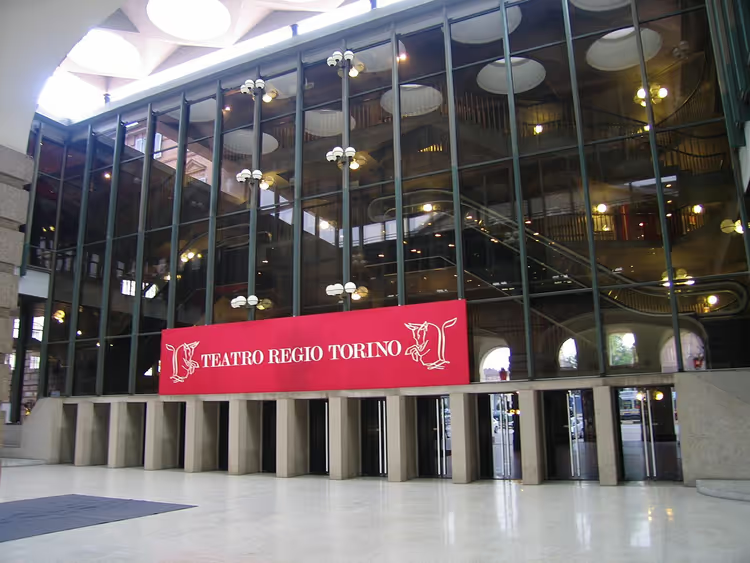
Teatro Regio on Piazza Castello is considered one of Italy's leading opera houses. The first theater building appeared in the 18th century, and after a major fire it was rebuilt from scratch. Today it hosts world-class opera and ballet productions.
The elliptical auditorium seats about one and a half thousand spectators. The acoustics are considered among the best in the country, and every production runs for many performances. Tickets for popular shows are worth buying in advance.
- Address: Piazza Castello, next to Palazzo Reale.
- The catch: tickets for top productions sell out weeks ahead, and cheap seats go first.
16. Egyptian Museum
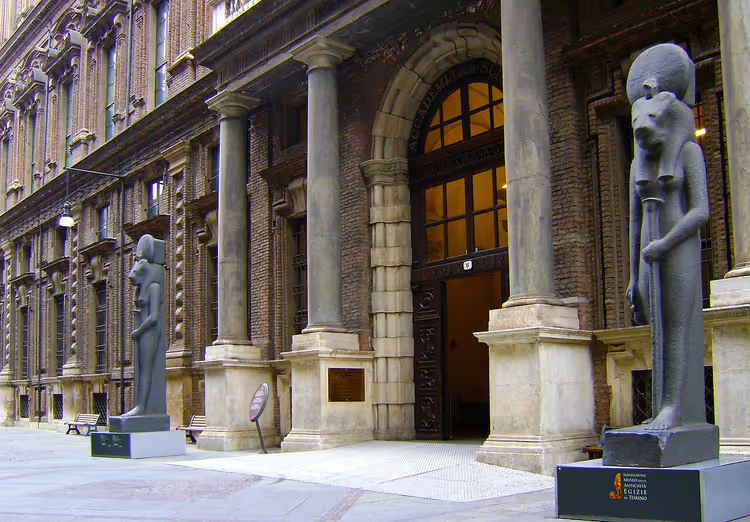
The Egyptian Museum is considered the second most important collection of Egyptian art after Cairo. The museum was founded in 1824, when the King of Sardinia bought the collection of consul Bernardino Drovetti (as of 09/2026, museoegizio.it). Today it houses about forty thousand exhibits.
You will see the Royal Papyrus with a list of pharaohs, the oldest geographical map in the world, and the Turin erotic papyrus. On the third floor, mummies, sarcophagi, and items from the Book of the Dead are on display. A visit takes at least three hours.
It is worth coming here for the originals: under glass lie papyri that are more than two thousand years old. After the renovation, the building connected the old courtyard with new halls, so the route flows without abrupt transitions, and the lighting in the halls does not interfere with viewing the display cases.
The exhibition is divided by theme: burial customs, writing, crafts, and cult. If you are going with children, take an audio guide, it is easier to hold their attention over a long visit. It is better to buy tickets online; the ticket office at the entrance sometimes has a line. The halls are cool, so a light jacket will come in handy.
- Ticket and hours: Mon 9:00-14:00, Tue-Sun 9:00-18:30, Sat until 20:00 (as of 09/2026, official museum website).
- The catch: lines are longer on weekends, buy your ticket online in advance.
17. National Automobile Museum
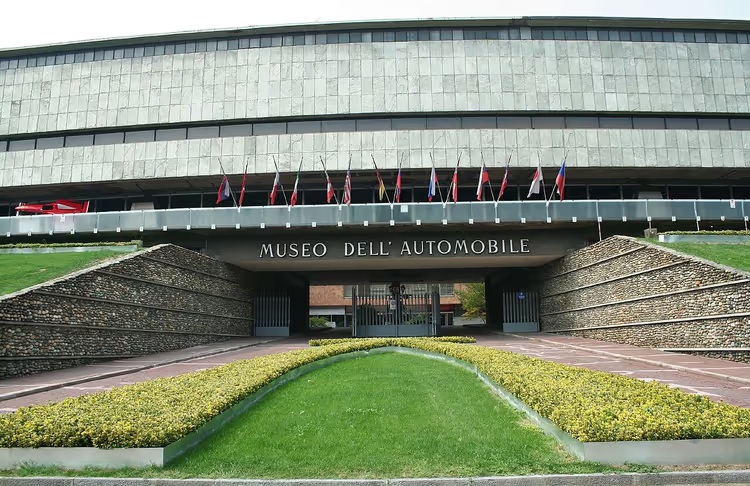 © Tony Harrison from Farnborough, UK · CC BYPhoto: Tony Harrison from Farnborough, UK, CC BY (https://creativecommons.org/licenses/by/2.0), Wikimedia Commons
MAUTO, also known as the National Automobile Museum, shows the history of the car from the first engines to racing cars. The collection includes more than two hundred models from about eighty brands (as of 09/2026, museoauto.com). Among the exhibits are the first four-wheeled Benz and the first car assembled in Turin.
A separate gallery is dedicated to racing: Ferrari race cars, a circuit Alfa Romeo, and rally Lancias. The museum occupies a former production building at Corso Unità d'Italia, 40. The exhibition has been updated, so some of the halls look quite modern.
- Ticket and hours: on the official website (as of 09/2026, MAUTO tickets and hours).
- Getting there: metro to Lingotto, then on foot or by bus.
- The catch: the museum is far from the center, set aside half a day for it.
18. Museum of Oriental Art
 © Roberto Cortese - Archivio Storico della Città di Torino · CC BY-SAPhoto: Roberto Cortese - Archivio Storico della Città di Torino, CC BY-SA (https://creativecommons.org/licenses/by-sa/4.0), Wikimedia Commons
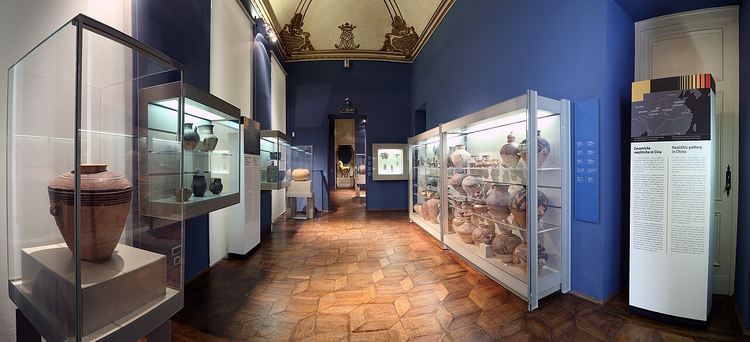
The Museum of Oriental Art (MAO) occupies the baroque Palazzo Mazzonis. The exhibition opened in 2008 and tells the story of Asian cultures. The first floor is dedicated to Chinese art with porcelain, bronze, and lacquerware.
On the second floor, masterpieces of Tibet and Buddhist art are on display. The third floor is dedicated to Islam, Turkey, Iran, and Japan. In total, the collection holds more than fifteen hundred works, including a rare Gandhara collection.
- Address: Via San Domenico, in the city center.
- Hours: the museum is open during daytime hours, check the exact schedule on site.
- The catch: some halls are temporarily closed for temporary exhibitions.
19. Juventus Stadium
 © forzaq8 from kuwait, kuwait · CC BYPhoto: forzaq8 from kuwait, kuwait, CC BY (https://creativecommons.org/licenses/by/2.0), Wikimedia Commons
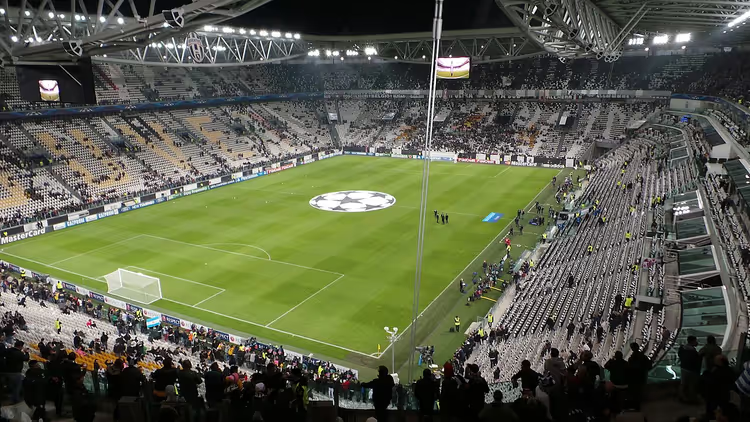
Juventus Stadium opened in September 2011 and became the club's home arena. The stands hold more than forty thousand spectators. Each section is designed so that several convenient walkways lead to your seat.
The steel supports in the shape of the letter "L" are painted in the colors of the Italian flag, the arena's signature feature. Nearby are the club museum, restaurants, and a walk of fame with portraits of players. On non-match days, people come here for tours, and you will see the locker rooms and the edge of the pitch.
The stadium tour includes the backstage areas, the museum, and the stands. On match days, people come here for the atmosphere, and on other days for a quiet stroll along the walk of fame. Buy your ticket in advance; spots sell out quickly on popular dates.
- Getting there: metro to Bernini station, then by special shuttle.
- The catch: on match days the area is closed off, arrive early.
20. Parco della Pellerina
 © Betty&Giò · CC BY-SAPhoto: Betty&Giò, CC BY-SA (https://creativecommons.org/licenses/by-sa/4.0), Wikimedia Commons
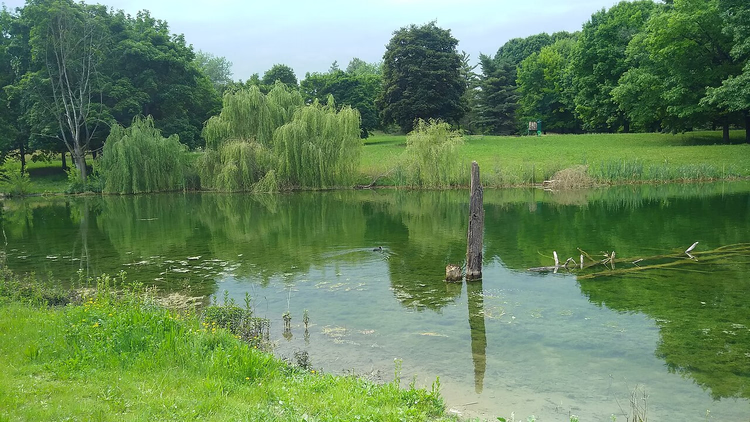
Parco della Pellerina is the largest park in Turin, in the western part of the city. It spreads across dozens of hectares along the Dora Riparia river. The park is named after an anthropologist, while locals call it by the name of an old cheese factory nearby.
There are tennis courts, a swimming pool, soccer fields, and paths for roller skating. In summer, the park hosts concerts and city festivals. Admission is free around the clock, so you can stop by at any time.
Paths along the river are perfect for cycling. In summer, bring water with you; there is little shade here. In the evening, it is better to walk along the lit alleys closer to the entrance.
- Address: Parco della Pellerina, west of the historic center.
- The catch: lighting is weak in the evening, it is better to walk during daylight hours.
21. Monumento a Vittorio Emanuele II
Monumento a Vittorio Emanuele II stands on Corso Vittorio Emanuele II in the city center. The bronze king is raised on four granite columns. The monument is over thirty meters tall.
At the base sit figures representing unity, labor, freedom, and brotherhood. The monument marks the king's role in the unification of Italy. From here it is convenient to walk to Piazza Solferino and further into the historic center with its palaces and museums.
- Getting there: on foot along Corso Vittorio Emanuele II from Porta Nuova station.
- The catch: the monument stands on a busy thoroughfare, with little shade and few benches nearby.
22. Castello di Rivoli
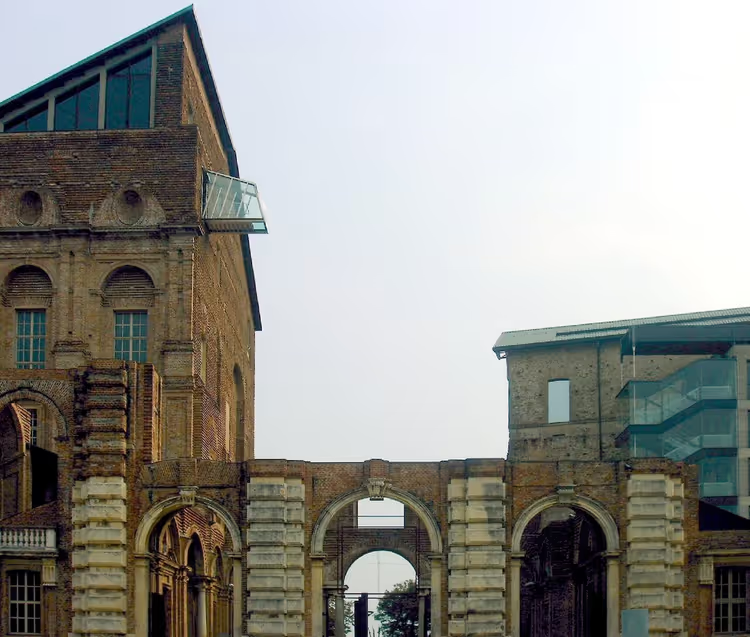 © Unknown author · CC BYPhoto: Unknown author, CC BY (https://creativecommons.org/licenses/by/2.5), Wikimedia Commons
Castello di Rivoli is located on the outskirts of Turin, and do not confuse it with the Verona Rivoli. The castle dates back to the 9th century and was a residence of the Savoy dynasty. After restoration, it became a museum of contemporary art.
Today it is the Museo d'Arte Contemporanea with works by 20th-century artists. The old vaults blend well with modern installations. The trip from the center takes about half an hour, but the view of the valley is worth the journey.
- Getting there: by suburban train or bus to Rivoli, then uphill to the castle.
- The catch: the permanent collection shares space with temporary exhibitions, so some halls may be closed.
23. Automobile Museum
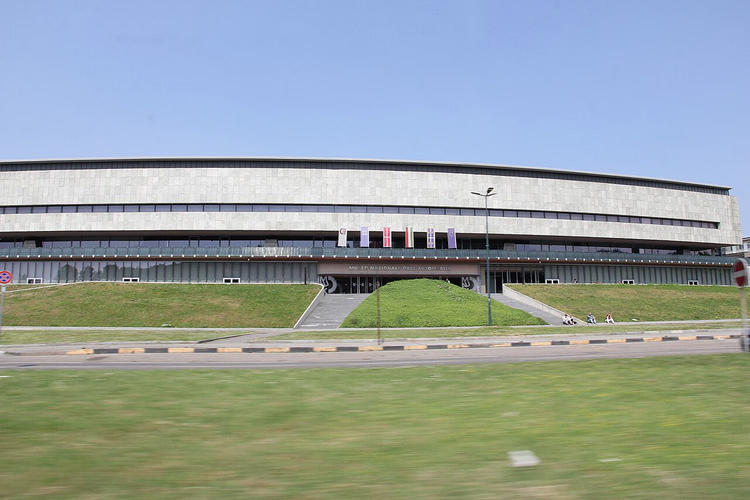 © Gianni Careddu · CC BY-SAPhoto: Gianni Careddu, CC BY-SA (https://creativecommons.org/licenses/by-sa/4.0), Wikimedia Commons
The history of Museo Nazionale dell'Automobile began in 1932. Roberto Biscaretti di Ruffia, one of the founders of Fiat, showed his private car collection to friends together with his son. A few years later the collection outgrew the family home and moved into a separate building.
Today the exhibition is organized by floor and theme. On the third floor, the "Origins" section displays the earliest automobiles. On the second floor, the "Cars and People" hall features race cars, and on the first floor the "Automobile and Design" section includes the Soviet Pobeda and a painted hippie minibus. There is also a library on the history of technology (as of 09/2026, museum's official website).
- Address: Corso Unità d'Italia, 40, the same complex as MAUTO.
- The catch: some of the new areas open one at a time after renovation.
24. National Museum of Cinema
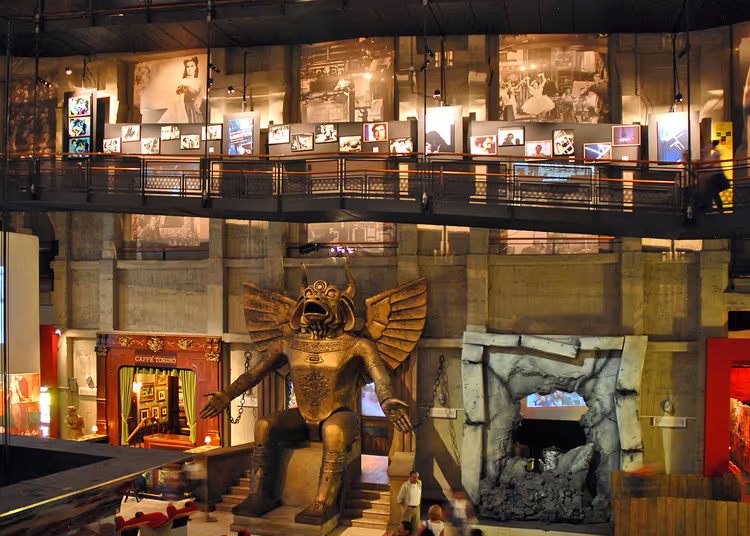 © Jean-Pierre Dalbéra from Paris, France · CC BYPhoto: Jean-Pierre Dalbéra from Paris, France, CC BY (https://creativecommons.org/licenses/by/2.0), Wikimedia Commons
The National Museum of Cinema occupies the famous Mole Antonelliana tower. The exhibition spirals upward over several floors, and the lobby has loungers where you can take a break.
It houses hundreds of thousands of posters, including hand-painted ones, tens of thousands of books, and thousands of films (as of 09/2026, cinema museum's official website). You will see vintage cameras, sets, and costumes, and some exhibits can be touched. The museum is considered one of the most unusual in Italy.
The exhibition changes periodically, so some rooms may look different from old photos. The ticket covers both the museum and the elevator ride, so do not buy two separate ones. On weekends it is best to arrive at opening time; by midday a line forms at the elevator.
- Ticket: combined ticket for the museum plus the observation deck (as of 09/2026, Museo del Cinema rates).
- Hours: the museum is open daily; the last entry time is listed on the website.
- The catch: there can be lines on weekends, so buy your ticket online in advance.
25. Galleria Sabauda
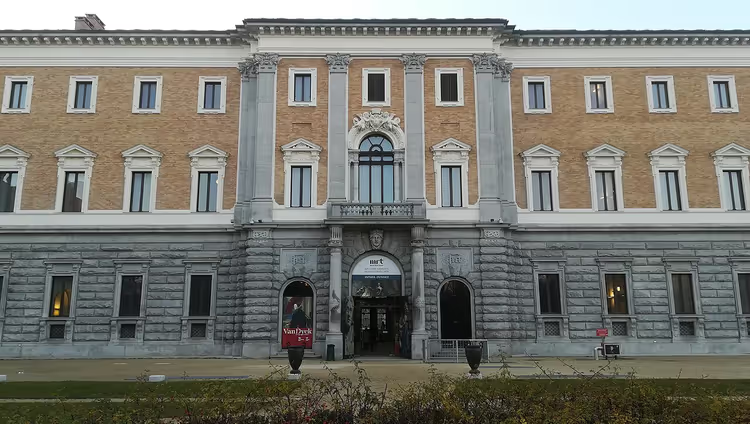 © Hairless Heart · CC BY-SAPhoto: Hairless Heart, CC BY-SA (https://creativecommons.org/licenses/by-sa/4.0), Wikimedia Commons
The Galleria Sabauda holds about seven hundred paintings collected by the House of Savoy (as of 09/2026, museireali.beniculturali.it). The collection spans painting from the Middle Ages to the 18th century. The gallery traces its history back to King Charles Albert's purchase of the collection in 1830.
Since 2014, the gallery has operated in the Musei Reali building across four floors. Each floor presents a different period of art history. The walls of the rooms are decorated with stucco, bas-reliefs, and half-columns, so you can easily spend a couple of hours here.
The gallery holds works by Italian and Flemish masters, including altarpieces and portraits. The visit follows a chronological path, so you move from the early Renaissance to the Baroque. Some rooms are given over to temporary exhibitions, so part of the collection sometimes moves around.
- Ticket: included in the combined Musei Reali ticket (as of 09/2026, Musei Reali tickets).
- The catch: after a packed visit, your eyes get tired, so it is better to come here as a separate visit.
Tours and tickets in Turin
Guided tours, skip-the-line tickets and activities — most offers can be cancelled free of charge.
See offers on GetYourGuideThe widget loads once you give your consent.
Turin attractions on the map
All 25 points are collected on the map below. It is convenient for planning your route and estimating distances between sights. Open the map on your phone to navigate the city on the go.
The points are numbered in the order they appear in the article: the first is at Piazza Castello, the last at the Galleria Sabauda. This way you can immediately see how close the central sights are to each other. Outlying points, such as the stadium and Castello di Rivoli, are easier to see on a separate day.
Landmarks of Turin
Places on the map
- 1Piazza Castello The heart of Turin, from here start the city's four main streets
- 2Piazza San Carlo The "city's living room" with an equestrian monument to the Duke of Savoy
- 3Mole Antonelliana Panoramic lift to an 85-metre observation deck, a symbol of Turin
- 4Palazzo Reale The main residence of the House of Savoy, a UNESCO site
- 5Palazzo Madama Two buildings in one, with the malachite "Medici Vase" inside
- 6Palazzo Carignano Guarini's curved façade, birthplace of Victor Emmanuel II
- 7Castello del Valentino 13th-century horseshoe-shaped castle on the bank of the Po
- 8Villa della Regina 17th-century villa with terraced gardens and a view over the city
- 9Basilica di Superga Burial place of the House of Savoy on a hilltop
- 10Cathedral of St. John the Baptist (Duomo di Torino) Turin's only Renaissance monument, home of the Shroud of Turin
- 11Santuario della Consolata Baroque church with an observation deck on the roof
- 12Gran Madre di Dio Neoclassical temple modelled on the Roman Pantheon by the Po
- 13Chiesa di San Lorenzo Modest façade and bold dome by Guarino Guarini
- 14Porte Palatine Ancient gate from the Roman city walls
- 15Teatro Regio One of Italy's leading opera houses
- 16Egyptian Museum (Museo Egizio) The second most important collection of Egyptian art after Cairo
- 17MAUTO (National Automobile Museum) History of the automobile, over two hundred models
- 18Museum of Oriental Art (MAO) Baroque Palazzo Mazzonis, cultures of China, Tibet and Japan
- 19Juventus Stadium The club's home arena for over forty thousand spectators
- 20Parco della Pellerina Turin's largest park, along the Dora Riparia river
- 21Monumento a Vittorio Emanuele II Bronze monument over thirty metres tall
- 22Castello di Rivoli 9th-century castle with a contemporary art museum inside
- 23Museo Nazionale dell'Automobile The same MAUTO complex, exhibits arranged by floor and theme since 1932
- 24National Museum of Cinema Spiral exhibition inside the Mole Antonelliana
- 25Galleria Sabauda About seven hundred paintings of the House of Savoy in the Musei Reali
⁉️🤔 Frequently asked questions
How many days do you need for Turin?
Three days is enough for the main sights. Spend the first day on Piazza Castello and Palazzo Reale, the second on the Egyptian Museum and Mole Antonelliana, the third on Superga and the Po riverbank. If you want to see the museums without rushing, add a fourth day and a couple of hours for the Galleria Sabauda.
How much do museum tickets in Turin cost?
Prices change by season, so check them on the official museum websites. The combined ticket for Mole Antonelliana includes both the cinema museum and the viewing platform. Musei Reali sells an all-day combined ticket, and on the first Tuesday of the month many museums offer free admission.
How do you get from the airport to the center?
From Torino Caselle Airport, a train runs to the center, to Dora station, then take the metro or tram. The journey takes about half an hour. A taxi is more expensive, but convenient with luggage. Check schedules and prices on the carrier's website before your trip.
When is the best time to visit Turin?
The most comfortable months are April, May, September, and October. In summer the city is hot and crowded, and in winter it is often foggy. In spring and autumn, walking around is easier and you will spend less time in lines.
Where to eat near Piazza Castello?
Around Piazza Castello and Piazza San Carlo there are many cafes serving Piedmontese cuisine. Historic coffee houses are tucked under the arcades, where local desserts are served. For simpler meals, check the neighboring streets. On weekend evenings, it is better to book a table in advance.
In short: what to book
If you have one day: get a ticket to the Egyptian Museum and go up the Mole Antonelliana. If you have two days: add Musei Reali with Palazzo Reale and the Galleria Sabauda. If you have three days: include Superga, Castello di Rivoli, and the Po riverbank.
For a family with children, MAUTO and the National Museum of Cinema are good choices. As a couple, choose Palazzo Madama and the gardens of Villa della Regina. Buy museum tickets online in advance, so you do not wait in line at the ticket office.

A small editorial team writing guides for independent travel. We travel ourselves, but we haven’t been everywhere, so we check prices, opening hours and how to get there against official sources.