
















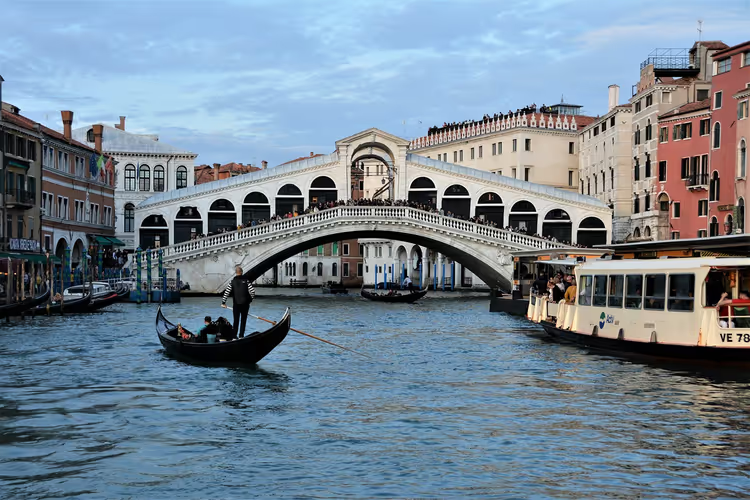
35 places to see in Venice: tickets, opening hours and a map
Venice is more than a hundred islands linked by bridges and vaporetto lines. There are almost no cars in the historic centre, but there is a palazzo, a church or an old bridge at every turn. We have put together 35 places worth seeing.
💡 In short:
- The list covers 35 sights in central Venice and on the islands of the lagoon.
- A combined ticket covers the museums of St Mark's Square, and a vaporetto pass is the better deal for getting around the city.
- Prices and opening hours: 09/2026, checked on the official Palazzo Ducale website.
The main rule is simple. Don't try to cover everything in a day: the bridges are steep, the queues are long, and the vaporetto runs to a timetable. Plan two or three sights for the morning and the same number after lunch. That way you'll fit in both the museums and an unhurried walk along the canals.
The museums of St Mark's Square accept a combined ticket. The "I Musei di Piazza San Marco" combined ticket costs 35 € (as of 09/2026, official MUVE website). It gets you into the Doge's Palace, the Correr Museum, the National Archaeological Museum and the halls of the Marciana Library. Below, each sight comes with a note on why it's worth your time and how to get there.
Ad: this article contains affiliate links, we earn a commission through them, and the price for you stays the same.
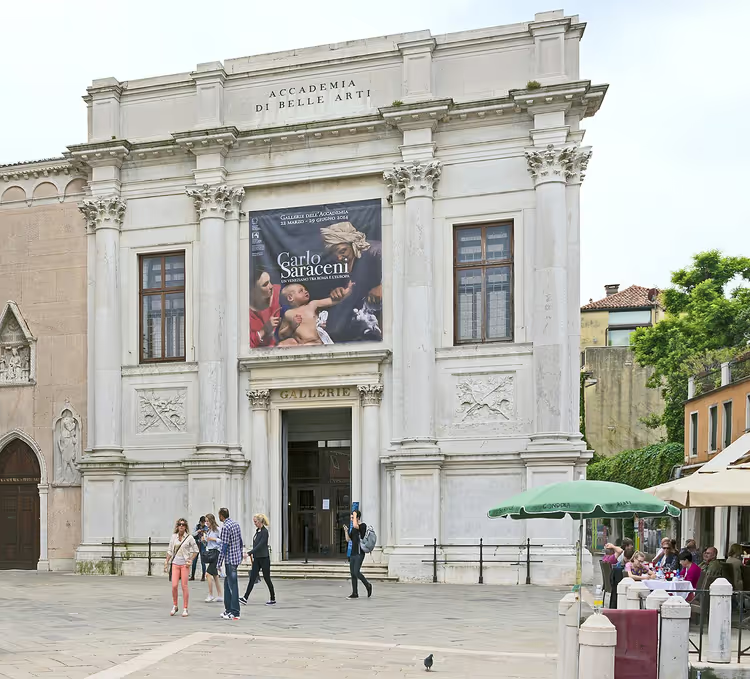
1. Gallerie dell'Accademia
 © Didier Descouens · CC BY-SAPhoto: Didier Descouens, CC BY-SA (https://creativecommons.org/licenses/by-sa/4.0), Wikimedia Commons
The Gallerie dell'Accademia (Galleria dell'Accademia) holds the largest collection of Venetian painting. It occupies the former convent and church of Santa Maria della Carità, so the rooms themselves feel like part of the display. Here you follow the Venetian school from the early Renaissance to the 18th century.
The big names include Bellini, Titian and Lorenzo Veneziano. The canvases hang in chronological order, which makes it easier to compare the masters' styles. The address is simple: Campo della Carità, 1050, in Dorsoduro next to the Accademia Bridge.
The room with the most famous works is small, and it's quieter in the morning. Admission is paid, with reduced or free entry for children depending on age. Check exact prices and available slots on the gallery's official website.
- Getting there: vaporetto to the Accademia stop, then a two-minute walk.
- Who it's for: anyone who wants to get to grips with Venetian painting in a single visit.
2. Grand Canal
 © Martin Falbisoner · CC BY-SAPhoto: Martin Falbisoner, CC BY-SA (https://creativecommons.org/licenses/by-sa/4.0), Wikimedia Commons
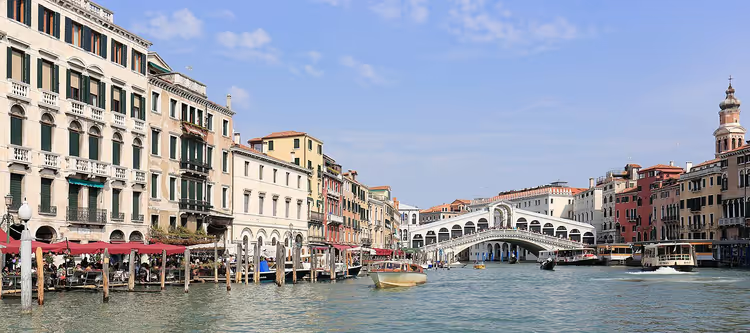
The Grand Canal is the city's main water street. It runs from Santa Lucia station to the point where it meets the Giudecca and San Marco canals, almost four kilometres in all. There is water here instead of tarmac, and vaporettos, gondolas and motorboats instead of buses.
The canal's width varies: in places it is narrow, in others it opens out enough for boats to travel two abreast. The banks are lined with the most expensive palazzi, medieval churches and old mansions. The facades form a solid wall, and from the water the city looks nothing like it does from the quayside.
Four bridges cross the Grand Canal: the Accademia, the Constitution, the Scalzi and the Rialto. They link the banks where the landing stages are. This is where you wait for the right vaporetto or gondola and buy a ticket at the kiosk nearby.
- How to see it: a ride on vaporetto line 1 runs the full length of the canal.
- Tip: sit by the windows or at the stern, where the view of the facades is best.
3. Doge's Palace
 © Didier Descouens · CC BY-SAPhoto: Didier Descouens, CC BY-SA (https://creativecommons.org/licenses/by-sa/4.0), Wikimedia Commons
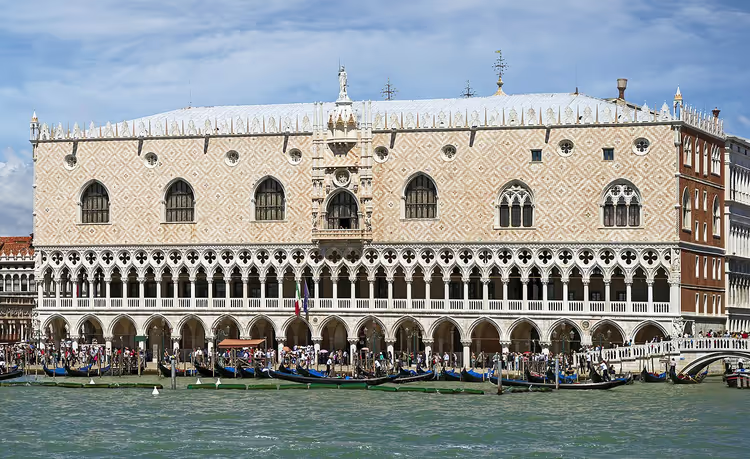
The Doge's Palace (Palazzo Ducale) was the residence of the republic's supreme rulers. The building was raised on the remains of ancient Roman walls, and after a fire in the late 14th century it was rebuilt in white, grey and pink marble. All three facades deserve a close look of their own.
Above the ceremonial gate, the Porta della Carta, stand a winged lion and a kneeling Doge Foscari. Inside you'll see marble staircases, statues and richly decorated walls and ceilings. People come here for the sheer scale and for the interiors of the council chambers.
Opening hours depend on the season. From 1 April to 31 October the palace is open from 9:00 to 19:00, with last admission at 18:00 (as of 09/2026, official website). In summer the doors stay open until 23:00 on Fridays and Saturdays. From 1 November to 31 March the palace is open from 9:00 to 18:00.
If you want to pick a time in advance and skip the queue, slots are available on Tiqets.
- Getting there: vaporetto to the San Zaccaria stop.
- The catch: in high season the queue at the entrance is long, so arrive at opening time.
4. Ca' d'Oro palace
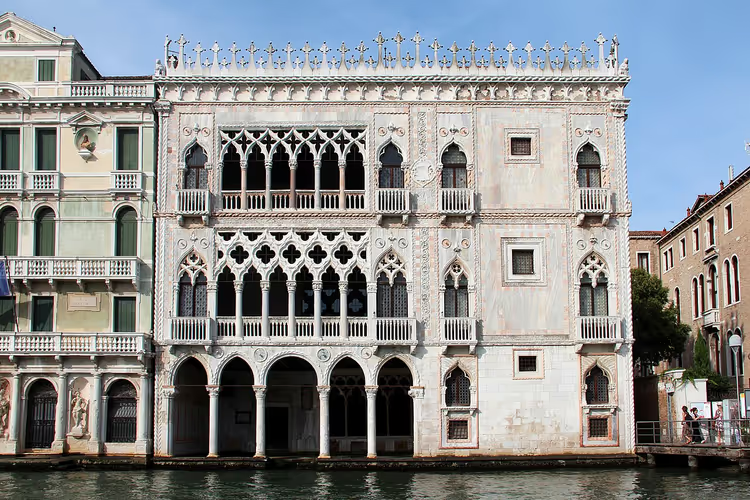
Ca' d'Oro translates as "golden house". The name came from the gold leaf in its decoration, which has not survived, but the name stuck for good. The central part of the facade is covered in white tracery of columns, pointed windows and carved ornament.
 © Jean-Pol GRANDMONT · CC BYPhoto: Jean-Pol GRANDMONT, CC BY (https://creativecommons.org/licenses/by/4.0), Wikimedia Commons
Officially the palace bears the name of Santa Sofia. Its history is tied to Venice's noble families and to the architects Giovanni and Bartolomeo Bon, father and son. In the late 19th century the building was bought by Baron Franchetti, a discerning art lover. He assembled a large collection of paintings, sculpture, ceramics, porcelain and antique furniture.
It houses the Franchetti art gallery, but the museum is currently closed for restoration (as of 10/2026). The palace stands in the Cannaregio district, opposite the Rialto fish market. View the facade from the opposite bank or from the water, where the full rhythm of the columns is visible.
- Address: Cannaregio, 3932, opposite the Rialto market.
- Who it's for: lovers of Gothic architecture and private collections.
5. Bridge of Sighs
 © Didier Descouens · CC BY-SAPhoto: Didier Descouens, CC BY-SA (https://creativecommons.org/licenses/by-sa/4.0), Wikimedia Commons
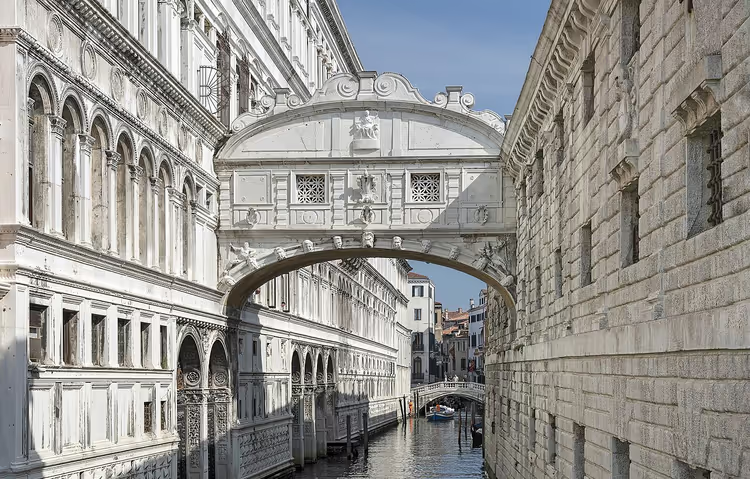
The Bridge of Sighs (Ponte dei Sospiri) connects the Doge's Palace with the prison on the other side of the canal. Convicts were led across it, and they sighed as they glimpsed freedom through the grilles. That is where the name comes from.
The bridge was built enclosed so that convicts could not escape. From the outside it is white marble in the Baroque style with carved ornament. See it either from the Cala d'Orseo bridge or from the water, approaching by gondola or vaporetto.
Stories about Casanova are attached to this place. Legend has it that he crossed the bridge and became the only man ever to escape from the prison. Locals also pass on another belief: if you sail under the bridge at sunset and kiss, your love will last. That is why a queue of gondolas gathers by the bridge in the evening.
- Getting there: a three-minute walk from the San Zaccaria stop.
- Who it's for: a romantic outing and a photo from the water.
6. Rialto Bridge
 © Alexey Komarov · CC BY-SAPhoto: Alexey Komarov, CC BY-SA (https://creativecommons.org/licenses/by-sa/4.0), Wikimedia Commons
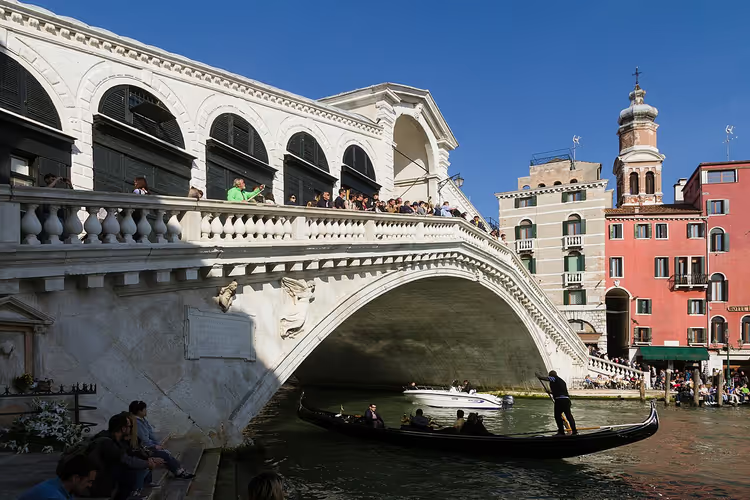
The Rialto Bridge (Ponte di Rialto) is the oldest of the city's bridges. The first crossing here appeared as early as the 12th century, it was later replaced by a wooden bridge, and wooden versions followed one another until the late 16th century, when the decision was made to build in stone. The design by the architect da Ponte was approved, and it is still in use today.
The bridge rests on thousands of oak piles driven into the lagoon bed. It is about fifty metres long, with rows of shops rising along both sides. Today it is still all shops, souvenir stalls and crowds of tourists.
The best view of the Rialto is from the quayside by the market, and from the bridge itself at dawn. During the day the spans are crowded, but this is exactly where you feel the city's trading spirit. Locals consider the bridge their calling card.
- Getting there: vaporetto to the Rialto stop, the bridge is steps away.
- Tip: come before 8 in the morning, before the tour groups arrive.
7. St Mark's Square
 © Matthias Süßen · CC BY-SAPhoto: Matthias Süßen, CC BY-SA (https://creativecommons.org/licenses/by-sa/4.0), Wikimedia Commons
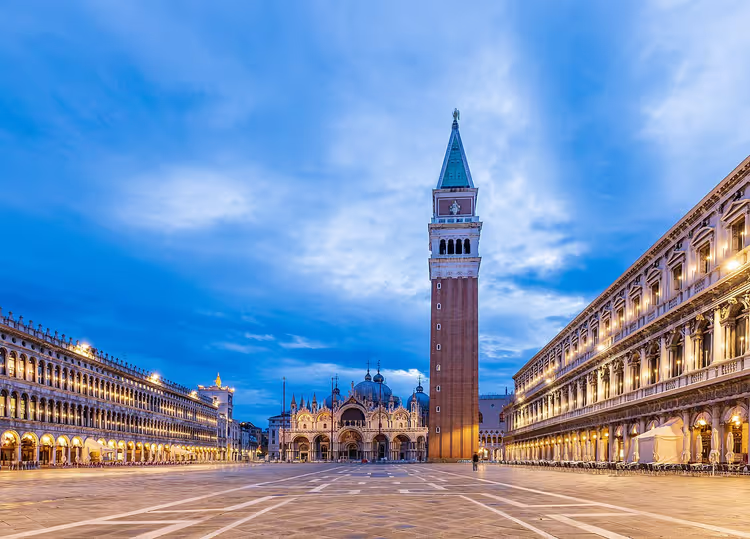
St Mark's Square (Piazza San Marco) is made up of three parts: the square itself and two piazzettas, San Marco and Leoncini. It is the heart of the city, ringed by buildings of rare beauty. The bell tower, visible from many points, stands here too.
The square is always busy: some people study the facades, others feed the pigeons. It has appeared in films more than once. The history of the square and the basilica is bound up with legends of Saint Mark.
Come early in the morning or late in the evening. At midday the square turns into a scorching expanse, while in the evening the stones are cooler and there are fewer people.
- Getting there: vaporetto to the San Marco or San Zaccaria stop.
- Who it's for: a first introduction to the city.
8. Basilica of Santa Maria della Salute
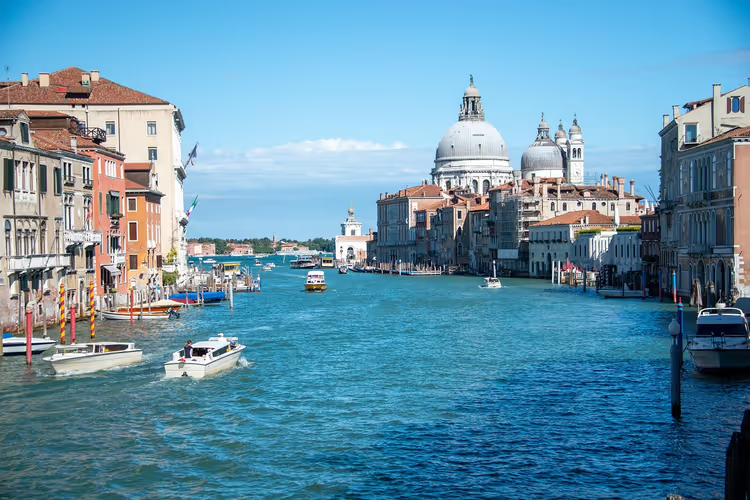
Santa Maria della Salute was built after the plague epidemic of the 1630s. The Senate vowed to raise a church if the disease retreated, and it kept its word. The church was founded in 1631 to a design by the young architect Longhena.
It took almost fifty years to build. The result is a round, octagonal Baroque building with a central dome on a drum and arched windows. The walls are lavishly adorned with sculpture and stucco, and the interior is every bit a match for the facade.
The basilica stands on the tip of Dorsoduro by the Grand Canal and can be seen from the quayside a long way off. The dome is easy to recognise by its light silhouette against the water. Entry is free, and it closes for a break in the middle of the day, so check the hours on the spot.
- Address: Dorsoduro, 30123.
- Getting there: vaporetto to the Salute stop.
9. St Mark's Basilica
 © Tony Hisgett from Birmingham, UK · CC BYPhoto: Tony Hisgett from Birmingham, UK, CC BY (https://creativecommons.org/licenses/by/2.0), Wikimedia Commons
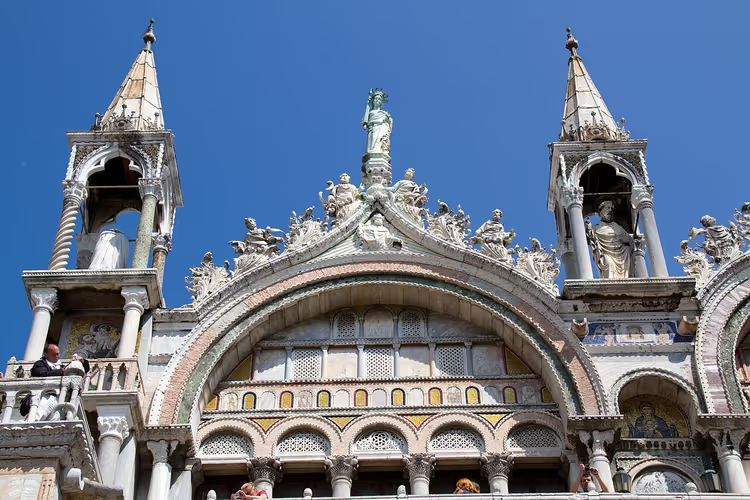
St Mark's Basilica (Basilica di San Marco) is where the remains of the city's patron saint lie. Tradition says an angel appeared to the saint in a dream and foretold that his relics would rest near the island of Rialto. The relics were brought from Alexandria and buried in a chapel, on the site of which the doges' court church later rose.
The present building was begun in 1063, modelled on the Church of the Twelve Apostles in Constantinople. The basilica was consecrated in 1094. It was then extended many times, and its appearance blends styles from Gothic to Eastern. The five-domed roof is laid out in the shape of a Greek cross, and the five entrances with their tall arches are supported by Byzantine columns.
Inside, linger over the mosaics and the high altar with the Pala d'Oro. Entry to the basilica is paid, with a timed ticket, and the queue moves slowly. Access to the terrace and the museum are charged separately; check current prices and hours on the basilica's official website.
- Address: St Mark's Square.
- The catch: in season the queue to get in can take more than an hour.
10. Burano island
 © GodeNehler · CC BY-SAPhoto: GodeNehler, CC BY-SA (https://creativecommons.org/licenses/by-sa/4.0), Wikimedia Commons
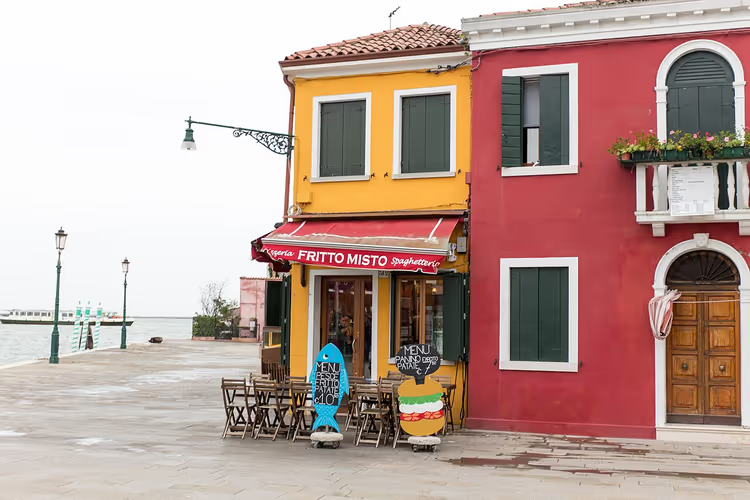
Burano is a fishing island seven kilometres from the centre. It is famous for its colourful house fronts, each painted in its own shade that doesn't repeat its neighbour's. Reflections in the canal turn the street into a kaleidoscope of blue, orange and turquoise.
Fine lace, known as Venetian lace, was once made here. Today genuine pieces can only be seen in the Lace Museum, because the craft itself has all but died out. Visitors also drop into the local bakery for buranelli shortbread biscuits.
Vaporettos 12 and 14 run to Burano from the city, and lines 9 and 12 from Murano. The trip takes about forty minutes, but you get to see the lagoon on the way. Arrive in the morning, before the groups take over the little bridges with views of the coloured houses.
- Address: Calle Capele, 30142.
- Lace Museum: open on weekdays during the day, closed on Mondays; check the hours on the spot.
- Who it's for: anyone who wants a break from the stone-built centre.
11. Basilica of Santa Maria Gloriosa dei Frari
 © Didier Descouens · CC BY-SAPhoto: Didier Descouens, CC BY-SA (https://creativecommons.org/licenses/by-sa/4.0), Wikimedia Commons
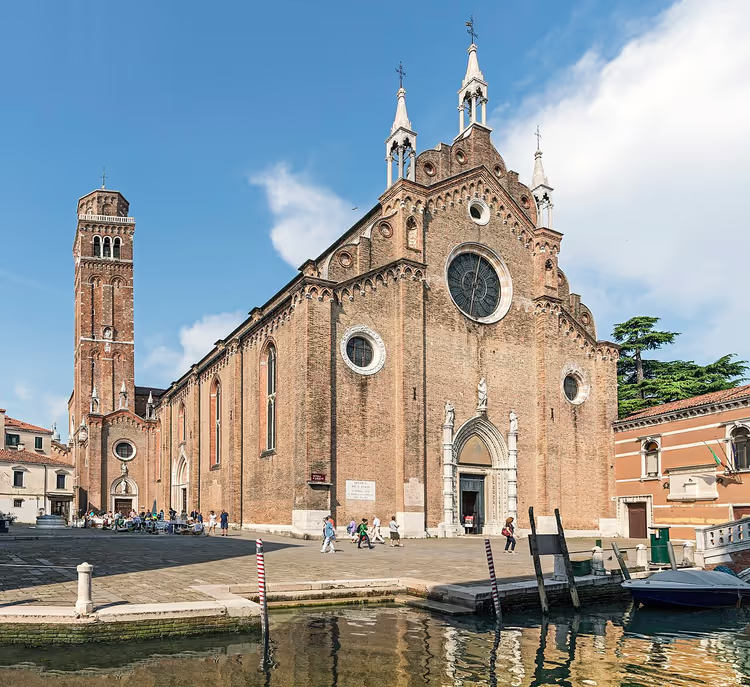
The Frari is a Franciscan basilica and a museum under one roof. Over the centuries it has gathered major works that let you trace Venetian art from the 15th to the 18th century. The key names are Bellini and Titian.
Standouts among the masterpieces are Titian's "Assunta" and the "Pesaro Madonna" in the family chapel. The sacristy holds Bellini's triptych "Madonna and Child". It is also worth seeking out Donatello's wooden statue of John the Baptist, the only one of its kind in Venice.
The basilica is open on weekdays from morning to evening, and on Sundays it opens only after lunch. Check the exact hours at the entrance or on the official website. Admission is paid, but it is worth it for the "Assunta" alone.
- Getting there: vaporetto to the San Tomà stop, then a five-minute walk.
- Who it's for: anyone coming for Titian and Donatello.
12. Basilica of San Giorgio Maggiore
 © Didier Descouens · CC BY-SAPhoto: Didier Descouens, CC BY-SA (https://creativecommons.org/licenses/by-sa/4.0), Wikimedia Commons
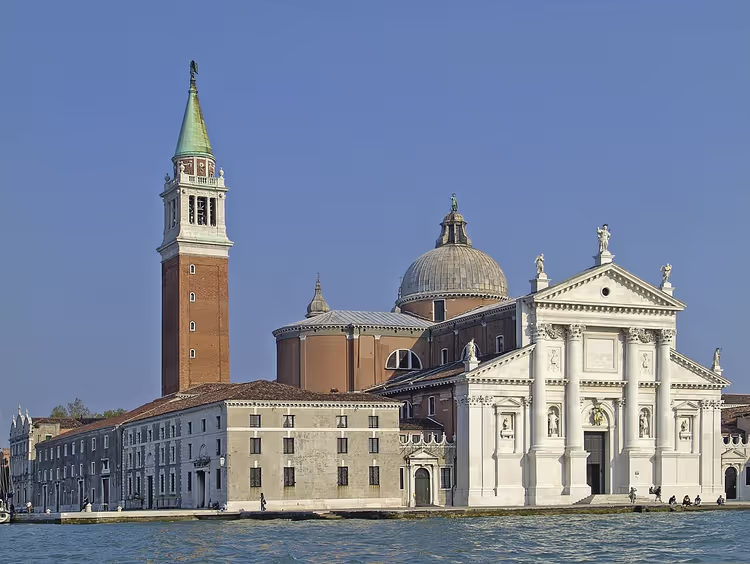
San Giorgio Maggiore stands on its own island opposite St Mark's Square. It is one of the finest examples of Renaissance architecture in the city and one of its largest churches. The facade is in the classical style, with marble columns on a high pedestal.
The dome is crowned by a statue of Saint George almost four metres tall, clad in copper plates. This was the first time in Venice that a sculpture was placed atop a dome instead of a cross. Inside you'll see Tintoretto's "Last Supper" and canvases by Bassano.
Benedictine monks live at the basilica, so visits are respectful and quiet. For a panorama of the city, take the lift up the bell tower. In summer the basilica stays open longer and in winter it closes earlier, so check the schedule on the spot.
- Getting there: vaporetto 2 to the San Giorgio stop.
- Who it's for: the best view of San Marco from across the water.
13. Ca' Rezzonico palace
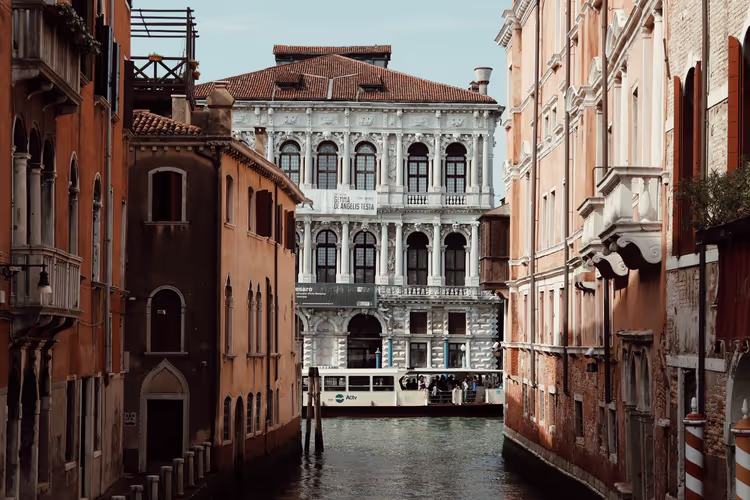
Ca' Rezzonico stands on the Grand Canal. It is a typical aristocratic building of the 18th century, and inside, the life of a Venetian palazzo of that era has been recreated. It holds a collection of 18th-century Venetian furniture and painting.
Of particular interest are the rooms with frescoes by Tiepolo, Guarana and Guardi. The Egidio Martini picture gallery brings together almost three hundred works of the Venetian school. The palace belongs to the group of museums of 18th-century Venice, and it is a good place to understand how the nobility lived.
From 1 November to 31 March the palace is open from 10:00 to 17:00, and from 1 April to 31 October from 10:00 to 18:00. The ticket office closes an hour before closing time, and the day off is Tuesday. Last admission is well before closing, so don't leave your visit until the evening.
- Getting there: vaporetto to the Ca' Rezzonico stop.
- The catch: closed on Tuesdays.
14. La Fenice theatre
 © Didier Descouens · CC BY-SAPhoto: Didier Descouens, CC BY-SA (https://creativecommons.org/licenses/by-sa/4.0), Wikimedia Commons
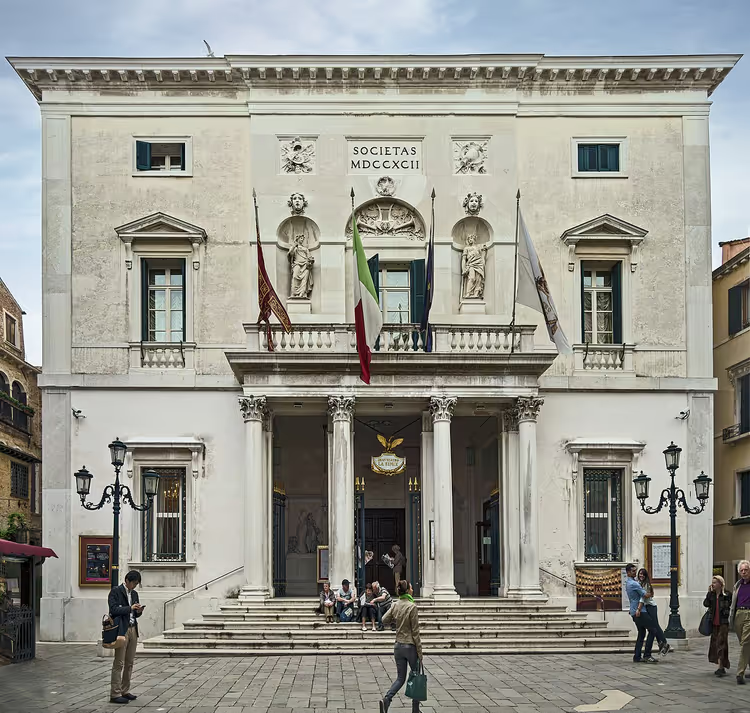
La Fenice (Teatro La Fenice) is the city's main opera house. Fires destroyed it twice, and both times the building was restored. In the 19th century it hosted premieres by Rossini, Bellini and Verdi, and in the 20th century premieres by Stravinsky, Britten and Prokofiev were heard on this stage.
After the fire of 1996 the theatre reopened in 2003. Craftsmen returned the auditorium to its 19th-century look: gold, plush, mouldings and stucco. The hall now seats about a thousand, and its acoustics are considered among the best in Europe.
These days a season runs to more than a hundred opera, ballet and chamber productions. During the day the theatre is open for tours, usually from morning to evening. Performance tickets sell out well ahead, so plan a night at the theatre months in advance.
- Getting there: Santa Maria del Giglio stop, then a three-minute walk.
- Tip: take a guided tour if you're not going to a performance.
15. Peggy Guggenheim Collection
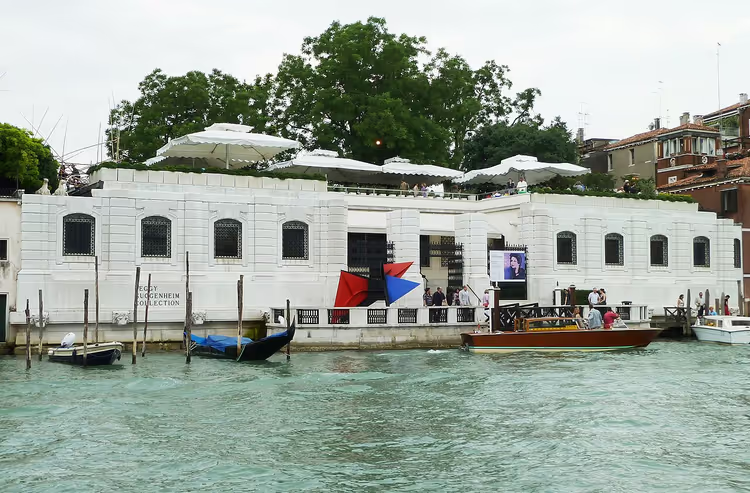
The Peggy Guggenheim Collection is the leading collection in Italy of American and European art from the first half of the 20th century. Here you'll see works by Picasso, Pollock, Kandinsky, Duchamp and Brancusi. The museum occupies Palazzo Venier dei Leoni, which Guggenheim bought as her own home.
 © Abxbay · CC BY-SAPhoto: Abxbay, CC BY-SA (https://creativecommons.org/licenses/by-sa/3.0), Wikimedia Commons
The Gianni Mattioli collection of Italian Futurists is shown separately. The museum keeps expanding and exhibits masterpieces from private collections. Sculptures stand in the garden, so there is plenty to see both inside and out.
The doors are open from 10:00 to 18:00, it is closed on Tuesdays, and the museum does not open on 25 December. Sundays can be crowded, so choose a weekday morning. Buy your ticket online to avoid wasting time at the entrance.
- Getting there: vaporetto to the Accademia or Salute stop.
- Who it's for: fans of modernism.
16. Venetian Arsenal
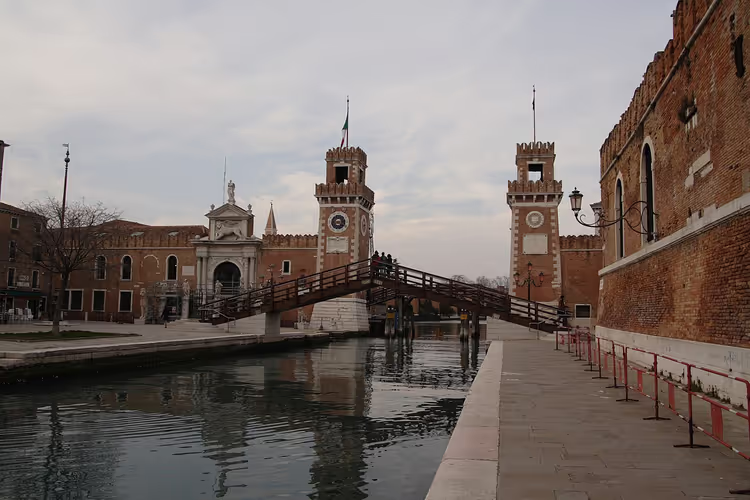
The Arsenal (Arsenale) is a historic shipyard in the Castello district. The first building went up back in the 12th century, and it was later enlarged and rebuilt more than once. It was a strong fleet that gave Venice its power at sea, and the shipyard gave work to thousands of craftsmen.
The main land entrance is decorated with figures of lions and resembles a triumphal arch. Today the Arsenal itself is not fully in use and looks neglected. You can only visit the part where the Art Biennale is held, while other workshops are occupied by a naval base.
Next door is the Naval Museum, worth a visit for its ship models and gondolas. It is open every day, usually from morning to evening, but the schedule differs by day of the week. Vaporettos 1, 4.1 and 4.2 take you right to the gate.
- Getting there: vaporetto 1, 4.1 or 4.2 to the Arsenale stop.
- The catch: most of the workshops are closed to visitors.
17. Constitution Bridge
 © Christoph Radtke · CC BYPhoto: Christoph Radtke, CC BY (https://creativecommons.org/licenses/by/3.0), Wikimedia Commons
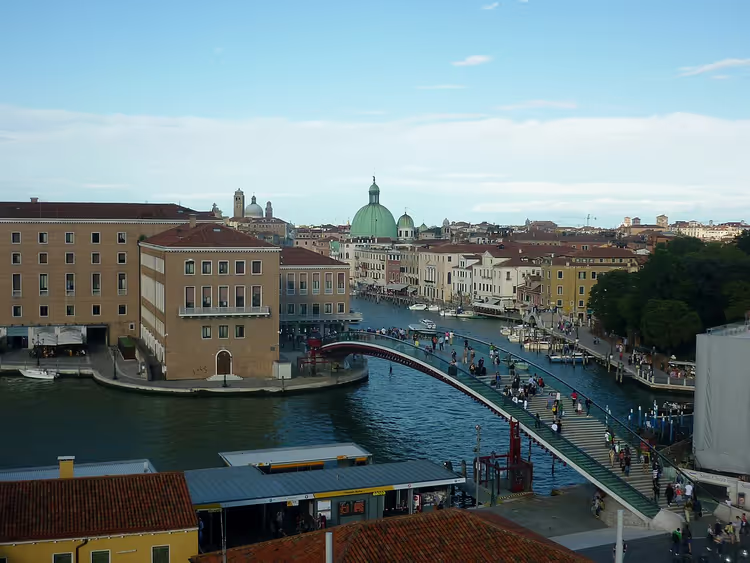
The Constitution Bridge (Ponte della Costituzione) is one of the city's most controversial sights. It spans the Grand Canal and links Santa Lucia railway station with the bus station. The bridge was built in 2008 to a design by the Spanish architect Santiago Calatrava.
Many locals were fiercely opposed to the idea. They felt that glass and steel would upset the harmony of the old city. The bridge really is at odds with its surroundings, which is why opinions on it are still divided.
The bridge has a practical drawback too. The glass panels get wet and become slippery, and crossing them in the rain is not safe. Repairs were needed within just a few years, and the architect delivered the project late and over budget. On the plus side, it offers a good view of the canal.
- Getting there: a couple of minutes on foot from either station.
- The catch: the steps are slippery in the rain, so hold the handrail.
18. National Library of St Mark
 © This Photo was taken by Wolfgang Moroder . Feel free to use my photos, but please mention me as the author and send me a · CC BY-SAPhoto: This Photo was taken by Wolfgang Moroder . Feel free to use my photos, but please mention me as the author and send me a, CC BY-SA (https://creativecommons.org/licenses/by-sa/3.0), Wikimedia Commons
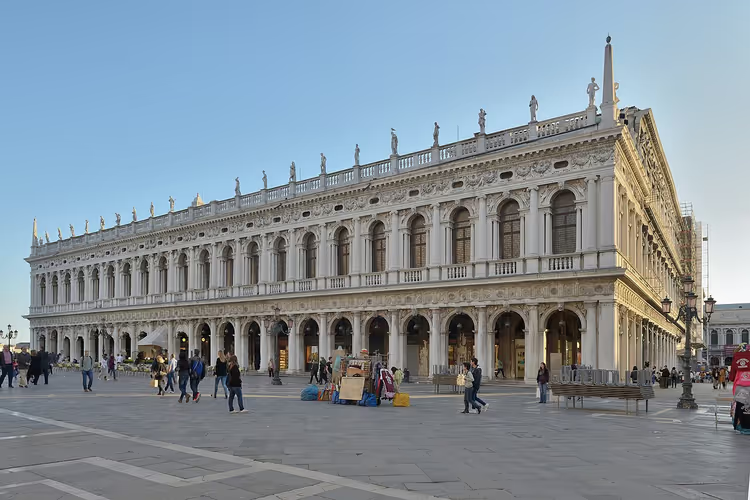
The Marciana Library (Biblioteca Marciana) stands in the San Marco district and catches the eye straight away. Two tiers of arcades, pilasters and white marble statues make it a model of the Renaissance. The story of the city's largest book collection begins in 1469.
That year Cardinal Bessarion gave the republic a collection of manuscripts and early printed books, including works in ancient Greek and Latin. Later, noble families added to the holdings, and in 1603 a law was passed: a copy of every book printed in Venice had to be sent to the library. The British Library and the US Library of Congress later adopted the same practice.
Today the collection holds genuine rarities, and visitors can see not only the facade but the interior halls as well. The reading rooms are open on weekdays from morning to evening, and on Saturdays only until lunchtime. The monumental halls are included in the combined San Marco museums ticket, so it is convenient to see them together with the Doge's Palace.
- Getting there: San Zaccaria stop, then along the waterfront to the piazzetta.
- Who it's for: anyone who loves libraries and old books.
19. Accademia Bridge
 © kallerna · CC BY-SAPhoto: kallerna, CC BY-SA (https://creativecommons.org/licenses/by-sa/4.0), Wikimedia Commons
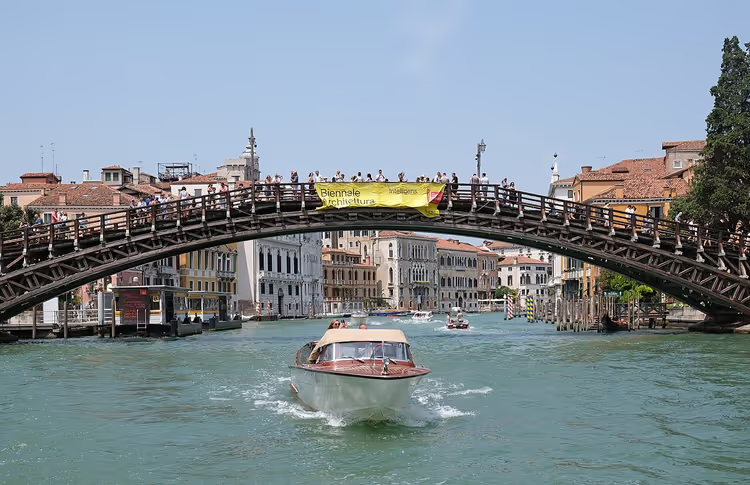
The Accademia Bridge connects Dorsoduro and San Marco. It is small, about fifty metres long, and named after the Gallerie dell'Accademia next to it. A crossing at this spot was being considered as early as 1488, but building it was difficult and expensive, so the matter dragged on for decades.
The first bridge was held together by steel parts and stood until 1933, when it was dismantled. The next version was wooden and short-lived, and in 1985 the present structure was put up over the canal. Another replacement is now under discussion, because the load-bearing parts are worn out by the strain.
The metal padlocks that couples hang on the railings add to the bridge's weight as well. From here you get the best view of the Grand Canal and the domes of Santa Maria della Salute. Stop here at sunset, when you can get a shot without a crowd in it.
- Getting there: Accademia stop, the bridge is right by the landing stage.
- The catch: padlocks cling to the narrow railings, and the metal spoils the view.
20. Palazzo Contarini del Bovolo
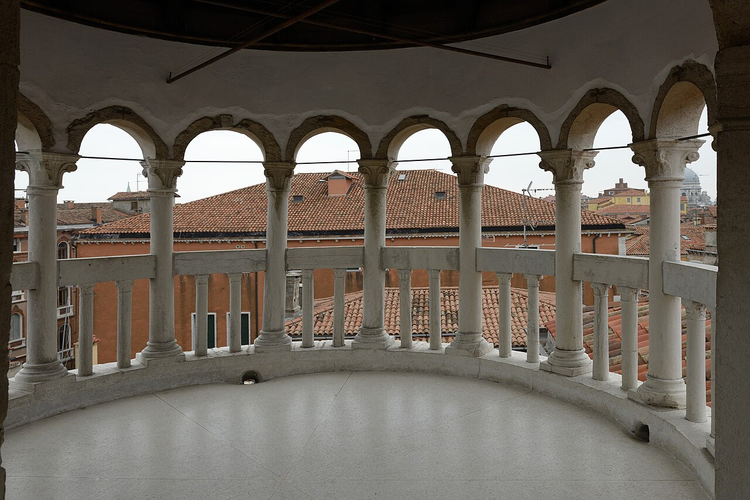 © This Photo was taken by Wolfgang Moroder . Feel free to use my photos, but please mention me as the author and send me a · CC BY-SAPhoto: This Photo was taken by Wolfgang Moroder . Feel free to use my photos, but please mention me as the author and send me a, CC BY-SA (https://creativecommons.org/licenses/by-sa/3.0), Wikimedia Commons
Contarini del Bovolo (Palazzo Contarini del Bovolo) is one of the most unusual palaces in Venice. Its footprint is compact, but it stretches upwards. The palazzo was built in the 15th century to a design by the architect Giovanni Candi, and it is tucked away in the backstreets of the San Marco district.
A multitude of arches with columns makes the facade slender and light. But its real highlight is the external spiral staircase in a round corner tower. It curves in a beautiful white spiral, and it gave the palace the word "bovolo" in its name, meaning "snail".
The palace was once one of the residences of the Contarini family, who had great influence on the life of the city. At various times eight members of the family became doges. The staircase was recently restored and reopened for climbing, so the view from the tower is worth paying for.
- Getting there: walk from the Rialto Bridge to Campo Manin, then follow the sign.
- Who it's for: anyone looking for an unusual angle.
21. Correr Civic Museum
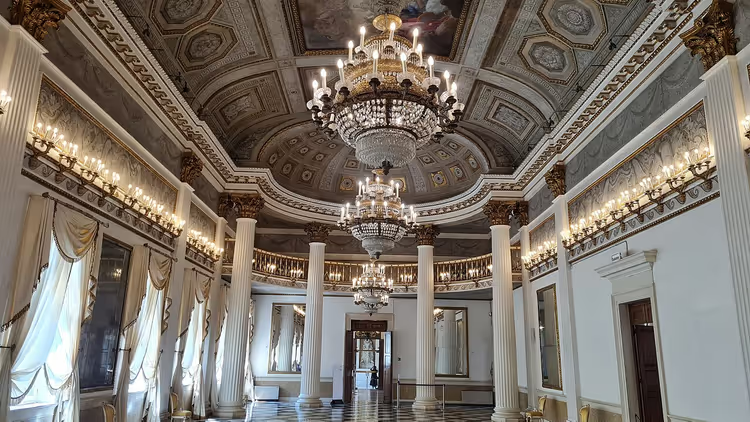 © Derbrauni · CC BYPhoto: Derbrauni, CC BY (https://creativecommons.org/licenses/by/4.0), Wikimedia Commons
The Correr Museum was founded in 1830 by the collector Teodoro Correr. He collected art all his life and bequeathed his collection to the city. The museum stands in the very heart of Venice, on St Mark's Square, and is divided into three sections across some twenty rooms.
Here you'll see historical documents, coins, weapons and ceremonial dress. Many of the items belonged to famous people. For example, Admiral Morosini's pistol is made in the form of a prayer book: the admiral feared for his life even in church and hid the weapon under its cover.
The picture gallery holds works by Bellini, Lo Schiavone, Lorenzo Veneziano and Antonello da Messina. From 1 November to 31 March the museum is open from 10:00 to 17:00, and from 1 April to 31 October from 10:00 to 18:00. The Correr Museum is also included in the combined St Mark's Square museums ticket.
- Getting there: San Marco stop, entrance from the square.
- Who it's for: anyone who wants to see the city's everyday life and history, not only paintings.
22. Basilica of Santi Giovanni e Paolo
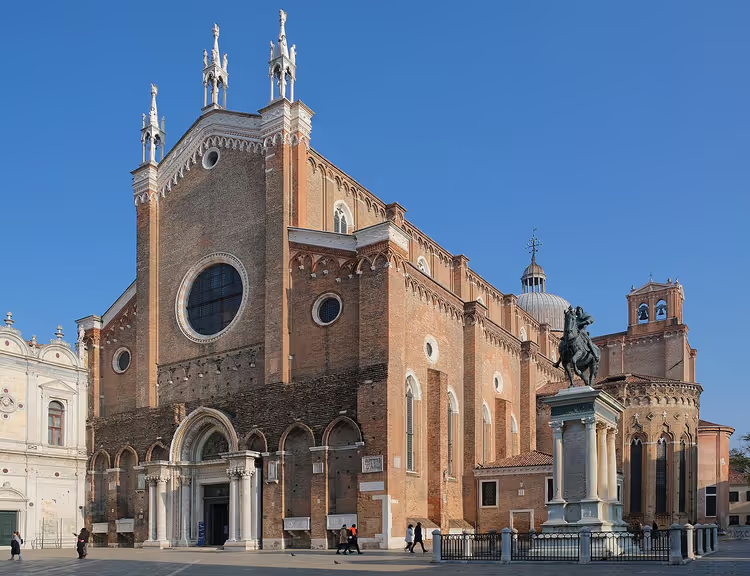 © kallerna · CC BY-SAPhoto: kallerna, CC BY-SA (https://creativecommons.org/licenses/by-sa/4.0), Wikimedia Commons
Santi Giovanni e Paolo is one of the largest and best-known churches in the city. It is famed for its large collection of sculpture, its austere Gothic style and the tombs of the doges. More than twenty rulers of the republic are buried here, and the facade makes that clear at once.
Construction began back in the 13th century on land the doge had given to the Dominican friars. It was only completed in 1430. From the moment it was consecrated, funeral services for deceased doges were held in the church, and they were buried right here.
Inside, the basilica impresses with its painting and sculpture. This is where the artist Giovanni Bellini began his career, and the walls are hung with canvases by Paolo Veronese and Lorenzo Lotto. In front of the church stands the equestrian statue of the condottiere Colleoni by Andrea del Verrocchio, which people come to see in its own right.
- Getting there: vaporetto to the Fondamente Nove or Ospedale stop.
- Who it's for: anyone interested in sculpture.
23. St Mark's Clock Tower
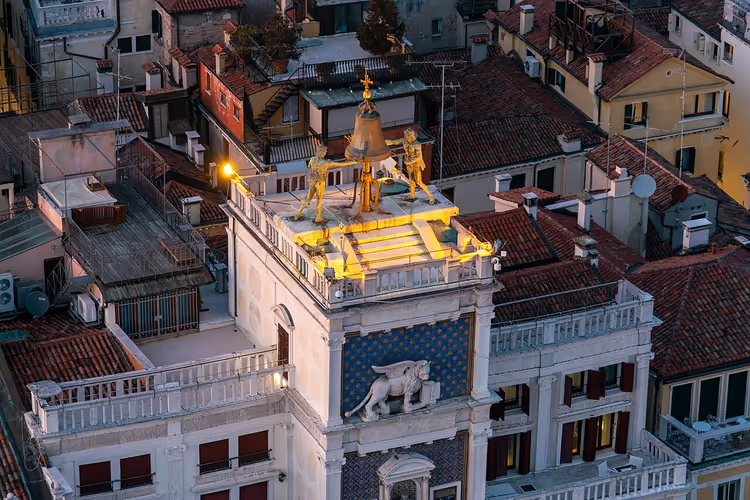 © Paul Colin Hennig firstdorsal.eu · CC BY-SAPhoto: Paul Colin Hennig firstdorsal.eu, CC BY-SA (https://creativecommons.org/licenses/by-sa/4.0), Wikimedia Commons
The Clock Tower (Torre dell'Orologio) is the city's most recognisable detail. The location was no accident: the clock had to be visible even from the sea. Visitors approaching the shore understood at once that Venice was rich and powerful.
In the 15th century, far from every city could afford a clock mechanism of its own. Every figure on the tower has a meaning. On the flat roof stand two human figures, one young and one old, who strike the bell with hammers and mark the time. Over the centuries they turned black and earned the nickname "the Moors".
Below them is the lion, the symbol of Saint Mark, and the centre of the tower is taken up by a bright blue dial with gold. You can see the tower from the inside: tours run several times a day, but the groups are kept very small. It is worth booking a place in advance, otherwise you won't get a slot.
- Getting there: San Marco stop, the tower is at the entrance to the square.
- Tip: arrive for the start of the tour, the groups are small.
24. Scuola di San Marco
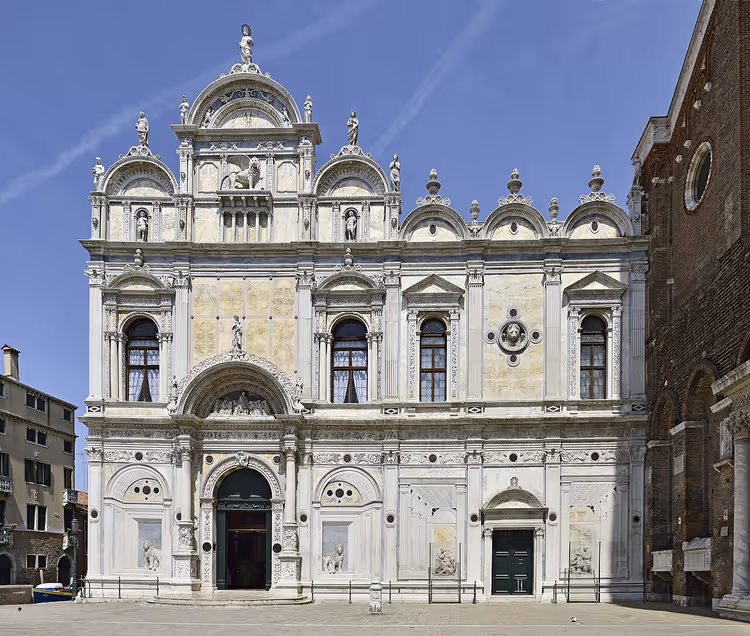
A scuola is a charitable confraternity that played an important part in the life of the city. The Scuola di San Marco was founded in 1260 and helped the sick and the poor for six centuries. The confraternity ceased its work after the invasion of Napoleon, who abolished all the scuole.
The first building burned down in the 15th century, and by the early 16th century a new one had been built in its place. Today it is a rare example of Renaissance architecture, and from the outside the building resembles a carved jewellery box. The facade is decorated with columns, niches and marble bas-reliefs.
After the Napoleonic Wars a military hospital was set up here, and today the building houses the city hospital. In 2013 it was opened to visitors, and there is a museum of medicine on the second floor. There you'll see antique surgical instruments and a rare library with works by Hippocrates and Avicenna.
- Opening hours: Tuesday to Saturday, with a break in the middle of the day.
- Getting there: Ospedale or Fondamente Nove stop.
25. Scuola di San Rocco
 © Didier Descouens · CC BY-SAPhoto: Didier Descouens, CC BY-SA (https://creativecommons.org/licenses/by-sa/4.0), Wikimedia Commons
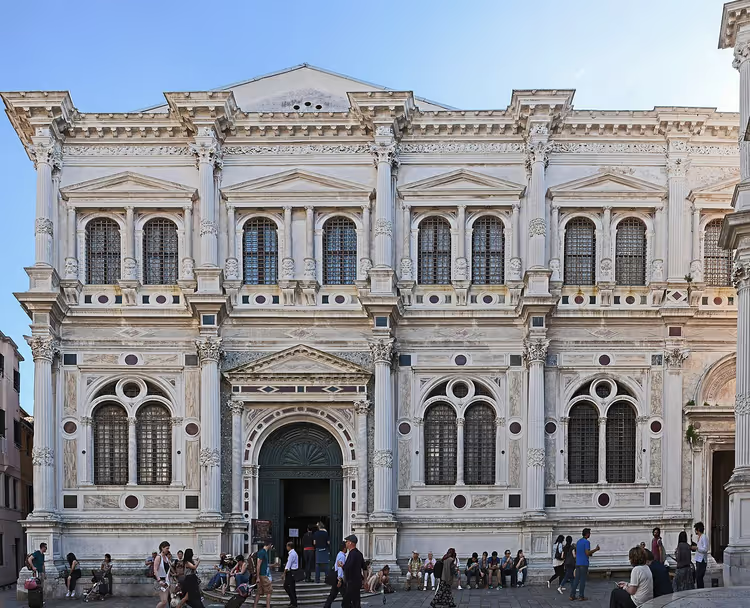
The Scuola di San Rocco was built in 1478 to help the sick and the destitute. It was named after Saint Roch, who was venerated as a protector against the plague. In the 16th century it was the richest confraternity in the city.
The confraternity announced a competition: the winner would earn the right to decorate the walls of the building. That winner was Jacopo Tintoretto, and his works became the scuola's greatest treasure. The artist painted them specifically for these rooms, so they need to be seen in the right order.
First go through the ground floor, then go up to the main hall on the upper floor. Inside, the woodcarving and allegorical wooden sculptures are striking. The building is superbly preserved and can be visited every day except New Year's Day and Christmas; the church attached to the scuola is open on holidays too.
- Getting there: San Tomà stop, then a three-minute walk.
- Who it's for: anyone who wants to see the full Tintoretto cycle.
26. Church of San Zaccaria
 © Didier Descouens · CC BY-SAPhoto: Didier Descouens, CC BY-SA (https://creativecommons.org/licenses/by-sa/4.0), Wikimedia Commons
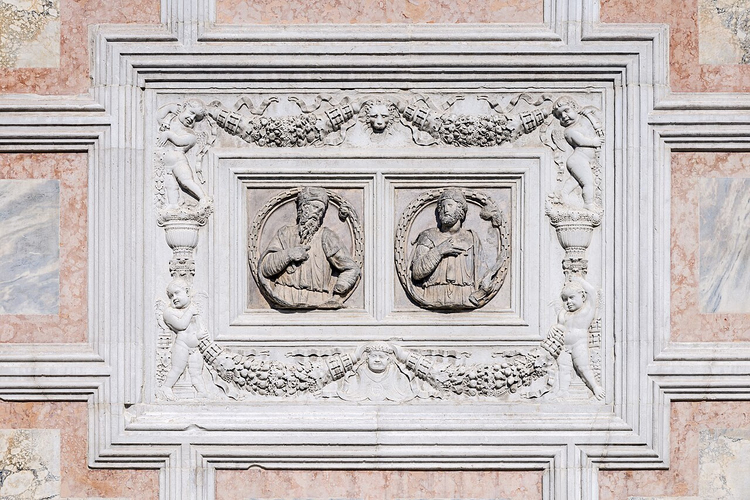
San Zaccaria (Chiesa di San Zaccaria) stands a stone's throw from the Piazzetta San Marco. In the 9th century the Byzantine emperor Leo V gave the city the relics of Saint Zechariah, father of John the Baptist. This church was built to house them; it was later almost completely destroyed by fire and rebuilt.
The facade combines Gothic and Renaissance, and you can see that straight from the street. The main space is full of paintings, and the altar holds Bellini's canvas "Madonna and Child with Saints". The lighting is dim, so there is a machine beside it: drop in a coin and the painting lights up.
Below floor level is the crypt, where eight Venetian doges are buried. It is partly flooded, which adds to the mystery of the place. The church is open on weekdays in the morning and again after a long break, and on Sundays only in the afternoon.
- Getting there: San Zaccaria stop, the church is on the square nearby.
- The catch: the entrance is closed for a long break in the middle of the day.
27. St Mark's Campanile
The Campanile (Campanile di San Marco) stands on the square of the same name and can be seen from many points in the city. In early times there was only a watchtower on this spot. The 9th-century bell tower served as a lighthouse for ships, and five bells hung at its top, each with its own purpose.
In the 15th century lightning and an earthquake destroyed the tower, and it was not restored until 1513. A gilded statue of the Archangel Gabriel was placed at the top, and a loggia was later added for the guards of the Doge's Palace. In the early 20th century the tower collapsed again because of a crack, but it was rebuilt within nine years.
The bell tower is almost a hundred metres high, making it one of the tallest structures in Italy. The pyramid-shaped roof is topped by a two-metre statue of the archangel. The viewing platform gives the best panorama of the city and the sea, so get a timed ticket and go up in the morning.
The schedule changes with the seasons: in summer the tower stays open longer, in winter it closes earlier. It is usually closed for maintenance in January, so check the timetable before your trip. The only way up is by lift, as there are no stairs inside.
- Getting there: San Marco stop, entrance by the square.
- The catch: the platform is sometimes closed in windy weather.
28. Columns of St Mark and St Theodore
 © Janmad · CC BY-SAPhoto: Janmad, CC BY-SA (https://creativecommons.org/licenses/by-sa/2.5), Wikimedia Commons
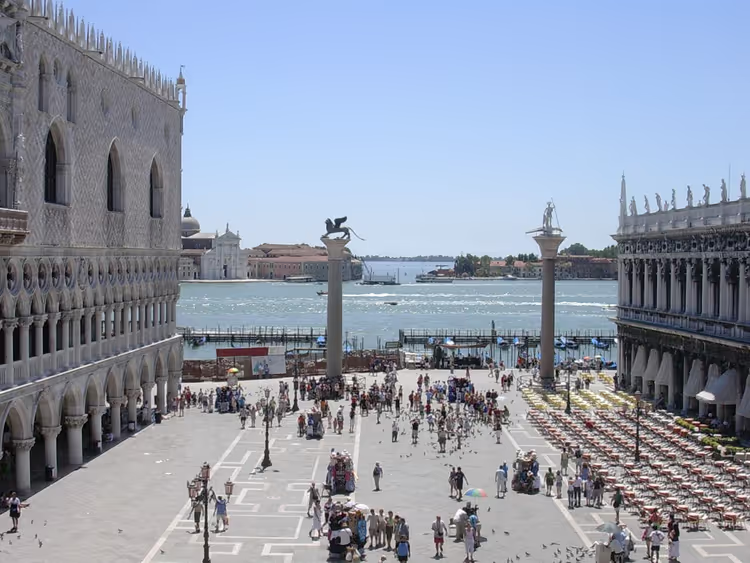
Adjoining St Mark's Square is a small open space with two columns. One is topped by the winged lion, the symbol of Saint Mark, the other by a statue of Saint Theodore. The columns were brought here in 1125 as a trophy after the victory over Tyre.
Originally three columns were shipped to the shore, but one sank and still lies on the bed of the lagoon. For a long time nobody could raise the other two, and they waited on the shore until 1196. Criminals used to be executed between the columns, which is why superstitious locals give the spot a wide berth.
After that the columns had adventures of their own. Following Napoleon's invasion the bronze lion was taken to Paris, and on its return it broke into pieces. The sculpture was pieced back together, and only at the end of the last century did the lion regain its former shape. Scholars have established that it was cast back in Assyria many centuries ago.
- Getting there: San Zaccaria stop, then on to the piazzetta.
- Who it's for: lovers of urban legends.
29. Ponte delle Tette
 © Didier Descouens · CC BY-SAPhoto: Didier Descouens, CC BY-SA (https://creativecommons.org/licenses/by-sa/4.0), Wikimedia Commons
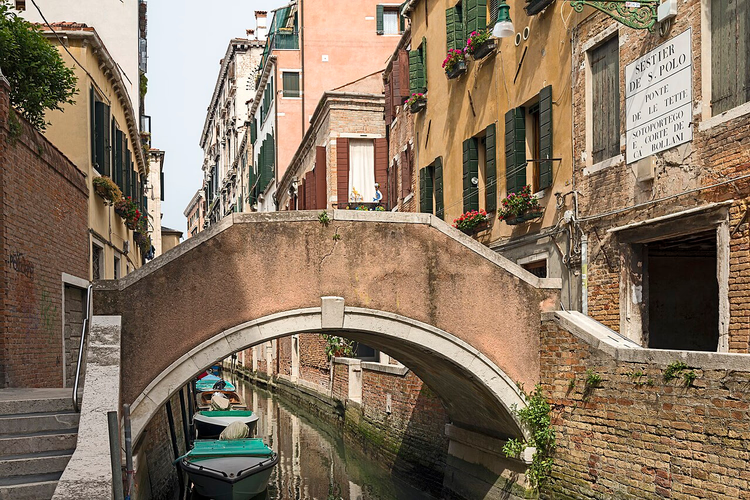
Ponte delle Tette translates as "bridge of bare breasts". It is the raciest entry on the list, although the little bridge itself looks modest. In the Middle Ages Venice was famous for its courtesans, who were so numerous that in the early 15th century the authorities restricted the districts where they could ply their trade.
Work was permitted only in certain places and at certain times. The Ponte delle Tette became one of those places. But what do bare breasts have to do with it? In those years the city was trying to tackle a different problem, and the authorities hoped that women's beauty would bring men back to ordinary life.
So the courtesans were ordered to display themselves at this bridge. The rules remained in force right up to the 18th century. After that the bridge lost its special role and became simply a narrow crossing between houses.
- Getting there: in the San Polo district, near the Rialto market.
- Who it's for: collectors of unusual city stories.
30. Naval History Museum
 © G.dallorto · CC BY-SAPhoto: G.dallorto, CC BY-SA (https://creativecommons.org/licenses/by-sa/2.5/it/deed.en), Wikimedia Commons
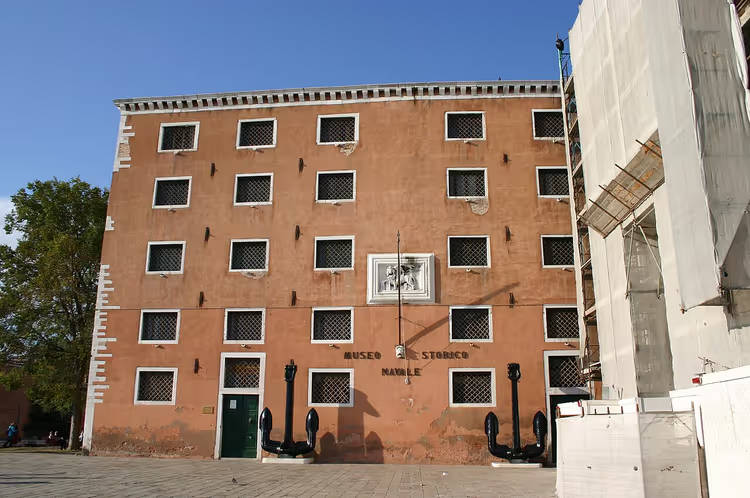
The history of the Venetian Republic is inseparable from the sea. The city was renowned for its fleet, and the ships for it were built right here. Fragments of that past are gathered in the Naval History Museum, which stands next to the Arsenal.
The building was originally intended as a granary. Only in the late 17th century did it begin to store ship parts and models. Today in its rooms you'll see a model of the floating palace used for the "marriage of the doge to the sea" ceremony, torpedoes, boats, gondolas and models of fortresses.
A separate room is devoted to admirals: portraits, personal belongings, decorations. The schedule is unusual: at the start of the week the museum is open only until lunchtime, on Fridays it stays open longer, and at weekends it opens later. It is worth checking the hours before you visit.
- Getting there: vaporetto 1, 4.1 or 4.2 to the Arsenale stop.
- The catch: some of the rooms are closed for restoration.
31. Punta della Dogana
 © Jean-Pol GRANDMONT · CC BYPhoto: Jean-Pol GRANDMONT, CC BY (https://creativecommons.org/licenses/by/4.0), Wikimedia Commons
Punta della Dogana stands on the point where the canals meet. Venice is a maritime city, so a customs house naturally appeared here. The present building dates from 1682 and is easy to recognise by its tower topped with a sculptural group.
The customs house operated right up to 1980. The building then stood derelict for twenty years, until the city council decided to hand it over to contemporary art. Today it is an exhibition space, and you can go in on any day except Tuesday.
The museum is open from morning to evening, usually from 10:00 to 19:00. The exhibitions change, so take a look at the centre's website before your visit. From here you also get a view of San Giorgio Maggiore and the mouth of the Grand Canal.
- Getting there: Salute stop, then along the waterfront.
- The catch: closed on Tuesdays.
32. San Trovaso boatyard
 © Jorge Franganillo · CC BYPhoto: Jorge Franganillo, CC BY (https://creativecommons.org/licenses/by/2.0), Wikimedia Commons
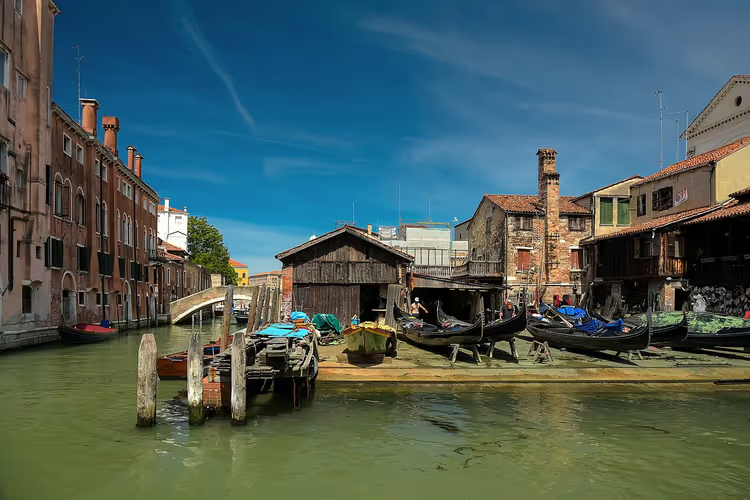
San Trovaso (Squero di San Trovaso) is one of the oldest boatyards in the city. It specialised in building gondolas, which were made by hand from several kinds of wood. The yard dates back to the 17th century, and gondolas are still repaired here today.
Free tours of about half an hour are run for visitors. In that time you'll see how the craftsmen put a boat together and which tools they use. It is best to sign up in advance, because the groups are small.
The wooden building stands on a foundation of larch trunks, and its walls and base are coated with clay for strength. For a city on the water, a wooden building is a rarity. Some of the premises are given over to the workshop, while gondola owners live in the others.
- Getting there: Zattere stop, then along the waterfront.
- Who it's for: anyone interested in the craft, not only in monuments.
33. Church of San Pantalon
San Pantalon (Chiesa di San Pantalon) bears the name of Saint Pantaleon. The church astonishes with the contrast between its exterior and its interior decoration. The facade, built back in the 11th century, is plain and austere, and looking at it leaves a sense that it was never finished.
Inside, however, you can admire works by Fumiani, Veronese, Veneziano, Vivarini and Longhi. A Catholic service here is unthinkable without the organ, and the instrument dates from the early 19th century. The ceiling is covered by the vast canvas "The Martyrdom of Saint Pantaleon" by Giovanni Antonio Fumiani.
The artist worked on the canvas for more than twenty years, and it became his last work. Tradition has it that Fumiani died while finishing the painting and was buried in this very church. Entry is free, and the church is open on weekdays in the morning and after a midday break.
- Getting there: San Tomà stop, then a three-minute walk.
- Who it's for: anyone who wants to see ceiling painting without the queues.
34. Casino
 © Didier Descouens · CC BY-SAPhoto: Didier Descouens, CC BY-SA (https://creativecommons.org/licenses/by-sa/4.0), Wikimedia Commons
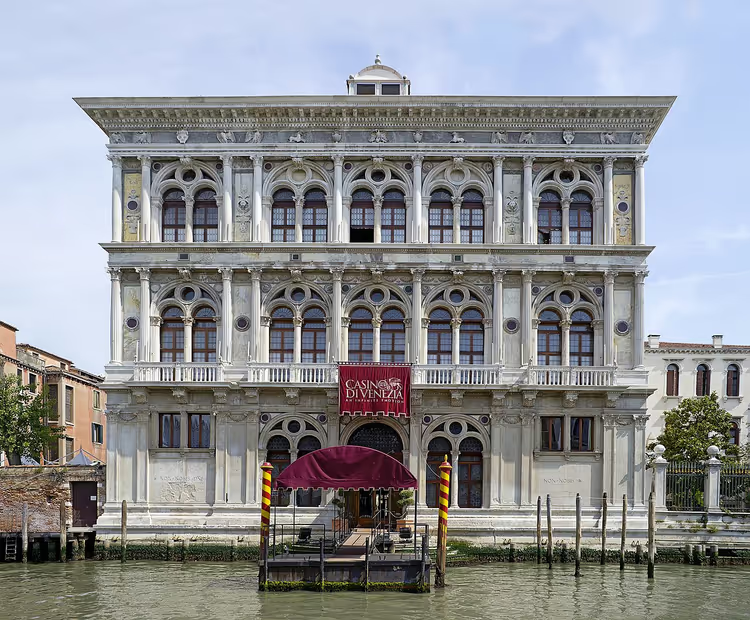
Formally, the Venice casino opened in 1959. But it can fairly be called the heir to the oldest gambling house in the world. It carries on the tradition of the "Ridotto", which drew the whole of Europe in the 17th century.
The present casino occupies the palazzo Ca' Vendramin. Construction began in 1481 and finished in 1509. For a long time the palace was home to a noble family. The "Ridotto" gambling house operated in a different building and opened in 1638. Only aristocrats could get in, and in 1774 the "Ridotto" was closed.
After the Second World War the city bought the palace and years later reopened it for gaming. To enter the casino you need to follow a dress code: sportswear won't do. Even if you don't gamble, it is worth looking in for the palazzo's interiors.
- Getting there: vaporetto to the Ca' Vendramin stop.
- Who it's for: anyone who wants to see the historic rooms of a gambling house.
35. Scalzi Bridge
 © Didier Descouens · CC BY-SAPhoto: Didier Descouens, CC BY-SA (https://creativecommons.org/licenses/by-sa/4.0), Wikimedia Commons
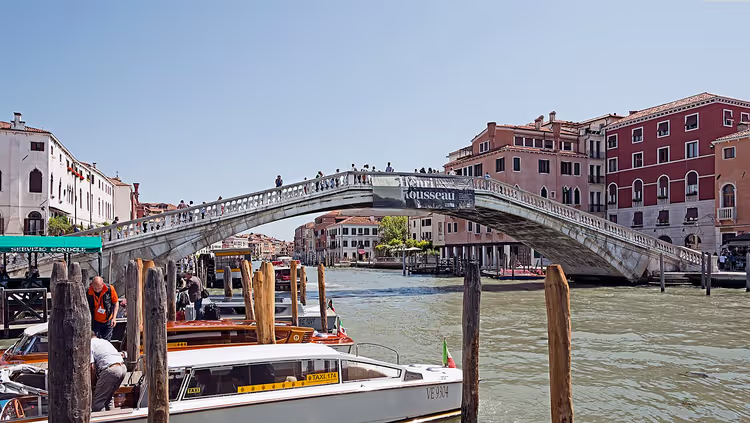
The Scalzi Bridge (Ponte degli Scalzi) is most often the first one visitors see, since it stands by the railway station. The name translates as "Bridge of the Barefoot". According to one version, the area was home to many beggars who didn't even have money for shoes. According to another, the name came from the barefoot Carmelite friars whose church stands nearby.
The bridge spans the Grand Canal and connects the station area with the rest of the city. A stream of people with suitcases crosses it every day, so it is crowded in the morning and evening. On the other hand, it gives you your first Venetian view of the canal.
If you've arrived by train, don't rush to your hotel. Stop on the bridge, take a photo and only then head deeper into the city. Beyond it the narrow alleys begin, and you won't come across wide panoramas again.
- Getting there: straight from Santa Lucia station, a two-minute walk.
- The catch: at rush hour the bridge is hard going with luggage.
Venice sights on the map
All 35 places on the list are easy to view on a single map. Mark the sights you want to see in a day and plot a route along the Grand Canal. The map below helps you work out what is close to your hotel.
35 places in Venice worth seeing
Places on the map
- 1Gallerie dell'Accademia The largest collection of Venetian painting, Dorsoduro by the Accademia Bridge
- 2Grand Canal The main water street almost four kilometres long, vaporetto line 1
- 3Doge's Palace Residence of the republic's rulers, open 9:00 to 19:00 in summer
- 4Ca' d'Oro The golden house in Cannaregio opposite the Rialto Market, Franchetti Gallery
- 5Bridge of Sighs Covered marble bridge between the Doge's Palace and the prison
- 6Rialto Bridge The city's oldest bridge on oak piles, shops lining the sides
- 7St Mark's Square The main square with two piazzettas, best early morning or evening
- 8Santa Maria della Salute Baroque octagon by the Grand Canal, free entry
- 9St Mark's Basilica Five-domed basilica with mosaics and the Pala d'Oro altarpiece
- 10Burano Fishing island with colourful facades, vaporetto 12 and 14, about forty minutes
- 11Santa Maria Gloriosa dei Frari Titian's Assunta and a Donatello statue, San Toma stop
- 12San Giorgio Maggiore A separate island opposite San Marco, Tintoretto's Last Supper
- 13Ca' Rezzonico 18th-century palazzo with Tiepolo frescoes, closed on Tuesdays
- 14La Fenice Theatre The city's main opera house, guided tours of the hall by day
- 15Peggy Guggenheim Collection Picasso, Pollock and Kandinsky in Palazzo Venier dei Leoni, closed on Tuesdays
- 16Venetian Arsenal Old shipyard in Castello, partly open during the Biennale
- 17Constitution Bridge A 2008 Calatrava project between the stations, glass turns slippery in the rain
- 18Marciana Library Renaissance arcades by the piazzetta, halls included in the San Marco combined ticket
- 19Accademia Bridge Links Dorsoduro and San Marco, the best view of the Salute dome
- 20Palazzo Contarini del Bovolo External spiral snail-shell staircase in the San Marco backstreets
- 21Correr Museum Documents, coins and weapons on Piazza San Marco, combined ticket
- 22Santi Giovanni e Paolo Gothic church with doges' tombstones and a statue of Colleoni outside
- 23St Mark's Clock Tower Blue and gold dial and Moor figures, guided tours by appointment
- 24Scuola Grande di San Marco Renaissance facade by the hospital, medical museum on the second floor
- 25Scuola Grande di San Rocco The full cycle of Tintoretto's works, best viewed from the ground floor
- 26San Zaccaria Bellini's Madonna at the altar and a flooded crypt with doges' tombs
- 27St Mark's Campanile Almost a hundred metres, lift to the top, panorama of the city and sea
- 28Columns of St Mark and St Theodore Trophy from 1125, criminals used to be executed between them
- 29Ponte delle Tette A narrow bridge in San Polo near the Rialto market, and its history
- 30Naval History Museum Ship models, gondolas and torpedoes near the Arsenale
- 31Punta della Dogana Former customs house of 1682, now contemporary art exhibitions
- 32San Trovaso Boatyard Old gondola workshop, free tours of about half an hour
- 33San Pantalon Ceiling canvas by Fumiani and an early 19th-century organ, free entry
- 34Venice Casino Successor of the Ridotto gambling house in a 16th-century palazzo, dress code applies
- 35Scalzi Bridge The first view of Venice by the Santa Lucia station
Tickets to the city's most popular museums are worth buying in advance: in season, free slots for the Doge's Palace and St Mark's Basilica go quickly. You can choose a time and see what's available right in the block below. It saves you at least an hour in the queue.
Tours and tickets in Venice
Guided tours, skip-the-line tickets and activities — most offers can be cancelled free of charge.
See offers on TiqetsThe widget loads once you give your consent.
⁉️🤔 Frequently asked questions
How many days do you need in Venice?
Two or three days are enough for a relaxed visit. On the first day cover St Mark's Square, the Doge's Palace and the basilica, on the second explore the Grand Canal and Dorsoduro, and keep the third for Burano and the museums. If you only have one day, choose San Marco and the canal.
Is the combined ticket for the San Marco museums worth it?
Yes, if you plan to visit at least two museums in the group. The combined ticket costs 35 € (as of 09/2026, museum prices on the MUVE website). Bought separately, the same museums work out more expensive.
How do you get around the city?
The main form of transport is the vaporetto, the water bus. For short distances it is easier to walk, but be ready for steep bridges and steps. For several rides get a pass, and take line 1 along the Grand Canal as a sightseeing trip.
When are there the fewest tourists?
Early morning and late evening. Come to St Mark's Square and the Rialto Bridge at opening time or after sunset, and you'll get photos without the crowds. In the shoulder season, in spring and late autumn, there are noticeably fewer people, and the weather is still good for walking.
What can you see for free?
St Mark's Square itself, the columns, the bridges over the Grand Canal and the palazzo facades are all free. Entry to St Mark's Basilica is paid: you need a timed ticket, and access to the terrace is charged separately. You can admire the city from a vaporetto or from the waterfront without buying any tickets.
In brief: what's worth booking
If you have two days: book the Doge's Palace with the basilica and keep the second day for the Grand Canal and Dorsoduro. If you have one day: focus on St Mark's Square and a trip along the canal. If you're travelling with children: add Burano with its coloured houses. If you love art: plan for the Gallerie dell'Accademia and the Peggy Guggenheim Collection.
Timed tickets are easy to book in advance on Tiqets: you choose your time and don't have to queue at the entrance.

A small editorial team writing guides for independent travel. We travel ourselves, but we haven’t been everywhere, so we check prices, opening hours and how to get there against official sources.