
















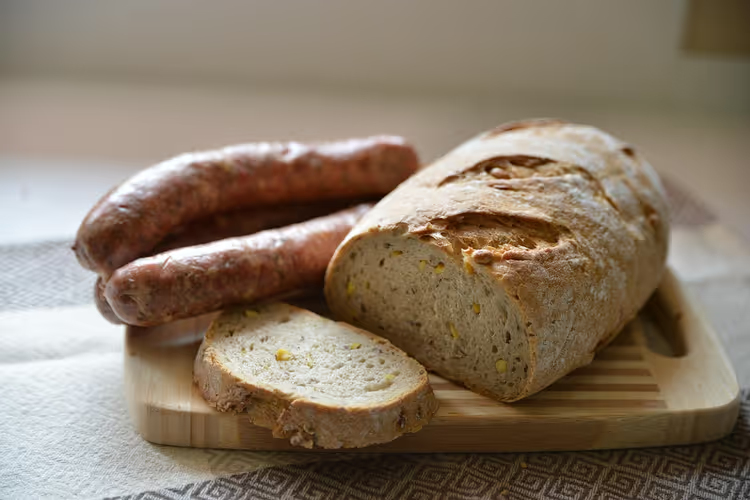
What to try in Poland: from zurek to Torun gingerbread
Polish cuisine rests on three things: meat, dough, and sauerkraut. After zurek or a serving of bigos, you will hardly want a second course.
We have put together 10 national dishes worth trying in Poland. Some of them are tied to a city or a holiday: St. Martin's croissants are baked in Poznan for November 11, and Torun gingerbread has been made since the 14th century (according to the Torun Gingerbread Museum, 09/2026).
Below, everything in order: what the dish is, where it came from, and what to order first.
Ad: this article contains affiliate links, we earn a commission if you book through them, at no extra cost to you.
What to try in Poland: in short
💡 In short:
- Three dishes on the list are tied to Easter: zurek, mazurek, and sernik.
- Half of the dishes are so filling that they replace both soup and a second course.
1. Zurek (zurek)
 © Toitoinebzh · CC BY-SAPhoto: Toitoinebzh, CC BY-SA (https://creativecommons.org/licenses/by-sa/3.0), Wikimedia Commons
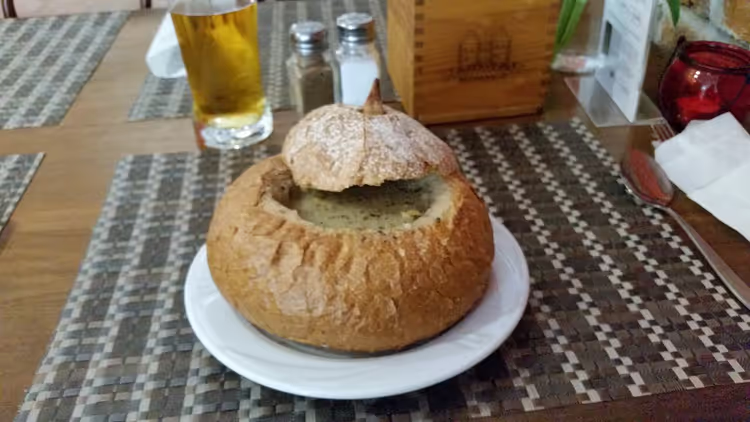
The list opens with the most famous Polish soup. Poles serve it even at weddings, and at Easter it appears in almost every home.
The base of zurek: a sourdough starter made from flour and meat broth. Every region has its own recipe, so some add horseradish, others brisket. Most often the soup is served in a bread bowl, but a regular soup tureen also appears. It is eaten with sour cream and herbs.
- Where to order: milk bars and home-style restaurants across the country.
- Who it's for: those who like hearty soups.
- The catch: the bread-bowl portion is large, so a second course is usually unnecessary after it.
2. Mazurek (mazurek)
 © Kgbo · CC BY-SAPhoto: Kgbo, CC BY-SA (https://creativecommons.org/licenses/by-sa/4.0), Wikimedia Commons
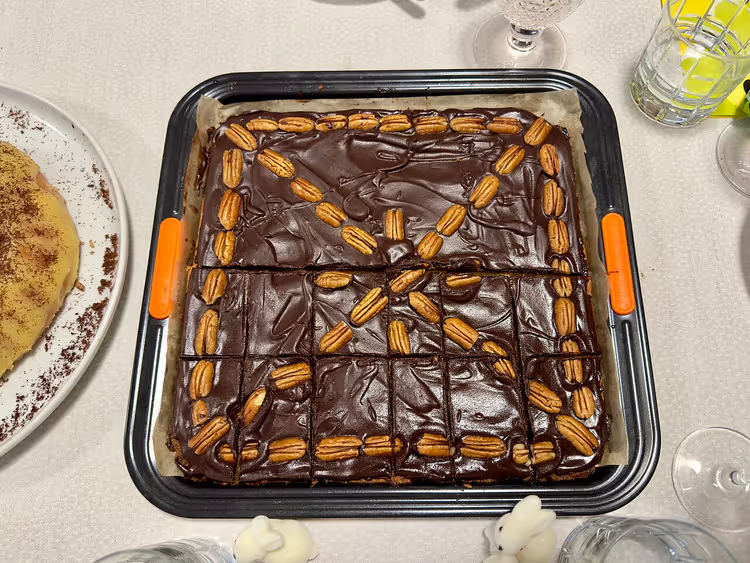
Mazurek: a low shortcrust pie with a filling. Inside go candied fruit, oranges, caramel, nuts, and dried fruit. Cooks combine several types of crust.
Mazurek is considered an Easter dish, but you can try it at other times too.
- When to try: at Easter and throughout the year.
- Who it's for: lovers of sweet baked goods.
- The catch: the dessert is very sweet, so tea or coffee nearby will not go amiss.
3. Sernik (sérnik)
 © Jacek Halicki · CC BY-SAPhoto: Jacek Halicki, CC BY-SA (https://creativecommons.org/licenses/by-sa/4.0), Wikimedia Commons
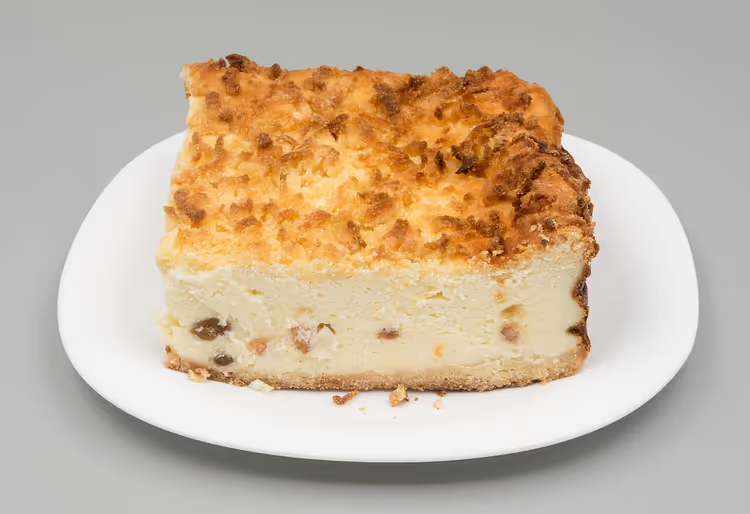
If you compare, sernik is closest to cheesecake and a baked curd casserole. The base is shortcrust pastry, a curd filling, and cream. Sometimes lemon juice and raisins are added to the dough.
You can buy sernik almost anywhere: in bakeries, cafes, and supermarkets by weight.
- Where to buy: bakeries, cafes, and supermarkets by weight.
- Who it's for: lovers of curd desserts.
4. Sekacz (sękacz)
 © Arek Olek from Kraków, Poland · CC BYPhoto: Arek Olek from Kraków, Poland, CC BY (https://creativecommons.org/licenses/by/2.0), Wikimedia Commons
Sekacz: a cake that resembles a tree. It is made on a spit. The batter is poured in layers, the spit rotates, and it is poured again. There is also another method, where the batter itself drips onto a rotating spit over the fire.
Because of this technique, the cake gets a ribbed, layered structure.
- Where to order: pastry shops and coffee shops with home-style baking.
- Who it's for: those who want to try unusual baked goods.
5. Flaki (flaki)
 © Alina Zienowicz Ala z · CC BY-SAPhoto: Alina Zienowicz Ala z, CC BY-SA (http://creativecommons.org/licenses/by-sa/3.0/), Wikimedia Commons
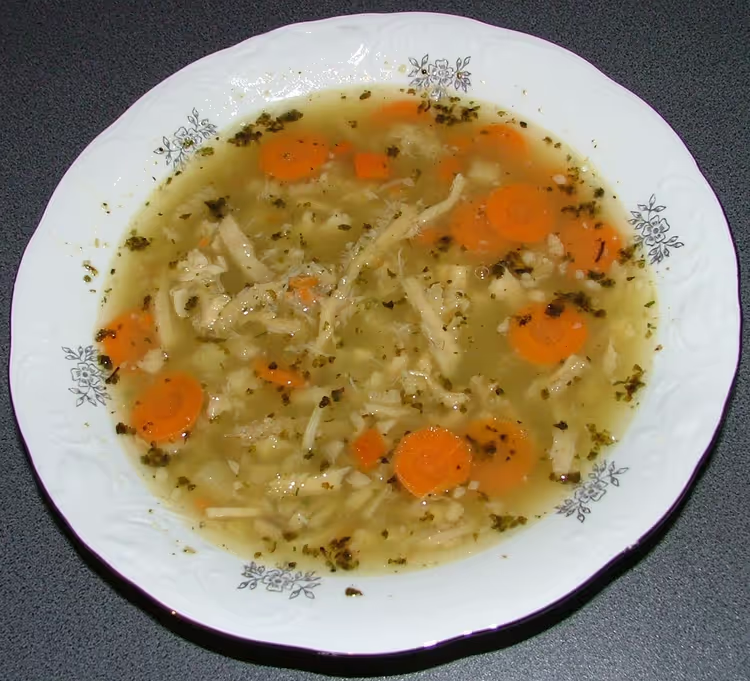
Another Polish soup famous for its richness and nourishing quality. It is made from beef tripe. To soften the tripe, it is brought to a boil several times, the water is drained, and the process is repeated. Then the sliced tripe is boiled for about three and a half more hours.
Rumor has it that flaki was the favorite dish of King Wladyslaw Jagiello. In the modern version, it is made with bacon, tomato paste, and spices.
You can try flaki in Krakow as part of food tours on GetYourGuide.
- Who it's for: those who like dense, filling soups.
- The catch: the dish is an acquired taste, since it is made from tripe.
6. Bigos (bigos)
 © Aw58 · CC BY-SAPhoto: Aw58, CC BY-SA (https://creativecommons.org/licenses/by-sa/4.0), Wikimedia Commons
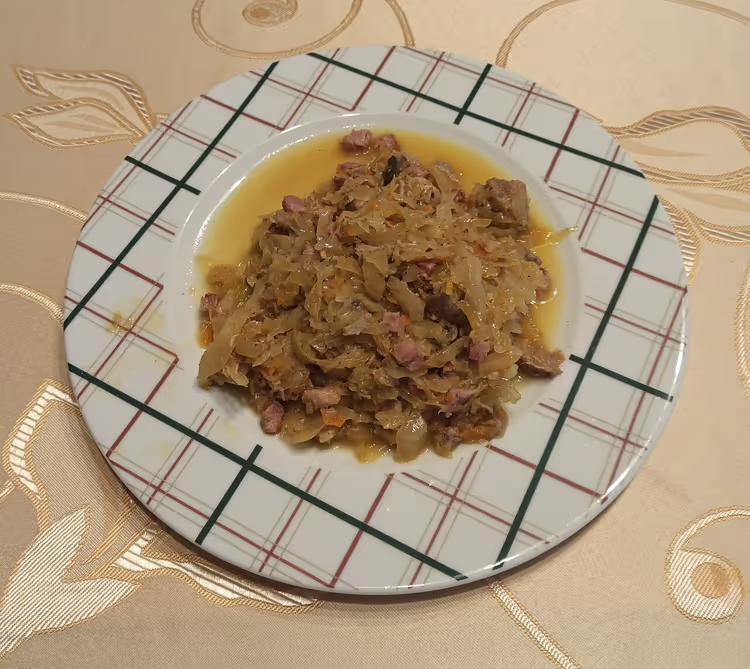
Bigos: a hearty hunter's stew. The classic version uses sauerkraut and any stewed meat. Modern Poles add whatever they like, from sausages to mushrooms.
- Who it's for: those who love rich meat dishes.
- Not for: those who don't like sauerkraut.
7. Golonka (pork knuckle)
 © Petar Milošević · CC BY-SAPhoto: Petar Milošević, CC BY-SA (https://creativecommons.org/licenses/by-sa/3.0), Wikimedia Commons
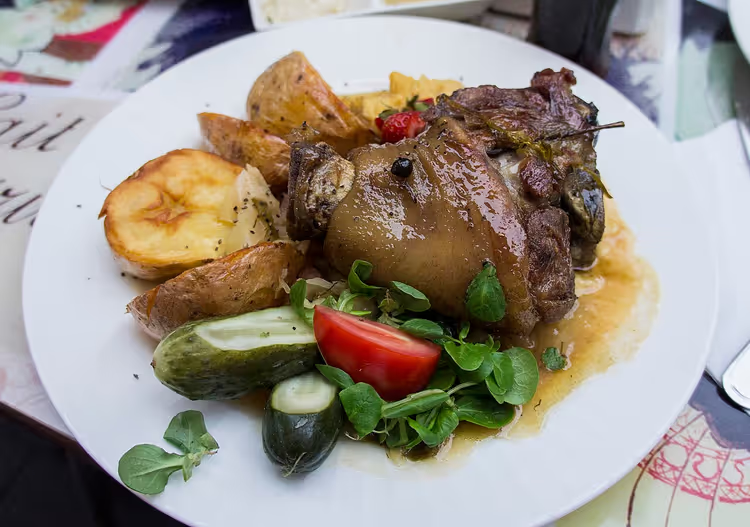
Golonka is also called pork hock or knuckle. It's cooked slowly until the skin turns brown and juicy. Sometimes the meat is braised in dark beer. Golonka is served whole, most often with mashed potatoes, cabbage, and boiled vegetables.
The dish appears on wedding and celebration menus, and it's also served in most Polish restaurants.
- Who it's for: those who came for a big piece of meat.
- The catch: the portion is very filling and high in calories.
8. Kaszanka (blood sausage)
 © Aw58 · CC BY-SAPhoto: Aw58, CC BY-SA (https://creativecommons.org/licenses/by-sa/4.0), Wikimedia Commons
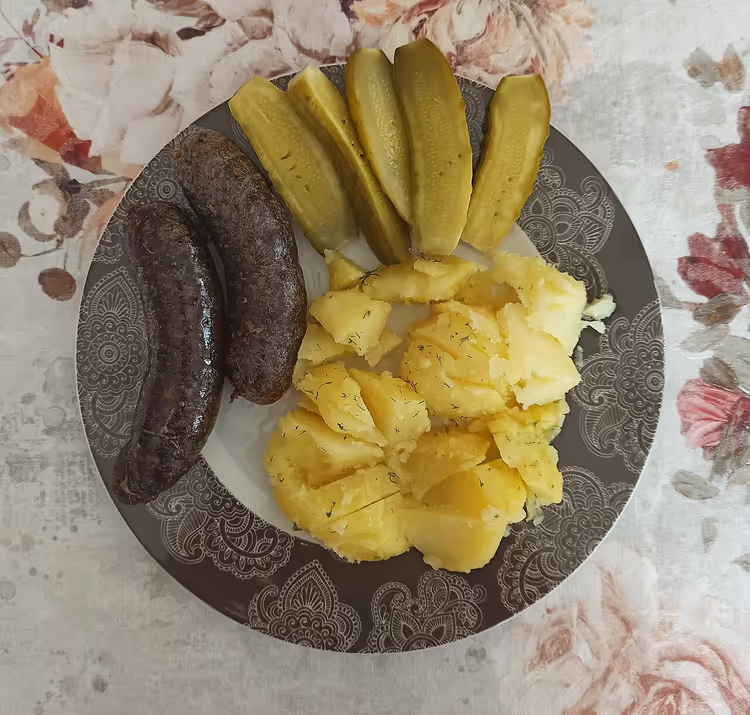
Kaszanka: a fairly popular sausage in Poland. It's made from animal blood, pork offal, and buckwheat or barley. Some people love it, others find it horrifying. These days kaszanka is increasingly cooked on the grill.
- Who it's for: those who like homemade sausages.
- The catch: it's a blood-based dish, so it's not for everyone.
9. St. Martin's croissants (rogale świętomarcińskie)
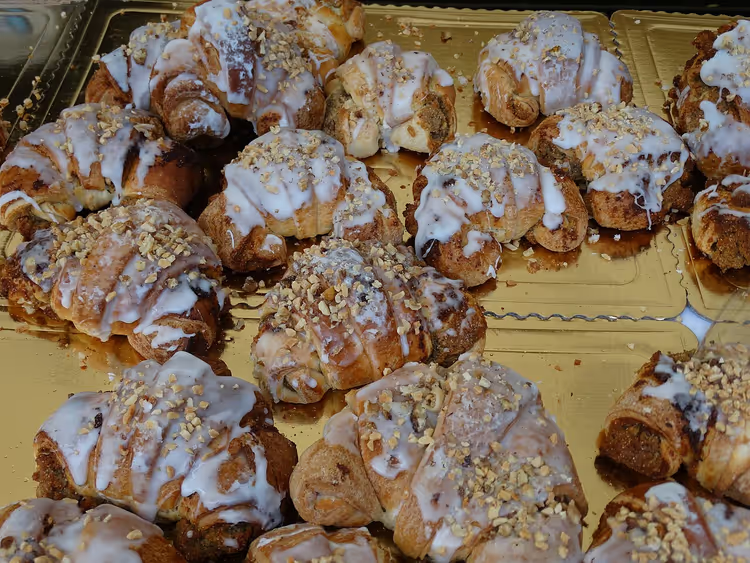 © Rzuwig · CC BY-SAPhoto: Rzuwig, CC BY-SA (https://creativecommons.org/licenses/by-sa/3.0), Wikimedia Commons
The best place to try these croissants is Poznań. Their name is registered in the EU as a protected geographical indication. The status protects the name specifically, not the pastry itself (according to Poland's Ministry of Agriculture, 09/2026).
Locals know them as croissants or rolls. They're glazed pastries filled with white poppy seeds, nuts, and raisins. They're baked for November 11, St. Martin's Day.
Getting to Poznań by train is easy: trains to Poznań on Trip.com.
- Who it's for: those heading to Poznań in November.
- The catch: for the freshest croissants around November 11, you really need to go to Poznań.
10. Toruń gingerbread (pierniki)
 © Sergei Gussev · CC BYPhoto: Sergei Gussev, CC BY (https://creativecommons.org/licenses/by/2.0), Wikimedia Commons
Toruń has been producing this sweet since the 14th century (according to the official Toruń museum website, 09/2026).
Local gingerbread is considered a traditional Christmas treat and a good souvenir. It comes glazed or chocolate-covered, with jam fillings or classic. The shapes vary too, so you'll easily find a version you like.
Trains run to Toruń, check schedules on Trip.com trains to Toruń.
- Who it's for: those looking for an edible souvenir from Poland.
⁉️🤔 Frequently asked questions
Which Polish dish should I try first?
Start with żurek: it's served in almost every city and in almost every milk bar. If you want meat, go for golonka or bigos. Save cheesecake or mazurek for dessert. That way you'll cover soup, a main course, and something sweet from Polish cuisine in one day.
How much does it cost to try the national cuisine?
Prices depend on the city and the venue, so check exact amounts on the spot. As a guide: soup or sausage in a milk bar will cost less than a main course in a mid-range restaurant. Each place sets its own price level, and it's usually higher in resort towns.
What can I bring home from Polish cuisine?
St. Martin's croissants can be taken home from Poznań: the PGI status protects only their name. Cheesecake can also be brought along when traveling within the EU. Toruń gingerbread travels home easily: it's given as a traditional Christmas souvenir.
When is the best time to try these dishes?
Some dishes are available year-round: bigos, flaki, and kaszanka are always on restaurant menus. Others are tied to the calendar. Żurek, mazurek, and cheesecake grace the Easter table, and St. Martin's croissants are baked for November 11, St. Martin's Day.
Is Polish cuisine suitable for vegetarians?
Partly. Żurek is often made with meat broth, bigos doesn't exist without meat, and golonka is pork. But cheesecake, mazurek, croissants, and gingerbread work. Skip kaszanka and flaki. Before ordering, check the ingredients with the waiter.
In short: what's worth booking
If you're visiting Poland for the first time, start with żurek and bigos: they're made in almost every city. Choose the other dishes based on the occasion.
- If you're in Poznań in November: get St. Martin's croissants.
- If you need a souvenir: get Toruń gingerbread.
- If you want to warm up: get flaki or kaszanka.
For a food-focused route, Kraków and Warsaw are the most convenient. There you can cover soup, a main course, and dessert in one evening. Travel between cities by train, and look for tastings in advance.

A small editorial team writing guides for independent travel. We travel ourselves, but we haven’t been everywhere, so we check prices, opening hours and how to get there against official sources.