










Fallas in Valencia: how to attend the fire festival on March 15-19
Fallas in Valencia lasts almost three weeks and ends with fire. Every March the city puts hundreds of huge papier-mache figures out on the streets, and on the night of March 19 it burns almost all of them. In 2016 UNESCO added this festival to the list of intangible cultural heritage of humanity (UNESCO decision, as of 09/2026).
Below is a quick overview of what Fallas is, when to show up for the main events, and how to plan your trip without overpaying for a hotel and without spending hours in a crowd with no view.
Ad: this article contains affiliate links. We earn a commission if you book through them, at no extra cost to you.
What Fallas in Valencia is
💡 In short:
- Fallas runs from March 1 to March 19, with the final night on the 19th (Valencia tourism office program, as of 09/2026).
- The main events fit into the last five days of the festival.
- The ninot figures are made of wood and papier-mache, some taller than a five-story building.
- The streets, the mascletà, and the cremà are free for spectators.
- Dates and program: 09/2026, checked on the official Valencia tourism office website.
At the heart of the festival are the ninots: figures made of wood and papier-mache that get bigger every year. Individual figures are assembled into whole scenes, and they often mock politicians, celebrities, and city news. These groups are called fallas, and the festival takes its name from them. The word itself comes from the Latin facula, meaning "torch."
Each neighborhood forms a commission and pays for its own monument. The competition is serious, because at the end of the festival the best falla is awarded a prize. In addition to the large groups, there are children's fallas, made specifically for kids.
How Fallas began
The tradition was born in the 18th century (according to the Valencia tourism office, 09/2026). Carpenters and woodworkers burned old wooden parot lamps on the night before the feast day of their patron saint, Saint Joseph. In winter the lamps lit their workshops, and by spring they were no longer needed.
Behind this custom lies an even older idea. Ancient cultures built large bonfires on the spring equinox and summer solstice to burn away the old and symbolically renew themselves. Over centuries this ritual grew into a festival that today brings the city significant revenue and creates hundreds of jobs.
In March the festival draws huge crowds to Valencia, and it is celebrated not only in the city but also in other places in the region, such as Denia and Gandia.
Dates and program: main events
Officially the festival runs from March 1 to March 19, with the main events falling on March 15-19: checked against the Valencia tourism office program, as of 09/2026. These stages are worth knowing in advance.
- La Crida (last Sunday of February): the opening of the festival at the Torres de Serranos, the remains of the old city wall (tourist office calendar).
- Mascletàs (March 1-19, daily at 2:00 PM): gunpowder blasts in Plaza del Ayuntamiento (blast schedule).
- Plantà (the night of March 15-16): the commissions set up their monuments in the streets (daily program).
- Ofrenda de flores (March 17 and 18): offering flowers to the city's patron saint (offering dates).
- Nit del Foc (the night of March 18-19): a big fireworks display in the old Turia riverbed (night of fire).
- Cremà (the night of March 19): the finale, when almost all the fallas are burned (finale coverage).
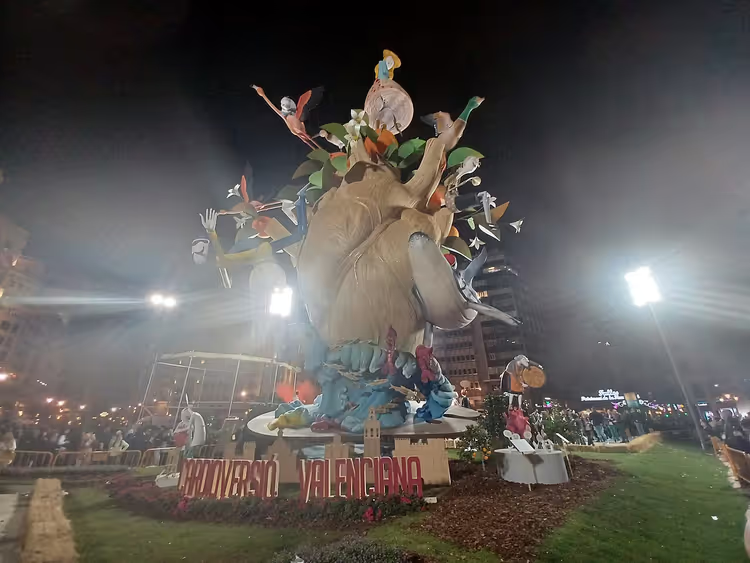 © Simon Burchell · CC BY-SAPhoto: Simon Burchell, CC BY-SA (https://creativecommons.org/licenses/by-sa/4.0), Wikimedia Commons
A Mascletà is not like a typical fireworks show. Black powder charges are connected with a fuse, and they explode in rhythmic waves. You feel the roar in your gut, not just hear it with your ears, so bring earplugs in advance.
Who is the Fallera Mayor
 © Rafa Esteve · CC BY-SAPhoto: Rafa Esteve, CC BY-SA (https://creativecommons.org/licenses/by-sa/4.0), Wikimedia Commons
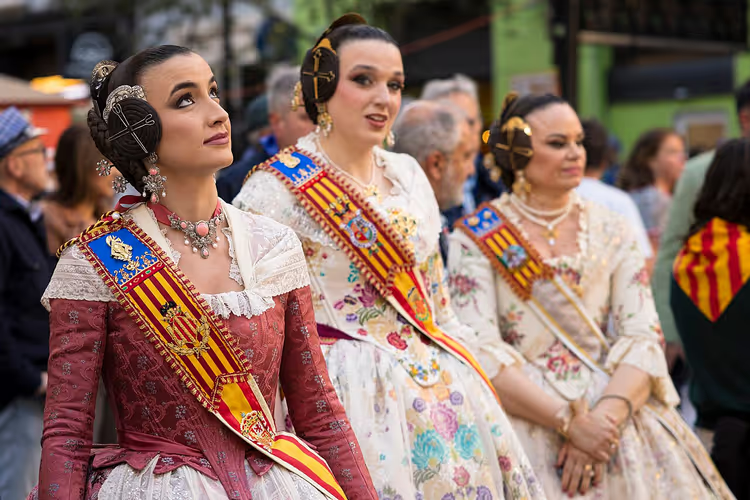
Each community chooses its own representative, the Fallera Mayor or Fallera Mayor Infantil. The women appear in elaborate traditional dresses made of expensive fabrics and with jewelry, and they are the center of attention throughout the festival. At the end, a Fallera Mayor and Fallera Mayor Infantil are chosen to represent Valencia the following year.
Flower offering (Ofrenda)
 © Simon Burchell · CC BY-SAPhoto: Simon Burchell, CC BY-SA (https://creativecommons.org/licenses/by-sa/4.0), Wikimedia Commons
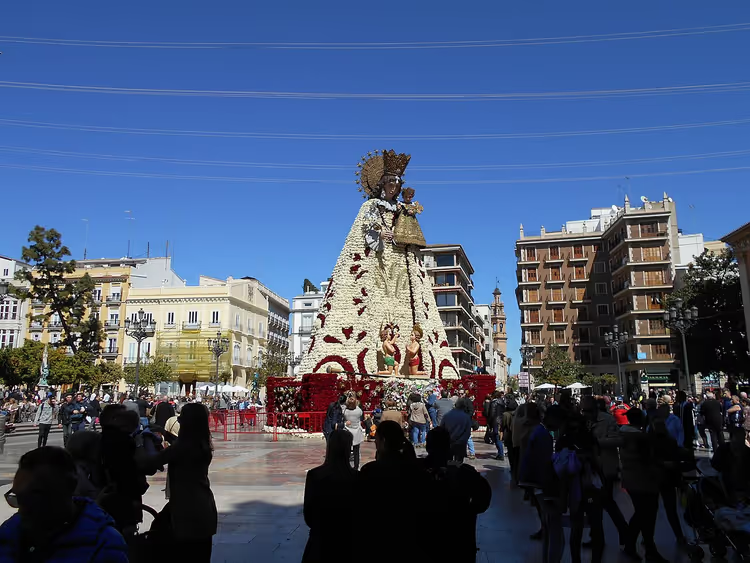
One of the most striking events of the festival is the offering of flowers to the Virgin Mary, the city’s patron saint. On the afternoons of March 17 and 18, around 100,000 falleros walk through Valencia in traditional dress, and you will see thousands of bouquets (as of the Valencia tourist office, 09/2026). These flowers are used to build an enormous cloak for the 14-meter figure of the Virgin Mary in Plaza de la Virgen.
Cremà: the fiery finale
 © Encar.sp · CC BY-SAPhoto: Encar.sp, CC BY-SA (https://creativecommons.org/licenses/by-sa/4.0), Wikimedia Commons
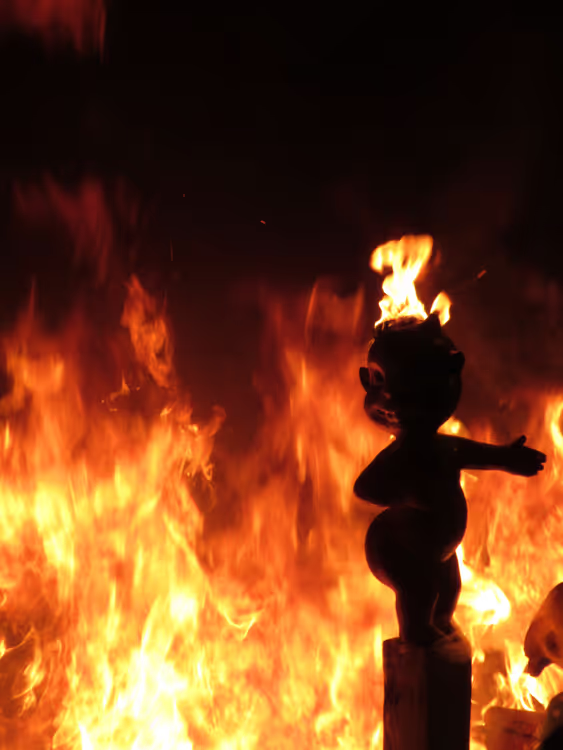
The Cremà begins on the evening of March 19. Around 8:00 pm the children’s fallas are set on fire, from 10:00 pm the large monuments, and around 1:00 am the central figure burns in Plaza del Ayuntamiento (Cremà schedule, as of: 09/2026). Firefighters stand by throughout the night.
A good falla should collapse inward rather than topple sideways, only then does the crowd applaud the artists. Two ninots indultats remain intact, one adult and one children’s. They are chosen by visitors at the Exposición del Ninot and become part of the Museo Fallero collection.
Tips for visiting
- Book accommodation early. During Fallas week, hotels in Valencia sell out completely and prices rise noticeably. Look at options several months ahead (Valencia hotels on Trip.com).
- Wear comfortable shoes. The monuments are spread across the whole city, so you will do a lot of walking.
- Get to the square well before the firecracker displays start. Otherwise you will only see the backs of the people in front of you.
- Protect your hearing. The festival is extremely loud, and earplugs will help both you and your children.
- Don’t forget the region. Similar but smaller-scale Fallas take place in Denia and other towns on the Costa Blanca.
If you want to see Valencia with a guide between events, book a tour in advance.
Tours and tickets in Valencia
Guided tours, skip-the-line tickets and activities — most offers can be cancelled free of charge.
See offers on GetYourGuideThe widget loads once you give your consent.
Don’t confuse Fallas with the Night of San Juan
Fallas are often confused with the Night of San Juan, but they are two different festivals. You’ll find how they differ in the frequently asked questions below.
⁉️🤔 Frequently asked questions
When do Fallas take place in Valencia?
Every year in March. The festival officially runs from March 1 to 19, with the main week falling on March 15-19 (tourist office schedule, 09/2026), and the finale, the Cremà, falls on the night of the 19th. Some events begin as early as late February, with La Crida.
What are ninots?
Ninots are figures made of wood and papier-mâché that are assembled into fallas monuments. They can be taller than a five-story building and depict people and characters. On the night of the Cremà they are burned, and only two ninots chosen by the public, one adult and one children’s, remain in the museum.
What is a mascletà?
Mascletàs take place from March 1 to 19 every day at 2:00 pm in Plaza del Ayuntamiento (firecracker display program, 09/2026). Spectators arrive an hour or more in advance to get a spot. There is no conventional fireworks show here: the gunpowder produces sound and a shockwave, not colored shapes in the sky.
Are Fallas on the UNESCO list?
Yes. In 2016, the Fallas of Valencia were added to the list of intangible cultural heritage of humanity (entry on the UNESCO list, 09/2026). The recognition covers not only the tradition itself, but also the craft of the artists who build the monuments and the work of the neighborhood committees.
How do Fallas differ from the Night of San Juan?
These are two different festivals, and confusing them is a mistake. Fallas take place in March in honor of Saint Joseph in Valencia. The Night of San Juan is celebrated in late June, at the summer solstice, and the most famous fire ritual of that date takes place in Alicante, where it is called Hogueras de San Juan.
In short: what to book
- If you are going for the main week: book your hotel in advance, otherwise only expensive options will be left (hotel prices in Valencia).
- If you are short on time: take an old town tour, it will replace running around between monuments (tours on GetYourGuide).
The main thing to remember: Fallas remains a free street festival, but accommodation and a spot by the stage should be arranged in advance.

A small editorial team writing guides for independent travel. We travel ourselves, but we haven’t been everywhere, so we check prices, opening hours and how to get there against official sources.