
















Travel SIM card: how not to overpay for connectivity on a trip
You land on vacation, turn on your phone, and there's no mobile data. Roaming with your home carrier outside the EU is expensive, and a local SIM card still needs to be found and registered. A familiar situation for almost every traveler.
We compared three working ways to stay connected abroad and calculated how much a gigabyte costs with each. Starting January 1, 2026, Roam like at home in the EU was extended to Ukraine and Moldova, so within Europe you pay the same as at home (as of 07/2026, European Commission). Outside this list, the rules are different, and it's better to know the price in advance.
The short answer: within the EU and EEA, your carrier's roaming is enough. For a 3-10 day trip to the UK, Switzerland, or Turkey, a travel eSIM is the cheapest option. For living in one country for months, a local SIM card is the better deal.
Ad: this article contains affiliate links, we earn a commission if you book through them, at no extra cost to you.
Three ways to get online abroad
💡 In short:
- Check your carrier's roaming terms before you leave home.
- Compare the three options by price per gigabyte and validity period.
- Roam like at home terms in the EU were verified on the European Commission website in 07/2026.
You have three paths: stay on your carrier's plan, buy a local SIM card in the country you're visiting, or get a travel card with eSIM. Each option solves the problem in its own way, and the choice depends on the length of your trip and your route.
The difference between them comes down to price, connection speed, and whether you keep your number. Below we break down each method step by step.
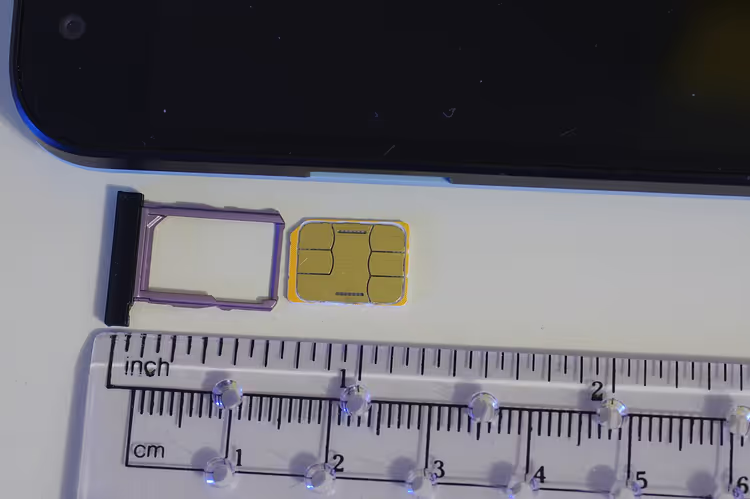 © BwDraco · CC BY-SAPhoto: BwDraco, CC BY-SA (https://creativecommons.org/licenses/by-sa/3.0), Wikimedia Commons
Step 1: check your home carrier's roaming
Within the EU and EEA, your plan works the same as at home. Roam like at home is activated automatically in 27 EU countries, as well as in Iceland, Liechtenstein, Norway, Ukraine, and Moldova (as of 07/2026, European Commission website). Calls, SMS, and data cost the same as on your home network, and the speed should match your home speed.
There is an exception. If you have an unlimited or very cheap data plan, the carrier may apply a fair use limit. They are required to notify you in advance and let you know when you reach 80% of the limit. The surcharge for data above the limit is capped, and by 2027 the ceiling will drop to €1 per gigabyte plus VAT (as of 07/2026, EU roaming regulation).
Three things to check before your trip. First: the UK is not part of the Roam like at home zone, so each carrier sets its own terms there. Second: in-flight and maritime satellite connectivity is not covered by the rules, these services are expensive, and the carrier must disconnect them once you reach €50 in extra charges (as of 07/2026, European Commission). Third: if you live in another EU country for more than four months, the carrier may apply a surcharge.
- Who it's for: short trips within the EU and EEA, a route of a couple of days.
- The catch: outside this list, rates rise sharply.
Step 2: buy a local SIM card in the country
A local SIM card is a card from a carrier in the country you're visiting. Calls and data are billed at local rates, and for a long trip this is often the most cost-effective solution. The catch is that you get a new number.
In many countries, an inactive card is blocked after a few months of no use. If you visit the country rarely, you'll have to buy a new card every time. For a short trip, that's extra cost and time.
The second nuance: back home, your contacts don't know the new number until you share it. Calling everyone from a single SIM card isn't always convenient. Plus, in some countries you need to show ID to register.
- Who it's for: living or working in one country for more than a month.
- The catch: a new number and blocking after long periods of inactivity.
Step 3: get a travel SIM or eSIM
A travel SIM card works in several countries on a single plan. It doesn't get blocked after long periods of no use, so one card lasts a long time.
The modern option is eSIM. No plastic card needed: the digital profile is installed on your phone before departure and activated on arrival. You keep your own number for WhatsApp and Telegram, and your home SIM stays in the phone.
Take Yesim for Europe and the UK. The plan covers 33 countries, no ID verification required, and the prices are: 500 MB for one day at $0.54, 1 GB for 30 days at $3, 5 GB for 30 days at $11.52, 30 GB for 30 days at $33.60 (as of 09/2026, Yesim rates). You need to install the profile within 180 days of purchase.
- Who it's for: trips of 3-10 days, travel across multiple countries.
- The catch: data-only plan, regular calls go through your home number.
Comparing the three options
The table shows which option fits your scenario.
Method | Setup | Where it works | Price | The catch |
|---|---|---|---|---|
Carrier roaming | nothing needed | EU, EEA, and RLAH list | same as home | expensive outside the list |
Local SIM | buy on arrival | one country | local rate | new number |
Travel eSIM | online in 5 minutes | 33+ countries | from $0.54 for 500 MB (as of 09/2026, Yesim rates) | data only |
eSIM prices: according to Yesim, 09/2026. Roaming terms: according to the European Commission, 07/2026.
How to install an eSIM: 5 steps
- Check whether your phone supports eSIM. The settings will tell you if the device has a digital SIM. The phone also must not be locked to a single carrier.
- Buy a plan online before you leave. The price is locked in at purchase, no extra payments during the trip.
- Install the profile via QR code or in the provider's app. It's best to do the installation at home over Wi-Fi.
- Activate the eSIM on arrival and turn on data for it. In settings, select the eSIM as the line for internet.
- Keep your home SIM active for calls and SMS so you can receive bank codes.
The process is the same across all eSIM providers, only the names of the menu items in the app differ.
Common mistakes when choosing
- A regional package is not the same as a global one: check the list of countries before paying.
- A QR code is valid for one phone only, you can't transfer the profile to a second device.
- A data-only plan doesn't include regular calls, you can call through messaging apps.
- Tethering to other devices depends on the carrier and the plan.
⁉️🤔 Frequently asked questions
Do I need to register a travel eSIM?
No, most eSIM services don't require ID. You pay for the plan by card and receive a QR code by email. The exception is local SIM cards: in some countries they are registered with a passport in the store.
What's cheaper for ten days in Europe?
Within the EU and EEA, your carrier's roaming is cheaper, it works the same as at home. Outside this zone, for example in the UK, Switzerland, or Turkey, a travel eSIM is the better deal. A European 5 GB package costs about $11.52 (as of 09/2026, Yesim eSIM) and covers 33 countries, including the UK. A local SIM card is only better for trips longer than a month, when you have time to use up the local plan.
Will my number stay the same in WhatsApp?
Yes. The eSIM only handles data, and your home number stays in the phone on the second line. WhatsApp, Telegram, and email continue to work with your existing account as long as you have internet.
Why didn't I get internet right after landing?
Check whether data is turned on for the eSIM and whether data roaming is active for that line. The profile activates when it connects to the local network. If that didn't happen, restart your phone and check the access point.
Does a travel SIM work outside Europe?
Regional packages only work in their designated zone. For Turkey, the UAE, or Asia, you need a separate package or a global plan. Before buying, check the list of countries the plan covers.
In short: what to book
The choice depends on your scenario. If you're taking a 3-10 day trip to the UK, Switzerland, or Turkey, get an eSIM: setup in five minutes and a fixed price. If you're living in one country for months, get a local SIM card. If your route is short and within the EU, your home carrier's roaming is enough.

A small editorial team writing guides for independent travel. We travel ourselves, but we haven’t been everywhere, so we check prices, opening hours and how to get there against official sources.