

















Brazil for the first time: Rio, Iguazu falls and when to go
Brazil does not fit into a single vacation. Five climate zones, the Amazon, Iguazu Falls, and Rio de Janeiro all compete for your time.
On a first trip, almost everyone bets on Rio: it remains the most visited city in the country.
Below we break the route down point by point: when to go, what to see in Rio, and whether it is worth flying to the far end of the country for the waterfalls. Some tickets go on sale long before the date, so keep your plan ready in advance.
Ad: this article contains affiliate links, we earn a commission if you book through them, at no extra cost to you.
What to know before the trip
💡 In short:
- Almost everyone starts from the same base: Rio de Janeiro, from there it is easy to build trips deeper into the country.
- The most comfortable time to go is May-June or September-October, and the carnival in 2027 runs February 5-13 (carnival calendar).
- You go up to the Christ statue by train or panoramic van, buy tickets in advance.
- As of 09/2026, verified on the official ICMBio website.
Brazil lies almost entirely in the tropics, but the climate here is not uniform: from equatorial in the north to subtropical in the south. This affects your plan more than the flight does. The same date gives different weather in Manaus and Porto Alegre, so the country is best divided into parts rather than covered in one trip.
Rio de Janeiro: the city that sets the tone
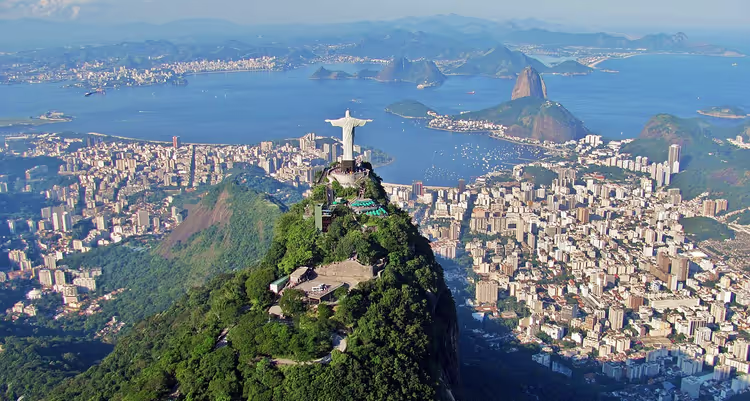 © Rafael Rabello de Barros · CC BY-SAPhoto: Rafael Rabello de Barros, CC BY-SA (https://creativecommons.org/licenses/by-sa/3.0), Wikimedia Commons
In Rio de Janeiro, mountains run into the ocean, and between them are squeezed neighborhoods with different characters: the business center, bohemian Lapa, the beach districts of Copacabana and Ipanema.
Year-round, the city hosts concerts by the ocean. Take the morning for sightseeing and leave the evening for the city.
Neighborhoods change every couple of metro stops. The center is packed with museums and historic streets, Santa Teresa draws you in with winding lanes and an old tram, and Lapa plays live music in the evenings. Between the beaches and the center, the metro is the most convenient way to get around, and beyond that take a taxi or bus.
When to go: seasons and weather
Brazil lies in the Southern Hemisphere, so the seasons here are shifted by six months. When it is January for you, Rio is in summer: hot, humid, and expensive.
For sightseeing, May-June and September-October work best: mild weather, less rain, fewer crowds (Lonely Planet, as of 09/2026). In those months, a couple of days for the beach and a couple for the city will be enough.
Period | Weather in Rio | Best for |
|---|---|---|
December-March | hot and humid | beaches and carnival |
April-June | warm and dry | city sightseeing |
July-August | dry, cool in the evenings | long walks |
September-November | warm, lots of greenery | a universal option |
July in the south of the country is cool: in São Paulo and further south you need a sweater in the evenings. For Rio, by contrast, it is the dry season, good for walking.
If you are going for the beaches, plan for December-March. If you are going for the city and nature, your months are May-June and September-October. Humidity in Rio is high year-round, so in summer move long walks to the morning.
Carnival, New Year, and events
The carnival in Rio de Janeiro takes place in February, before Lent. In 2027, the main parades at the Sambadrome run February 5-13 (parade schedule). If you are going for the carnival, buy sector tickets in advance: closer to the date, only resellers are left.
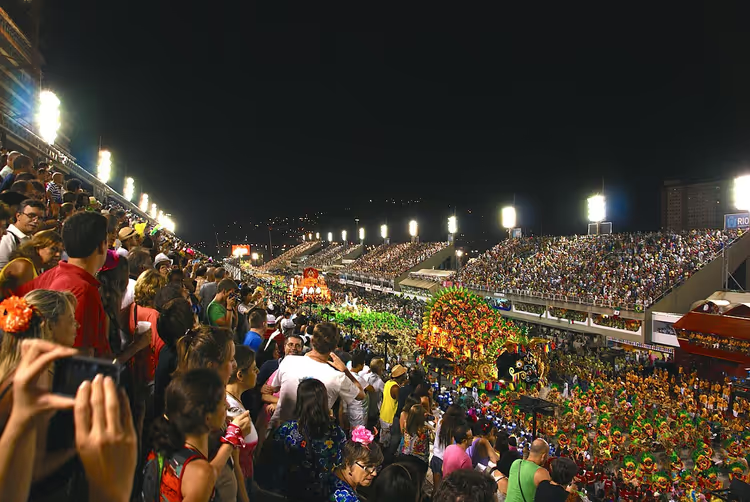 © Ben Tavener from Curitiba, Brazil · CC BYPhoto: Ben Tavener from Curitiba, Brazil, CC BY (https://creativecommons.org/licenses/by/2.0), Wikimedia Commons
New Year's in Brazil is second in scale only to Carnival. In Rio, midnight is celebrated on Copacabana: locals dress in white and come to the ocean with the whole family.
Event tourism isn't limited to two dates. Religious holidays, music festivals, and sports tournaments take place across the cities. Capoeira and street samba are available to you in any month.
Christ the Redeemer statue and Corcovado
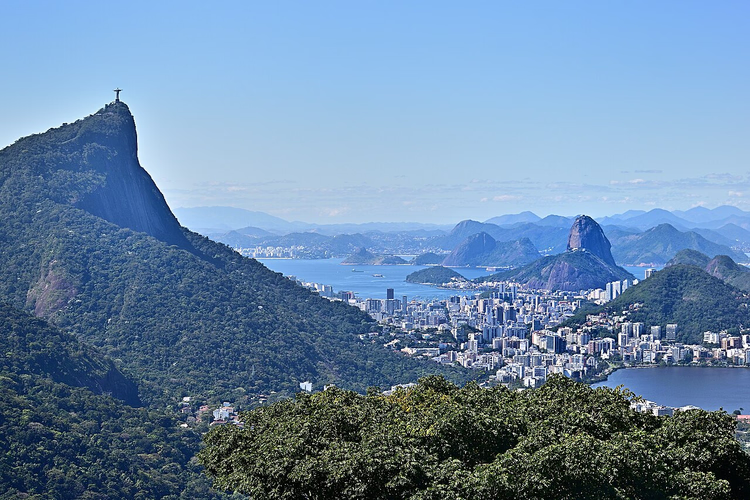 © Matthias Bethke · CC BY-SAPhoto: Matthias Bethke, CC BY-SA (https://creativecommons.org/licenses/by-sa/4.0), Wikimedia Commons
The Christ the Redeemer statue is recognizable by its silhouette at first glance. The sculpture itself is 30 m tall, and it stands atop Corcovado, about 710 m above the ocean (as of 09/2026, the statue's Wikipedia page).
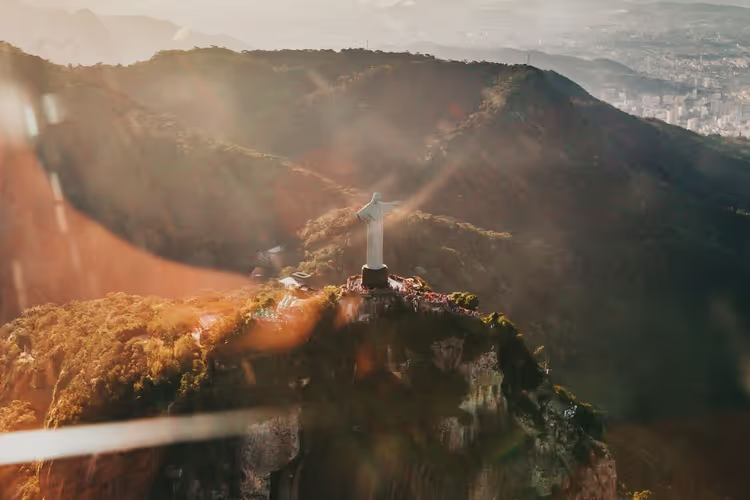
A cog railway train and panoramic vans take you to the top. The observation deck opens up all of Rio: the bay, Copacabana, and Sugarloaf Mountain. On a clear day, go early in the morning; by midday the statue is often covered by a cloud.
It's best to buy tickets for the ascent in advance and choose a morning slot. If you don't want to deal with transportation yourself, Rio tours on GetYourGuide include a transfer to the base.
Tours and tickets in Rio de Janeiro
Guided tours, skip-the-line tickets and activities — most offers can be cancelled free of charge.
See offers on GetYourGuideThe widget loads once you give your consent.
Beaches of Rio de Janeiro
Copacabana and Ipanema define Rio's beach image. The sand here is fine, the water is warm almost year-round, and a wide promenade runs along the waterfront.
 © Rjcastillo · CC BYPhoto: Rjcastillo, CC BY (https://creativecommons.org/licenses/by/4.0), Wikimedia Commons
Beach vacations in the country aren't limited to the city's arc. South of Rio stretch the long beaches of Santa Catarina, and to the north lie ocean resorts. If you're traveling with children, choose calm water outside the center.
Copacabana stays crowded until evening, so grab a lounger in the morning. For quiet swimming, the Arpoador rock area between Ipanema and Copacabana works well. Swim where lifeguards are on duty.
Tijuca National Park
Tijuca starts right in the city. The park covers 3,959 hectares within Rio de Janeiro (as of 09/2026, ICMBio) and is considered one of the largest urban forests in the world.
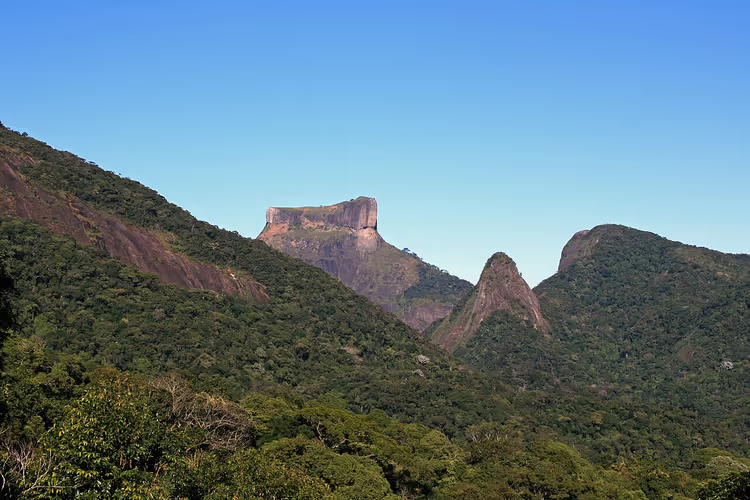 © Halley Pacheco de Oliveira · CC BY-SAPhoto: Halley Pacheco de Oliveira, CC BY-SA (https://creativecommons.org/licenses/by-sa/3.0), Wikimedia Commons
Inside there are waterfalls, viewpoints, and old plantation roads. The park receives about 2 million visitors a year (according to Wikipedia).
Come in the morning: during the day the popular trails get crowded, and after rain they are slippery. For a walk you will need comfortable shoes and a supply of water. The routes here vary in length, from short trails to climbs up the rocks.
Museums of Rio de Janeiro
Rio has a strong museum scene. Museu de Arte Moderna showcases Brazilian modernism, Museu Histórico Nacional brings together the country's history, and Museu do Índio tells the story of indigenous cultures. Museu Nacional, in the former imperial palace of Quinta da Boa Vista, is being restored after the 2018 fire.
Museum | Focus | Location |
|---|---|---|
Museu de Arte Moderna | Brazilian modernism | Flamengo Park |
Museu Histórico Nacional | the country's history | near Praça XV |
Museu Nacional | natural sciences | Quinta da Boa Vista |
Museu do Índio | indigenous cultures | Botafogo neighborhood |
Check opening hours before you head out: some museums are closed at the beginning of the week. It is easier to buy tickets online so you do not have to wait at the ticket office.
Iguazu Falls: how to see them
The Iguazu system has nearly 300 waterfalls on the border between Brazil and Argentina, in the state of Paraná (Visit Brasil, as of 09/2026). It is the largest waterfall complex in the world.
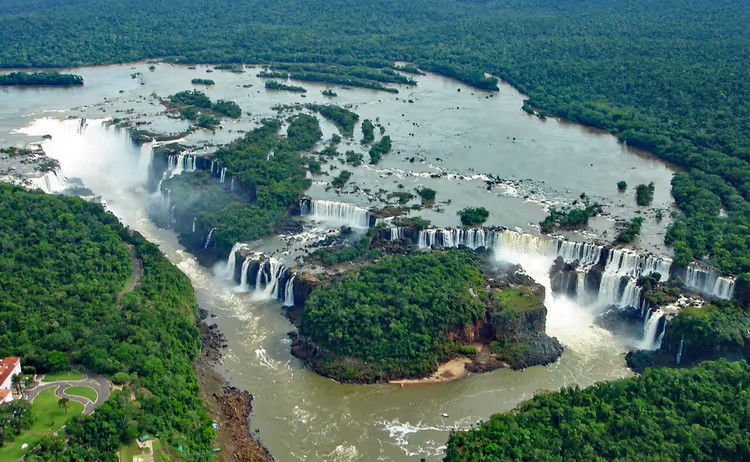 © Mariordo (Mario Roberto Durán Ortiz) · CC BY-SAPhoto: Mariordo (Mario Roberto Durán Ortiz), CC BY-SA (https://creativecommons.org/licenses/by-sa/4.0), Wikimedia Commons
The nearest city is Foz do Iguaçu. The Brazilian side gives you panoramic views, while the Argentine side brings you closer to the flows. On the Brazilian side, convenient walkways lead to the viewpoints; on the Argentine side there are more long boardwalks above the water.
It is worth setting aside two days here: one for the Brazilian side, the second for the Argentine side. If you are short on time, start with the Brazilian side for the overall picture.
The Amazon, Manaus, and the jungle
The north of the country is occupied by the Amazon, with the Amazon River, the largest by volume in the world. The starting point for the jungle is Manaus, where the Rio Negro and the Solimões meet.
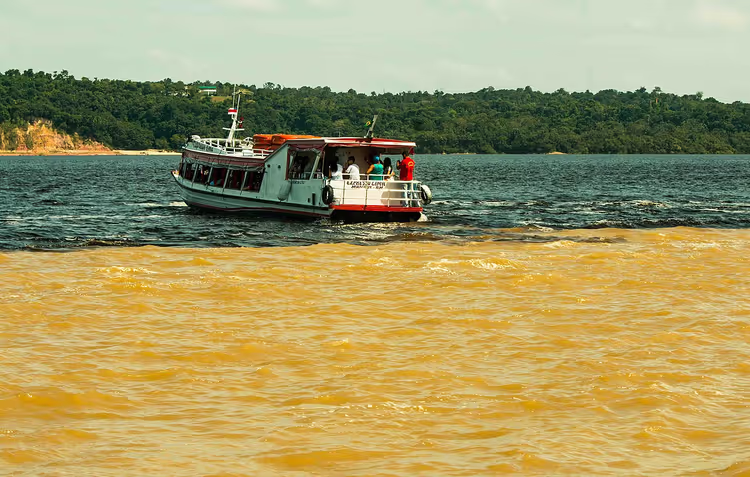
Lodges with guides and meals operate in the forest. If you want to experience the jungle without a tent, book a multi-day program: you cannot feel the forest in a single day.
You can get to Manaus by direct flight from Rio or São Paulo. Lodge slots get booked up in advance, especially in the dry season. The minimum program includes two to three days with a guide and an overnight stay in the forest.
⁉️🤔 Frequently asked questions
When is the best time to go to Brazil?
For sightseeing in Rio, choose May-June or September-October: dry, warm, and fewer tourists. For beaches and carnival, go from December to March, but be ready for heat and high accommodation prices. In the south, evenings are cool in July; in the Amazon, rains start in December.
Do I need to book the Christ the Redeemer ascent in advance?
Yes, train and van tickets are sold with time slots. In high season, convenient morning slots sell out several days ahead. Buying online saves time at the ticket office, and an early ascent increases the chance that clouds won't block the view. Check the schedule on the official website.
What to see in Rio in a week?
Split your days between the city and nature. Set aside a morning for Christ the Redeemer and Corcovado, leave a separate day for Tijuca, and another for the beaches of Copacabana and Ipanema. Add museums during the day, and in the evening listen to samba in Lapa.
Iguazu: which side is better?
The Brazilian side gives you the overall panorama of the falls; the Argentine side takes you right up to the water along long walkways. If you're short on time, start with the Brazilian side. With two days, you can do both sides, and they complement each other well. Bring a raincoat, you'll feel the spray everywhere.
How many days should I plan for a first trip to Brazil?
For a first trip, two weeks is a sensible amount. Rio takes four to five days including Tijuca and the beaches, Iguazu two days, Manaus three. The rest goes to flights: the country is large, and distances are measured in hours in the air.
In short: what to book
A short trip works for one city: choose Rio de Janeiro and don't spread yourself thin. A week lets you add Iguazu. Two weeks can also fit in the Amazon with Manaus.
Accommodation in Rio gets booked up early, especially during carnival and New Year weeks. See hotels in Rio de Janeiro on Trip.com.

A small editorial team writing guides for independent travel. We travel ourselves, but we haven’t been everywhere, so we check prices, opening hours and how to get there against official sources.