

















Travel during pregnancy: timing, transport and first aid kit without unnecessary risk
Planning a trip during pregnancy is calmer in the second trimester. Morning sickness fades, energy returns, and your belly doesn't yet get in the way of sitting in a seat.
Below we'll walk through step by step how to get clearance from your gynecologist, where you shouldn't go, how train, cruise, and plane travel differ, and what to put in your travel first aid kit. Figures and rules are checked against official carrier pages and medical organizations (as of 09/2026).
Ad: this article contains affiliate links, we earn a commission if you book through them, at no extra cost to you.
First, see your doctor: clearance to travel
💡 In short:
- See your gynecologist in advance: they will assess uterine tone, blood pressure, and test results.
- Get a written certificate stating your gestational age and that there are no contraindications to travel.
- Pack a first aid kit and check whether your medications are allowed in the destination country.
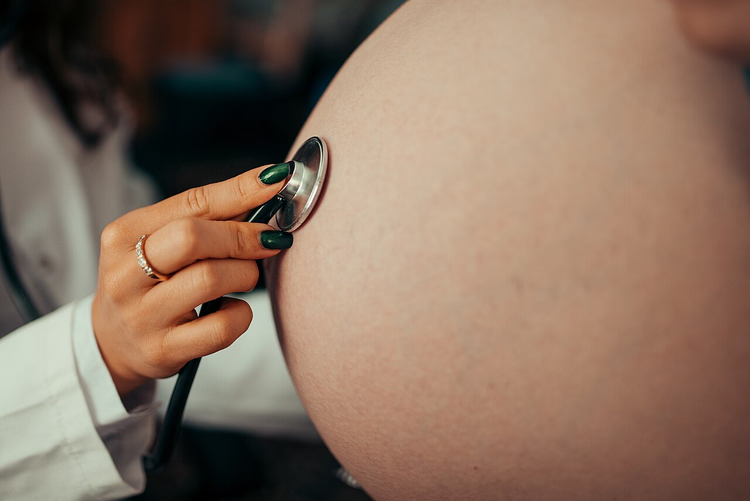
Pregnancy is not an illness, but you still need clearance to travel. The doctor managing your pregnancy will check your condition, review your ultrasound, and select medications worth taking with you. Book your appointment in advance, not on the last day before departure.
Important: a medication allowed at home may be banned in another country. Before packing your first aid kit, check every medication against local rules or get a prescription with the international name of the active ingredient.
 © Shixart1985 · CC BYPhoto: Shixart1985, CC BY (https://creativecommons.org/licenses/by/2.0), Wikimedia Commons
Where to go: climate and vaccinations
When choosing a destination, an expectant mother should avoid drastic changes in climate and time zone. The body has a harder time acclimating, so it's calmer to stay within your own time zone. Put off extreme activities too: diving, surfing, horseback riding, and high-altitude jumps.
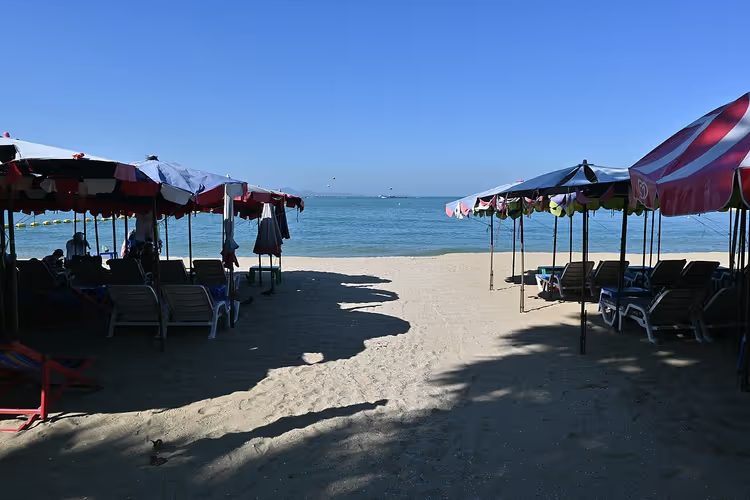
Think separately about vaccinations. A yellow fever vaccination certificate is required only by certain countries in Africa and South America. But this vaccine is live, and doctors try to avoid giving it to pregnant women (according to CDC, 09/2026). If vaccination can't be avoided, the decision is made by a doctor. Vaccines for Japanese encephalitis, typhoid fever, and rabies should also be discussed with a doctor in advance when planning a trip to Vietnam, India, China, or Thailand.
Make sure you have quick access to medical care. Find a clinic near your hotel and save your doctor's contact information. If the area raises concerns, choose a hotel closer to a major clinic: find a hotel on Trip.com.
 © PattayaPatrol · CC BY-SAPhoto: PattayaPatrol, CC BY-SA (https://creativecommons.org/licenses/by-sa/4.0), Wikimedia Commons
Also consider the local cuisine. You can try exotic dishes another time, and drink only bottled water. Stay in touch with your doctor: save their number in your phone.
Who to travel with: help nearby
A pregnant woman should have someone with her throughout the trip who can help in any situation. It's better not to risk traveling alone. If you're going with a noisy group, arrange a quiet place in advance where you can rest comfortably.
How to travel: five options
Choose your transport based on your stage of pregnancy and the distance. Each option has its own nuances worth knowing in advance.
Car and bus
Suitable for short distances and only if you can make stops. Sitting in one position for a long time slows blood flow in your legs. Get out to stretch your legs and use the restroom at every convenient pause, don't wait until it becomes uncomfortable. Plan your route with gas stations and rest stops, and don't stretch a driving trip across the whole day.
Motorhome
A good option for those who want to plan their own route or skip the plan entirely. A motorhome has a bed, a bathroom, and the ability to prepare fresh food. However, think about reliable cellular coverage so you can call for help in time. Plan sun and insect protection in advance, and choose overnight stops near populated areas.
Train
Lets you lie down or walk around, and the restroom is always close by. Take a lower berth: it's easier to get up and sit down from it. Bring antibacterial wipes and hand gel. On long routes, get up and stretch, and leave the heavy suitcase at home. Compare train tickets.
Cruise ship
Cruises have strict restrictions. Most companies don't take women in late pregnancy on board and don't accept liability waivers. You can usually board a ship only up to the 24th week of pregnancy. Seasickness and limited medical care on board add to the risk. If something goes wrong, there are no facilities for premature birth on a cruise ship, and getting to a hospital turns into a rescue operation.
 © Ank Kumar · CC BY-SAPhoto: Ank Kumar, CC BY-SA (https://creativecommons.org/licenses/by-sa/4.0), Wikimedia Commons
Plane
The fastest and most comfortable option for long-distance travel. Food, water, and a restroom are usually available on board. Each airline has its own requirements for pregnant passengers. Some don't require a certificate at all, but many airlines ask for one starting around the 28th week. After the 36th week, carriers usually refuse to fly you. Check your airline's rules in advance, before buying a ticket.
 © Ganesh Mohan T · CC BY-SAPhoto: Ganesh Mohan T, CC BY-SA (https://creativecommons.org/licenses/by-sa/4.0), Wikimedia Commons
When to go
The optimal period for flying: the second trimester, from the 14th to the 28th week (according to the official ACOG website, 09/2026). After 28 weeks, moving and sitting for long periods becomes harder, and the risk of premature birth increases. Consider both how you feel and your doctor's recommendations.
If tickets were bought in advance and the pregnancy came as a surprise, notify the carrier. This way you'll avoid being denied boarding.

What to bring
- Documents and a pregnancy certificate plus comprehensive insurance. It will help you out at the slightest discomfort.
- Comfortable clothing and shoes will make long hours of sitting easier. Compression garments and stockings improve blood circulation.
- A special neck pillow won't hurt on a long flight.
- Skin moisturizers, eye drops, and saline nasal spray will help against the dry air on a plane.
- Bring extra food and water: a snack will help with sudden hunger or nausea.
- Remember that every pregnancy is different. General advice and friends' experiences don't replace your doctor's opinion.
Before your trip, compare the terms of several insurance programs for pregnant women.
⁉️🤔 Frequently asked questions
Until what stage of pregnancy can you fly?
After the second trimester, many carriers ask for a doctor's certificate, and in late pregnancy they may refuse to fly you. Check the exact deadlines and requirements with your airline in advance.
Do I need a certificate from a gynecologist?
In late pregnancy, most carriers require a medical statement confirming that flying is not contraindicated. The certificate is often requested in English and is issued shortly before departure. Get the document from your doctor in advance so you don't have to sort it out at the airport.
Can I go on a cruise in late pregnancy?
Practically no. Plan your cruise in advance, while your pregnancy is still early.
Which vaccinations are dangerous during pregnancy?
Live vaccines are the most dangerous, and doctors try to avoid giving them to pregnant women. Non-live vaccines are usually safer, but the decision is always made by a doctor.
How can I reduce the risk of blood clots on a long trip?
Move: on a plane or in a car, get up and stretch your legs. On trips longer than 4 hours, wear compression stockings, they improve blood flow (NHS, 09/2026). Drink water and avoid alcohol. If you're at higher risk, your doctor may prescribe blood-thinning medication.
In short: what to book
If you're in your second trimester and your doctor has no objections to the trip, plan calmly. Your own car and a flexible route work well for short trips: compare car rental prices.
Book in advance: travel is easier in the second trimester, and spots in high season go quickly.

A small editorial team writing guides for independent travel. We travel ourselves, but we haven’t been everywhere, so we check prices, opening hours and how to get there against official sources.