
















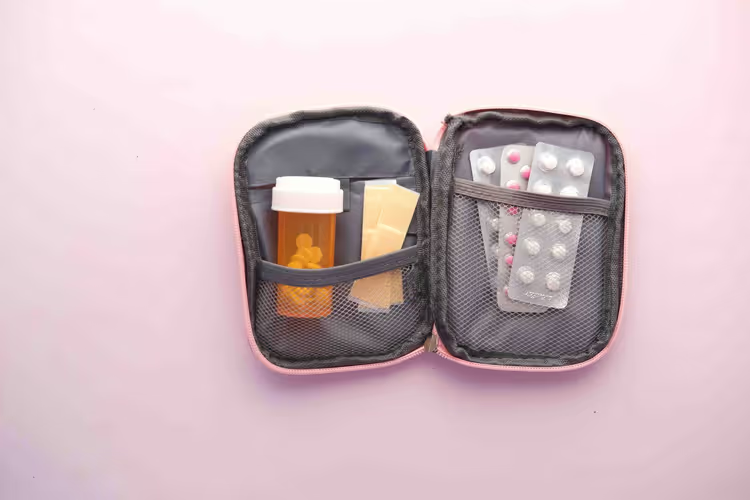
Travel first aid kit: what to take on a trip and how to carry medicines
A first aid kit on vacation serves two purposes. First, to relieve pain or fever without hunting for a 24-hour pharmacy. Second, to avoid losing a day of rest to an upset stomach or motion sickness.
Familiar packaging has different names in another country, and some medications are sold only by prescription. So put the kit together at home, not on the first evening after your flight.
We have organized the kit into four groups: pain relievers, stomach remedies, cold remedies, and topical treatments. Separately, there are medications for chronic conditions, remedies for motion sickness and injuries, and a list for the tropics.
What a basic first aid kit includes
💡 In short:
- Put together the kit by four groups: pain relievers, stomach remedies, cold remedies, topical treatments.
- Check the active ingredient, not the packaging name: the brand will be different in another country.
- Take factory packaging and keep the first aid kit in your carry-on.
- Group contents and prevention in the tropics: verified on 09/15/2026 on the WHO website.
The four groups cover almost all everyday situations on the road. The first relieves pain and spasms, the second handles the stomach and intestines, the third covers colds and allergies, and the fourth combines topical treatments for cuts and scrapes.
Group | What to take | When it helps |
|---|---|---|
Pain relievers | ibuprofen, paracetamol, drotaverine | headache, spasms, fever |
Stomach remedies | activated charcoal, loperamide, diosmectite, oral rehydration salts, pancreatin | diarrhea, poisoning, heaviness after eating |
Cold remedies | ibuprofen, xylometazoline, butamirate, ambroxol, throat lozenges | colds, runny nose, cough, sore throat |
Topical treatments | hydrogen peroxide, iodine in a pen applicator, bandage, adhesive bandage | cuts, blisters, scrapes |
Keep the list in your phone notes. When a package runs out, you will quickly see what to add to the kit.
Pain relievers, stomach remedies, and heart medications
The pain relief part is divided into two types. Ibuprofen and paracetamol relieve pain and fever. Drotaverine works as an antispasmodic for abdominal pain.
The stomach group is the broadest. Activated charcoal is used for poisoning, loperamide for upset stomach, diosmectite and nifuroxazide for diarrhea and indigestion. Oral rehydration salts restore water to the body after poisoning. Pancreatin helps when the familiar cuisine and water change abruptly.
For heartburn, the list includes antacids with calcium carbonate and alginates. Those who already take medication for acidity keep pantoprazole or omeprazole. Heart medications should be selected by your doctor; show them the list before the trip. Corvalol contains phenobarbital, and its import is banned in several countries. If your doctor prescribed such a medication, take a medical certificate with you.
Colds, allergies, and topical treatments
The cold-fighting part of the kit: cold powders based on paracetamol. Add symptom-specific remedies to them: ibuprofen for colds, xylometazoline for a runny nose, butamirate and ambroxol for cough, lozenges for sore throat. Ear drops are for ear pain, eye drops for eye inflammation, acyclovir for cold sores.
Sedatives in the basic list: valerian and lemon balm preparations. Antiallergy medications: loratadine and clemastine. Pack them separately so you can find the right package right away.
Topical treatments take up the smallest corner and are needed most often: hydrogen peroxide, iodine in pen applicators, bandage, adhesive bandage, and cotton wool. Iodine in a pen applicator does not leak in your suitcase and does not stain your things.
Important: packaging names and contents depend on the country of purchase. Check the active ingredient with a pharmacist: in another country, the same medication is often sold under a local name.
What to take for chronic conditions
A change of climate and water can worsen chronic conditions. For this group, you put together a kit not from a general list, but according to your own prescription.
People with diabetes take their usual medications and test strips. People with high blood pressure pack a blood pressure monitor and the pills they take daily. People with thyroid conditions take their dose for the entire trip plus a few extra days of supply.
Keep the main supply of medications in your carry-on, and put a backup package in your suitcase. If one bag gets lost, you will not be left without your medication.
Remedies for travel, active recreation, and the beach
For motion sickness, the basic list includes meclizine and dimenhydrinate. Take them in advance, before boarding a bus or boat. Otherwise the tablet will not have time to work.
For active recreation, add an elastic bandage and a cold pack. For a fresh injury, you need cold first, not a warming ointment. Gels with diclofenac or ketoprofen reduce inflammation. Troxerutin belongs to vein tonics. A bactericidal adhesive bandage will help with cuts and blisters that appear on the first long walk.
For the beach, take sunscreen with a high protection factor (the basic list specifies SPF 30-50), panthenol for burns, and a soothing spray for your skin type. Reapply cream after every swim.
Tropics: malaria, water, and food
There is no malaria vaccine for travelers, so doctors recommend a preventive course of tablets. A yellow fever vaccination is sometimes mandatory for entry into certain countries. Requirements depend on the country and change, so check them before buying a ticket: on the WHO website or with your doctor.
Malaria remains a widespread disease in the tropics. According to WHO, in 2024 there were about 282 million cases and 610,000 deaths in 80 countries worldwide (as of 12/2025, WHO). The African region accounts for about 95% of cases.
The basic first aid kit for the tropics is reinforced with broad-spectrum stomach remedies. Read reviews about food and water in the specific country in advance: they show where travelers most often get food poisoning.
How to pack and transport medications
From our travel experience: tablets travel in factory packaging, not in a single jar "for everything." That way, at the border and at the pharmacy, it is clear what the medication is and until what date it is valid.
Pack liquids in a separate zip bag. Hydrogen peroxide and pressurized sprays leak in a suitcase. Keep the first aid kit in your carry-on: your suitcase sometimes arrives later than you do.
If you take a medication regularly, take a prescription or a doctor's note with the international name. Metamizole, Corvalol with phenobarbital, and medications with codeine are banned from import in several countries. Bring such medications only with a doctor's certificate and after checking the country's rules. Keep a copy on your phone and the original in the folder with your ticket.
Ad: this article contains affiliate links, we earn a commission if you book through them, at no extra cost to you.
Insurance and help when you get sick on a trip
You pay the clinic bill abroad yourself, and insurance reimburses the expenses according to the policy terms.
Before the trip, compare insurance terms: treatment coverage, telemedicine, and reimbursement for flight cancellation. Put the policy number on your phone next to your ticket.
⁉️🤔 Frequently asked questions
Which groups of medications are included in a basic first aid kit?
The first aid kit is made up of four groups: pain relievers, stomach remedies, cold remedies, and topical treatments. Pain relievers include ibuprofen, paracetamol, and drotaverine; stomach remedies include charcoal, loperamide, and oral rehydration salts; cold remedies include xylometazoline and throat lozenges. Topical treatments include hydrogen peroxide, iodine in a pen applicator, bandage, and adhesive bandage.
What should I do if a medication runs out in another country?
Take the packaging or a note with the active ingredient and show it to a pharmacist. The composition and dosage stay the same, but the name changes: the pharmacy will offer you a local equivalent. If you take a prescription medication, see a doctor first rather than asking for a substitute without a consultation.
Which remedies help with motion sickness?
Tablets with dimenhydrinate or meclizine work well. If you do not tolerate travel well, choose a window seat or a seat in the front of the vehicle.
What should I take for sunburn and burns at the beach?
For the beach, you need sunscreen with a high protection factor, panthenol for burns, and a soothing spray for your skin type. Reapply cream after every swim, otherwise the protection washes off. For a severe burn with blisters, treatment should be prescribed by a doctor, not a first aid kit.
Do I need vaccinations for a trip to the tropics?
A yellow fever vaccination is sometimes mandatory for certain countries. There is no malaria vaccine for travelers; a doctor prescribes preventive tablets. Check the requirements for your country on the WHO website or with your doctor.
Can I pour tablets into a single jar?
No. Keep medications in blister packs so the name, dosage, and expiration date are visible.
In short: what is worth booking
A basic first aid kit takes up half of a small toiletry bag and can be put together in one evening. If you are going on a seaside trip, add motion sickness remedies and burn cream to the four groups. If you are going to the tropics, first check vaccinations and malaria requirements, then reinforce the stomach group.
If you have a chronic condition, put together a separate kit according to your prescription. Take a doctor's note with the international name of the medication and keep it with your ticket.
Before your flight, compare insurance terms and save the policy number on your phone.

A small editorial team writing guides for independent travel. We travel ourselves, but we haven’t been everywhere, so we check prices, opening hours and how to get there against official sources.