
















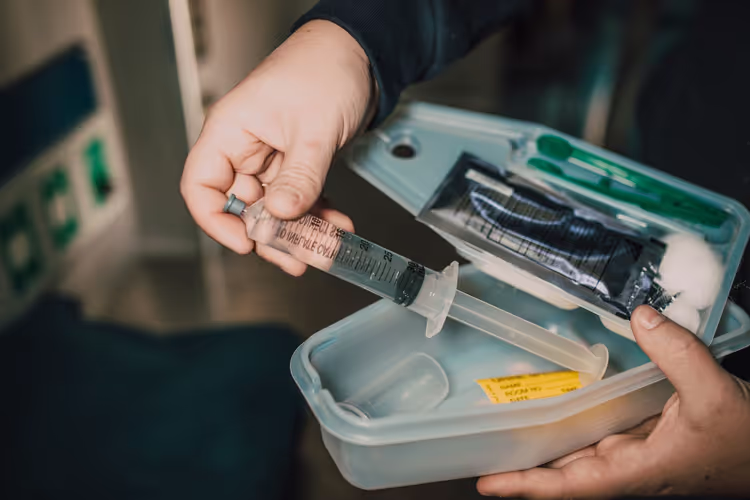
Preparing for travel with allergies: first aid kit, pollen season and insurance
Planning a trip with allergies is more complicated than a regular vacation. A flare-up can catch you in an unfamiliar city, where the pharmacy is closed and your usual medication is not on hand.
The good news is that almost everything can be handled in advance. The destination, season, first aid kit, and insurance cover most of the risks before you even board the plane.
Below is a preparation checklist that works for pollen, food, and drug allergies. Each step takes one evening.
Ad: this article contains affiliate links, we earn a commission if you book through them, at no extra cost to you.
How to choose a destination when you have allergies
💡 In short:
- Check the pollen season in the country and avoid traveling during peak bloom.
- Choose accommodation without carpets, with a clear cleaning schedule and no animals.
- Liquid medications can be carried in hand luggage above the 100 ml limit (verified on 09/13/2026 on the official EU portal).
Start with the destination. If you are allergic to insect stings, think twice about a trip to Africa. Midges and mosquitoes there can cause a severe reaction. Some countries also require a vaccination certificate for entry.
Find out in advance which vaccinations are required for the country and whether you react to any of their components. The decision about vaccination is made by your allergist, not a tour operator.
Climate matters too. Humid tropics with mold are a poor fit if you are allergic to mold. Dry desert air makes life easier with pollen allergies but dries out your mucous membranes.
When choosing a hotel or apartment, read reviews about how often cleaning is done, how often linens are changed, and which cleaning products are used. This matters if you are allergic to dust or household chemicals.
Do not hesitate to message the owner of the accommodation or car and ask clarifying questions. If you are allergic to animal dander, ask whether a previous guest had a pet.

When to go: pollen seasons in Europe
Choosing the right time is just as important for an allergy sufferer as choosing the right place. Plan your trip so it does not fall during a flare-up period.
Copernicus CAMS publishes a daily pollen forecast for six allergens: alder, birch, olive, grasses, mugwort, and ragweed (according to Copernicus, 09/2026). The service is free and updated every day.
Alder and birch open the season in early spring. Grasses last from late spring to mid-summer. Mugwort and ragweed spoil late summer and early fall.
If you have a pollen allergy, move your trip to another time or choose a region where your plant is not blooming.
Check not only the country but also the specific area. In the mountains, the season shifts later, while on the coast it starts earlier because of the mild winter. Your allergist can tell you when your peak period is.
Consultation with an allergist
A visit to an allergist before the trip assesses your health and gives recommendations on prevention and dosages. The doctor selects medications for your profile and destination.
Take a certificate with the doctor's conclusion on your trip. The information in it should be duplicated in English or in the language of the destination country, otherwise neither a border officer nor a local doctor will be able to read it.
Check how your medication will behave in new conditions. A familiar pill sometimes works differently when the climate and diet change.
During pregnancy, allergies can worsen, and previously used medications can become unsafe. Discuss this with your doctor in advance.
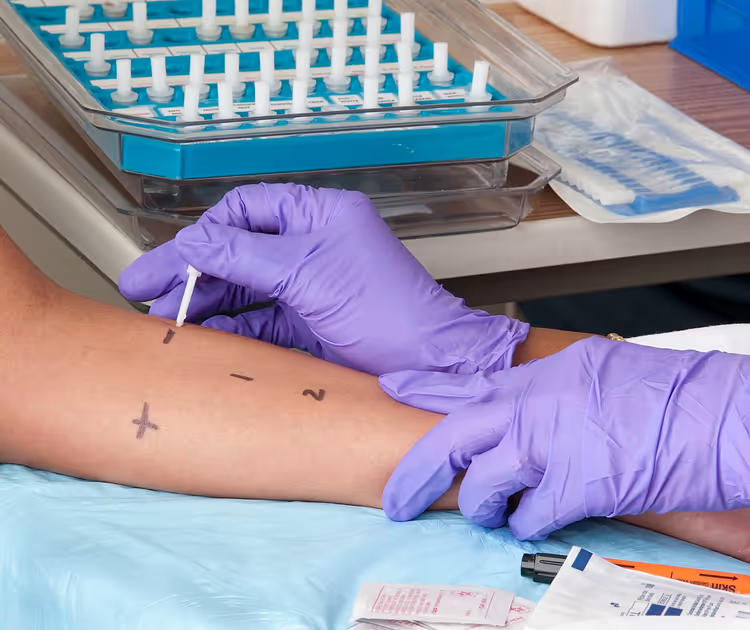
Travel first aid kit for allergies
Put together a first aid kit for your type of allergy. Below is a basic set worth discussing with your doctor.
Item | Why you need it on the road |
|---|---|
Antihistamines | the foundation for any allergy, chosen by a doctor |
Eye drops | moisturize and rinse pollen out of your eyes |
Decongestant nasal drops | help with allergic rhinitis |
Saline spray | relieves dryness in the sinuses and cleans the nose |
Inhaler and peak flow meter | needed for allergic asthma |
Epinephrine auto-injector | can save your life if there is a risk of anaphylactic shock |
Emollients and steroid cream | used for contact dermatitis |
Make sure you have antihistamines that work for you specifically. Do not change your dosage on your own during the trip, even if symptoms get worse.
If you have allergic asthma, keep your inhaler and peak flow meter with you. The device measures your exhalation force and shows when it is time to step up treatment.
If anaphylactic shock is possible, an epinephrine auto-injector within reach can save your life. Check the expiration date and a spare cartridge before departure.
Before the trip, find out whether you can bring your medications across the border and whether they are available locally. Some medications require a prescription or authorization.
Put medications in a zip-lock bag so nothing spills or leaks. Keep them in your hand luggage, not in a checked suitcase.
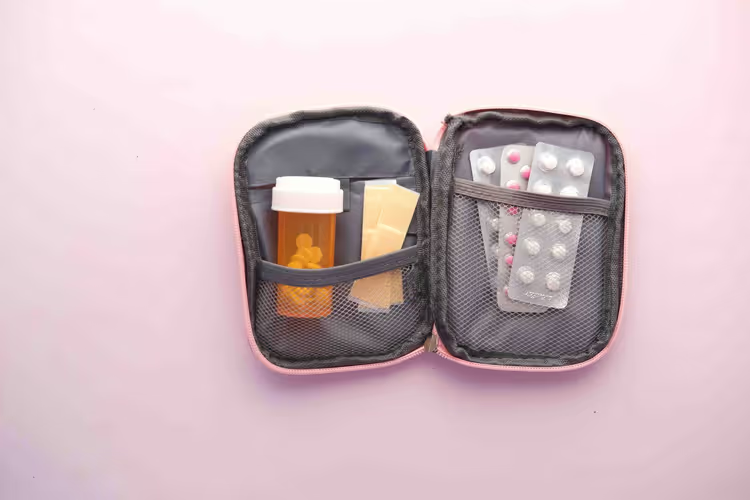
Medications in hand luggage: EU rules
Liquid medications for medical purposes can be carried above the 100 ml limit (verified on 09/13/2026 on the European Commission website). You do not have to place them in the one-liter transparent bag.
At security, present medications separately and show the prescription or certificate. This helps the officer understand faster that it is a medication, not cosmetics.
An epinephrine auto-injector and an inhaler are allowed in hand luggage. Keep them with you, not in the bag you check into the cargo hold.
Take a supply for the entire trip plus a few extra days for flight delays. Finding your brand in a foreign pharmacy can be difficult.
The English name of the active ingredient will be useful in any pharmacy.
Insurance: what to check in the policy
Good insurance keeps you from going broke if you need medical care or medications that are not in your first aid kit. Review the policy before the trip, not in the emergency room.
Check three things. Whether the policy covers flare-ups of a chronic condition. Whether medications and doctor visits are included. Whether there is repatriation and assistance for anaphylaxis.
The European Health Insurance Card works in EU countries but only covers public healthcare under general conditions (Your Europe, 09/2026). It does not cover private clinics, medications, or getting you back home.
It is convenient to compare insurance terms and see the exclusions right away. Read them, not just the policy price.
Doctor contacts and communication
Write down the contacts of doctors, clinics, and emergency services you can reach at any time. The single European emergency number 112 works in all EU countries, save it in advance.
Keep the number and copies of prescriptions on your phone and on paper. Your phone may run out of battery or fail to find a network while roaming.
Sort out communication in advance. A local SIM or eSIM for calling a clinic works faster than searching for open Wi-Fi.
Food, bracelets, and sun protection
If you have a food allergy, choose restaurants with detailed menus and ask whether a dish contains the allergen. Do not taste food whose ingredients raise doubts.
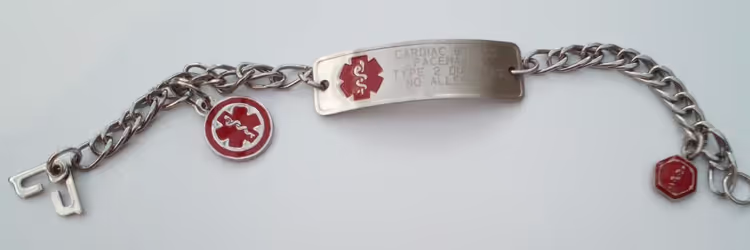 © RexxS · CC BY-SAPhoto: RexxS, CC BY-SA (https://creativecommons.org/licenses/by-sa/4.0), Wikimedia Commons
If your list of food allergens is short, wear a bright bracelet on your wrist stating the forbidden ingredient. A label like nut allergy or seafood allergy works well.
In northern countries, if you have cold allergy, warm clothes and shoes are not enough. Take a scarf to cover your face, gloves, warm socks, and a thermos of tea.
Plan spots along your route where you can warm up quickly. A cafe, museum, or shopping center works better than a long walk along the waterfront.
If you have photodermatitis, always wear a high-SPF sunscreen with mineral filters. It is especially important at the seaside and at a ski resort.
Allergies are no reason to give up traveling. Plan your trip with more care for yourself, and your vacation will go smoothly.
⁉️🤔 Frequently asked questions
How do I carry allergy medications in hand luggage?
Liquid medications for medical purposes can be taken above the usual liquid limit, but they must be presented at security. Take a prescription or certificate in English, pack medications separately from the one-liter bag, and keep the auto-injector within reach, not in checked baggage.
What should I do if a flare-up happens during the trip?
First, take the medication according to the plan your doctor agreed on. If it gets worse, call emergency services or go to the nearest clinic. Keep doctor and insurance contacts on your phone, and take the policy and certificate with you.
Which destinations are suitable for someone with allergies?
The choice depends on your allergen. If you have a pollen allergy, choose a region where your plant is not blooming; if you are allergic to mold, humid tropics are a poor fit. Check the pollen forecast for the peak season.
Do I need separate insurance for allergies?
Yes, especially if the allergy is chronic. Check whether the policy covers flare-ups and doctor visits. The EU health insurance card only works within the union and only for public healthcare; it does not pay for private clinics or getting you back home.
How do I eat at a restaurant with a food allergy?
Choose places with detailed menus and ask about the ingredients of each dish. A bright bracelet saying nut allergy or seafood allergy helps staff understand the restriction without long explanations.
In short: what to book
If your trip falls during pollen season: choose accommodation with air conditioning and no carpets. If you have a food allergy: choose a hotel with a breakfast buffet and labeled dishes. If you are going north with a cold allergy: take a thermos and warm accessories.
Put together your first aid kit in advance, get insurance, and save your doctors' contacts. Then your vacation will not depend on how your allergy behaves.

A small editorial team writing guides for independent travel. We travel ourselves, but we haven’t been everywhere, so we check prices, opening hours and how to get there against official sources.