
















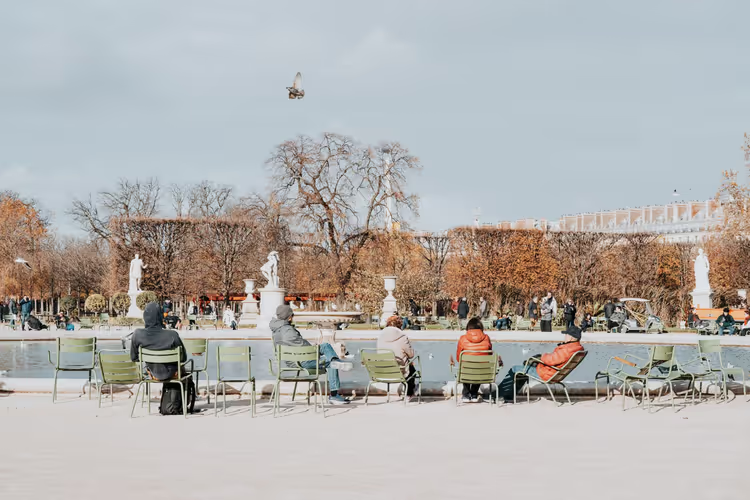
Tuileries Garden: route through the free park and the Orangerie Museum
The Tuileries Garden lies exactly between the Louvre and Place de la Concorde. It is a free park in the center of Paris that you can enter without a ticket, reservation, or waiting in line.
Many tourists rush through it in ten minutes on their way to the Louvre or the Champs-Élysées. That way you miss the city's best free pause: shade, sculptures, a pond, and an Impressionist museum right inside the garden.
Below is everything you need for a first visit: what to see, how much the Musée de l'Orangerie costs, when to go, and how to get there by metro.
Ad: this article contains affiliate links. We earn a commission if you book through them, at no extra cost to you.
Tuileries Garden: essentials for a first visit
💡 In short:
- Garden entry is free, there is no ticket office; the park is open every day from early morning to late evening.
- The Musée de l'Orangerie in the western part of the garden is open from 9:00 to 18:00, closed on Tuesdays.
- Access and opening hours: 09/2026, verified on the official Musée de l'Orangerie website
The garden stretches as a long green axis between two of Paris's main squares. You can walk its full length in about twenty minutes, but with stops it easily takes two to three hours.
Keep one simple rule in mind. Start at the Louvre and walk toward Place de la Concorde, then return along the Seine. That way the sun stays to the side rather than in your face.
History: from Catherine de' Medici to the present day
The garden appeared in 1564 along with the Tuileries Palace (history of the garden). It was commissioned by Catherine de' Medici, wife of King Henry II. She wanted to live near her sons in the Louvre and was given land for a large park west of the city wall.
The layout was designed by the Florentine master Bernard de Carnesse. He created an Italian garden about 500 meters long and 300 meters wide (layout). The space was divided by six alleys, with lawns, flower beds, and small groups of trees between them.
There was also a working section. It held a vegetable garden and a vineyard, plus a labyrinth and a grotto. Historians mention ceramic figures of plants and animals used to decorate the flower beds.
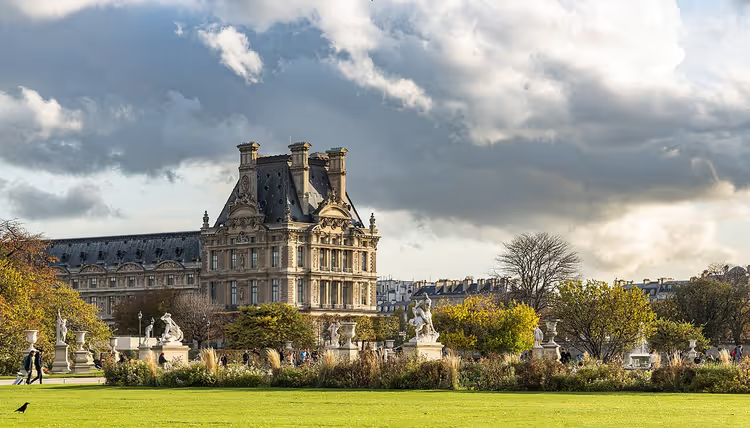
Under Louis XIV, the garden was redesigned by André Le Nôtre. He established the geometry you see today: straight alleys, trimmed hedges, two basins, and a long perspective toward the Champs-Élysées (reconstruction).
The garden opened to the public in 1667 (opening date). Before that, only the royal family walked here. After the French Revolution, the park became municipal and open to everyone.
The Tuileries Palace did not survive. It was burned during the Paris Commune in 1871, and only the garden and the arch at Place du Carrousel remain from the residence (fate of the palace). Later the garden lived through two world wars and shelling, but each time it was returned to the city.
What to see: walkways, sculptures, and the pond
The main walkway runs from Place du Carrousel to the octagonal basin at Place de la Concorde. This is the same axis that makes it easy to walk the entire park while taking in the views on both sides.
Sculptures from different eras line the edges. Almost all of them are cast copies of the originals, so the bronze stands outdoors without display cases or guards (sculpture in the garden).
In the eastern part lies a large square with fountains. In summer, chairs and open-air cafes operate here, and children ride a carousel and a small Ferris wheel. In winter, some of the attractions close.
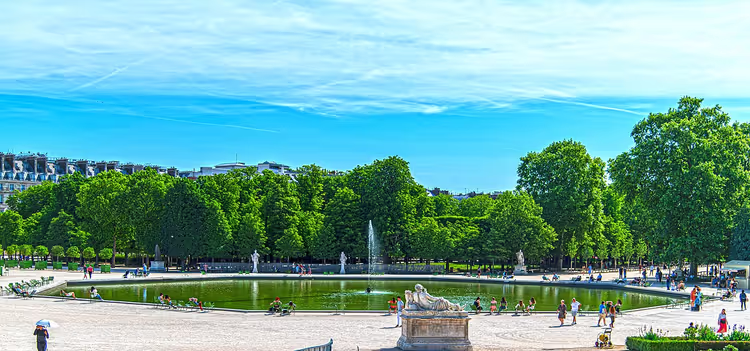 © Michael Gaylard from Horsham, UK · CC BYPhoto: Michael Gaylard from Horsham, UK, CC BY (https://creativecommons.org/licenses/by/2.0), Wikimedia Commons
Bring water and do not count on shade right by the pond. At midday the open walkways heat up considerably, and the benches sit in the sun. Your comfortable plan: morning or early evening.
Tours and tickets in Paris
Guided tours, skip-the-line tickets and activities — most offers can be cancelled free of charge.
See offers on GetYourGuideThe widget loads once you give your consent.
Musée de l'Orangerie and the Impressionists
At the western end of the garden stands the Musée de l'Orangerie. It is known for two oval rooms displaying Claude Monet's enormous "Water Lilies" (about the museum).
Another room houses the Walter-Guillaume collection. Here you will see Renoir, Cézanne, Picasso, Utrillo, and Modigliani (collection contents). The rooms are small, so go in the morning: by midday, tour groups fill the first oval rooms.
The museum is open from 9:00 AM to 6:00 PM, closed on Tuesdays (verified 09/14/2026 on the official website). Tickets cost in the low double digits; check the exact price at the ticket office or online.
Paris museum tickets are best bought in advance so you do not wait at the entrance. Paris museum tickets on Tiqets are booked for a specific time, and you enter without queuing.
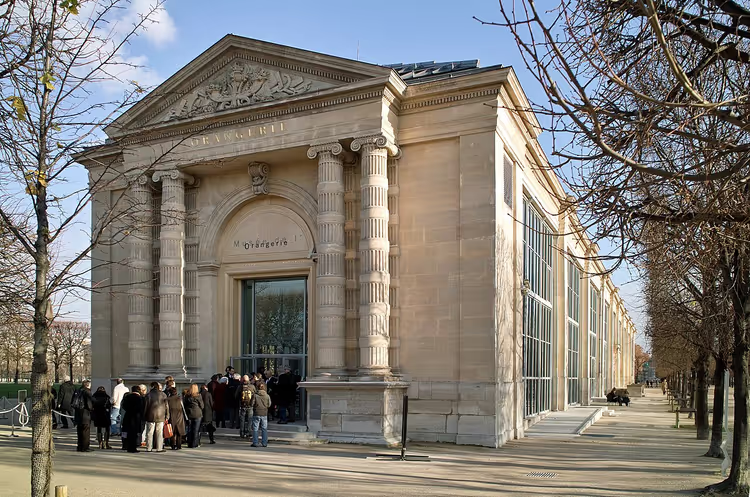 © Traktorminze · CC BY-SAPhoto: Traktorminze, CC BY-SA (https://creativecommons.org/licenses/by-sa/3.0), Wikimedia Commons
Interesting facts about the garden
The park covers almost 25.5 hectares (garden size). That is larger than many city parks in Europe.
According to one version, Catherine de' Medici wanted to grow poisonous plants here. The legend is still repeated, but there is no evidence to support it.
The garden sits on the right bank of the Seine and divides the first arrondissement of Paris. The area between the Louvre and Place de la Concorde was once wasteland outside the city wall.
The name recalls a craft. Tiles were fired here for centuries: in French, tuile means "tile," and tuileries translates as "tile workshops" (origin of the name).
The storm of 1999 brought down hundreds of trees in the park (storm aftermath). The garden was replanted, so many of the trees here are younger than the layout itself.
In 1783, one of the first hot air balloon flights took off from here (balloon flights). And in 2024, the Olympic cauldron for the Paris Games was lit in the garden.
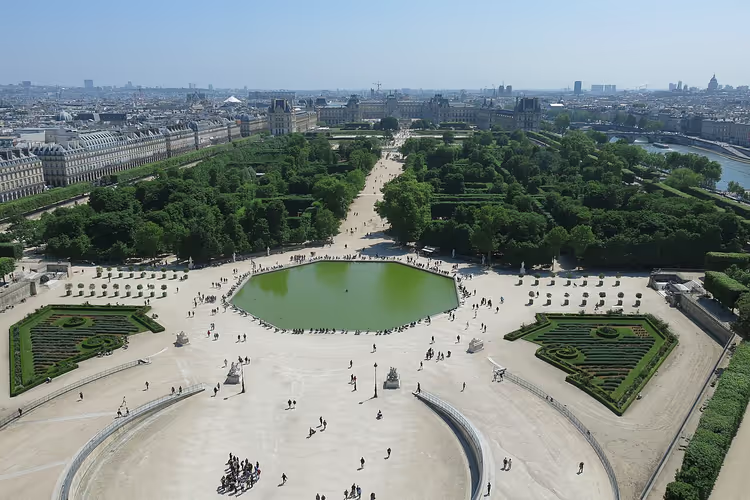
Cafes and attractions are paid, but the park itself is open to everyone.
How to get there and when to go
The easiest way is by metro. Tuileries station on line 1 brings you right to the eastern entrance, and Concorde and Palais Royal stations are also nearby (how to get there).
From the Louvre to the garden is less than a kilometer through the Carrousel gallery (distance). From Place de la Concorde, the entrance is on the opposite side.
The best time to visit: a weekday morning from April through June or in September. In July and August it is crowded here, but the fountains at Place de la Concorde are running.
If you want to see Paris without rushing, add a short tour to your garden visit. Paris tours on GetYourGuide go on foot and by bus, often with a guide in a language you understand.
Tuileries Garden on the map
Tuileries Garden and what's nearby
Places on the map
- Tuileries Garden Free 25.5-hectare park between the Louvre and Place de la Concorde
- Louvre Less than a kilometre from the garden via the Carrousel gallery
- Place de la Concorde The western end of the garden's axis, fountains run in summer
- Arc du Carrousel All that remains of the Tuileries Palace, the start of the main alley
- Musée de l'Orangerie Two oval rooms with Monet's Water Lilies, open 9:00-18:00
- Tuileries Station The first metro line, exit right at the garden's eastern entrance
Open the map on your phone and build a route to the nearest entrance. That way you won't keep circling around the Louvre and Place de la Concorde.
⁉️🤔 Frequently asked questions
How much does it cost to enter the Tuileries Garden?
Entry to the garden is free, and there is no ticket office in the park. You only pay for the Musée de l'Orangerie, cafes, and attractions. Book your museum ticket in advance for a specific time slot so you don't have to wait in line at the entrance. Check prices on the museum's official website before your trip.
Is the Tuileries Garden open in winter?
Yes, the garden is open year-round, including in winter. Some attractions and outdoor cafes close for the cold season, but the paths, pond, and sculptures are accessible every day. The wind from the Seine is strong in January, so bring a warm jacket and don't plan on long walks without breaks.
When are there the fewest people?
Come at opening time on a weekday. By midday, tour groups start arriving, and after lunch the area around the pond gets crowded. Early morning in the garden is almost empty, and you can easily photograph the paths without people in the frame. On weekends, evening is the better choice.
Can you walk through the garden on the way to the Louvre?
Yes, and many people do. From Place de la Concorde to the Louvre through the garden is less than a kilometer. Along the way you'll see the octagonal pond, the grand carré, and the Musée de l'Orangerie. The garden lies directly on the route between the city's two main squares.
Where can you eat near the garden?
Inside the garden, there are cafes near the grand carré and ice cream carts. For a full meal, look on Rue de Rivoli or in the shopping arcade near the Louvre. Lying on the lawns is not allowed in some areas, but there are chairs along the paths that you can move into the shade.
In short: what to book
The Tuileries Garden is worth your time even on a short trip. It is free, lies on the way to the Louvre, and gives you a breather between two busy squares. Plan your visit in the morning and go into the Musée de l'Orangerie right after it opens.
If you have two hours: walk through the garden and visit the Musée de l'Orangerie.
If you have a full day: add the Louvre and an evening Seine cruise.
Louvre skip-the-line tickets on GetYourGuide and hotels near the Louvre on Trip.com should be booked in advance.
And get your Paris museum tickets through Tiqets: you enter at your chosen time without waiting in line.

A small editorial team writing guides for independent travel. We travel ourselves, but we haven’t been everywhere, so we check prices, opening hours and how to get there against official sources.