














Istanbul on two continents: what to see, what to try and when to go
Istanbul sits on two continents at once: you can have breakfast in Europe and lunch in Asia.
Türkiye combines Mediterranean beaches, Byzantine and Ottoman heritage, and one of the strongest cuisines in the region.
Ad: this article contains affiliate links. We earn a commission if you book through them, at no extra cost to you.
Istanbul: a city on two continents at once
💡 In short:
- Old City (Sultanahmet): Hagia Sophia and the Blue Mosque stand side by side, mosque entry is free.
- New City: a walk along Istiklal, the Galata Tower and evening restaurants.
- Tickets and opening hours: 09/2026, verified on the official Galata Tower website.
Istanbul lies in two parts of the world at once, and that is what makes it special. The Bosphorus divides the city into European and Asian halves, while the Golden Horn inlet cuts the European side into two more: the New City and the Old City. One trip gives you two completely different cities.
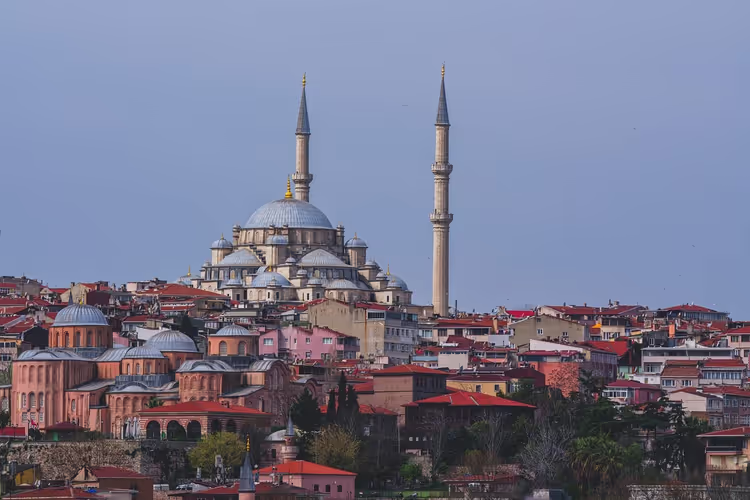
The Old City on the southern shore of the Golden Horn gathers almost all the monuments. Hagia Sophia and the Blue Mosque stand on Sultanahmet Square, with palaces and an underground cistern nearby. You can walk these streets for days, and each time you will find a new corner.
The New City on the northern shore lives differently. This is where the business districts, shops and evening bars along the pedestrian Istiklal are. People come here for dinner and the view from the Galata Tower, not for a museum tour.
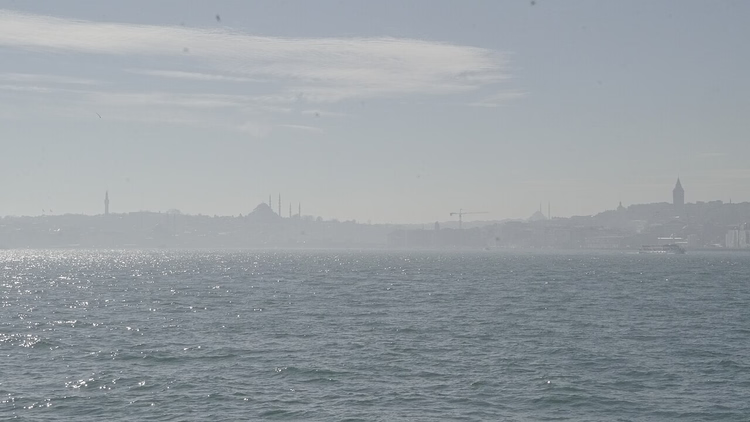
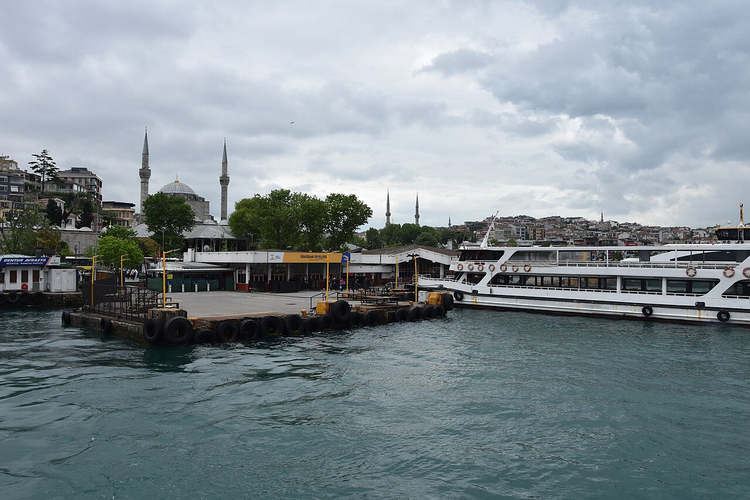
The Bosphorus connects the Black Sea with the Sea of Marmara, and busy shipping traffic runs through it. Ferries link the European piers with the Asian ones, so the crossing becomes a little outing in itself. Take a sunset sailing: the shores light up, and the deck is cooler than the streets. It is the easiest way to see the city from the water if you do not want to hire a boat.
 © Jwslubbock · CC BY-SAPhoto: Jwslubbock, CC BY-SA (https://creativecommons.org/licenses/by-sa/3.0), Wikimedia Commons
European and Asian sides: how they differ
The European half gathers the main sights, hotels and restaurants. Here you will find Sultanahmet, Galata and the neighborhoods around Taksim Square. The density of monuments is at its highest, but so is the number of tourists.
The Asian half is calmer. Here you will find residential neighborhoods, markets and waterfronts where Istanbul locals themselves go. The atmosphere is more relaxed, prices are lower, and the views of the European shore open up from the water.
Getting between the two parts is easy on public transport and ferries. A ferry across the Bosphorus takes about 20 minutes, so you will not need a taxi. That way you can see both sides in one day without overpaying.
 © Phyrexian · CC BY-SAPhoto: Phyrexian, CC BY-SA (https://creativecommons.org/licenses/by-sa/4.0), Wikimedia Commons
What to see in Istanbul: tickets and opening hours
Istanbul alone has hundreds of sights, so choose according to your interests. Below are five places that make a good starting point for a first trip.
Site | Entry | Hours and details |
|---|---|---|
Hagia Sophia | active mosque, entry rules have changed | closed during prayer times, check before visiting |
Blue Mosque | free, no ticket needed (official website) | active place of worship, enter between prayers |
Galata Tower | paid entry | 08:30-18:30, night sessions until 22:00 (official) |
Rüstem Pasha Mosque | free | small mosque with tiles, active |
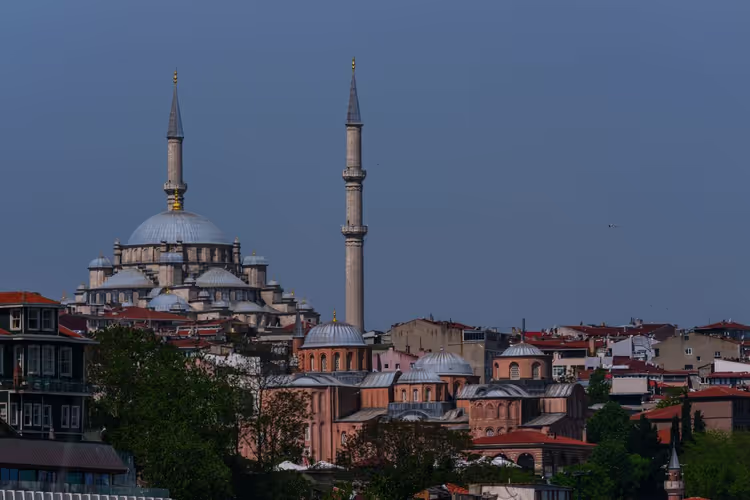
Kariye Mosque (Chora) | paid | active mosque since 2024, Byzantine mosaics and frescoes, closed during prayer times |
Hagia Sophia combines a Byzantine cathedral and an Ottoman mosque in one building. Today it operates as an active place of worship, so the schedule depends on prayers, and entry rules have changed several times. Check an official source before your trip.
The Blue Mosque stands opposite, across the square. Entry is free, no ticket needed, but you should cover your shoulders and knees, and women will want a headscarf. Come in the morning on a weekday: the lines are shorter.
The Galata Tower offers the best view of the city. Officially it is open from 08:30 to 18:30, with night sessions in the evening until 22:00 (verified 14.09.2026 on the official tower website). Go up at opening time or at sunset: during the day the narrow gallery gets crowded.
If you want a guide and no lines, Istanbul tours and tickets on GetYourGuide cover both entry and getting there.
Tours and tickets in Istanbul
Guided tours, skip-the-line tickets and activities — most offers can be cancelled free of charge.
See offers on GetYourGuideThe widget loads once you give your consent.
Turkish cuisine: what you must try
Turkish cuisine is built on vegetables, herbs, fish and meat, and sweets hold a special place. Ordering meze is the convenient way to go: many small appetizers instead of one big dish. That way you try more and do not overpay.
Mornings in Türkiye start with a hearty breakfast: cheeses, olives, fresh vegetables, eggs and warm flatbread. Portions come on small plates, so an order is easy to split between two.
For hot dishes, go for kebabs, lamb shish, pide and lahmacun. On the Bosphorus waterfront, get the fish: it is prepared simply, on the grill. Vegetarians have it easy, because there are just as many vegetable dishes as meat ones, and some are served cold.
Finish with baklava and a glass of Turkish tea. There is a huge variety of sweets here, and every confectionery row will offer you several to try. Tea is drunk all day, from small glasses.
When to go to Türkiye: seasons and weather
In summer the Mediterranean coast is hot and crowded, and hotel prices peak. July and August are the hardest months. That is when the coast has the most vacationers.
The coast is at its mildest in May, June, September and October. The sea is still warm, the heat eases, and lines at sights are shorter.
On the Mediterranean, the season is longer: swimming is comfortable from May through October. Resorts already open in early spring. In winter the coast is cheaper and quieter, but the sea is cold, so that time is better for cities.
Istanbul lives at a different pace than the coast. For a city trip, the same May, June, September and October work well. Walking the streets will be more pleasant than in the height of summer. In April, tulips bloom in Istanbul. The weather here is shaped by the Bosphorus, so spring and autumn bring more rain and wind, and you should pack a jacket.
⁉️🤔 Frequently asked questions
Do I need a ticket for the Blue Mosque?
No, entry is free, no ticket needed: the Blue Mosque operates as an active place of worship, not as a museum. Come between prayers and cover your shoulders and knees. Women should bring a headscarf; one is often provided free at the entrance.
Can I see Europe and Asia in one trip?
Yes. The Bosphorus divides the city into two parts, and regular transport and ferries run between them.
When is the best time to visit Istanbul?
May, June, September and October are the most comfortable. In summer the city is hot and crowded; in winter it is damp and windy. If you are planning beaches, aim for the same months: the sea stays warm until October.
What must I try from Turkish cuisine?
Start with meze, then have a kebab or shish, pide and lahmacun. By the Bosphorus, order grilled fish. Finish with baklava and Turkish tea: there is a huge variety of sweets here, and vegetarians will find plenty of vegetable dishes.
Which places should I see in Istanbul first?
Start with the Old City: Hagia Sophia and the Blue Mosque stand side by side on Sultanahmet Square. Then go up the Galata Tower, and stop by the Rüstem Pasha Mosque and the Kariye Mosque with its mosaics.
In short: what to book
A first trip to Türkiye almost always starts with Istanbul, so it is best to keep your accommodation in the Old City or near Galata. If you have a short visit and want to fit everything in, choose Istanbul hotels on Trip.com near the tram.
If you are traveling without a car and want ready-made routes, check out Istanbul tours on GetYourGuide. Book in advance if you are arriving on a weekend or during holidays.

A small editorial team writing guides for independent travel. We travel ourselves, but we haven’t been everywhere, so we check prices, opening hours and how to get there against official sources.