















Sultanahmet: route to the main sights and ticket prices
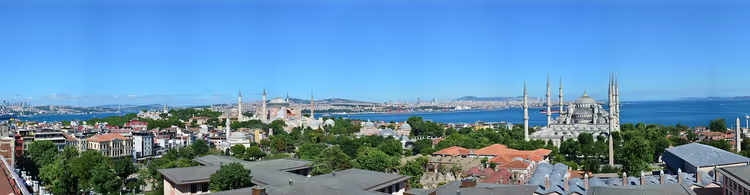
Most tourists spend two days in Sultanahmet. The area is compact, but it packs in Hagia Sophia, the Blue Mosque, Topkapi Palace, and the ancient Hippodrome with its three antique columns. You can walk from one site to another, no metro or taxi needed.
The entire historic center of Sultanahmet is a UNESCO World Heritage Site. It is also home to the Archaeological Museum, Gulhane Park, and dozens of cafes serving Turkish cuisine. We have put the area's main sites into one guide: what to see, how much tickets cost, where to eat, and which hotel to stay at.
Ad: this article contains affiliate links, we earn a commission if you book through them, at no extra cost to you.
What to see in Sultanahmet
💡 In short:
- Hagia Sophia, the Blue Mosque, and Topkapi Palace are all within a one-kilometer radius, with the T1 tram running between them.
- Buy tickets for Hagia Sophia and Topkapi online in advance, otherwise you will stand in line at the entrance.
- Prices and opening hours: 09/2026, verified on the official portal of Turkey's museums.
The area occupies a small stretch of land between the Bosphorus and the Sea of Marmara, within the Fatih district. Monuments from early Christianity and the Ottoman era stand side by side here. It is convenient to split your visit into two days.
Site | Admission | Hours | Closed |
|---|---|---|---|
Hagia Sophia, upper gallery | €25 | 09:00-19:00 | Friday 12:00-14:30 |
Topkapi Palace | €30, harem another €15 | 09:00-18:00 | Tuesday |
Archaeological Museum | 400 TL | 09:00-18:00 | Monday |
Blue Mosque | free | 08:30-18:30 | Friday until 14:30 |
Gulhane Park | free | 24 hours | none |
As of 09/2026, Istanbul Tourist Information. Hours change on holidays, so check the site's official website before your trip.
History of the Sultanahmet area
The first settlement on this spot appeared long before the Ottomans. Greek seafarers and merchants founded the colony of Byzantium here as early as the 7th century BC. In 330, Emperor Constantine turned the settlement into a new capital and named it New Rome.
The city was conceived as a stronghold of Christianity. Churches were built here, and market rows stood next to places of worship. At the height of the empire, Hagia Sophia and the Church of Saint Irene were erected. But the state was weakening, while the Ottoman power was growing stronger nearby.
In 1453, the Turks took Constantinople. Some Christian monuments were destroyed, others were converted into mosques and warehouses. Today's Istanbul has long outgrown the boundaries of Byzantium, and it is no longer the capital of Turkey. But you will most likely start your acquaintance with the country right here in Sultanahmet.
Hagia Sophia
The square where Hagia Sophia stands was built up three times. First it was a trading area, then a wooden church appeared, and after the Nika revolt it was burned to the ground. Emperor Justinian ordered a new cathedral to be built, and the construction was colossal in both scale and cost.
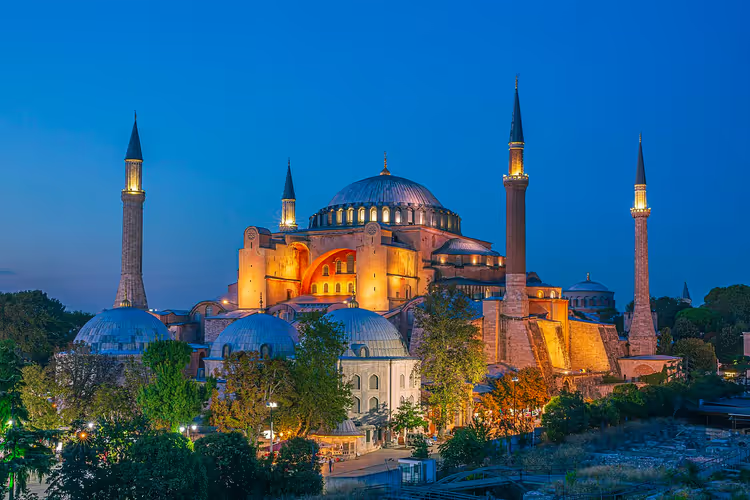 © Kecags · CC BY-SAPhoto: Kecags, CC BY-SA (https://creativecommons.org/licenses/by-sa/4.0), Wikimedia Commons
Materials were brought in from across the empire. For the decoration, they dismantled the Temple of Artemis in Ephesus and the Temple of the Sun in Rome. In 1204, the cathedral was looted by crusaders who were on their way to liberate the Holy Sepulchre. A significant portion of Europe's Christian relics was taken from here (source).
In 1453, Mehmed the Conqueror converted the cathedral into a mosque, and services were held there for five hundred years. In the mid-1930s, the building was turned into a museum, and since 2020 it has again been a functioning mosque. The upper gallery with its mosaics is open to tourists, and admission is paid.
- Cost: €25 for the upper gallery (as of 09/2026, ticket prices), Hagia Sophia tickets on Tiqets.
- Hours: 09:00-19:00, Friday break 12:00-14:30.
- The catch: a line forms at the entrance even outside peak season, so book a time slot in advance.
Obelisk of Theodosius
The granite obelisk is older than the city itself. It was quarried in Egypt under Pharaoh Thutmose III and brought to Constantinople by imperial order. The stele was erected on the Hippodrome only under Theodosius I, around 390 (source). The hieroglyphs on its faces are still legible today.
 © Giorgio Galeotti · CC BY-SAPhoto: Giorgio Galeotti, CC BY-SA (https://creativecommons.org/licenses/by-sa/4.0), Wikimedia Commons
Local craftsmen could not lift the multi-ton column, so they made a marble pedestal with bronze supports for it. The reliefs on the base show the emperor himself with his family in the stands. Later the obelisk was briefly turned into a fountain, and water basins were added.
- Getting there: tram T1 to Sultanahmet, then a couple of minutes on foot (see map).
- Cost: free, open all day.
- The catch: during the day there are many people around the pedestal, mornings are quieter.
Serpent Column
The bronze column of three intertwined serpents was cast in Greece in 478 BC. It was made from the weapons of defeated Persians, and the column itself served as a base for a golden tripod (source). In 326, Constantine moved it to the new capital and placed it on the Hippodrome.
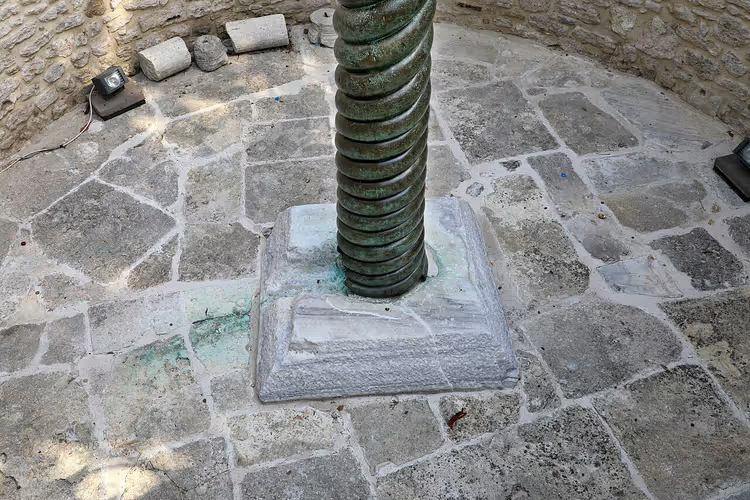 © Francesco Bini · CC BY-SAPhoto: Francesco Bini, CC BY-SA (https://creativecommons.org/licenses/by-sa/4.0), Wikimedia Commons
Locals considered the monument mystical: after its installation, snakes supposedly disappeared from the area. According to another legend, the top of the column was cut off by Mehmed the Conqueror. Archaeologists found one of the broken-off heads, and you can now see it in the Archaeological Museum. The base is buried about a meter underground.
- Cost: free.
- The catch: only part of the original eight meters remains, so the monument looks modest.
Obelisk of Constantine
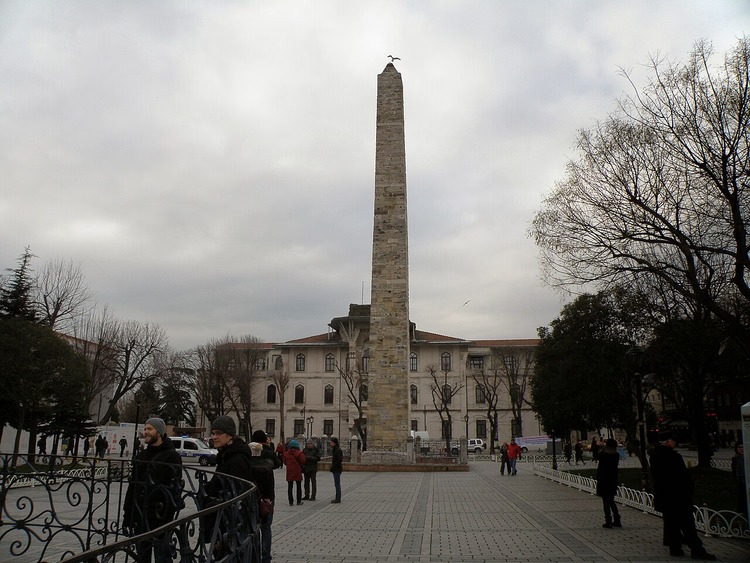
The third monument on the Hippodrome is built from limestone slabs held together with mortar. It is believed to have been erected under Constantine while awaiting an Egyptian stele that was delayed in transit (source). Time has badly damaged the masonry, and some of the stones have crumbled.
 © Mikhail Malykh · CC BYPhoto: Mikhail Malykh, CC BY (https://creativecommons.org/licenses/by/3.0), Wikimedia Commons
In the tenth century, Constantine Porphyrogenitus ordered the monument to be renovated. The walls were covered with copper sheets depicting battle scenes, and the top was crowned with a sphere or a statue. The Crusaders stripped and carried off the bronze, and under the Ottomans the slabs with Christian inscriptions were dismantled. Restoration of the monument is still being discussed today.
Today the monument stands on the Hippodrome without any barrier. Nearby you will see the two other obelisks and the Serpent Column, so the visit takes only a few minutes. The slabs at the base are still holding up, while the upper part long ago lost its cladding.
- Cost: free.
- The catch: the obelisk is in poor condition, part of the cladding is lost.
Blue Mosque
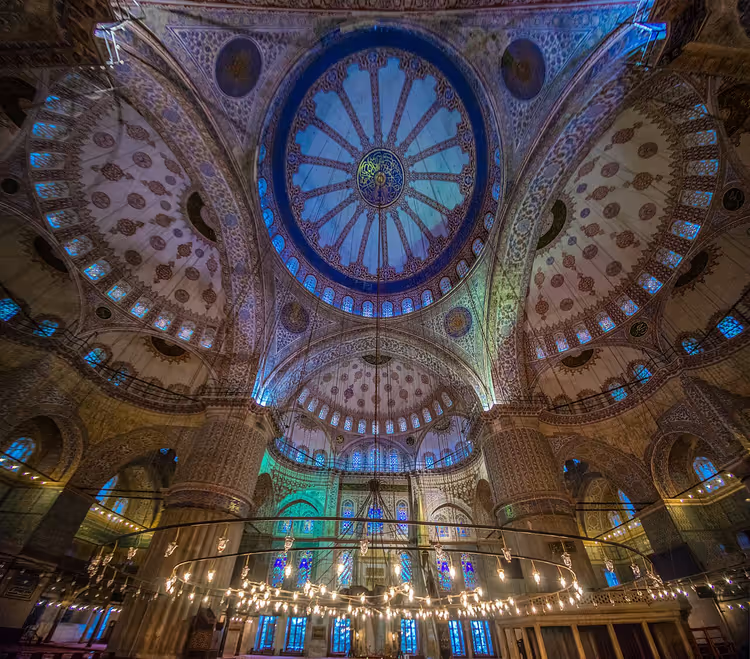
The mosque of Sultan Ahmed I was built from 1609 to 1616. The best craftsmen were invited for the decoration, and the sultan allocated funds from his personal reserves. He had only a year to see the finished building: Ahmed died of typhus. Today it is an active place of worship and the main mosque of the district (source).
 © Pedro J Pacheco · CC BY-SAPhoto: Pedro J Pacheco, CC BY-SA (https://creativecommons.org/licenses/by-sa/4.0), Wikimedia Commons
The mosque has six minarets, although at the time no more than four were allowed. It seems the architect tried to match the number of minarets of the Sacred Mosque in Mecca, or simply made a mistake. Inside, you will find not only painted decoration but also a special quality of light: the stained glass keeps the interior bright without glaring.
- Cost: free entry (as of 09/2026, source).
- Hours: 08:30-18:30, tourists are not allowed inside during prayer times, until 14:30 on Fridays.
- The catch: the entry line moves slowly because of security checks and the dress code.
Arasta Bazaar
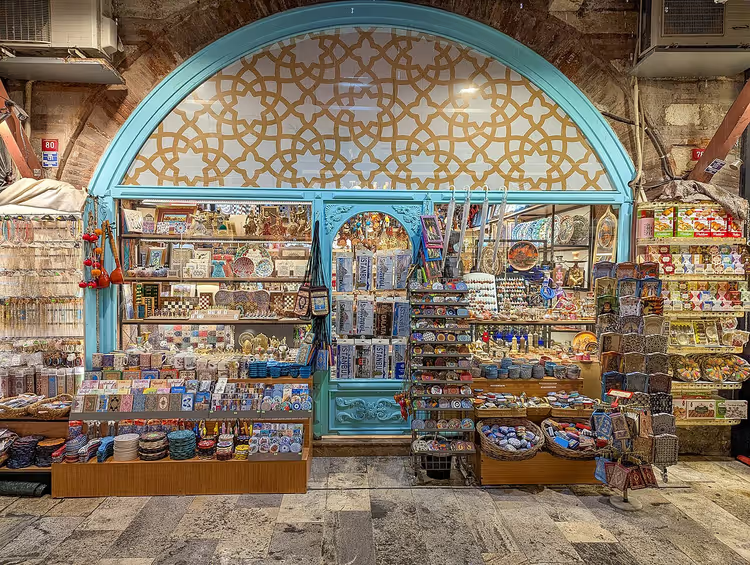
Arasta Bazaar does not work like a typical market. Nobody grabs your arm or pushes a leather jacket on you. It is more of an open-air museum where the displayed items can be bought. The sellers speak English and German fluently, and a buyer is almost always offered tea.
 © Sourabh.biswas003 · CC BY-SAPhoto: Sourabh.biswas003, CC BY-SA (https://creativecommons.org/licenses/by-sa/4.0), Wikimedia Commons
Haggling is part of the rules here, and the final price often ends up noticeably lower than the starting one. The selection is narrow, but high quality: handmade carpets from the Hereke and Bunyan provinces, jewelry with inlay work, metal tableware with colored enamel. It is easy to spend half a day shopping.
- Getting there: between the Blue Mosque and the Archaeological Museum, on foot from the Sultanahmet tram stop.
- The catch: starting prices are high, it is not worth paying without haggling.
Fountain of Ahmed III
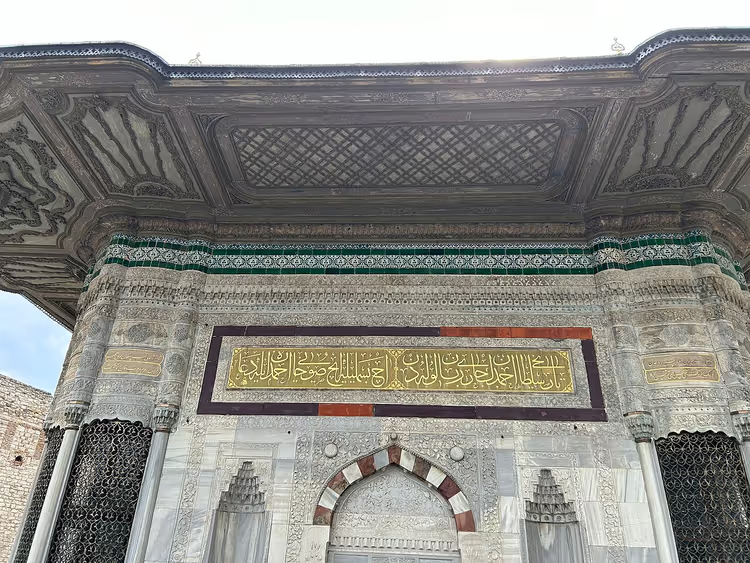
The fountain was built in 1728 by order of Ahmed III. It was placed at the gates of Topkapi Palace, where you will see it today (source).
 © Premeditated · CC BY-SAPhoto: Premeditated, CC BY-SA (https://creativecommons.org/licenses/by-sa/4.0), Wikimedia Commons
The structure has an unusual form: it is a palace facade, not a basin with a pipe. The slabs are covered with carvings and inscriptions, and taps are set into the walls. The inscriptions ask everyone who quenches their thirst to remember in prayer the person who built the water source.
- How to get there: at the first gate of Topkapi Palace, next to the Gülhane tram stop.
- Cost: free.
- The catch: the fountain is small, and in the flow of tourists it is easy to miss.
Carpet Museum
At first the museum pavilion was housed inside the Blue Mosque. When the collection grew, the exhibition was moved to a separate building near Hagia Sophia. Today all conditions for storing carpets are in place: equipment maintains the required temperature and humidity.
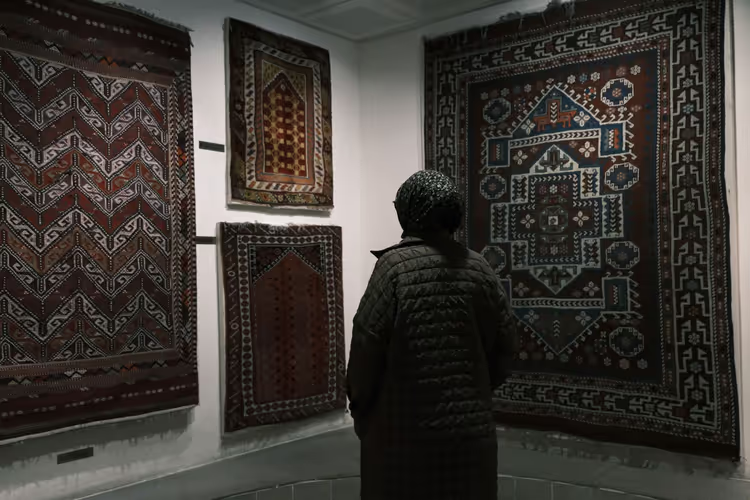
The exhibits span several eras. In the first halls you will see Seljuk carpets, followed by pieces woven in Anatolia and huge palace carpets of the late Ottomans. The collection numbers several thousand items, and almost all of them have been restored.
The name should not mislead you: this is a state collection, not a shop. The exhibits hang under glass and are labeled, and touching them is not allowed. It is convenient to stop by on the way between Hagia Sophia and Topkapi Palace; the museum does not require a separate trip.
- Cost: a ticket is sold separately, check the price at the ticket office.
- The catch: the halls are small, and a visit takes less than an hour.
Topkapi Palace
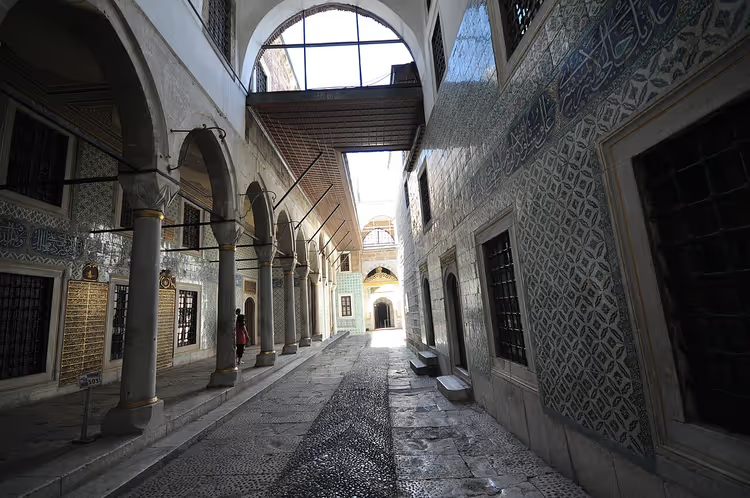
For several centuries, all important decisions of the Ottoman Empire were made here. Within the palace walls coins were minted, the divan convened, and the harem, treasury, armory, and storerooms were located. A ship stood ready in the bay around the clock for the sultan's immediate departure.
 © Jorge Láscar from Australia · CC BYPhoto: Jorge Láscar from Australia, CC BY (https://creativecommons.org/licenses/by/2.0), Wikimedia Commons
When the residence was moved to Dolmabahçe, the complex fell into decline. In the early twentieth century it was restored, and in 1924 the palace opened as a museum (how the palace became a museum). The collection is enormous: one day may not be enough for a full visit.
- Cost: €30 for the palace, the harem is paid separately, another €15 (as of 09/2026, prices and hours).
- Hours: 09:00-18:00, closed on Tuesdays.
- The catch: without a ticket bought in advance, you can easily lose an hour in line at the ticket office.
Church of St. Irene
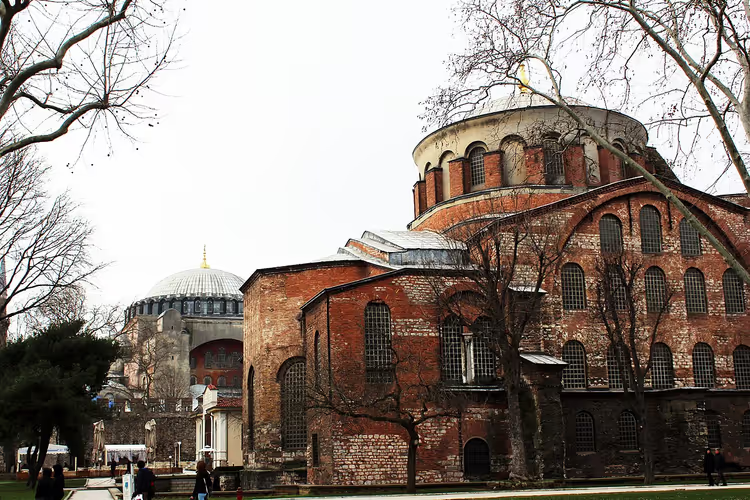
Some historians believe this church is older than Hagia Sophia. It was built under Emperor Constantine on the site of a pagan shrine dedicated to Aphrodite. Until the new cathedral was completed, this was the main church of the capital and the residence of the patriarch (source).
 © Berkay0652 · CC BY-SAPhoto: Berkay0652, CC BY-SA (https://creativecommons.org/licenses/by-sa/4.0), Wikimedia Commons
The church was destroyed and rebuilt many times. It burned during the Nika revolt, Justinian restored it, and an earthquake destroyed part of the mosaics. After 1453 the building was used as an arsenal, and from 1869 it was attached to the Archaeological Museum. Today concerts are held here, and even musicians praise the acoustics of the halls.
- Cost: admission is paid, check the price and conditions at the ticket office.
- The catch: part of the time the building is occupied by concerts, so access may be limited.
Archaeological Museum
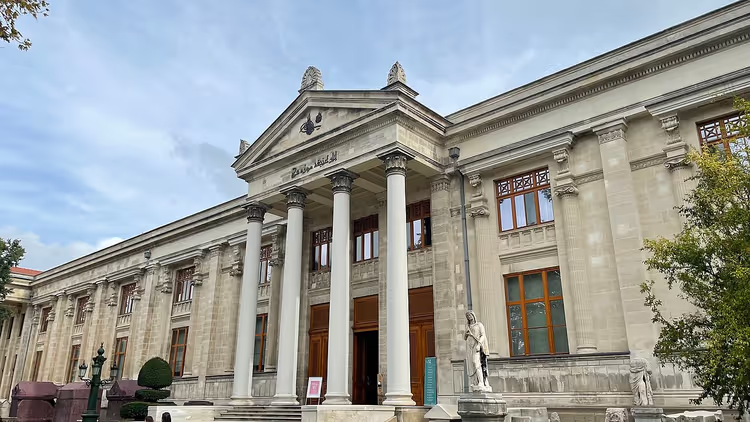
The museum's collection numbers more than a million items. The collection originated in the late nineteenth century thanks to Osman Hamdi Bey, an artist and archaeologist. He pushed for a ban on exporting antiquities from the country, and construction of the complex began in 1881 (source).
 © Metuboy · CC BY-SAPhoto: Metuboy, CC BY-SA (https://creativecommons.org/licenses/by-sa/4.0), Wikimedia Commons
The museum welcomed its first visitors in 1891, though the exhibition took its final shape later. The collection kept growing, and in 1935 an additional building was constructed for it. The museum stands directly opposite Topkapi Palace, so it is easy to combine with a palace visit.
- Cost: 400 TL (as of 09/2026, ticket price).
- Hours: 09:00-18:00, closed on Mondays.
- The catch: there are many halls, so allow at least two hours for the visit.
Gulhane Park
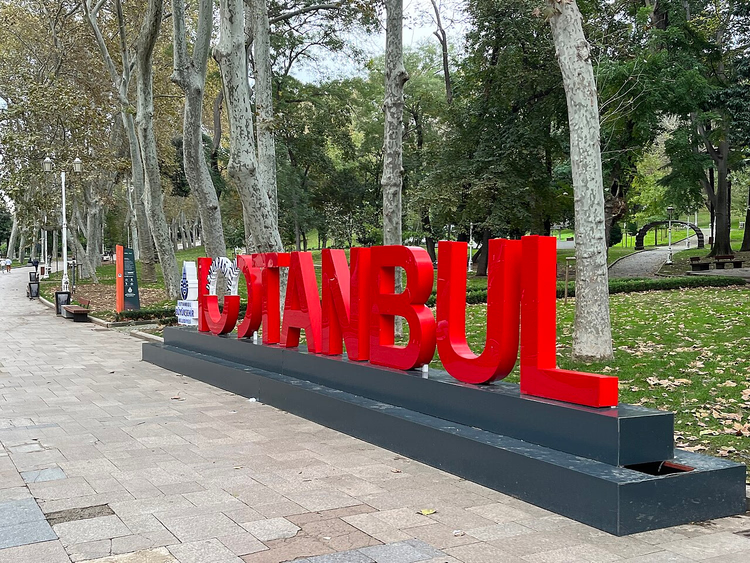
This garden was once part of Topkapi Palace and was called the House of Roses. The sultan strolled here with his courtiers, and outsiders were not allowed in. In the late nineteenth century the park was opened to the public, the buildings fell into disrepair, and a fire in 1863 destroyed some of the pavilions (source).
 © Another Believer · CC BY-SAPhoto: Another Believer, CC BY-SA (https://creativecommons.org/licenses/by-sa/4.0), Wikimedia Commons
In the late twentieth century the park was restored: the paths were cleared, trees were replanted, and benches were placed along the alleys. The flowers here change throughout the year, from tulips to roses. You can enter through three gates, and there is no fee.
- Cost: free.
- Hours: the park is open all day, with fewer people in the morning.
- The catch: in spring, during tulip season, the alleys are packed.
Parade Pavilion
Sultans liked to observe their subjects while remaining unseen. For this purpose, the Parade Pavilion was built on the fortress wall that separated Gulhane Garden from the city (source). The building turned out modest: there was no need to display power here.
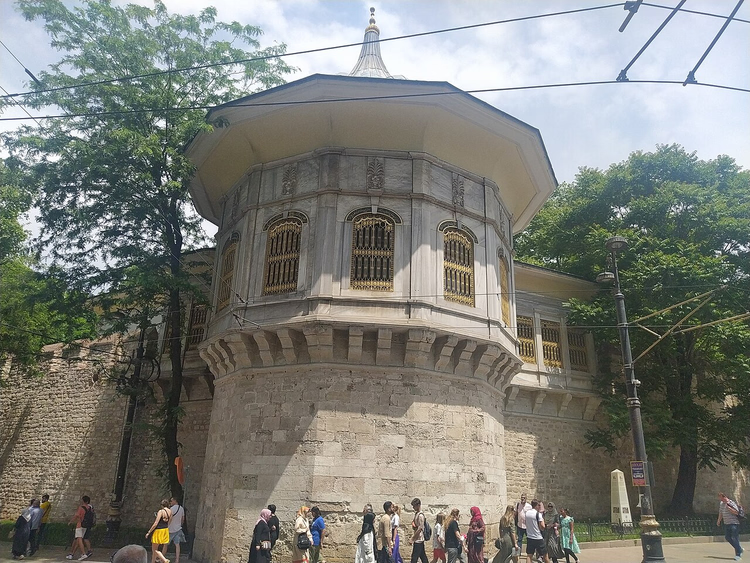
The sultan and his retinue took their places on the second floor. The windows overlooked the street, and a roof protected the observers from sun and rain. Ibrahim the Mad, according to legend, shot at passersby with a crossbow. After the residence was moved, the pavilion fell into disrepair, and today it has been restored.
- What is inside: a library operates on the second floor, and a cozy cafe on the first.
- The catch: the interiors are adapted for modern needs, so you will see almost none of the historic chambers.
Church of Saints Sergius and Bacchus
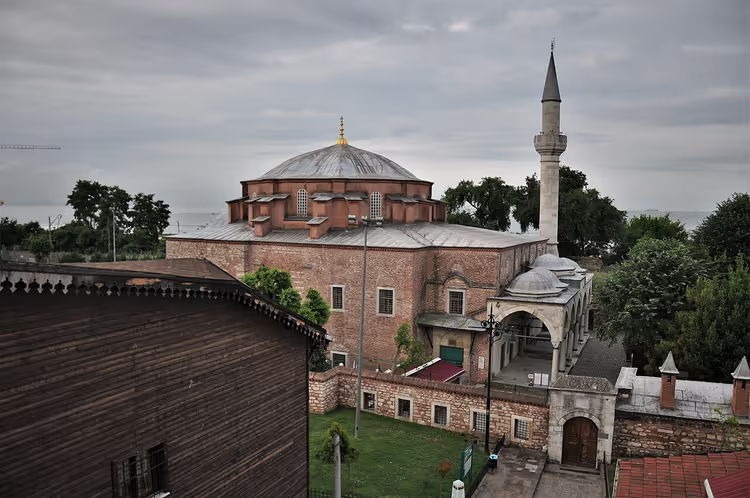
According to researchers, Hagia Sophia and this church were built by the same architects: the buildings are too similar. The initiator was Emperor Justinian, who venerated Saints Sergius and Bacchus, soldiers executed for refusing to worship idols (source).
 © fusion-of-horizons · CC BYPhoto: fusion-of-horizons, CC BY (https://creativecommons.org/licenses/by/2.0), Wikimedia Commons
After the city was captured in 1453, the church was not closed, and services continued here for another half century. Only in the early sixteenth century was the building converted into a mosque: a minaret and a madrasa were added, and the mosaics were painted over. This is how Little Hagia Sophia came to be. Inside you will no longer see Christian decoration, but you will appreciate the architectural kinship with the great Hagia Sophia.
- How to get there: the Kucuk Ayasofya neighborhood, on foot from the Hippodrome.
- The catch: the interiors have long ceased to resemble a church, so it is not worth going here for the mosaics.
Sokollu Mehmed Pasha Mosque
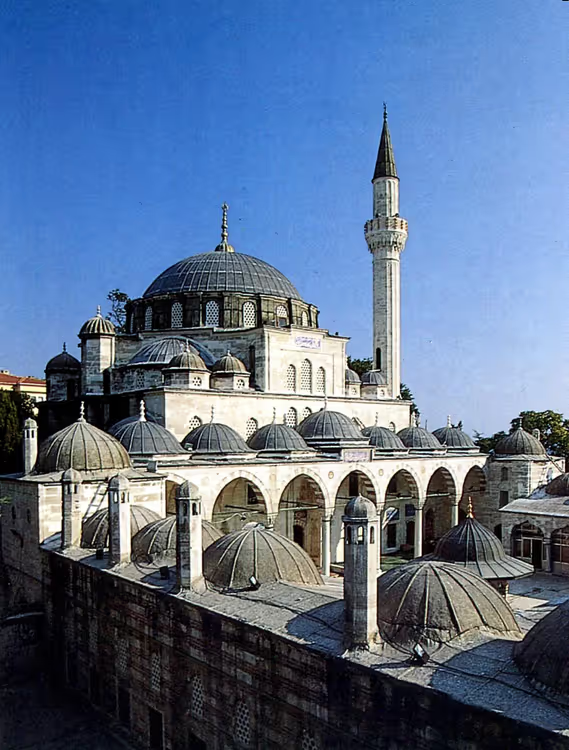
The complex was built by Sokollu Mehmed Pasha, a nobleman who effectively ruled the empire in his later years. He was born into a Christian family and was given the name Bajko, but was forced to convert to Islam. The pasha graduated from a madrasa, built a career, and personally oversaw the construction (source).
 © MChew · CC BY-SAPhoto: MChew, CC BY-SA (https://creativecommons.org/licenses/by-sa/3.0), Wikimedia Commons
The result was an entire quarter: a mosque, a madrasa, a fountain for ablutions, and a house for dervishes. Inside it is modest and majestic at the same time, and the walls are covered with tiles featuring tulips and chrysanthemums. A relic is kept here: a fragment of the Kaaba stone. One of the oldest mosques in Turkey is still in use today.
- Rules: visitors are admitted outside prayer times, women need a headscarf, which is provided at the entrance.
- The catch: the entrance from the street is easy to miss, as the complex stands deep within the quarter.
All the sights of Sultanahmet can realistically be covered in two days. The visit goes more smoothly if you already have some of your tickets in hand.
Tours and tickets in Istanbul
Guided tours, skip-the-line tickets and activities — most offers can be cancelled free of charge.
See offers on GetYourGuideThe widget loads once you give your consent.
Popular restaurants and cafes
You won't go hungry in the historic center. Eateries and restaurants are on every corner, and there's almost no distance between sightseeing and lunch. Below are four spots with different cuisines.
- Sirkeci Restaurant serves Turkish, European, and Mediterranean cuisine. The staff speaks several languages, and the dining room is small.
- Three Partners Cafe & Restaurant focuses on seafood and has a wine list. Service is fast.
- Istanbul Anatolian Cuisine is a good fit for anyone who wants to try classic Turkish cuisine: they also prepare barbecue and seafood.
- Istanbul Kebab Cafe & Restaurant specializes in Turkish and Middle Eastern cuisine, but also serves European dishes.
 © Yasin isa yildirim · CC BY-SAPhoto: Yasin isa yildirim, CC BY-SA (https://creativecommons.org/licenses/by-sa/4.0), Wikimedia Commons
Besides restaurants, the neighborhood has plenty of street food stands. You can grab a quick bite on the go: simit, kebab in lavash, roasted chestnuts. Portions are small, but you don't waste time waiting.
Which hotel to choose in Sultanahmet
Staying near Hagia Sophia is convenient. In the morning you get to the sights before the tour groups, and in the evening you can walk back. The Fatih district has options for different budgets, and below are four hotels at different levels.
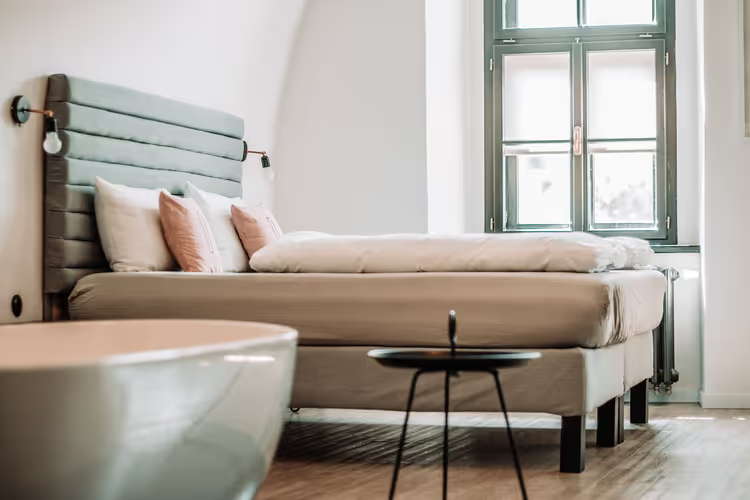
- Kalyon Hotel Istanbul, four stars and a good balance of price and quality. Breakfast included, daily housekeeping. check prices at Kalyon Hotel on Trip.com
- Armada Istanbul Old City Hotel, four stars, quiet location. The windows look out onto the Blue Mosque and Hagia Sophia, and Topkapi Palace is within walking distance. check prices at Armada Hotel on Trip.com
- Hotel Ipekyolu, a small hotel near Topkapi Palace. Breakfast works for both adults and children, Wi-Fi is free. check prices at Hotel Ipekyolu on Trip.com
- Armada Apartment, a budget option near Sultanahmet. Breakfast and Wi-Fi are included, and the staff speaks several languages. check prices at Armada Apartment on Trip.com
If you want to compare all options at once, open hotels in Sultanahmet on Trip.com.
Find hotels in Istanbul
Compare prices across booking sites and filter for rooms with free cancellation.
Compare prices on Trip.comThe widget loads once you give your consent.
Where it is and how to get there
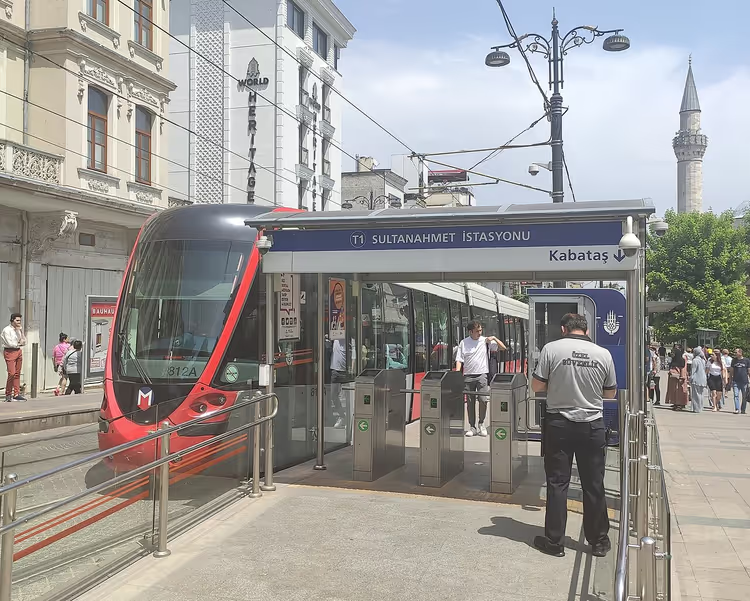
Sultanahmet lies in the European part of Istanbul, in the Fatih district. The area occupies a strip between the Bosphorus and the Sea of Marmara, so you can also reach it from the water. Everything important is concentrated around the square with the Sultanahmet tram stop.
The easiest way into the center is along the T1 tram line. The tram connects the area with the train station and the Galata Bridge. From Istanbul Airport (IST), Havaist buses and metro trains run to the city, and a bus also runs from Sabiha Gokcen (SAW). At rush hour the trip takes longer, and you can easily lose an extra hour in traffic.
It is better not to drive into the historic center: the streets are narrow and parking is scarce. If you are traveling with suitcases, it is calmer to book a transfer with Kiwitaxi in advance than to look for a taxi on the spot.
The tram stop is right by the square, so from there you walk. The district's side streets are narrow and winding, so a navigation app on your phone will come in handy here.
Sultanahmet district in Istanbul
Places on the map
- Hagia Sophia Justinian's cathedral, again a working mosque since 2020
- Sultanahmet Square Former Hippodrome, three ancient columns on one square
- Obelisk of Theodosius Egyptian granite obelisk, erected around 390 AD
- Serpent Column Bronze from 478 BC, base of the golden altar
- Obelisk of Constantine Third monument of the Hippodrome, limestone masonry
- Blue Mosque Mosque of Sultan Ahmed I, six minarets
- Arasta Bazaar Carpets, jewellery and enamel between the Blue Mosque and the museum
- Fountain of Ahmed III Built in 1728, moved to the gate of Topkapi
- Carpet Museum Seljuk and late Ottoman carpets, a separate building
- Topkapi Palace Residence of the sultans, a museum since 1924
- Hagia Irene Possibly older than Hagia Sophia, today a concert hall
- Archaeological Museum Over a million objects, founded in 1881
- Gülhane Park Former garden of Topkapi Palace, the Rose House
- Parade Kiosk Sultans watched the city from the fortress wall
- Church of Sts Sergius and Bacchus Little Hagia Sophia, a mosque since the 16th century
- Sokollu Mehmed Pasha Mosque A complex with a madrasa, relic - a fragment of the Kaaba stone
⁉️🤔 Frequently asked questions
How much time do you need for Sultanahmet?
Set aside two days if you want to see everything at a relaxed pace. On the first day you can realistically see Hagia Sophia, the Blue Mosque, the Hippodrome, and Topkapi Palace. For the second day, leave the Archaeological Museum, the Church of St. Irene, and Gulhane Park. With a guide the pace is faster, but there is still not enough time.
How much does it cost to enter the main sights?
There are only a few paid sites. Hagia Sophia costs 25 € for the upper gallery, Topkapi Palace costs 30 €, and the harem is another 15 € (as of 09/2026, source). The Archaeological Museum costs 400 TL (as of 09/2026, Istanbul Tourist Information). The Blue Mosque, the Hippodrome, and Gulhane Park are free.
Can a tourist enter a working mosque?
Yes, the Blue Mosque and the Sokollu Mehmed Pasha Mosque allow visitors outside prayer times. Women need a headscarf, men need covered shoulders and knees. Shoes are removed at the entrance, and the carpets are not touched with your hands. On Fridays, tourists are usually not allowed in before lunch.
Where to eat near the sights?
The neighborhood has plenty of restaurants and street food spots. For street food, head to the square: simit, kebab in lavash, and roasted chestnuts are sold right on the go.
How to get from the airport?
From the new Istanbul Airport, Havaist buses and the metro go to the city, and there are also buses from Sabiha Gokcen. In the city, transfer to the T1 tram, which stops right at Sultanahmet Square. With luggage, it is easier to book a transfer than to figure out connections on the spot.
In short: what is worth booking
If you are visiting Istanbul for the first time, stay right in Sultanahmet. In the morning, the sights are yours before the tour groups arrive. see hotels in Sultanahmet on Trip.com
If you have only one day, plan your route around Hagia Sophia, the Blue Mosque, and Topkapi Palace. Buy tickets in advance, otherwise you will spend your time in lines: tickets for Istanbul sights.
If you like quiet, come at opening time. If you are traveling with kids, split the sightseeing over two days and save some energy for Gulhane Park.

A small editorial team writing guides for independent travel. We travel ourselves, but we haven’t been everywhere, so we check prices, opening hours and how to get there against official sources.