
















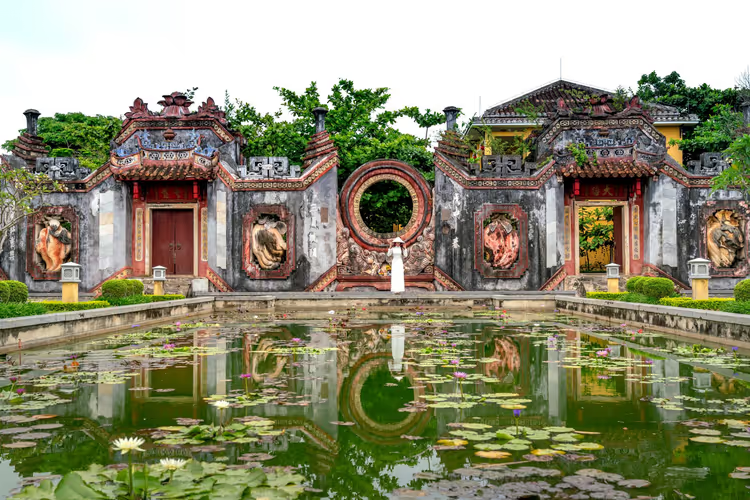
Vietnam in January: weather by region, Tet and travel tips
In January, Vietnam lives in three climates at once. In the north, you'll find a damp winter, in the center a mild spring, and in the south a true beach season.
The temperature spread is wide. In Hanoi, daytime temperatures stay at 12-20 °C, while in Ho Chi Minh City and on Phu Quoc the air warms up to 26-32 °C (as of 08/2026, Vietnam Tourism). You can't fit both ends into one trip without a flight.
January opens the dry season in the south and center, so beaches and old towns are at their best right now. In the north it's cold, but uncrowded and cheaper. Ahead: weather by region, the month's holidays, and what will help you plan your trip.
Ad: this article contains affiliate links, we earn a commission if you book through them, at no extra cost to you.
Weather in January by region of Vietnam
💡 In short:
- North: damp winter and few tourists.
- Center: dry, warm, and the best weather balance.
- South: dry season, beaches, and sun.
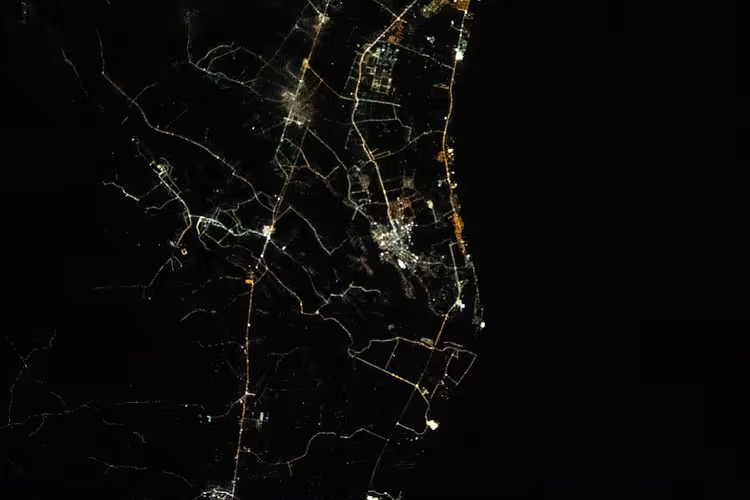
Vietnam stretches more than 1,600 km from north to south, so January hits its ends differently (as of 08/2026, Vietnam Tourism). The farther south you go, the warmer it gets and the more tourists you'll find.
North: winter in Hanoi and fog on Halong Bay
Hanoi in January behaves like an ordinary winter city. In the morning the air cools to 12-14 °C, during the day it stays at 12-20 °C, and the sky often remains gray (as of 08/2026, Vietnam Tourism). The Old Quarter traps the cold in its narrow streets, so bring a warm jacket, not a light layer.
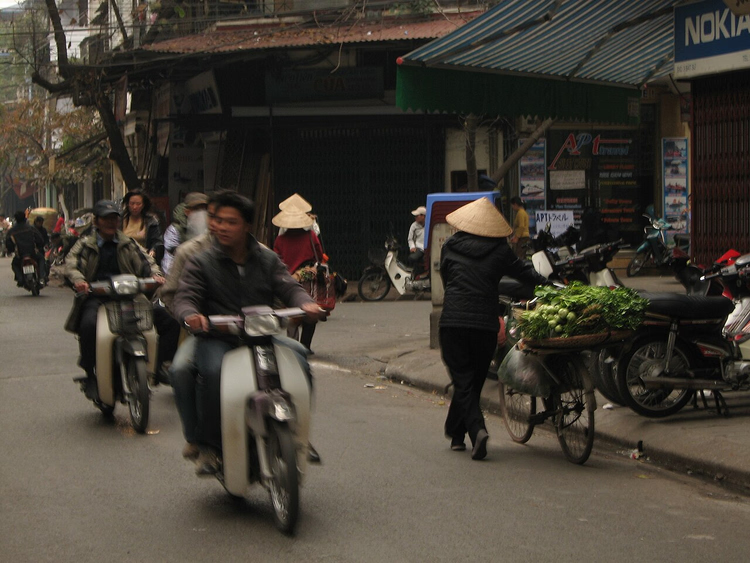 © Hector Garcia from Barcelona, Catalonia, Spain · CC BY-SAPhoto: Hector Garcia from Barcelona, Catalonia, Spain, CC BY-SA (https://creativecommons.org/licenses/by-sa/2.0), Wikimedia Commons
Sapa sits at an altitude of 1,500-1,600 meters, and there it's already 5-12 °C (as of 08/2026, Vietnam Tourism). Frost is possible at night, and the rice terraces stand brown after the harvest. Trekking doesn't suffer from this: the trails are empty, and guesthouses in villages like Ta Van or Lao Chai charge around ten dollars a night, with the exact rate set by the hosts on the spot.
- Who it's for: museums, the old town, trekking without the heat.
- Not for: if you're coming for the sea and sun.
- The catch: damp chill and fog in Halong Bay, the views don't always open up.
Center: dry season and warm beaches
In central Vietnam, January offers the best balance of weather and tourists. Da Nang and Hoi An greet you with mostly dry weather, and daytime temperatures hold at 20-27 °C (as of 08/2026, Vietnam Tourism). Hue stays cool and rainy in January. The water at My Khe Beach warms to 24-25 °C, but the sea in January is often rough. After sunset the air cools down, so a light jacket for the evening will come in handy.
Hoi An is the busiest city in the region in January. The lanterns in the old town are lit every evening, and the narrow streets get crowded. Nha Trang in the central south is warmer: temperatures hold at 24-29 °C (as of 08/2026, Vietnam Tourism). Visibility for diving there in January is not the best of the year.
- How to get there: from Da Nang to Hoi An it's 45 minutes by Grab or taxi.
- The catch: prices in Hoi An are higher than in Da Nang, and evenings are crowded.
The south: dry season and beaches
The south delivers what people come here for in winter. In Ho Chi Minh City, daytime temperatures are 26-32 °C with low humidity and nearly 244 hours of sunshine per month (as of 08/2026, Vietnam Tourism). Rain is rare: January brings about 5 rainy days, and a downpour passes in half an hour.
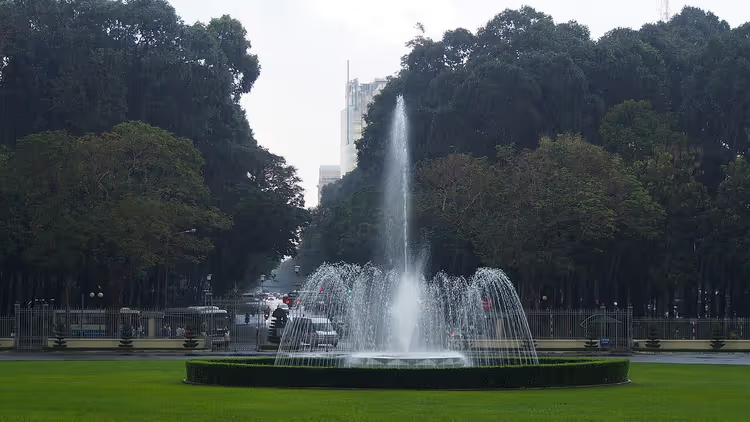 © Clay Gilliland · CC BY-SAPhoto: Clay Gilliland, CC BY-SA (https://creativecommons.org/licenses/by-sa/2.0), Wikimedia Commons
The Mekong Delta is more convenient for boat routes in the dry season. The Cai Rang floating market in Can Tho comes alive from 6 to 8 a.m., so you need to leave before dawn. Phu Quoc warms up to 27-32 °C, the sea is calm, and Long Beach and Sao Beach fill up closer to midday (as of 08/2026, Vietnam Tourism).
- Who it's for: beaches, islands, diving, winter sun.
- The catch: peak season, accommodation prices are noticeably higher.
Holidays and events this month
On January 1 the country rests: New Year's Day on the Gregorian calendar. There are no big celebrations, the main holiday is still ahead. The day is convenient for flying between regions if you bought your ticket in advance.
Tet: the lunar New Year
Tet remains Vietnam's main holiday and changes its date every year. In 2026 it fell on February 17, and in 2027 it lands on February 6 (as of 09/2026, PublicHolidays.vn). The holiday lasts about a week, and preparations start as early as late January: flower markets appear, train and bus tickets sell out, prices rise.
 © trungydang · CC BYPhoto: trungydang, CC BY (https://creativecommons.org/licenses/by/3.0), Wikimedia Commons
During Tet, local shops and cafes close, while tourist restaurants stay open. People travel to their families, so transport is packed and hotels get more expensive. If you want a smooth trip, leave Vietnam before February 10 or arrive after the 25th (as of 08/2026, Vietnam Tourism). If you want to see the festival, book accommodation several weeks ahead.
Lim Festival
The Lim Festival is held in Bac Ninh Province, but not in January, as some sources claim. It takes place in the first lunar month, so on the calendar it falls in late February or early March (in 2026, that's February 28 and March 1, as of Vietnam.vn). The festival features Quan Ho folk singing, games, and fireworks across seven villages in the province.
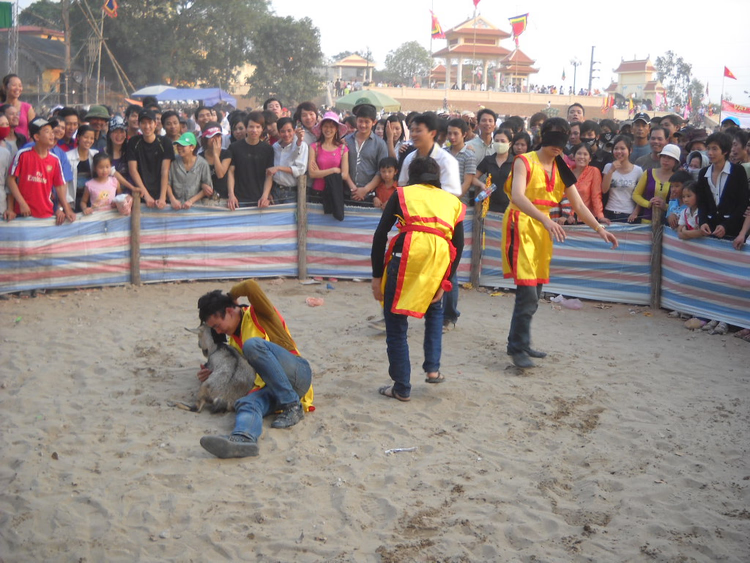 © Nguyễn Đông Sơn at Vietnamese Wikipedia · CC BY-SAPhoto: Nguyễn Đông Sơn at Vietnamese Wikipedia, CC BY-SA (https://creativecommons.org/licenses/by-sa/3.0), Wikimedia Commons
What to pack in January
You'll need to pack for three different climates at once. Over a single trip you'll swap a down jacket for shorts, so split your clothes by region.
Region | What to pack |
|---|---|
North (Hanoi, Sapa, Halong) | thermal underwear, down jacket, hat, gloves |
Central (Da Nang, Hoi An, Hue) | light layers, a jacket for the evening |
South (Phu Quoc, Ho Chi Minh City) | summer clothes, swimsuit, sunscreen |
Mornings and evenings in the north are genuinely cold, and in Sapa you'll freeze within an hour without a warm layer. For the south, bring sunscreen and a cap: the winter sun here is just as harsh.
Everyone will benefit from a universal adapter, an offline map, and an eSIM for Vietnam from Yesim. You can buy a local SIM at the airport, but with an eSIM you activate service before boarding and don't have to hunt for a store. You need internet for Grab, maps, and bookings.
Budget and booking in peak season
January remains peak season, so prices stay 20-40% higher than in the off-season (as of 08/2026, Vietnam Tourism). A hostel bed costs around ten dollars a night, a budget hotel stays in the low double digits, and a mid-range hotel in the mid double digits. A resort on Phu Quoc runs into triple digits per night, a domestic flight is usually in the double digits, and a train ticket works out cheaper than flying. There's no fixed price here: rates depend on the date, city, and availability.
Book accommodation and transport in advance, ideally 3-4 weeks before departure. Hotels in Vietnam on Trip.com are easy to compare by neighborhood, especially if you're heading south in high season.
What to do in January
The dry season opens up trekking and motorbike routes. In the Ha Giang mountains and around Sapa, the trails are clear, and in January peach and apricot trees are in bloom. Da Lat shows off its flower gardens at the same time, so a day on a motorbike sticks with you for a long time.
In the south-central region, Easy Rider is popular: a driver takes you along mountain roads and through villages far from bus routes. Hoi An is dry in January, so walks through the old town happen without rain. For a Halong Bay cruise, choose a two-day route: in winter the fog clears by midday, and the views open up during the day.
Tours and boat tickets are easy to book online: excursions and cruises on GetYourGuide. That way you lock in your spot in advance and don't stand in line at the pier.
⁉️🤔 Frequently asked questions
Is January a good time to visit Vietnam?
Yes, but not for the whole country at once. The south and center are dry and warm in January, so beaches and old towns are in full swing. The north is cold and damp, but there are no crowds and accommodation is about a third cheaper.
Where is the best beach holiday in January?
In the south of the country. Phu Quoc and Mui Ne offer 27-32 °C, calm seas and almost no rain (as of 08/2026, Vietnam Tourism). The center is also warm, but evenings are cooler and the sea is often rough.
Is it cold in northern Vietnam in January?
Yes. In Hanoi it's 12-20 °C during the day, and in the Sapa mountains only 5-12 °C, with frost possible at night (as of 08/2026, Vietnam Tourism). Bring thermal underwear, a down jacket, a hat and gloves.
Is there a lot of rain in January?
Almost none in the south: about 5 rainy days per month (as of 08/2026, Vietnam Tourism). In the center, rain is more frequent, especially in Hue, where January is cool and rainy. The north is damp and chilly, especially in the first half of the month.
When is Tet in Vietnam and how does it affect travel?
Tet falls at the end of January or in February: in 2026 it's February 17, in 2027 it's February 6 (as of 09/2026, PublicHolidays.vn). During Tet, shops and local cafes close, transport fills up, and prices rise. Book accommodation and tickets in advance.
Is January a good time for trekking in the mountains?
Yes, especially in Sapa and Ha Giang. The cool weather is good for walking, and the rice terraces are bare of greenery, but the trails are empty. Be prepared for fog and night frosts, bring warm clothes and a spare day for weather.
In short: what to book
January splits Vietnam into three trips, so choose your route based on the kind of holiday you want. If you need sun and sea, go south: Phu Quoc, Mui Ne or Ho Chi Minh City. If you want mild weather and old towns, go central: Da Nang, Hoi An or Hue. If you're into trekking and quiet, go north: Hanoi, Sapa or Halong. Book accommodation and flights in advance, and plan any travel around Tet separately.
Book in advance:

A small editorial team writing guides for independent travel. We travel ourselves, but we haven’t been everywhere, so we check prices, opening hours and how to get there against official sources.