
















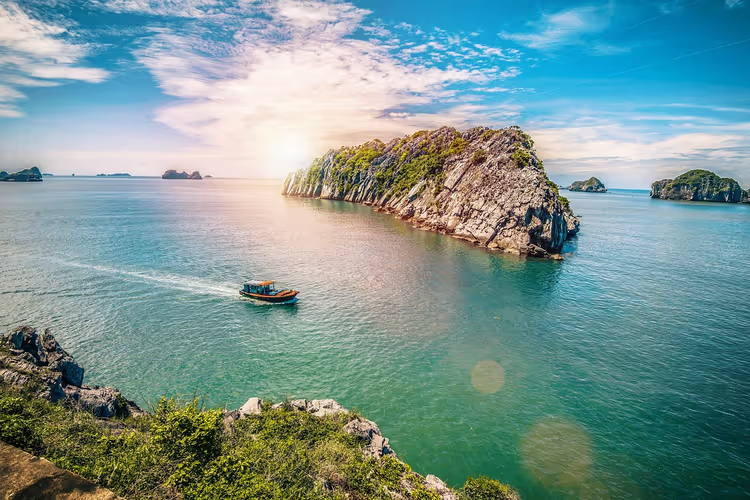
Vietnam islands for a beach holiday: 17 places, seasons and how to get there
Choosing an island in Vietnam is harder than it seems. There are plenty of names, and half of them mean nothing before the trip. Phu Quoc and Nha Trang are familiar, while Con Dao, Co To, or Nam Du are often discovered only once you're there. We've gathered the country's islands and archipelagos and sorted them by season, route, and type of vacation. You'll immediately see where to go in winter and where in summer, where you need a speedboat and where a ferry is enough.
Ad: this article contains affiliate links, we earn a commission if you book through them, at no extra cost to you.
Vietnam's islands: how to choose
💡 In short:
- In the south, on Phu Quoc and Nam Du, the dry season runs from November to April.
- The islands near Nha Trang work well for a day trip.
- Con Dao and Co To require separate transport: a flight, speedboat, or ferry.
- Seasons, weather, and travel time: 09/2026, according to Vietnam's national tourism office.
The islands in this guide are conveniently divided into three groups. The southern ones, Phu Quoc and Nam Du, follow the dry season from November to April. The central ones, the Nha Trang islands, Ly Son, and Cu Lao Cham, are best visited in spring. The northern ones, Cat Ba and Co To, open up from April, when the water has already warmed up.
Destination | Best season | How to get there | Who it's for |
|---|---|---|---|
Phu Quoc | November-April | first trip, beaches | |
Con Dao | March-April | quiet, diving, turtles | |
Cat Ba | April | bay, kayaking, trekking | |
Cu Lao Cham | March-April | snorkeling, nature | |
Nha Trang islands | February-April | day trip, families |
1. Phu Quoc
 © [//commons.wikimedia.org/wiki/User:Trantuonglam Trantuonglam] · CC BY-SAPhoto: [//commons.wikimedia.org/wiki/User:Trantuonglam Trantuonglam], CC BY-SA (https://creativecommons.org/licenses/by-sa/4.0), Wikimedia Commons
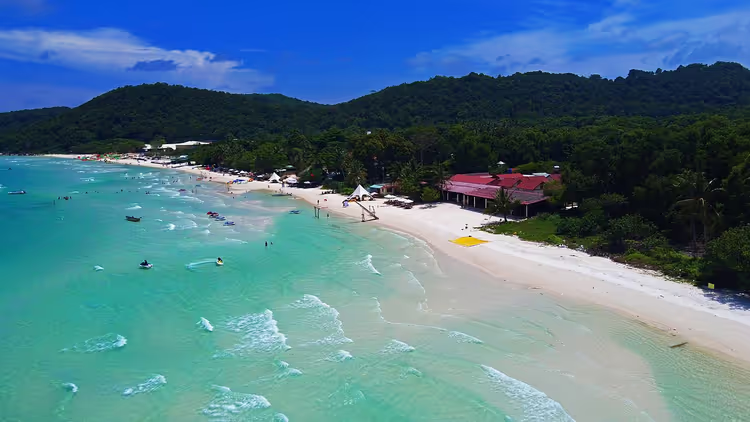
Phu Quoc lies in the Gulf of Thailand and remains the country's largest island. It has an international airport, hotels at various levels, dive schools, and restaurants. At the same time, just a couple hundred meters from the hotels, wild beaches and jungle begin. Details about the island's geography are collected on the Phu Quoc page.
Typhoons and tsunamis are almost unheard of on the island: the mountains shield it from the winds. The climate is milder than on the mainland, with no extreme heat. And seafood is plentiful and reasonably priced, which makes Phu Quoc a convenient choice for a first trip to Vietnam.
For seclusion, head to the north of the island: white sand, a gentle slope into the water, few people. For infrastructure and water activities, set your course for Long Beach and Bai Sao.
- Who it's for: first trips, families and couples who want an airport close to the hotel.
- Hotels: view Fukuoka hotels on Trip.com
2. Hon Tam
 © MerPerle · CC BY-SAPhoto: MerPerle, CC BY-SA (https://creativecommons.org/licenses/by-sa/4.0), Wikimedia Commons
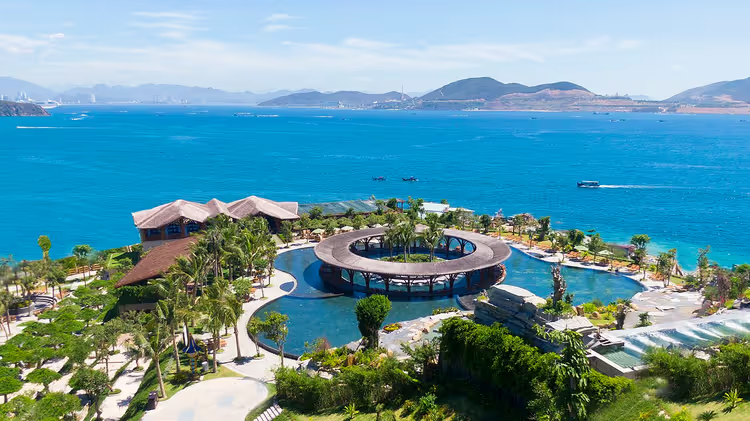
Hon Tam sits in Nha Trang Bay, 7 km from the city pier. Boats run roughly every hour from eight in the morning, with the last departure from the island around 4:20 pm. The trip takes twenty minutes, and you immediately find yourself in a different setting, without the city noise. Background on the bay and its islands is available in the Nha Trang guide.
The main draw here is not just the beach. The island is home to Hoang Hoa village with pottery workshops, a craft that goes back more than a century and a half. The second reason to come: cascading mineral-water pools and restaurants right next to them.
The beach, with pavilions, loungers and palm trees, is comfortable for swimming. You can also go kayaking, ride a jet ski or parasail over the water.
- How to get there: boat from the Nha Trang pier, about 7 km across the water.
- Who it's for: a short day trip and calm swimming.
3. Hon Mun
 © Nguyen Hung Vu · CC BYPhoto: Nguyen Hung Vu, CC BY (https://creativecommons.org/licenses/by/2.0), Wikimedia Commons
Hon Mun in Nha Trang's Cua Bay is uninhabited. It is a marine reserve of about 450 hectares, so the water here is clean and the corals are alive. Many people come for diving and snorkeling: the underwater world around the reefs is dense and diverse. Details on the reserve and local islands are collected in the Nha Trang overview.
Speedboats for 5-6 people run from Nha Trang's South Port. Group tours go on a diesel boat, and visitors pay an environmental fee. The island has a white-sand beach.
- The catch: renting a boat costs noticeably more than a trip to the neighboring islands.
- Who it's for: divers and anyone who wants a quiet beach with no hotels.
4. Hon Mieu
 © Liftold at Vietnamese Wikipedia · CC BY-SAPhoto: Liftold at Vietnamese Wikipedia, CC BY-SA (https://creativecommons.org/licenses/by-sa/3.0), Wikimedia Commons
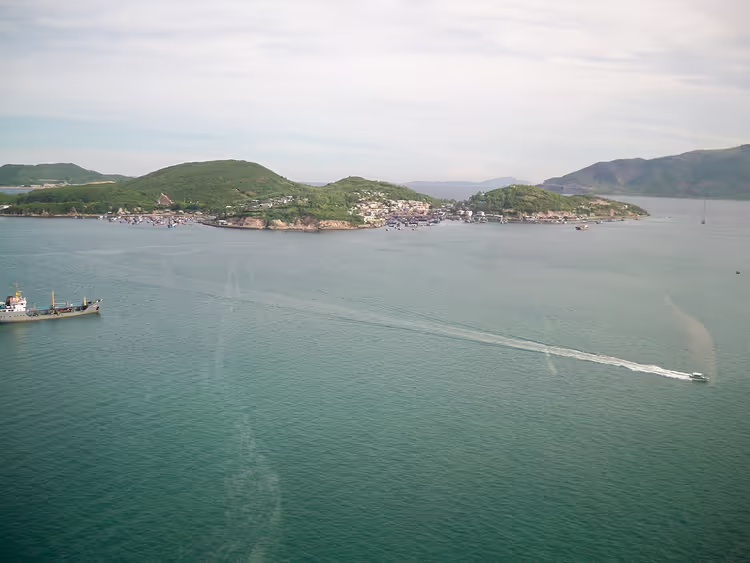
Hon Mieu is small and lies south of Nha Trang. There are no convenient beaches here; the shore is covered with large rocks, and swimming and sunbathing are not really done. But the island does have things to see.
The main reason to come: an aquarium shaped like a pirate ship. The tanks hold sharks, moray eels, large turtles and tropical fish. The biggest crowd gathers for the feeding of the marine life, so arrive in time for the start.
- The catch: there are no beaches, so the trip is worth it for the aquarium and the views.
- Who it's for: families with children and fans of marine fauna.
5. Monkey island, Hon Lao
 © calflier001 · CC BY-SAPhoto: calflier001, CC BY-SA (https://creativecommons.org/licenses/by-sa/2.0), Wikimedia Commons
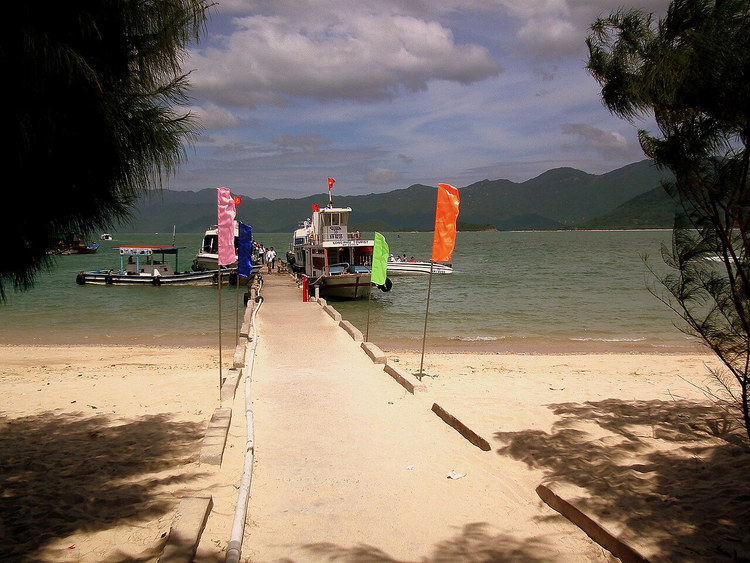
Hon Lao is known as Monkey Island: it has a monkey reserve. You can get there as part of a group by booking with a guide in advance. A boat runs from the North Pier to the island, and the crossing is short.
The macaques are quick and will easily snatch a bag, glasses or an item of clothing. To avoid attracting attention, leave your things in the storage on the boat. Feeding the animals is allowed only inside the sanctuary, so bring cookies, nuts and chips with you in advance.
- Who it's for: families with children and anyone who wants to see animals up close.
6. Orchid island, Hon Heo
 © Lương Tấn Phú · CC BY-SAPhoto: Lương Tấn Phú, CC BY-SA (https://creativecommons.org/licenses/by-sa/4.0), Wikimedia Commons
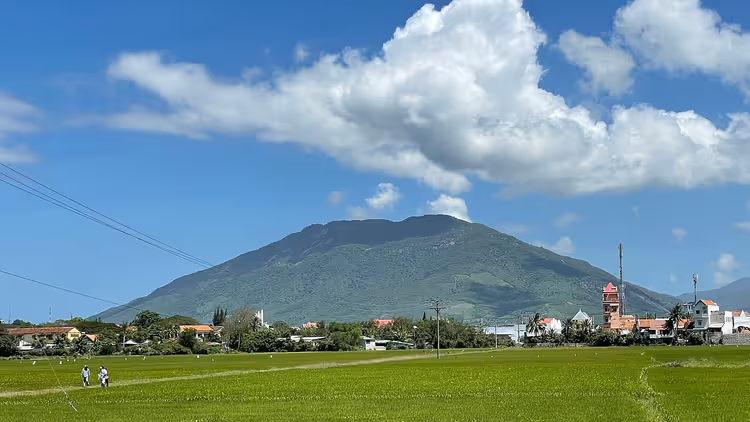
Orchid Island, Hon Heo, sits in Nha Phu Bay and belongs to a peninsula that can only be reached by water. The trip from Nha Trang takes about 40 minutes. Along the way you will see floating farms where shellfish are raised, and that is already part of the outing. Background on the bay's islands is available in the Nha Trang Bay guide.
Almost the entire area has been turned into an orchid garden: flowers grow along the paths, in flower beds and under palm trees. Streams with little bridges, mini waterfalls and stone installations complete the garden.
The infrastructure is well developed: an equipped beach, a market, equipment rental. At local cafes, fish and seafood are cooked in front of you, and fresh juice is served. There are almost no waves, so snorkeling is easy even for beginners.
- Who it's for: those who want to combine beach, garden and snorkeling.
7. Ostrich island, Hon Thi
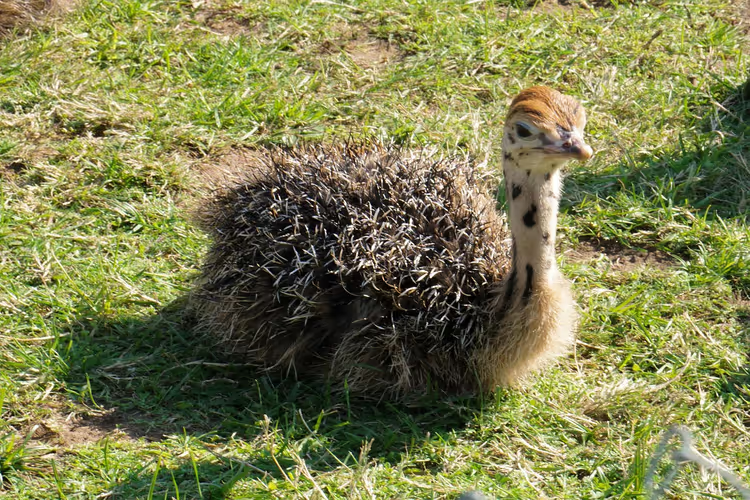
Next to Monkey Island and Orchid Island lies Hon Thi, known as Ostrich Island. The farm raises ostriches, which visitors feed and ride. A neighboring farm is home to spotted deer, which is why the island has a second name, Deer Island.
The flora is also part of the program. Grapefruits and mangoes grow here, and locals call the fruit of the pitaya dragon eyes. The beaches are clean and uncrowded, the coves are small, and the cliffs are covered with forest. On one of the slopes stands a temple honoring the God of the Seas.
- Who it's for: families with children and fans of farm tours.
8. Ly Son
 © Đôi Ta Đi · CC BY-SAPhoto: Đôi Ta Đi, CC BY-SA (https://creativecommons.org/licenses/by-sa/4.0), Wikimedia Commons
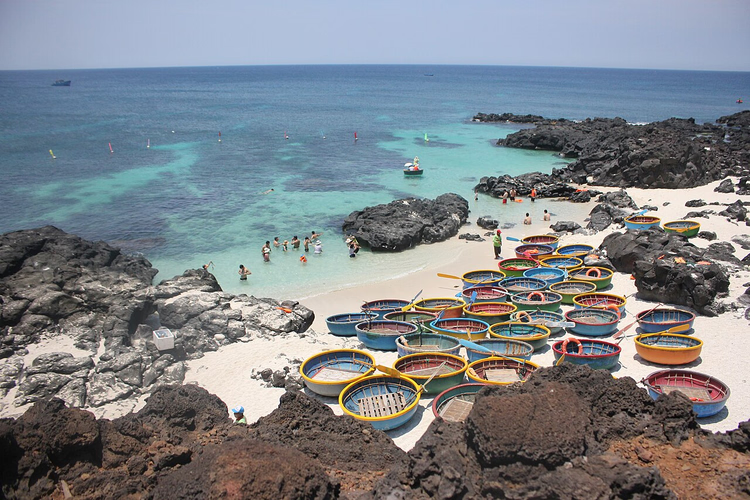
Ly Son in Quang Ngai province emerged from volcanic lava. The red basalt produces lush greenery, and neat plots of garlic and onions are visible on the slopes. These are the island's main crops, and many farmers work on them every day. A description of the island and its geology is available on the Ly Son page.
The island is divided into two parts and five peaks. From above, you can see green valleys and stretches of sandy beaches. The main occupation of local residents, fishing, sends boats out of the port from early morning.
Ly Son is known for its pagodas and temples, of which there are more than fifty. Some stand on the peaks, and one is carved directly into a coastal cliff. After sightseeing, you can swim in the clear water among small crabs.
- Who it's for: those interested in volcanic landscapes and village life.
9. Vinpearl
 © Андрей Бобровский · CC BYPhoto: Андрей Бобровский, CC BY (https://creativecommons.org/licenses/by/3.0), Wikimedia Commons
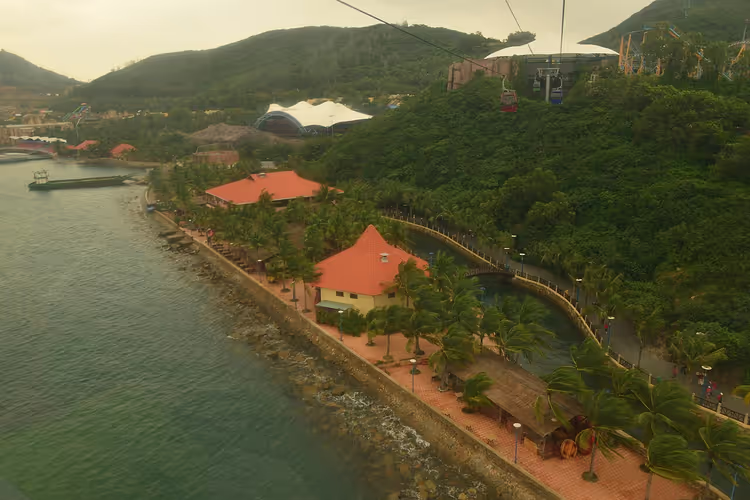
Vinpearl occupies Hon Tre Island in Nha Trang Bay and operates as a large amusement park. In scale, the complex is comparable to major Asian parks: water slides, an aquarium, a game zone, and musical fountains are all gathered in one area. You can get here by boat or by a 3,320 m cable car, one of the longest over the sea. Park information is available on the official website.
Adults get extreme slides, lazy rivers, and full-day attractions.
Hotels of various levels stand nearby: guests use the park at no extra charge. A budget option here is to come from Nha Trang for a single day.
A separate children's area consists of small pools, fountains, and slides with surprises. Elephant, hippo, and penguin figures stand nearby. In the evening, a fountain show with music and lighting runs on the grounds, so it's worth staying until dark. The aquarium in the park is large, so allow at least an hour for it. The cable car is an attraction in itself: from the cabin you can see the entire Nha Trang Bay and the surrounding islands.
- Who it's for: families with children and amusement park fans.
- Tickets: park tickets and tours
10. Ti Top
 © Takeshi Aida from Hong Kong, Hong Kong · CC BY-SAPhoto: Takeshi Aida from Hong Kong, Hong Kong, CC BY-SA (https://creativecommons.org/licenses/by-sa/2.0), Wikimedia Commons
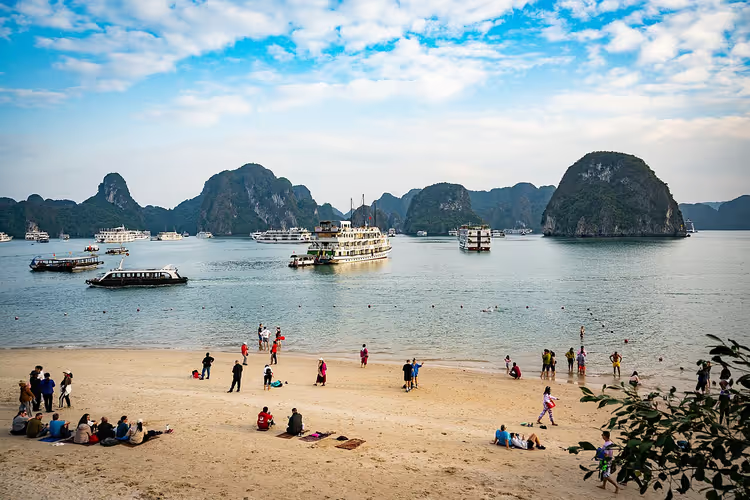
The rocky island of Ti Top rises above the water like a sharp triangle. Until 1962, it was listed as island number 46. It got its name after a visit by Soviet cosmonaut German Titov, who swam near its shore. The island's history can be checked on the Ti Top page.
An observation deck is set up at the top. The climb involves roughly 300 steps, and the panorama of Halong Bay rewards the effort.
The beach at the foot is small and clean, with calm water. Bay cruises stop here, so there are noticeably fewer people in the morning.
- The catch: the climb to the deck is all steps, which is tough in the heat.
- How to get there: as part of a cruise or by boat on Halong Bay.
11. Nam Du Archipelago
 © trungydang · CC BYPhoto: trungydang, CC BY (https://creativecommons.org/licenses/by/3.0), Wikimedia Commons
The Nam Du Archipelago lies southeast of Phu Quoc and consists of 21 islands. Civilization is only just arriving here: bright blue sea, rows of coconut palms, and empty beaches. Details about the islands are collected on the Nam Du page.
The largest island, Hon Lon, has already been discovered by tourists. From the local lighthouse you can see the entire archipelago, and sunsets and sunrises here are photographed more often than anywhere else.
Thirty minutes away by water lies Hon Ngang, the most populated island in the archipelago. Fishing boats stand in the port, and nearly all residents make their living from fishing and fish farming. Fresh seafood at local cafes is inexpensive.
- Who it's for: those who want a quiet vacation without large resorts.
12. Binh Ba
 © Violetbonmua · CC BY-SAPhoto: Violetbonmua, CC BY-SA (https://creativecommons.org/licenses/by-sa/3.0), Wikimedia Commons
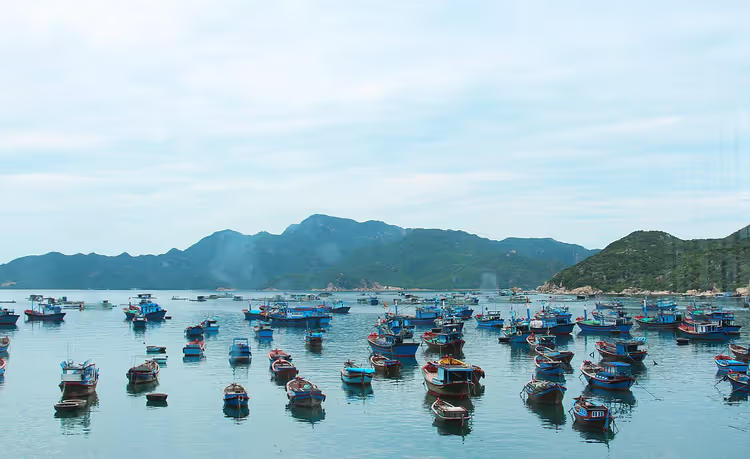
Binh Ba shelters Cam Ranh Bay and is almost untouched by civilization. Virgin forests, aquamarine water, and long beaches make the island similar to its neighbors in the bay.
There are no hotels on the island. Overnight stays are in private homes, so it's best to plan the trip in advance.
Locals live by fishing and collecting shellfish, and boats of various sizes stand at the evening pier. For divers, there's an interesting underwater world, and for beach lovers, warm, clean water.
- The catch: there are no hotels, so you'll have to spend the night in private homes.
- How to get there: by boat from Nha Trang or Cam Ranh.
13. Con dao turtle island
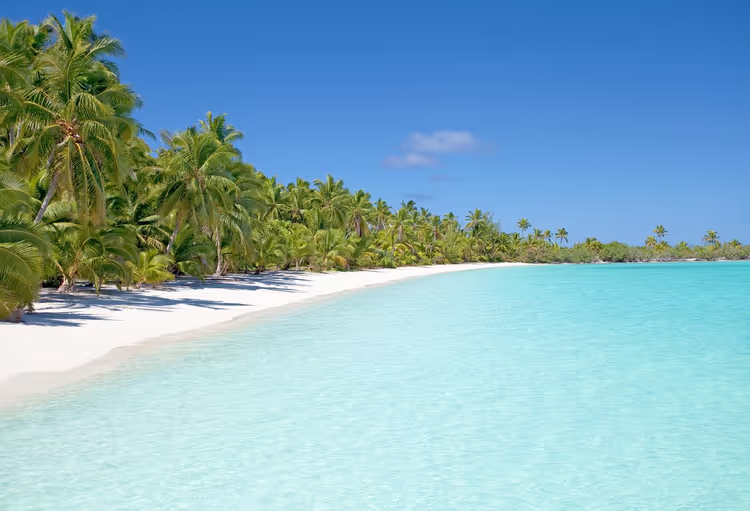
Con Dao consists of 16 islands. They lie about a hundred kilometers from the southern coast and belong to a national park. The largest island covers an area of 51 km². Information about the archipelago is available on the Con Dao page.
It's called Turtle Island because of the sea turtles that crawl ashore to lay eggs from May to November. The remoteness makes for a quiet, intimate getaway.
History is close at hand here: a former prison for political prisoners has become a museum, and the cemetery has been preserved as well. The Museum of the Revolution and a local temple are open to visitors.
There's almost no entertainment, but the nature and underwater world are rich. In the evening, the silence, the sea, and the view of neighboring islands are all you need.
Exotic trees and diverse birdlife turn a walk around the island into an educational excursion. The beaches here are long and nearly empty, the water is clear, and turtle tracks are often visible on the sand in the morning. There aren't many hotels, so it's worth booking well in advance.
- The catch: there's almost no entertainment infrastructure.
- Hotels: check prices for Con Dao hotels
14. Hang Rai
Hang Rai, a stretch of rocky coastline in Vinh Hy Bay, is prized for its sunrises and sunsets. Crimson rocks, white foam, and vivid greenery produce shots that barely need editing. Information about the area is available in the Ninh Hai description.
There are many grottoes and caves along the shore, which draws speleologists and divers. The coral reefs suit both beginners and experienced divers.
You'll easily forget about the city and spend the day on the beach among the rocks.
- Who it's for: divers and those coming for the rocky landscapes.
15. Cu Lao Cham
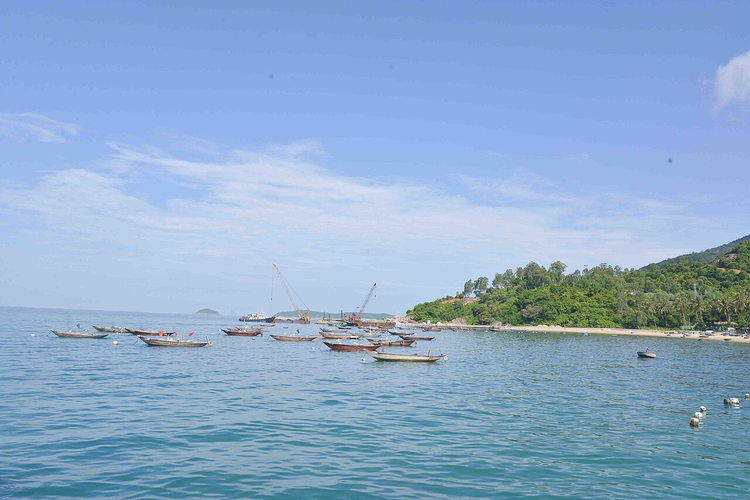
Cu Lao Cham lies 15 kilometers from Hoi An and consists of eight islands. The archipelago is recognized as a UNESCO biosphere reserve. Information about it is collected on the Cu Lao Cham page.
 © Robert Quan · CC BY-SAPhoto: Robert Quan, CC BY-SA (https://creativecommons.org/licenses/by-sa/4.0), Wikimedia Commons
The nature here is generous: high forested slopes, sandy beaches, a rich underwater world. The larger islands have infrastructure for water sports.
Diving, parasailing, and water skiing schools are available. Tourists kayak, paddle, and snorkel. Cafes serve shrimp, crab, and lobster.
The coral reefs are considered the archipelago's strong suit, so underwater photography enthusiasts spend entire days here. Boat trips are popular even with non-swimmers, and hiking routes pass through fishing villages. Collecting shells and touching coral is prohibited in the reserve. People come here from the mainland for a day trip, but the islands reveal themselves better with an overnight stay.
- Hotels: hotels in Hoi An near the pier
16. Cat Ba
 © Oscar Saunders · CC BYPhoto: Oscar Saunders, CC BY (https://creativecommons.org/licenses/by/3.0), Wikimedia Commons
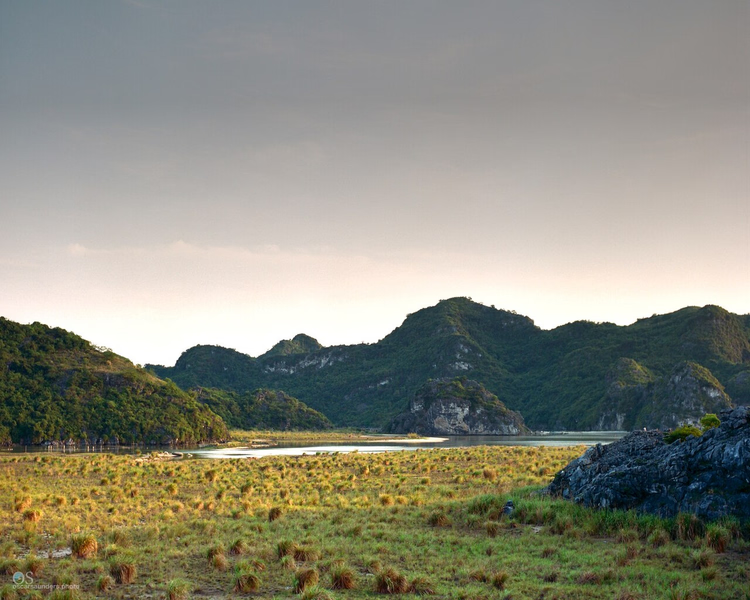
Cat Ba is the largest island in the archipelago in Halong Bay. The island group is part of a biosphere reserve and a national park with rich tropical flora and fauna. Information about the island is available on the Cat Ba page.
Tours of natural attractions and water tours with kayaking, hiking, and diving are organized here. Under instructor supervision, you can practice rock climbing and explore caves.
Renting motorbikes to ride around the area is popular.
Ecotourism is currently being developed here: plans include a theme park, a yacht marina, and new resort facilities. Entry to the national park and some scenic trails is paid, with the money going toward protecting the area. The neighboring Lan Ha Bay rivals Halong in scenery but has fewer boats. The island has fishing villages with floating houses.
- Hotels: hotels on Cat Ba
17. Co To
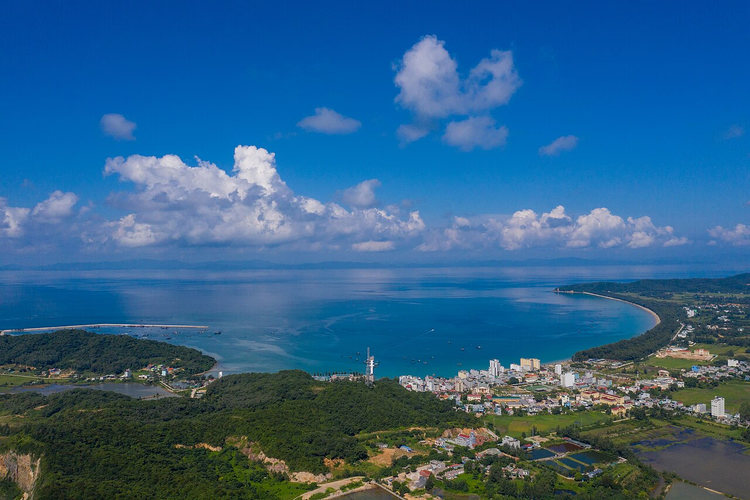
Co To lies in Quang Ninh province and impresses with its contrasts. Yellow cliffs, lush greenery, and red ferrallitic fields come together as a picturesque backdrop. Island details are collected on the Co To page.
 © Tuoipt · CC BY-SAPhoto: Tuoipt, CC BY-SA (https://creativecommons.org/licenses/by-sa/4.0), Wikimedia Commons
Speedboats run from Van Don to the island, and the trip takes about an hour and a half. During that time you can take in the sea views and research accommodation and food prices.
There is a project here where tourists stay in islanders' homes and take part in daily life. You can limit yourself to a single day or stay for a week in a guesthouse. The beaches are white, the sea is blue, and the places are quiet.
Weather on the islands
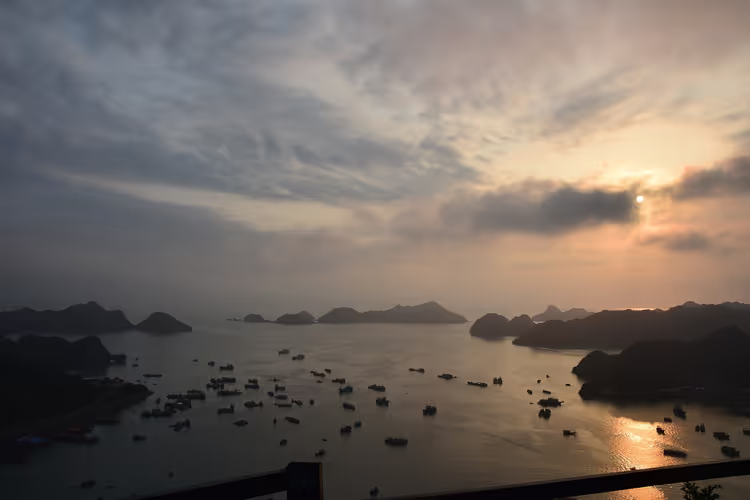
It seems like the tropics are warm all year round, and you can visit the islands in any month. In reality, the weather depends on the season, which is either dry or rainy. Climate data has been checked against Vietnam tourism office materials.
On the Gulf of Thailand islands, Phu Quoc and Nam Du, the dry season runs from November through April. The water stays at 27-29 °C, and the air warms up to 30 °C.
From May through October the rainy season lasts. It gets hot and humid, and typhoons begin to rage in places. The rainiest month is September, with daytime temperatures around 30 °C. In October the heat subsides, but winds pick up.
When to go
January and February are comfortable months for a Phu Quoc vacation. April is a good season in the north, on Cat Ba and Co To. Con Dao, Cu Lao Cham, and Hon Lao are best visited in March and April, before the intense heat sets in.
Even during the rainy season, many islands still work for a vacation if you watch the forecast and build in a buffer day.
Vietnam's islands on the map
All the places in this roundup are marked on the map. Open it in full size to sketch out a route and see the distances between islands.
17 best islands of Vietnam
Places on the map
- 1Phu Quoc The country's largest island, with an international airport
- 2Hon Tam Nha Trang bay, a potters' village and cascading pools
- 3Hon Mun Marine reserve, diving and snorkelling near Nha Trang
- 4Hon Mieu Aquarium shaped like a pirate ship, no beaches
- 5Hon Lao Monkey Island Monkey reserve, reachable only with a group
- 6Hon Heo Orchid Island Orchid garden in Nha Phu Bay, floating shellfish farms
- 7Hon Tam Ostrich Island Ostrich and spotted deer farm, temple of the Sea God
- 8Ly Son Island of volcanic lava, pagodas and garlic plots
- 9Vinpearl Amusement park on Hon Tre island with a cable car
- 10Nam Du Archipelago 21 islands southeast of Phu Quoc, empty beaches
- 11Binh Ba Almost untouched island with no hotels in Cam Ranh Bay
- 12Con Dao Turtle Island 16 islands of the national park, turtles from May to November
- 13Hang Rai Rocky shore of Vinh Hy Bay, grottoes and diving
- 14Cu Lao Cham UNESCO biosphere reserve, eight islands
- 15Cat Ba Largest island of Ha Long Bay, kayaking and hiking
- 16Co To Yellow rocks and a homestay project with locals
⁉️🤔 Frequently asked questions
Which Vietnamese island has the best beaches?
For white sand and a gentle slope into the water, most people head to Phu Quoc and the islands near Nha Trang. Long Beach and Bai Sao on Phu Quoc are easy for swimming with kids, and Hon Tam has pavilions and loungers. For empty, wild beaches, look in the northern part of Phu Quoc and on Nam Du.
When is the best time to visit the islands?
The dry season on the Gulf of Thailand islands, including Phu Quoc and Nam Du, runs from November through April. In the north, on Cat Ba and Co To, the good season falls in April. Con Dao, Cu Lao Cham, and Hon Lao are best visited in March and April, before the intense heat sets in.
How many days do you need on an island?
The islands near Nha Trang can be done in one day and are easy to combine into a boat trip. Phu Quoc, Con Dao, or Cat Ba deserve two to four days. Co To works for either a short trip or a week-long stay in a local islander's home.
How do you get to the islands without your own transport?
Planes fly to Phu Quoc, boats run to the islands near Nha Trang and to Vinpearl, and a cable car leads to the park. Cat Ba is reached by ferry from the mainland, and Cu Lao Cham by boat from Hoi An. It's better to book tickets in advance, especially in high season.
Where should you stay on the islands?
On Phu Quoc, Con Dao, and Cat Ba, the hotel selection is broad, from budget to high-end. Binh Ba has no hotels, so you'll need to stay in private homes. Co To has a program with homestays at local residents' houses, and on Vinpearl it's convenient to stay right by the park.
In short: what's worth booking
Vietnam's islands vary widely in season and access, so it helps to narrow the choice down to a few scenarios. If you need an airport and hotels nearby, go with Phu Quoc. If you want quiet and underwater life, Con Dao or Cu Lao Cham fit the bill. For a day trip from Nha Trang, Hon Tam and Vinpearl are enough. For ferries and bay cruises, set your sights on Cat Ba and Co To.
You can compare options like this: Phu Quoc hotels on Trip.com and bay tours and excursions.

A small editorial team writing guides for independent travel. We travel ourselves, but we haven’t been everywhere, so we check prices, opening hours and how to get there against official sources.