

















Vietnam by month: where it is dry and warm, and where there are rains and typhoons
Vietnam stretches more than 1,650 km from north to south (according to Vietnam Tourism). There is no single best season for the whole country. While Hanoi is cool and dry, Da Nang gets rain, and Phu Quoc stays hot with no precipitation. So the question of "when to go" is answered by region, not by calendar.
A month or two before your trip, check the weather by city. In the dry season, hotels get more expensive, and during the rainy season some island resorts close for the storm months.
Below is a breakdown by three zones: when to go to the north, the center, and the south, which months to avoid because of typhoons, and where it is comfortable even in the rain.
Ad: this article contains affiliate links, we earn a commission if you book through them, at no extra cost to you.

What time of year is best for a trip
💡 In short:
- North (Hanoi, Ha Long Bay): comfortable months from October to April.
- Center (Da Nang, Hoi An): best time from February to May, typhoons from September to November.
- South (Ho Chi Minh City, Phu Quoc): dry season from December to April.
- Seasons and temperature: 09/2026, checked on the Vietnam Tourism portal.
The most expensive and comfortable travel falls in the dry season. But each region has its own: on the same day, the north can be foggy while the south is hot above 30 °C (as of Vietnam Tourism).
If you are building a route across the whole country, take late March or October. In these months, several zones are comfortable at once. For a beach vacation, that is not necessary: just pick the south or the center and fit your dates to the dry season.
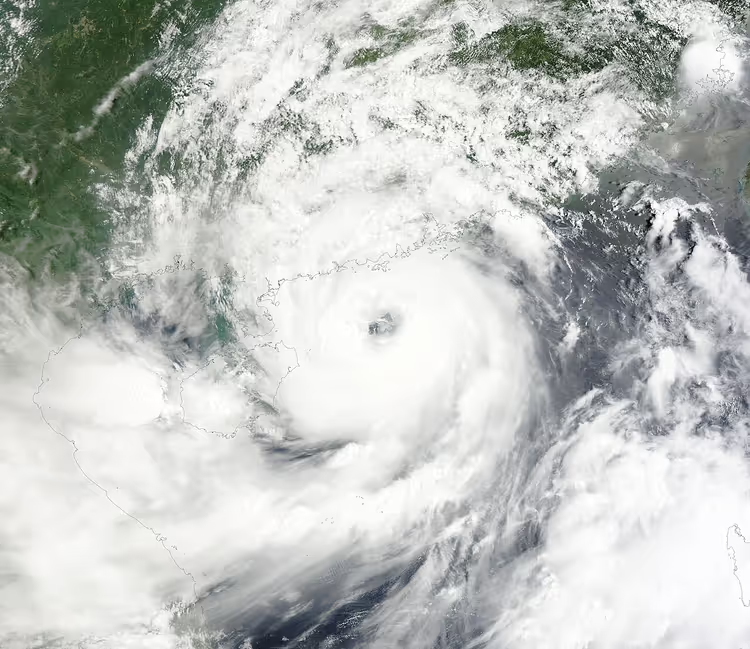
The north lives by four seasons. Winter here is cool and foggy, summer is hot and rainy. The best time to visit the north: October, November, and March. December and January in Hanoi, however, are colder than tourists from the tropics expect.
The center is good to see from February to May. After that the heat starts, and in September typhoons arrive. In the south there are only two seasons, but the weather is more stable. The south is what people choose when they want a beach without surprises.
Climate: north, center, and south
Vietnam is divided into three climate zones, and the weather in them does not match even on the same day (according to the weather calendar, 09/2026). Here are basic reference points for temperature and precipitation.
Month | North (Hanoi) | Center (Da Nang) | South (Ho Chi Minh City) |
|---|---|---|---|
January | 15-20 °C, dry | 18-23 °C, dry | 26-32 °C, dry |
March | 18-25 °C, dry | 24-30 °C, dry | 28-34 °C, dry |
May | 25-33 °C, rain | 29-35 °C, hot | 28-35 °C, rain |
July | 27-34 °C, rain | 30-35 °C, hot | 27-32 °C, rain |
September | 25-31 °C, rain | 28-33 °C, typhoons | 27-32 °C, rain |
November | 17-24 °C, dry | 22-28 °C, dry | 25-31 °C, dry |
Source of figures: monthly summary (as of 09/2026).
In the north, winter lasts from November through March, and summer from April through October. Rain falls mainly from June through August, while December and January are the coldest and foggiest months. In the mountains near Sapa, nighttime temperatures can drop below 5 °C (weather in Sapa and Hanoi).
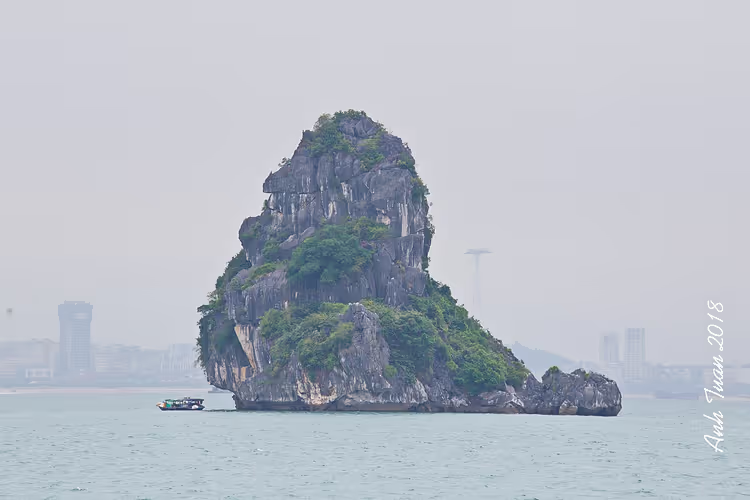
The central region is more complicated. From June through August it is hot and dry here, with temperatures reaching 35-38 °C (according to Vietnam Tourism). From September through November the northeast monsoon arrives, bringing downpours and typhoons. The comfortable window for Da Nang and Hoi An runs from February through May.
The central coast is partly shielded by the Truong Son mountain range. It weakens the rain but does not protect against typhoons. The peak risk falls in October, when flooding occurs in Hoi An. In these cases it is better to shift your trip to the south or the north.
The south has two seasons. The dry season runs from December through April, and the rainy season from May through October. Temperatures stay in the 25-35 °C range year-round (according to Vietnam Tourism), so you can swim at any time. Downpours usually come in the afternoon and last 1-2 hours; mornings are more often sunny.
Outdoor activities: diving, kitesurfing, and fishing
A beach vacation in Vietnam is not the only option. Diving, kitesurfing, and fishing are best planned for the dry season of each region: in the center roughly from February through August, and in the south from December through April (according to coastal seasonality).
Diving and snorkeling are popular near Nha Trang, on Phu Quoc, and around the Con Dao archipelago. Instructors work with beginners, and dive prices are usually lower than in Europe. Underwater visibility depends on the season and is noticeably better during the dry period.
 © Jean-Marie Hullot · CC BYPhoto: Jean-Marie Hullot, CC BY (https://creativecommons.org/licenses/by/3.0), Wikimedia Commons
Kitesurfing and windsurfing are well developed in Mui Ne in the south, but that area expects confident riders. Calm bays in the center are better suited for beginners. If you are getting on a board for the first time, take a lesson with an instructor and do not go out on the sea on stormy days.
Fishing is possible in the sea, on freshwater lakes, and in mountain rivers. Locals will point you to the right spot and bait, but it is better to prepare your tackle in advance. There are also plenty of excursions: rice terraces, bays, waterfalls, and markets. You cannot see everything on a short vacation, so pick two or three destinations and book excursions on GetYourGuide.
Wellness centers and mud baths
Vietnam has many wellness centers and resort complexes. They offer mud baths based on mineral mud, thermal springs, and healing water. Alongside traditional medicine, alternative methods are also practiced, including herbal infusions.
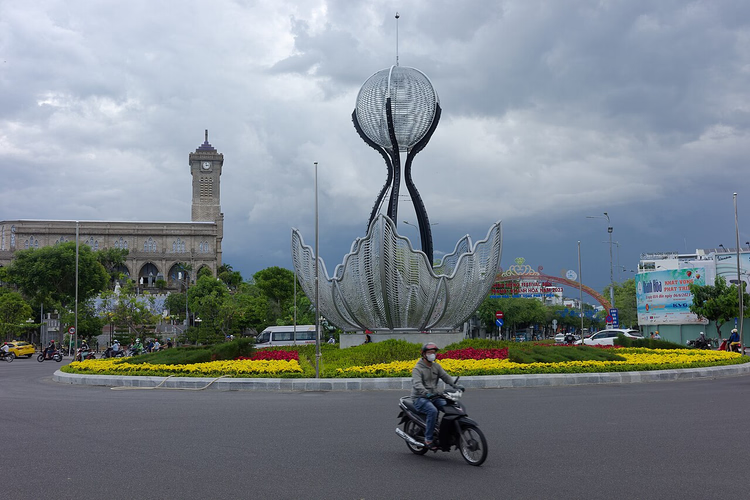 © Leonid · CC BY-SAPhoto: Leonid, CC BY-SA (https://creativecommons.org/licenses/by-sa/2.0), Wikimedia Commons
Holidays in Vietnam are celebrated loudly and colorfully. In addition to world-famous dates, there are religious ceremonies and rituals. Tet, the lunar new year, falls in January or February. If your trip coincides with these dates, book accommodation and transport in advance: prices rise, and some businesses close for several days.
⁉️🤔 Frequently asked questions
When is the dry season in Vietnam?
The dry season depends on the region. In the south it runs from December through April, in the center the comfortable window runs roughly from February through May, and in the north the dry and clear months include October, November, and March. In the same month you can get dry weather in the south and rain in the center, so dates should be chosen for a specific zone.
Is it worth going to Vietnam during the rainy season?
Yes, if you are prepared for short downpours. Rain more often falls in the afternoon and lasts 1-2 hours, while mornings are usually sunny. The upsides: fewer tourists, lower prices, and lush green nature. The exception: the central provinces in September-November and Ha Long Bay in July-August, where the risk of typhoons and storms is higher.
When do typhoons occur in central Vietnam?
The typhoon season in the center runs from September through November, with the peak risk in October. During this time, flooding is possible in Hoi An and Hue, along with flight cancellations and beach closures. If you are planning Da Nang or Hoi An for October, monitor the forecast and get insurance that covers weather-related disruptions.
What to pack depending on the region?
For the north in winter you need layers: in Hanoi in January it is 15-20 °C, and in the mountains around Sapa at night it can drop below 5 °C (weather in Hanoi and Sapa). For the south, bring light clothing, it is warm there all year round. A raincoat is useful everywhere, even in the dry season there are short downpours.
When is the best time to go to cover the whole country?
For a route along the entire length of the country, choose late March or October, when several zones are comfortable at once. There is another option: travel from south to north in December-February, or in the reverse order in autumn. That way you match each leg of the trip to the local weather.
In short: what to book
The choice depends on the purpose of the trip, not just the month.
- If you want beach and sun: southern Vietnam from December to April.
- If you want cities and cooler weather: the north in October or March.
- If you want sea and sightseeing together: the central part from February to May.
There is no single ideal month, but there is almost always a region with good weather. Keep Tet and typhoons in mind if your dates are already fixed. Compare hotels in Vietnam on Trip.com and book in advance: in the dry season there are fewer available rooms.

A small editorial team writing guides for independent travel. We travel ourselves, but we haven’t been everywhere, so we check prices, opening hours and how to get there against official sources.