
















Virtual tourism: how to see the world for free without leaving home
A trip to London is expensive. Flights, a hotel, and timed-entry tickets add up to an amount not everyone is ready to spend this year. Virtual tourism offers a different option: you sit down at your laptop and find yourself in the Throne Room of Buckingham Palace, at a panda enclosure, or on a riverbank where bears are fishing.
There are several formats for these walks, and they differ in how immersive they feel. Google Arts & Culture has brought together more than 2,000 museums and archives (as of 09/2026, according to the service). Zoos and national parks have set up round-the-clock cameras. VR headsets add depth and sound to the picture. Below, we will look at how these approaches differ, what to watch first, and where you may be disappointed.
Ad: this article contains affiliate links, we earn a commission if you book through them, at no extra cost to you.
How virtual tourism works
💡 In short:
- Live streams give you an unedited, real-time picture, panoramas give you control over the route, and VR headsets add depth.
- Free services cover almost everything: streams, 3D tours, and tour schedules are all publicly available.
- Services and availability: 09/2026, verified on the official Google Arts & Culture website
Let's start with the simplest format. A guide or blogger walks down the street with a phone, starts a stream, and you watch the city with no filters and no editing. That is how travel channels on YouTube and wildlife reserve cameras work. The catch: the picture depends on the connection, and an animal can walk into its enclosure and leave you staring at an empty landscape.
The second format: a guided online tour over video call. You join a group, listen to the guide, and ask questions as you go. The program usually lasts an hour or an hour and a half. Museums and guides publish schedules on their websites, and the price is usually lower than an in-person walk.
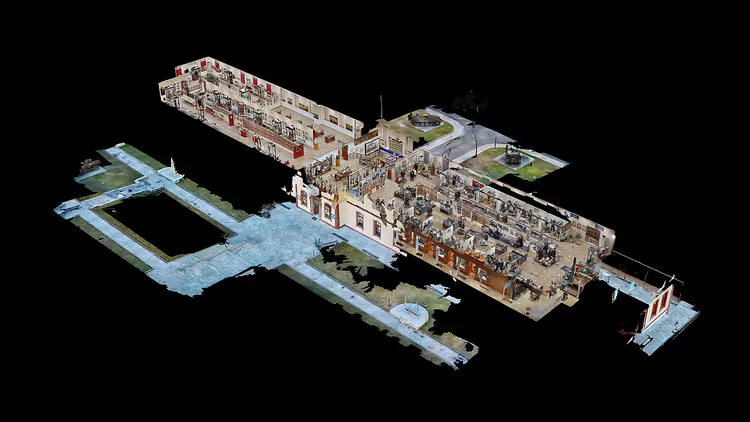
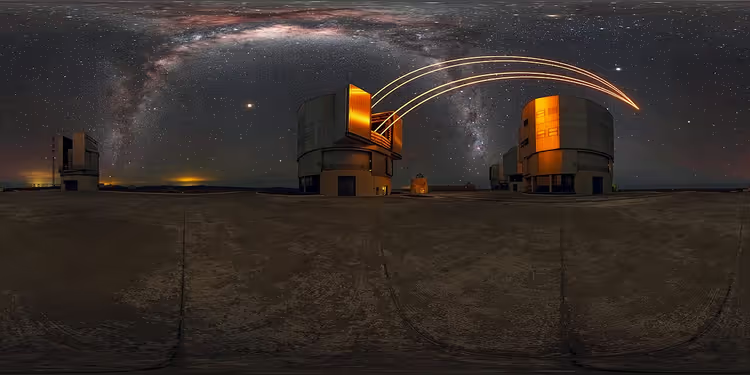
The third format: panoramas and Street View. Here, you choose the route: you move the camera through the rooms, change your viewpoint, and decide where to linger. Museums post these tours on their websites, and a free selection is available in the Virtual tours section on Google Arts & Culture.
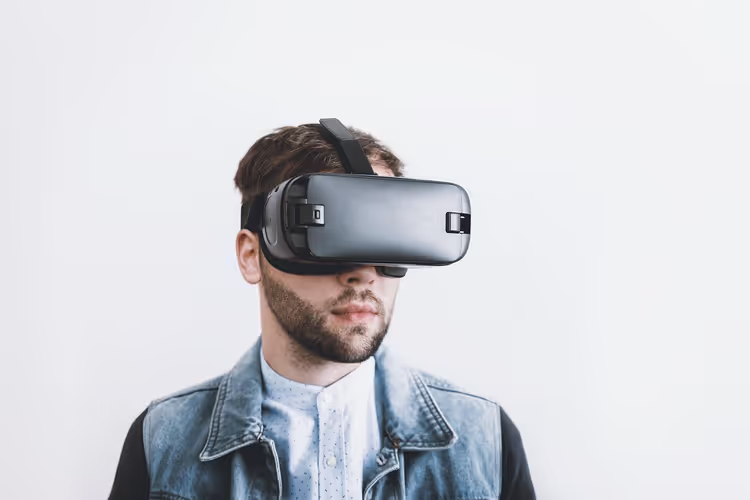
The fourth format requires hardware. VR headsets add depth and sound, so the sense of presence is stronger. The hardware is getting more expensive: Meta raised Quest 3 prices on April 19, 2026 (as of: Meta blog). It is easier to start with free services and only then decide whether you need a headset.
Who this is for. People who cannot travel: health, budget, and work get in the way more often than you might think. People who are preparing for a real trip: a panorama shows you the rooms, lines, and distances in advance. And people who are simply curious about how other cities live.
 © Vivestia · CC BY-SAPhoto: Vivestia, CC BY-SA (https://creativecommons.org/licenses/by-sa/4.0), Wikimedia Commons
Live-stream walks: what to watch today
The format grew out of the pandemic, when bloggers started taking viewers through empty cities. Today, wildlife reserves and zoos have picked up the baton: they set up cameras at watering holes, near nests, and in enclosures. The Explore.org network brings together dozens of these streams in one place. The US National Park Service maintains a separate list of webcams on its lands.
The main advantage is that you can watch around the clock, but after that the compromises begin. The camera does not obey you, the weather changes the picture, and an animal is free to walk into the shade.
Practical details also matter. Set the quality to 1080p if your internet can handle it. Turn on the sound: birdsong and running water provide half the effect. Check the time zone so that the animals' morning does not fall in the middle of your night.
Guided online tours: how they work
Here, a guide leads a group over video call. The picture comes with a presentation: floor plans, photographs, maps, and room layouts. You listen to the guide and ask about what interests you specifically. The group is usually small, so everyone has time to ask a question.
The format suits people who need context, not just a view. The guide explains how to read a facade, why a room was rebuilt, and where to look for fakes and originals. Museums, tourist offices, and independent guides offer these programs.
Before you pay, check three things. Time zone: a tour from the US may run in the middle of the night in Europe. Language: some programs are offered only in English. Reviews: look at how many people left them and how recently.
The catch with this format: the schedule is someone else's, and the camera angle is chosen by the guide, not you.
 © M. Cabral/ESO · CC BYPhoto: M. Cabral/ESO, CC BY (https://creativecommons.org/licenses/by/4.0), Wikimedia Commons
What you can see for free
Below are five services that work without a subscription or registration.
Service | What it shows | Price | Source |
|---|---|---|---|
Google Arts & Culture | 3D tours of museum halls and Street View through cities | free | |
Explore.org | live nature and animal cameras | free | |
National Park Service | webcams of US national parks | free | |
San Diego Zoo | cameras at animal enclosures | free | |
Royal Collection Trust | 360 tour of the state rooms of Buckingham Palace | free |
National park live stream
Cameras are placed at geysers, waterfalls, and watering holes, so the park is shown in real time rather than in a promotional video. The picture changes with the weather: fog today, sun tomorrow. For trip planning, this is more useful than glossy photos.
The streams run around the clock, so you can check conditions in the park at any time.
San Diego Zoo: cameras at the enclosures
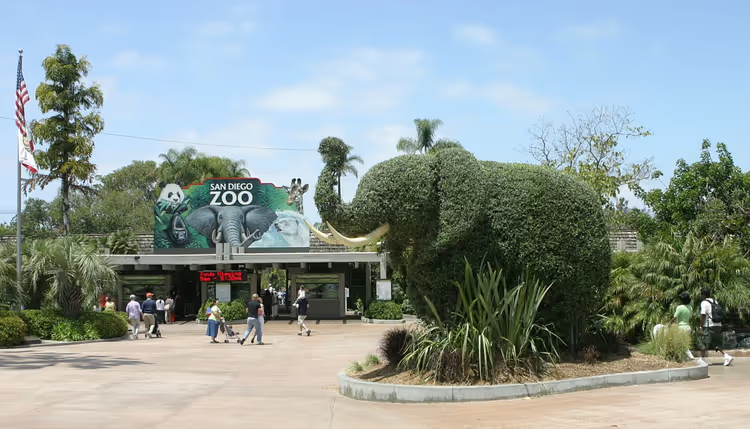
The zoo has set up cameras at the enclosures of pandas, elephants, hippos, koalas, and penguins (official website). You can watch for free and without registration. The animals walk, eat, and sleep: the scene changes every hour, and that is what makes these cameras different from a documentary.
 © en:User:Cburnett · CC BY-SAPhoto: en:User:Cburnett, CC BY-SA (http://creativecommons.org/licenses/by-sa/3.0/), Wikimedia Commons
One tip: the animals may go into their indoor areas, and then the camera will show an empty space. The zoo itself honestly warns about this. Switch to another camera and come back in half an hour.
Buckingham Palace: 360 tour of the state rooms
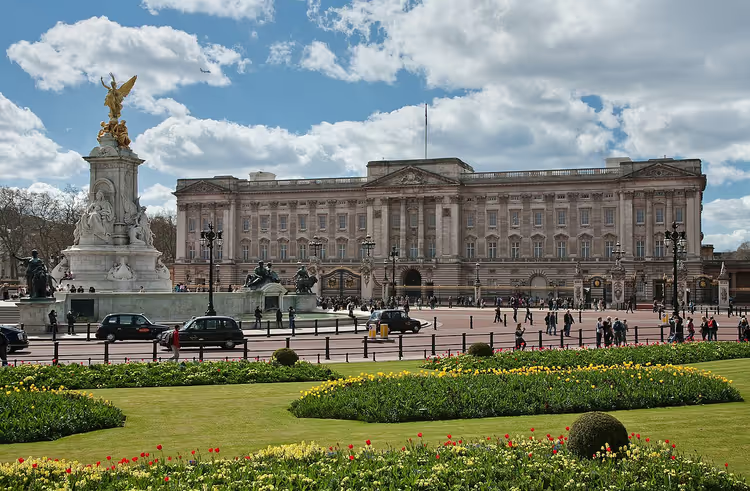
The palace opens the Throne Room, the White Drawing Room, and other state rooms to online visitors (official website). The picture moves and the scale changes: you zoom in on interior details and examine them without glass or security guards.
A regular visit does not work that way. Tickets are sold for a specific time, the rooms are crowded, and the summer opening runs for a limited period (as of 09/2026, Royal Collection Trust). The online tour is available around the clock and does not depend on the season: verified on 09/15/2026 on the official website.
If a trip to London is still in the plans, book tickets in advance: timed-entry tickets on Tiqets. That way the panorama and the actual hall will match, and the difference will become clear.
 © Diliff · CC BY-SAPhoto: Diliff, CC BY-SA (https://creativecommons.org/licenses/by-sa/3.0), Wikimedia Commons
The panorama won't replace a real walkthrough, but it does show the halls in silence and up close. Start with the Throne Room: it sets the scale for the entire palace.
Tours and tickets
Guided tours, skip-the-line tickets and activities — most offers can be cancelled free of charge.
See offers on GetYourGuideThe widget loads once you give your consent.
⁉️🤔 Frequently asked questions
Do I need VR glasses to see a museum?
No: panoramas and live cameras open in a browser on a laptop, tablet, or phone, and a headset adds nothing to these tours. Glasses are needed for 3D scenes and apps that support them. Start with free services and see if the sense of presence is enough for you.
How much does a virtual tour cost?
There are plenty of free options: 3D museum tours, zoo cameras, and nature reserve streams cost nothing. Only online tours with a live guide, where you can ask questions and get commentary, are paid. Check the price on the organizer's website: museums are usually cheaper than private guides.
Can I see Buckingham Palace online?
Yes, the palace has a free 360 tour of its state rooms. It opens in a browser, just like other panoramas.
When is the best time to turn on zoo and nature reserve cameras?
Aim for morning and evening local time: that's when animals come out to feed and move around the most. During the day, activity drops and the frame often stays empty. A simple plan: watch zoos in the morning, then switch to reserves on another continent in the evening.
Which museums offer virtual tours?
Look for panoramas of the Louvre, the Vatican Museums, and the British Museum on the museums' official websites and on Google Arts & Culture. Beyond those, the platform has collected tours and exhibitions from other museums and archives. Pick a tour by country or collection and open it right in your browser.
In short: what's worth booking
Virtual tourism doesn't replace travel, it prepares you for it. You know in advance which room you need, where the line will be, and what to see after. The matrix is simple.
- If you want to see the state rooms of Buckingham Palace: start with the free 360 tour and add museum panoramas on Google Arts & Culture.
- If you love animals: watch the San Diego Zoo cameras and live nature cameras.
- If you need context from a person: book an online tour with a guide and check the time zone in advance.
- If a real trip is planned: book timed tickets in advance, and GetYourGuide tours will help you choose the date and route.

A small editorial team writing guides for independent travel. We travel ourselves, but we haven’t been everywhere, so we check prices, opening hours and how to get there against official sources.