
















Boutique hotel: features, history and what to check before booking
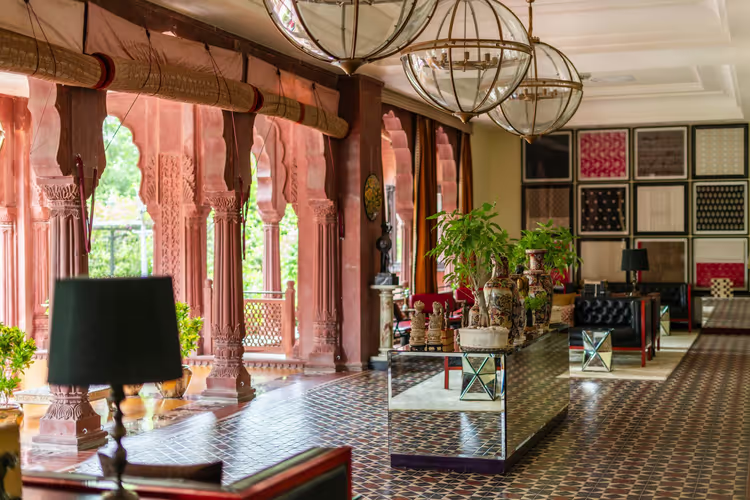
A night in a typical chain hotel rarely differs from the previous one. The corridors are the same, the breakfast is the same, the view from the window is the same. Boutique hotels break that pattern: they usually have fewer than 100 rooms and almost always feature distinctive design.
The first such property is considered to be Morgans Hotel in New York, which opened in 1984. Below we look at how a boutique hotel differs from a chain hotel, where the term came from, and what to check before booking.
What a boutique hotel is
💡 In short:
- A boutique hotel is a small property with a personal concept, distinctive design, and a compact room count.
- The first such property opened in New York: 113 rooms and interiors by designer Andrée Putman.
The term came from the US and was initially purely a marketing one. It described small hotels run personally by the owner: they greet guests themselves, choose the furniture themselves, and decide what breakfast will be.
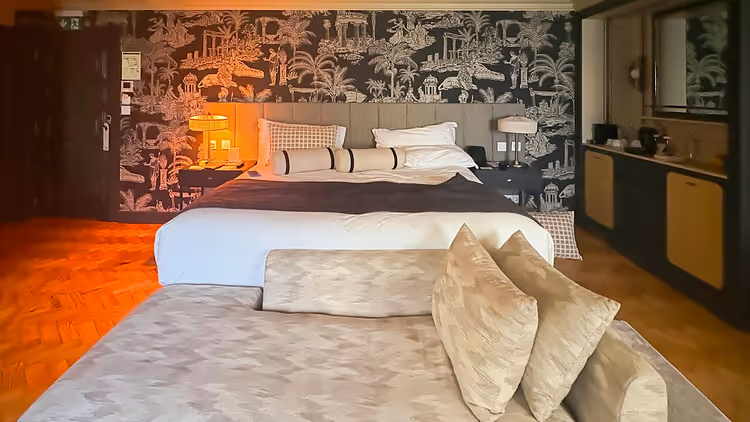
The definition rests on three features. Size: according to the format definition, these are personally managed properties with fewer than 100 rooms. Design: rooms here do not repeat each other as copies from floor to floor. Service: staff remember you by name and hold a table for your arrival, not for your booking number.
The rule about one hundred rooms is not strict. In London, Barcelona, New York, and Paris, there are boutique hotels with more than a hundred rooms, and some brands have already become chains.
 © Dale Cruse - 10M views from San Francisco, CA, USA · CC BYPhoto: Dale Cruse - 10M views from San Francisco, CA, USA, CC BY (https://creativecommons.org/licenses/by/4.0), Wikimedia Commons
History: Morgans Hotel and the 1980s
The format emerged with a specific property. Morgans Hotel on Madison Avenue in New York was opened in 1984 by two founders of the Studio 54 club, Ian Schrager and Steve Rubell. They bought the 1927 building and converted it, commissioning French designer Andrée Putman for the interiors.
The result was a 113-room property with only 4 to 8 rooms per floor. The corridors were covered with carpet featuring a checkerboard border, the doors were made of bird's-eye maple, and the walls in the rooms were painted in a mix of four muted tones. The photographs for the rooms were shot by Robert Mapplethorpe, and the top floor had a two-level penthouse with a conservatory.
In 2018 the hotel closed, and the building was converted into residential apartments. For the market, this is a telling story: the idea lasted more than thirty years and outlived the original property itself.
How a boutique hotel differs from a chain hotel
The difference shows in several areas. Let's start with size. A chain hotel builds hundreds of identical rooms and sells predictability. A boutique hotel sells the fact that it is unlike the previous hotel, and that is exactly what you pay for. Below is a comparison across six criteria.
Criterion | Chain hotel | Boutique hotel |
|---|---|---|
Room count | hundreds and thousands of rooms | dozens of rooms, rarely more than a hundred |
Design | standard project | distinctive, often built around one theme |
Management | staff following a protocol | the owner or a small team |
Star classification | mandatory for the brand | not the main argument |
Price per night | mid-range | upper mid-range, often higher than neighbors |
Predictability | high | depends on the specific property |
The practical takeaway is simple. If you need a guaranteed set of services, choose a chain hotel. If atmosphere matters to you and you are willing to pay for individuality, your option is a boutique hotel.
 © Chongkian · CC BY-SAPhoto: Chongkian, CC BY-SA (https://creativecommons.org/licenses/by-sa/4.0), Wikimedia Commons
Where boutique hotels open
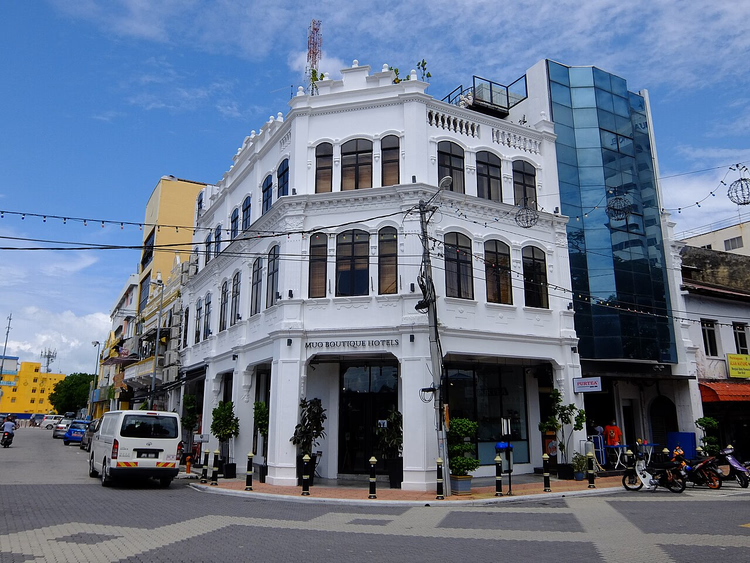
Location here is part of the concept. These properties often occupy historic buildings, former factories, workshops, or even courthouses. From the outside, a boutique hotel can easily be mistaken for an architectural landmark or a local attraction.
In the 1980s the format stepped beyond New York: similar properties appeared in San Francisco and London. In London, Blakes Hotel in South Kensington is considered part of the format; it was designed by Anouska Hempel. Later, boutique hotels opened in Paris, Barcelona, Berlin, and Marrakech, and then on islands and in Alpine resorts: in Mallorca, Santorini, and Graubünden.
 © Jules Verne Times Two · CC BY-SAPhoto: Jules Verne Times Two, CC BY-SA (https://creativecommons.org/licenses/by-sa/4.0), Wikimedia Commons
Design, theme, and stars
Design remains the main argument. Some properties build their concept around a single theme: wine, music, the sea, the city's architecture. Rooms within the same hotel still differ from one another, so you choose not only the size but also the experience.
Stars explain almost nothing here. Switzerland was the first to introduce a certified hotel star classification in 1979, and other countries followed later. In Germany, this system is voluntary. Classification is useful to guests as a reference point, but it also makes hotels more similar to one another.
The market's response was twofold: among large properties, design hotels and art hotels appeared, while among small ones, individuality began to be sold under the word "boutique." So treat stars as a baseline and look for character in the description of the specific property.
 © Basile Morin · CC BY-SAPhoto: Basile Morin, CC BY-SA (https://creativecommons.org/licenses/by-sa/4.0), Wikimedia Commons
How much a night in a boutique hotel costs
Boutique hotel prices sit in the upper part of the mid-range and are often higher than a neighboring chain hotel in the same area. The reason is simple: there are few rooms and no group discounts.
There is no single pricing standard here, so you check the exact amount for your travel dates. Compare the same dates and the same area, because the price difference between a boutique and a chain is usually smaller than advertising makes it seem.
Two habits help you avoid overpaying. First: check what is already included in the rate, especially breakfast and the city tax. Second: check what you are paying extra for, interior design or actual conveniences such as the view from the window and the size of the bathroom.
How to choose a hotel when booking
Five points worth going through in order.
- Check the room count. If the property has forty rooms, the service is almost always personal.
- Look at the windows and the floor plan. A room facing the street in the center is noisier than the same category facing the courtyard.
- Ask about breakfast. Clarify its format before booking.
- Check the design's origin. A designer interior and a set of furniture from a catalog produce different results.
- Check the neighborhood. Boutique hotels often have no grounds of their own, so nearby cafes, transport, and a park matter.
Make a shortlist of three properties, compare them on these points, and only then book. That way you will not overpay for a buzzword in the description and will get what you are paying for.
⁉️🤔 Frequently asked questions
Can a boutique hotel be part of a chain?
Yes. Some boutique hotels are already part of chains. The chains try to preserve each property's identity: service and booking standards remain shared, while design and the restaurant are kept separate.
How many rooms does a boutique hotel usually have?
Most often fewer than 100 rooms. In cities there are very small properties with only a few doors per floor.
How does a boutique hotel differ from a design hotel?
A design hotel bets on interiors and often belongs to a large brand. A boutique hotel adds a small room count and personal management to the design. In practice the boundaries are blurred: many properties call themselves both a design hotel and a boutique at the same time, so look at the room count and who manages the property.
Is a boutique hotel suitable for a family with children?
It depends on the property. A small room count means there may be no playground or kids' activities, because those require space. On the other hand, staff resolve everyday matters faster: a crib, an early breakfast, a place for a stroller. Check the family arrangements before booking, not on arrival.
Is breakfast included in the price?
Sometimes it is, more often it is not. In small properties breakfast is prepared in the kitchen and served from a menu, so it is treated as a separate service. Clarify the format in advance: buffet, à la carte, or just coffee with pastries. This detail noticeably changes the total for several nights.
How many weeks in advance should you book a boutique hotel?
There is no exact rule. There are few rooms, so in high season and during holidays the property sells out earlier than a large hotel. For popular cities, allow several months; for the off-season, a couple of weeks is enough. Check the availability calendar for your date and keep one backup option.
Ad: this article contains affiliate links. We earn a commission if you book through them, at no extra cost to you.
In short: what to book
If you want a quiet property in the center where staff know you by name, choose a small boutique hotel in a historic quarter. If you are traveling with children, compare the boutique with a chain hotel that has a pool and a kids' program. If you are going away for a weekend as a couple and a historic quarter outside your window matters to you, a boutique hotel in an old building will give you more than a chain property on the edge of town.
We at the tourism.com.de editorial team keep one criterion: the hotel description should match reality. Look at photos, the floor plan, and reviews, not just the word "boutique" in the name.

A small editorial team writing guides for independent travel. We travel ourselves, but we haven’t been everywhere, so we check prices, opening hours and how to get there against official sources.