

















How to read Michelin stars, hotel ratings and beach certificates
Four stars in Antalya and four stars in Vienna mean different things. There is no single global standard for hotels, so the same stars in different countries describe a different set of services. Quality marks help you avoid guessing: they show who checked the hotel, restaurant, or beach, and by what criteria.
Below we break down the main quality marks in tourism. You will see what stands behind Michelin stars, hotel classification, the Blue Flag, and eco-labels. You can verify each mark in the official registry before you book.
Ad: this article contains affiliate links, we earn a commission if you book through them, at no extra cost to you.
What quality marks are
💡 In short:
- A quality mark appears only after an independent check against set criteria.
- Hotel classification is run by national associations, while certificates are issued by independent foundations.
- Requirements are revised every few years, so an old badge by itself guarantees nothing.
A quality mark comes from an independent check, not from decoration on a sign. The checking party sets the criteria, inspects the property, and assigns it a category for a set period.
Systems fall into two types. National associations run hotel and restaurant classification, while independent foundations issue voluntary certificates that are valid for a limited time. Both revise their requirements every few years, so an old badge by itself guarantees nothing.
For you, this means a simple rule. Open the official registry for the mark you need and check the property there, not on the venue's website.
Michelin stars: rating the kitchen
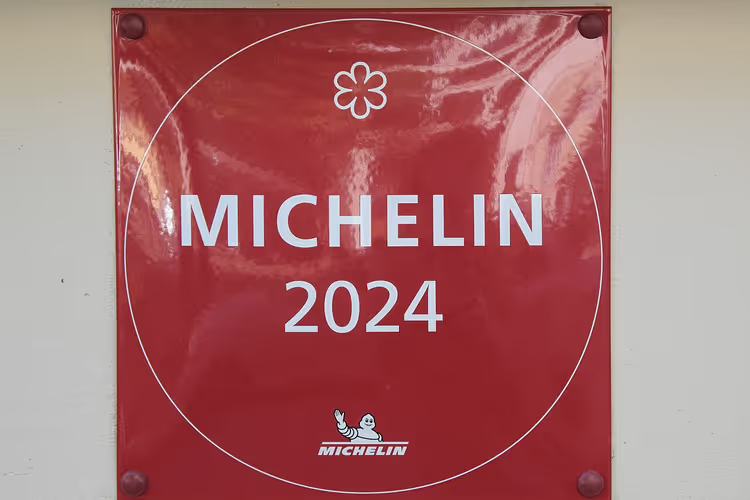
The Michelin Red Guide rates only the kitchen, not service or interior. Inspectors award from zero to three stars based on five criteria: quality of ingredients, mastery of flavor and technique, the chef's personality, value for money, and consistency. The official guide states these criteria directly.
 © GFreihalter · CC BY-SAPhoto: GFreihalter, CC BY-SA (https://creativecommons.org/licenses/by-sa/4.0), Wikimedia Commons
One star means very good cooking. Two stars go to a place worth a detour. Three stars go to a place people plan a separate trip around. At starred locations, reservations are sometimes booked out months in advance, so people look for a table early.
The full list is updated every year, and a restaurant can lose a star as easily as it earned one. If you are traveling for food, check the guide's website before booking a table. Michelin marks hotels separately, with a different symbol, so do not confuse it with the stars for cooking.
Hotel stars: where systems are more honest
Stars on a facade mean a set of services and amenities, not a level of luxury. Basic categories give a minimum standard: a private bathroom and daily cleaning. At three stars, breakfast and laundry appear; at four stars, room service is added; and at five stars, a concierge is expected.
The main trap is that there is no single global system. In Europe, Hotelstars Union operates: associations from 22 countries have agreed on common criteria, and the standards themselves are revised roughly every five years (as of 09/2026, Hotelstars Union). Outside the union, countries keep their own rules, so four stars in Turkey and in Austria describe different levels.
 © Hotelstars Union · CC BY-SAPhoto: Hotelstars Union, CC BY-SA (https://creativecommons.org/licenses/by-sa/4.0), Wikimedia Commons
The classification itself is voluntary: a hotel pays for the check and receives a category for several years. You can verify it in the national association's registry. A convenient way to browse hotels with ratings and reviews is Trip.com: choose a hotel on Trip.com. But stars do not replace reading recent reviews, especially negative ones.
Blue Flag: a quality mark for beaches
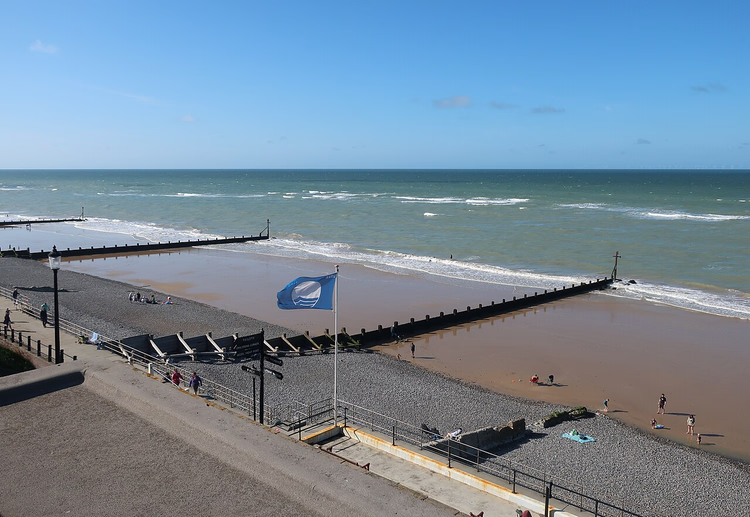
You know the Blue Flag from Mediterranean beaches. It is awarded by the Foundation for Environmental Education, and it is a voluntary award for the ecology, safety, and accessibility of a beach or marina. In 2025, a total of 5,216 sites in 51 countries received the award (as of 10/2025, Blue Flag).
 © Hugh Venables · CC BY-SAPhoto: Hugh Venables, CC BY-SA (https://creativecommons.org/licenses/by-sa/2.0), Wikimedia Commons
The mark is not bought forever. A beach is rechecked every season, and water quality is taken from official measurements. If you see the flag at the entrance, it means there is current cleanliness data for that stretch.
For vacations with children, the flag remains a convenient reference point. But it does not tell you that the beach is empty or that there is a cafe nearby, so check the infrastructure separately.
Green Key: an eco-certificate for hotels
The Green Key program is run by the same foundation as the Blue Flag. It is a voluntary eco-certificate for hotels, campsites, and restaurants: a property proves that it saves water and energy, sorts waste, and reduces its environmental impact. As of August 2026, more than 9,000 properties in over 90 countries hold the certificate (as of 08/2026, Green Key).
The certificate is issued for two years (as of 08/2026, Green Key), after which the hotel is rechecked. For you, this means that a Green Key mark at the front desk describes the property's current practices, not a one-off action.
If sustainability matters to you, look for the hotel in the program's general registry. Do not confuse the international label with stickers from the hotel itself.
Dog-friendly: venues for pets
A dog-friendly mark signals that a venue welcomes guests with animals. The level of service varies. One cafe will let you come in with a dog; another will provide a water bowl, a disposable pad, and a toy.
 © Rodhullandemu · CC BYPhoto: Rodhullandemu, CC BY (https://creativecommons.org/licenses/by/3.0), Wikimedia Commons
There is no single registry for this mark, so check the details before your visit. Ask whether you can come in with a large dog and whether there is space on the terrace. Large shopping malls even have parking areas for animals.
For a trip, check the hotel's rules in advance. Some hotels allow pets for an extra fee and only in certain rooms, so the front desk may turn you away without warning.
Face control and dress code
Venues with face control and a dress code set conditions for a guest's appearance. Clubs, hotel restaurants, and places with a high average check do this. Requirements can be soft (for example, smart casual without athletic shoes) or strict (a suit and tie).
In Europe, face control is less common than in Dubai or Las Vegas. But you still will not be let into the opera or a gala dinner in shorts. Before your visit, check the rules on the venue's website or by phone, otherwise you will arrive and be left at the door. A dress code says something about the atmosphere and level of service, not about the quality of the kitchen.
TripAdvisor and Booking.com: traveler ratings
TripAdvisor and Booking.com collect ratings from real travelers. This is not a mark from inspectors, but a sum of reviews and a place's rating. The more reviews there are and the fresher they are, the more reliable the picture.
If you choose a hotel by rating, do not read the average score; read the latest negative reviews. They quickly show what exactly is wrong: noise, cleaning, breakfast, staff. Isolated bad reviews prove nothing, while a systemic complaint repeats across different guests.
Ratings can be inflated, so cross-check them against details: dates, guest photos, specific facts. Be cautious of a place with a high score and only a couple of reviews. Booking.com and TripAdvisor remain private platforms, not a government standard, so they are convenient for booking but do not equal a quality mark in rigor.
⁉️🤔 Frequently asked questions
What does one Michelin star mean?
One star indicates very good cooking. The guide rates only the food, not service or interior. A restaurant is rechecked every year, so a star can be lost. If you are booking a table for one star, check the current list on the guide's official website.
Why do four stars mean different things in different countries?
There is no single global standard, and outside Hotelstars Union, national rules apply. Check the category in the local association's registry, not by the badges on the facade.
What does a Blue Flag on a beach give you?
The flag confirms the beach's ecology, safety, and accessibility in the current season. It does not describe cafes and sun loungers, so check the infrastructure separately.
Can you trust Booking.com and TripAdvisor ratings?
They are useful platforms, but not a government quality standard. Read recent negative reviews and look for complaints that repeat across different guests.
What does a dog-friendly mark mean?
It means the venue welcomes guests with animals. There is no single registry for the mark, so check the conditions in advance.
In short: what is worth booking
Quality marks save time, but they do not replace checking. Michelin covers the kitchen, hotel classification covers the set of services, and the Blue Flag and Green Key cover ecology. Traveler ratings add fresh details to the official lists.
If you have a short city trip, take a hotel with a confirmed category and recent reviews: browse hotels on Trip.com. If you are traveling for food, check the guide's list in advance and book a table. For a seaside vacation, choose a beach with a current Blue Flag.
Before booking, open the official registry for the mark you need and check the property there. That way you will not overpay for stars that in reality mean nothing.

A small editorial team writing guides for independent travel. We travel ourselves, but we haven’t been everywhere, so we check prices, opening hours and how to get there against official sources.