
















Maldives: best season, bans and hotel choice
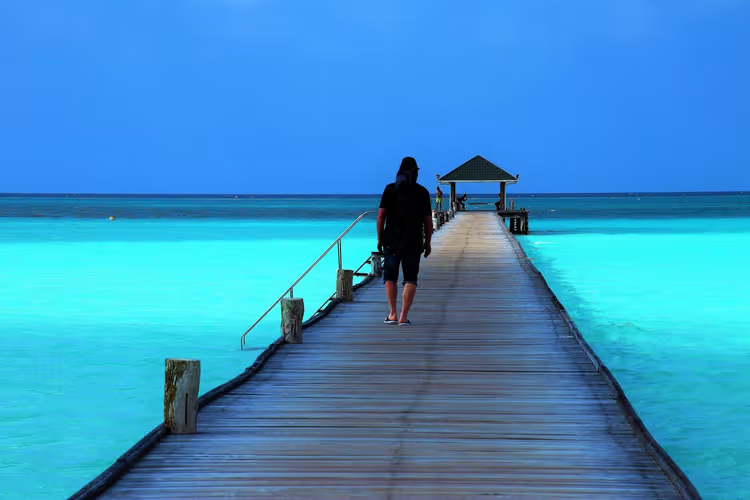
The Maldives is not one resort but 1,192 coral islands in the Indian Ocean (official tourism portal). A vacation here is built around a single island, so seclusion is included in the price by default. There are no mountains or big cities here, but there are reefs, lagoons, and the ocean.
We put together a practical picture of a vacation for you: the best season, laws and restrictions, diving, hotels, honeymoon, and cuisine. We relied on official sources from the tourism office, the immigration service, and the Maldives meteorological service.
Ad: this article contains affiliate links, we earn a commission if you book through them, at no extra cost to you.
How the Maldives are structured: 26 atolls
💡 In short:
- The country occupies a double chain of 26 atolls and 1,192 islands (Visit Maldives).
- A 30-day visa is issued on arrival and is free (Maldives immigration website).
- Season, visa, and rules: 09/2026, verified on the official Maldives tourism office website.
The Maldives stretch from north to south across the equator for almost 871 kilometers. Land, however, accounts for only 298 square kilometers of the total area (Visit Maldives). Of the 1,192 islands, roughly 200 are inhabited. A small portion is set aside for resorts; the rest remain uninhabited.
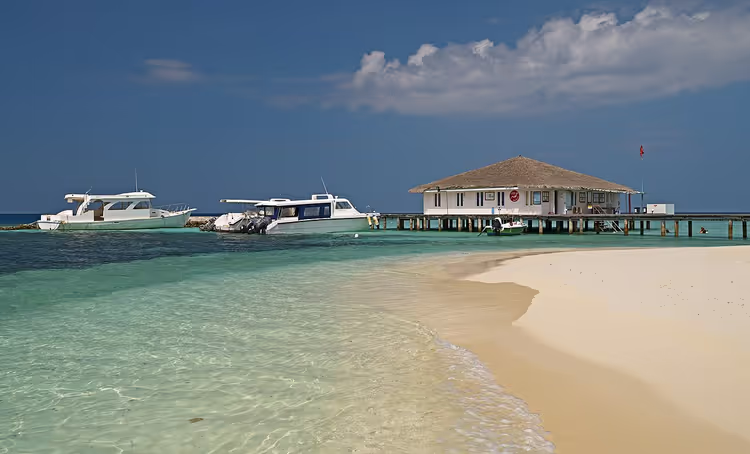
The country's capital, Malé, sits on a tiny island. International flights arrive there. From there, you get to your resort by seaplane or speedboat. That is how local transfers work.
 © Hansueli Krapf · CC BY-SAPhoto: Hansueli Krapf, CC BY-SA (https://creativecommons.org/licenses/by-sa/3.0), Wikimedia Commons
The archipelago's reefs make up about 5% of all coral reefs on the planet (tourism office data). Around 1,000 species of fish make their home here, and manta rays and whale sharks come to the currents. Snorkeling right off your beach delivers what people come here for.
Climate and the best season
The weather in the Maldives is driven by two monsoons. The dry season brings the northeast monsoon, which runs roughly from November to April (Maldives Meteorological Service). Rainfall is low during these months, the sea is calm, and underwater visibility is at its best.
From May to October, the wet southwest monsoon takes over. Air temperatures stay around 30 °C, and lagoon water warms to 27-29 °C almost year-round (meteorological service data). Even when it rains, you can still swim and sunbathe, as downpours are usually short.
Prices peak in January and February. Book a trip in November or April: the weather is still dry, and hotels are cheaper.
Diving, snorkeling and surfing
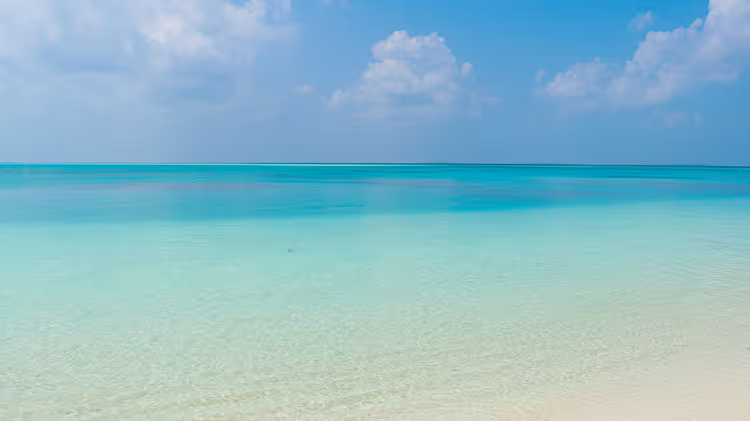
The Maldives ranks among the best diving destinations on the planet. Clear water, warm currents and rich reefs make diving comfortable even for beginners. Almost every resort has a dive center offering PADI courses where you can earn an internationally recognized certification.
Surfers also have plenty to work with here. Waves at the outer reefs hold their shape, and the spots are rarely crowded. The archipelago has hosted the international O'Neill Deep Blue Open tournament (Surfer). Events like this confirm the quality of the local waves.
If you want to combine reefs with excursions, check out dive tours and sea trips on GetYourGuide. A guide will show you proven spots near your atoll.
 © Ввласенко · CC BY-SAPhoto: Ввласенко, CC BY-SA (https://creativecommons.org/licenses/by-sa/3.0), Wikimedia Commons
Rules and restrictions: what you can be fined for
The Maldives remains a Muslim country with strict laws. Violations carry fines, so it is best to learn the rules in advance. The list is short but mandatory for everyone.
It is forbidden to break or collect corals, pick up shells, hunt or fish near the islands. Littering and leaving bottles on the sand are not allowed. Nudism and topless sunbathing are prohibited by law, even on the beach. In Male, you must wear covered clothing: shoulders and knees need to be covered.
Alcohol is sold only in resort zones and on licensed vessels. On local islands, alcohol is banned, and bringing it into the country is prohibited. Drinking in public outside your hotel is not permitted.
Currents near the outer reefs can be strong and unpredictable. So swimming far from shore into open water is not advisable.
Hotels: one island, one hotel
Global hotel brands operate across the archipelago. Resort infrastructure includes spas, dive schools, water sports centers, bars and restaurants.
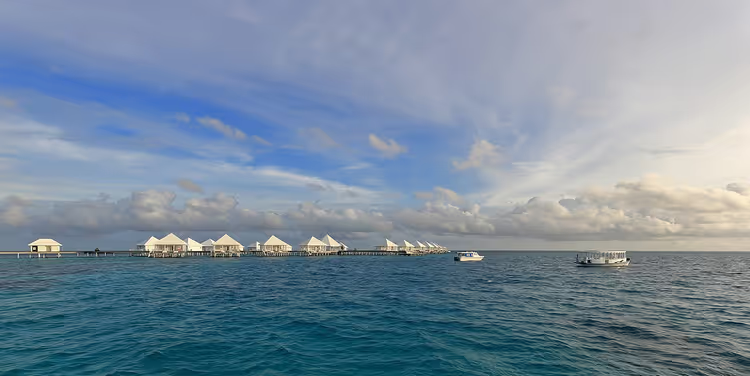
The main local feature: each resort island has only one hotel. Every resort occupies its own island and accommodates a limited number of guests. Accommodations are built as bungalows and villas, often on stilts directly over the water. A simpler option is a guesthouse on a local island, but there is no alcohol there.
Finding hotels in the Maldives on Trip.com is convenient to do in advance: you can see island options and prices at a glance.
 © Martin Falbisoner · CC BY-SAPhoto: Martin Falbisoner, CC BY-SA (https://creativecommons.org/licenses/by-sa/4.0), Wikimedia Commons
Instead of a resort, you can choose a yacht or liveaboard. The vessel travels between atolls, and diving is usually included in the price. This type of vacation costs about the same as a room in a good five-star hotel.
Good to know: there are almost no pharmacies on resort islands. Bring your usual medications with you in sufficient quantities.
Honeymoons and weddings
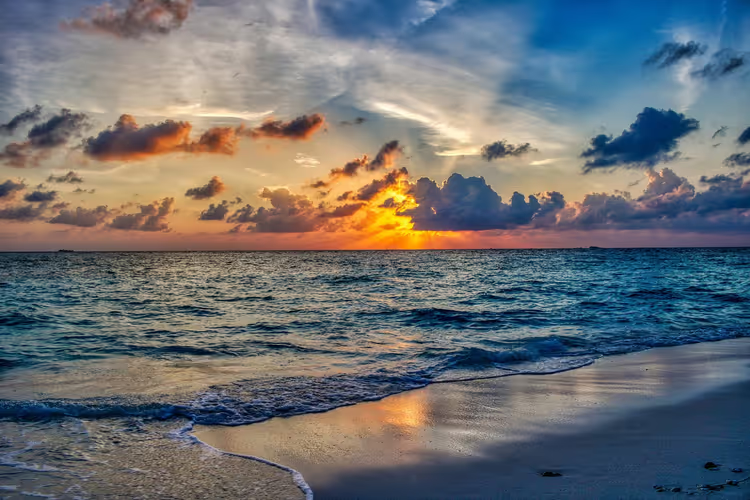
The Maldives has long been considered one of the most romantic honeymoon destinations. Newlyweds book an overwater villa and a dinner on the sand by the ocean. The quiet, privacy and sunsets do the rest.
Many resorts offer couples perks: accommodation discounts, room decorations, late checkout. Some couples even arrange their wedding ceremony here. A ceremony on the island costs more than a regular vacation, but you are not distracted by city bustle.
This kind of trip works for everyone else too. Beach, active, family and quiet formats coexist on neighboring islands.
Food, souvenirs and shopping
Local cuisine draws on Indian and Arab traditions. The staples are rice and fish, most often tuna. There are few vegetables and greens, but spices, seafood and imported fruit are used generously. For local produce, go for bananas and coconuts.
Shopping on the islands mostly comes down to souvenirs. Small items people bring back include wood and coconut crafts, lacquered inlaid boxes and coconut oil. On the pricier side, palm-fiber mats and branded diving gear are in demand.
For clothing, people buy beach sarongs and light embroidered dresses. As something more unusual, traditional drums are popular, although they are difficult to transport. Bargaining is not the custom here: prices are not haggled down even at the market.
 © Mark Fischer · CC BY-SAPhoto: Mark Fischer, CC BY-SA (https://creativecommons.org/licenses/by-sa/2.0), Wikimedia Commons
⁉️🤔 Frequently asked questions
Do I need a visa to travel to the Maldives?
No, all tourists get a visa on arrival. You get 30 days free of charge, with no prior approval required (Maldives Immigration). Before departure, you fill out an electronic declaration. Your passport must be valid for at least one more month.
When is the best time to visit the Maldives?
The dry season runs from November to April (meteorological service climate report). Details on monsoons and prices are covered in the climate section.
Can I drink alcohol in the Maldives?
Alcohol is sold on resort islands and on licensed liveaboard vessels. On local islands, alcohol is prohibited, and bringing it into the country is not allowed. If you are staying at a resort, the bar is at your disposal.
What is strictly prohibited on the islands?
The main restrictions concern the reef, the beach and clothing. The full list of rules is covered in the section on prohibitions and fines.
What should I choose: a resort island or a yacht?
A resort offers stability: your own beach, restaurants, a dive center and a spa on one island. A yacht suits those who want to change atolls every week and dive right from the boat. In terms of price, the options are comparable to a good five-star hotel.
Find hotels in Maldives
Compare prices across booking sites and filter for rooms with free cancellation.
Compare prices on Trip.comThe widget loads once you give your consent.
In short: what to book
The Maldives suits couples, divers and families alike. If you are deciding where to start, follow a simple logic.
- If you are on your honeymoon: book an overwater villa on a private island.
- If you dive: choose a resort with a dive center and a house reef.
- If price matters to you: plan your trip for November or April.
- If you want to compare islands: find a hotel on Trip.com.

A small editorial team writing guides for independent travel. We travel ourselves, but we haven’t been everywhere, so we check prices, opening hours and how to get there against official sources.