
















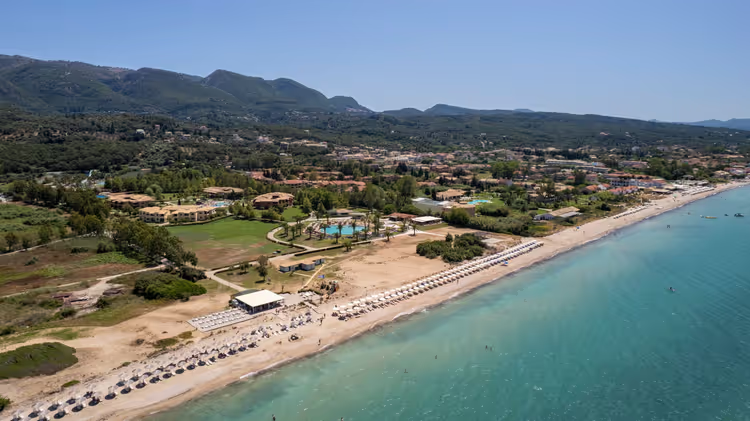
20 Best beaches of Corfu: sand, pebbles and places without crowds
Corfu is called the greenest island in the Ionian Sea. Choosing a beach here is trickier than it seems.
In 2026 the island received 18 Blue Flag awards (as of 09/2026, enimerosi.com). Next to a wide sandy lagoon there is almost always a pebble cove hiding nearby, and wind and waves change the picture every day.
Below are 20 beaches of Corfu: from the resort beaches of Glyfada and Dassia to the quiet Rovinia and Halikounas. You will see where the sand is, where the pebbles are, and where to go for calm water.
How to choose a beach on Corfu
💡 In short:
- The coast of Corfu is divided into three types: sand, pebbles, and a mixed sand-and-pebble strip.
- For calm water, head east; for wind and kiting, head to the southwestern spit.
- On the east coast the water warms up earlier, and there are fewer people there in the morning.
- Blue Flag awards and beach facilities: 09/2026, verified on eepf.gr.
First decide what matters most to you. Fine sand and a gentle entry suit families with children, while pebbles and clear water appeal to those who snorkel. The west coast is exposed to the wind, and calm water there is found only in coves beneath the cliffs. The eastern beaches are calmer and warm up earlier.
Next, consider the time of day. After 11:00 the waves pick up on the west coast, while the water on the east coast stays smooth. If you are traveling with a child, go in the morning: by midday the popular beaches run out of free sunbeds.
Beach | Shore | Who it suits |
|---|---|---|
Paleokastritsa | sand and pebbles in coves | families and divers |
Gardenos | sand | a quiet getaway |
Rovinia | pebbles | those seeking seclusion |
Benitses | sand with pebbles | families and active holidays |
Issos | sand | long walks and kiting |
Porto Timoni | white pebbles | swimming in a cove |
Barbati | coarse pebbles | snorkeling and diving |
Peroulades | sand | cliff views |
Agios Georgios | sand | families and windsurfing |
Glyfada | sand | families and surfing |
Canal d'Amour | sand | couples and a short walk |
Avlaki | pebbles | surfing and sailing |
Ipsos | sand with pebbles | families and nightlife |
Dassia | sand with pebbles | families and water sports |
Marathias | sand | families and kayaking |
Vitalades | white sand | families and tranquility |
Halikounas | sand | kitesurfing and seclusion |
Nissaki | fine pebbles | couples and divers |
Kontogialos | sand | families and surfing |
Agios Spyridon | sand with pebbles | families and excursions |
1. Paleokastritsa
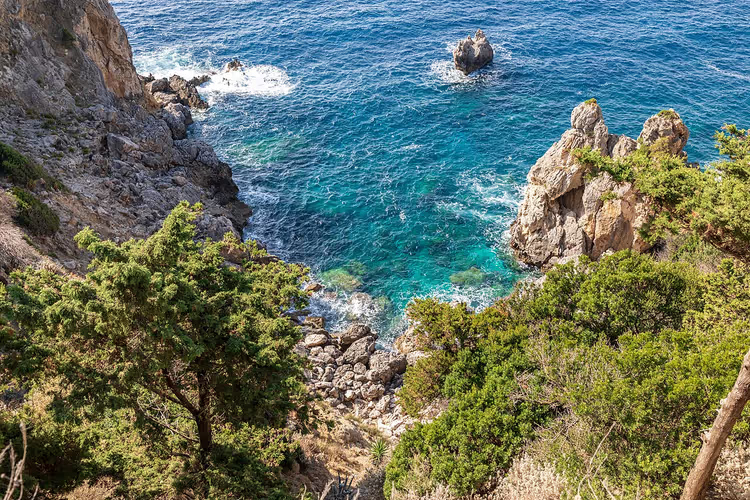 © Dietmar Rabich · CC BY-SAPhoto: Dietmar Rabich, CC BY-SA (https://creativecommons.org/licenses/by-sa/4.0), Wikimedia Commons
Paleokastritsa lies in the northwest, 25 km from Corfu Town (as of 09/2026, corfu.info). It is not one beach but six coves between cliffs, where sand alternates with pebbles. The sea in the coves is sheltered from the wind, so the water here is warm and calm.
The entry into the water is gentle, and the seabed near the shore is safe. That is exactly why Paleokastritsa works well for families with children. Divers come for the underwater terrain and caves, and there is a dive center operating near the shore.
The infrastructure is complete: equipment rental, sunbeds, tavernas, and boats to the sea caves in the cliffs. If you want a spot right by the water, arrive before noon.
- How to get there: 25 km from Corfu Town along a mountain road, about 40 minutes by car or bus (per the map).
- Who it's for: families with children and divers.
2. Gardenos
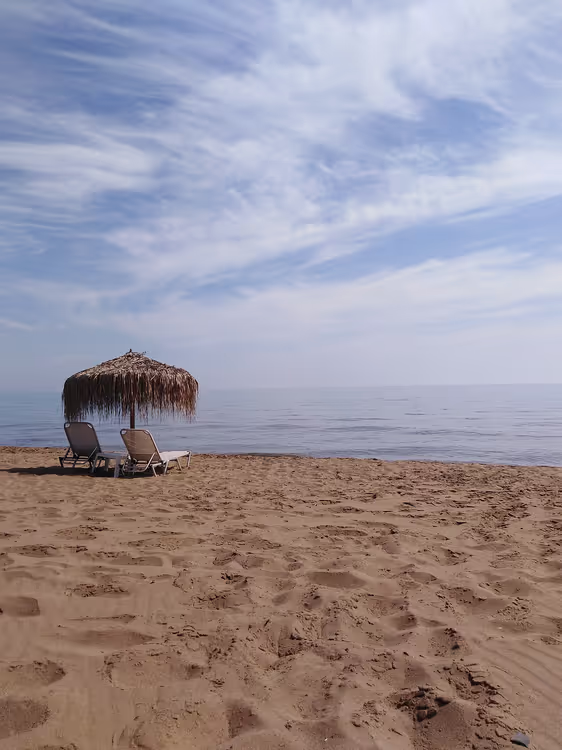 © Allesineinem · CC BY-SAPhoto: Allesineinem, CC BY-SA (https://creativecommons.org/licenses/by-sa/4.0), Wikimedia Commons
Gardenos lies between olive and cypress groves, and a cascade of cliffs shelters it from the wind. The beach is wide and sandy, and even in high season it rarely gets crowded.
Locals love this spot for its open space. Tourists discovered it fairly recently, so the shore stays peaceful. Available activities include sailing, canoeing, and boating, and nearby tavernas serve Greek cuisine.
The infrastructure is modest: there are umbrellas, sunbeds, and a toilet. If you are looking for quiet and open space, Gardenos fits the bill.
- How to get there: south of the island, south of Vitalades, 30 km from the airport, by car or scooter (per the map).
- Who it's for: those who value a quiet getaway without crowds.
3. Rovinia
 © Dietmar Rabich · CC BY-SAPhoto: Dietmar Rabich, CC BY-SA (https://creativecommons.org/licenses/by-sa/4.0), Wikimedia Commons
Rovinia hides in a cove near the village of Liapades. High cliffs enclose it on two sides, and the shore here is entirely pebbly. There is almost no infrastructure, just a toilet cabin.
You can get there in two ways. With a rental car, you leave the vehicle in the parking lot and walk along a path through the brush. The second option is to rent a boat in Liapades and arrive by sea. Bring water, food, and everything you need for swimming.
A small vessel approaches the beach from the sea, but it only brings ice cream and drinks. In return, you get sea caves where you can hide from the sun and swim out to the boat.
- The catch: no cafes or sunbeds; you bring your own water and food.
- Who it's for: those seeking seclusion.
4. Benitses
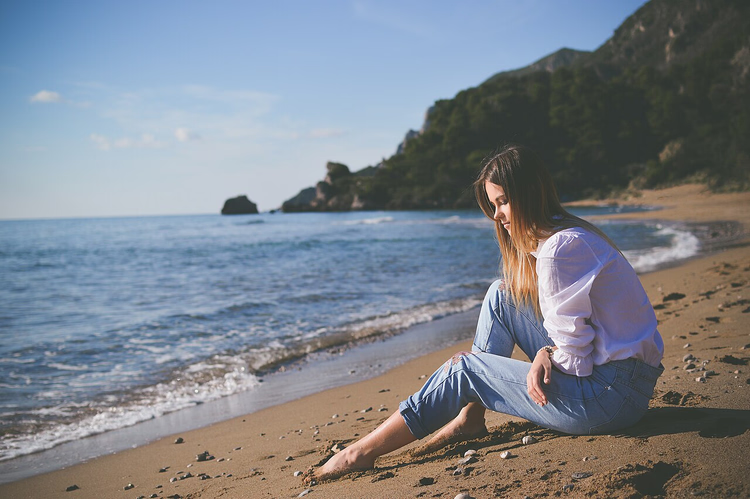
Benitses is 13 km from the capital (on the map) and is considered the island's main resort. A few years ago, nightlife parties were in full swing here, but after complaints from local residents, there are fewer of them now. Today it is a quiet place with full infrastructure.
The coastline is sand and pebble, and mountains with dense forest rise around it. The beach has received the Blue Flag for clean water and shoreline (as of 09/2026, enimerosi.com). Tourists enjoy both swimming and active recreation here.
Sunbed rentals, diving, surfing, and water skiing are all available. There are volleyball and basketball courts on the shore. Ferries to neighboring islets depart from Benitses.
- How to get there: 13 km from Corfu Town, about 20 minutes by car or bus (on the map).
- Who it's for: families and those who want active recreation.
5. Issos
 © Ondřej Žváček · CC BYPhoto: Ondřej Žváček, CC BY (https://creativecommons.org/licenses/by/2.5), Wikimedia Commons
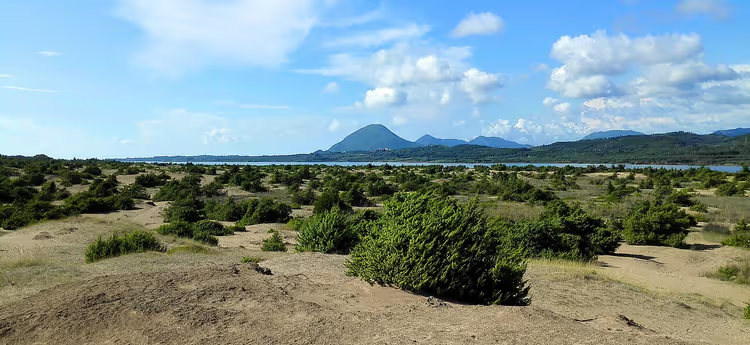
Issos stretches for 2 km (on the map) in the southwest of the island, near the village of Agios Georgios. Locals call it the "Desert of Corfu" for its wide sandy strip and dunes. High dunes surround the beach from the east, while the seaward side is open to the wind.
Issos lies between the sea and Lake Korission. People ride ATVs and horses in the dunes, and migratory birds stop at the lake. Sunsets here are long because the shore turns westward.
The beach is so large that crowds are barely noticeable. It has been awarded the Blue Flag for clean water (as of 09/2026, enimerosi.com).
- How to get there: southwest of the island, near the village of Agios Georgios (on the map).
- Who it's for: those who love long walks and sunsets.
6. Porto Timoni
 © Juggertrout · CC BYPhoto: Juggertrout, CC BY (https://creativecommons.org/licenses/by/4.0), Wikimedia Commons
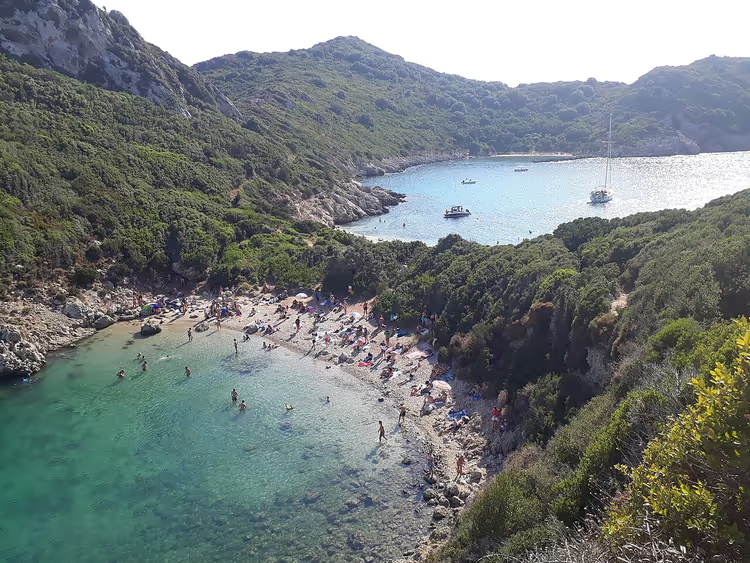
Porto Timoni is called the Blue Lake for its vivid water color. Two bays are separated by a narrow isthmus, and the shore is covered with white pebbles. Cliffs shelter the bay from the wind, so the water here is especially warm.
There is no infrastructure, and getting here is not easy. You can reach the village of Afionas by bus or car, then descend along a 650 m trail (on the map). The climb back up is harder than the descent.
Along the way, you will constantly stop for the views. Bring comfortable shoes and water; there is little shade on the trail.
- How to get there: a 650 m trail from Afionas; cars are left at the village (on the map).
- The catch: no cafes or sunbeds, and the return climb is steep.
- Who it's for: those willing to walk for the view.
7. Barbati
 © EntaXoyas · CC BY-SAPhoto: EntaXoyas, CC BY-SA (https://creativecommons.org/licenses/by-sa/3.0), Wikimedia Commons
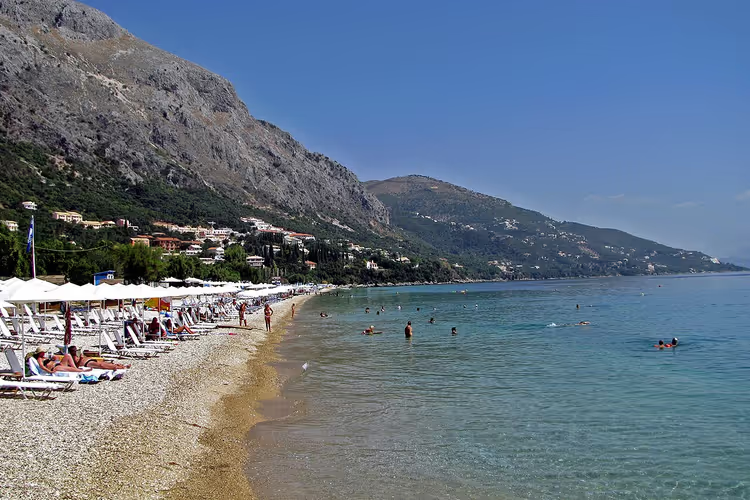
Barbati lies in a bay of the same name on the east coast. The beach offers a view of rocky ridges that plunge straight into the sea. The shore is pebbly, but the stones are polished by the water, so lying on a towel is comfortable.
The beach is separated from the hotels by a green square where you can hide in the shade. There are rentals for sunbeds, umbrellas, and water sports equipment, as well as changing rooms, toilets, and showers.
The water gets deep quickly, and there are rocks on the bottom. Because of this, the spot is not suitable for small children, but the clear water reveals fish and seaweed for snorkeling.
- The catch: the depth drops off quickly and there are rocks on the bottom; you need to be careful with children.
- Who it's for: divers and snorkelers.
8. Peroulades
 © Dietmar Rabich · CC BY-SAPhoto: Dietmar Rabich, CC BY-SA (https://creativecommons.org/licenses/by-sa/4.0), Wikimedia Commons
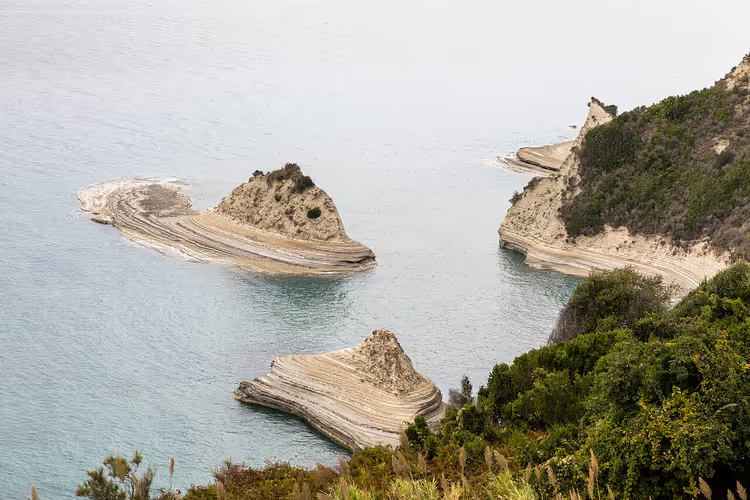
Peroulades is 40 km from Corfu (on the map), next to the village of the same name. It's a narrow strip of sand between the sea and steep cliffs.
The descent goes down steep wooden staircases. Getting down them is not easy, so many people come here just for the views. At the top of the cliff, the Panorama taverna has a viewing platform.
If you want to have lunch with a sea view, book a table in advance. The peak is at sunset, when the most people arrive. The beach itself has no infrastructure.
- How to get there: 40 km from Corfu, about an hour by car (on the map).
- The catch: the descent down steep staircases.
- Who it's for: those who come for the views from above.
9. Agios Georgios
Agios Georgios lies on the west coast near Corfu. It's the widest stretch of shore on the island, about 200 m (on the map), and one of the longest: the strip runs for 6 km (on the map). The sand here is light, and the water is clean and clear.
Forests and cliffs with sharp peaks rise around it. Because of its size, the beach is never empty in high season; both locals and tourists come here. There are plenty of hotels, restaurants, and cafes along the shore.
The beach has umbrella, lounger, and equipment rentals. Besides diving, windsurfers catch waves in the western part. If you want to combine swimming with active recreation, this is a convenient option.
- How to get there: west coast, about 30 minutes from Corfu (on the map).
- Who it's for: families, divers, and windsurfers.
10. Glyfada
 © Lucian Duma · CC BY-SAPhoto: Lucian Duma, CC BY-SA (https://creativecommons.org/licenses/by-sa/3.0), Wikimedia Commons
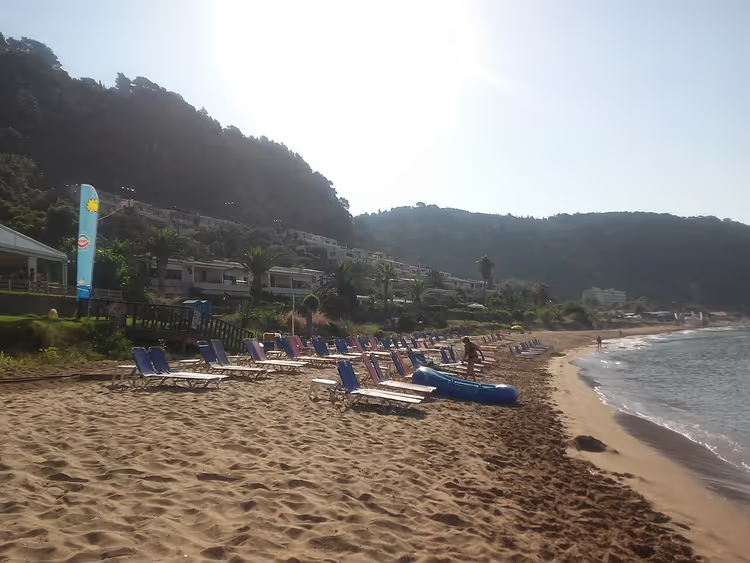
Glyfada is 15 km from Corfu (on the map) and is considered one of the most developed beaches on the island. Golden sand stretches for about 1.5 km (on the map). The beach has been awarded the Blue Flag for the cleanliness of its shore and water (as of 09/2026, enimerosi.com).
The swimming season starts in June, when the water becomes warm enough. A long shallow area with a gentle entry is especially convenient for children.
The southern part of the beach is quieter, the northern part is busier: cars are allowed there. Nearby hotels with water slides charge an entrance fee. Young people stay for parties, and surfing and paragliding are available to everyone.
- How to get there: 15 km from Corfu, about 25 minutes by car or bus (on the map).
- Who it's for: families with children and water sports enthusiasts.
- The catch: in July and August the shore is crowded.
11. Canal d'Amour
 © žába · CC BYPhoto: žába, CC BY (https://creativecommons.org/licenses/by/3.0), Wikimedia Commons
Canal d'Amour is in the town of Sidari in the north of the island. Its second name is "Channel of Love." The bay is shaped like a heart: two cliffs squeeze the water from both sides and leave a narrow opening to the sea.
The sandy strip here is only about 20 m (on the map). It's the smallest beach on the island, but it remains one of the most popular. The water, protected by the cliffs, is always calm, so swimming is safe.
The place is tied to a legend about two lovers whom the gods turned into cliffs. According to the belief, if you swim through the arch together, the couple will stay together. On weekends the cliffs are filled with visitors.
The water in the bay is warm and shallow, so both adults and children swim here. Both locals and foreigners love the place: some are drawn to the shape of the bay itself, others to the beliefs associated with it. At the nearby bars and tavernas you can get cold drinks and lunch.
- Who it's for: couples and families with children.
- The catch: on weekends there are a lot of people on the shore.
12. Avlaki
Avlaki lies between the villages of Kassiopi in the north and Agios Stefanos in the south. The shore here is white-pebble, and bays with clean water alternate with rocky slopes. The place is less known than the southern beaches, so there are no lines for loungers here.
Strong winds make Avlaki good for surfing and sailing. Foreigners come here for the open space, horseback riding, and diving. If you want to combine swimming with active pursuits, it's worth stopping by.
A large rental point operates here: boats, canoes, pedal boats, and surfboards. Two tavernas serve lunches in the local style.
- How to get there: north of the island, by car from Kassiopi (on the map).
- Who it's for: surfers and those looking for a shore without crowds.
13. Ipsos
 © Panek · CC BY-SAPhoto: Panek, CC BY-SA (https://creativecommons.org/licenses/by-sa/4.0), Wikimedia Commons
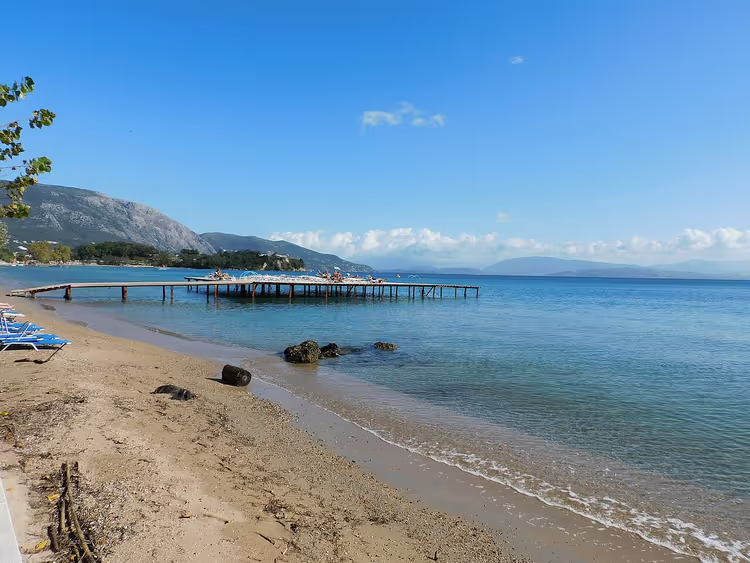
Ipsos stretches as a narrow crescent-shaped strip along a large bay on the east of the island. The water here is clear, and the entry into the sea is even and convenient. Because of this, the beach is suitable for families with children.
For young guests, an inflatable play area with trampolines and slides is set up on the shore. Adults have access to diving pontoons, jet ski and boat rentals. There are enough changing rooms, showers, and loungers.
The surface is sand and pebble; you can lie on a towel or a blanket. Many cafes, restaurants, and tavernas are open along the shore. On Fridays, Saturdays, and Sundays, night discos take place here.
- The catch: a busy road runs nearby, so it's noisy in the evening.
- Who it's for: families during the day and young people in the evening.
14. Dassia
 © Hombre · CC BY-SAPhoto: Hombre, CC BY-SA (https://creativecommons.org/licenses/by-sa/3.0), Wikimedia Commons
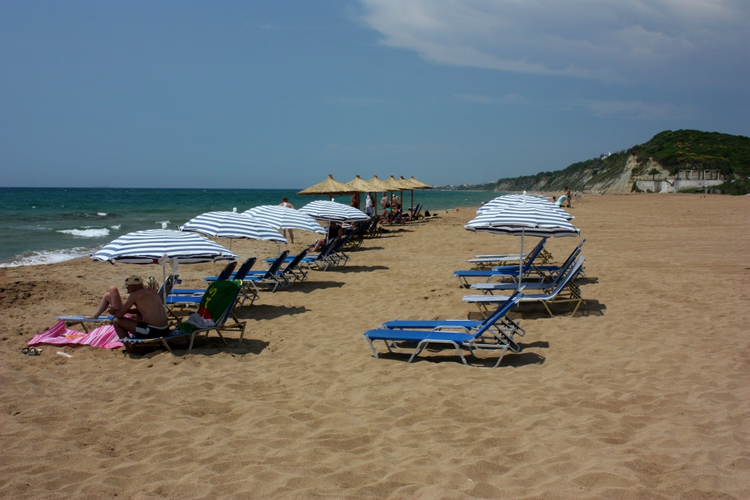
The name Dassia translates from Greek as "forest." The beach is surrounded by olive, orange, and lemon groves that fill the air with fragrance. The strip is narrow and long, with a sand-and-pebble surface, and it's cleaned every day.
In the eastern part, the sea is calmer and warmer, with a gentle entry. Trees growing near the shore provide shade. The beach has been awarded the Blue Flag (as of 09/2026, enimerosi.com).
The infrastructure is well developed: parasailing, water skiing, and boating, plus a nightclub right by the water. The town has a horseback riding school. The northern end of Dassia is quieter and suited for a relaxed stay.
- How to get there: east coast, about 20 minutes from Corfu (on the map).
- Who it's for: families and water sports enthusiasts.
15. Marathias
Marathias lies near the village of Potamia, 300 m from its center (on the map). Light golden sand and calm water make this beach one of the best in the Ionian Islands. The surrounding mountains shelter the sea from the winds.
The bottom is even, the depth increases gradually, and there are no rocks. These conditions are convenient for families with children. A highway runs nearby, so the beach has a large parking lot and is easy to reach.
There are enough umbrellas, loungers, and changing cabins. Watercraft and equipment rentals are available, and there's a volleyball court. If you want to explore the area, eight more beaches are within a 5 km radius (on the map).
- How to get there: 300 m from the center of Potamia, parking at the beach (on the map).
- Who it's for: families and active recreation enthusiasts.
16. Vitalades
 © Przemek Pietrak · CC BY-SAPhoto: Przemek Pietrak, CC BY-SA (https://creativecommons.org/licenses/by-sa/3.0), Wikimedia Commons
Vitalades is in the southern part of the island, in a village with authentic architecture. Low yellow cliffs cut into the water and form small bays with patches of white sand.
Families with children often choose this beach: the sand is fine, the depth is shallow, and the water is warm. A river flowing into the sea divides the area into two parts. Nearby is the picturesque Megali Lakka, which locals call Kanoula.
Umbrellas and loungers are available for rent, and there are showers and changing rooms. You can have lunch at the tavernas and restaurants. Parking and mini-markets are nearby, and rooms are available for rent.
- Who it's for: families with children and those who want to stay in a village.
- The catch: it's far from the major resorts.
17. Halikounas
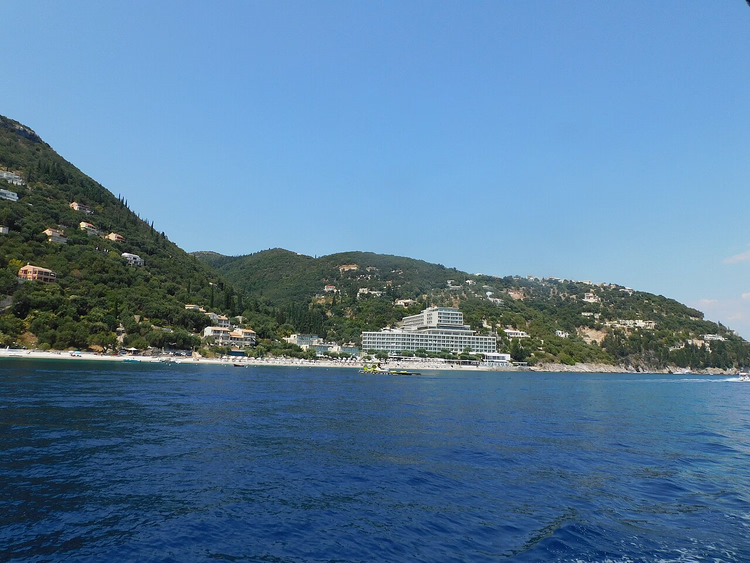
Halikounas lies in the southwest between the Ionian Sea and Lake Korission. It's a very wide sandy spit with room for many visitors. The sand is fine, the entry into the water is gentle, and there's plenty of open space around.
 © Panek · CC BY-SAPhoto: Panek, CC BY-SA (https://creativecommons.org/licenses/by-sa/4.0), Wikimedia Commons
There is no shade or umbrellas on most of the beach, so bring your own umbrella. The juniper thickets on the dunes smell pleasant. The shallow depth and warm water are convenient for families with children.
The spit is uncrowded because it's far from the resorts. People come here by taxi or rental car along a dirt road, and parking is free. For kitesurfers, the western part is considered the best on the island, and a kite school operates in the center.
The infrastructure is concentrated in the central part: there are loungers, cafes, and equipment rentals. The western spit remains almost wild, and visitors there stay far apart from each other. If you're going for the whole day, bring water, food, and an umbrella with you.
- The catch: almost no shade, you need your own umbrella.
- Who it's for: kitesurfers and those who want quiet.
18. Nissaki
Nissaki is 20 km from Corfu (on the map) and consists of several small coves. It's easy to find a secluded spot here, and the gradual depth and lack of wind make it suitable for families with children. The cove is enclosed by tall cliffs covered with forest.
The underwater world near the shore is rich, so divers and snorkelers come here. The rock caves appeal to those who enjoy exploring the coastline. Some of the beaches are wild, with facilities only on the central one.
There is no promenade along Nissaki; the road runs off to the side. In the central part, tavernas and boat and scooter rentals operate. In July and August there are many visitors here, so it's best to claim a spot early.
- How to get there: 20 km from Corfu, about 30 minutes by car (on the map).
- Who it's for: couples, divers, and families.
19. Kontogialos
Kontogialos lies 10 km from Corfu (on the map), next to the village of the same name. The beach is short in length but equipped to a high standard. In the region, it's considered one of the best-developed stretches of coastline.
The water entry is gentle, and the bottom is free of rocks. Green mountains rise around it, and colorful sun loungers line the shore. Kayaking, SUP surfing, and riding watercraft are popular here.
High waves bring surfers here, and a water playground is set up for children. In high season, when the shore is full, lifeguards are on duty at the beach. If you're traveling with a child, choose the morning: the water is calmer.
Besides swimming, you can also play beach volleyball here.
- Who it's for: families and water sports enthusiasts.
- The catch: in high season the shore gets crowded.
20. Agios Spyridon
Agios Spyridon is located in the north of the island, in a picturesque bay with calm water. Mountains and lush greenery rise around it, and white cliffs stand right at the water's edge. The shore is covered with sand and fine pebbles, so walking barefoot is comfortable.
The gentle slope and soft bottom make it suitable for families with children. The Greek character attracts many foreigners. Nearby there is a nature reserve and a lake where excursions are organized, and in the village stands the ancient church of Saint Spyridon, which gave the settlement its name.
The swimming season opens in June. In May people come here for walks and natural attractions, and in October it's convenient to combine beach time with excursions.
- Who it's for: families and those who combine the beach with excursions.
- The catch: it's far from the southern beaches.
Corfu beaches on the map
The map brings together all the beaches from the list in a single route. Open it and plan your trip order based on the day and the wind.
Corfu beaches
Places on the map
- 1Paleokastritsa Six coves between the cliffs, gentle entry, diving center
- 2Gardenos Wide sandy beach among groves, few crowds
- 3Rovinia Pebble cove by the village of Liapades, almost no infrastructure
- 4Benitses Sand-and-pebble resort beach with a Blue Flag
- 5Issos 2 km sand strip, dunes, Lake Korission nearby
- 6Porto Timoni Turquoise lagoon, white pebbles, 650 m trail from Afionas
- 7Barbati Pebble shore, steep drop-off, snorkelling
- 8Peroulades Narrow sand strip under the cliffs, swimming only at low tide
- 9Agios Georgios The island's widest beach, light sand, windsurfing
- 10Glyfada 1.5 km golden sand, Blue Flag, water slides at the hotels
- 11Canal d'Amour Sidari, heart-shaped bay, the island's smallest beach
- 12Avlaki White-pebble shore between Kassiopi and Agios Stefanos, surfing
- 13Ipsos Crescent along the bay, an inflatable play area for kids
- 14Dassia Sand-and-pebble beach among groves, Blue Flag
- 15Marathias Near the village of Potamos, golden sand, even seabed
- 16Vitalades Southern village, coves with white sand, shallow water
- 17Halikounas Wide sand spit between the sea and the lake, kitesurfing
- 18Nissaki Several coves, diving, sea caves
- 19Kontogialos Well-developed beach, kayaking and SUP surfing
- 20Agios Spyridon Northern cove, sand with fine pebbles, gentle entry
⁉️🤔 Frequently asked questions
Where are the sandy beaches on Corfu?
Look for sand in the west and southwest: Glyfada, Agios Georgios, Issos, Marathias, and Chalikounas. On the east coast, the shore is more often sand and pebble, as in Dassia or Benitses. If you specifically want soft sand without rocks, plan your trip to the western side of the island.
Where should you swim with children?
Paleokastritsa, Ipsos, Marathias, and Glyfada are convenient for families. They have a gentle slope, shallow depth, and calm water. In Barbati the depth starts abruptly, so it's better not to go there with small children. Arrive in the morning: by midday the water is warmer, but there are noticeably more people.
When is the best time to go to the beaches of Corfu?
The swimming season lasts from June to October. In June the water is already warming up, and in September the sea remains warm but with fewer people. July and August are the hottest and busiest, so sun loungers are taken from the morning. May is convenient for excursions.
Where are there the fewest people?
For peace and quiet, go to Rovinia, Avlaki, Chalikounas, or Peroulades. These beaches are far from resorts, and some of them are wild. Rovinia and Chalikounas are easier to reach with a rental car. In Nissaki, choose the central beach; the other sections are almost empty.
Which beaches have the Blue Flag?
In 2026, Glyfada, Benitses, Issos, and Dassia received the award on Corfu (as of 09/2026, enimerosi.com). The island received 18 awards in total. The Blue Flag means clean water, safety, and a well-developed shore, so these beaches are convenient for families.
In short: what's worth booking
If you're traveling with children: choose Glyfada or Marathias, where there is sand and a gentle entry. If you want peace and quiet: Rovinia or Chalikounas, but bring water and an umbrella with you. If views matter: Peroulades and Canal d'Amour. Divers will like Paleokastritsa and Barbati. For accommodation, book hotels near your chosen beach: in Glyfada, Dassia, or Benitses, the beach and infrastructure are within walking distance.
Plan your trip in advance and don't mix the western and eastern coasts in one day: the road through the mountains takes time. Choose a beach based on the wind and arrive at opening time, then you'll get a spot by the water.

A small editorial team writing guides for independent travel. We travel ourselves, but we haven’t been everywhere, so we check prices, opening hours and how to get there against official sources.