
















Where to go from Budapest for one day: 12 train and bus routes
From Budapest you can take a day trip to another country. The capital of Hungary sits almost at the border: Slovakia is about 2.5 hours by train, Croatia is roughly 4.5 hours by bus (as of 09/2026, official MÁV website). We've put together 12 destinations where you can realistically go from Budapest for one day and be back at your hotel by evening. Among them are towns with thermal baths, wine cellars, fortresses, and karst caves. For each destination you'll find how to get there, the main sights, and an overnight option if you decide to stay until morning.
💡 In short:
- Nearby destinations (Szentendre, Visegrád, Gödöllő) take half a day, while farther ones (Zagreb, Hévíz) require an early start.
- Buy train, bus, and main attraction tickets online in advance; in summer, ticket offices and lines move more slowly.
Ad: this article contains affiliate links, we earn a commission if you book through them, at no extra cost to you.
1. Eger: fortress and wine cellars
Eger is 130 km from Budapest, and a direct train from Keleti station takes just over two hours (as of 09/2026, MÁV train schedules). The old town is compact, and you can cover the main sights on foot in half a day. In that time you can fit in the fortress, the basilica, and the wine cellars.
 © Antissimo · CC BY-SAPhoto: Antissimo, CC BY-SA (https://creativecommons.org/licenses/by-sa/4.0), Wikimedia Commons
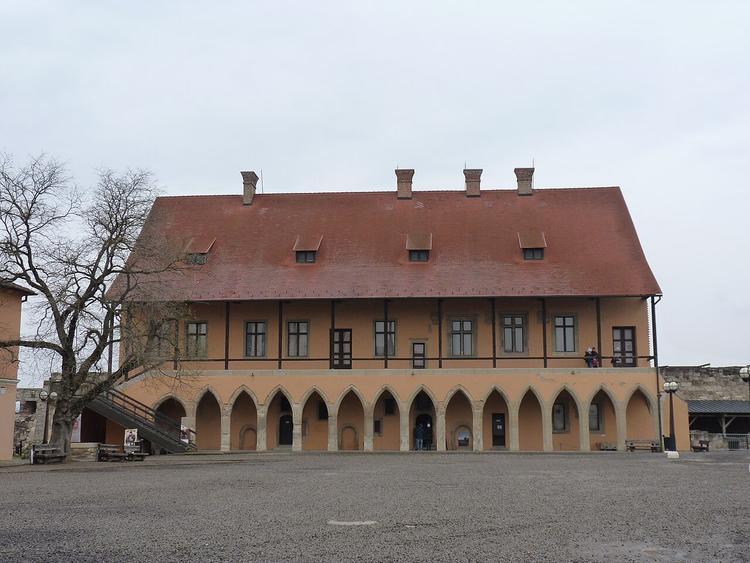
Eger Castle remembers the sieges of the 13th and 16th centuries. Today it houses a museum with casemates, underground passages, and a viewing terrace over the city. Climb the walls in the morning, before the tour groups arrive.
The Basilica of Eger is built in neoclassical style and consecrated in honor of St. John. It is the second largest church in Hungary (according to the Eger tourist office). Admission is free, and services follow the parish schedule.
The Valley of the Beautiful Women (Szépasszony-völgy) is a half-hour walk from the center, with dozens of wine cellars carved right into the rock. You taste wine in a cellar, served with cheese, pork cracklings, and homemade bread. On summer evenings musicians play here, and the atmosphere is anything but museum-like.
- How to get there: train from Keleti station to Eger station, then walk to the center.
- Who it's for: couples and friends who want a wine evening near a fortress.
- The catch: in summer the Valley of the Beautiful Women is crowded with tourists; a weekday will be calmer.
2. Aggtelek National Park
 © Hungarorum · CC BY-SAPhoto: Hungarorum, CC BY-SA (https://creativecommons.org/licenses/by-sa/4.0), Wikimedia Commons
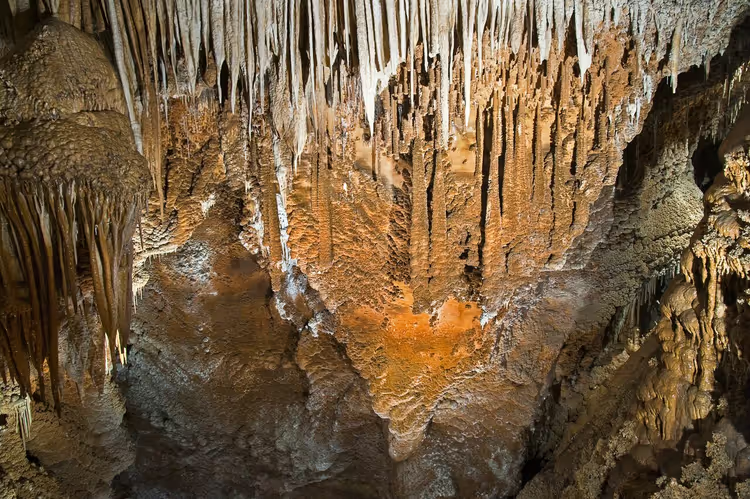
Aggtelek National Park lies in northeastern Hungary. The park is known for its karst caves, more than two hundred of them, and for its terrain of sinkholes and depressions. The reserve's flora differs from the rest of the country: rare shrubs grow here, and several hundred bird species nest in the area.
The caves attract speleologists, but a single guided descent is enough for you too. In some caves there is a sanatorium where the microclimate is used to treat respiratory conditions. The earliest human settlements here are estimated to be seven thousand years old.
- Getting there: train to Miskolc and then a bus, or a bus to Aggtelek.
- Who it's for: those who want nature and caves instead of a city walk.
- The catch: cave tours start in scheduled groups, without a reservation you may not get in.
- Aggtelek tours on GetYourGuide
3. Esztergom and the Maria Valeria Bridge
 © Dennis G. Jarvis · CC BY-SAPhoto: Dennis G. Jarvis, CC BY-SA (https://creativecommons.org/licenses/by-sa/2.0), Wikimedia Commons
Esztergom sits on the Danube right at the border with Slovakia, and it's one of the oldest cities in the country. The first Hungarian king, Stephen, later canonized as a saint, was born here. The city survived devastation by the Ottomans and the wars of the 20th century, but rebuilt itself.
The city's main landmark is the Basilica of St. Adalbert, whose dome is visible from the opposite bank. The church is one of the largest in Hungary, and inside you can visit the crypt, the treasury, and an observation deck under the dome. Nearby stand the Archbishop's Palace and the Christian Museum with Hungarian and Italian paintings.
The Maria Valeria Bridge connects Esztergom with the Slovak town of Sturovo. Built in the late 19th century, it was destroyed twice in the 20th century and rebuilt both times. Walking across the bridge puts you in another country within minutes, a convenient crossing with no lines.
- Getting there: train from Nyugati station, then walk from the station to the center.
- Who it's for: those who want a cathedral, the Danube, and a hop into Slovakia in one day.
- The catch: the basilica sits on a hill and is not wheelchair or stroller friendly, plan the climb in advance (as of: official website).
- Hotels in Esztergom on Trip.com
4. Szekesfehervar: the first capital
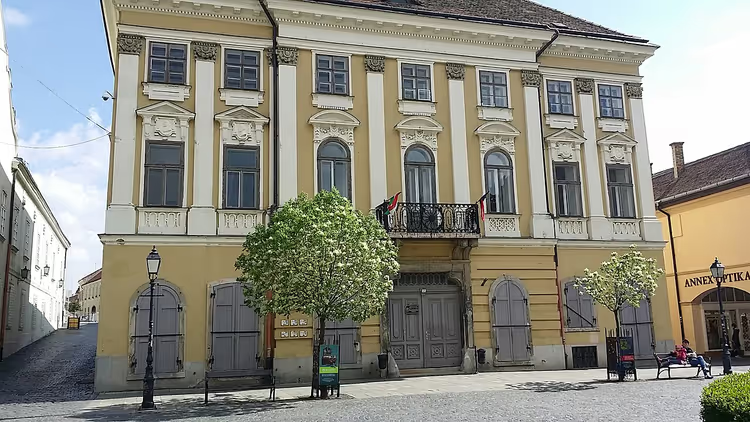 © Teemeah · CC BY-SAPhoto: Teemeah, CC BY-SA (https://creativecommons.org/licenses/by-sa/4.0), Wikimedia Commons
Szekesfehervar was founded in the 10th century and was the first capital of Hungary. In Latin the city was called Alba Regia, and thirty coronations of Hungarian kings took place here. Today it's a museum city, where monuments appear at every turn.
On the main square, Varoshaza, you'll see the Bishop's Palace and the Orb monument with a crown on top. From the viewing platform at the edge of the square, a panorama of the old town opens up. Nearby stand the Cathedral of St. Stephen and the unusual Bory Castle, whose appearance blends Romanesque and Gothic styles.
- Getting there: train from Keleti or Deli station, then walk through the center.
- Who it's for: history lovers who care about the Hungarian royal context.
- The catch: it's hard to cover all the churches and Bory Castle in one day, pick the highlights.
5. Szentendre and Visegrad
 © own work · CC BY-SAPhoto: own work, CC BY-SA (https://creativecommons.org/licenses/by-sa/3.0), Wikimedia Commons
Szentendre sits in the Danube Bend and grew out of a settlement of Serbs fleeing the Ottomans. Serbian traditions are visible in the narrow cobblestone streets and baroque facades with tiled roofs. The town is considered the artistic capital of Hungary, with many galleries and workshops.
The Marzipan Museum deserves special attention, where figures are made from almond paste. You stroll along the embankment, pop into galleries, and sample local sweets.
Visegrad stands near Szentendre and grew up around a fortress on a mountaintop. One watchtower has survived to this day, the Solomon Tower: according to legend, Count Dracula was held captive here. Right by the shore lie the ruins of King Matthias's palace, built in the 15th century from red marble.
- Getting there: HEV suburban train from Batthyany ter square to Szentendre, a bus runs to Visegrad.
- Who it's for: those who want to combine galleries, the embankment, and a fortress.
- The catch: on weekends the center is full of organized groups, a weekday will feel much freer.
- Danube Bend tours on GetYourGuide
6. The palace in Godollo
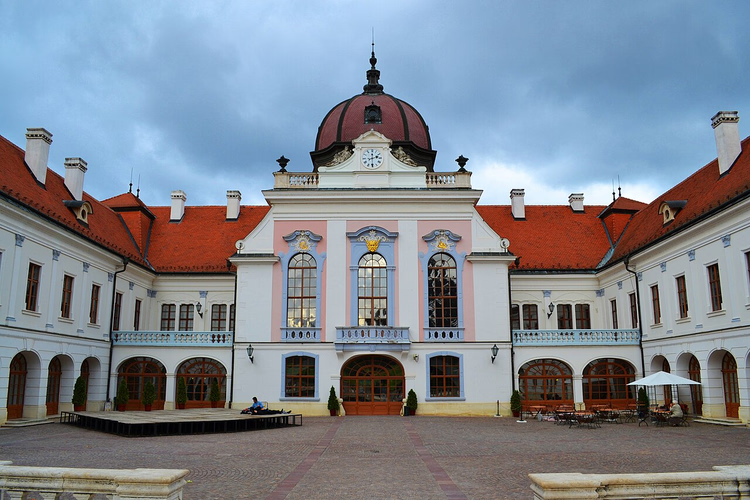 © oPPÁRÉ · CC BY-SAPhoto: oPPÁRÉ, CC BY-SA (https://creativecommons.org/licenses/by-sa/2.5/hu/deed.en), Wikimedia Commons
Godollo is known for its royal palace and the park around it. Empress Elisabeth, known as Sisi, wife of Franz Joseph, used to visit here. In her honor, a sculpture of a girl under an umbrella stands in the park.
Inside the palace, the imperial apartments and Sisi's private rooms have been restored. You'll see stucco work, furniture, and household items from the Austrian court, and park admission is free.
- How to get there: HÉV suburban train from Örs vezér tere square to the final station.
- Who it's for: anyone interested in the Austro-Hungarian era and park walks.
- The catch: the palace can only be visited with a ticket and during opening hours, check the official website.
- Hotels in Gödöllő on Trip.com
7. Hévíz: thermal lake
 © Oleg Andriychuk · CC BYPhoto: Oleg Andriychuk, CC BY (https://creativecommons.org/licenses/by/3.0), Wikimedia Commons
Hévíz is known for its thermal lake, the largest in Europe. The water is rich in minerals, and the bottom is covered with therapeutic mud. The bath operates year-round, and in winter steam rises over the lake.
The town is small, so besides the bath you'll have time to stroll through the park and along the promenade. Before heading back, you can have lunch at a local tavern and try Hungarian wine.
- How to get there: bus or car, the trip takes about 2.5 hours (as of 09/2026, Hévíz tourist office).
- Who it's for: those looking for therapeutic water and a quiet getaway.
- The catch: the round trip takes about five hours, leaving only a few hours for the bath.
- Hotels in Hévíz on Trip.com
8. Bratislava in one day
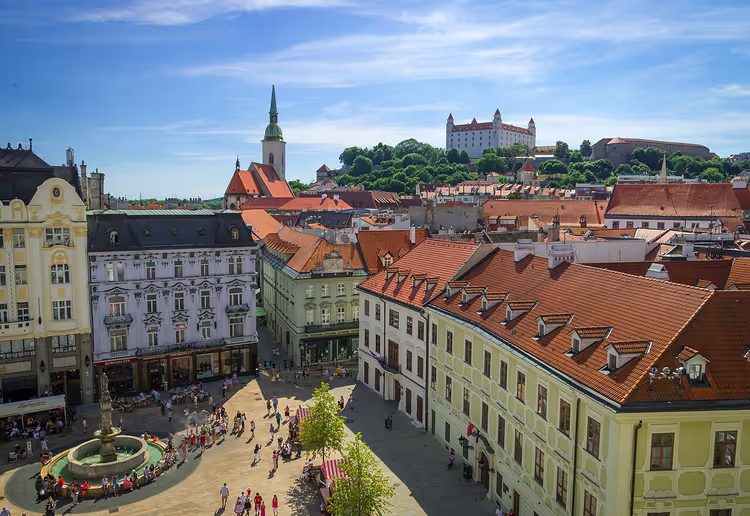 © Rob Hurson from Kentstown, Ireland · CC BY-SAPhoto: Rob Hurson from Kentstown, Ireland, CC BY-SA (https://creativecommons.org/licenses/by-sa/2.0), Wikimedia Commons
Bratislava is the closest international destination: the direct train takes about 2.5 hours (as of 09/2026, MÁV timetable). The city became the capital of Slovakia and reopened to tourists after its center was restored.
In one day you can cover Main Square and Franciscan Square, the Jesuit church, the Old Town Hall, and the Slovak National Theatre. Overlooking the city is Bratislava Castle, which locals call the "upside-down table." Don't miss the Gothic St. Martin's Cathedral and Michael's Gate with its tower.
- How to get there: train from Keleti station, and there are also bus services from Népliget.
- Who it's for: those who want a second country and a capital in one day.
- The catch: travel takes about five hours round trip, so you'll have to see the city quickly.
- Train and bus tickets to Bratislava
9. Pannonhalma Abbey
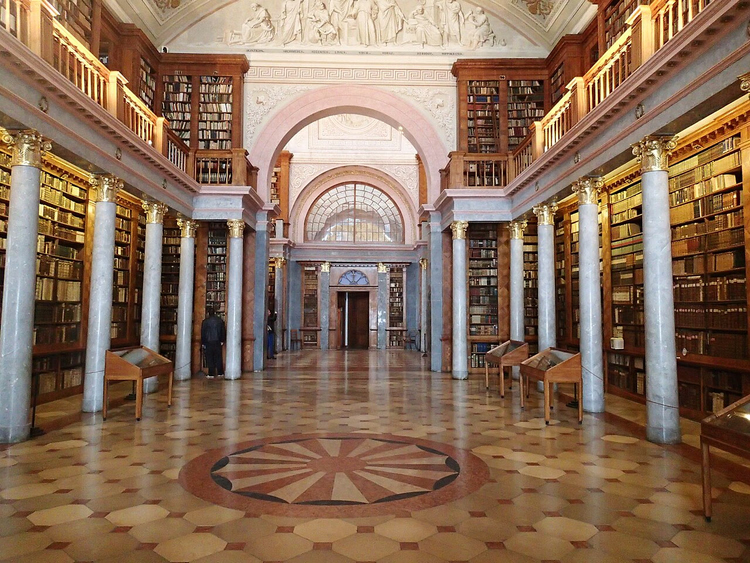 © Raki_Man · CC BYPhoto: Raki_Man, CC BY (https://creativecommons.org/licenses/by/3.0), Wikimedia Commons
Pannonhalma Abbey stands on the hill of St. Martin and is considered the oldest monastery in Hungary. The abbey has been rebuilt many times, so its appearance combines different architectural styles.
The main attraction, the 13th-century basilica, impresses with its scale and interior decoration. The monastery library holds hundreds of thousands of volumes, including valuable folios (as of 09/2026, official abbey website).
- How to get there: train to Pannonhalma, then uphill from the station to the abbey.
- Who it's for: those drawn to monastic architecture and old libraries.
- The catch: visits are with an audio guide during visiting hours, with no free wandering around the monastery.
- Tours to Pannonhalma Abbey on GetYourGuide
10. Lake Balaton
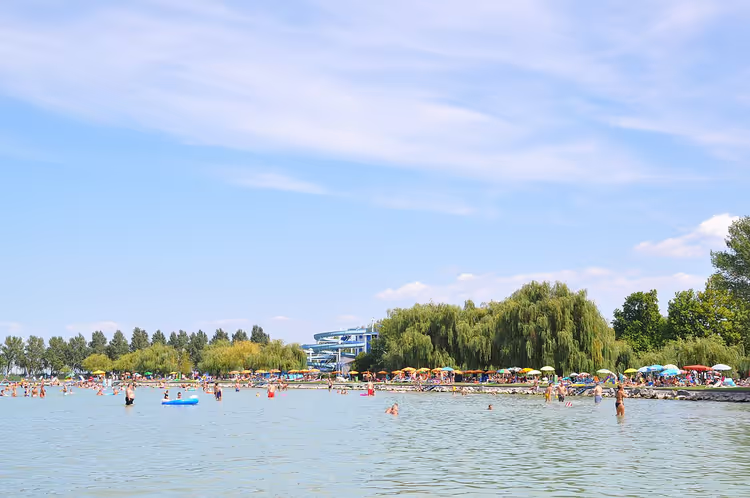 © Christo · CC BY-SAPhoto: Christo, CC BY-SA (https://creativecommons.org/licenses/by-sa/4.0), Wikimedia Commons
Balaton is considered Hungary's main lake, and locals call it the "Hungarian sea." Resorts line the entire shore: in summer people swim, sail, and explore wine routes.
The Balaton Uplands are home to a national park with volcanic terrain. Here you'll see old craters of extinct volcanoes and springs. The air in the area is considered therapeutic, which is why people come here to improve their breathing.
- How to get there: train from Déli station to Siófok or Keszthely, then along the shore.
- Who it's for: those who want beach, bikes, and wineries instead of the city.
- The catch: on summer weekends the shore is overcrowded, so come on a weekday.
- Hotels on Lake Balaton on Trip.com
11. Pécs: Zsolnay ceramics
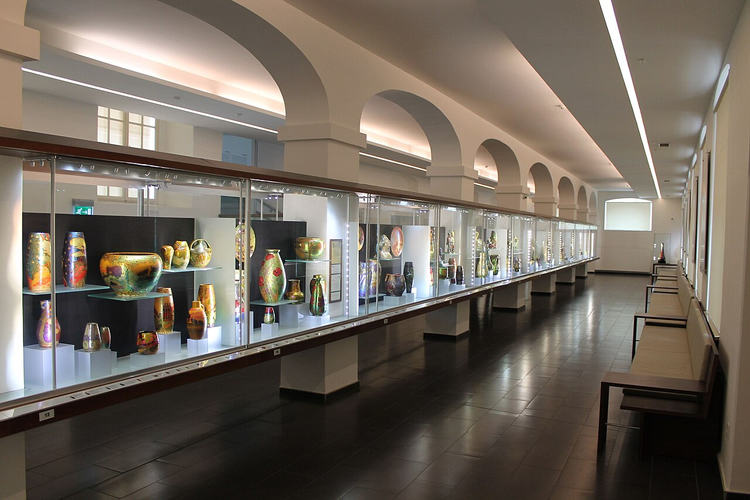 © KovacsDaniel · CC BY-SAPhoto: KovacsDaniel, CC BY-SA (https://creativecommons.org/licenses/by-sa/3.0), Wikimedia Commons
Pécs was a European Capital of Culture and grew up as far back as Roman times. The Zsolnay ceramics factory operates here, and the early Christian necropolis is listed as a UNESCO site.
On Széchenyi Square stand the Belváros parish church and the Holy Trinity Column. On Kossuth Square you'll find the Town Hall and the Synagogue, and on Dóm Square, the Cathedral of Saints Peter and Paul. All the main sights are easy to cover on foot.
- How to get there: train or bus, then from the station to the center.
- Who it's for: those interested in ceramics, UNESCO sites, and the southern character of Hungary.
- The catch: in one day you'll only cover the center, and you'll have to skip some museums.
- Hotels in Pécs on Trip.com
12. Zagreb: Donji Grad
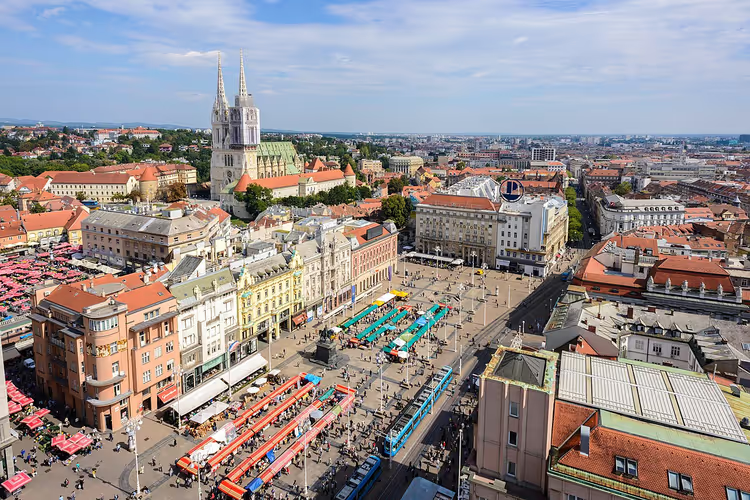 © Nick Savchenko from Kiev, Ukraine · CC BY-SAPhoto: Nick Savchenko from Kiev, Ukraine, CC BY-SA (https://creativecommons.org/licenses/by-sa/2.0), Wikimedia Commons
Buses run from Budapest to Zagreb, and the trip takes almost five hours. The Croatian capital stands out for its clean streets and the calm beauty of its center.
Spend the day in the Donji Grad district, where the main squares and churches are clustered close together. Ban Jelačić Square serves as the heart of city life: families stroll here, and street musicians play in the evenings. At the farmers' market next door you'll find vegetables, cheeses, and honey, and at the entrance stands a sculpture of a woman with a basket on her head.
Don't miss Zagreb Cathedral, restored after the earthquake, and the glass facade of the Hotel Dubrovnik.
- How to get there: bus from Népliget station, with daily departures.
- Who it's for: those willing to make a long trip for a new country.
- The catch: almost five hours on the bus each way, leaving only half a day for the city.
- Bus tickets to Zagreb
One-day routes from Budapest on the map
The map shows the points for all destinations: open it on your phone and pick a route based on distance from Budapest.
Day trips from Budapest
Places on the map
- 1Eger A fortress, a basilica and the wine cellars of the Valley of Beauties
- 2Aggtelek A national park with karst caves in the northeast of the country
- 3Esztergom St Adalbert's Basilica on the Danube near the border with Slovakia
- 4Maria Valeria Bridge A bridge over the Danube to Štúrovo in Slovakia, rebuilt twice
- 5Székesfehérvár Hungary's first capital, the Power monument and Bory Castle
- 6Szentendre Hungary's art capital with the Marzipan Museum
- 7Visegrád A hilltop fortress with Solomon's Tower and the ruins of Matthias's palace
- 8Gödöllő A royal palace where Empress Sisi once lived
- 9Hévíz Europe's largest thermal lake with healing mud
- 10Bratislava Bratislava Castle and St Martin's Cathedral, the capital of Slovakia
- 11Pannonhalma Hungary's oldest monastery with a 13th-century basilica and a library
- 12Lake Balaton Hungary's largest lake with resorts and wine routes
- 13Pécs The Zsolnay ceramics factory and an early Christian necropolis, a UNESCO site
- 14Zagreb The Lower Town with Zagreb Cathedral, the capital of Croatia
⁉️🤔 Frequently asked questions
Where can you go from Budapest for a day without a car?
Without a car, you can realistically get to Eger, Esztergom, Székesfehérvár, Bratislava, and Zagreb: trains and buses run there from city stations. Szentendre and Gödöllő are served by the HÉV suburban railway. The trip takes from half an hour to five hours each way, so buy tickets online in advance.
What can you see in Eger in a day?
In a day you can cover the castle with its casemates, the basilica, and the Valley of the Beautiful Women with its wine cellars. The old town is compact, so you can walk between sights. Set aside a couple of hours in the evening for the wine cellars, and get to the castle in the morning before the tour groups arrive.
How much does admission to the main sights cost?
Some sites are free to enter, while castles, palaces, and baths require tickets. Check exact prices on the official websites, as they change by season. In this guide we link to primary sources instead of listing outdated prices.
Where should you go with kids?
For families, Szentendre with its Marzipan Museum, Gödöllő with its large park, and Lake Balaton with its beaches are all good options. Hévíz works if your kids handle long trips well. Zagreb and Bratislava are better for school-age children who are interested in urban architecture.
What time of year is best to go?
In summer the baths and beaches are open, but the main sights are more crowded. In spring and fall you can walk around the towns without the heat, and some thermal baths are open year-round. In winter, basilicas and palaces close earlier, so check opening hours on their websites.
In short: what to book
If you have just one day: choose the Szentendre and Visegrád combination, which is closest to Budapest, or Eger. If you want thermal water: plan for Hévíz or the capital's baths. If you're drawn to going abroad: a train to Bratislava and a bus to Zagreb solve the problem in a single day.
For overnight stays in Budapest and along the route, check hotels on Trip.com, and airport transfers are easy to book through Kiwitaxi.

A small editorial team writing guides for independent travel. We travel ourselves, but we haven’t been everywhere, so we check prices, opening hours and how to get there against official sources.