
















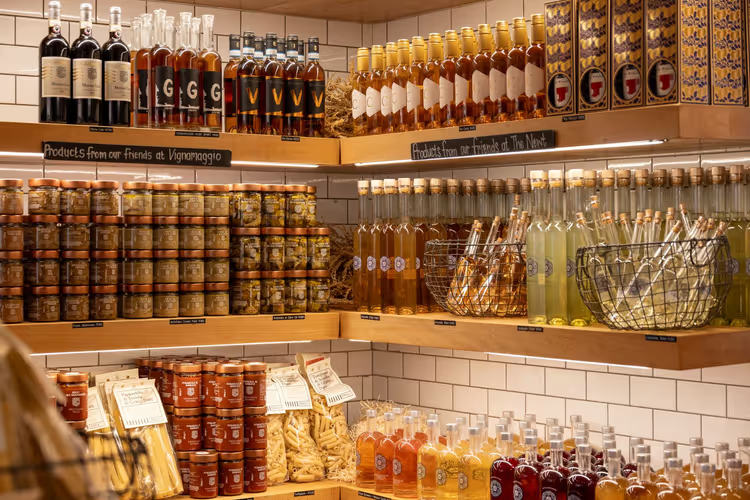
What to bring from Italy as a gift: 20 souvenirs from pasta to Murano glass
What to pack in your suitcase so a gift doesn't turn into a magnet?
A couple of kilos of pasta weighs more than it seems, and an opened bottle of oil lasts about a month. There are plenty of Italian gifts, but not all of them survive the trip home.
Below are twenty ideas that will make it home: food, crafts, and household items. For each item, we've noted where to buy it and what to check on the label. Consider the weight, shelf life, and transport rules. That way the gift will delight the recipient, and you won't haul extra weight.
1. Durum wheat pasta
💡 In short:
- Pack by weight: dry pasta, vacuum-sealed coffee, and canned goods handle travel best.
- Leave room in your luggage for glass; bottles and jars need protection.
- Check the shelf life and ingredients on the package, and confirm import rules in advance.
- Prices and selection: 09/2026, verified on the official website of Italy's national tourism board.
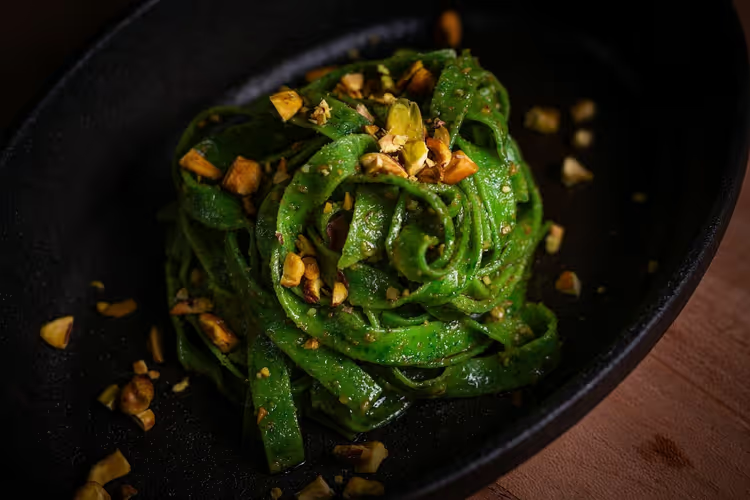
Shape affects the taste of a dish. Long pasta holds thick sauces, short pasta works for soups and baked dishes, and shaped pasta collects oil in its ridges. Look for a bronze die marking on the package: after drying this way, the surface stays rough, and sauce clings better.
Cook pasta to al dente so it won't turn mushy when reheated. Dry pasta usually has a shelf life of over a year, so it will easily survive even a long flight. Small shapes take up less space than long ones and break less often. If the gift is for someone with gluten intolerance, choose a corn or rice version from the northern regions. At home, keep pasta in a sealed jar, otherwise it will absorb moisture and kitchen odors.
It was Italy that turned dried dough products into a global industry. Today pasta is made in dozens of countries, but Italian pasta rests on two rules: durum wheat and slow drying.
In a shop you'll see dozens of shapes: long, short, shaped, filled. Choose paper bags; they let you see the color and texture of the dough. Brands with history: Barilla, Divella, Garofalo, La Molisana, Felicetti, Agnesi. On a separate shelf you'll find legume pasta, chosen by those who watch their protein intake.
- Who it's for: someone who cooks at home and plans to stay within luggage weight limits.
- The catch: dry products break, so pack them in the middle of your suitcase between clothes.
2. Wine and Chianti
 © Francesco Sgroi · CC BYPhoto: Francesco Sgroi, CC BY (https://creativecommons.org/licenses/by/2.0), Wikimedia Commons
The ancient Greeks called Italy Enotria, meaning the land of wine. The Romans spread the vine to what would become French and Hungarian vineyards. Modern winemakers preserve these traditions and add strict classification to them.
Local wines are divided by quality: table wines, controlled designation wines, and protected designation wines. For a gift, choose the latter: the label shows the zone name, not just the winery name. Among reds, Italians prize Chianti, Merlot, Sangiovese, and Cabernet Sauvignon. For whites, go with Vermentino, Chardonnay, or Trebbiano.
- Who it's for: someone who hosts guests and enjoys discussing labels.
- The catch: glass adds weight to your luggage, and you can't take a bottle in carry-on.
3. Coffee for home
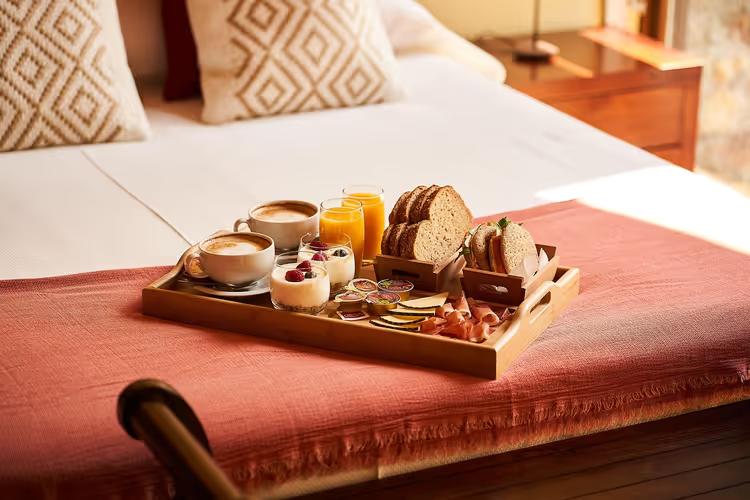
Roast affects flavor more than brand. Southern blends are darker and more bitter; northern ones are softer and sweeter. At home, Italians brew coffee in a moka pot, so blends for it are ground for pressure, not for an espresso machine. If the recipient has a capsule machine, bring beans and a hand grinder: that setup is more flexible.
Check the roast date on the package seam. Fresh beans keep their aroma longer, and an opened bag is best transferred to a lidded jar and kept in the dark. Choose beans if you don't know the recipient's equipment: they can be ground for both a moka pot and a French press. Bags with a one-way valve release excess gas and keep the beans from going stale.
Italy has no coffee plantations of its own, but it has hundreds of roasting companies. They buy beans from Brazil and Vietnam and compete through blends and packaging.
The Illy company in Trieste was founded by Francesco Illy in the early 1930s. He also patented packaging beans with inert gas, which keeps the aroma longer. Lavazza produces the Crema e Gusto and Qualita Oro blends. Major suppliers include Kimbo, Molinari, Borbone, Vergnano, and Hausbrandt.
Choose vacuum-sealed beans. Ground coffee loses its aroma faster, so by the time you open it at home, the bag will already be stale.
- Who it's for: someone with a coffee grinder or an espresso machine.
- The catch: soft packaging gets crushed, and an opened bag goes stale within a couple of weeks.
4. Extra virgin olive oil
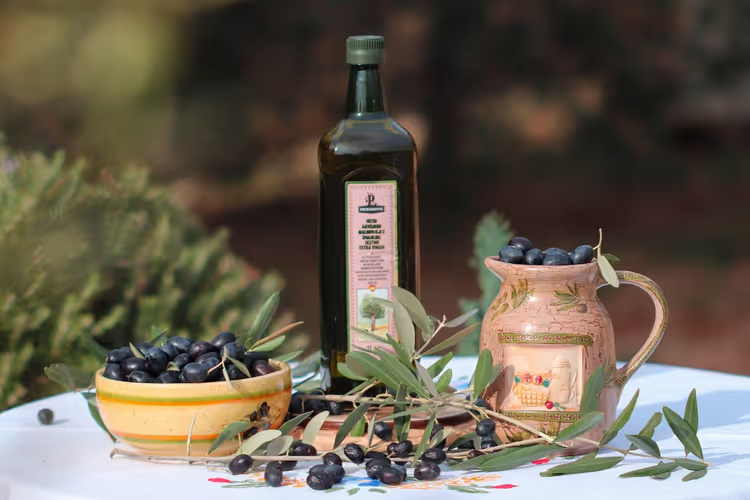
Tuscany, Umbria, and Apulia produce most of Italy's olive oil. Hundreds of olive varieties grow here, so oil from neighboring provinces differs in flavor: from grassy to nutty.
The most prized oil carries the extra virgin label; it's obtained by cold pressing without chemicals. Buy dark glass bottles; light speeds up oxidation. On the label, look for the harvest date and production location, not just the country name. An opened bottle lasts about a month, after which the oil turns rancid and loses vitamins.
If you're taking an agriturismo tour, buy oil there: small producers care about quality and often offer tastings.
- Who it's for: someone who makes salads and dressings at home.
- The catch: heat and jostling harm the oil, so pack it in checked luggage and don't open it until you're home.
5. Hard Italian cheeses
Italy ranks among the world leaders in the number of cheese varieties. Parmesan and mozzarella are known everywhere, but the range is wider: Grana Padano, Pecorino, Taleggio, Gorgonzola, mascarpone.
Parmesan ages for at least a year, and aged wheels reach up to three years (as of 09/2026, Parmigiano Reggiano Consortium). The cheese is made from cow's milk, and the rind is stamped with a batch number. Mozzarella di bufala is made in Campania from water buffalo milk; a cheaper cow's milk version is also available.
For a gift, choose hard cheeses in vacuum packaging: they survive the trip. Buy soft cheeses and mozzarella on the last day of your trip and keep them cold.
- Who it's for: someone who cooks pasta, risotto, and baked dishes.
- The catch: soft cheeses need refrigeration, so you can't take them on a long journey.
6. Balsamic vinegar from Modena
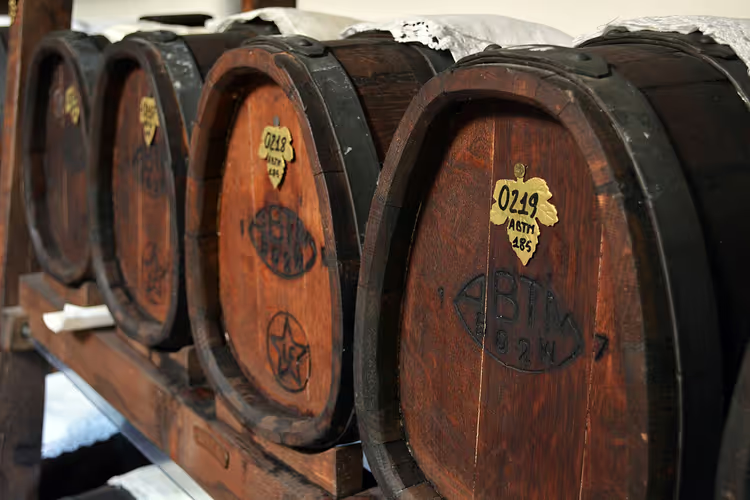 © Pug Girl · CC BYPhoto: Pug Girl, CC BY (https://creativecommons.org/licenses/by/2.0), Wikimedia Commons
Balsamic vinegar has been known in Italy since the eleventh century, and it's made from grape must. The must is reduced and then aged for years in barrels of oak, ash, chestnut, and cherry. The wood imparts aroma, so the flavor becomes dense and sweet.
Genuine Aceto Balsamico Tradizionale di Modena DOP ages in family barrels for at least twelve years, and the Extravecchio version sits in cellars for a quarter of a century (As of: 09/2026, Consorzio Aceto Balsamico Tradizionale). It's sold in small bottles, so the price per volume looks high.
Cheap imitations labeled "Aceto Balsamico di Modena" are made differently: faster and with added grape concentrate (As of: 09/2026, Consorzio Tutela). That kind of sauce works fine for a salad, but it has nothing to do with a gift.
- Who it's for: someone who grills meat and makes salads at home.
- The catch: genuine tradizionale is expensive, and in a small bottle you can't see it until the first drop.
7. Herbs and spices

Aromatic herbs grow all over the Mediterranean and were used as far back as the Roman Empire. Italians can't imagine food without basil, oregano, and rosemary. Markets sell freshly cut greens, but you can't bring them home: fresh herbs wilt within a day.
Go for dried bunches in bags or glass jars: basil, oregano, thyme, rosemary, sage, fennel. Check the packing date on the package, old spices lose their aroma. A market stall will point you to a good gift: sun-dried tomatoes in oil and cinnamon sticks, which go into dough, drinks, and desserts.
- Who it's for: someone who cooks every day and likes trying new flavors.
- The catch: opened bags lose their potency, so buy small packages and store them in a jar.
8. Panettone and Christmas baking
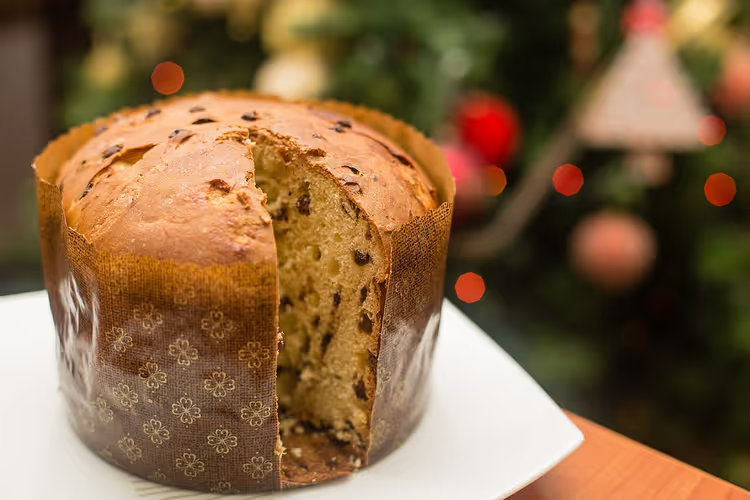 © N i c o l a from Fiumicino (Rome), Italy · CC BYPhoto: N i c o l a from Fiumicino (Rome), Italy, CC BY (https://creativecommons.org/licenses/by/2.0), Wikimedia Commons
Panettone is baked for Christmas: it is a tall cake with candied citrus peel and raisins. The dough is proofed for a long time, so the crumb turns out airy and the crust golden. A classic panettone can reach up to thirty centimeters in height.
Milan is considered the birthplace of this bake. According to legend, it was invented by an apprentice from the House of Sforza: he burned the holiday cake and put together a new one from eggs, sugar, raisins and candied fruit. The bake was named "pan de Toni", meaning Toni's bread. The master praised the cake, and the recipe stayed in the family books.
Buy panettone in a cardboard box with a baking date: a fresh cake is soft, while an over-dried one crumbles. Next to it on the shelf sits pandoro, a vanilla version without candied fruit, chosen by those who do not like dried fruit.
- Who it's for: someone who gathers the whole family around the Christmas table.
- The catch: the bulky box takes up space in your luggage, although the cake itself is light.
9. Canned truffles
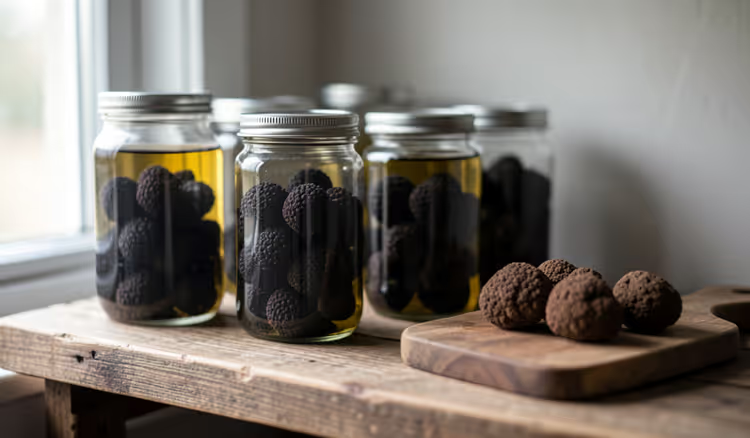 AIIllustrative image: AI-generated
Truffles grow underground, most often under oaks, willows and linden trees in limestone soil. The main harvesting areas in Italy are in the forests of Piedmont and right on the border with France. They are found with dogs and pigs: the animals can smell the mushroom through the earth.
The white truffle from Alba outpaces every mushroom in the world in price. Fresh, it lives only a few days, so you will bring home canned truffles in glass or tin. The jar keeps the taste but not the aroma of the fresh mushroom, and producers honestly say so on the label.
- Who it's for: someone who cooks pasta and risotto at home and wants to add a delicacy.
- The catch: the taste in a jar is weaker than fresh, and an opened jar has to be kept in the fridge.
10. Chocolate from Turin and Modica
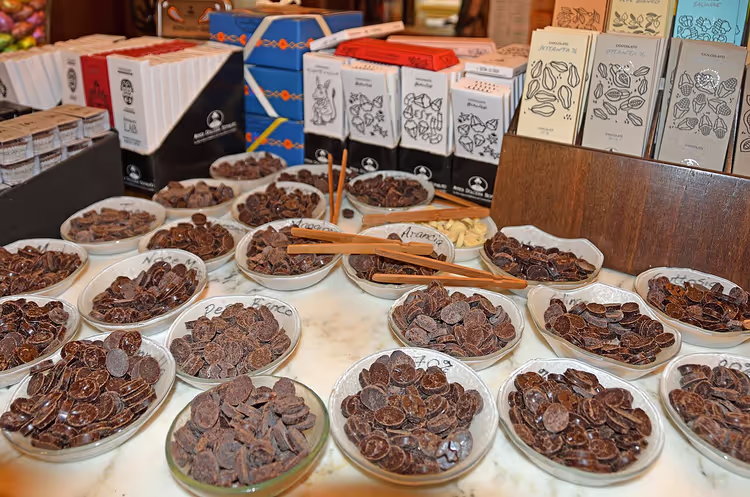 © Ludvig14 · CC BY-SAPhoto: Ludvig14, CC BY-SA (https://creativecommons.org/licenses/by-sa/4.0), Wikimedia Commons
Turin is called the chocolate capital of Italy: bars with different cocoa percentages are made here. In Sicily, Modica chocolate is made using a cold process, the sugar in it does not dissolve completely, so the bar crunches between your teeth.
Ferrero is known for candies with nut filling, Baci Perugina are given to loved ones, and bars with awards from the chocolate academy sit in confectionery shop windows. Look for the cocoa percentage and production date on the packaging. A fresh bar shines and snaps with a click, an old one develops a white bloom.
- Who it's for: someone you do not want to bring a fragile gift to.
- The catch: in summer the bar melts in your luggage, put it in your carry-on.
11. Prosciutto and salami
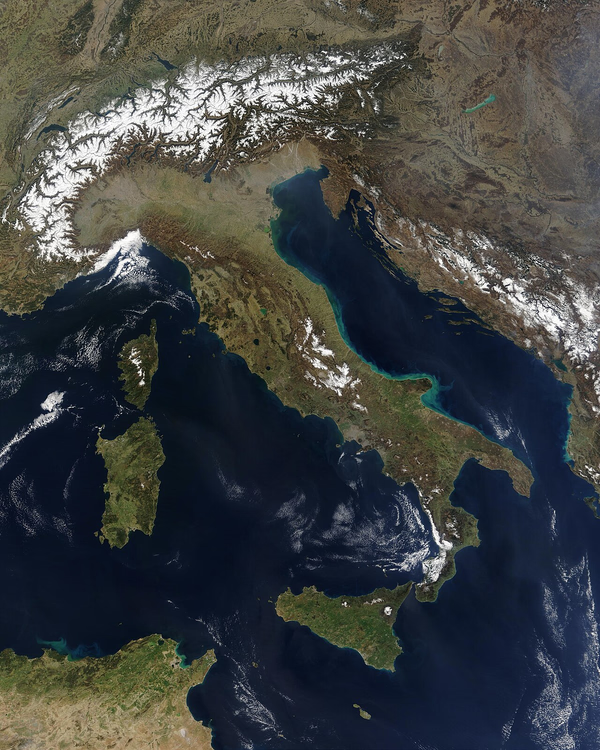
Italian ham matures for months: the dry-cured version needs at least a year, and Prosciutto di Parma is aged for no less than four hundred days (as of 09/2026, Prosciutto di Parma consortium). The cooked version, prosciutto cotto, is prepared in a steam oven and served thinly sliced.
Salami comes in many forms: from small sausages to large loaves. Pepper, garlic, fennel, juniper and wine are added to the pork, beef or poultry mince. Pancetta or speck, smoked ham from the northern regions, also makes a good gift.
Choose vacuum packs: prosciutto will travel in them and will not dry out. Sliced ham should be eaten within the first few days, it keeps worse than a whole piece.
- Who it's for: someone who puts together a charcuterie board at home to go with wine.
- The catch: within the EU there are no restrictions on bringing in meat, but Switzerland has its own limits.
12. Limoncello from Sorrento
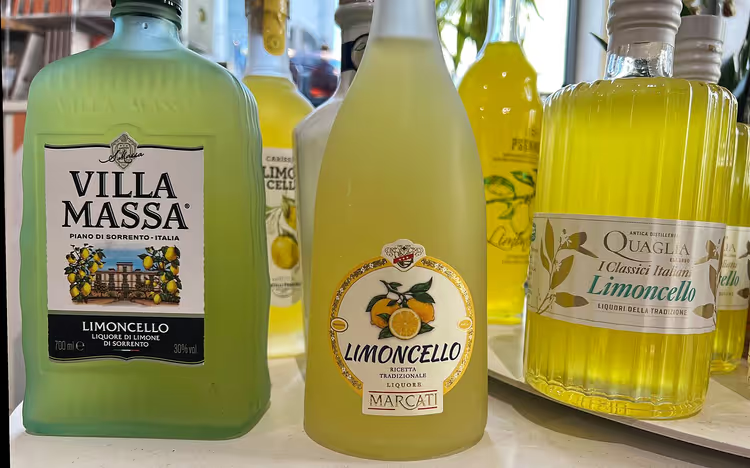 © Burkhard Mücke · CC BY-SAPhoto: Burkhard Mücke, CC BY-SA (https://creativecommons.org/licenses/by-sa/4.0), Wikimedia Commons
Limoncello is made from lemon zest, alcohol, water and sugar. The zest is infused for several days, then the mixture is filtered and bottled. The infusion retains the essential oils, so the liqueur smells of fresh lemon.
The birthplace of the most famous version is Sorrento. Local lemons are larger than usual, they grow on volcanic soil and produce aromatic zest. Among the brands, Villa Massa and Liquore di limoni are valued, and Trentino also makes its own version. Inexpensive supermarket liqueurs work fine for cocktails.
Buy limoncello in glass. You will not be allowed to take a bottle in your carry-on due to liquid restrictions, so plan space in your checked luggage.
- Who it's for: someone who likes strong sweet liqueurs and makes desserts.
- The catch: the drink is strong and very sweet, check the recipient's tastes in advance.
13. Venetian carnival masks
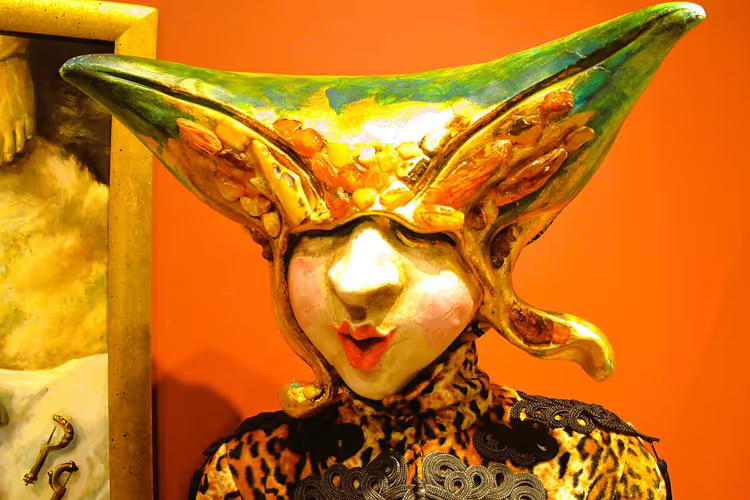 © Silar · CC BY-SAPhoto: Silar, CC BY-SA (https://creativecommons.org/licenses/by-sa/4.0), Wikimedia Commons
Masks appeared in Venice along with the street performances of the Commedia dell'arte. Gradually they became part of the carnival, and the tradition spread across Europe. Artisans make them from papier-mâché, so a mask weighs almost nothing.
After a long break, the craft returned in the last century together with the carnivals. In shop windows you'll find Commedia dell'arte characters (Arlecchino, Colombina, Brighella) and the classic Bauta, Volto, and Dottor Peste models. Each shape has its own meaning: the Bauta covers the entire face but leaves the voice free, which is why it was worn even at business meetings.
Buy a mask from a workshop where you can try it on: that way you can check the size and how the ties fasten.
- Who it's for: anyone who loves carnival parties and home collections.
- The catch: cheap tourist masks are made of plastic, they don't breathe and quickly lose their look.
14. Murano glass
 © Didier Descouens · CC BY-SAPhoto: Didier Descouens, CC BY-SA (https://creativecommons.org/licenses/by-sa/4.0), Wikimedia Commons
Murano glass is made on the island of Murano in the Venetian Lagoon. The formula and technique were kept secret: artisans were not allowed to leave the island, so the craft wouldn't reach competitors. Today colored glass is blown by hand from silica sand, with oxides added for the shade.
The range is wide: vases, jewelry, lamps, tableware, Christmas ornaments. Genuine pieces are marked with the Vetro Artistico Murano stamp, issued by the Promovetro consortium (as of 09/2026, Promovetro). A master's signature and gold lettering also indicate handmade work, but the stamp is easier to verify.
- Who it's for: anyone giving home gifts and jewelry.
- The catch: there are plenty of imitations on the market, buy from a workshop or a brand store.
15. Scarves and ties from Como

The Como district is called the capital of Italian silk: ties, scarves, and foulards for fashion houses are woven here. The factories are united in a consortium and maintain quality in printing and dyeing.
In the shops you'll find cashmere scarves for winter and light silk foulards for spring. Prices vary widely: in a haute couture boutique a tie costs as much as half a suitcase, while in a souvenir shop you can buy decent silk for reasonable money. If the recipient is into soccer, get a scarf with Juventus, Inter, or Milan branding.
- Who it's for: anyone who wears a suit or loves accessories.
- The catch: silk requires dry cleaning, let the recipient know about the care.
16. Moleskine planners
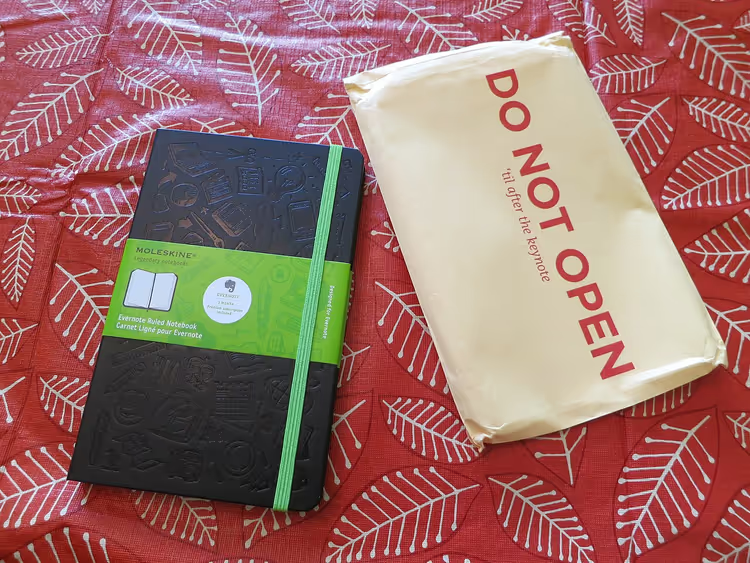 © Brooks Duncan from Vancouver, Canada · CC BYPhoto: Brooks Duncan from Vancouver, Canada, CC BY (https://creativecommons.org/licenses/by/2.0), Wikimedia Commons
Moleskine notebooks are recognized by their flexible cover and elastic closure band. The brand got its name from the binding fabric, not from its owners: Van Gogh and Hemingway used notebooks like these.
In the late eighties, the last French workshop producing these notebooks closed. A small Milanese publishing house bought the name, registered it in Milan, and brought the notebooks back to market. Today dozens of product lines are released under this logo: planners, sketchbooks, address books, device cases.
Get a notebook from a bookstore or a brand department: there you can open it and check the ruling and paper.
- Who it's for: anyone who writes by hand and keeps plans on paper.
- The catch: the price of a well-known brand is higher than that of a no-logo notebook.
17. Jewelry
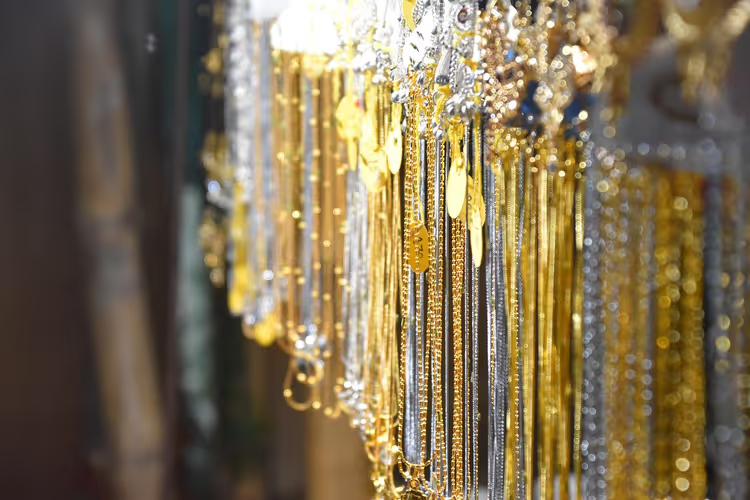
The jewelry trade in Italy grew out of ancient workshops and Renaissance ateliers. Major centers operate in Arezzo, Vicenza, and Valenza: they make chains, rings, and earrings from gold, silver, and stones.
Some workshops create one-of-a-kind pieces, others work only with silver or diamonds. For a gift, a chain or bracelet is convenient: the size fits almost everyone, while a ring is better chosen together with the recipient.
Buy from a seller who provides a hallmark and a receipt, so at home you can exchange the piece or take it in for repair.
- Who it's for: someone you're ready to give an expensive gift to.
- The catch: with a piece that has a stone, it's easy to overpay for the setting, compare the price of the metal and the stone separately.
18. Leather goods
 © AEttwig · CC BYPhoto: AEttwig, CC BY (https://creativecommons.org/licenses/by/4.0), Wikimedia Commons
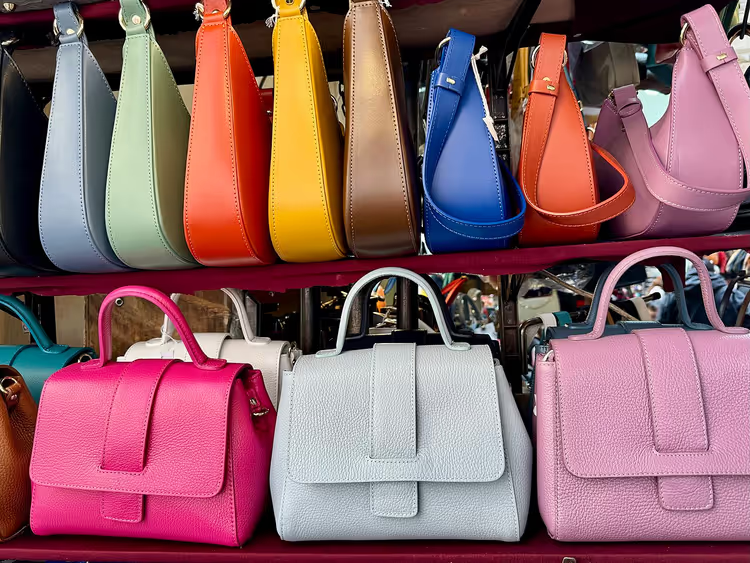
Leather jackets, bags, wallets, and belts are valued for their craftsmanship and honest material. A wallet or billfold with a well-known brand logo makes a practical gift, while a jacket is a purchase meant to last for years.
Among the brands, Pierotucci stands out: the company has been making goods from thin but durable leather for over forty years. Barbarina offers a wide selection of accessories. In the shop, check the stitching, lining, and smell: real leather smells like dry material, while a cheap substitute gives itself away with a sharp glue odor.
- Who it's for: someone looking for an everyday gift.
- The catch: a jacket takes up half a suitcase, so people more often buy a bag, belt, or wallet.
19. Italian perfumery
The first Venetian shops selling scented water opened back in the sixteenth century. Since then, Italian perfumery has competed with French: citrus, woody, floral, and spicy notes are done here in their own way.
Stores carry Armani, Prada, Bulgari, Gucci, and Valentino. Blends differ in longevity: fresh citrus scents fade within a couple of hours, while woody ones last all day. Compare prices in the city and at the airport, the difference can be noticeable.
Try the fragrance on your skin and walk away with it for an hour: top notes are deceptive, and you need the drydown that reveals itself later.
- Who it's for: someone whose favorite scent you know for certain.
- The catch: perfume is chosen for the individual, and guessing without them is difficult.
20. Natural cosmetics
 © Craft Cosmetics · CC BY-SAPhoto: Craft Cosmetics, CC BY-SA (https://creativecommons.org/licenses/by-sa/4.0), Wikimedia Commons
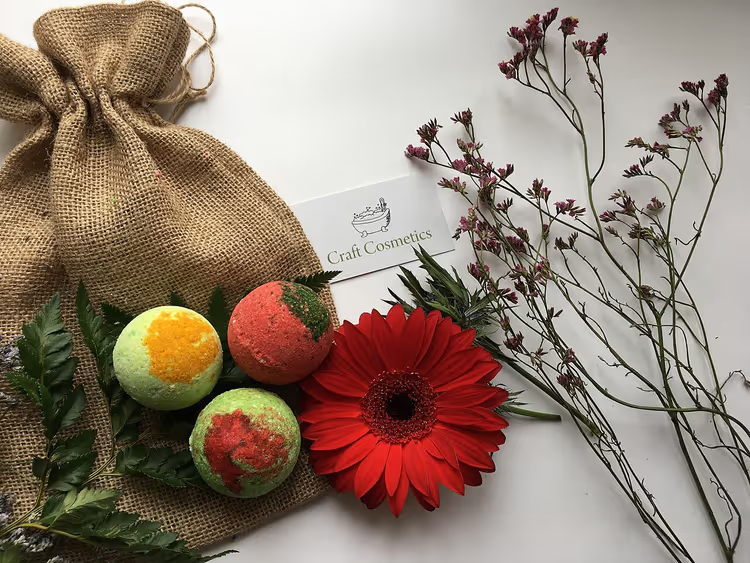
Look at the ingredient list, not the promises on the front: oils and plant extracts should be at the top of the list. Small sets with cream, soap, and scrub are convenient for gifting, easier to pack and lighter to carry. If the recipient dislikes added fragrance, look for the senza profumo label. Check jars of oil for a tight seal: in transit, a lid can leak and stain your things.
Organic cosmetics are sold in pharmacies, herbal shops, and large supermarkets, so you won't have to travel to another city for them. At home, store products away from radiators, oils spoil from heat.
Italian organic cosmetics are built on plant oils: olive, almond, argan, shea, and baobab. Look for the word naturale on the packaging: this marks products where natural ingredients make up the majority.
The Ligurian brand I Provenzali makes soap, creams, and balms with rose petals, aloe, and seaweed. L'Erboristica has a wide range of products for face, body, and hair. Guam creams are known for their anti-cellulite line. These cosmetics are sold in herbal shops, pharmacies, and supermarkets.
- Who it's for: someone who pays attention to the ingredients in skincare products.
- The catch: jars take up space, and the product volumes are small.
Where to buy souvenirs in Italy
The shopping format affects selection and price more than the city does. In a gourmet food shop, you get a tasting and storage advice; in a supermarket, the same brands are more reasonably priced, but the selection is simpler. At a city market, sellers cut cheese and let you try it, so you choose a gift deliberately rather than based on a picture in the display case.
For specific purchases, there are dedicated shops. Look for wine in an enoteca, herbs and cosmetics in an erboristeria, paper and notebooks in a cartoleria, coffee in a torrefazione. In such places, you have a better chance of finding small local brands that aren't at the airport, and the seller will explain how to store the product and how well it travels in luggage. You can also compare several brands of the same product at one counter.
Leave the airport as a last resort: the selection there is narrow, and gift wrapping often costs extra. If you have a connecting flight, buy gifts in the city, not in the transit zone.
- Who it's for: someone who wants to bring home local brands, not identical magnets.
- The catch: markets close after lunch, and on Mondays some shops are closed.
What to check on the label
The label tells you more about a product than the display case does. Check the production date and shelf life: for oil and cheese, freshness matters, not just the time remaining before expiration. For cheese, look for vacuum packaging and a consortium stamp; for wine, the name of the zone; for cosmetics, the full ingredient list. Even machine printing and a manufacturer's address speak in favor of an honest product.
The label made in Italy does not mean the same as packaged in Italy. Some products are packaged in Italy from imported raw materials, and an honest producer states this on the back. For Murano glass, check for the Vetro Artistico Murano stamp; for balsamic vinegar, the word tradizionale: without it, you are buying a quick sauce, not aged vinegar. For coffee, look at the roast date, not just the expiration date.
Calculate price and volume in advance. Bottles and jars add weight to your luggage, and fragile items should be packed in the middle of the suitcase between clothes. Ask for a receipt: at home, it's easier to exchange a gift that didn't work out.
- Who it's for: someone who doesn't want to bring home a fake or an expired product.
- The catch: small shops don't always give receipts, and returns aren't offered there.
How to pack gifts in a suitcase
Pack fragile items in the middle of the suitcase, between layers of clothing, not against the side. Wrap a bottle in bubble wrap and tape the cork with packing tape. Vacuum-sealed cheese, prosciutto, and coffee will survive the trip fine, but chocolate will melt in the heat, so don't keep it in luggage under the sun.
Check oil, wine, vinegar, liqueur, and cosmetics in your luggage: liquids will be confiscated from carry-on at security. At check-in, ask for a fragile luggage sticker if you're carrying glass or ceramics. At home, unpack boxes over a table and check the ties on masks and the integrity of lamps.
Weigh your suitcase before departure: excess baggage costs more than shipping a parcel by mail. Put heavy jars near the wheels so the suitcase won't tip over.
- Who it's for: someone bringing food, glass, and cosmetics all at once.
- The catch: space runs out quickly, and you'll have to wear some of your clothes.
⁉️🤔 Frequently asked questions
Which souvenirs from Italy will definitely make it home?
Dry pasta, vacuum-sealed coffee, canned goods, a small bottle of balsamic vinegar, and packaged Murano glass. Choose dense and dry products, and leave perishables for the last day of your trip. Wrap glass in clothing and place it in the middle of the suitcase, and it will survive the flight.
Can I bring cheese and prosciutto home?
You can bring hard vacuum-sealed cheeses and dry-cured ham if the journey takes no more than a day. Within the EU, there are no restrictions on importing meat and dairy products. Switzerland has its own limits, check them before your trip on the customs website. Soft cheeses and fresh sausages are better eaten in Italy, they don't handle heat well.
What can't go in carry-on luggage?
Liquids: oil, liqueurs, vinegar, and cosmetics. They must be checked in, otherwise the bottle will be confiscated at security. Glass and ceramics are also better packed in a suitcase. In carry-on, take scarves, notebooks, chocolate, and papier-mâché masks, these don't count as liquids.
How do you tell genuine Murano glass apart?
Look for the Vetro Artistico Murano stamp and the master's signature. The stamp is issued by the Promovetro consortium and is placed on items made on the island. An even machine-made shape, a sticker instead of engraving, and a below-market price all indicate a fake.
What should you buy if you're flying with carry-on only?
Pasta, vacuum-sealed coffee, chocolate, spices, a notebook, or a scarf. These gifts don't count as liquids and are unlikely to break. Leave wine, oil, vinegar, and liqueur for checked luggage or for your next trip.
If you prefer watching to reading, start with a short souvenir overview from an English-language channel.
In short: what's worth booking
Choose gifts by recipient type, this makes it easier to stay within your luggage weight and not lose small items.
- If you're giving food gifts: pasta, hard vacuum-sealed cheese, and balsamic vinegar from Modena.
- If you need a home gift: Murano glass, a Venetian mask, a scarf from Como.
- If suitcase space is tight: coffee, spices, chocolate, a Moleskine notebook.
Shop at a city market: there you can gather half your set in one stop and see the entire selection in one place.

A small editorial team writing guides for independent travel. We travel ourselves, but we haven’t been everywhere, so we check prices, opening hours and how to get there against official sources.