
















Chicago in one day: a route through 15 places and what to book in advance
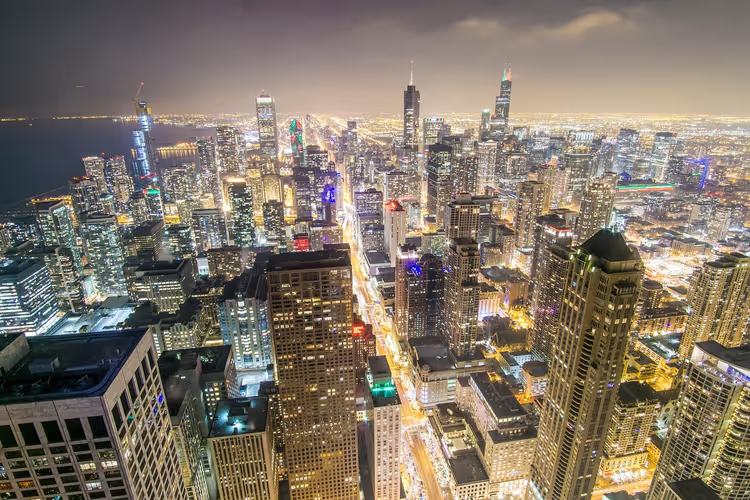
Chicago fits into one packed day if you don't spread yourself thin. The city stretches in a narrow strip along Lake Michigan, and the main sights sit almost on one line. A logical north-to-south route saves you hours of travel time.
Below is a list of places you can realistically cover in one day. For each one we give opening hours, prices, and a tip on how to get to the next stop.
Ad: this article contains affiliate links, we earn a commission if you book through them, at no extra cost to you.
What to see in Chicago in one day
💡 In short:
- Split the day into three clusters: Lincoln Park in the north, the Magnificent Mile in the middle, and downtown near Millennium Park.
- Move from north to south so you don't backtrack along the same route.
- Buy a ticket to one of the Museum Campus museums online: on weekends, showing up without a reservation means a long line.
- Prices and opening hours: 09/2026, verified on the Field Museum official website.
Chicago stretches along the lake, and the subway and buses take you from north to south. You won't cover the whole city in a day, and that's fine. A realistic goal: two northern museums, the skyscrapers of the Magnificent Mile, and the grand downtown area near Millennium Park. Between clusters you ride the subway; within clusters you walk. The order below follows that logic.
1. Peggy Notebaert Nature Museum
 © Another Believer · CC BY-SAPhoto: Another Believer, CC BY-SA (https://creativecommons.org/licenses/by-sa/4.0), Wikimedia Commons
The Peggy Notebaert Nature Museum sits in Lincoln Park and is entirely dedicated to the nature of Illinois and the Great Lakes. The museum is open daily from 10:00 to 16:00 (as of 09/2026, naturemuseum.org). The main reason to visit: the butterfly greenhouse, where hundreds of insects fly right around you.
The halls recreate the state's forests, wetlands, and meadows. You'll see birds, reptiles, amphibians, snails, and mollusks. The format works well for families: everything is compact, and you can get through the exhibits in an hour and a half. The museum grounds cover several hectares of greenery right in Lincoln Park.
- How to get there: from the Armitage subway station (brown line) it's about a 15-minute walk (per the map).
- The catch: on a rainy weekend the greenhouse gets crowded, so arrive at opening time.
2. Lincoln Park Zoo
 © Teemu008 from Palatine, Illinois · CC BY-SAPhoto: Teemu008 from Palatine, Illinois, CC BY-SA (https://creativecommons.org/licenses/by-sa/2.0), Wikimedia Commons
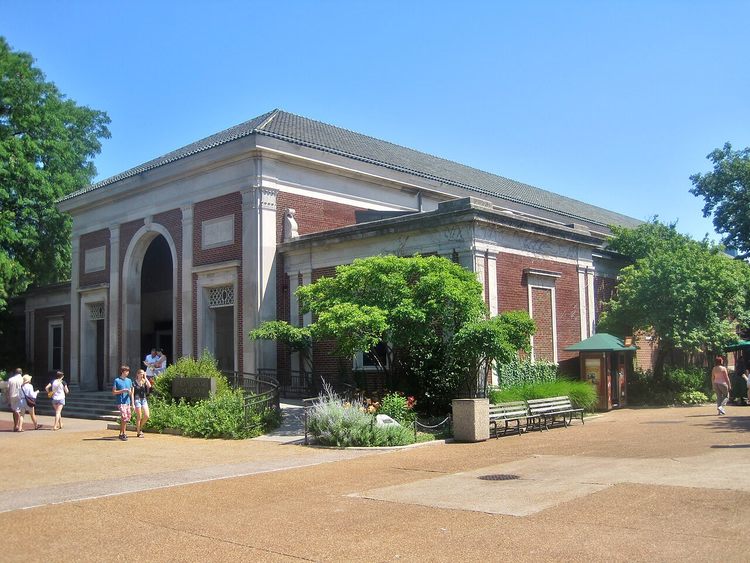
Lincoln Park Zoo operates on the lakefront and charges no admission fee. For a major American city, that's rare. Lions, tigers, giraffes, hippos, and penguins live here, and at a separate farm you can meet goats and horses.
The grounds are green and shady, with ponds and flower beds. Palms, ferns, and orchids await you in the conservatory. Allow two hours for the walk, and even more with kids. In addition to big cats, the zoo houses bears and primates.
- Who it's for: families with children and anyone who wants a break from museums.
- How to get there: from the nature museum you continue through the park, about a 20-minute walk (per the map).
3. Chicago History Museum
 © Goldnpuppy · CC BY-SAPhoto: Goldnpuppy, CC BY-SA (https://creativecommons.org/licenses/by-sa/3.0), Wikimedia Commons
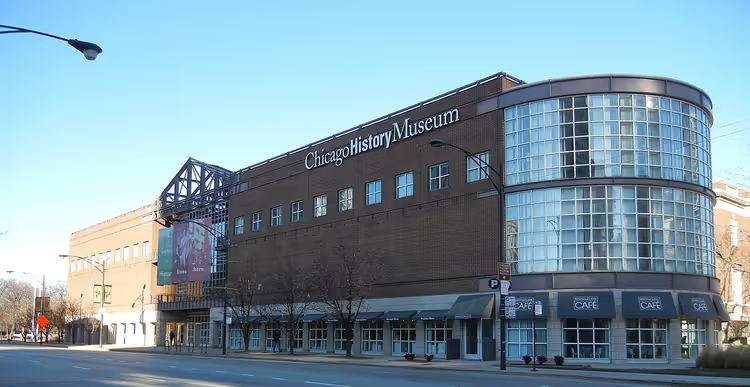
The Chicago History Museum is considered the city's oldest research institution. The exhibits explain how a lakeside settlement turned into a metropolis: Native Americans, colonizers, the abolition of slavery, the Great Fire, and mob families.
The halls hold building blueprints of old structures, 19th-century costumes, ceramics and glass, advertising posters, and vinyl records. A special highlight: the actual bed on which President Abraham Lincoln died. Some key episodes of the city's history are shown as highly detailed dioramas.
- Hours and tickets: check current hours and prices on the museum's website.
- Who it's for: those who want to understand the city, not just photograph the facades.
4. Charnley-Persky House Museum
In the Gold Coast neighborhood near the skyscrapers, historic mansions have been preserved. The Charnley-Persky House Museum stands on Astor Street and was built in the late 19th century to a design by Louis Sullivan, one of the fathers of American high-rise construction.
 © Warren LeMay from Chicago, IL, United States · CC BY-SAPhoto: Warren LeMay from Chicago, IL, United States, CC BY-SA (https://creativecommons.org/licenses/by-sa/2.0), Wikimedia Commons
From the outside the house looks austere: brick, a wooden balcony with columns, casement windows. Inside you'll find oak panels with fine carving, an atrium with a staircase, and a fireplace of African marble in the library. Free tours are offered on Wednesdays. The house is small, but the detailing is intricate, so the visit takes about an hour.
- How to get there: from the history museum it's about a 10-minute walk (per the map).
5. John Hancock Center
 © Ken Lund from Reno, Nevada, USA · CC BY-SAPhoto: Ken Lund from Reno, Nevada, USA, CC BY-SA (https://creativecommons.org/licenses/by-sa/2.0), Wikimedia Commons
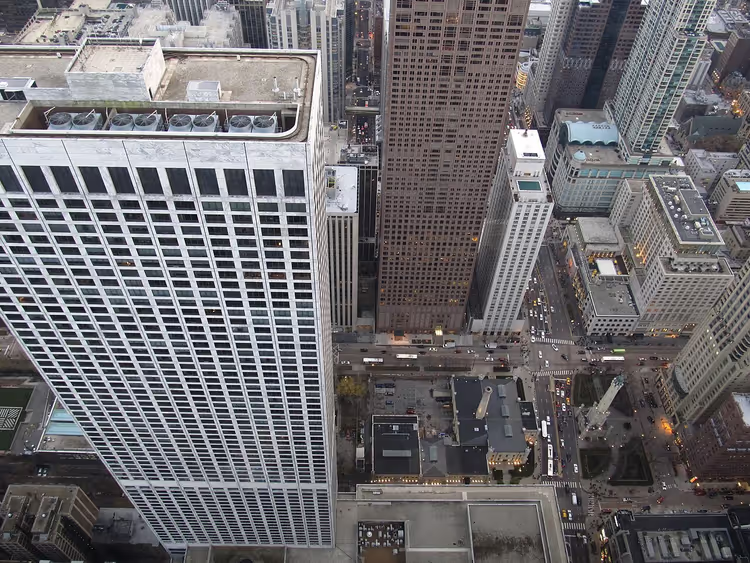
The skyscraper on the Magnificent Mile was long called the John Hancock Center, and today it carries the address 875 North Michigan Avenue (as of 09/2026, from the observatory website). The tower narrows from base to top and has become one of the city's symbols.
Inside there are offices, shops, apartments, restaurants, and parking. For a tourist, what matters is different: the observation deck is on the 94th floor. This is where you go up for the panorama.
6. 360 Chicago observation deck
 © GualdimG · CC BY-SAPhoto: GualdimG, CC BY-SA (https://creativecommons.org/licenses/by-sa/4.0), Wikimedia Commons
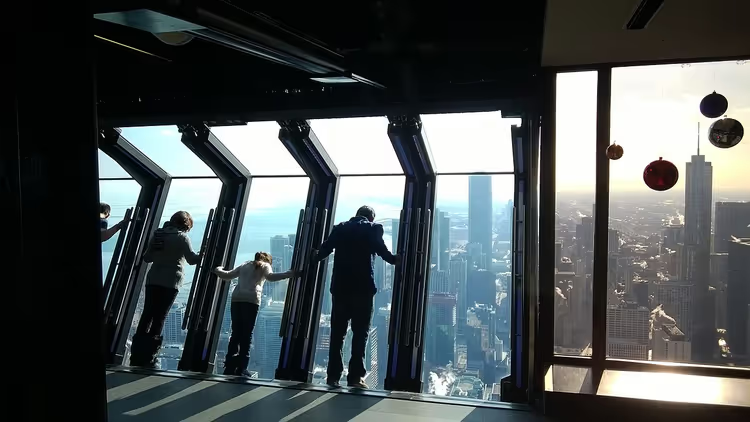
The 360 Chicago observation deck occupies the 94th floor at 1,030 feet, about 314 meters. From here you can see Lake Michigan, the lakefront, and the entire downtown. A general admission ticket starts at $30 per adult online, and it costs more at the ticket office (as of 09/2026, 360 Chicago tickets).
A separate reason to go up: the TILT attraction. A hydraulic glass platform tilts you outward, and you hang over the city. A ticket with TILT starts at $35, and the combined TILT & View rate will cost from $45 (as of 09/2026, TILT rates).
The deck is open daily from 9:00 a.m. to 11:00 p.m., with the last entry at 10:00 p.m. On this route, you go up here during the day. For the sunset, you can come back in the evening, since the deck stays open late. Find Chicago tours on GetYourGuide.
7. Museum of contemporary art Chicago
The Museum of Contemporary Art Chicago shows painting, sculpture, photography, installations, and video. You will see surrealism, pop art, and minimalism, along with staged photographs and objects made from unexpected materials.
The building is assembled from limestone, metal, and glass. The facade looks austere, but inside it is spacious and bright, and spiral staircases lead to different galleries. The museum is closed on Mondays, so if you are fitting it into a single day, put it in the middle of the week.
On Tuesdays the museum stays open late. If you love contemporary art, allow two hours here and take your time.
8. Holy Name Cathedral
 © Farragutful · CC BY-SAPhoto: Farragutful, CC BY-SA (https://creativecommons.org/licenses/by-sa/4.0), Wikimedia Commons
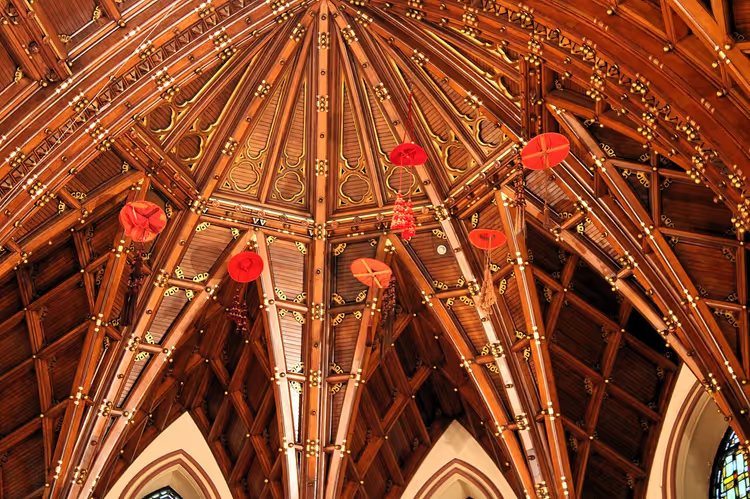
Holy Name Cathedral was built in the neo-Gothic style after the Great Fire. The tall, light facade is decorated with a rose window and lancet windows, and the entrance is covered by a massive bronze door.
Inside, bronze sculptures of biblical figures predominate, along with a columned arcade and colored stained glass. The altar is made of red granite. The organ makes a separate impression: it is assembled from several thousand pipes, and it can be heard from anywhere in the hall. The cathedral is active, and services are held here on a schedule.
- Who it's for: for those who want to see a working church, not just a museum.
9. Millennium Park and its sculptures
 © orangemania from Montréal, QC · CC BYPhoto: orangemania from Montréal, QC, CC BY (https://creativecommons.org/licenses/by/2.0), Wikimedia Commons
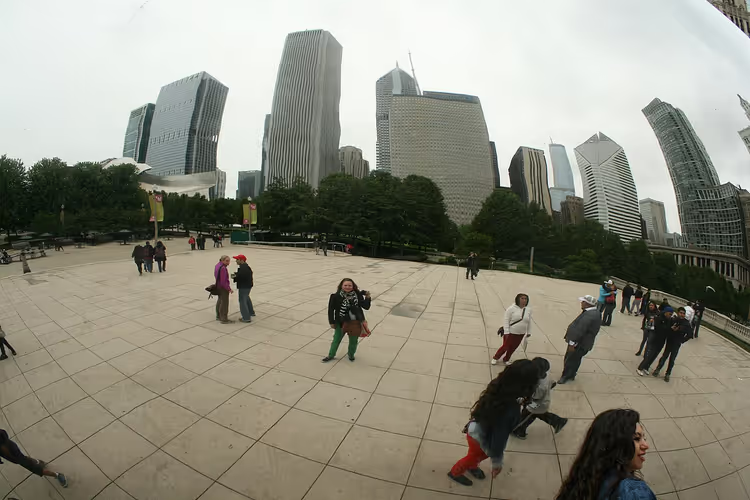
Millennium Park lies on the lakefront right next to the skyscrapers, and admission is open to everyone. The main sculpture, Cloud Gate, is made of polished steel plates and reflects the city like a mirror. Locals call it "The Bean."
Besides the sculpture, the park is home to the Crown Fountain with two screens that show residents' faces. Between the screens, water runs from the mouths of the images, and this spectacle draws a crowd in summer. There are also the columns of the Millennium Monument and a large lawn for relaxing.
In summer, concerts and festivals are held on the open-air Jay Pritzker Pavilion stage. You can sit right on the grass and listen to music under the open sky.
10. Chicago Cultural Center
 © The original uploader was DS1953 at English Wikipedia . · CC BY-SAPhoto: The original uploader was DS1953 at English Wikipedia ., CC BY-SA (https://creativecommons.org/licenses/by-sa/2.5), Wikimedia Commons
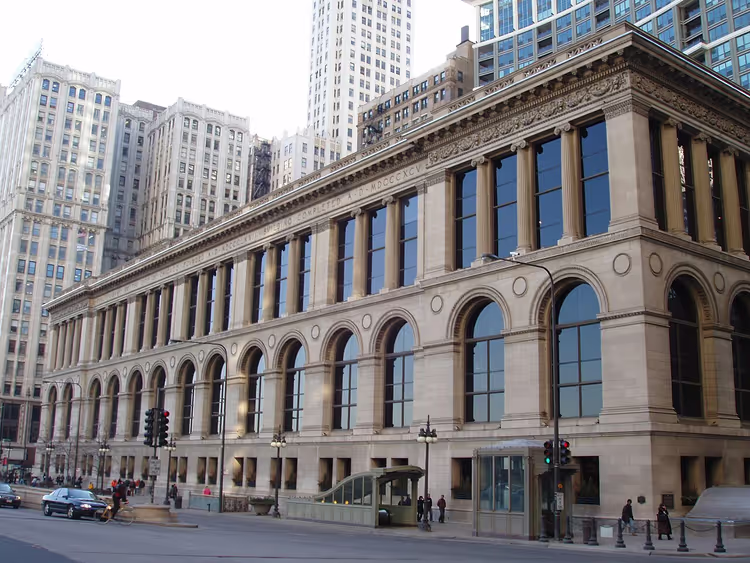
The Chicago Cultural Center across from Millennium Park welcomes guests free of charge. Inside, art exhibitions, concerts, film screenings, and festivals take place. From Wednesday through Saturday, free tours of the halls are offered here.
The neoclassical building itself deserves attention: coffered ceilings, patterned mosaics, carved cornices, and marble walls. The stained-glass dome of Preston Bradley Hall is assembled from thousands of glass pieces and is immediately noticeable. The acoustics here are special, which is why musicians love the hall. Admission is free, so the center is convenient to fit in between the park and the fountain in Grant Park.
11. Buckingham fountain in Grant park
 © Tony Hisgett from Birmingham, UK · CC BYPhoto: Tony Hisgett from Birmingham, UK, CC BY (https://creativecommons.org/licenses/by/2.0), Wikimedia Commons
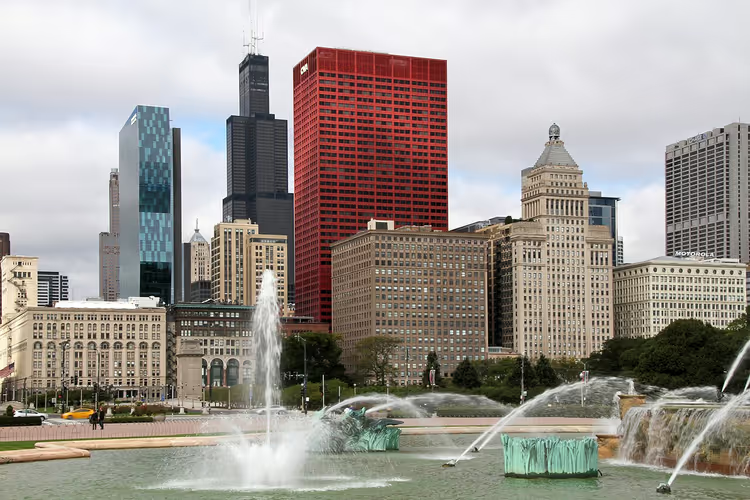
Buckingham Fountain stands in the center of Grant Park and is considered one of the city's largest water features. It was built with money from philanthropist Kate Buckingham in memory of her brother. The basin is wide, and a three-tiered pink marble structure rises in the middle.
Sea horse sculptures stand around it. When it gets dark, the fountain turns on lights and music, with hundreds of colored underwater spotlights providing the illumination. The jets shoot high, and the wind carries the spray for many meters. The evening show doesn't last long, but it draws people from all over the park. The basin's diameter is impressive even against the backdrop of the surrounding skyscrapers.
- Important: the fountain operates in the warm season and is turned off in winter.
12. Navy pier on Lake Michigan
 © NoTalentHack · CC BY-SAPhoto: NoTalentHack, CC BY-SA (https://creativecommons.org/licenses/by-sa/3.0), Wikimedia Commons
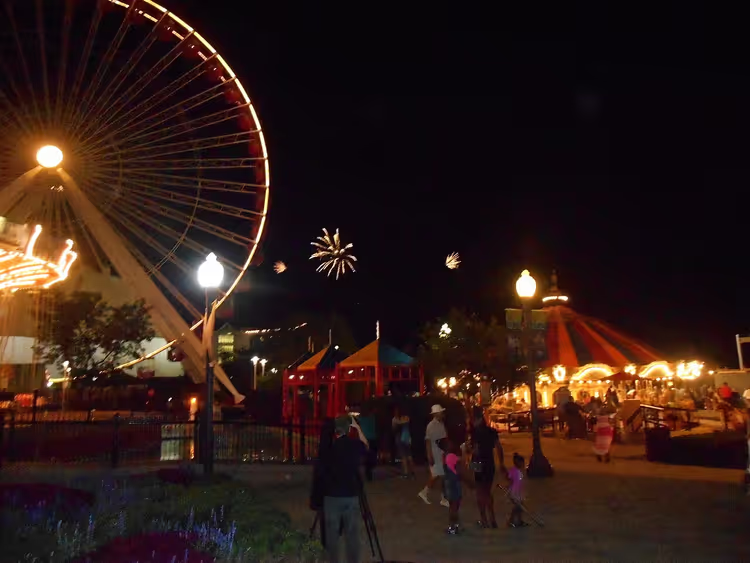
Navy Pier began as a military dock and training base, and today it's the main entertainment area on the lake. Entry to the pier is free; you pay for individual attractions and the Ferris wheel.
It's packed with cafes, restaurants, shops, theaters, and exhibition halls. The waterfront offers views of the lake and skyscrapers, and the futuristic Lake Point Tower rises nearby. The park area features a fountain, sculptures, and a botanical garden with palm trees under a glass roof. The pier has children's attractions, so it's easy to spend half a day here. In the evening, the waterfront lights up, and the lake view becomes especially peaceful.
- How to get there: from Millennium Park by bus or taxi; on foot it's the farthest point on the route.
- Who it's for: families and evening walks by the water.
13. Chicago Riverwalk along the river
 © Victorgrigas · CC BY-SAPhoto: Victorgrigas, CC BY-SA (https://creativecommons.org/licenses/by-sa/3.0), Wikimedia Commons
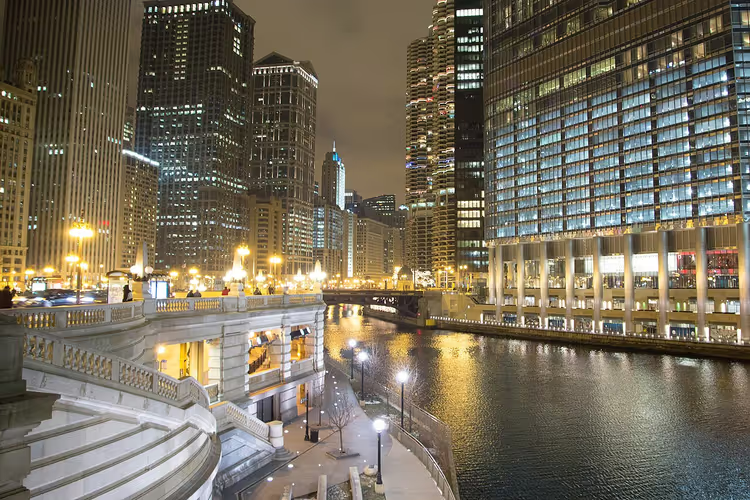
The Chicago Riverwalk is a landscaped pedestrian promenade along the river in the very center. From here you can see the city's grand architectural facade, which looks best from the water. Numerous bridges cross the river, and some of them open for boats.
The walk is easy to vary: terraces, sports areas, green spaces, and outdoor cafes line the route. If you want a different angle, you can ride part of the way on a water taxi.
- How to get there: there are stairs down to the water at Michigan Avenue and at the central bridges.
14. Shedd Aquarium
 © Madeleine_H · CC BYPhoto: Madeleine_H, CC BY (https://creativecommons.org/licenses/by/2.0), Wikimedia Commons
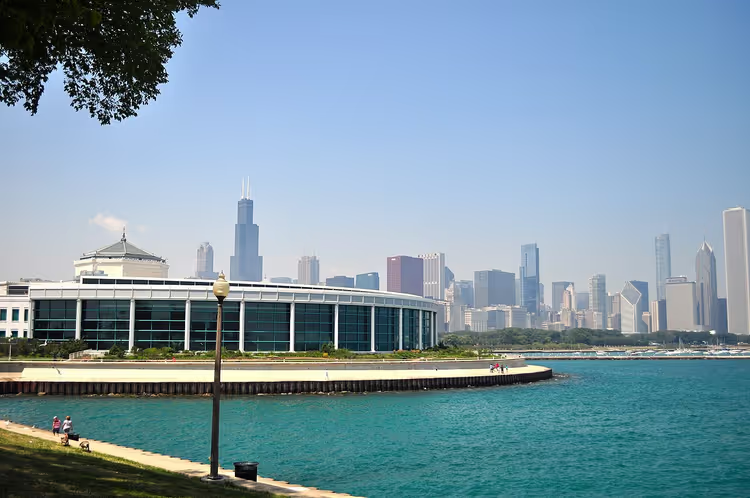
Shedd Aquarium occupies an octagonal white marble building on the Museum Campus. Inside, you walk through the tropical jungles of the Amazon, the coral reefs of the Caribbean, and halls with ocean life. Ticket prices depend on the day and time, and are cheaper on off-peak dates.
The tanks are home to dolphins, beluga whales, sea lions, rays, piranhas, crocodiles, and octopuses. A separate exhibit is designed as a Philippine village where sharks swim among schools of fish.
Allow at least two hours for the aquarium: there are many exhibits, and you'll definitely linger at the large tanks. Arrive at opening time if you haven't bought tickets in advance. The exhibits are divided into themed zones, so it's convenient to view them in order.
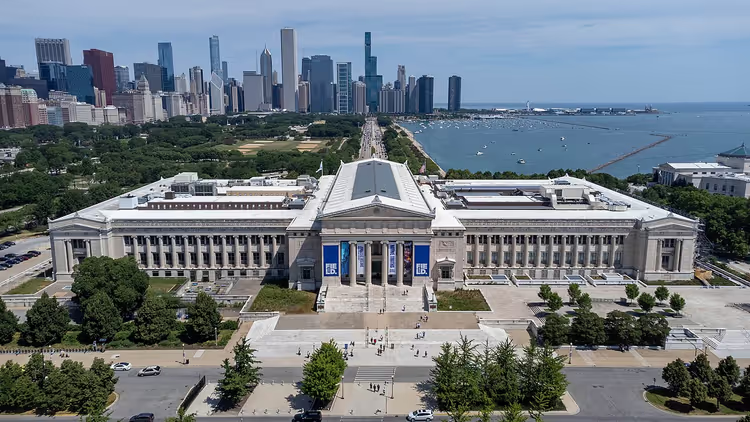
15. Field museum of natural history
 © Sea Cow · CC BY-SAPhoto: Sea Cow, CC BY-SA (https://creativecommons.org/licenses/by-sa/4.0), Wikimedia Commons
The Field Museum of Natural History is divided into geological, zoological, and anthropological collections. The museum is open daily from 9:00 AM to 5:00 PM, with last entry at 4:00 PM (as of 09/2026, fieldmuseum.org). Chicago residents get discounted tickets; visitors pay full price.
The museum's pride is the Tyrannosaurus rex skeleton SUE. It's one of the most complete T. rex skeletons in the world, and it always draws a crowd. Skeletons of other dinosaurs from different eras stand nearby.
Separate halls house minerals, meteorites, taxidermy animals, and authentic ancient Egyptian tombs. The hall on the indigenous peoples of the New World shows the daily life and culture of Native American tribes. The museum's collection numbers millions of finds from around the world, so in one visit you can realistically see only part of the halls.
- Who it's for: those traveling with kids who want to see dinosaurs in person.
- How to get there: the museum is on the Museum Campus next to the aquarium, about a 5-minute walk between them (on the map).
Tours and tickets in Chicago
Guided tours, skip-the-line tickets and activities — most offers can be cancelled free of charge.
See offers on TiqetsThe widget loads once you give your consent.
Chicago route on the map
Below is a map with the route points. The order is simple: morning in the north, midday on the Magnificent Mile, afternoon in the center. Make it to the Museum Campus before 5:00 PM while the Field Museum is open.
Time | Area | What to see | Tickets in advance |
|---|---|---|---|
Morning | Lincoln Park | Peggy Notebaert Nature Museum, zoo | not needed |
Midday | Magnificent Mile | John Hancock Center, 360 Chicago | yes, observation deck |
Afternoon | Center | Millennium Park, Buckingham Fountain, Riverwalk | optional |
Before 5:00 PM | Museum Campus | Shedd Aquarium or Field Museum | yes, one of the museums |
Chicago 1-day route
Places on the map
- 1Peggy Notebaert Nature Museum Butterfly conservatory and Illinois nature in Lincoln Park
- 2Lincoln Park Zoo Free lakefront zoo with a farm-in-the-zoo for kids
- 3Chicago History Museum City history from Native Americans to the Great Fire, Lincoln's deathbed
- 4Charnley-Persky House Museum Late-19th-century mansion designed by Louis Sullivan
- 5John Hancock Center Skyscraper on the Magnificent Mile with a 94th-floor observatory
- 6360 Chicago observation deck Panorama from 314 meters and the TILT attraction over the city
- 7Museum of Contemporary Art Chicago Surrealism, pop art and installations, closed on Mondays
- 8Holy Name Cathedral Neo-Gothic cathedral with an organ of several thousand pipes
- 9Millennium Park Lakefront park with the Cloud Gate sculpture and Crown Fountain
- 10Chicago Cultural Center Free exhibitions and the Preston Bradley stained-glass dome
- 11Buckingham Fountain Large water feature in Grant Park with evening illumination
- 12Navy Pier Lakeside entertainment zone with a Ferris wheel
- 13Chicago Riverwalk Pedestrian riverside promenade with architecture views
- 14Shedd Aquarium Dolphins, belugas and sharks at the Museum Campus
- 15Field Museum of Natural History Skeleton of T. rex SUE and ancient Egyptian tombs
⁉️🤔 Frequently asked questions
How much time do you need to see downtown Chicago?
Allow half a day for the center around Millennium Park and the waterfront. In that time you can comfortably see the park, the cultural center, the fountain, and the Riverwalk. Adding the Museum Campus on the same day is realistic if you choose one museum out of the two.
How much does it cost to go up to the 360 Chicago observation deck?
There's a general admission ticket, a ticket with the TILT attraction, and a combined TILT & View rate. Prices for each rate are listed above in the observation deck section (360 Chicago rates). Children's tickets are cheaper, and evening slots sell out faster.
What can you see in Chicago for free?
Lincoln Park Zoo, Millennium Park, the Chicago Cultural Center, the Riverwalk, and entry to Navy Pier are free. You pay for individual attractions, museums, and the observation deck. That set covers a full day of sightseeing without tickets.
When is the best time to go up to the observation deck?
Come an hour before sunset. That way you catch the city in daylight, then the sunset, and then the evening lights of the skyscrapers. The 360 Chicago observation deck is open late, so there's plenty of time.
Do you need a car in Chicago?
For a downtown route, a car is unnecessary and only gets in the way: parking is expensive, and the metro takes you between clusters. On foot you can cover the center in a day and see more details. A car is worth renting only for trips outside the city.
Can you do the Field Museum and Shedd Aquarium in one day?
Yes, but each one will take at least two hours, and in summer add time for lines. Buy tickets online and arrive at opening time. If the day is short, leave one museum for your next visit.
In short: what to book
If you have one day, book only two things in advance: the 360 Chicago observation deck and a ticket to one of the Museum Campus museums. Everything else on the route is free or can be handled on the spot.
If you're traveling with kids, give the morning to the zoo and nature museum, and leave the evening for the fountain and the park. If you're more drawn to history and science, put the Museum Campus in the first half of the day. If panoramas and architecture matter most to you, start with the Magnificent Mile skyscrapers.
To stay near the route, compare hotel prices in downtown Chicago on Trip.com.

A small editorial team writing guides for independent travel. We travel ourselves, but we haven’t been everywhere, so we check prices, opening hours and how to get there against official sources.