
















Gifts and souvenirs from Israel: what to bring home
Before departure, almost every traveler asks the same question: what to bring from Israel. The choice is huge, but suitcase space is limited.
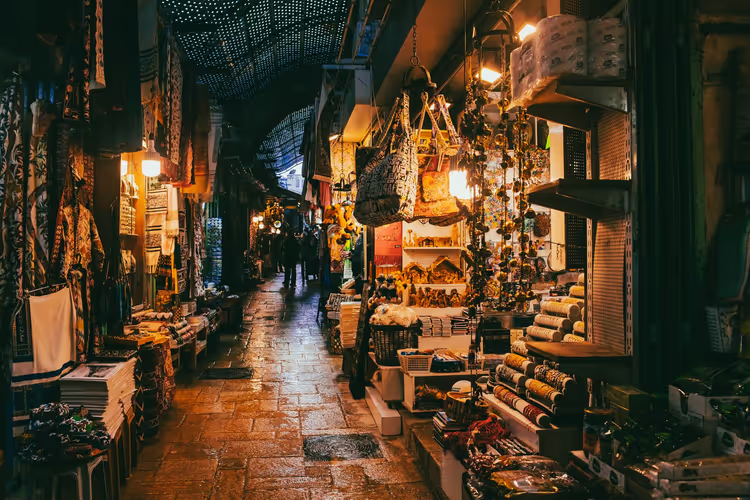
The shops of the Old City and the markets of Tel Aviv are packed with souvenirs. It is easy to buy an expensive trinket instead of something with a story. So we selected what is actually worth bringing.
We put together twenty ideas: from religious items to Dead Sea cosmetics and local food. For each item, you will learn what it is, who it suits, and what to look for when buying.
The official tourism portal of Israel advises not to limit yourself to one city: the list of destinations includes Jerusalem, Tel Aviv, the Negev Desert, and the Sea of Galilee (as of 09/2026, Visit Israel).
1. Icons
💡 In short:
- Buy souvenirs with a story in Jerusalem, and pick up food and cosmetics before your flight.
- Check expiration dates on food products and packaging integrity before paying.
- Bargaining is appropriate at markets; prices are fixed in stores.
- Gift and brand data: as of 09/2026, according to the Israel Ministry of Tourism.
 © Mohammad Shad Siddiqui · CC BY-SAPhoto: Mohammad Shad Siddiqui, CC BY-SA (https://creativecommons.org/licenses/by-sa/4.0), Wikimedia Commons
Icons consecrated in Jerusalem are considered miraculous by believers. They are brought as protection for the home and blessing for loved ones. The most commonly requested images are of the Holy Trinity, Jesus Christ, the Mother of God, and Nicholas the Wonderworker. In the shops of the Old City you will also find home icons: family, patron saint, and wedding icons.
Icons are painted on wood and canvas, set in silver and gold frames, and decorated with semi-precious stones. Simple images are modestly priced, while hand-painted pieces cost noticeably more. Travel icons with a prayer and a capsule of holy water from the Jordan are sold for travelers.
2. Candles
 © Godot13 · CC BY-SAPhoto: Godot13, CC BY-SA (https://creativecommons.org/licenses/by-sa/4.0), Wikimedia Commons
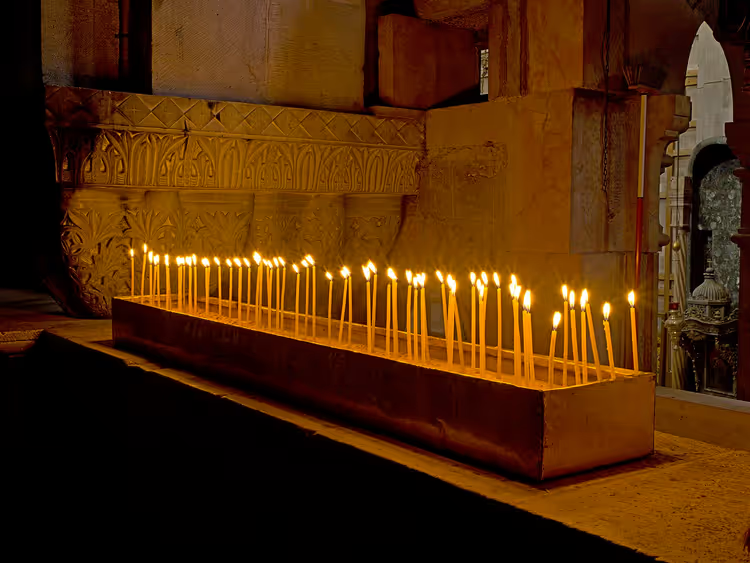
Candles consecrated from the Holy Fire at the Church of the Holy Sepulchre are considered a priceless gift by believers. The fire descends in Jerusalem before Easter, and new candles are lit from it. Such a gift is appropriate specifically for a believer.
You will find thin and thick Jerusalem candles, sets with honey, and sets for home prayer. At home, such candles are lit in the morning and evening, except on Good Friday. Buy extra: they are given both individually and as a whole set. A large set is more convenient for the home, while a single candle is enough for a colleague.
3. Menorah
 © Vyacheslav Argenberg · CC BYPhoto: Vyacheslav Argenberg, CC BY (https://creativecommons.org/licenses/by/4.0), Wikimedia Commons
The menorah, a seven-branched lamp, is one of the main symbols of Judaism and the emblem of Israel. According to tradition, the first lamp was made for the portable sanctuary that the people carried through the desert.
Kabbalists consider the menorah protection from evil forces. Craftsmen decorate it with plant motifs, enamel, or silver. You can choose a lamp for ritual use or simply as home decor. A menorah brought home will remind you of Israel every evening. Craftsmen make lamps in different sizes, so you will find both a tabletop menorah and a miniature version for a shelf. Kabbalists advise placing it at the entrance to the home.
4. Holy Myrrh
 © Conquerer01 · CC BY-SAPhoto: Conquerer01, CC BY-SA (https://creativecommons.org/licenses/by-sa/4.0), Wikimedia Commons
Holy Myrrh is oil consecrated at the Church of the Holy Sepulchre, based on olive oil. Aromas of cinnamon, frankincense, myrrh, and pomegranate are added to it, so each blend has its own purpose.
Oil with frankincense is considered protection from evil, while jasmine and rose are used for anointing. Consecrated oil is bought for home oil lamps and for skin care. It is traditionally kept near icons, and it is best to give it with an explanation of the tradition. Myrrh is sold by type or in sets. If you do not know which fragrance to choose, buy a set: the person can pick the right one themselves.
5. Kippah
 © H. Pellikka · CC BYPhoto: H. Pellikka, CC BY (https://creativecommons.org/licenses/by/2.5), Wikimedia Commons
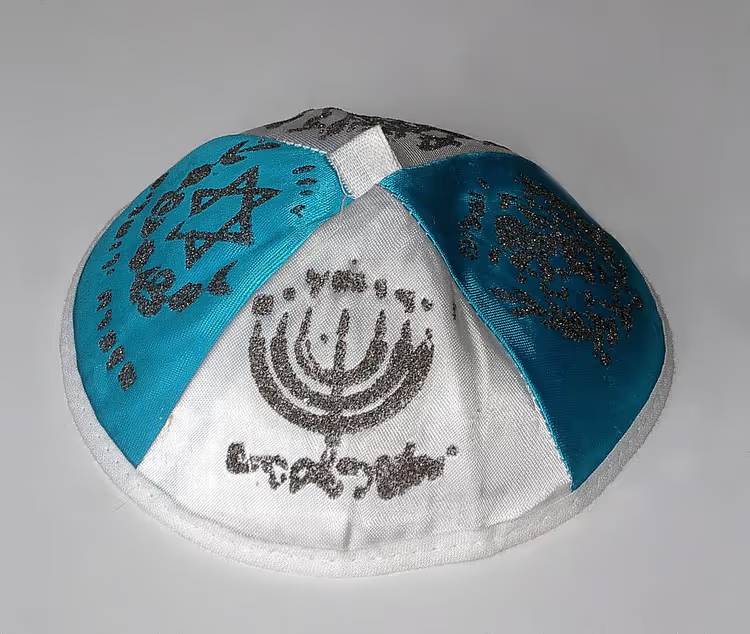
A kippah is the traditional head covering worn by Jewish men. This fabric, knitted, or leather cap is also known as a yarmulke.
The style of a kippah indicates the branch of Judaism a person belongs to. You will see white and black kippahs, some with ornamental borders and some with the Star of David. Wearing one at all times is not required: many people keep a kippah with them and put it on for specific occasions. When buying a kippah, get a clip to go with it, otherwise it will fall off. Knitted and fabric models cost less than leather ones. For a gift, choose a versatile black or white color.
6. Keffiyeh
 © Michael Plutchok · CC BY-SAPhoto: Michael Plutchok, CC BY-SA (https://creativecommons.org/licenses/by-sa/3.0), Wikimedia Commons
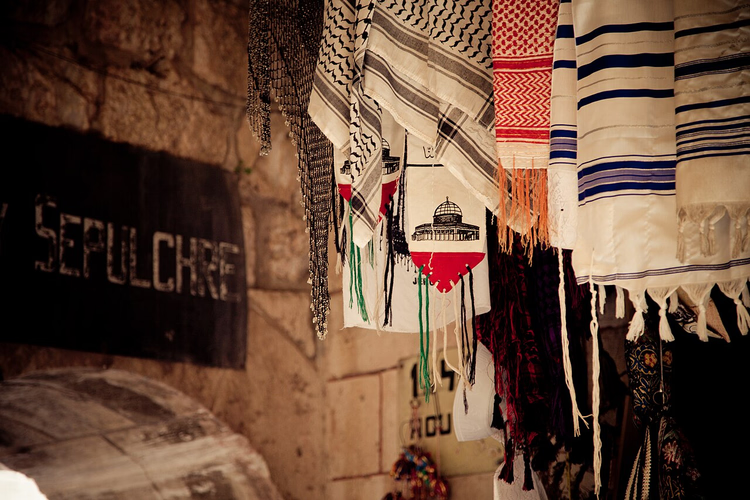
A keffiyeh is a square or rectangular scarf that has been worn since ancient times on the Sinai and Arabian Peninsulas. The name comes from the city of Al-Kufa, where the scarf was first worn.
The scarf is folded diagonally and tied according to local custom, sometimes secured with a camel-hair cord. The fabric protects the head and face from sun, wind, and sand, and dries quickly from sweat and rain. In Europe, the keffiyeh is worn as a neck scarf, which makes it a suitable gift for someone far removed from the Middle East. The size of the scarf depends on how it will be worn: a square one is more convenient for the head, while an elongated one is easier to tie around the neck. At the market, keffiyehs come in several colorways, from white to red-and-white and black-and-white.
7. Hamsa
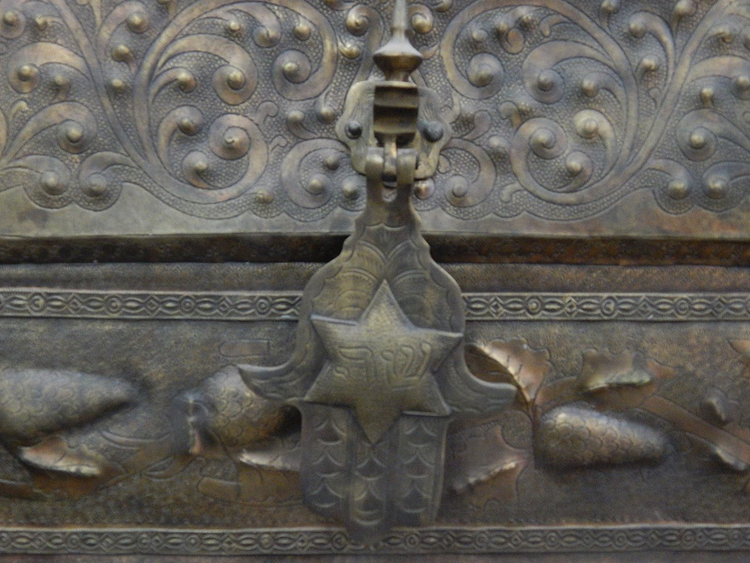 © Mariel arg · CC BY-SAPhoto: Mariel arg, CC BY-SA (https://creativecommons.org/licenses/by-sa/4.0), Wikimedia Commons
A hamsa is a talisman in the shape of an open palm, with a second thumb where the little finger would be. Lines of fate, fish, an eye, or the Star of David are drawn on the palm to strengthen its protection. Blue and light blue shades are believed to deflect evil rays, which is why they are the most common choice for gifts.
Muslims call the hamsa the Hand of Fatima, Jews call it the Hand of Five, and Christians refer to it as the Hand of the Almighty. A charm with semi-precious stones is hung at the entrance to a home, and a pendant version is sold for cars. Women are often given a silver hamsa pendant with crystals, sometimes as a set with a bracelet.
The price of a hamsa depends on the metal and stones. Simple versions are bought as souvenirs, while high-grade silver jewelry costs more. If you are choosing a pendant, ask the seller about the origin of the stones and whether a certificate is available.
8. Amulets
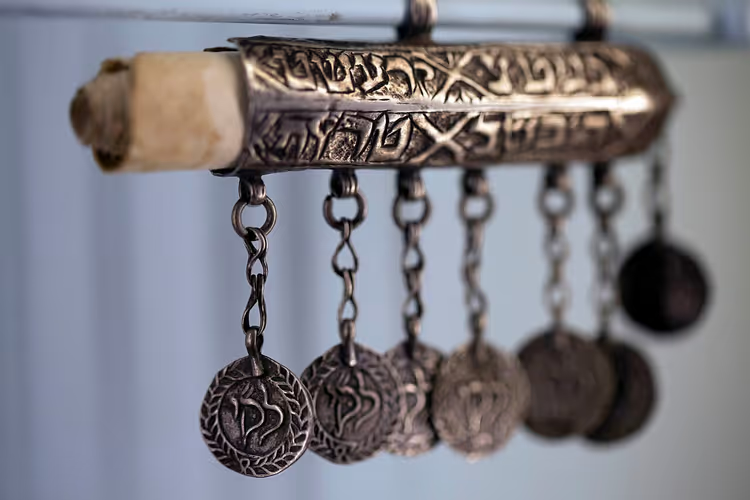 © Guy Yechiely · CC BY-SAPhoto: Guy Yechiely, CC BY-SA (https://creativecommons.org/licenses/by-sa/4.0), Wikimedia Commons
Silver earrings, bracelets, rings, and pendants at the market look like ordinary jewelry, but many are made as talismans. They are engraved with Hebrew prayers and the names of angels, and the power of the amulet is traditionally tied to the Holy Land.
Money amulets with blessings are brought back for luck and prosperity, often together with a silver chain. Bracelets and rings are chosen for men, pendants and earrings for women. Before buying, check the hallmark and ask for a receipt: at the market it is easy to overpay for silver-plated costume jewelry.
9. 72 Names of God bracelet
The bracelet with the names of God is made of pure silver, often with gold plating. The name refers to the 72 names of God from the book of Exodus, where each name is considered part of the "great code."
Each name, according to tradition, has its own meaning and purpose. This bracelet is worn as protection in public places and at the same time as a piece of jewelry. The clasp is reliable, and the size is adjusted by length, so the bracelet suits both women and men. The bracelet goes with any outfit, which is why many people wear it every day. Each artisan has their own original design, so identical pieces are rare in the shops.
10. Red string against the evil eye
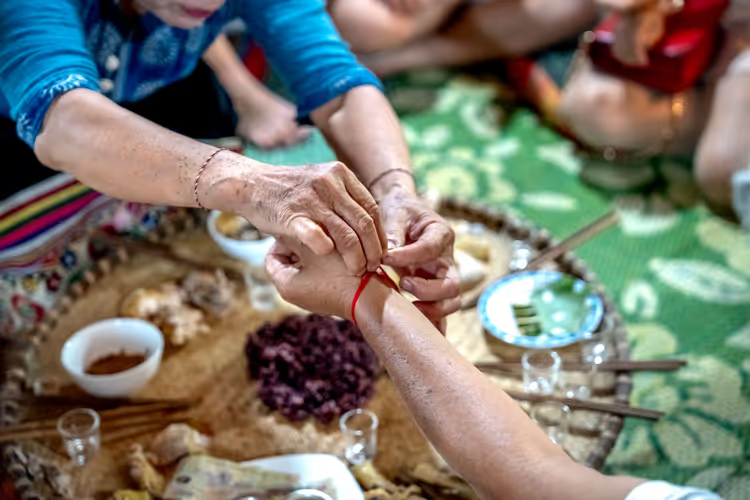
A red string blessed at the tomb of the matriarch Rachel is considered one of the most powerful protective charms. It is tied on the left wrist with knots, and the person tying it must be someone who wishes you well.
The string is made of wool and sold in sets with varying numbers of strings. If the string breaks, tradition says that misfortune has passed you by. For a gift, buy several at once: they are often worn by the whole family, and a spare string will always find an owner. The string is believed to protect against curses, the evil eye, and negative energy. Interest in practical Kabbalah has fueled the fashion for such talismans, which is why the strings are sold in almost every souvenir shop.
11. Cosmetics
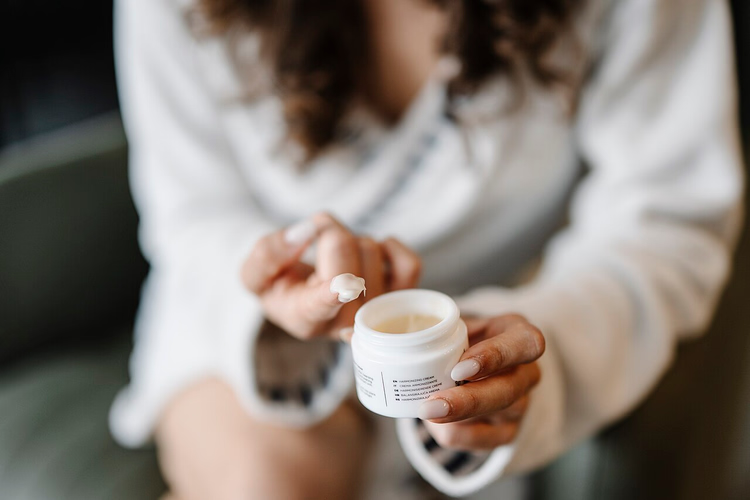 © Shixart1985 · CC BYPhoto: Shixart1985, CC BY (https://creativecommons.org/licenses/by/2.0), Wikimedia Commons
Israeli cosmetics have long been famous far beyond the country's borders. Their formulas are based on Dead Sea salts, aromatic oils, and desert plant extracts, which is why these products are considered therapeutic.
Brands like Anava, Ein Gedi, Sea of SPA, DSM, and Aroma make products for the face, body, and hair. People bring back Dead Sea salts and mud for home baths, mud shampoos, and soap. The DSM black caviar line is popular for face and hair care, and Ein Gedi is valued for its antioxidant collections: verified 09/2026 on the official website.
Cosmetics are bought as gifts for both women and men. Before buying, check the expiration date and volume: large jars are a better value but heavier in your suitcase, so it's convenient to pick up some items at duty-free. Aroma makes products with vanilla, lavender, coconut, and grape seed fragrances. Their formulas use citrus essential oils, seaweed, and extracts of medicinal plants.
12. Hummus
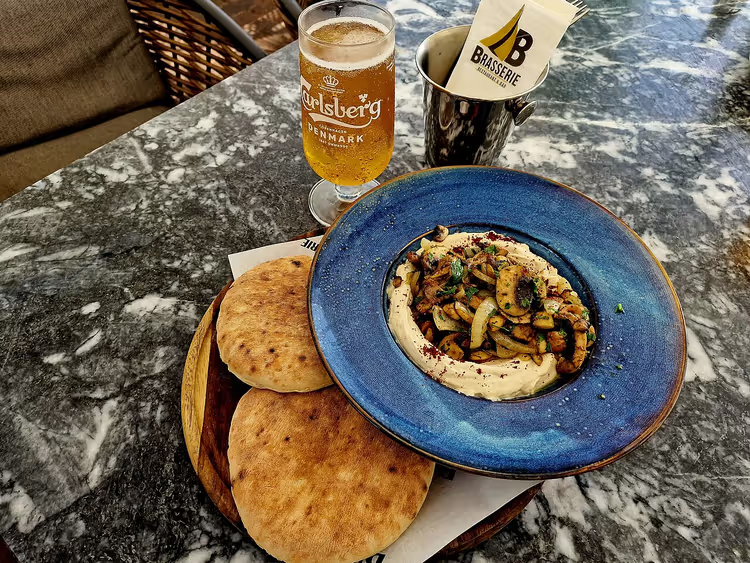 © Anagoria · CC BY-SAPhoto: Anagoria, CC BY-SA (https://creativecommons.org/licenses/by-sa/4.0), Wikimedia Commons
Hummus is a spread made from mashed chickpeas with olive oil, tahini, paprika, garlic, and lemon juice. It's rich in plant protein, vitamins, and micronutrients, so it's filling and suitable for fasting.
Hummus is eaten as a spread on bread, with chips and nuts. The product spoils quickly, so buy it right before your flight and check the production date on the package. At home, keep the jar in the refrigerator and eat it within the first few days after your trip. People often buy tahini, paprika, and olive oil separately to make the spread at home.
13. Wine
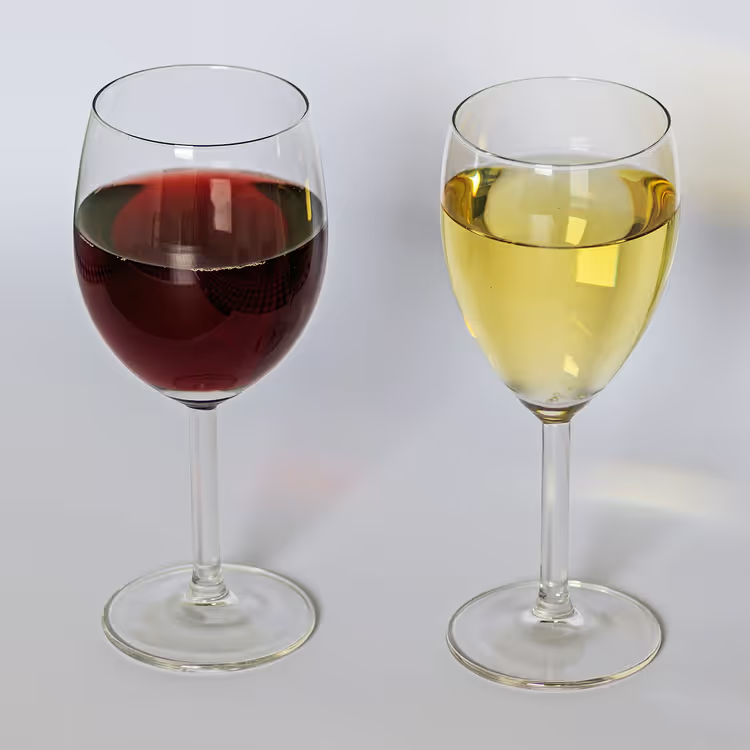 © A.Savin · CC BY-SAPhoto: A.Savin, CC BY-SA (https://creativecommons.org/licenses/by-sa/3.0), Wikimedia Commons
Israeli wine is produced at several hundred wineries, from small estates to large factories. The Israel Wine Producers Association brings together about 40 of them (as of 09/2026, IWPA).
Among kosher labels, Flam, Sas, Yatir, and Barkan stand out: their wines are sold in many countries. Bring back what you liked at a tasting, such as King David wine, Rimon pomegranate wine, or blackcurrant wine. Sabra kumquat liqueurs are added to cocktails and coffee, and they won gold medals at a London competition. Premium wines like Yarden Katzrin have apple, pear, and citrus notes with hints of tropical fruit and spices.
14. Dates and date honey
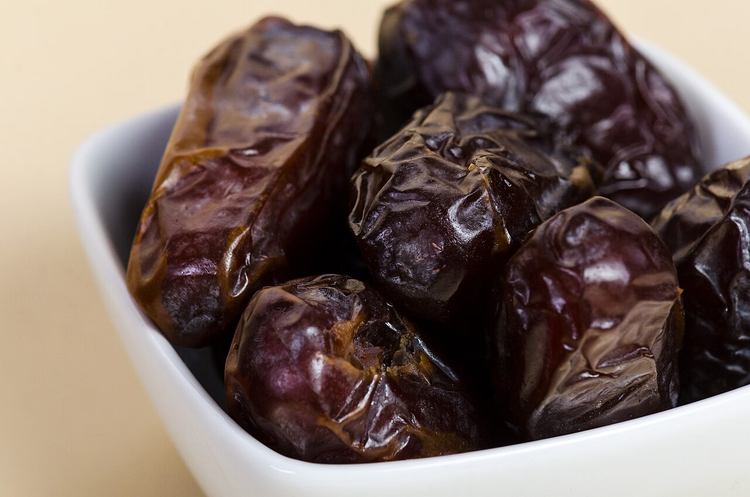 © ORGANIChouse · CC BY-SAPhoto: ORGANIChouse, CC BY-SA (https://creativecommons.org/licenses/by-sa/4.0), Wikimedia Commons
Dates from the Holy Land are brought back for almost everyone: they're sweet, large, and often sold already pitted. For a gift, choose the Deglet Noor and Medjool varieties, which are considered the juiciest.
Dates are packed in bags and sold by weight, sometimes with nuts inside. Date honey, or silan, is a concentrated syrup with no added sugar: it's pressed from ripe fruit and used as a sugar substitute. A major producer, the Hadiklaim cooperative, specializes specifically in the Medjool variety (as of 09/2026).
15. Halva
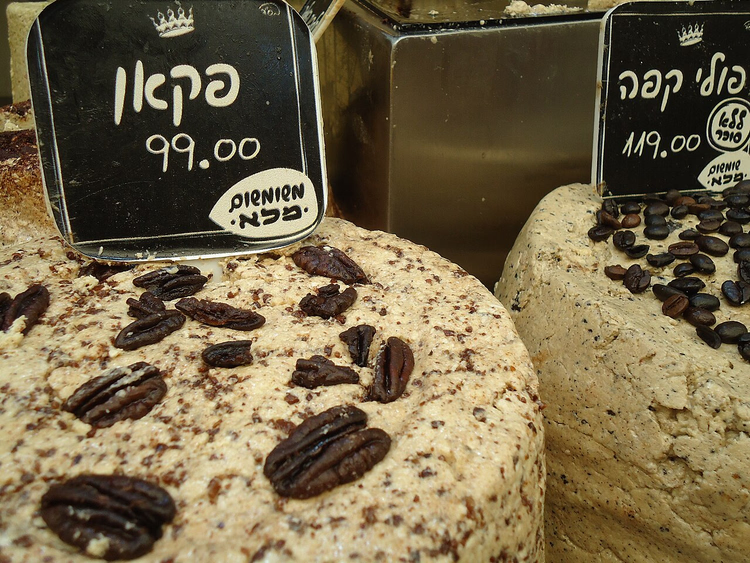 © Meg Stewart from Poughkeepsie, NY, U.S.A. · CC BY-SAPhoto: Meg Stewart from Poughkeepsie, NY, U.S.A., CC BY-SA (https://creativecommons.org/licenses/by-sa/2.0), Wikimedia Commons
Israeli halva differs from what many people are used to: it's more delicate and less sweet. Classic Tahini halva is made from ground sesame seeds and sugar, and the sesame gives it a nutty aroma.
Halva is sold in bars and by weight, with nuts, peanuts, and sesame. For a foodie, pick unusual varieties: chocolate, lemon, pear, as well as halva with mango, chili, or whiskey. The more unexpected the flavor, the more interesting the gift. Bars are easy to transport and don't crumble in your suitcase. For gifting, there are ready-made assorted boxes with several varieties at once.
16. Spices and seasonings
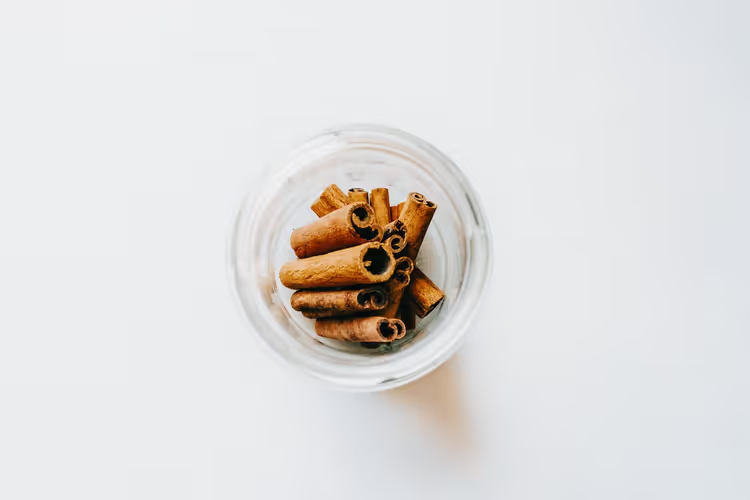
Herbs and spices in Israel are grown in the Judean Desert, far from factories, so the spices keep their aroma and potency. At the market you will find dozens of seasoning varieties.
The main local blend is baharat: cloves, cinnamon, black pepper and allspice, sometimes with nutmeg and cardamom. Separately, pick up cumin for meat, coriander, turmeric, and cardamom. Purple-red sumac adds a tangy note, and green za'atar goes well with fish and vegetables. At home, the spices will remind you of the trip all winter long. At the market, spices are sold by weight, so ask to have them packed airtight. You will add a pinch of za'atar or sumac to your first home-cooked dishes.
17. Materna baby food
Materna is Israel's leading baby food brand. Infant formulas are made for children from birth to several years old, with a composition designed to be close to breast milk.
The lineup includes milk-based and milk-and-plant-based formulas, vegetable and fruit purees, and dry cereals. For older children, they sell rice biscuits and dairy-free cereals: corn, rice, and oat. As a gift for families with little ones, this kind of set is a sure fit, but the jars take up a lot of room in a suitcase.
18. Kosher products
 © Chenspec · CC BY-SAPhoto: Chenspec, CC BY-SA (https://creativecommons.org/licenses/by-sa/4.0), Wikimedia Commons
Kosher products are certified as compliant with Jewish dietary laws. This group includes olive oil and olives, aromatic spices, and vegetable pastes.
From the kosher selection, people bring honey varieties from the best apiaries, ginger honey, and date honey. Add to the list chocolate, candied exotic fruits, date paste, fruit-flavored tea, coffee, and cocoa. Extra virgin olive oil and olives are convenient to bring in small packaging. This kind of set works well as a gift for people who cook at home.
19. Ceramic items
 © שלמה רודד · CC BYPhoto: שלמה רודד, CC BY (https://creativecommons.org/licenses/by/2.5), Wikimedia Commons
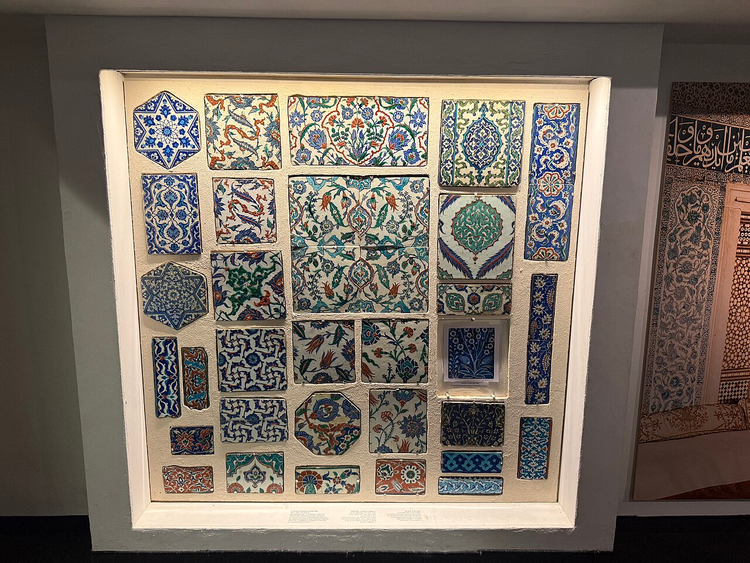
Ceramics from Israel are easy to recognize by their painted decoration. The largest selection is in the Armenian Quarter of Jerusalem: tiles, vases, planters, plates, jugs, and cups in blue-and-white tones and bright color schemes.
Decorative plates with biblical scenes, views of the country, and symbols are in especially high demand. Among small ceramic pieces, people buy pendants and earrings in the shape of the hamsa and the Star of David, beads, and necklaces. At home, it is best to place such items away from the edge of a shelf. Besides the Armenian Quarter, ceramics are sold in shops and at the market.
20. National games
 © Deror_avi · CC BY-SAPhoto: Deror_avi, CC BY-SA (https://creativecommons.org/licenses/by-sa/3.0), Wikimedia Commons
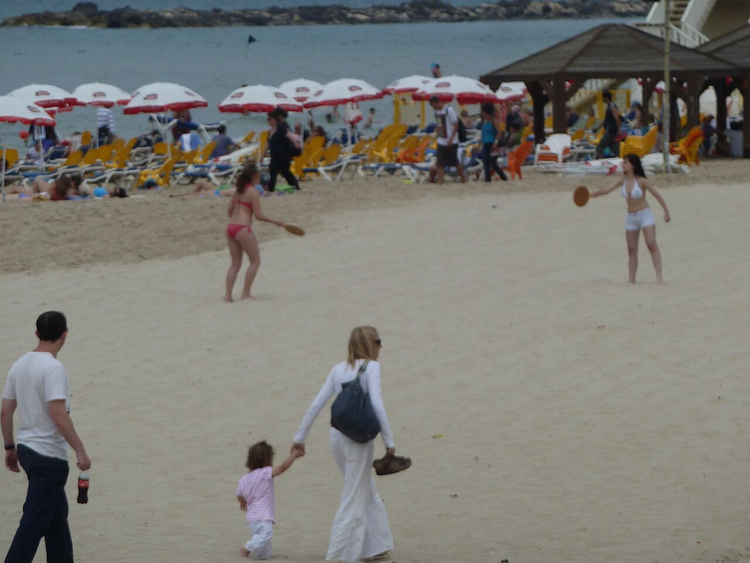
Original game sets appeal to both children and adults. The authentic Israeli game is called Matkot: the set includes a rubber ball and two paddles, and the rules resemble badminton and table tennis.
You can play without a net or table, so Matkot is often played on the beach, and the set is sold in any supermarket. For children, people bring themed building sets featuring the Tower of David, Solomon's Temple, and Noah's Ark. For adults, souvenir chess sets and backgammon with tortoiseshell, marble, or ceramic pieces are a good fit. A Matkot set is lightweight, so it will travel fine in checked luggage.
⁉️🤔 Frequently asked questions
What should you bring from Israel first and foremost?
Dead Sea cosmetics, spices, dates, and olive oil: they are lightweight, keep for a long time, and suit almost anyone. Buy religious items only for a person of faith, otherwise the gift will go unused. Before buying, check the expiration date and packaging integrity, and keep the receipt.
Can you bring hummus and fresh products?
Hummus spoils quickly, so people buy it right before the flight and check the production date on the jar. Some products cannot be brought into European Union countries, so check your country's rules in advance and leave extra time at the airport for inspection.
Are souvenirs in Israel expensive?
The range is wide: simple icons, hamsas, and threads are modestly priced, while silver, artisan ceramics, and premium cosmetics cost more. Prices in Old City shops are quoted on the spot, and haggling is appropriate there. Compare several shops before paying, and do not buy from the first seller.
Where should you buy souvenirs in Israel?
Religious items are easiest to buy in Jerusalem, cosmetics and food in Tel Aviv or at the airport. The market is usually cheaper than a store, but watch the quality: counterfeits of well-known brands are more common there. It is best to keep the receipt for cosmetics and jewelry.
What should you not bring from Israel?
Perishable products, bulky ceramic vases, and souvenirs from regions that could raise questions at customs. If you are unsure about a gift, go with something light and straightforward: spices, tea, dates, or olive oil.
Before your trip, watch a short overview of souvenir shops: it will help you understand what to look for first.
In short: what to bring back from Israel
A gift from Israel doesn't have to be expensive. Spices, dates, tea, and olive oil go into almost every suitcase, and Dead Sea cosmetics cover the gift question for both women and men.
For religious people, bring icons, candles from the Holy Fire, or blessed oil: these items are brought directly from Jerusalem. For a family with children, Materna and national games are a good fit.
If you're short on space, go with spices, tea, and date honey. If you want to impress, opt for Ein Gedi cosmetics and Israeli wine. Check expiration dates before paying, and don't forget the kippah clip.

A small editorial team writing guides for independent travel. We travel ourselves, but we haven’t been everywhere, so we check prices, opening hours and how to get there against official sources.