
















Helsinki in one day: how to walk the center and make it to the islands
One day in Helsinki can really fit into a clear route. The city center is compact, and the train from the airport takes you right to the station in about 30 minutes (HSL, as of 09/2026). The main sights stand close together: from Market Square to Senate Square you can walk. Below is a tested walking order that fits into one daylight day.
The plan suits those who came on their own and don't want to take a guided tour. You'll walk through the old center, go up on the observation wheel, and in the evening ride out to the island with the sea fortress.
Ad: this article contains affiliate links. We earn a commission if you book through them, at no extra cost to you.
How to get from the airport to the center
💡 In short:
- Trains I and P depart from under the airport terminal straight to Central Station, about 30 minutes en route (HSL train schedule, as of 09/2026).
- An ABC zone ticket works on both the tram and the metro, so you'll reach the center without a second purchase.
- Start the route at Market Square: from there all the sights are within walking distance.
- Prices and opening hours: 09/2026, verified on the official Ateneum website.
Helsinki-Vantaa Airport lies about 20 km from the city center (on the map). The fastest way to get there is by trains I and P: the station is right under the terminal, and the ride takes about half an hour (official HSL website, as of 09/2026).
Besides trains, HSL buses also go to the center. They're convenient if your hotel is away from the railway line. Taxis and pre-booked transfers cost noticeably more, but the car takes you right to the door. Always check whether the ride is included in your travel pass.
If you landed in the morning, head down to the train right away. The interval is short, and the taxi line at rush hour is longer. Buy a ticket in advance in the HSL app, and you won't have to look for a ticket machine.
From the station to the first stop on the route you can walk in a few minutes. On the way out, follow the sign for Mannerheimintie: it's the main street, and it's handy for checking your direction.
Bus station and Kamppi shopping center
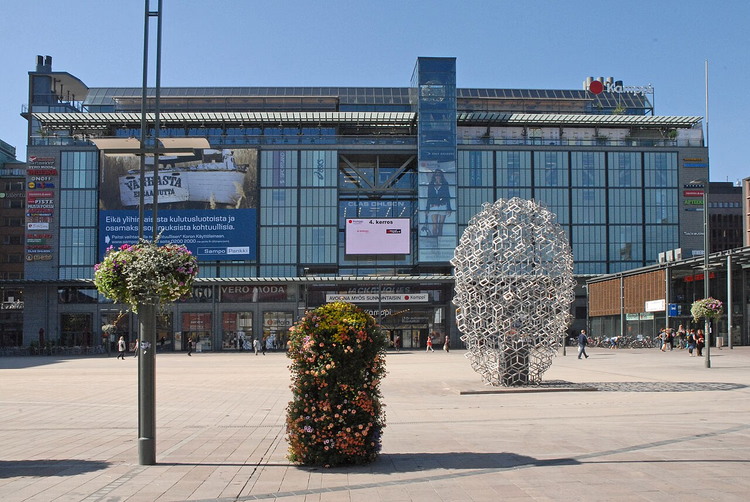
Helsinki's bus station is hidden inside the large Kamppi complex. Under one roof you'll find the intercity terminal, shopping galleries, and a metro station. If you're leaving the city by bus, it's convenient: everything is at hand.
The building was constructed in the 2000s on the site of the old bus station. The terminal occupies several levels, with a waiting hall, luggage storage, and ticket offices nearby. From the shopping area you can get down to the metro in a couple of minutes. Address: Urho Kekkosen katu 1.
The upper floors are given over to shops and cafes. From here it's easy to step out onto Mannerheimintie and continue your walk. In the evening, the open terrace offers a view of the city lights.
 © Jean-Pierre Dalbéra from Paris, France · CC BYPhoto: Jean-Pierre Dalbéra from Paris, France, CC BY (https://creativecommons.org/licenses/by/2.0), Wikimedia Commons
Kamppi Chapel of Silence
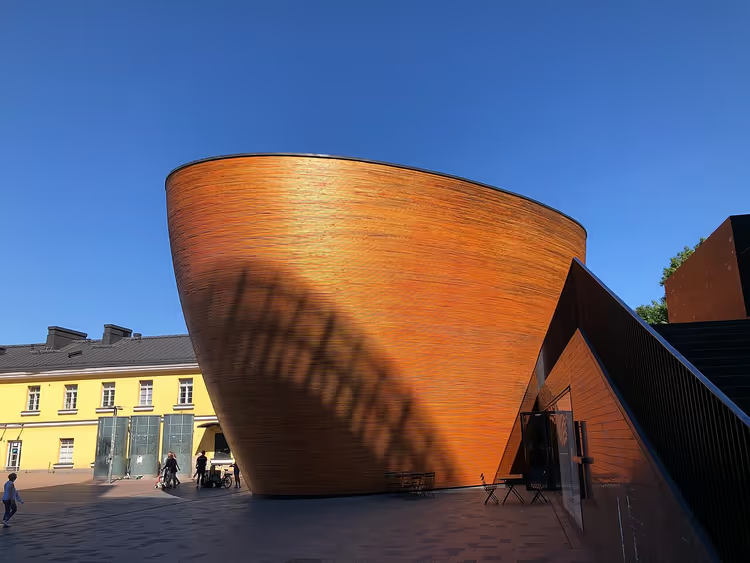
Kamppi Chapel of Silence (Kampin kappeli) stands on Narinkkatori Square, between the shopping center and the bus station. Outside it's a wooden egg made of bent spruce slats, and inside you'll find rare silence in the middle of the noisy center.
Admission is free. There are no regular services here: baptisms and funerals are not held, only short prayers during the day. Stop in briefly to rest between two points on the route. You can't make noise inside, so loud guided tours are not brought here.
The chapel opened in the early 2010s. The glass base serves as the entrance from the square side. If you're tired of the crowds, this is the best pause in the center.
 © Vadelmavene · CC BY-SAPhoto: Vadelmavene, CC BY-SA (https://creativecommons.org/licenses/by-sa/4.0), Wikimedia Commons
Esplanadi Park in the center
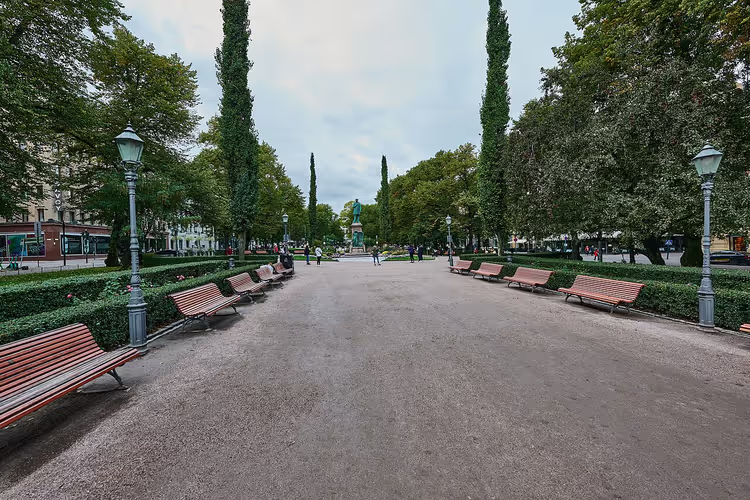
Esplanadi Park stretches as a narrow linden-lined strip through the center, between Eteläesplanadi and Pohjoisesplanadi streets. The city laid it out back in the 19th century, and since then it has been Helsinki's main promenade. Here you can take a break from cars and noise.
The park is home to a historic restaurant and the Espa summer theater. Among the trees stand monuments to Finnish writers, including a monument to the author of the national anthem, J. L. Runeberg. At the eastern edge you'll be greeted by the Havis Amanda fountain with a bronze figure of a girl, a symbol of the city.
The park is compared to the Champs-Élysées, only in miniature. From here it's a stone's throw to Market Square, the Swedish Theater, and the observation wheel. Walk the entire avenue: further on you'll come out right at the harbor.
Helsinki Market Square
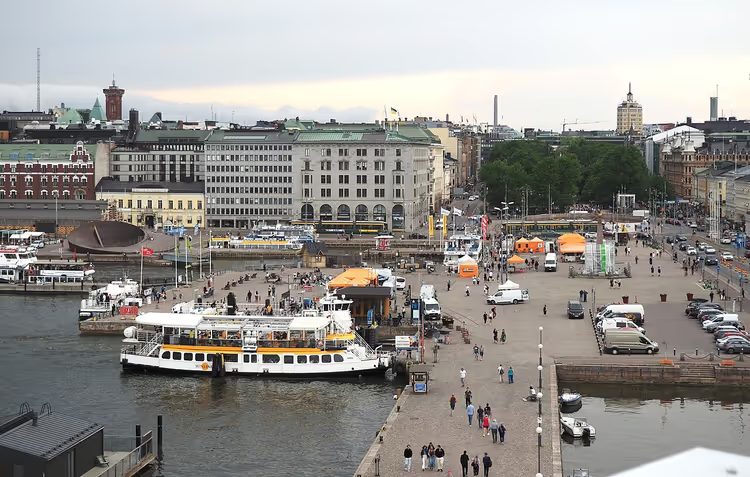
Market Square (Kauppatori) opens directly onto the seaport. Here they sell berries, fish, knitted sweaters with Nordic patterns, and souvenirs. Behind the stalls you'll see the bay and the islands.
The square has served as the trading heart of the city for centuries. The facade of the Presidential Palace and the old port look onto it, and in the center stands an obelisk with a double-headed eagle. The bronze fountain "Sea Nymph" is familiar to every resident.
A special life begins on weekends. In winter a Christmas market unfolds here, and in October the herring fair takes place. On the first Fridays of the month you'll see vintage American cars.
Hold your food tight: the seagulls here are bold and snatch everything in flight. The tram stops nearby, at the Eteläranta stop.
 © Tuula Sipilä · CC BYPhoto: Tuula Sipilä, CC BY (https://creativecommons.org/licenses/by/4.0), Wikimedia Commons
Senate square and Helsinki cathedral
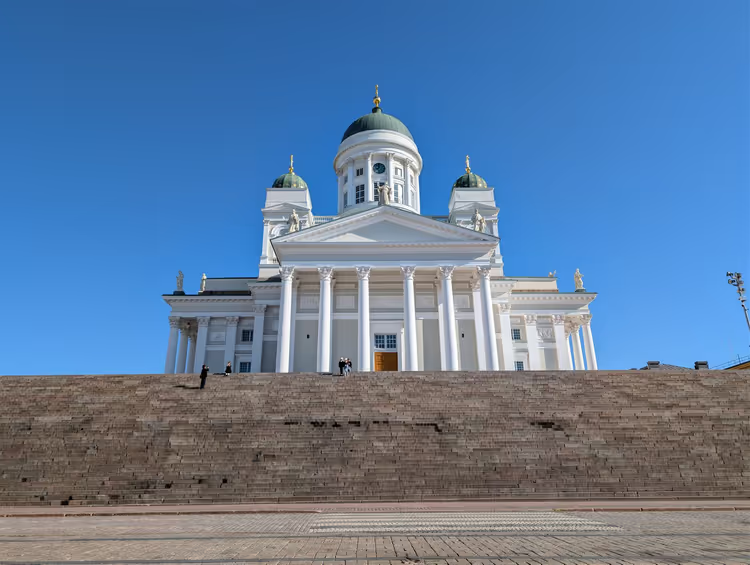
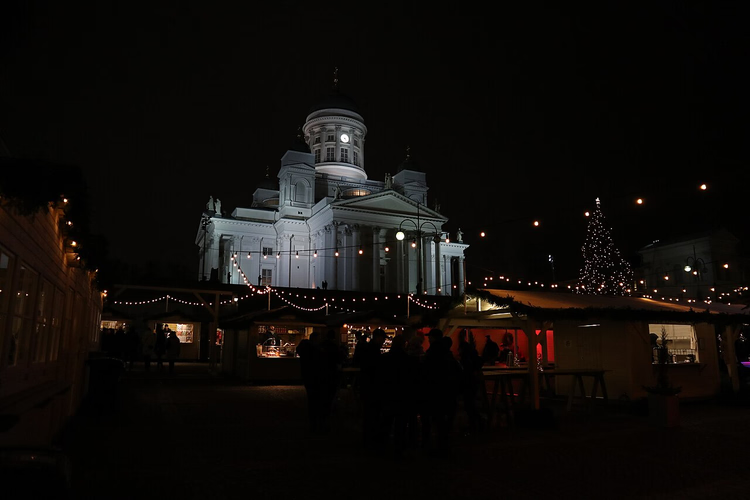
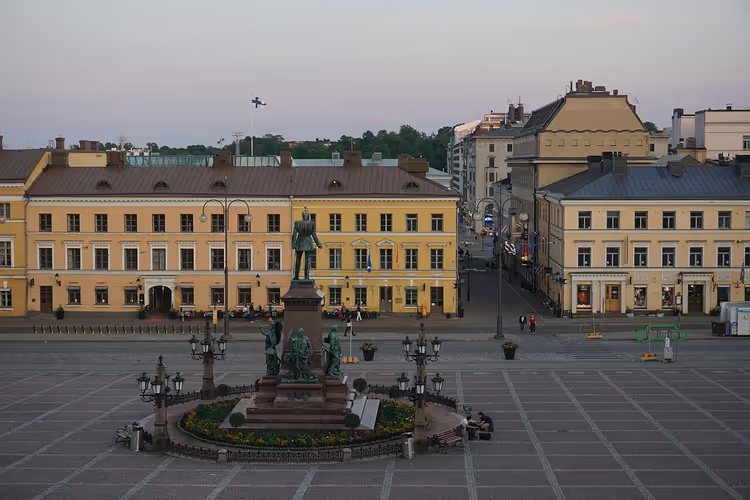
Senate Square took shape in the 19th century and still sets the ceremonial look of the center. The ensemble was built to designs by the German architect Carl Ludvig Engel. Around it stand the university, municipal, and church buildings.
 © Mikkoau · CC BY-SAPhoto: Mikkoau, CC BY-SA (https://creativecommons.org/licenses/by-sa/4.0), Wikimedia Commons
The main decoration of the square is the snow-white Helsinki Cathedral. Its columns and high dome earned Helsinki the nickname "White Capital of Finland." A chime melody sounds from the bell tower on a schedule, so come here at any time and listen to the city.
In the center of the square stands a monument to Alexander II surrounded by figures personifying Law, Light, and Labor. Under him Finland gained autonomy, and the city's residents honor the emperor for his reforms.
On holidays the cathedral's wide staircase turns into an amphitheater. Climb it: from the upper steps you'll see the whole square and the port.
 © Jari Kolehmainen · CC BY-SAPhoto: Jari Kolehmainen, CC BY-SA (https://creativecommons.org/licenses/by-sa/4.0), Wikimedia Commons
Uspenski Cathedral in Helsinki
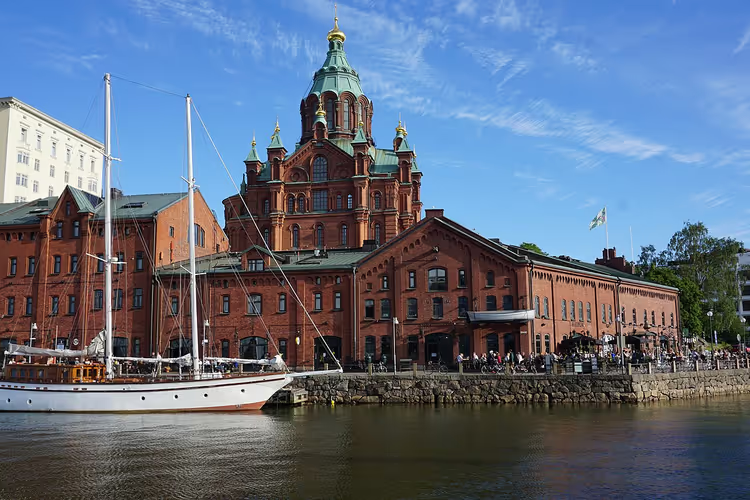
Uspenski Cathedral stands on a rock above the south harbor. Its dark red walls and green domes are visible from the water even before you reach the pier. It is Finland's main Orthodox church and one of the largest in Northern Europe.
The cathedral was built in the second half of the 19th century in honor of the Dormition of the Mother of God. It is crowned with numerous domes and a separate bell tower. Inside, revered icons are kept, and massive chandeliers hang from the ceiling.
The church is active: services are held here, and part of the archbishop's residence is open to visitors. Weekdays are quieter; on weekends there are more worshippers. Walk from Market Square, the climb takes about 10 minutes (see map).
 © Jari Kolehmainen · CC BY-SAPhoto: Jari Kolehmainen, CC BY-SA (https://creativecommons.org/licenses/by-sa/4.0), Wikimedia Commons
Address: Kanavakatu street by the south harbor, next to the ferry pier to Suomenlinna. Check exact opening hours at the entrance: on service days the cathedral follows a different schedule.
Ferris wheel by the Allas terrace
The observation wheel stands on the Katajanokka peninsula, by the Allas terrace. From the top you can see the entire city center, the harbor, and the islands.
The wheel is 40 meters high, and the ride lasts about 12 minutes, which is three to four rotations (SkyWheel Helsinki, as of 09/2026). A regular ticket costs €15 for an adult and €10.50 for children aged 3 to 11 (as of 09/2026, SkyWheel Helsinki). Each gondola seats six people.
The white and blue gondolas have heating and air conditioning, so the ride is comfortable in any weather. For a special occasion, a separate cabin with leather seating and a glass floor is available.
The view from above takes in both the domes of Helsinki Cathedral and the open sea. The best light for photos comes closer to sunset.
Glass cafe terraces operate nearby: even in the wind, it is pleasant to sit with a view of the bay. Address: Katajanokanlaituri 2. The wheel runs until late evening; check exact hours on the website.
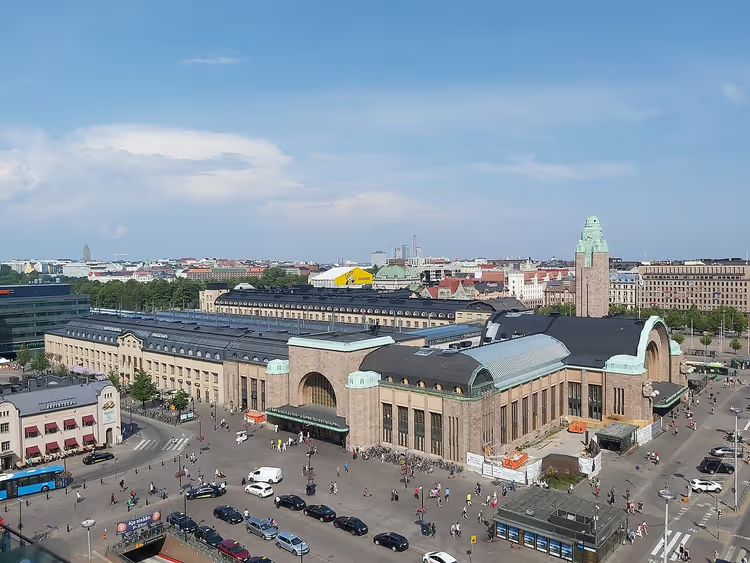
Helsinki Central Station
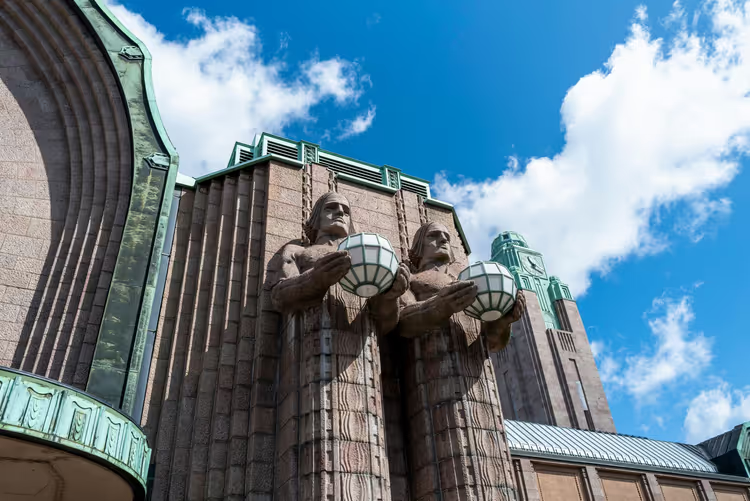
Helsinki Central Station greets you right after the train from the airport. The Art Nouveau building was designed by Eliel Saarinen in the early 20th century. It is easy to recognize by the granite arch with figures of atlantes holding lanterns.
The station sits in the very heart of the city, next to shopping centers and main streets. Shops, pharmacies, cafes, banks, and a tourist center operate here. From here you can walk to Market Square, where the route begins.
The station sells the Helsinki Card tourist pass. It gives you access to public transport and museum entry. It is a good value for independent sightseeing if you plan to travel a lot.
Under the station is Rautatientori metro station, the busiest in the city. It lets you quickly transfer to other transport if your route continues further.
 © Anne Pietarinen · CC BYPhoto: Anne Pietarinen, CC BY (https://creativecommons.org/licenses/by/4.0), Wikimedia Commons
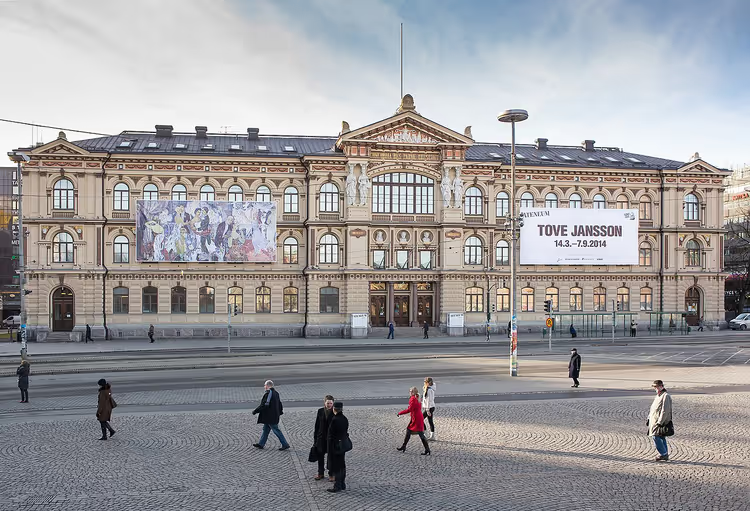
Ateneum Art Museum
The Ateneum Art Museum (Ateneum) occupies a historic building opposite the station. It houses the main collection of Finnish art: works by Akseli Gallen-Kallela and Helene Schjerfbeck sit alongside paintings by Van Gogh, Gauguin, and Cezanne.
The building was constructed in the late 19th century. The exhibition spans several floors, and the permanent section displays paintings by Finnish masters. Address: Kaivokatu 2, directly opposite Central Station.
The permanent collection brings together works by dozens of Finnish artists. The exhibitions are refreshed regularly, so some rooms may be closed for installation.
Tickets cost €23 at the ticket office and €21 online, concession €13 (Ateneum, as of 09/2026). Visitors under 18 enter free. The museum is open Tuesday and Friday 10-18, Wednesday and Thursday 10-20, weekends 10-17, closed Monday.
Book timed tickets in advance to avoid queuing: Helsinki museum tickets on Tiqets. On Wednesday and Thursday evenings the galleries are quieter, so two hours will be enough.
 © Finnish National Gallery · CC BY-SAPhoto: Finnish National Gallery, CC BY-SA (https://creativecommons.org/licenses/by-sa/4.0), Wikimedia Commons
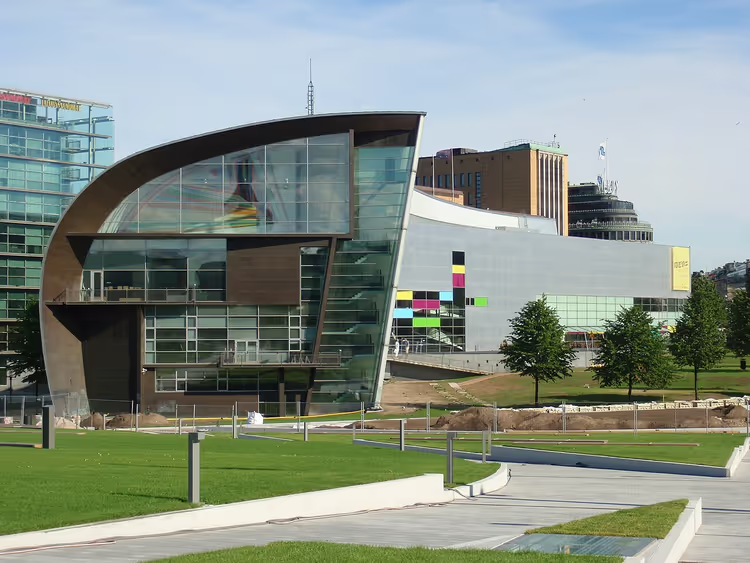
Kiasma Museum of Contemporary Art
The Kiasma Museum (Kiasma) stands next to the Mannerheim monument. The unusual building resembles a sail: inside there are many staircases, walkways, and narrow corridors that lead through the galleries. Light falls at different angles, and the mood of the rooms constantly shifts.
The collection includes thousands of contemporary artworks. The exhibitions are spread across all floors and refreshed several times a year. The name "kiasma" describes the crossing of optic nerves: the architecture plays with this idea through light and space.
Tickets cost €23 and €21 online, concession €13 (Kiasma, as of 09/2026). Children and teenagers under 18 enter free. The museum is closed on Mondays, address: Mannerheiminaukio 2.
If you are tired of the classics after Ateneum, stop by here for an hour: the permanent exhibition is short, and temporary projects change often.
 © Paasikivi · CC BY-SAPhoto: Paasikivi, CC BY-SA (https://creativecommons.org/licenses/by-sa/3.0), Wikimedia Commons
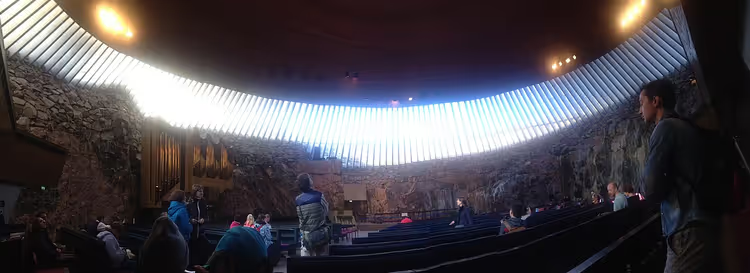
Temppeliaukio Rock Church
The Temppeliaukio Church (Temppeliaukion kirkko) is carved directly into a granite rock. From outside, only the glass dome on a copper frame is visible, which is why the building is compared to a flying saucer. From the square you will see an unusual silhouette.
Inside, you descend into a hall with walls of rough stone. The acoustics are so clean that organ and classical concerts are held here regularly. Church services take place on weekends and holidays, and the bell ringing is replaced by recordings.
Entry is paid; check the exact price and hours on the church's official website (as of 09/2026). Address: Lutherinkatu 3. Arrive at opening time, and you will have time to sit in silence without a tour group.
 © Lauren Stevens · CC BY-SAPhoto: Lauren Stevens, CC BY-SA (https://creativecommons.org/licenses/by-sa/4.0), Wikimedia Commons
Sibelius Monument
The Sibelius Monument (Sibelius-monumentti) stands in a park west of the city center. The composition of hundreds of steel pipes is visible from afar: some see an organ in it, others the northern lights. The pipes rise upward in a wave and echo the composer's music.
The monument was unveiled in the second half of the 20th century. It was assembled by sculptor Eila Hiltunen, who welded some of the pipes herself. In the wind the structure hums, and the sound really does resemble a sea breeze.
A bronze bust of Sibelius stands nearby. Over the decades, no rust has appeared on the metal. Sibeliuksen puisto park is open around the clock, entry is free, so you can come at any time.
Cafe Regatta by the bay
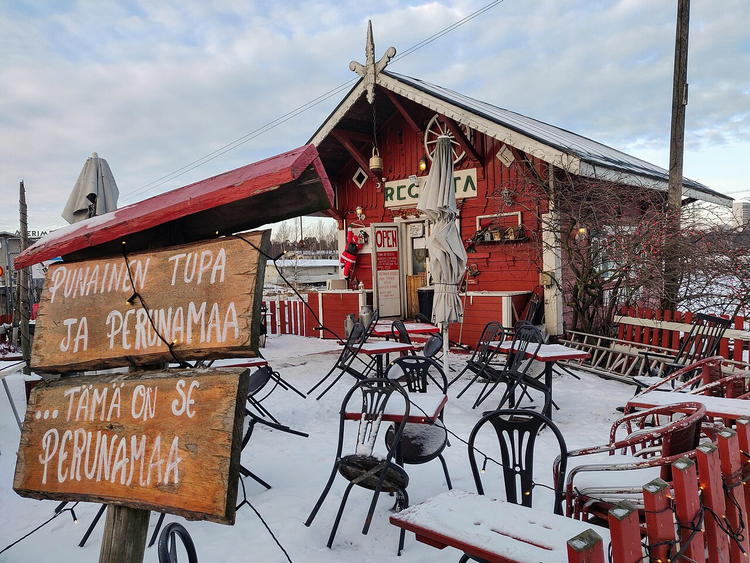
Cafe Regatta sits right on the shore, ten minutes from the Sibelius Monument. The house is small and wooden, with simple benches. The windows look out over the bay, and the shelves hold dishes and candles.
They bake cinnamon buns and traditional meat pies here. Coffee and hot chocolate are served year-round. In summer you can sit on the terrace by the water, and in winter you can take shelter inside by the window.
The cafe allows dogs, so people stop by after a walk in the park. In the yard there is a fire pit, tables on the shore, and a space for children.
 © Alicia Fagerving · CC BY-SAPhoto: Alicia Fagerving, CC BY-SA (https://creativecommons.org/licenses/by-sa/4.0), Wikimedia Commons
Cafe owners rent out a boat: in summer it is a nice way to ride around the bay. Visitors often take photos next to a red retro car in the courtyard.
Address: Merikannontie 10. The cafe is open all day, and afterwards you can easily walk back to the Sibelius Monument.
Torni hotel tower and Vin Vin wine bar
The Torni hotel tower (Solo Sokos Hotel Torni) rises above the city center five minutes from the train station. The 1920s-style building was one of Helsinki's first skyscrapers. The observation deck on the top floor offers a panoramic view of the city.
From above you will see the domes of Helsinki Cathedral, the harbor, and the Suomenlinna island. The elevator to the observation deck starts running after noon. A curious detail: the view is visible even from the restroom windows, which is what the hotel is known for.
You can round out the evening at the Vin Vin wine bar in the center. It pours wine from small private producers and serves simple dishes made with local potatoes. The cozy interior with soft furniture is a pleasant place to talk over your walk.
Bar address: Kalevankatu 6, while the hotel itself is at Yrjönkatu 26. If you want to end the day with a city view, go up to the deck an hour before sunset.
Hietaniemi beach
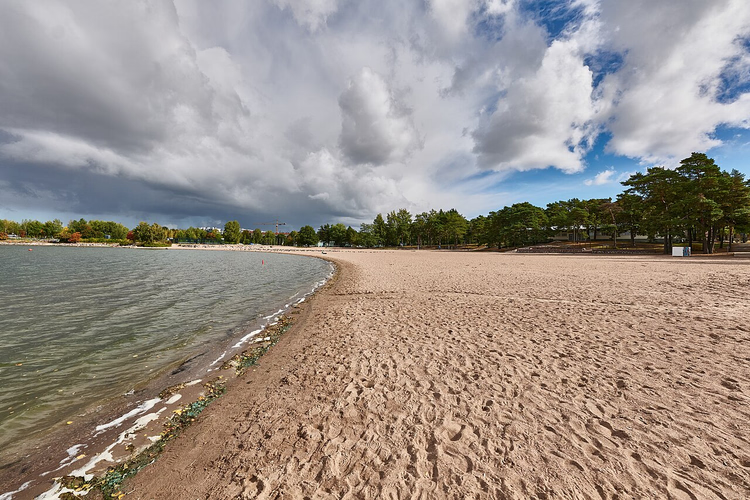
Hietaniemi beach (Hietaranta) lies in the center, a few minutes from the Töölö district. The sand here was once brought from the seabed, hence the name: hieta means sand. People started swimming here back in the first half of the 20th century.
Finnish summer is short, and the water rarely warms up to a comfortable temperature. But walking along the shore is pleasant in any weather: you will breathe in the sea air and see the bay from inside the city.
The beach has volleyball courts, a golf course, and children's play areas. Concerts are held here in summer. The swimming season runs from June through August, admission is free, so you only need to pay for a beach chair rental.
The beach is one of Helsinki's official recreation areas; there are dozens of them across the city. Some beaches stretch along the Vantaa River, but Hietaniemi is the closest to the center. Address: Hiekkarannantie.
Today it has everything for a long day: changing rooms, cafes, and sports areas. In summer you can easily find a spot both on the lawn and on the sand.
If you have only one day, bring a towel only when it is hot: people more often come here for the sunset rather than for swimming. It gets cool by the water in the evening, so take a light jacket.
Helsinki islands and ferries
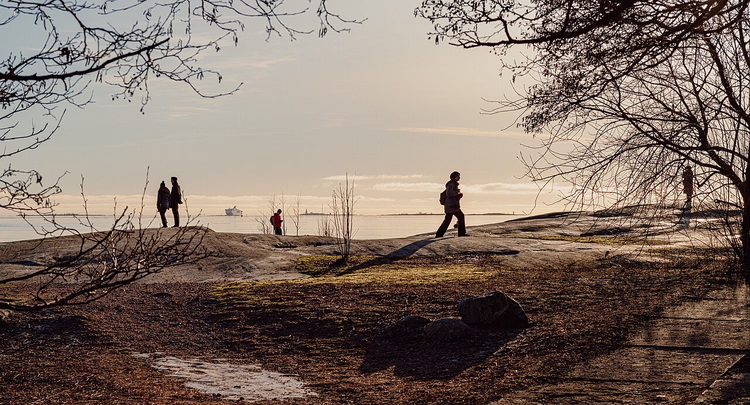
Helsinki sits on the Baltic coast, and part of the city is made up of islands. Until recently, many of them belonged to the military and were closed to visitors. Today, most islands are served by ferries, boats, and even tram routes.
On the islands you will find picnic areas, walking trails, cafes, and beaches. Bring food and water with you: there are not stores everywhere. Below are the most interesting places worth reaching in half a day.
The Helsinki archipelago has hundreds of islands, but a few are enough for a short trip. Some are built up with villas, while others remain military and nature areas.
Plan the islands for the second half of the day: getting there and walking around takes more time than the city center. If you only have a few hours, choose Suomenlinna or nearby Liuskasaari. Outside the city, ferry schedules are shorter, so check the last departure in advance.
Liuskasaari and Uunisaari
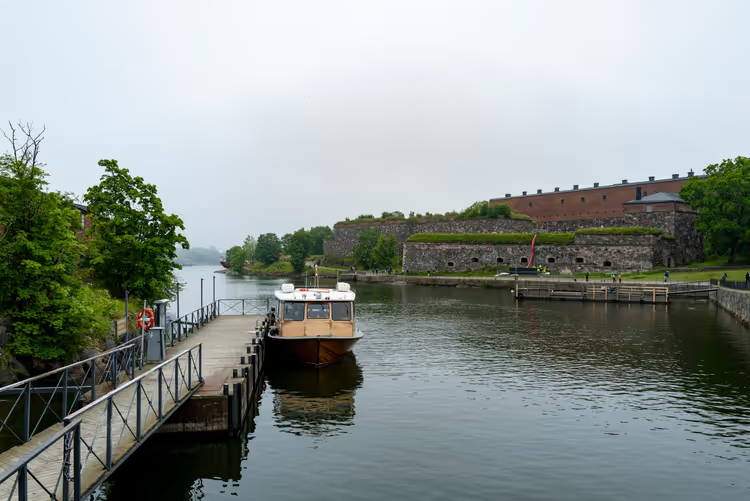
Liuskasaari Island lies in the southern part of the city, about a hundred meters from the Merisatamanranta waterfront. It is considered the birthplace of Finnish sailing: the old HSS club with wooden yachts operates here.
 © Safa Hovinen · CC BYPhoto: Safa Hovinen, CC BY (https://creativecommons.org/licenses/by/2.0), Wikimedia Commons
During the Helsinki Olympics, sailing competitions were held on the island. Today people come here to watch sailors train and to have picnics. The island has a cafe, a restaurant, and saunas.
A stone bridge connects Liuskasaari with Uunisaari. The neighboring island has a beach and picnic areas. In summer you can walk here from Kaivopuisto Park in five minutes (on the map), and in winter a pontoon crossing operates.
Pihlajasaari
Pihlajasaari Island was once a place of country villas. One of them, Villa Hällebo, still stands: it now houses the Pihlajasaari restaurant.
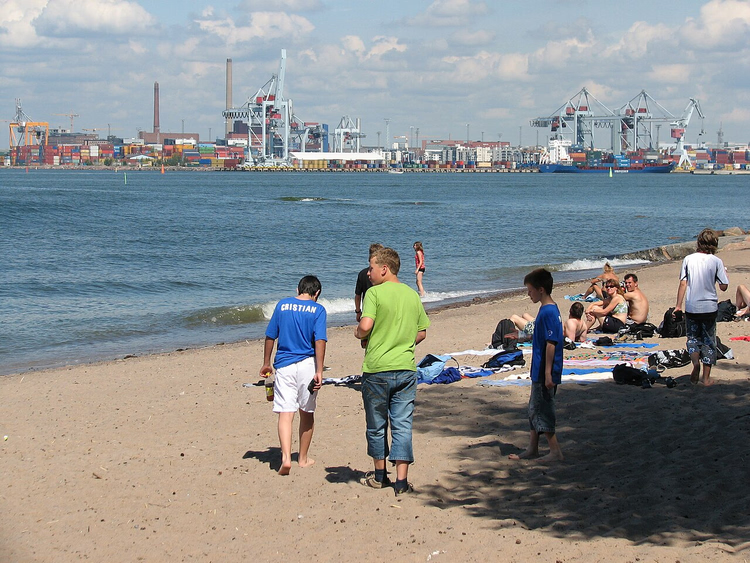 © JIP at English Wikipedia · CC BYPhoto: JIP at English Wikipedia, CC BY (https://creativecommons.org/licenses/by/2.5), Wikimedia Commons
There is a sandy beach and a separate nudist beach among the rocks. A cafe, a campsite, and a sauna are available. In summer, sheep and goats graze on the lawns, and anglers take the best spots by the water.
The island is connected to the city only by ferry. The boat departs from the Sea Harbor waterfront and from Ruoholahti. The season runs from May to October; in winter you cannot get here.
Suomenlinna
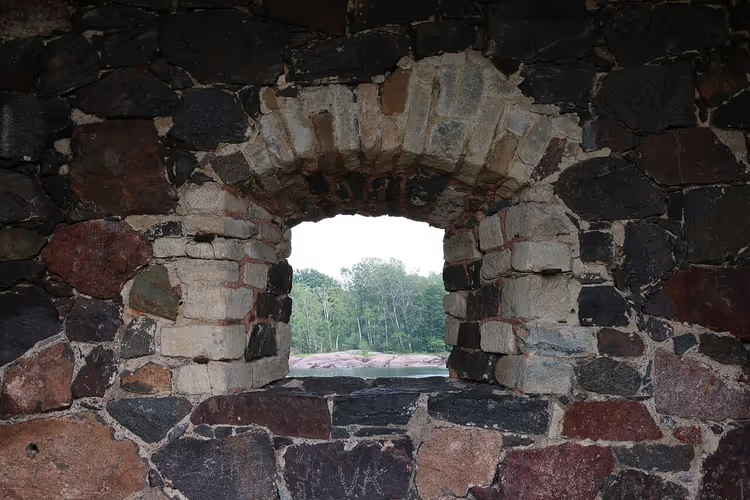
Suomenlinna (Sveaborg in Swedish) stands out among the islands. The sea fortress was built by the Swedes and is now a UNESCO World Heritage Site (Suomenlinna, as of 09/2026). It is one of the largest sea fortresses in the world.
Guided tours run through the fortress, on a schedule in summer. The submarine Vesikko, part of the Military Museum exhibition, is of particular interest. The Piper cafe operates on the island in a wooden villa on a hill.
The ferry to Suomenlinna departs from Market Square all day. The ticket works as a regular city fare, so you ride at the same rate as in the center. The visitor center is open daily 10-18 (Suomenlinna fortress, as of 09/2026).
Korkeasaari
Korkeasaari Zoo operates on a separate island half an hour from the center. Ferry service to it opened back in the 19th century, and the zoo itself appeared at the end of the same century.
The zoo combines the functions of a zoological and botanical garden. It is home to snow leopards, Amur tigers, Asiatic lions, reindeer, and Chilean flamingos. In total, the island has more than 150 animal species (Korkeasaari, as of 09/2026).
Korkeasaari is open year-round, so in winter you can see how the animals behave in the snow. You can get there by ferry, bus, on foot, or by bike across the bridge. Address: Mustikkamaanpolku 12.
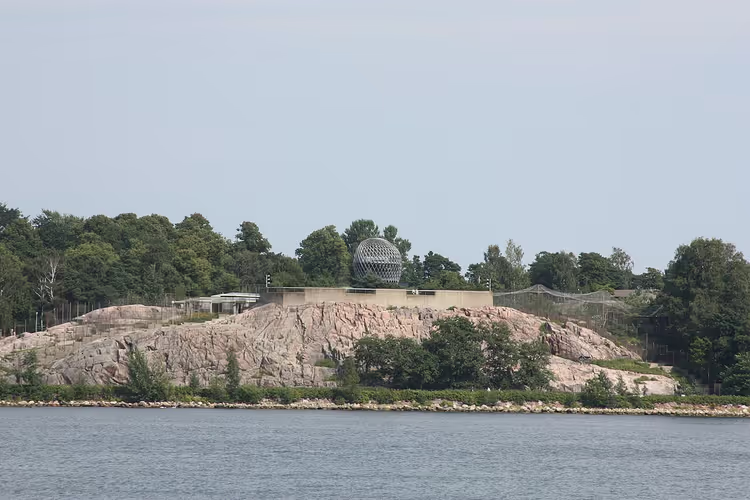 © Bin im Garten · CC BY-SAPhoto: Bin im Garten, CC BY-SA (https://creativecommons.org/licenses/by-sa/3.0), Wikimedia Commons
Seurasaari
Seurasaari Island is home to an open-air museum. Old rural buildings from all over Finland were moved here and restored: houses, windmills, saunas, barns, and farms.
Among the buildings are 17th-century houses assembled without a single nail. In total, almost ninety buildings and structures were moved to the island. In the collection you will see church boats used for weddings and funerals.
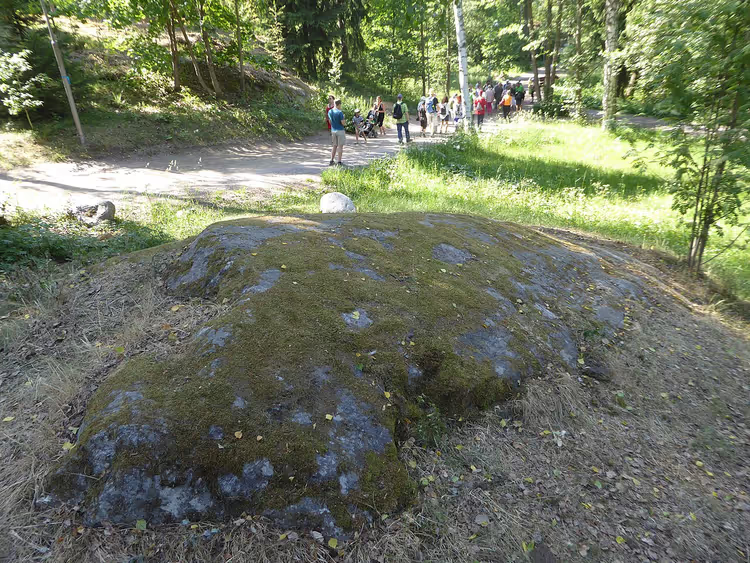 © Nemo bis · CC BY-SAPhoto: Nemo bis, CC BY-SA (https://creativecommons.org/licenses/by-sa/4.0), Wikimedia Commons
At Easter and on the summer solstice, bonfires are lit on the island and folk ensembles come to perform. In the old church, the oldest building on the island, couples still get married.
Getting there is easy: a bus runs from Mannerheim Avenue, and from the stop you walk across a pedestrian bridge. The museum is open only in summer; check the exact hours and ticket price at the entrance.
Söderskär
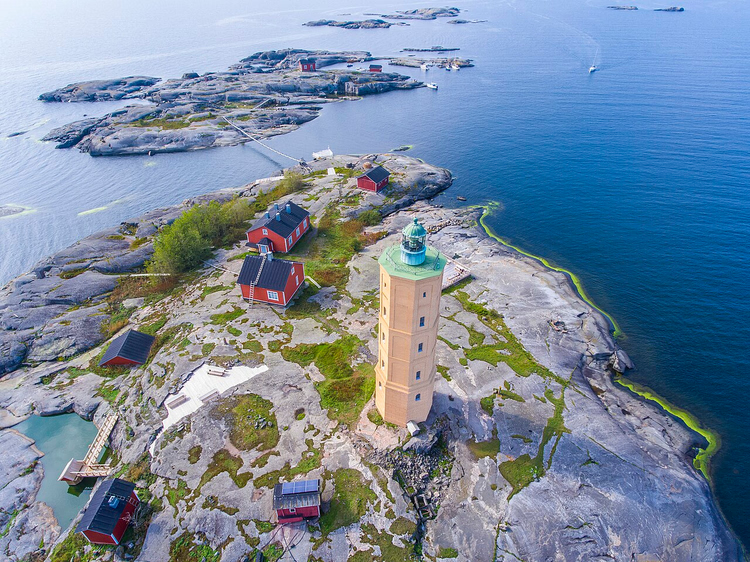
Söderskär lies farthest out in the archipelago. People come here for the feeling of solitude among bare, wind-polished rocks and for the story of the old lighthouse.
 © Mcigorsklan · CC BY-SAPhoto: Mcigorsklan, CC BY-SA (https://creativecommons.org/licenses/by-sa/4.0), Wikimedia Commons
A tiny hotel is set up in the lighthouse tower. With the wind howling, it is easy to imagine yourself as the keeper. The island has a cafe and a sauna, and the balcony by the lamp offers a view of the open sea.
The ferry departs from Market Square in the morning and returns in the afternoon. Tours to the island run regularly, but only in calm weather.
Kaunissaari
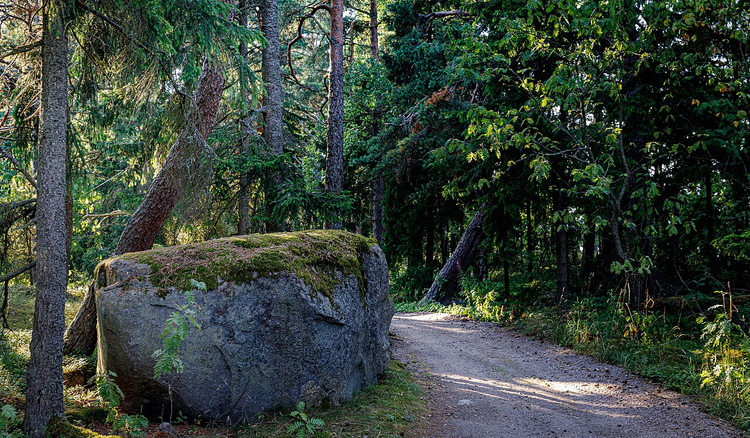
Kaunissaari lies far to the east, in the Sipoo archipelago. The island looks like a stone ridge in the middle of the open sea, where anglers and nature lovers come.
 © Ninara · CC BYPhoto: Ninara, CC BY (https://creativecommons.org/licenses/by/2.0), Wikimedia Commons
A nature trail runs across the island through rare landscapes. For relaxing, there are shelters with grilling areas, plus a restaurant and beaches. The rocky shores hide secluded spots where nobody will disturb you.
The ferry arrives from Vuosaari. Bring food and water with you: the island's infrastructure is modest, and the ferry back runs only on schedule.
The islands take more time than they seem to, so set aside at least half a day for them. If the day is short, stick to Suomenlinna and return to the center for dinner. That way you'll have time for both the observation deck and an evening walk.
Tours and tickets in Helsinki
Guided tours, skip-the-line tickets and activities — most offers can be cancelled free of charge.
See offers on TiqetsThe widget loads once you give your consent.
Where to stay for one night
If you only have an overnight stop in Helsinki, choose a hotel based on location. The easiest option is to stay near Central Station: from there you can walk to the main streets and Market Square in just a few minutes.
Original Sokos Hotel Vaakuna Helsinki and Holiday Inn Helsinki City Centre stand right by the station. Near the airport, Break Sokos Hotel Flamingo and Hilton Helsinki Airport are convenient for early departures. On Esplanadi Boulevard, Kämp and Hotel Haven await you.
Keep in mind: the center is busy, and finding parking with a car is difficult. Check in advance whether the hotel has its own parking and how much it costs. That way you won't waste time looking for a spot late in the evening.
Comparing options in the center is easy on Trip.com. Prices at Hotel Kämp and rooms at Original Sokos Hotel Vaakuna are worth checking in advance.
If you're tired after your walk, take a ride through the center on a vintage tram. You'll get to your hotel and see the city's facades one more time.
⁉️🤔 Frequently asked questions
How much time do you need to cover central Helsinki in one day?
A full day is enough for the compact center. Start in the morning at Market Square, then walk through Senate Square, the Ateneum, and Kiasma. After lunch, go up on the observation wheel by the Allas terrace. Set aside a separate few hours for the island of Suomenlinna, otherwise you will have to rush through the fortress.
What can you see in Helsinki for free?
You can enter the Kamppi Chapel of Silence for free, walk through Esplanadi Park, and go up to Senate Square. Helsinki Cathedral and Uspenski Cathedral are also open to visitors with no admission ticket. Hietaniemi Beach is free all year round: you only pay for rentals, not for entry.
How do you get to the islands of Helsinki?
A ferry to Suomenlinna leaves from Market Square, and the ticket works as a regular city fare. You can walk to Liuskasaari and Uunisaari from Kaivopuisto Park across the bridge. Farther islands, such as Kaunissaari and Söderskär, are only reachable by scheduled ferry.
What to see on a rainy day?
When it rains, head to the museums: the Ateneum with Finnish painting and Kiasma with contemporary art are open until evening. Add the Torni hotel tower to your day: the observation deck offers a view of the entire center, and at the Vin Vin wine bar you can wait out the downpour over a glass of wine.
Is the Helsinki Card worth buying?
The card pays off if you plan to visit many museums and take many trips. It includes public transport and admission to the main museums. If you follow our route on foot and buy tickets online, you may not need a separate card.
In short: what to book
Helsinki opens up easily in one day: the center is compact, and you walk between the sights. In the morning, take the train from the airport, in the afternoon see the museums and the square, and in the evening go up to an observation deck.
If you are short on time, choose the area around the station and do not spend hours on travel. If you love the water, plan for Suomenlinna or Hietaniemi Beach. If it rains, bet on the Ateneum and Kiasma.
Book museum and wheel tickets in advance so you do not have to stand in line. It is convenient to compare hotels in the center on Trip.com, and for Helsinki museum tickets check Tiqets.

A small editorial team writing guides for independent travel. We travel ourselves, but we haven’t been everywhere, so we check prices, opening hours and how to get there against official sources.