
















10 Cities where you can easily get by without a car
A city without a car saves you stress, time, and money. In some megacities, the metro, trams, and ferries run strictly on schedule; in others, a bus ride turns into a quest. We've rounded up 10 cities where public transport genuinely replaces a car.
The benchmark is simple. According to a Time Out survey (2025, over 18,500 people from 50 countries), Hong Kong residents are 98% satisfied with their transport, Shanghai residents 94%, and Taipei residents 88% (Time Out survey results). Below, we break down each city: what types of transport operate there, how the system is convenient for tourists, and what to check before your trip.
City | Main transport | Why it's useful for tourists |
|---|---|---|
Berlin | Metro, trams, S-Bahn | A single ticket works on all types of transport |
Prague | Metro, trams, funicular | Trams make it easy to cover the center and the hills |
Tokyo | Metro, trains, monorail | English signage and route-planning apps |
Copenhagen | Metro, buses, water buses | The driverless metro goes straight to the airport |
Stockholm | Metro, buses, ferries | The underground is designed like an art gallery |
Singapore | Metro, buses, monorail | Air-conditioned buses with arrival displays |
Hong Kong | MTR metro, trams, ferries | The highest resident ratings in the Time Out survey |
Taipei | Metro, trains, buses | High-speed trains and the convenient EasyCard |
Shanghai | Metro, buses, maglev | One transport card for almost all modes |
Amsterdam | Trams, metro, buses | Reliable tram schedules and the GVB app |
Ad: this article contains affiliate links, we earn a commission if you book through them, at no extra cost to you.
1. Berlin
💡 In short:
- Check which operator runs transport in the city: in Berlin it's BVG and S-Bahn Berlin, in Prague DPP, in Hong Kong MTR.
- Download the official app in advance: in Tokyo it's Tokyo Subway Navigation for Tourists, in Amsterdam the GVB app.
- Resident ratings and city rankings: 2025, based on the Time Out survey.
Berlin is used to transport arriving right on the minute. Buses, trams, S-Bahn trains, and the metro cover the entire city, and transfers take almost no time.
Two major companies handle passengers. BVG runs buses, trams, the metro, and ferries, while S-Bahn Berlin GmbH operates only the suburban trains. The unified system means one ticket for all types of transport within a zone, so you don't buy a separate pass for each trip.

The metro looks complicated on the map, but in practice it's considered one of the most convenient underground systems in Europe: nine lines and 175 stations, with trains running from morning until late evening (as of 09/2026, official Berlin website). On the platforms you can see where each train is headed, and displays show how many minutes until the next one.
- Getting there: from BER airport, a suburban train takes you to the center; buy your ticket at a machine or in the app.
- Payment: a day pass pays for itself by the third trip; the fare depends on the zone.
- The catch: at rush hour the cars are packed, and the ring line is noisy.
2. Prague
Prague is best explored by tram: the routes pass old churches and Renaissance-era houses. Transport gets you to almost any viewpoint and to Petřín Hill.
The city has a metro, buses, and trams. There's also a funicular to Petřín, ferries on the Vltava, and a cable car. The main carrier DPP handles scheduling, while ROPID coordinates the entire integrated system. One ticket works on all types of transport within the travel time.

Prague's metro consists of three lines, easy to tell apart by color. Line A is green, B is yellow, C is red. If you want to see unusually designed stations, choose line A. Line B crosses the other two and leads to residential areas with socialist-era housing, so the ride turns out to be educational.
- Getting there: from Václav Havel Airport, a bus takes you to a metro station, then you continue into the center underground.
- Who it's for: for those who want to cover the city in a couple of days. Prague tours with a guide will help you avoid getting lost in the center.
- The catch: in summer, trams in the center are overcrowded, and by evening a line forms at the Petřín funicular.
3. Tokyo
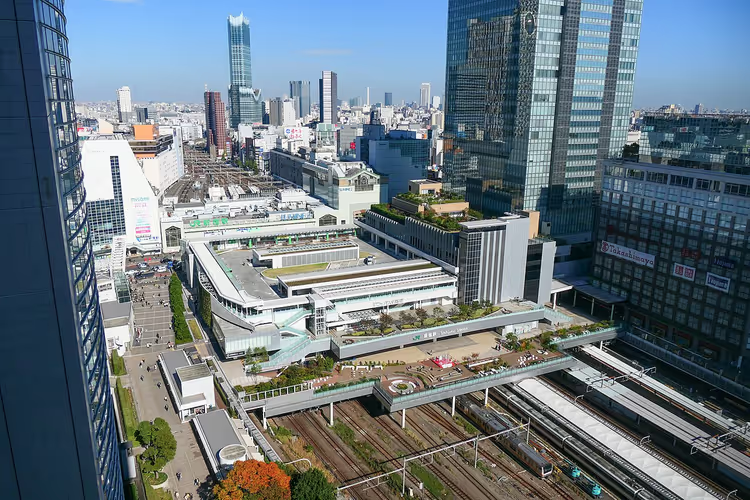
Tokyo seems like a labyrinth only for the first half hour. Buses, trains, the metro, trams, and monorails are linked into one dense network, and you can get almost anywhere.
The main challenge is that several companies operate the transport. Lines belong to different operators, and when transferring you sometimes have to buy a new ticket. On the plus side, announcements and signs are duplicated in Japanese and English, so you won't lose your bearings.
 © MaedaAkihiko · CC BY-SAPhoto: MaedaAkihiko, CC BY-SA (https://creativecommons.org/licenses/by-sa/4.0), Wikimedia Commons
Tokyo's metro branches into more than a dozen lines and several hundred stations. Each station is assigned a code made of a letter and a number: the letter indicates the line, and the number shows the stop's position on the route. This system helps you avoid confusion when transferring and quickly figure out which direction to go.
For tourists, there are official apps: Tokyo Subway Navigation for Tourists and Toei Kotsu. They build routes with transfers in mind and point you to the exit nearest your destination. Signs at stations show which car to board so you get off closer to the transfer.
- Getting there: from Narita and Haneda airports, express trains and the monorail take you to the center.
- Payment: a Suica or Pasmo transport card saves time at ticket machines but requires a deposit.
- The catch: during the morning rush hour, cars are packed to the brim, and in the heat it feels especially rough.
4. Copenhagen
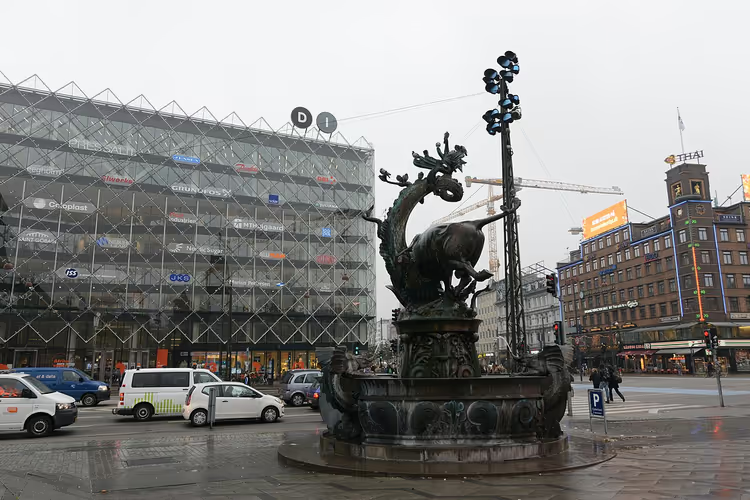
Copenhagen is compact and easy to get around without a car. The city is connected by buses, the metro, suburban trains, and water buses.
Buses are distinguished by color and a letter in the route number, and some run around the clock. Night lines wait for you at well-lit stops; during the day intervals are shorter. We especially recommend the Havnebusser: these are bus-boats that travel along the canals and past parks.
 © Jorge Láscar from Melbourne, Australia · CC BYPhoto: Jorge Láscar from Melbourne, Australia, CC BY (https://creativecommons.org/licenses/by/2.0), Wikimedia Commons
The metro in the Danish capital opened only in the early 2000s, but it quickly became one of the most reliable in Europe. The trains run without drivers, so the schedule almost never slips. Four lines connect the center with new districts and the airport, and the platforms have glass doors to block the wind.
Locals love the S-train suburban trains: they're a fast alternative to the tram. The fare depends on the zone, and for tourists the Copenhagen Card is the better deal. It covers transport and museum entry, so you don't waste time buying tickets at every counter.
- Getting there: from Kastrup Airport, the metro takes you straight to the center in minutes.
- Who it's for: for those who want to see both the old houses and the Little Mermaid statue in one day.
- The catch: on weekends, some buses run only every half hour.
5. Stockholm
Stockholm runs on schedule almost to the minute. Trams, buses, the metro, ferries, and commuter trains run so predictably that you can plan your day by the clock.
The bus network connects the center with every district and operates day and night. If your destination is outside the city, suburban routes will get you there. A tram ride here becomes an experience in itself: one of the lines passes the main museums. On historic route number 7, the old cars look like exhibits, and in one of them you can have a coffee.
 © Julian Herzog ( Website ) · CC BYPhoto: Julian Herzog ( Website ), CC BY (https://creativecommons.org/licenses/by/4.0), Wikimedia Commons
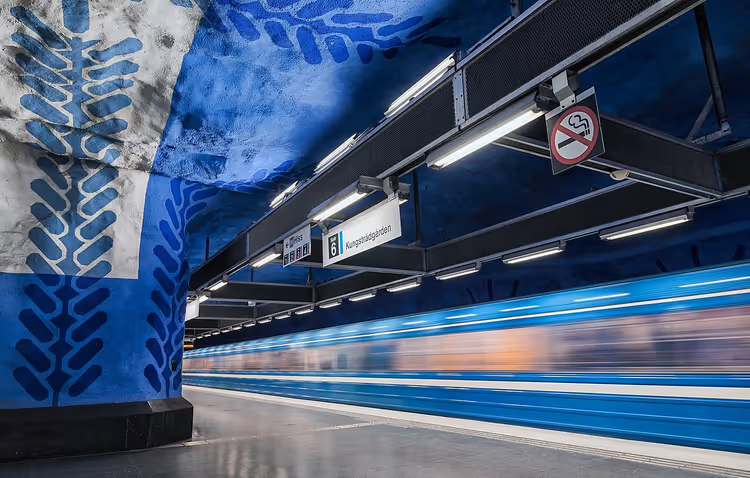
Stockholm Metro is considered the longest art gallery in the world. The subway system combines three lines and dozens of stations, and the walls are decorated with mosaics, bas-reliefs, and pop art. It's worth going down here not just to transfer, but for the halls themselves.
Ferries are just as necessary as trains. The Stockholm archipelago has tens of thousands of islands, and the most convenient way to get between them is by water. Locals note that transit rarely lets them down, so keeping a car in the city isn't necessary.
- How to get there: a high-speed train and a bus run from Arlanda Airport to the center.
- Payment: the SL card works on the metro, buses, trams, and city ferries.
- The catch: tickets at the machine are sold by card only, cash is not accepted.
6. Singapore
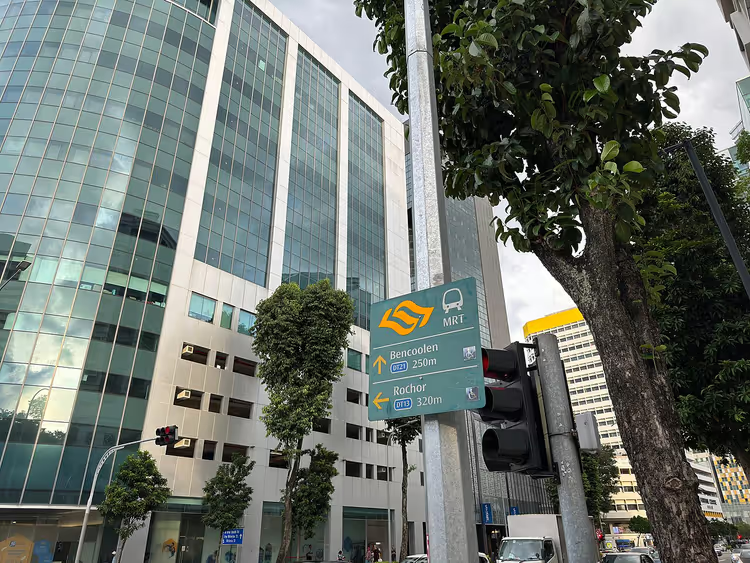
Singapore bets on order, and its transit system proves it. Buses, the metro, and the monorail will get you where you need to go quickly.
Daytime buses run until late evening. Night routes operate only on Fridays and Saturdays. The buses have air conditioning, large windows, and soft seats, and stops have displays showing arrival times. If you see your bus, raise your hand: without that, it may drive past.
 © LN9267 · CC BY-SAPhoto: LN9267, CC BY-SA (https://creativecommons.org/licenses/by-sa/4.0), Wikimedia Commons
The metro is considered the city's most convenient and budget-friendly transport. Lines cover the main districts, cars are air-conditioned, and fares depend on distance. The monorail connects the city to Sentosa island, and the trip takes just a few minutes with a view of the harbor.
Bicycle rickshaws in Chinatown and the center are more of a tourist attraction than a way to get around. A ride costs several times more than a regular taxi, so agree on the price in advance. If you need internet for navigation in the metro, set up an eSIM for your trip ahead of time.
- How to get there: from Changi Airport, the MRT metro and city buses go to the center.
- Payment: the EZ-Link card or a contactless bank card works on all types of transport.
- The catch: transfer stations on the metro get very crowded at rush hour.
7. Hong Kong
According to a Time Out survey (2025), 98% of Hong Kong residents are happy with their public transport (survey results). That's the best result in the world, and the reason is simple: the metro, ferries, trains, buses, and trams cover nearly every route.
The MTR metro is one of the fastest but also most expensive ways to get around. For short distances, going underground isn't worth it: a couple of stops will cost more than a bus. On the plus side, every station has its own design, and platforms have fans, spaces for passengers with reduced mobility, and toilets.
 © Ralf Roletschek · CC BYPhoto: Ralf Roletschek, CC BY (https://creativecommons.org/licenses/by/3.0), Wikimedia Commons
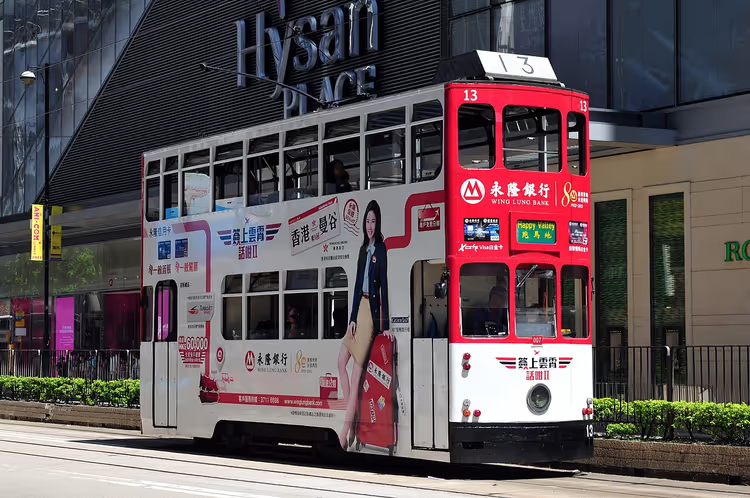
Double-decker buses have become as much a symbol of the city as its skyscrapers. Fares depend on distance and whether the bus has air conditioning. Buses stop on request, so raise your hand and pay your fare when boarding.
The cheapest option is a ride on a double-decker tram. It moves slowly, but the fare is the lowest in the city, and the views of the old neighborhoods from the window are free. A trip on the ferry or funicular gives you the best views of the harbor and mountains.
- How to get there: from Chek Lap Kok Airport, the Airport Express high-speed train takes you to the center.
- Payment: the Octopus card works on the metro, buses, trams, and in some shops.
- The catch: MTR transfer stations get very crowded at rush hour, and lines form at the escalators.
8. Taipei
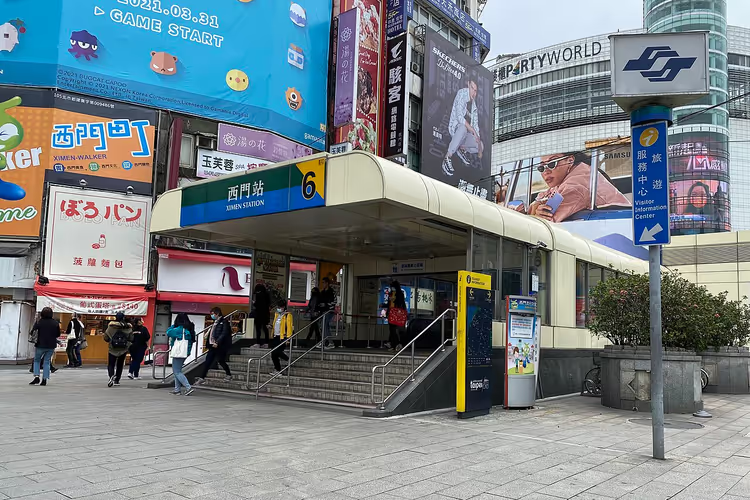
Taipei ranks high in ratings for a reason. The metro, trains, and buses work together so smoothly that rush-hour traffic barely affects your trip.
According to a Time Out survey (2025), 88% of locals rate the transport positively (Time Out data). The metro is considered one of the busiest in the world, but that doesn't stop it from running on schedule and staying clean.
 © Alexwikix · CC BY-SAPhoto: Alexwikix, CC BY-SA (https://creativecommons.org/licenses/by-sa/4.0), Wikimedia Commons
Keep local rules in mind. You'll be fined for smoking, drinking alcohol, or vandalism in the metro, so it's better to read the restrictions in advance. Buses stop on request, just like in Hong Kong. High-speed trains run on the busiest rail routes, connecting the city with the south of the island.
- How to get there: from Taoyuan Airport, a train and a bus go to Taipei Main Station.
- Payment: the EasyCard covers the metro, buses, and YouBike bicycles.
- The catch: it's easy to get lost when transferring at Taipei Main Station because of the station's size.
9. Shanghai
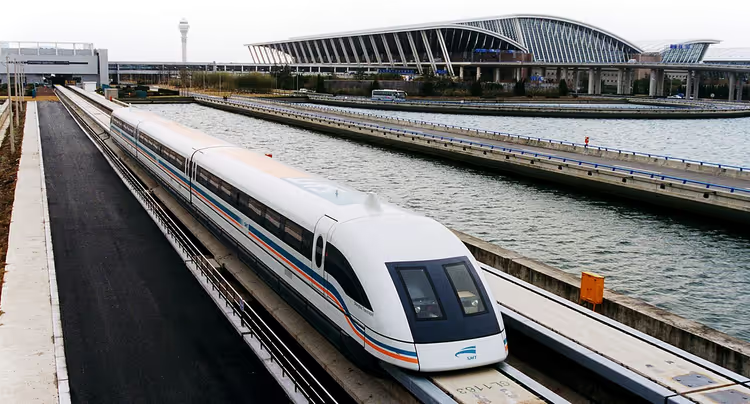
Shanghai is one of the largest megacities in Asia, and getting around it by public transport is a good deal. The city has buses, trolleybuses, trams, the metro, ferries, and a maglev that accelerates to hundreds of kilometers per hour.
According to a Time Out survey (2025), 94% of residents rate the city's transit highly (full ranking). By number of stations, the Shanghai metro even surpasses the New York City subway: dozens of lines and several hundred stations are combined into a single system. All station information is provided in both Chinese and English.
The bus remains the cheapest form of transport in Shanghai. The number of routes has long exceeded a thousand, and the vehicles are equipped with air conditioning and scrolling text displays. The city's trolleybus system is considered the oldest in the world, but its equipment is modern.
The Shanghai Public Transportation Card works for payment almost everywhere. It is sold in metro stations, banks, and official outlets, so you don't have to hunt for change at every stop. In summer, the cars are air-conditioned; in winter, the heating is on, so the weather outside doesn't get in the way of your trip.
- Getting there: express trains and the metro run from Pudong and Hongqiao airports to the city center.
- Payment: top up your card at station machines, which have an English interface.
- The catch: at rush hour, crowding on central lines is comparable to Tokyo.
10. Amsterdam
Amsterdam is compact, and the entire center is easy to get around by tram. The metro, trams, and buses divide the city into zones, and almost all transit is operated by GVB.
Most often, locals and visitors choose the tram. It runs from the center to any part of the city and follows a clear schedule, so you don't waste time waiting. Buses behave differently: they are often late, but they run around the clock and offer seats even late at night.

The metro is a lifesaver on longer routes. Most of the tracks run above ground, so you see the city out the window rather than a tunnel. The cars are decorated with photo wallpaper showing Amsterdam views and artwork honoring the airline KLM.
Before your trip, download the official GVB app and check the zone map. On the GVB route map you can see where fare zones change, so you'll know in advance which ticket you need.
- Getting there: a train from Schiphol Airport to the center takes about fifteen minutes.
- Payment: on the tram, buy your ticket from the driver by card; cash may not be accepted.
- The catch: buses rarely arrive on schedule, so it's best not to plan a transfer around them.
⁉️🤔 Frequently asked questions
Which city has the best public transit?
According to a Time Out survey (2025), Hong Kong has the highest score: 98% of residents are satisfied with the system (Time Out report). Shanghai follows with 94% and Taipei with 88%. These cities share a dense metro network, convenient transfers, and English-language navigation, which makes trip planning easier for tourists.
Do you need a car in these cities?
In Berlin, Prague, Tokyo, and Amsterdam, a car is more of a hindrance. Parking in the center is expensive. The metro, trams, and buses cover the main routes, and night lines keep you from getting stranded in the city after midnight.
Can you pay for transit with a card or phone?
In most cities, yes. In Amsterdam, contactless payment works right at the entrance; in Stockholm, the SL card is linked to your phone's wallet. In Prague and Taipei, it's easier to buy a local transit card, and in Shanghai, the city public transport card comes in handy.
Which apps help with route planning?
In Tokyo, it's Tokyo Subway Navigation for Tourists and Toei Kotsu; in Amsterdam, the GVB app. In Singapore and Shanghai, official metro maps with an English interface are convenient. Save official city apps offline in advance so you don't burn through mobile data while traveling.
Which city has the cheapest transit?
The cheapest rides are on the double-decker tram in Hong Kong and on buses in Shanghai. In Berlin and Prague, a 24-hour ticket is a good deal: it pays for itself after just a few trips. Exact fares change, so check them on the operator's website before you travel.
In short: what to book
If your goal is to get around the city without overpaying, start with transport, not the hotel. Here's a quick cheat sheet for the trip.
- Want to see as much as possible in a couple of days: get a city transport card and plan your route around metro lines.
- Traveling through several cities: compare tickets for trains and buses across Europe in advance, early booking is usually cheaper.
- Staying for a few nights: choose a hotel near a metro line and check out hotels in the cities on your list.
The main idea is simple. Where a transport card works on all types of transit, you don't need a car. Get the card, the app, and a proven route, and the city will open up without extra costs.

A small editorial team writing guides for independent travel. We travel ourselves, but we haven’t been everywhere, so we check prices, opening hours and how to get there against official sources.