






Cape Kolka: sunrise and sunset from one point and what to see nearby
Cape Kolka is located at the very north of the Kurzeme Peninsula, where the open Baltic Sea and the Gulf of Riga meet (according to latvia.travel, as of 09/2026). The cape lies inside Slītere National Park, so there are no hotels or shopping rows on the shore.
The drive from Riga takes more than two hours (by map). But only from here can you see both sunrise and sunset over the water from a single point.
Below we cover how to get there, where to leave your car, when to go for the sunset, and what to see near the cape.
Ad: this article contains affiliate links. We earn a commission if you book through them, at no extra cost to you.
What Cape Kolka is
💡 In short:
- Entry to the cape is free, and the site is open 24/7 (as of 09/2026, Kurzeme information center).
- Sunrise and sunset are visible from a single point, but in summer there is almost no darkness between them.
- Parking at the tip is paid; west of it, by the forest path, it is free.
- Best time: May, June, and late September; for birds, mid-April and early October.
- Info center hours and trail season: 09/2026, verified on the official Kolkasrags website.
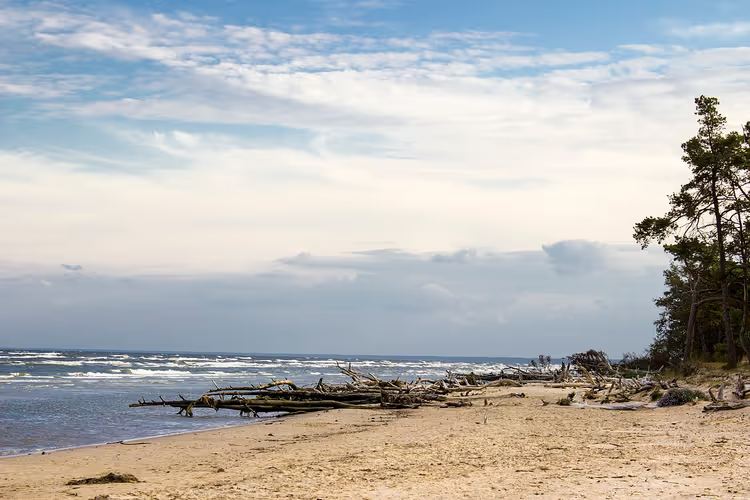
Cape Kolka, also known as Kolkasrags, juts out into the sea as a narrow spit and divides the water into two parts. To the left lies the open Baltic, to the right the Gulf of Riga, and the waves of the two seas meet at an angle to each other. That is why the horizon here is open both to the west and to the east.
The place is known not only for its scenery. In spring and autumn, a mass migration of birds passes through the spit (according to the official tourism portal of Latvia, as of 09/2026). For naturalists, this is one of the key spots in the Baltics.
The cape is also convenient as a base for exploring Kurzeme. Slītere National Park begins here, and the fishing villages of the Livonian coast stretch along the shore. You can easily combine the cape with an overnight stay at a campground right by the water.
Where Cape Kolka is located
The cape is located in northwestern Latvia, in the historical region of Kurzeme, in Talsi Municipality. The nearest village is called Kolka, and a little to the south on the coast lies Melnsils with a campground. On the map, head for the very north of the peninsula.
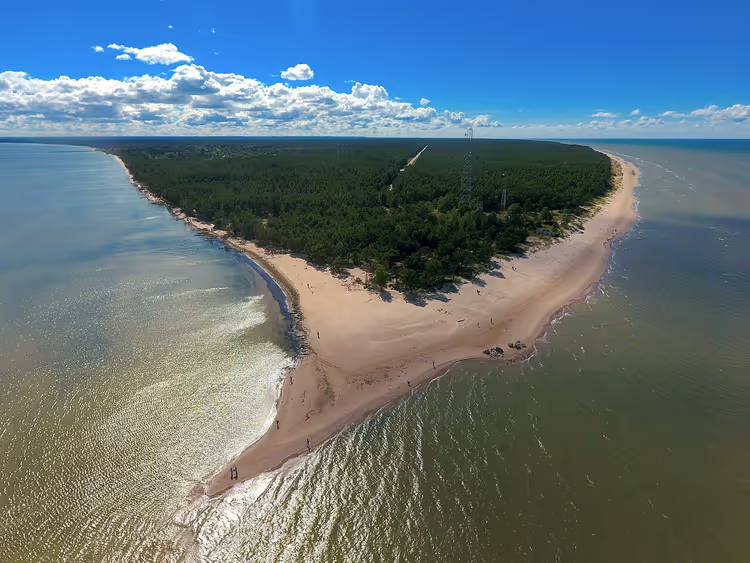 © Edgars Šulcs · CC BY-SAPhoto: Edgars Šulcs, CC BY-SA (https://creativecommons.org/licenses/by-sa/4.0), Wikimedia Commons
You will find the official map and coordinates on the Kolkasrags website. Around you there is only pine forest, dunes, and long sandy beaches with no development.
How to get there and where to park
The most convenient way to reach the cape is by car: regular buses barely come this far. From Riga, take the A10 highway to Tukums, then turn onto regional road P131. From Engure, the route follows the coast through Melnsils, and you arrive right at the tip (detailed route on Kolkasrags).
On the map it is about 160 kilometers and just over two hours one way. The roads are narrow and there is nowhere to pass, so allow extra time.
There are two parking lots before the cape. One is closer to the tip, the second is slightly to the west, at the start of a forest path. Open on the map: near parking lot and far parking lot.
The parking lot right at the tip is paid: the area is managed by the cape information center (according to the Dundaga tourist center, as of 09/2026). The second parking lot is marked on maps as free. The near one saves you ten minutes of walking (on the map), the far one costs nothing.
When to go: sunrise, sunset, and season
The symmetry of sunrise and sunset is easy to explain: the cape juts so far into the sea that the horizon is open both to the west and to the east. There is no other point like this in Latvia (according to the Cape Kolka guide, as of 09/2026).
 © Laima Gūtmane (simka… · CC BY-SAPhoto: Laima Gūtmane (simka…, CC BY-SA (https://creativecommons.org/licenses/by-sa/3.0), Wikimedia Commons
In late May and June the sun sets late, so darkness almost never falls. You can watch the sunset, return to the campsite, and catch the sunrise. In September the nights are longer, but the tip is empty, and the water stays clear until the first storms.
The birdwatching season comes in two short waves: mid-April and early October (according to Visit Talsi on migration, as of 09/2026). During these weeks, tens of thousands of birds pass over the spit. Bring binoculars and a warm jacket.
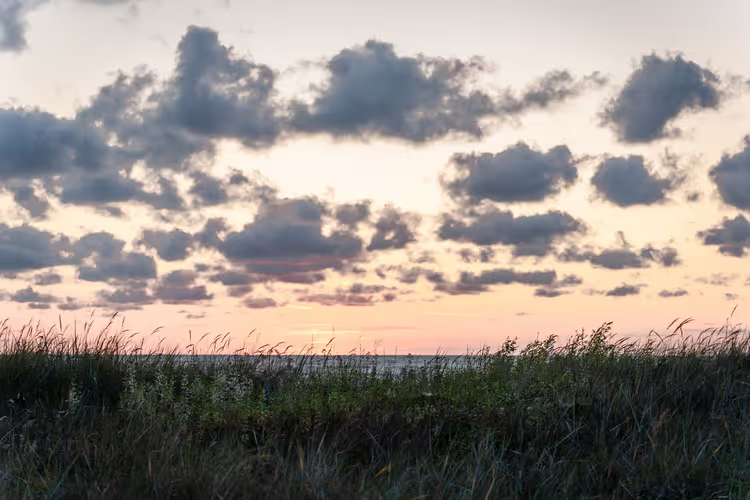
A thermos and a blanket are useful even in July: the sea wind quickly strips away the warmth. The cafe at the information center is open only in season, so it is better to bring water and food with you (according to the Dundaga tourism portal, as of 09/2026).
What to see nearby
Around the cape there are several separate sights within a couple of kilometers. Plan them for one day and take your time.
 © Dace Kundrāte · CC BY-SAPhoto: Dace Kundrāte, CC BY-SA (https://creativecommons.org/licenses/by-sa/4.0), Wikimedia Commons
Observation tower and pine trail
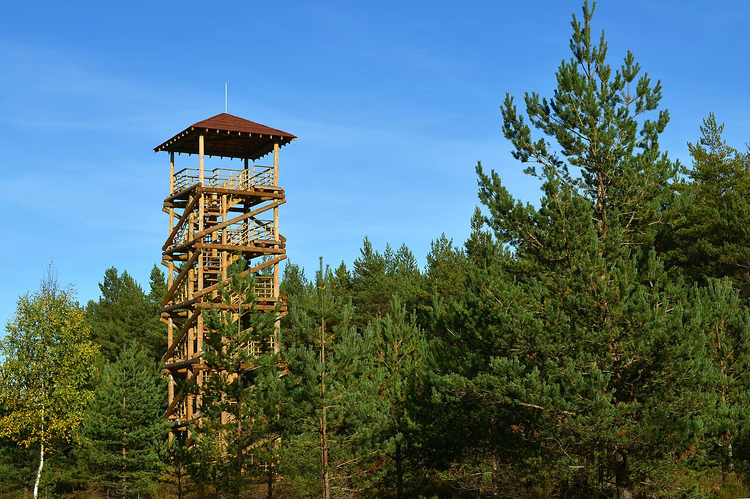
A wooden birdwatching tower stands near Kolka. It has six levels, and the top platform is 16 meters high (according to Visit Talsi, as of 09/2026). From that height you can see the bay, the forest, and the migration corridor.
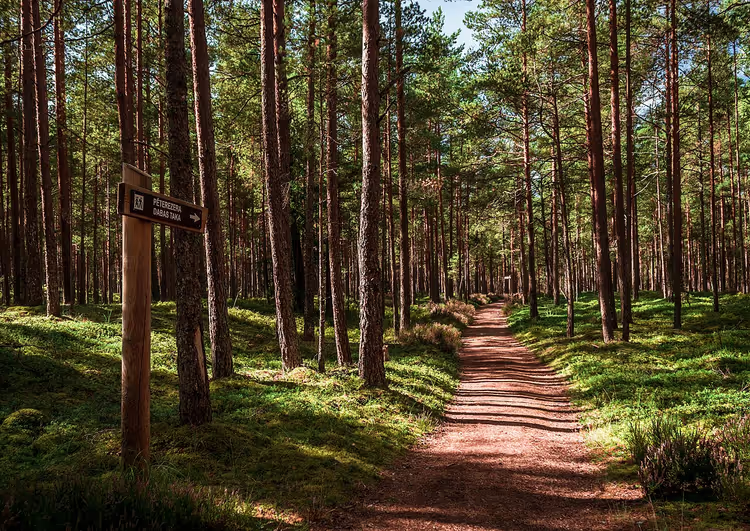
A pine nature trail runs nearby, and the tower has free parking. This is the place to come in the morning if you want to see birds without the crowds.
 © Laima Gūtmane (simka… · CC BY-SAPhoto: Laima Gūtmane (simka…, CC BY-SA (https://creativecommons.org/licenses/by-sa/3.0), Wikimedia Commons
Kolka lighthouse
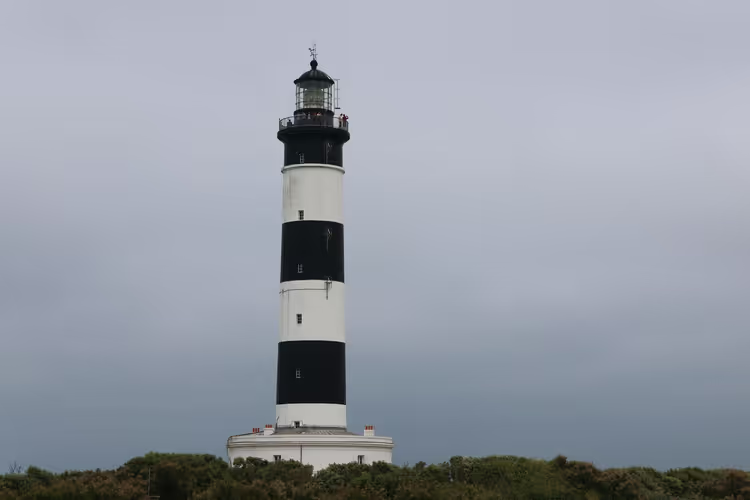
Kolka lighthouse (Kolkas bāka) stands not on the shore but on an artificial island 5.14 kilometers from the coast (according to Visit Talsi, as of 09/2026). Latvia has no other lighthouse on a man-made island: the stones for it were brought by boat from all over Courland.
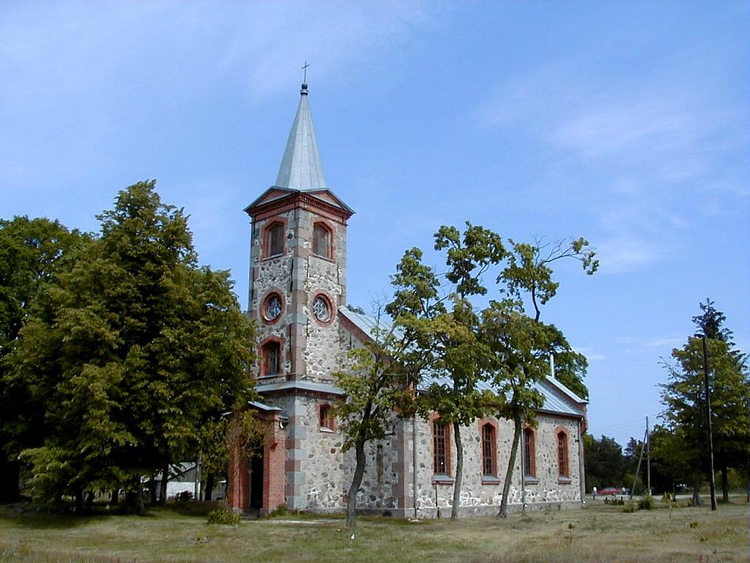 © J. Sedols · CC BYPhoto: J. Sedols, CC BY (https://creativecommons.org/licenses/by/3.0), Wikimedia Commons
Construction began in 1872, and the lighthouse became operational in 1884; since 1979 it has operated without keepers. The catch: you cannot go inside, the site is closed to tourists and opens only on special event days (according to the lighthouse history on Visit Talsi, as of 09/2026).
Slītere National Park
The cape lies on the edge of Slītere National Park. In high season, from May 1 to October 15, the Slītere lighthouse and the Slītere nature trail are open here (according to Kolkasrags, as of 09/2026).
The park is known for its old broadleaf forests and bogs. If you have half a day, add it to your trip to the cape: it is a completely different landscape, with no sea and no dunes.
The beach and stone hearts
A wide sandy beach stretches from the parking lot all the way to the tip. Along the way you pass a large boulder and dunes, a good place to stop for photos.
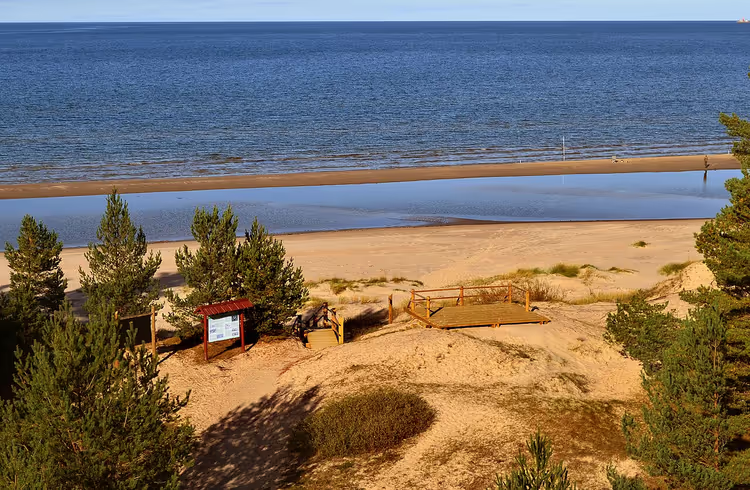 © Laima Gūtmane (simka… · CC BY-SAPhoto: Laima Gūtmane (simka…, CC BY-SA (https://creativecommons.org/licenses/by-sa/3.0), Wikimedia Commons
On the rocks by the water, couples arrange hearts out of stones, which is why the cape has long been considered a romantic spot. In the evening it is quiet here, and the sunset is visible until the last minute.
Hours, admission, and practicalities
Admission to the cape is free: as a natural site it never closes (according to the Courland information center, as of 09/2026). You only pay for parking at the tip.
The information center is open year-round. From May through September it is open daily: in May and September from 10:00 to 20:00, in June, July, and August from 09:00 to 20:00. From October 15, visitors are welcomed on Fridays, Saturdays, and Sundays from 11:00 (according to the schedule on kurzeme.lv, as of 09/2026).
The center has a cafe, souvenirs, and a mobile sauna, and the Saules mājas campsite is nearby. There is no other infrastructure at the cape, so do not count on a store (according to the Dundaga tourism center, as of 09/2026).
Tours and tickets
Guided tours, skip-the-line tickets and activities — most offers can be cancelled free of charge.
See offers on GetYourGuideThe widget loads once you give your consent.
⁉️🤔 Frequently asked questions
How much does it cost to enter Cape Kolka?
Entry is free, and the cape is open 24/7 (according to the Kurzeme Tourism Association, as of 09/2026). You only pay for parking near the tip.
Can you see sunrise and sunset on the same day?
Yes. The cape extends so far into the sea that the horizon is open to both the west and the east. In late May and June the nights are short, so only a few hours pass between sunset and sunrise. In winter this trick won't work, darkness takes up most of the day.
When is the best time to go birdwatching?
There are two migration waves: mid-April and early October (according to the tower description on Visit Talsi, as of 09/2026). The best view is from the observation tower.
Where can I park near the cape?
There are two parking lots before the tip. The closer one is paid, but it gets you to the water the fastest. The second one, further west, is marked on maps as free. In summer on weekends, arrive early so you don't end up circling on the narrow road.
Can you visit the Kolka lighthouse?
No, the lighthouse is closed to tourists and opens only on special event days (according to the lighthouse information on Visit Talsi, as of 09/2026). You can admire the lighthouse from the shore or from the water.
What else is there near the cape?
Besides the beach and dunes, nearby you'll find an observation tower, a pine trail, and Slītere National Park with its own lighthouse. In high season, from May 1 to October 15, the park opens the Slītere trail (according to the park visitation rules, as of 09/2026). One full day is enough for all of it.
In short: what to book
Plan Cape Kolka as an evening trip: arrive for sunset, leave your car at the farther parking lot, and walk to the water. If you're coming for the birds, set your alarm for dawn and start at the observation tower.
- If you have one evening: the tip and sunset over two seas.
- If you have a morning: the observation tower and the pine trail.
- If you have a full day: add Slītere National Park.
- If you have a tent: stay overnight at the campground in Melnsils right on the shore.
Guided tours of Kurzeme are easiest to find in advance: browse tours on GetYourGuide.

A small editorial team writing guides for independent travel. We travel ourselves, but we haven’t been everywhere, so we check prices, opening hours and how to get there against official sources.