
















Silk, coffee and pearls: what to bring from Vietnam and what cannot be exported
Vietnam surprises with more than just its beaches. Silk, coffee, pearls, and wood carvings cost noticeably less here than in Europe. But some shops are aimed at tourists, and certain souvenirs cannot be exported at all.
We have put together the items worth seeking out and the rules that will save you from a fine at the border.
Ad: this article contains affiliate links, we earn a commission if you book through them, at no extra cost to you.
What people bring back from Vietnam most often
💡 In short:
- Silk, coffee, ceramics, and pearls offer the best balance of price and quality.
- Haggle at markets, and ask for a certificate in jewelry shops.
- EU limits: 09/2026, verified on the official EU website.
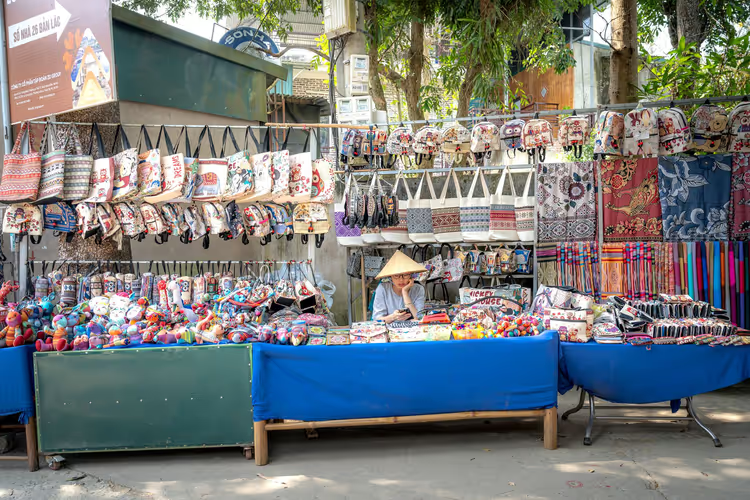
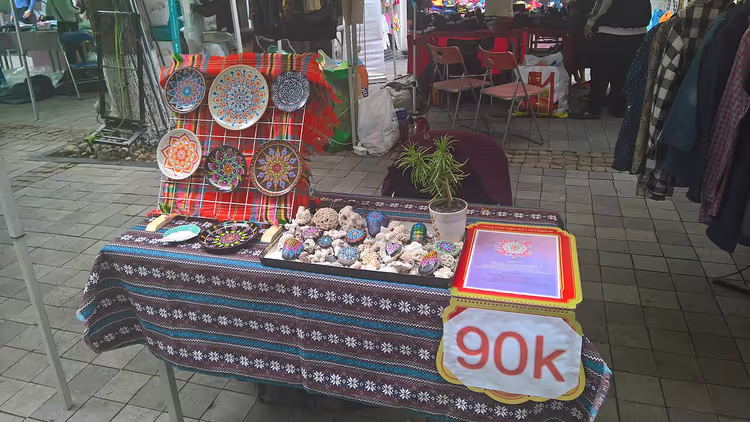
The range in local shops is wider than it seems at first glance. Besides silk and coffee, you will find ceramics, lacquer boxes, bamboo products, tea, and medicinal balms. Many items are handmade, so identical pieces are rare.
 © Donald Trung · CC BY-SAPhoto: Donald Trung, CC BY-SA (https://creativecommons.org/licenses/by-sa/4.0), Wikimedia Commons
Prices at markets are flexible, and haggling is appropriate almost everywhere. Street vendors give in more readily than sellers in shopping malls. The rule is simple: first ask the price, then offer your own, about a third lower.
Silk, textiles, and shoes
Vietnamese silk holds its color but wrinkles easily. There are two craft centers: Van Phuc village near Hanoi and workshops near Hoi An. Van Phuc lies about 10 km southwest of central Hanoi (as of: 09/2026, official Vietnam tourism portal).
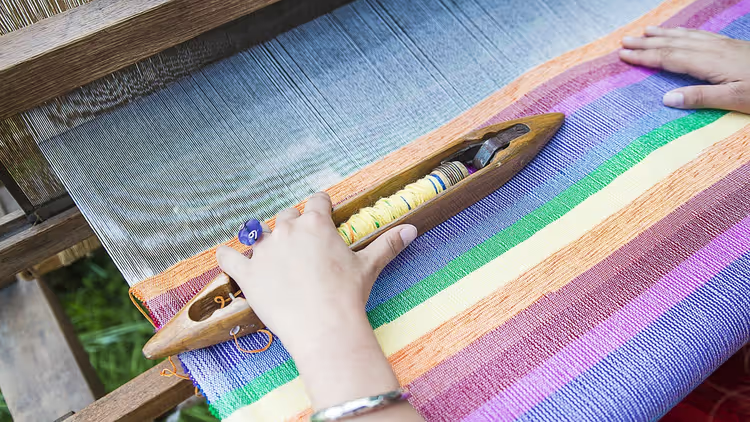
Real silk can be distinguished by touch. It is warm, while synthetics are cold. Hold the fabric in your hand and look at it against the light; the threads should lie evenly. For a silk shirt at Ben Thanh, Dong Xuan, or Hoi An markets you will pay less than in a specialty store, but haggling is a must.
People buy shoes for two reasons. Local workshops make custom sandals in a day, and sports brands are cheaper here than in Europe. Be careful about authenticity: fakes are common, so check the stitching, logo, and article number on the tag.
Fabrics are sold by the meter, and it is easy to pick up material for curtains or tablecloths. Ask the seller about the composition and request an extra 10 cm for shrinkage after washing.
Coffee, tea, and food products
 © Clarin · CC BYPhoto: Clarin, CC BY (https://creativecommons.org/licenses/by/2.5), Wikimedia Commons
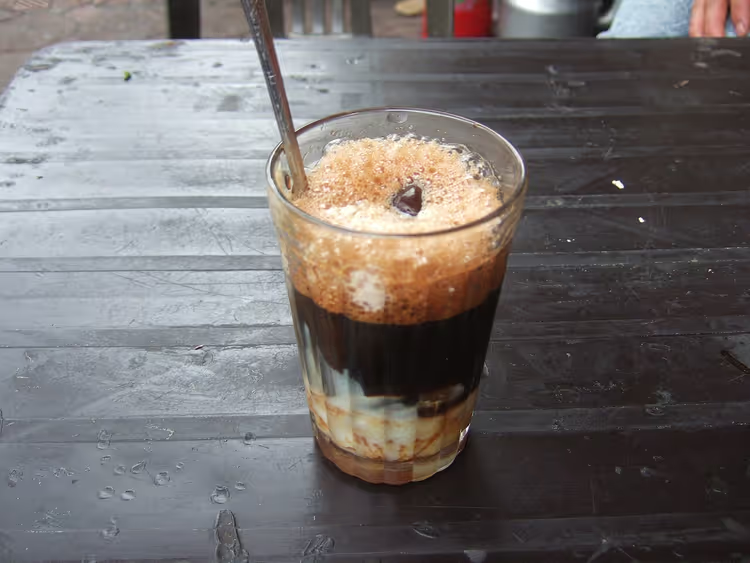
Coffee here is not just a drink but a major export. According to USDA and ICO data, Vietnam ranks second in the world in production: about 27.9 million 60 kg bags in 2025 (as of: 09/2026, Vietnam.vn). The main variety, robusta, gives a dense flavor with bitterness.
Coffee is vacuum-packed, so it travels home without problems. Buy beans rather than ground powder if you want to preserve the aroma longer. The local brewing method using a phin filter produces a strong drink, to which condensed milk is added.
Tea, spices, rice, dried fruit, and seafood are also worth buying. We have a separate article about exotic fruits, fruits of Vietnam, and here we recommend going to a city market early in the morning.
In Dalat, wine is made from local grapes. Quality varies, and street stalls sometimes sell fakes with cheap substitutes. Buy alcohol at a supermarket rather than from a stall, and check the excise stamp on the bottle.
For lovers of exotic foods, delicacies made from cobra and snakes are sold. It is better not to bring them with you: sanitary rules and bans on exporting wild animals apply in most countries.
Pearls, stones, and jewelry
Pearls on the coast are cheaper than inland because the farms are right by the shore. On Phu Quoc island, pearls have been cultivated for a long time, and farms there offer tours. You will see the entire cycle, from mollusk to finished necklace.
There are few guarantees, however: by appearance alone it is hard to distinguish natural pearls from imitations. Before buying, ask for a certificate and compare the luster in daylight. Do not hesitate to walk away if the seller pressures you and does not give you time to think.
Precious stones and jewelry are sold below European prices. Combinations of gold, silver, and hand-cut inserts are common here. But the discount is not always honest: a glass fake looks like a stone until a jeweler examines it.
A separate warning about ivory. International trade in tusks is banned by the CITES convention, so importing such items into the EU is illegal (as of: 08/2026, Euronews). A purchase will result in confiscation at customs and a fine. For the same reason, do not export ancient relics and antiques without a permit.
Furniture, lacquerware, and electronics
 © Ji-Elle · CC BY-SAPhoto: Ji-Elle, CC BY-SA (https://creativecommons.org/licenses/by-sa/4.0), Wikimedia Commons
Furniture made of bamboo, rattan, and wood is chosen by those settling in for the long term. The carving is done by hand, so patterns rarely repeat. But shipping is expensive: container delivery takes weeks, and duty is calculated on the value of the cargo.
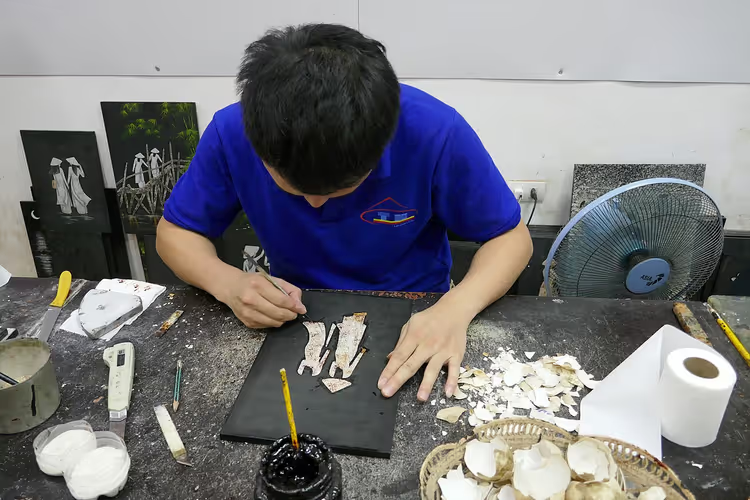
Lacquer boxes, panels, and tableware take up little space and weigh little. They are convenient to carry in luggage and do not break as easily as ceramics. Check that the lacquer is applied evenly, without bubbles or a strong smell.
People buy electronics and smartphones because of the price and the latest models. Local brands are almost on par with global ones in quality. Check the warranty, charger, and compatibility with European standards, otherwise you will not be able to plug the device in at home.
What you cannot export and how to avoid overpaying
The balm Cao Sao Vàng, ceramics, and small souvenirs are considered safe purchases. But medicines made from snake and insect venom are better avoided: the composition is often unverified, and they will be held at the border. Buy only what is sold at a pharmacy with a receipt and instructions.
Do not buy goods without safety documentation. Without a certificate, the cargo will be held at customs, and there will be no one to refund your money. Ask for a receipt even at a market, especially for jewelry and electronics.
Prices are lower where there are fewer tourists. Walk a couple of blocks away from the waterfront, and the same scarf or coffee will cost noticeably less. You will spend less and see the real city, not a display for visitors.
⁉️🤔 Frequently asked questions
How much money can you bring into the EU from Vietnam duty-free?
The duty-free limit for air passengers is €430 per person (as of: 09/2026, EU import rules). For travel by land and water, the limit is lower, €300 (as of: 09/2026, gov.hr). Alcohol and tobacco are counted separately: 1 liter of spirits, plus 4 liters of wine and 200 cigarettes.
What should you bring from Vietnam as a gift?
Universal gifts include a silk scarf, lacquer boxes, and ceramics. A scarf and boxes are light, do not break in luggage, and suit almost any recipient. A bag of whole bean coffee is also a good option if the person brews coffee at home.
Can you export pearls and jewelry?
Pearls and jewelry can be exported; there are no separate restrictions. Ancient relics cannot be exported without a permit; they will be confiscated at the border. Before buying pearls, ask for a certificate, otherwise it is easy to buy an imitation.
Where is haggling most worthwhile?
At markets and with street vendors, haggling is appropriate and even expected. In shopping malls, supermarkets, and pharmacies, the price is fixed. Stay calm; a discount usually appears after the second offer.
When is the best time to go shopping?
For silk and ceramics, it is convenient to go during the dry season, when markets are open every day. Arrive at opening time, before the heat and crowds. At midday, the selection is smaller and tourist prices are higher.
In short: what is worth buying in Vietnam
If you need a gift, buy a silk scarf or a lacquer box. If you love coffee, buy a bag of robusta beans and a phin filter. If you want jewelry, look at pearls at a farm on Phu Quoc island. Buy everything else as you wish, but check certificates and keep receipts.
Planning a trip and want to combine shopping with sightseeing? Find excursions and tours in Vietnam on GetYourGuide.

A small editorial team writing guides for independent travel. We travel ourselves, but we haven’t been everywhere, so we check prices, opening hours and how to get there against official sources.