
















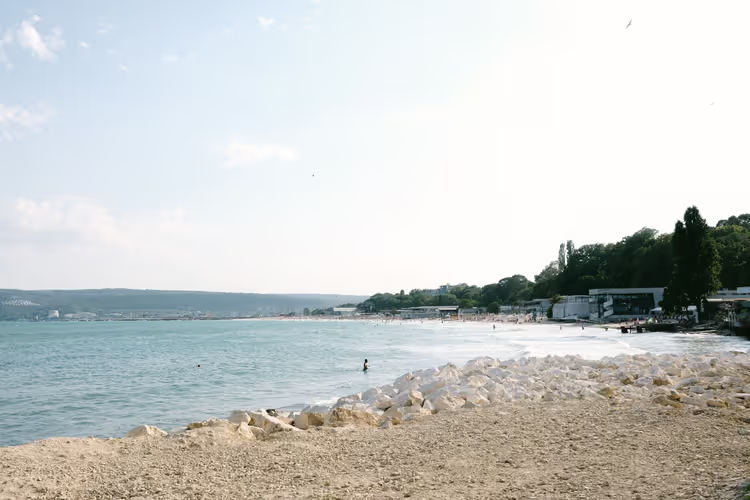
Varna in one day: 20 places with prices and a route on the map
Varna rarely makes it onto the plans of travelers heading to Bulgaria for the beach. Yet the city has more than twenty museums, parks, and monuments. In one day you can cover eras from the Neolithic to operetta.
We walked this route on the map and put together twenty places in a sensible order. Each place got its own section with ticket info, hours, and an honest assessment. You'll see what to visit first, what's closed on Mondays, and what's not worth your time.
Ad: this article contains affiliate links, we earn a commission if you book through them, at no extra cost to you.
How our Varna route works
💡 In short:
- Start with the Dormition Cathedral and Knyaz Boris I Boulevard: it's a compact center, everything is close by.
- In the afternoon, pick one: the Sea Garden, the dolphinarium, or the Roman Baths.
- Euxinograd Palace and Aladzha Monastery are outside the city, you'll need a bus or taxi.
- Buy tickets at the ticket offices: the Regional History Museum doesn't sell them online.
- Prices and hours: 09/2026, verified on the museum's official website.
The twenty sites fall into three groups. The center is walkable, the Sea Garden stretches along the coast, and the outlying points require transport. The table below lists five places that cover the main interests.
Place | Why it's interesting | Who it's for |
|---|---|---|
Dormition of the Mother of God Cathedral | an active church with golden domes | those starting their day in the center |
Archaeological Museum | gold from the Varna necropolis | history lovers |
Roman Baths | the largest bath ruins in the Balkans | fans of antiquity |
Festa Dolphinarium | dolphin show | families with children |
Aladzha Monastery | a rock monastery in the forest | those with time to spare |
1. Dormition of the Mother of God Cathedral
The cathedral was built to commemorate the liberation of Bulgaria from Ottoman rule. Money was raised by the whole community: both ordinary citizens and the nobility donated. The first stone was laid by Prince Alexander I, and the church was dedicated to the Mother of God, the patron saint of Empress Maria Alexandrovna.
The building has no single style. It combines Byzantine traditions, features of Russian churches, and even Gothic details. You'll see the golden domes from anywhere in the center. Step inside to look at the murals, but remember: this is an active church, and during services tourists are asked to keep quiet.
 © Diego Delso · CC BY-SAPhoto: Diego Delso, CC BY-SA (https://creativecommons.org/licenses/by-sa/4.0), Wikimedia Commons
- Getting there: the center, between Independence Square and the Sea Garden.
- Cost: free entry, it's a parish church.
- The catch: on Sunday mornings the interior is full of parishioners, so the murals are hard to see properly.
2. Archaeological Museum
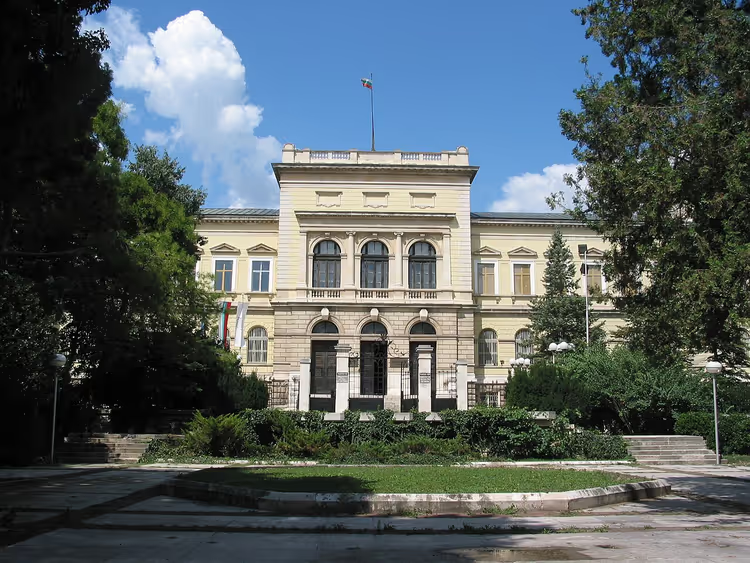
The collection began to be assembled back in the late 19th century, and the museum received official status in 1889. At first the holdings were crammed into the city library, later they moved to a neo-Renaissance mansion. The abundance of finds is easy to explain: people have lived on Bulgarian lands since ancient times.
The halls follow the eras: Paleolithic, Ancient Thrace, antiquity, the Middle Ages. You'll see tools, jewelry, weapons, pottery, and documents. The main treasure, the gold of the Varna necropolis, occupies a separate hall: the collection includes more than three thousand items (according to the Varna tourist office).
 © Extrawurst · CC BY-SAPhoto: Extrawurst, CC BY-SA (http://creativecommons.org/licenses/by-sa/3.0/), Wikimedia Commons
- Cost: €10 for adults, €4 for schoolchildren, free for children under 7; groups of 15 or more pay €8 (as of 09/2026, museum's official website).
- Hours: from May to September the museum is open daily from 10:00 to 17:00; from October to April it's closed on Sundays and Mondays (according to the museum's page).
- Getting there: 41 Maria Luisa Boulevard, a ten-minute walk from Knyaz Boris I Boulevard.
- The catch: the museum doesn't sell tickets online, you can only buy them at the ticket office.
3. Knyaz Boris I Boulevard
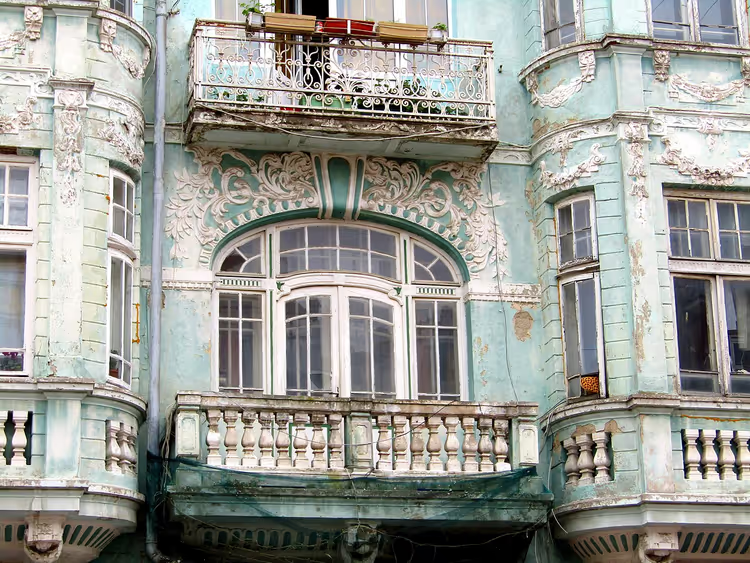
Varna's main pedestrian street runs from Independence Square to the Sea Garden. This is where people buy souvenirs: rose oil in small bottles, ceramics, works by local artisans. Prices on the boulevard are moderate, despite the constant flow of tourists.
Old houses with their own stories line the street. Some evoke Baroque, others Gothic, and without a guide it's easy to get them mixed up. Come here in the morning: by midday the boulevard gets crowded, and in summer there's almost no shade.
 © Alicia Fagerving · CC BY-SAPhoto: Alicia Fagerving, CC BY-SA (https://creativecommons.org/licenses/by-sa/3.0), Wikimedia Commons
- Getting there: the center, from Independence Square to the entrance to the Sea Garden.
- The catch: in July and August there are huge crowds here by evening.
4. Sea Garden
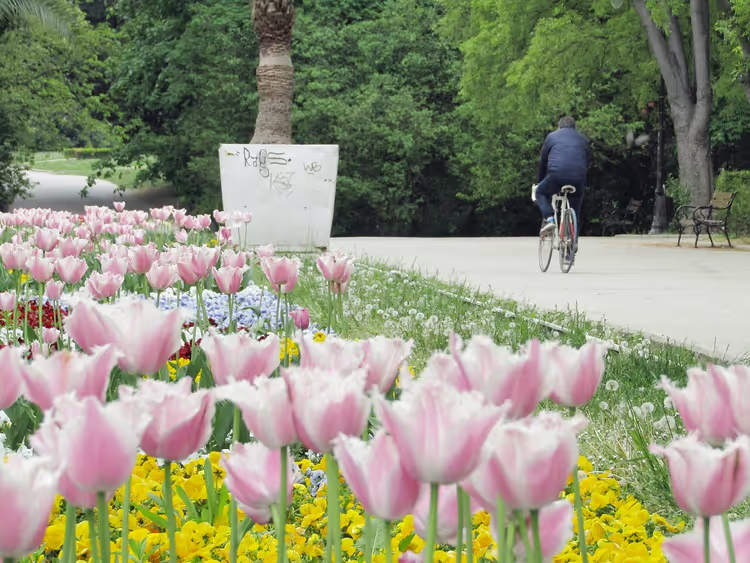
The park was laid out in the 19th century to a design by Czech architect Anton Novak. Before that, the shore was an abandoned wasteland. Today it's the city's main green zone: alleys, conifers, flower beds, and fountains stretch along the sea.
The park grounds are home to museums, a planetarium, a zoo, and a dolphinarium. In summer, concerts take place at the Summer Theater, and nearby there are cafes and souvenir kiosks. From the main alley you can easily walk down to the beach. Set aside half a day to explore the park at a leisurely pace.
 © Alicia Fagerving · CC BY-SAPhoto: Alicia Fagerving, CC BY-SA (https://creativecommons.org/licenses/by-sa/3.0), Wikimedia Commons
- Getting there: along the shore from the center, about half an hour on foot.
- Cost: park entry is free.
- The catch: on summer weekends the alleys are packed, and you won't find a free bench right away.
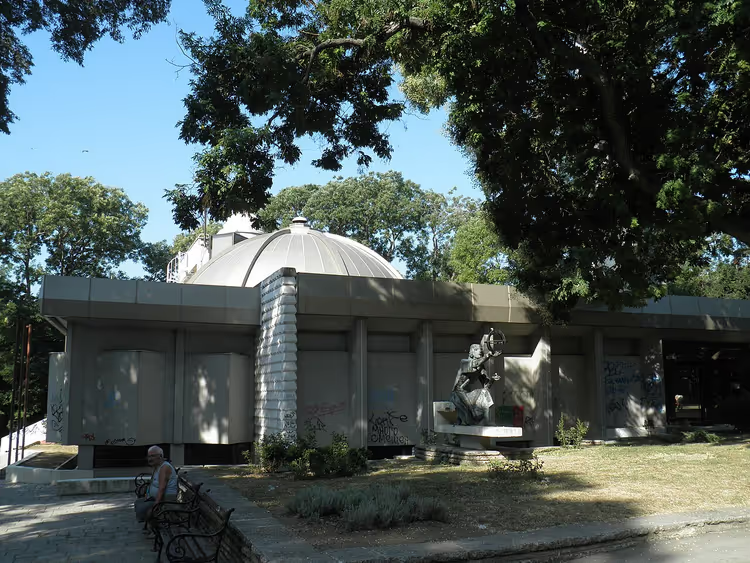
5. Nicolaus Copernicus Planetarium and Observatory
The astronomy and cosmonautics club opened in Varna in the early 1960s. A few years later the city was visited by Gherman Titov, Yuri Gagarin's backup. After his visit, the decision was made to build an observatory.
The complex stands in the Sea Garden. Besides the observatory, it includes a planetarium and a tower with a Foucault pendulum: it visually demonstrates the Earth's rotation on its axis. Inside, lectures are held, stars and planets are shown, and a library is maintained. Before visiting, check the session times, as the schedule changes by season.
 © Mister No · CC BYPhoto: Mister No, CC BY (https://creativecommons.org/licenses/by/3.0), Wikimedia Commons
- How to get there: in Prymorskyi Park, next to the Summer Theater.
- The catch: evening observations depend on the weather, sessions are canceled when it's cloudy.
6. Zoo and terrarium
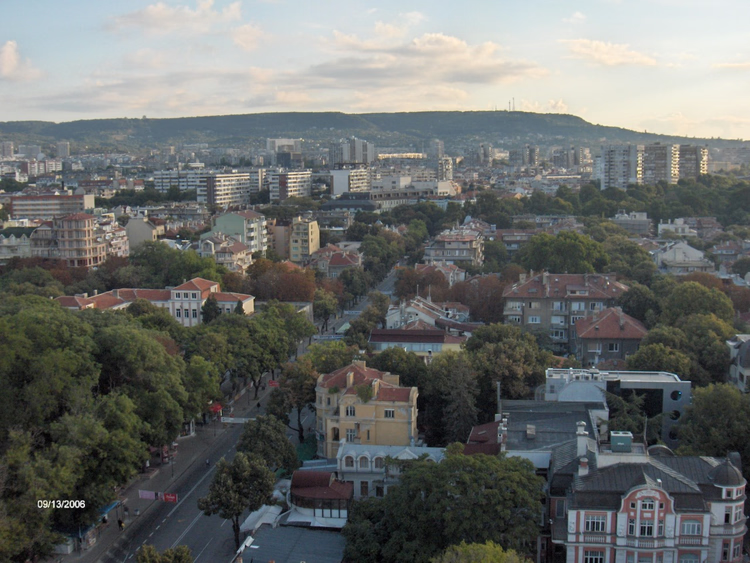
The zoo opened in the early sixties, with funding provided by sailors of the ship "Maxim." The terrarium appeared almost forty years later. Today the zoo is home to over seventy species of animals and birds, some of them listed in the Red Book.
You'll see lions, tigers, and panthers, feed a camel and a llama, and watch a peacock fan its tail. Black swans are considered the pride of the zoo. The neighboring terrarium houses snakes, lizards, turtles, and frogs, and the staff will tell you about their way of life.
 © Balkanregion · CC BY-SAPhoto: Balkanregion, CC BY-SA (https://creativecommons.org/licenses/by-sa/3.0), Wikimedia Commons
- How to get there: in Prymorskyi Park, entrance from the main alley.
- Hours: the zoo welcomes visitors daily, the terrarium follows the same schedule.
- The catch: there are few shaded spots, bring water and a cap in hot weather.
7. Naval museum
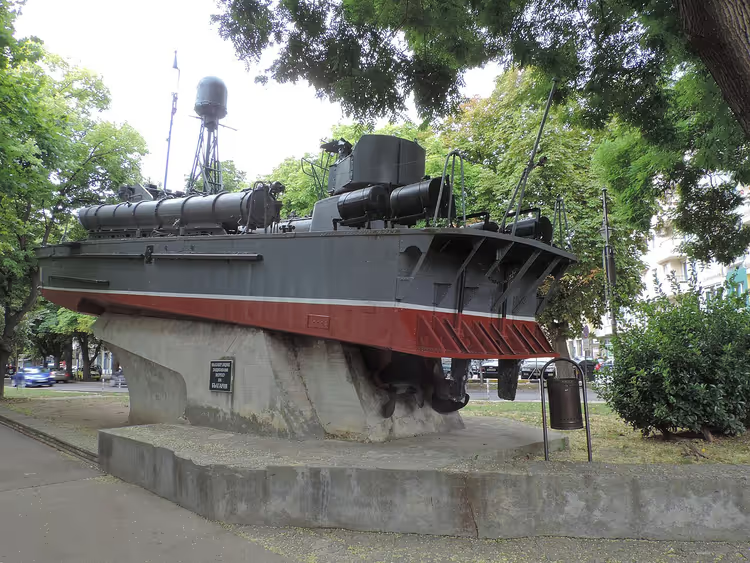
Exhibits for the museum began to be collected by naval officers in the late 19th century. The first visitors saw the collection in the early twenties of the last century, and later the museum became part of the Ministry of Defense system. The building dates back to the 19th century and attracts attention in its own right.
Inside you'll find anchors, ship fragments, figureheads, sailor and officer uniforms, flags, and ship models. The strongest impression comes from the open-air area. There you'll see the destroyer "Derzkiy," a yacht that sailed around the world, a minesweeper, artillery pieces, and even Bulgarian helicopters.
 © Спасимир (Spasimir Pilev) · CC BY-SAPhoto: Спасимир (Spasimir Pilev), CC BY-SA (https://creativecommons.org/licenses/by-sa/4.0), Wikimedia Commons
- How to get there: near Prymorskyi Park, next to the Sea Terminal.
- The catch: most of the exhibition is outdoors, so viewing is inconvenient in the rain.
8. Roman baths
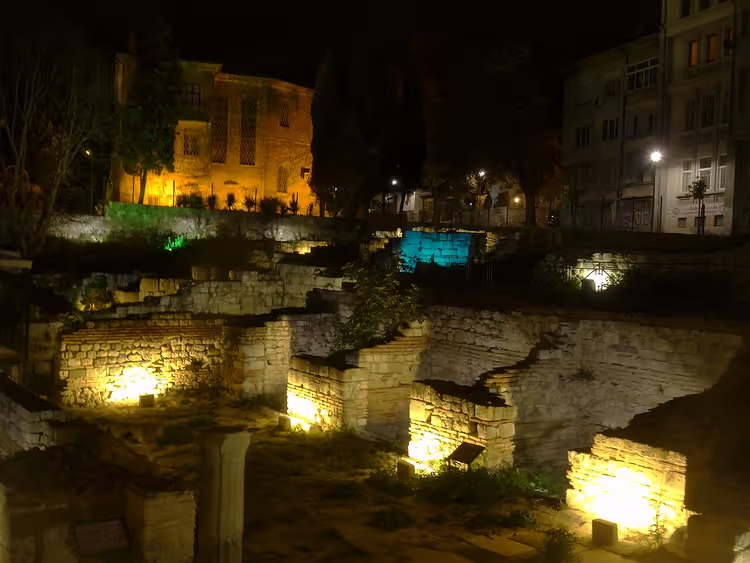
The baths were built around the 2nd century AD. They are the largest Roman baths in the Balkans, and in Europe they rank among the top four by size. The baths were likely in use for one and a half to two centuries.
The complex covered an area the size of a football field. Inside there was a courtyard with merchant stalls, men's and women's sections, pools, rooms for pouring water, rest areas, and latrines. The marble floors were heated, and water was supplied by a tower as tall as a six-story building. Today only ruins remain, but they give you an easy sense of the scale.
 © Magdalenaamcmus · CC BY-SAPhoto: Magdalenaamcmus, CC BY-SA (https://creativecommons.org/licenses/by-sa/4.0), Wikimedia Commons
- Cost: €4 for adults, €2 for schoolchildren, free for children under 7 (as of 09/2026, museum's official website).
- How to get there: walk from the center toward the railway station.
- The catch: the site is open-air, and in summer there is almost no shade.
9. Euxinograd Palace
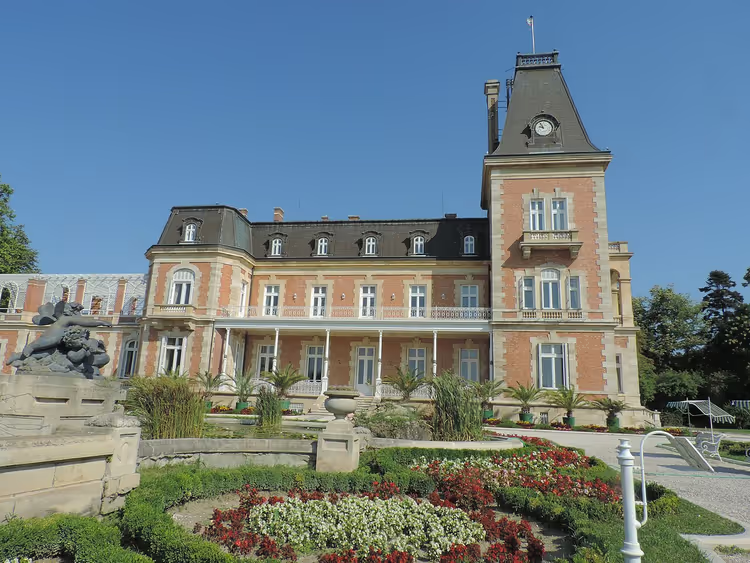
The summer residence of Bulgarian rulers stands a few kilometers north of Varna. Construction began in the late 19th century by order of Prince Alexander of Battenberg and was completed under Prince Ferdinand. The Renaissance-style facade looks stately and ceremonial.
Inside, furniture made of precious woods, chandeliers, paintings, and clocks have been preserved. The name comes from the ancient Greek name for the Black Sea, Euxine Pontus. Around the palace you will see the Greek Garden and the English Garden, and a sculpture of Neptune by a pond. The wine cellars with a tasting room and the ruins of an ancient fortress in the park deserve special attention.
 © Спасимир (Spasimir Pilev) · CC BY-SAPhoto: Спасимир (Spasimir Pilev), CC BY-SA (https://creativecommons.org/licenses/by-sa/4.0), Wikimedia Commons
- How to get there: a few kilometers from the center, easiest by taxi or bus.
- The catch: it is a working residence, so some rooms are closed to visitors.
10. Varna Opera Theater
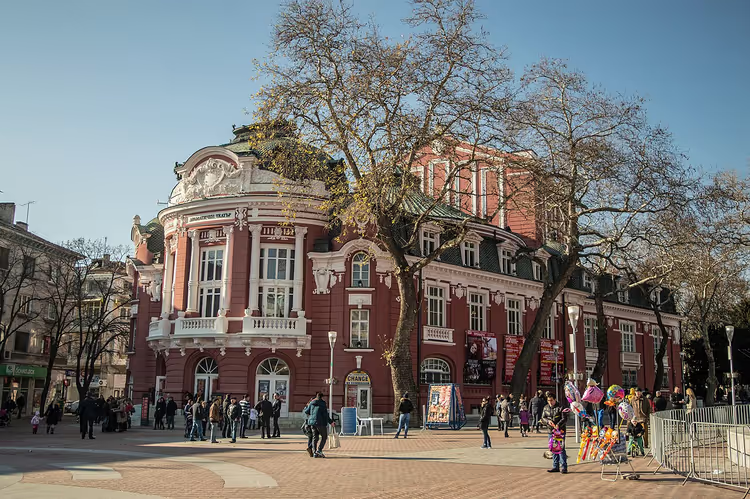
The building is small but is considered one of the most beautiful in the city. The Empire style highlights the architect's impeccable taste. The theater opened in the late 1940s and has not closed its doors since.
The stage hosts operas, operettas, musicals, and children's performances. World-famous opera singers have performed here, and in popularity the theater is second only to Sofia's. It is easy to find: the building stands next to the Sea Garden, a stone's throw from the boulevard.
 © www.bdmundo.com · CC BY-SAPhoto: www.bdmundo.com, CC BY-SA (https://creativecommons.org/licenses/by-sa/2.0), Wikimedia Commons
- How to get there: next to the Sea Garden, a ten-minute walk from Knyaz Boris I Boulevard.
- The catch: tickets for popular evenings sell out in advance, so you should buy them at the start of your trip.
11. Armenian church of Saint Sarkis
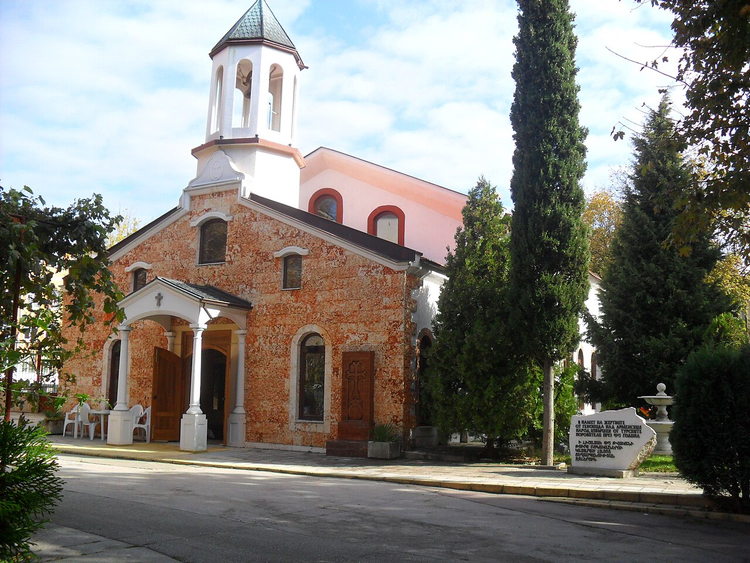
A modest wooden chapel originally stood on this site, but it burned down in a fire. The new church was built in the mid-19th century. Saint Sarkis is considered the patron saint of lovers, much like Saint Valentine.
The church has a multifaceted dome and a square bell tower. Inside, Orthodox visitors are surprised to note the absence of an iconostasis, which usually separates the altar. The walls are covered with murals, and the church itself feels airy. From the outside the building looks modest, and that is deceptive.
 © Powerfox · CC BY-SAPhoto: Powerfox, CC BY-SA (https://creativecommons.org/licenses/by-sa/4.0), Wikimedia Commons
- How to get there: in the center, not far from Knyaz Boris I Boulevard.
- The catch: the church is open mainly during services; at other times you cannot get inside.
12. Fiesta Dolphinarium
The dolphinarium has operated in the Sea Garden since the 1980s. Its first performers were bottlenose dolphins brought from the Atlantic. They quickly learned dozens of tricks and still perform today.
At the show, the dolphins jump through hoops, play ball, dance, and even sing. You can take photos with them, and with advance booking you can swim alongside them. The commentary during the performance is given in several languages. A cafe with a panoramic window operates nearby. In summer there are more showtimes, so you can easily fit one into your itinerary. Arrive half an hour before the start, as seats and parking fill up quickly.
 © Avda · CC BY-SAPhoto: Avda, CC BY-SA (https://creativecommons.org/licenses/by-sa/3.0), Wikimedia Commons
- Tickets, showtimes, and getting there: an adult ticket in high season costs €26, in the shoulder season €19, and in winter €14; children's tickets are €23, €14, and €11 respectively; shows run at 10:30, 12:00, 15:30, and 17:00, and Monday is the dolphins' day off; buses No. 9, No. 14, No. 39, and No. 409 run from the center (as of 09/2026, verified on 13.09.2026 on the dolphinarium's official website).
- The catch: swimming with the dolphins is only possible with advance booking, and spots are limited.
13. Varna History Museum
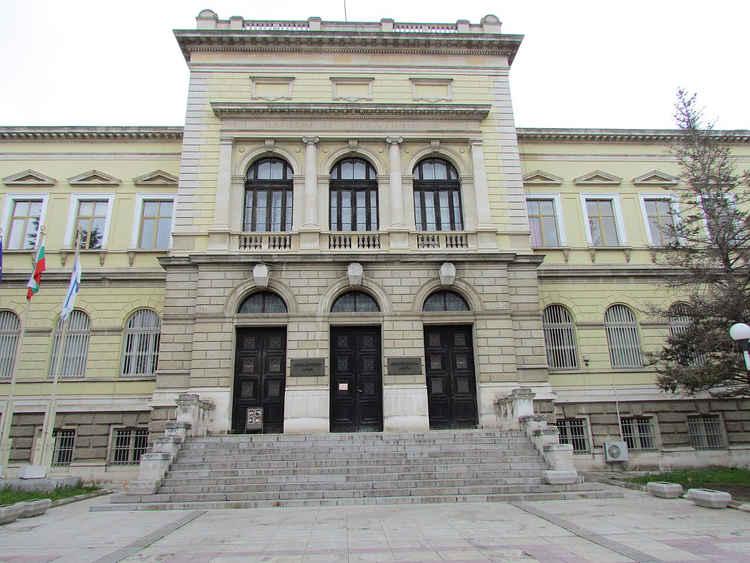
The museum shows what Varna was like from the second half of the 19th century until the start of World War II. There is no pomp here, but the atmosphere of a resort town is recreated: workshops and artisan shops, a photographer's studio, a coffeehouse, and a small courtyard.
The museum opened in the late 1960s, and the collection has only grown since. You will see civilian and military clothing, old photographs, and items from Euxinograd. A priceless exhibit is the grand piano bought for the first international music festival.
 © vedyteam · CC BYPhoto: vedyteam, CC BY (https://creativecommons.org/licenses/by/3.0), Wikimedia Commons
- Cost: €5 for adults, €2 for schoolchildren (as of 09/2026, museum's official website).
- The catch: the rooms are small, and on weekends it gets crowded inside.
14. Ethnographic Museum
The exhibition is dedicated to the culture of the region in the 19th and early 20th centuries. At that time, local residents worked in farming, viticulture, livestock breeding, beekeeping, and fishing. The museum opened in the first half of the 1970s.
Tools, pottery, costumes, and models of mills have been preserved. The clothing in particular reveals national characteristics: settlers from different countries came to the lands around Varna. Wedding and festive attire, books, and souvenirs are of special interest. The building breathes history, and you will get excellent photos here.
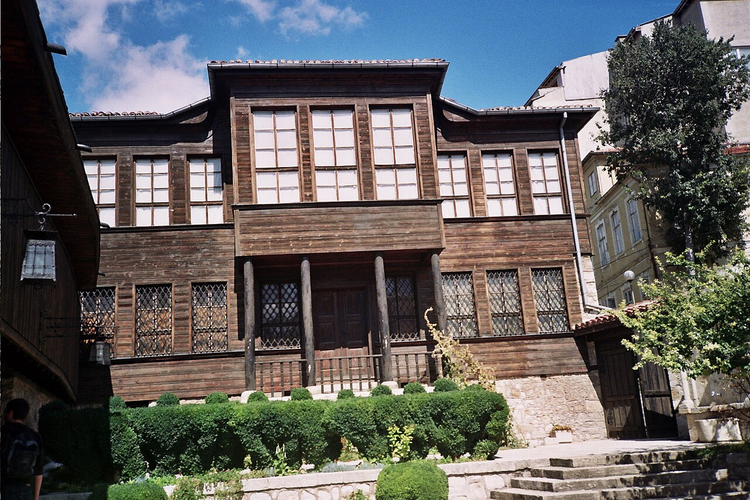 © Ilonamay · CC BY-SAPhoto: Ilonamay, CC BY-SA (https://creativecommons.org/licenses/by-sa/3.0), Wikimedia Commons
- Cost: €5 for adults, €2 for schoolchildren (as of 09/2026, museum's official website).
- Who it's for: fans of crafts, everyday life, and old photographs.
15. Retro Museum
This museum showcases Bulgaria during the socialist era. The exhibition covers the period from the mid-1940s to the late 1980s. The museum opened recently and quickly attracted nostalgic locals.
You'll see cigarettes and perfume, home appliances, cosmetics, and clothing from that time. The exhibits include cars: Zhiguli, Moskvich, Volga, Skoda, and even a Chaika limousine used by top state officials. Wax figures of politicians stand nearby, and many tourists take photos with them.
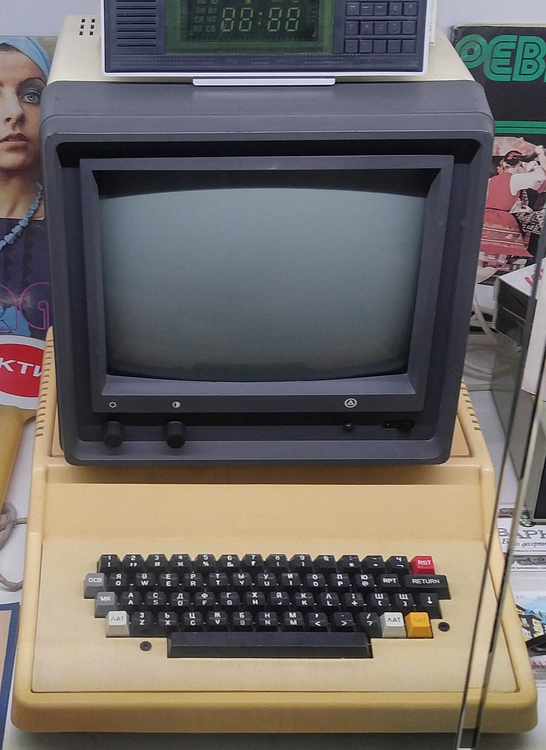 © Scroch · CC BY-SAPhoto: Scroch, CC BY-SA (https://creativecommons.org/licenses/by-sa/4.0), Wikimedia Commons
- Who it's for: those who remember the socialist era and collectors of retro technology.
- The catch: someone is almost always taking photos with the wax figures, so getting a clean shot is difficult.
16. Vladislav Varnenchik park museum
In the mid-15th century, a battle took place near Varna: Christian forces tried to stop the Ottomans on their way into Europe. Thousands of warriors died, including King Władysław III of Varna from the Jagiellonian dynasty. His body was never found, and a mausoleum with a stone sarcophagus was later built in the park.
In the mid-1960s, for the battle's anniversary, a museum was built here. Inside you'll find weapons, banners, knight's armor, and models that recreate details of the battle. The park museum is located far from the center. Besides the museum, the park has the mausoleum and a large green area that's pleasant for a walk after your visit. Families come here in groups, and there's plenty of space for everyone.
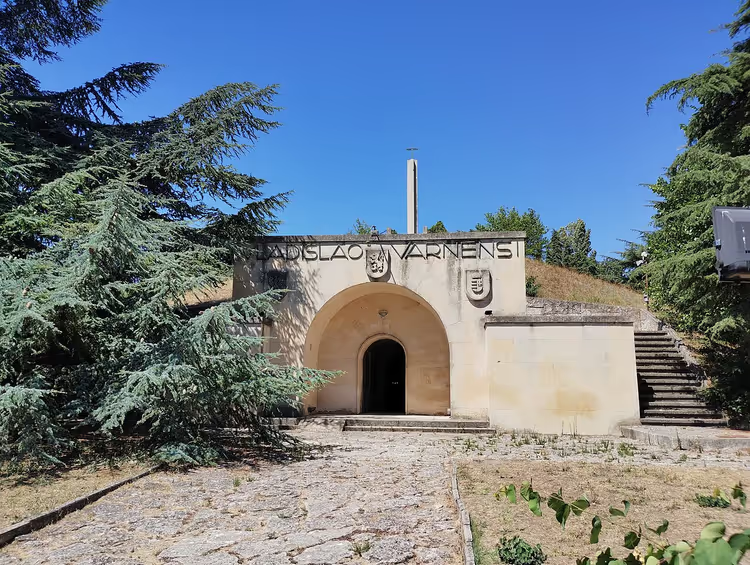 © Michał Derela · CC BY-SAPhoto: Michał Derela, CC BY-SA (https://creativecommons.org/licenses/by-sa/4.0), Wikimedia Commons
- Getting there: outside the city; from the center it's easier to take a taxi or bus.
- The catch: getting here without your own vehicle is inconvenient.
17. Varna Necropolis
The necropolis was discovered by accident during earthworks: gold jewelry ended up in an excavator bucket. About three hundred graves have been studied so far, which is roughly two-thirds of the entire burial site. The find turned out to be one of the richest in Europe.
Scientists found thousands of gold artifacts and hundreds of pottery samples. The people buried here lived at the end of the fifth millennium BC. Men were laid on their backs, women on their sides in a fetal position, with vessels, jewelry, weapons, and talismans placed beside them. The collection itself is housed in the Archaeological Museum.
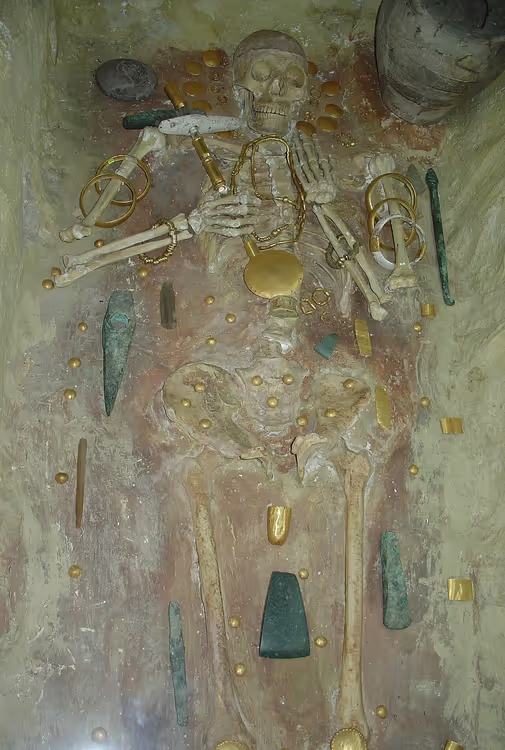 © Yelkrokoyade · CC BY-SAPhoto: Yelkrokoyade, CC BY-SA (http://creativecommons.org/licenses/by-sa/3.0/), Wikimedia Commons
- Getting there: see the location along with the Archaeological Museum, where the finds are displayed.
- The catch: on site you'll mostly see a fenced-off area; the gold is only shown in the museum.
18. University botanical garden "Ecopark"
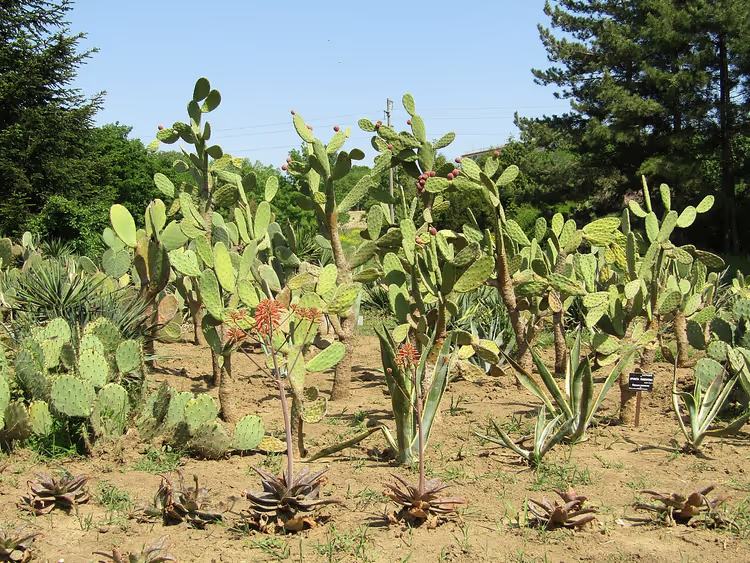
The Ecopark covers a large area and connects natural and artificial ecosystems. Rare trees, shrubs, and grasses grow here: irises, dozens of rose varieties, a tulip tree, maritime pines, ironwood, and paper mulberry.
There is a jockey club on the grounds where you can ride horseback or in an antique carriage. In March, the Horse Festival is celebrated here, and there is also a biological station and a plant market. Part of the garden looks like a wild corner of nature, and it's a convenient spot for a picnic with barbecue. The garden spans more than thirty hectares, so allow a couple of hours for your walk and wear comfortable shoes. Kids are thrilled by the small waterfall, and gardeners never leave without seedlings or an exotic houseplant. People staying at nearby hotels often stop by.
 © Alicia Fagerving · CC BY-SAPhoto: Alicia Fagerving, CC BY-SA (https://creativecommons.org/licenses/by-sa/3.0), Wikimedia Commons
- How to get there: on the outskirts of Varna, easiest to reach from the center by bus or taxi.
- Who it's for: families with children and plant lovers.
19. Historical and ethnographic complex "Fanagoria"
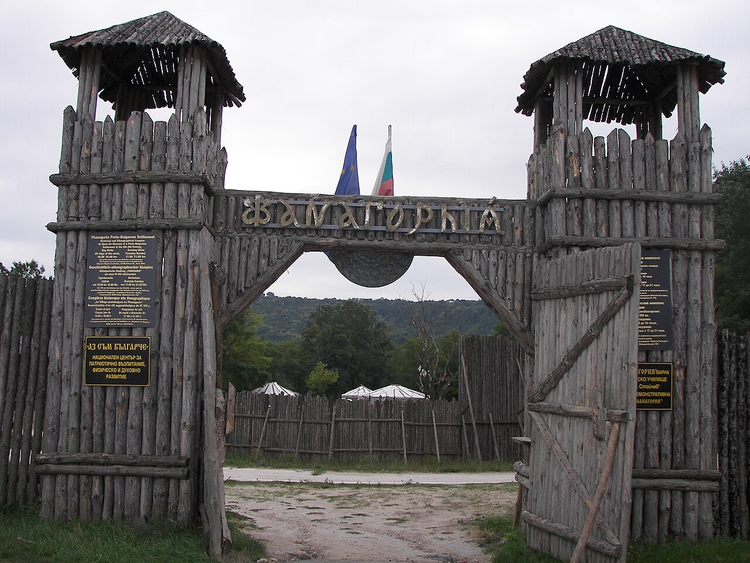
The complex recreates a military camp from the era of the First Bulgarian Empire: wooden defensive structures, workshops, yurts, and a pagan shrine. Construction began in the early 2000s, and "Fanagoria" opened a year later. Here you can clearly see what a camp looked like many centuries ago.
 © www.vacacionesbulgaria.com · CC BY-SAPhoto: www.vacacionesbulgaria.com, CC BY-SA (https://creativecommons.org/licenses/by-sa/4.0), Wikimedia Commons
Costumes from that period, weapons, and household items have been recreated. The grounds include an archery range, spectator seating, and a riding school for children. In the evening, you can watch an equestrian show, and at workshops you can try your hand at an ancient craft. Local souvenirs replicate ancient objects, and you won't find anything like them elsewhere. The organizers welcome groups and entire families, and lectures are offered for guests. The complex continues to grow: plans include a full fortress, a suspension bridge, and an Orthodox church.
- Hours: the complex welcomes guests every day except Monday.
- How to get there: outside the city, from Varna by bus or taxi.
- Who it's for: families with children and those interested in Bulgarian history.
20. Aladzha Monastery
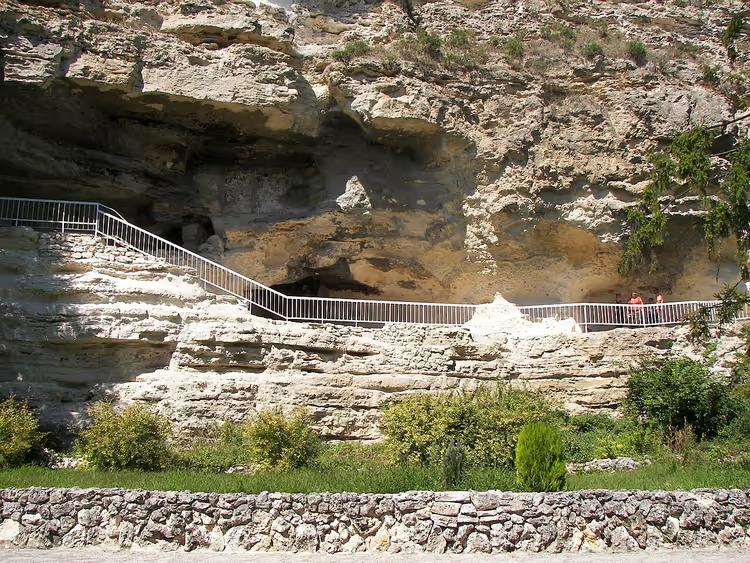
The monastery is located in Golden Sands Park, and the name "Aladzha" translates as "colorful." Monks lived here in the 13th and 14th centuries. Nearby there is a network of caves where people settled as early as the first centuries of Christianity: pottery, coins, and various artifacts were found there.
The Ottomans heavily damaged the monastery, but hermits returned to the caves until the 18th century. The first level had cells, a church, a refectory, and storerooms; the second level had a chapel. In the mid-1960s, the monastery was recognized as a cultural monument of national significance. A museum recreating the monastery's past was built nearby, and you can also buy books and souvenirs there.
 © www.vacacionesbulgaria.com · CC BY-SAPhoto: www.vacacionesbulgaria.com, CC BY-SA (https://creativecommons.org/licenses/by-sa/4.0), Wikimedia Commons
- Cost: €5 for adults, €3 for students, free for children under 7 (as of 09/2026, official museum website).
- How to get there: within Golden Sands Park, from Varna by bus or taxi.
- The catch: steep stairs lead to the rock chambers, so you can't get up with a stroller.
One-day Varna itinerary on the map
If you want to fit your trip into one day, here's a suggested order. Spend the morning in the center: the Dormition Cathedral, Knyaz Boris I Boulevard, the Archaeological Museum. After lunch, head down to the Sea Garden and pick one: the dolphinarium, the zoo, or the Roman Baths.
Put the outlying sites in a separate block. Euxinograd and "Fanagoria" are easy to combine, and leave Aladzha for the morning of the second day. That way you won't spend half a day on the road and won't get worn out from transfers.
Plan your time with a buffer. Each museum takes about an hour, lunch in the center another hour, and the trip from the center to outlying sites eats up half an hour. Leave the evening for a walk through the Sea Garden and dinner by the sea: the sunset here is the best in the city.
A one-day route around Varna
Places on the map
- 1Cathedral of the Assumption Active church with golden domes in the city centre
- 2Archaeological Museum Gold of the Varna Necropolis, halls arranged by era
- 3Knyaz Boris I Boulevard Main pedestrian street from the square to the Sea Garden
- 4Sea Garden Main green area of the city along the sea
- 5Nicolaus Copernicus Planetarium and Observatory Tower with a Foucault pendulum, lectures on stars and planets
- 6Zoo Over seventy species of animals and birds
- 7Terrarium Snakes, lizards, turtles and frogs next to the zoo
- 8Naval Museum A torpedo boat, yacht and guns on an open-air site
- 9Roman Thermae The largest Roman baths in the Balkans, ruins from the 2nd century
- 10Euxinograd Palace Summer residence of Bulgarian rulers with gardens
- 11Varna Opera House Operas, operettas and musicals in a building from the late 1940s
- 12Armenian Church of St. Sarkis Church with a multi-faceted dome and no iconostasis
- 13Fiesta Dolphinarium Bottlenose dolphin show, swimming by appointment
- 14Museum of Varna History Resort town from the late 19th to early 20th century
- 15Ethnographic Museum Life of the region in the 19th and early 20th century, costumes and tools
- 16Retro Museum Bulgaria of the socialist era, cars and wax figures
- 17Vladislav Varnenchik Park-Museum Weapons and armour from the 15th-century battle of Varna, mausoleum
- 18Varna Necropolis Necropolis from the late fifth millennium BC
- 19University Botanical Garden Ecopark Rare trees and flowers on more than thirty hectares
- 20Fanagoria Historical-Ethnographic Complex Military camp of the First Bulgarian Empire, reconstruction
- 21Aladzha Monastery Rock monastery from the 13th-14th centuries in Golden Sands park
We've marked all twenty spots on the map above so you can build your own route. Open it on your phone and walk through the center on foot, so you don't miss anything.
Tours and tickets in Varna
Guided tours, skip-the-line tickets and activities — most offers can be cancelled free of charge.
See offers on GetYourGuideThe widget loads once you give your consent.
⁉️🤔 Frequently asked questions
How much will tickets cost for a day?
There's plenty to see for free in the center: the cathedral, the boulevard, the Sea Garden, and the Roman Baths from the outside. Paid sites are the Archaeological Museum at €10 and the Roman Baths at €4 for adults. With kids, the daily museum budget stays modest, since children under 7 get in free (as of 09/2026, official museum website).
What's closed on Mondays?
The dolphinarium is closed on Mondays, and the Archaeological Museum is closed on Sundays and Mondays from October through April. The "Fanagoria" complex also doesn't welcome guests on the first day of the week. Plan your walks around the center for the start of the week and save museums for other days (according to the museum).
Can you see all twenty places in one day?
Honestly, no. On foot you can cover the center and the Sea Garden, which is about a third of the list. The outlying sites are outside the city and require transport. Pick five to seven places that match your interests and don't chase quantity.
How do you get to the outlying sites?
Euxinograd Palace, the Vladislav Varnenchik Park-Museum, and "Fanagoria" are outside the city. Buses run there from the center, but a taxi is more convenient. To reach Aladzha Monastery, take a bus to Golden Sands Park and then walk through the forest.
Is it worth taking a guided tour?
For the center, a guide isn't necessary: you'll see the main sights on your own. A guide is useful at the Archaeological Museum and at Aladzha, where half the meaning is lost without explanations. Ready-made tours of the city and surroundings are easy to book in advance.
In short: what's worth booking
In one day, Varna can be covered by about a third. Start with the cathedral and the boulevard, then choose the Sea Garden, the dolphinarium, or the Roman Baths. If you're traveling with kids, go for the dolphinarium and the zoo. If you love history, put the Archaeological Museum and Aladzha on your list. Those with half a day to spare will enjoy Euxinograd and "Fanagoria."
Guided tours of Varna and the surrounding area are worth booking in advance: see options on GetYourGuide.

A small editorial team writing guides for independent travel. We travel ourselves, but we haven’t been everywhere, so we check prices, opening hours and how to get there against official sources.