
















Verona in one day: 18 places on foot, with prices and opening hours
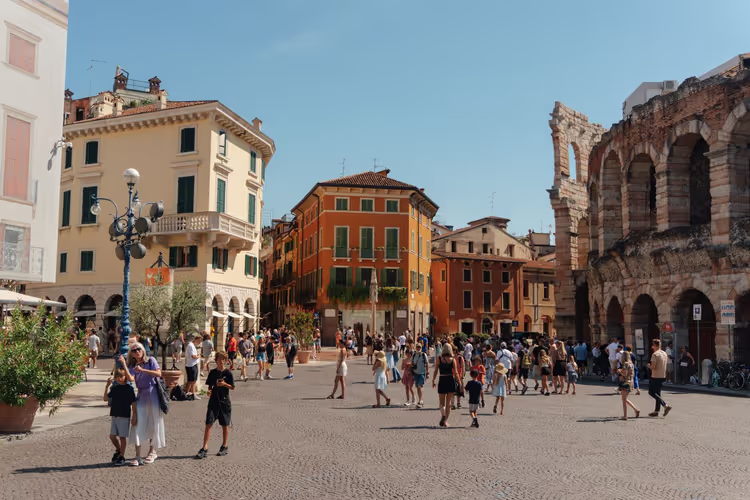
Verona is more compact than it seems: you can actually walk the historic center on foot in a day. The tricky part is something else. Tickets and schedules here change every season, and some sites close for restoration. Below is a route through the main stops in the center: what to see in order, how much it costs, and where to go early in the morning before the lines form.
Ad: this article contains affiliate links, we earn a commission if you book through them, at no extra cost to you.
A one-day walking route through Verona
💡 In short:
- Start with the Arena and Piazza Bra in the first hours after opening, before the lines and the heat.
- In the afternoon, walk through Piazza delle Erbe, Piazza dei Signori, and Juliet's House to the Adige riverfront.
- Prices and opening hours: 09/2026, verified on the official Verona museums website.
The city is divided into two parts by the Adige River. The compact core with the Arena, Piazza delle Erbe, and Juliet's House lies on the left bank, while the Giusti Palace and Castel San Pietro rise above the city from two hills.
Part of the day | What you can fit in |
|---|---|
Morning | Arena di Verona, Piazza Bra, Castelvecchio |
Midday | Verona Cathedral, Piazza dei Signori, Porta Borsari |
After lunch | Juliet's House, Lamberti Tower, Palazzo Maffei |
Evening | Castel San Pietro, Adige panorama |
Church of San Fermo
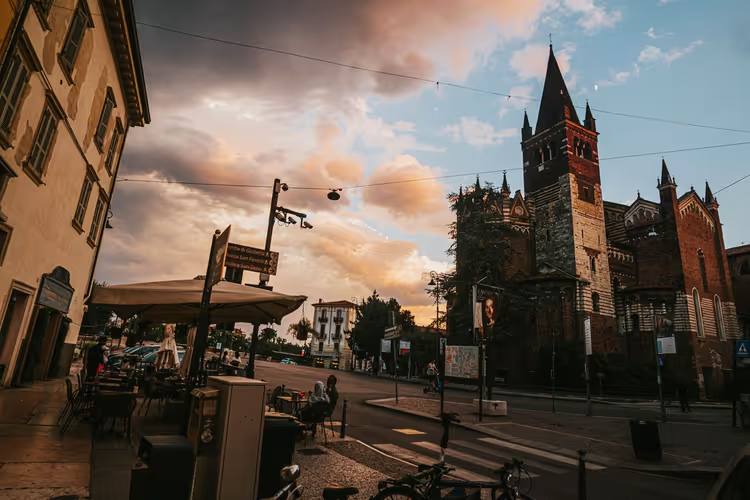
San Fermo stands away from the main tourist flow, and that's its advantage. Outside, the building stays true to Veronese Romanesque style, while inside the upper nave is covered by a wooden ribbed ceiling. Upstairs you'll find the Della Torre family mausoleum and the sculptural group "Lamentation over the Dead Christ" with frescoes by Pisanello. Go down to the lower church: it preserves the spirit of the 11th-century Benedictines, older frescoes, and the "Madonna Enthroned with Child and Two Saints."
- Cost: paid entry, you can get a ticket at the entrance.
- Opening hours: the cathedral stays open longer in summer and closes earlier in winter.
- Who it's for: for those who want to see two churches in one building without the crowds.
Castelvecchio Museum and Castle
 © Ввласенко · CC BY-SAPhoto: Ввласенко, CC BY-SA (https://creativecommons.org/licenses/by-sa/3.0), Wikimedia Commons
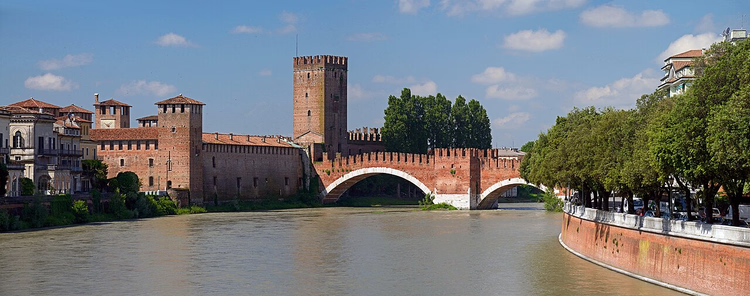
Castelvecchio on the left bank of the Adige was built as a fortress, not a museum. Military barracks stood here until the early 20th century, and only later were the halls given over to collections. You'll see remains of ancient Roman structures in red brick, Romanesque sculpture, and paintings including works by Pisanello. If you're planning at least three museums in a day, get the 24-48 hour Verona Card.
- Cost: a separate ticket costs a few euros, entry is included with the Verona Card.
- Opening hours: the museum is open daily, on Mondays the working day starts in the afternoon.
- Who it's for: for lovers of medieval architecture and painting.
Giusti Palace and Garden
 © Paolo Villa · CC BY-SAPhoto: Paolo Villa, CC BY-SA (https://creativecommons.org/licenses/by-sa/4.0), Wikimedia Commons
The Giusti Palace stands on the eastern outskirts among the hills, and it makes more sense to get here by bus. The palace is unusual in that it's built at the foot of the mountain rather than at the top. Through a closed Romanesque courtyard you come out to a belvedere with a panorama of Verona, with terraces below and an old grotto with a sculptural composition at its center. The park with its centuries-old cypresses and labyrinth is considered one of the finest Italian gardens of the late Renaissance, and Goethe loved it. A hop-on hop-off bus ticket saves you energy on the way to the hills.
- Cost: garden entry is paid, tickets are bought on site.
- Who it's for: for those ready to trade the city's tight spaces for greenery and a panorama.
Porta Leoni
 © Falk2 · CC BY-SAPhoto: Falk2, CC BY-SA (https://creativecommons.org/licenses/by-sa/4.0), Wikimedia Commons
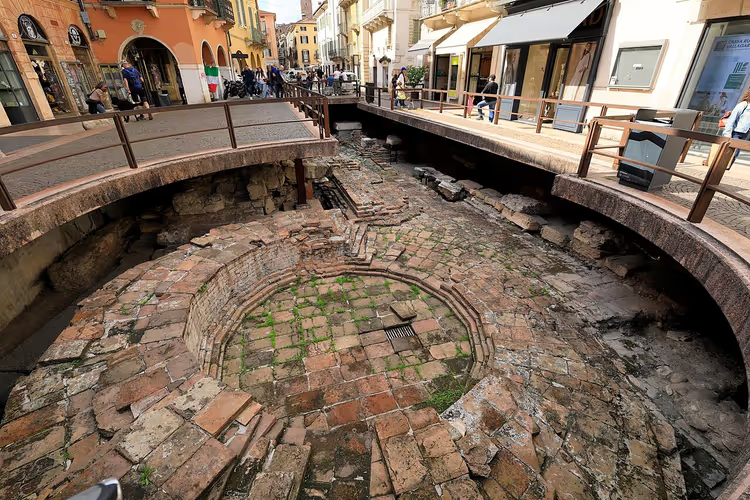
Porta Leoni is one of the oldest city gates in Verona, built back in Roman times. The name came about simply: nearby stands a tomb guarded by stone lions. In front of the double facade, note the small brick wall beside it, a fragment of an even older gate. The inner facade is clad in white stone and decorated with twisted columns, and it still faces Verona's old forum.
- Cost: viewing from the street is free.
- The catch: only the right side of the facade survives; the outer facade has not been preserved.
- Who it's for: those who enjoy the city's Roman layers without a ticket or a line.
Piazza dei Signori
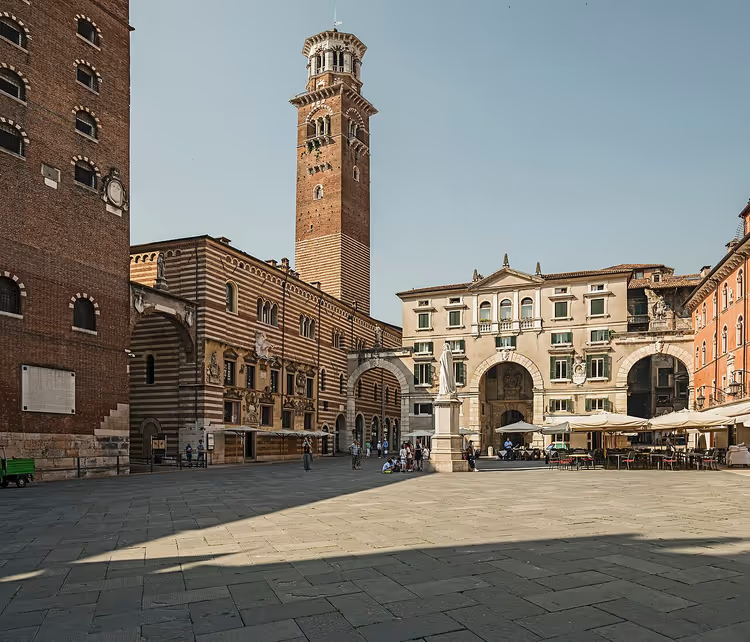 © Didier Descouens · CC BY-SAPhoto: Didier Descouens, CC BY-SA (https://creativecommons.org/licenses/by-sa/4.0), Wikimedia Commons
Piazza dei Signori, also called Piazza Dante, begins right behind Piazza delle Erbe. Once people debated politics and settled city affairs here. The ensemble was assembled from the 14th-century Scaliger arches, the Loggia del Consiglio, and the Palazzo del Podestà with the Lamberti Tower. A Carrara marble statue of Dante looks out over the square from its pedestal. From here it's easy to walk over to the Scaliger arches and the tower; they stand right next to each other, literally a couple of minutes on foot.
- Who it's for: those who want to see Gothic sarcophagi and the loggia in one place.
- How to get there: on foot from Piazza delle Erbe, about two minutes.
Scaliger Arches
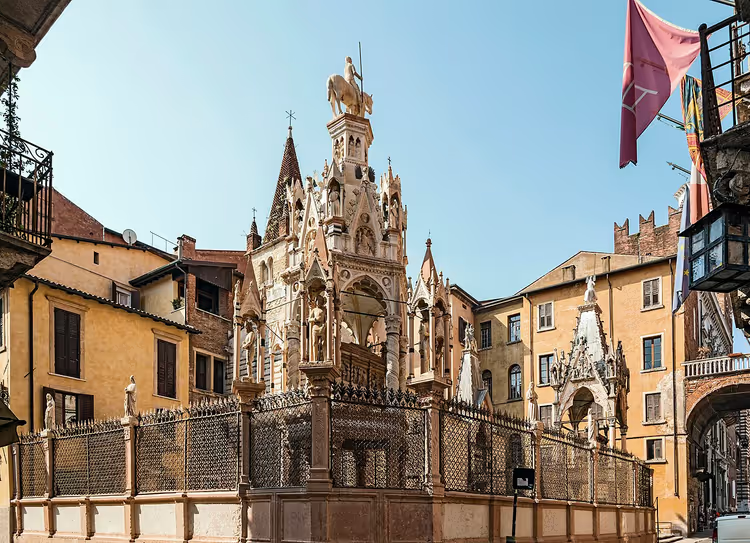 © Didier Descouens · CC BY-SAPhoto: Didier Descouens, CC BY-SA (https://creativecommons.org/licenses/by-sa/4.0), Wikimedia Commons
The slender spires of the Scaliger arches immediately draw the eye, and different shades of brown weave into the square's panorama. These Gothic tombs repeat the form of the hanging sarcophagus at the church of Santa Anastasia. They immortalized the rulers of the Scaliger family, who held power in the Middle Ages. The tomb of Cangrande I is considered one of the finest examples of Veronese sculpture; the author's name remains unknown, though Rigino is most often mentioned.
- Cost: viewing from outside is free.
- Who it's for: those interested in Gothic sculpture.
Verona Cathedral
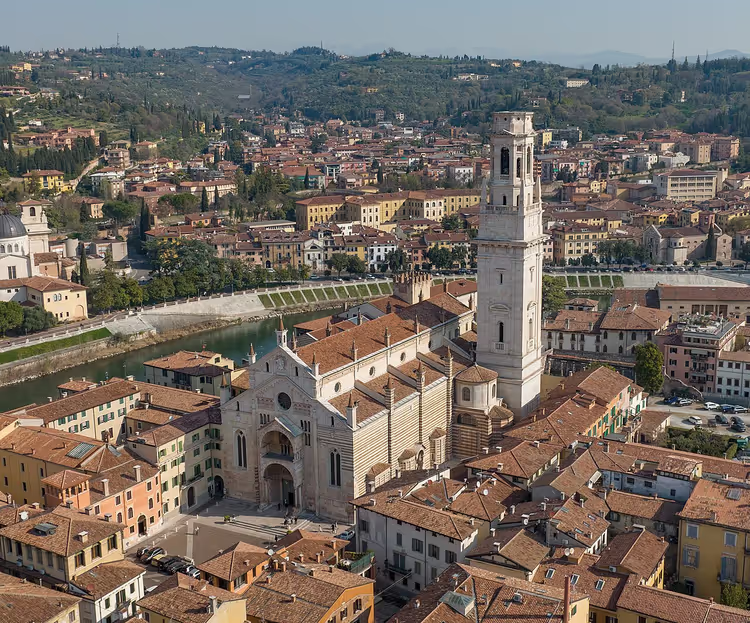 © Arne Müseler · CC BY-SAPhoto: Arne Müseler, CC BY-SA (https://creativecommons.org/licenses/by-sa/3.0/de/deed.en), Wikimedia Commons
Verona Cathedral combines Romanesque and Gothic styles. The marble facade rests on three buttresses, the oldest of which was decorated as early as the 12th century. Outside, austere Gothic gives way to Baroque and Renaissance inside. The cathedral is like a painted canvas: white and red marble columns, arches with tympanums, figures of prophets and saints. Separately, look at the two organs; their gilding and carving are complemented by 16th-century painting.
- Cost: paid entry; tickets are bought at the entrance.
- Hours: Monday through Saturday the cathedral is open during daytime hours; on Sunday the schedule is shorter.
- Who it's for: those who appreciate church architecture and marble.
Santa Anastasia
 © Didier Descouens · CC BY-SAPhoto: Didier Descouens, CC BY-SA (https://creativecommons.org/licenses/by-sa/4.0), Wikimedia Commons
Santa Anastasia is the largest church in Verona, built by the Dominicans. It stands in the oldest part of the city, near the Ponte Pietra bridge. Outside, the tall bell tower spire and the 14th-century sarcophagus of Guglielmo di Castelbarco stand out. Inside, find the "hunchbacks of Saint Anastasia," grotesque sculptures on either side of the entrance. The church floor is a monument in itself: a mosaic of gray-blue, white, and pink marble echoes the portal's cladding.
- Cost: paid entry; tickets are bought at the entrance.
- How to get there: on foot to the Ponte Pietra bridge, then along the road by the river.
- Who it's for: those who want to see Veronese Gothic from the inside.
Porta Borsari Arch
The Porta Borsari arch survives only partially, but it remains a notable Roman witness. The gate was built as a military outpost at the southern end of the city; barracks were supposed to stand behind the facade. It was richly decorated because the gate stood at the intersection of Verona's two main streets. Examine the lower tier and find the inscription "Colonia Verona Augusta" carved in stone between the two arches. It is dated to the mid-3rd century.
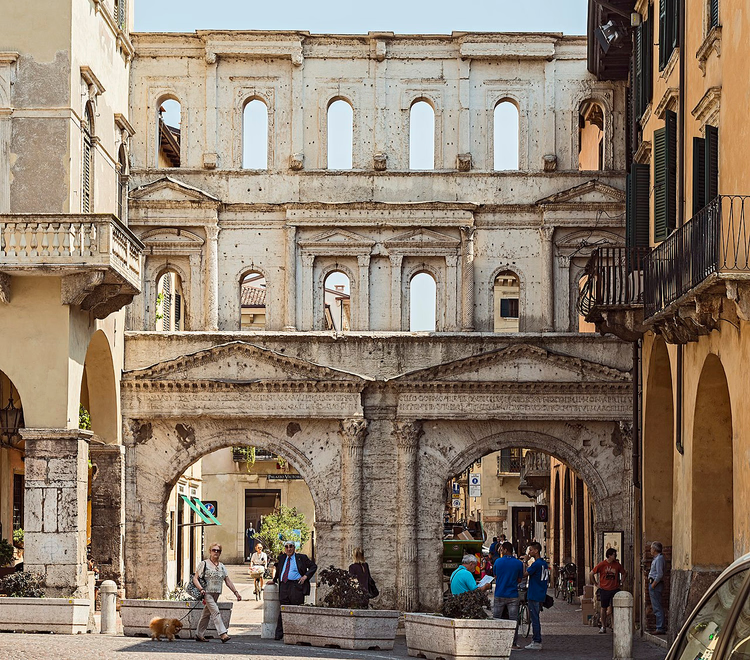 © Didier Descouens · CC BY-SAPhoto: Didier Descouens, CC BY-SA (https://creativecommons.org/licenses/by-sa/4.0), Wikimedia Commons
- Cost: viewing from the street is free.
- The catch: only individual parts of the structure have survived to this day.
- Who it's for: those following the city's Roman route.
Palazzo Maffei
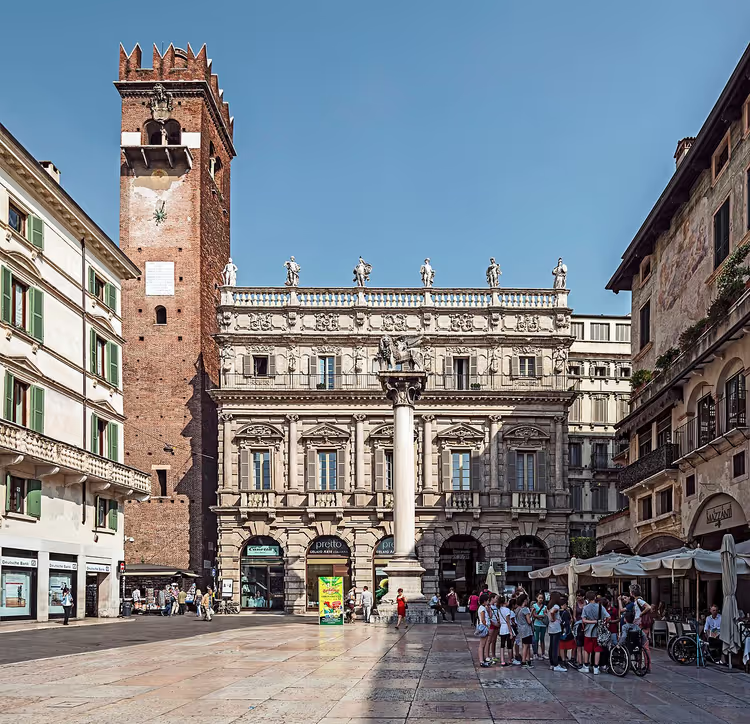 © Didier Descouens · CC BY-SAPhoto: Didier Descouens, CC BY-SA (https://creativecommons.org/licenses/by-sa/4.0), Wikimedia Commons
Palazzo Maffei adorns Piazza delle Erbe and stands on the site of the former Roman forum. According to the 15th-century plan, it was supposed to be two stories, but construction dragged on, and today it has three. The nearly two-century pause did not break the ensemble; the Baroque pomp suited the wealthiest family in Verona. A spiral stone staircase connects the cellars and the roof without a single support. On the roof, a balustrade with statues of ancient gods and heroes has been preserved.
- What's inside: since 2020, the palace has housed the Casa Museo, and you can go inside.
- Who it's for: those viewing the facades of Piazza delle Erbe.
Basilica of San Zeno Maggiore
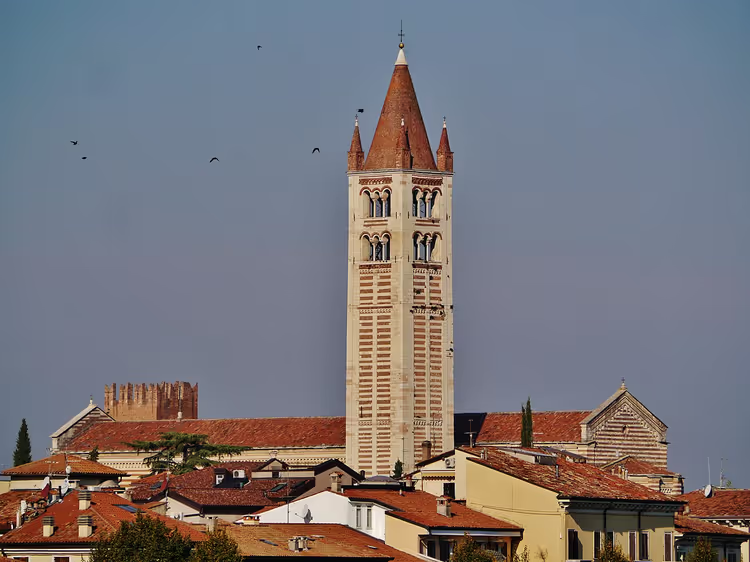 © Zairon · CC BY-SAPhoto: Zairon, CC BY-SA (https://creativecommons.org/licenses/by-sa/4.0), Wikimedia Commons
The Basilica of San Zeno Maggiore is a prime example of Veronese Romanesque style; it appeared on the city map as early as the seventh century. Bishop Zeno, who was canonized, is buried here. The crypt with his remains looks unusual: the decayed bones rest in a transparent sarcophagus, and in the evenings it is illuminated. The facade of pink marble and golden tuff looks heavy and majestic; the bas-reliefs and carvings appeared much later than the building itself.
- Cost: paid entry, tickets are bought at the entrance.
- Hours: from March to October the basilica is open longer, on Sundays the working day starts later, in winter it closes earlier.
- Who it's for: for those who have made it to the far part of the center.
Piazza delle Erbe
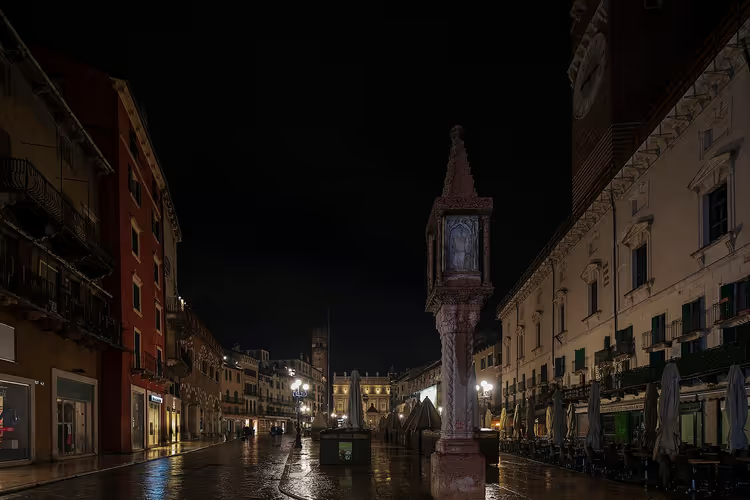 © Maurizio Moro5153 · CC BY-SAPhoto: Maurizio Moro5153, CC BY-SA (https://creativecommons.org/licenses/by-sa/4.0), Wikimedia Commons
Piazza delle Erbe, or the Square of Herbs, stands on the ruins of an ancient forum. During the day a market bustles here, and hundreds of tourists make it hard to see the facades. The best time to visit is Sunday evening: the market stalls are cleared away, and the square finally opens up in full. Then you can see Palazzo Mazzanti, the Lamberti Tower, and the fountain of the Madonna. Grab a glass of wine at one of the osterias around the perimeter and take in the square without rushing.
- The catch: during the day the square is packed with the market and tour groups, making it hard to see the facade details.
- Who it's for: for those who want to see the heart of the city at a quiet hour.
The Wall of Love
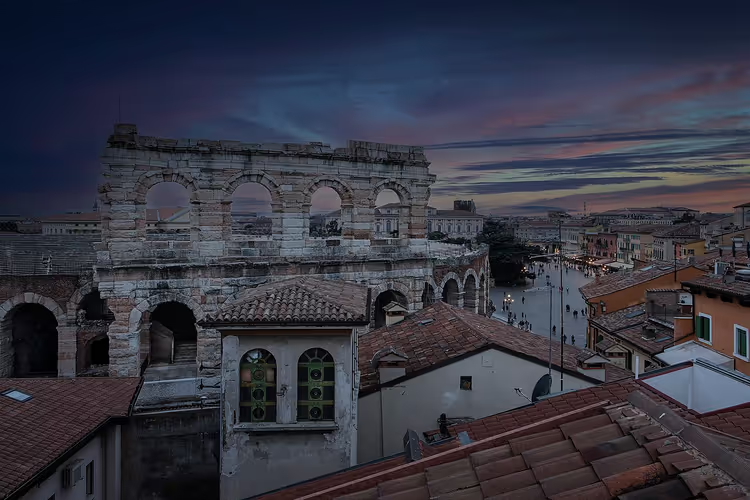 © Maurizio Moro5153 · CC BY-SAPhoto: Maurizio Moro5153, CC BY-SA (https://creativecommons.org/licenses/by-sa/4.0), Wikimedia Commons
The Wall of Love is an arched passageway before Juliet's courtyard. From the ground almost to the ceiling it is covered with thousands of declarations in dozens of languages, the inscriptions layered one on top of another. The wall appeared as a counterpoint to Shakespeare's tragedy: local couples leave wishes of love here. Even if you came alone, you can leave a few words for yourself and your loved ones. The passage is short, but it is exactly what leads to the balcony and the statue.
- Cost: the passage is free.
- Who it's for: for those heading to Juliet's House.
Juliet's House
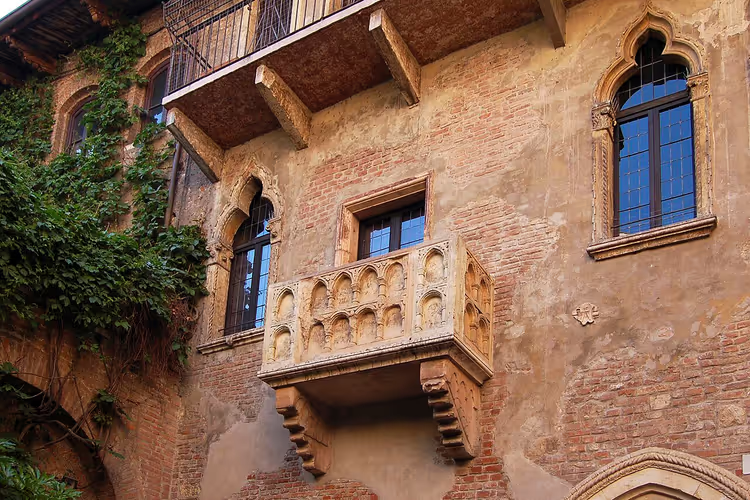 © This Photo was taken by Andrea Bertozzi . Feel free to use my photos, but please mention me as the author and send me a · CC BY-SAPhoto: This Photo was taken by Andrea Bertozzi . Feel free to use my photos, but please mention me as the author and send me a, CC BY-SA (https://creativecommons.org/licenses/by-sa/4.0), Wikimedia Commons
Juliet's House is actually the house of the Cappello family. Shakespeare never visited Verona, but fans of the play found a suitable setting, and that is how the city's tourist symbol came to be. Hundreds of thousands of people come to the courtyard with its carved balcony and the bronze statue of Juliet. The courtyard used to be free to enter, but as of 04/01/2026 a ticket is required both for the courtyard and the house itself; there is a single entrance, through Teatro Nuovo in Piazzetta Navona (as of 09/2026, official page of Juliet's House). Reservations are made online in advance.
- Cost: a ticket is mandatory, priced in the low double digits.
- Hours: the house is open daily; on Mondays the working day starts in the afternoon.
- The catch: in summer, morning slots and the line to the statue get snapped up quickly.
Lamberti Tower
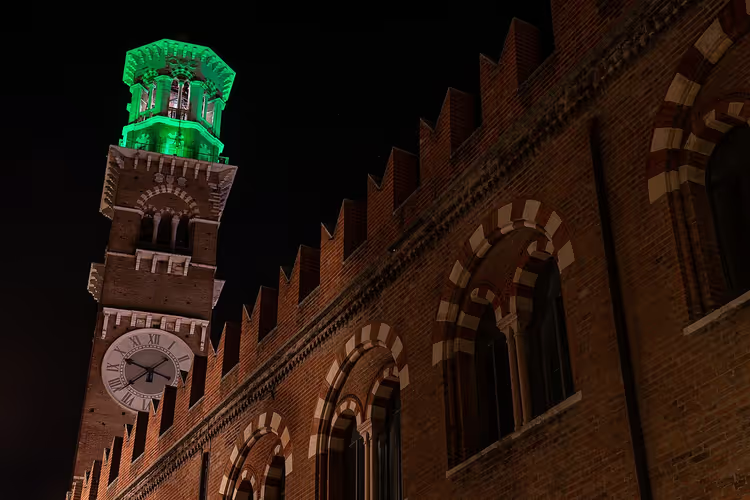 © Gianfranco z · CC BY-SAPhoto: Gianfranco z, CC BY-SA (https://creativecommons.org/licenses/by-sa/4.0), Wikimedia Commons
The Lamberti Tower remains the tallest structure in Verona. Its frame was laid in the twelfth century as part of the Palazzo della Ragione, but lightning severely damaged the top. When completing it, the builders no longer tried to imitate the style: the lower tiers are made of tuff and brick, above that is pure medieval masonry, and at the top a marble bell tower. The climb offers the best panorama of the center. From 08/31 the tower is open daily from 9:30 to 21:00, reservations are recommended (as of 09/2026, official website). The skip-the-line ticket to the Lamberti Tower includes admission to the modern art gallery.
- Cost: the ticket costs a few euros and covers the gallery.
- Who it's for: for those willing to climb for the panorama.
Arena di Verona
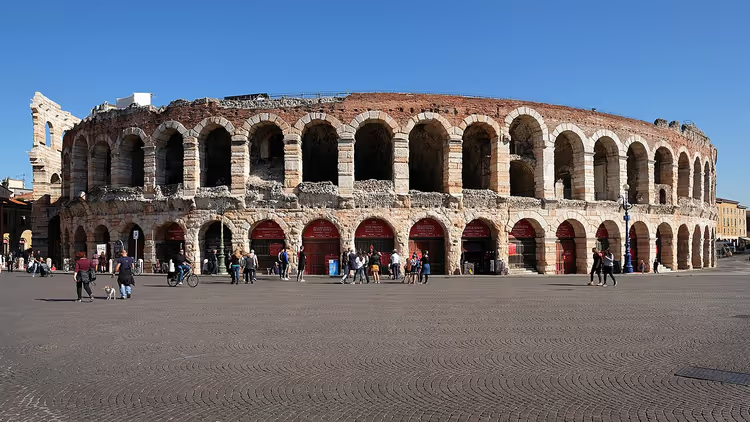 © Claconvr · CC BY-SAPhoto: Claconvr, CC BY-SA (https://creativecommons.org/licenses/by-sa/4.0), Wikimedia Commons
The Verona Arena is a monumental amphitheater made of pink marble, built by the Romans. Today it is the third largest structure of its kind in Italy. The acoustics are so good that opera is performed here in summer. In 2026, the festival runs from June 12 to September 12 (as of 09/2026, schedule on the Arena's official website). A daytime visit and an opera evening are two separate tickets, and it's easy to mix them up when booking. Opera prices are calculated separately from the sightseeing entrance fee.
- Cost: paid entry, concert tickets are purchased separately.
- Hours: the Arena is open for visits during the day; on Mondays the working day starts in the afternoon.
- Who it's for: for those coming in summer for open-air opera.
Palazzo della Ragione
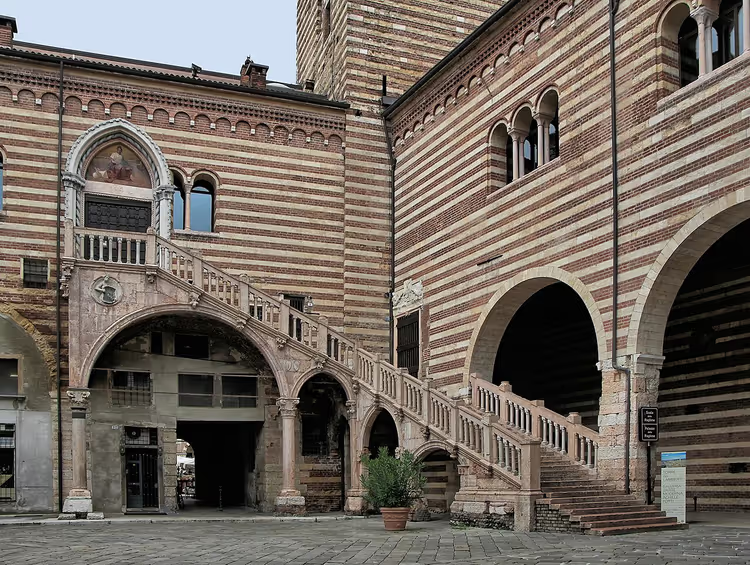 © H. Zell · CC BY-SAPhoto: H. Zell, CC BY-SA (https://creativecommons.org/licenses/by-sa/3.0), Wikimedia Commons
The Palazzo della Ragione, or Palace of Reason, has survived several destructions since the twelfth century. The square building covers more than two thousand square meters, making it one of the largest structures of the Middle Ages. The facade facing Piazza delle Erbe is in the neoclassical style, while the second facade incorporates Renaissance features. A huge marble staircase leads to the main tower, considered the most photographed in the city. Inside are frescoes, paintings, and sculptures.
- Cost: paid entry, tickets are bought at the entrance.
- Hours: the palace is open longer in summer; in winter the working day is shorter.
- Who it's for: for those who have already walked through Piazza delle Erbe.
Castel San Pietro
 © trolvag · CC BY-SAPhoto: trolvag, CC BY-SA (https://creativecommons.org/licenses/by-sa/3.0), Wikimedia Commons
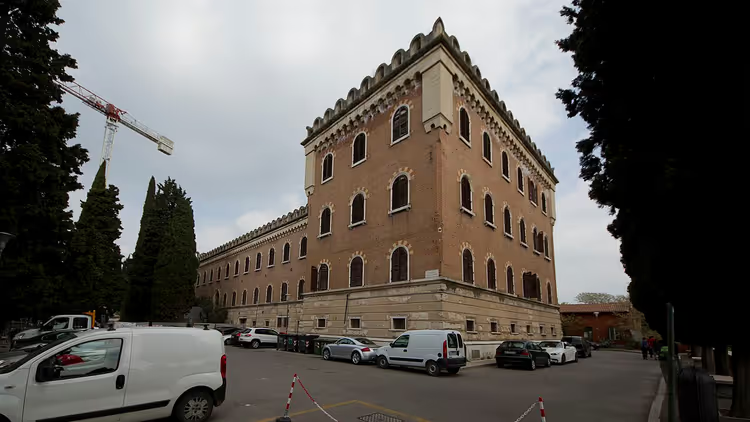
Castel San Pietro stands on the site of an ancient Roman temple. The hill is encircled by the Adige, and from the height you can see the whole city, which is why the location had strategic value. The modern observation deck offers the best view of Verona. The fortress stood abandoned for a long time; restoration work is now underway, with plans to open a museum under its vaults. Entry to the grounds is free. You can climb on foot or take the funicular, which has been running since 2017.
- Cost: entry to the grounds is free.
- Who it's for: for those who want a final panoramic view of the city.
Tours and tickets in Verona
Guided tours, skip-the-line tickets and activities — most offers can be cancelled free of charge.
See offers on GetYourGuideThe widget loads once you give your consent.
⁉️🤔 Frequently asked questions
Is one day enough for Verona?
Yes, if you stick to the center. The main sights are within a couple of kilometers of each other, and on foot you can cover the Arena, Piazza delle Erbe, Juliet's House, and the embankment without transport. The Giusti Palace and Castel San Pietro on the hills require extra energy and time. One day gives you an overview of the city, not a deep visit to every museum.
What does the Verona Card give you and how much does it cost?
A 24-hour card costs 33 €, a 48-hour card costs 38 €; as of 01.09.2026 the price also includes city transport (as of 09/2026, Verona Card rates). It gives free entry to the museums and churches on the card's list.
Do you need to book Juliet's House in advance?
Yes. Book online; this also applies to Verona Card holders.
When is the best time to go to the Verona Arena?
During the day the Arena is open for visits, and in summer evenings the opera festival takes place here.
Where to eat in the center without overpaying?
Piazza delle Erbe has many tourist tables with a markup. On Sundays the market stalls on the square are removed, and the evening becomes calmer here. Locals appreciate the trattorias in the alleys around the square: the menu is shorter there and the bill is lower than on Piazza delle Erbe itself.
In short: what to book
Verona rewards those who get up early. On weekdays before opening there are almost no queues, so start with the Arena and Castelvecchio. If you want open-air opera, check the festival schedule months before your trip; good seats go first.
- If you're going for the opera: Verona Arena tickets on Tiqets.
- If you want the city with a guide: Verona tours on GetYourGuide.

A small editorial team writing guides for independent travel. We travel ourselves, but we haven’t been everywhere, so we check prices, opening hours and how to get there against official sources.