
















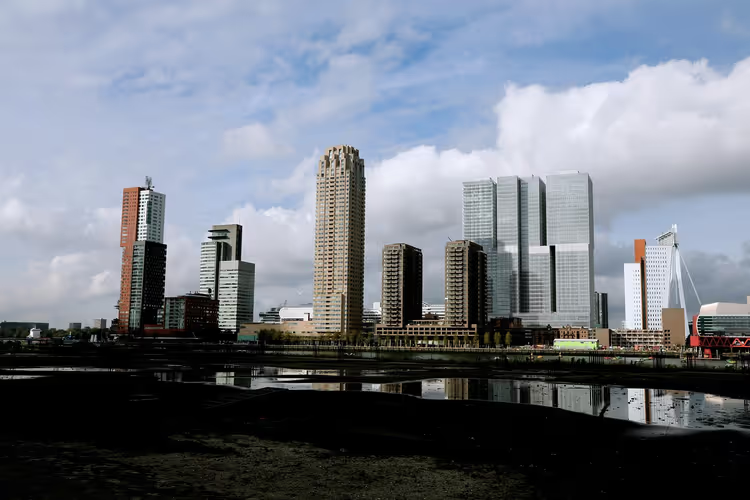
Rotterdam in two days: 25 places from the Euromast to Kinderdijk
Rotterdam is unlike other cities in the Netherlands. The historic center was wiped out by World War II bombing, and the city was rebuilt from glass, wood, and concrete. It's easy to get overwhelmed here: twenty-five very different sights are scattered across both banks of the Nieuwe Maas.
This guide is meant to help you plan. You'll find distances, approximate prices, opening hours, and practical tips for each place. We checked prices and hours on the official websites of the venues and noted the date of verification.
One thing worth understanding up front: the city is compact. You can walk from the Erasmus Bridge to the Museum Park, while Kinderdijk is better saved for a separate trip.
Ad: this article contains affiliate links, we earn a commission if you book through them, at no extra cost to you.
What to see in Rotterdam: a two-day plan
💡 In short:
- Start with the center: the Erasmus Bridge, City Hall, the White House, and the Cube Houses are all within walking distance of each other.
- Spend your first day on the center and Delfshaven, and your second day in the Museum Park. Save Kinderdijk for a separate trip.
- Book tickets for Depot Boijmans Van Beuningen and Diergaarde Blijdorp online in advance, entry there is by time slot.
- Prices and opening hours: 09/2026, checked on the Depot Boijmans Van Beuningen pricing page.
Your priority | Where to start |
|---|---|
First visit to the city | Erasmus Bridge, Euromast, Delfshaven |
Trip with kids | Diergaarde Blijdorp, Miniworld Rotterdam, Plaswijckpark |
Art and architecture | Depot Boijmans Van Beuningen, Kunsthal Rotterdam, Chabot Museum |
Sights without tickets | Sculpture waterfront, Het Park, the White House, Delfshaven |
1. Erasmus Bridge
 © F.Eveleens · CC BYPhoto: F.Eveleens, CC BY (https://creativecommons.org/licenses/by/3.0), Wikimedia Commons
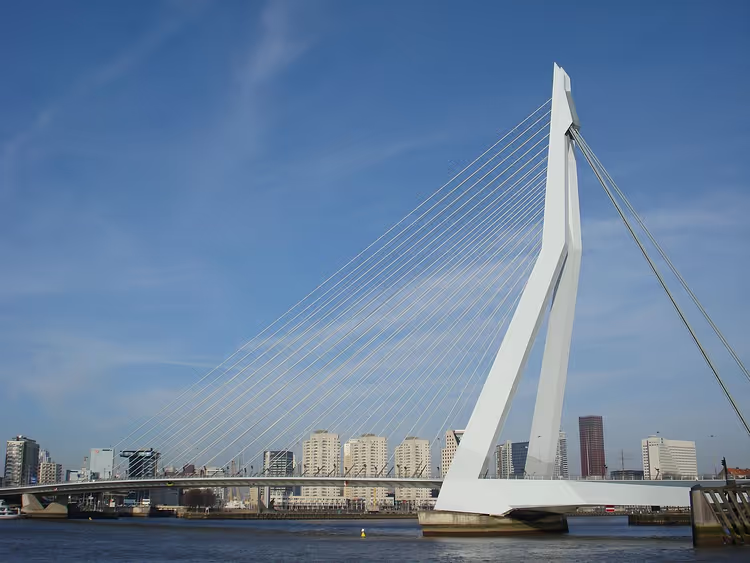
The Erasmus Bridge (Erasmusbrug) connects the north and south of the city across the Nieuwe Maas. The total length of the bridge is 802 meters, and the pylon rises to 139 meters, which is why the bridge has become the main symbol of Rotterdam (as of 09/2026, Wikipedia). Construction ran from 1986 to 1996, and the bridge was opened by Queen Beatrix.
Locals call the curved pylon "the Swan." The cable-stayed and bascule sections were combined in a single structure, which was a bold engineering solution for its time.
- How to get there: from Rotterdam Centraal, take the tram to the Willemsplein stop, then walk about five minutes (per the map).
- When to go: the lighting comes on in the evening, so you'll get the best shots after sunset.
- The catch: the waterfront by the bridge is windy, so bring a jacket if you're walking along the water.
2. Rotterdam City Hall
 © F.Eveleens · CC BYPhoto: F.Eveleens, CC BY (https://creativecommons.org/licenses/by/3.0), Wikimedia Commons
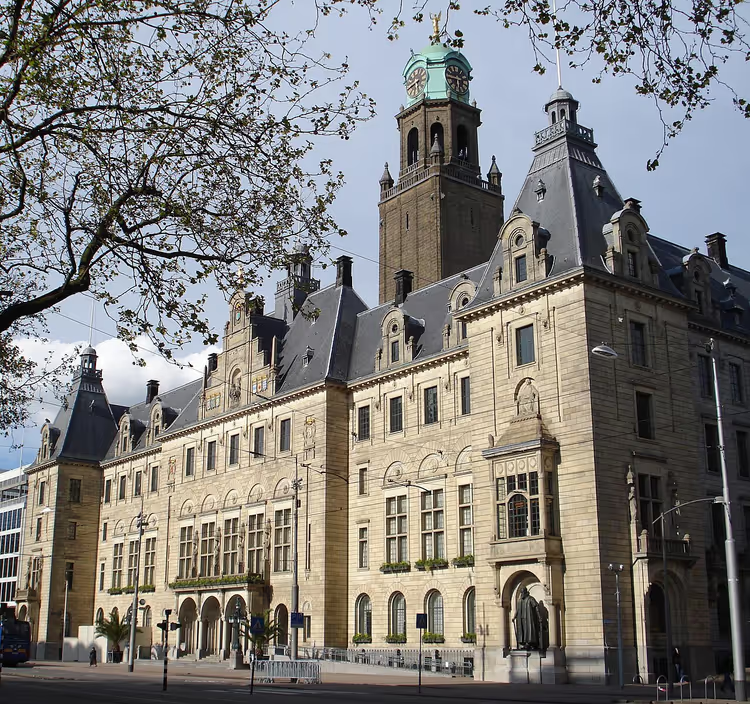
City Hall stands on Coolsingel, and its neo-Renaissance facade survived the bombing of the city. The new building was constructed in the early part of the last century to a design by architect Evers: Queen Wilhelmina laid the foundation stone, and the shell limestone for the walls took five years to put in place.
Inside is the Burgerzaal, where receptions, ceremonies, and organ concerts are held. The carillon has nearly fifty bells, and the facade is decorated with sculptures representing national traits: caution, reliability, perseverance, and enterprise.
- How to get there: get off at Stadhuis metro station, from there it's a one-minute walk to the facade (per the map).
- Access: you can get into the Burgerzaal on a tour or at a concert; the exterior of City Hall is freely viewable.
- Who it's for: for those who want to see what official Rotterdam architecture looked like before the war.
3. Euromast
 © Thomas Dahlstrøm Nielsen · CC BYPhoto: Thomas Dahlstrøm Nielsen, CC BY (https://creativecommons.org/licenses/by/4.0), Wikimedia Commons
The Euromast was built for the Floriade horticultural exhibition. Architect Huig Maaskant proposed a tower shaped like a ship's mast with a bridge at the top, and his design won the competition. The structure was later extended with a space tower, and it became the tallest building in the country.
Today it houses restaurants, a souvenir shop, and hotel suites. At the top, two observation decks and an open terrace await you, from which you can rappel down. The elevator in the added section rotates around its axis as it ascends, so you can see the city from both sides.
- Tickets: check prices and opening hours on the official Euromast website, entry is by time slot.
- How to get there: take the tram or metro to Dijkzigt station, from the stop it's a five-minute walk to the tower (per the map).
- Who it's for: for those who want to see the port and the Meuse delta from above. With small children, the upper deck rarely impresses.
4. Delfshaven
 © Michielverbeek · CC BY-SAPhoto: Michielverbeek, CC BY-SA (https://creativecommons.org/licenses/by-sa/3.0), Wikimedia Commons
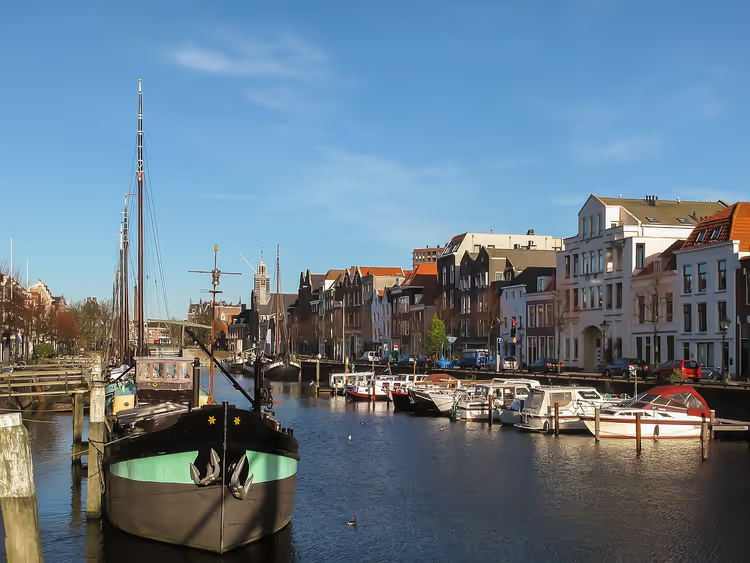
Delfshaven grew up on the right bank of the Nieuwe Maas as a separate harbor and later became an independent municipality. The stone warehouses, narrow canals, and boats on the water have survived just as they were centuries ago, so it's easy to forget you're in a big city.
See the Pilgrim Fathers' Church with its bell-shaped facade, the restored windmill, and Pilgrim, the only brewery in Rotterdam. At the quay stands a replica of the ship Delft, which took part in naval battles in the eighteenth century.
- How to get there: take the metro to Delfshaven station, then walk ten minutes along the canal (see map).
- Who it's for: anyone who loves old Europe and wants to have lunch in a pub. For museums, head to the center instead.
- Good to know: antique shops open closer to midday; in the morning half the streets are closed.
5. Museum Boijmans Van Beuningen and Depot
 © AgainErick · CC BY-SAPhoto: AgainErick, CC BY-SA (https://creativecommons.org/licenses/by-sa/4.0), Wikimedia Commons
Museum Boijmans Van Beuningen grew out of private gifts. Its foundation was the bequest of collector Frans Jacob Otto Boijmans, and later the Van Beuningen family sold a second collection to the city. Today the holdings number tens of thousands of works, most of them donated by private collectors.
The historic building is closed for renovation, so the collection is shown at Depot Boijmans Van Beuningen. Admission costs €20, visitors under eighteen enter free, and students get a discount (as of 09/2026, checked on 14.09.2026 on the official pricing page). The museum is open Tuesday through Sunday, from 11:00 to 17:00, and the ticket is valid for the selected time slot.
- Tickets: Rotterdam museum tickets on Tiqets are sold online; few spots remain at the box office.
- How to get there: about a fifteen-minute walk from Rotterdam Centraal through the Museum Park (see map).
- The catch: until the renovation is finished, the permanent collection is only partially on display, so some galleries will be closed to you.
6. St. Lawrence Church
 © Paul van de Velde from Netherlands · CC BYPhoto: Paul van de Velde from Netherlands, CC BY (https://creativecommons.org/licenses/by/2.0), Wikimedia Commons
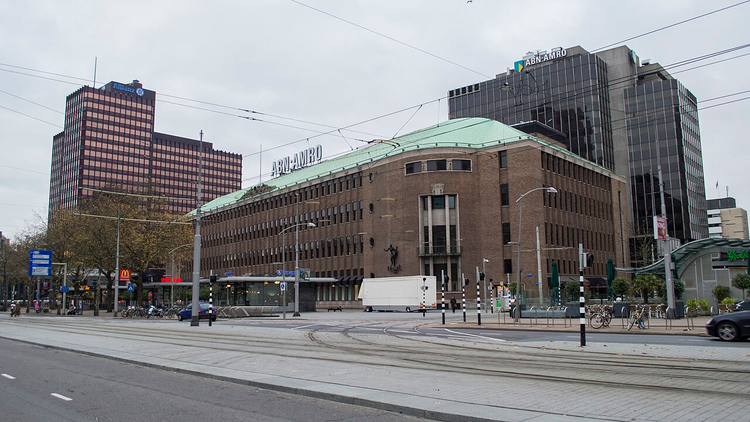
After the bombing, only the walls and part of the tower remained of the medieval St. Lawrence Church. The Gothic details were lost in later reconstructions, and the restoration was completed only in the 1960s.
Inside stands the largest organ in the country, and organ concerts are held regularly. Among the surviving furnishings you'll see bronze doors with scenes of war and peace and the tombs of Admiral Witte de With and Henry Roosevelt, an ancestor of the American president.
- Tower climb: paid, with a panorama from a height of about sixty-five meters; tickets are sold on site.
- How to get there: a ten-minute walk from Blaak metro station along Binnenrotte (see map).
- Who it's for: anyone interested in church architecture and organ music.
7. Cathedral of Sts. Lawrence and Elizabeth
 © Ymblanter · CC BY-SAPhoto: Ymblanter, CC BY-SA (https://creativecommons.org/licenses/by-sa/4.0), Wikimedia Commons
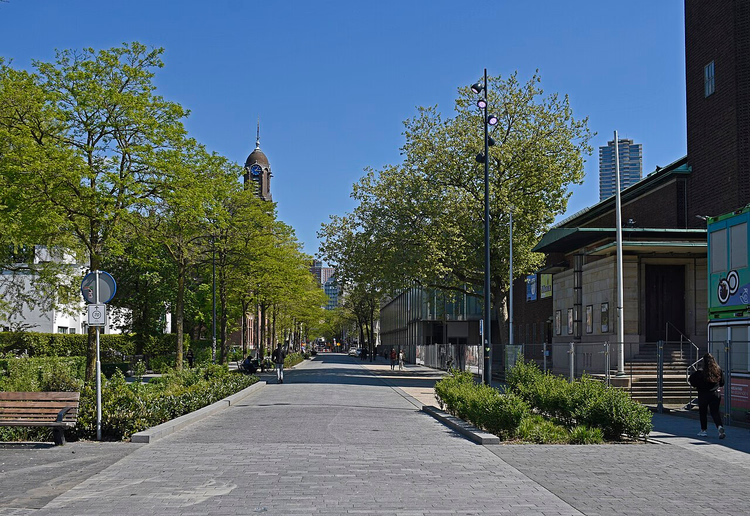
This church was built in two stages. First, at the beginning of the last century, the facade of the parish church appeared, and between the two world wars the towers were added. The pseudo-Romanesque style was maintained in every detail, so the building is easy to recognize by its massive forms.
After the restoration of 1956, the church was made a cathedral and the name of the city's patron saint, St. Lawrence, was added to its title. Tourists come here for the stained glass, sculptures, and the mosaic altar.
- How to get there: from Rotterdam Centraal take the tram toward the Museum Park, then walk to Mathenesserlaan (see map).
- Dress code: this is an active church, so choose modest clothing and don't disturb parishioners during services.
- Who it's for: anyone who wants to see mosaics and stained glass without the lines of museum galleries.
8. Museum Park
Museum Park is divided into four parts: walking paths, a romantic area with a bridge and flower beds, a space for city events, and a well-kept garden. The ponds collect rainwater from the city center, so the park also works as part of the drainage system.
The park got its name from its neighbors. Along its perimeter stand the Museum Boijmans Van Beuningen, Kunsthal Rotterdam with rotating exhibitions, the Netherlands Architecture Institute, the Chabot Museum, and the Natuurhistorisch Museum Rotterdam. Nearby is the Sonneveld House, an example of functionalism.
- Getting there: take the metro to Eendrachtsplein, then it's a five-minute walk to the park (see map).
- Good to know: park entry is free, but the museums around it follow their own schedules and closing days.
- The catch: during city events, some lawns are closed off, and finding a quiet spot gets harder.
9. Cube Houses
 © W. Bulach · CC BY-SAPhoto: W. Bulach, CC BY-SA (https://creativecommons.org/licenses/by-sa/4.0), Wikimedia Commons
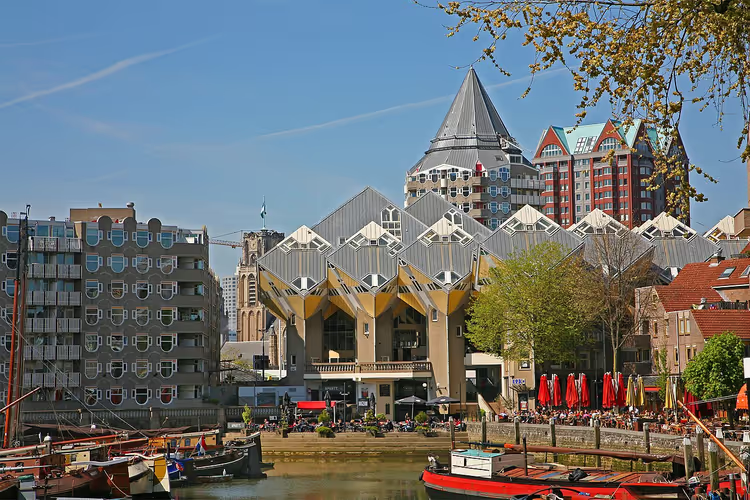
The Cube Houses were designed by architect Piet Blom, who placed the cubes on hexagonal pylons above a busy thoroughfare. Of the planned district with housing and a school, thirty-eight houses were built.
Each house has three floors, all with different shapes: a triangle, a polygon, and a pyramid. Some apartments are residential, so you should keep quiet in the courtyard. One apartment is open as a museum, where you can see how this kind of home works from the inside.
- Tickets: entry to the museum apartment is paid, and tickets are sold on site.
- Getting there: take the metro or tram to Blaak station; the cubes are right by the exit (see map).
- Who it's for: photographers and fans of modern architecture.
10. Arboretum Trompenburg
 © Wilma Verburg · CC BY-SAPhoto: Wilma Verburg, CC BY-SA (https://creativecommons.org/licenses/by-sa/2.5/nl/deed.en), Wikimedia Commons
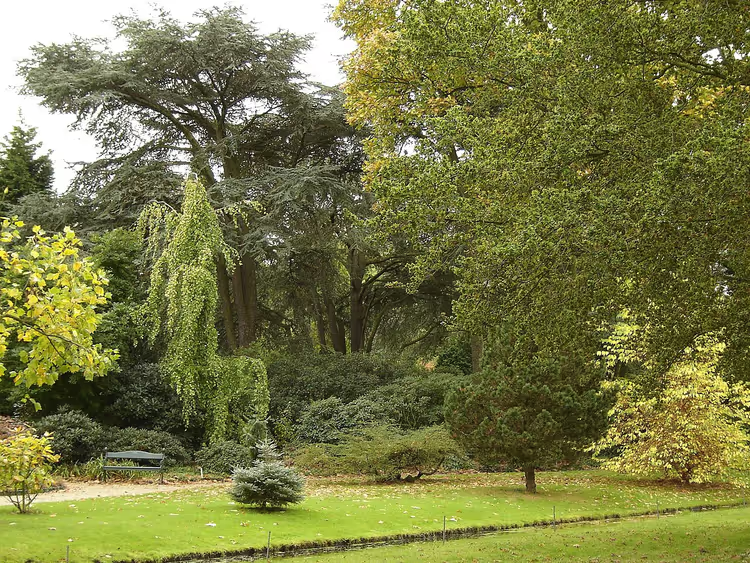
Arboretum Trompenburg began as the private collection of the Van Hoey Smith family in the mid-19th century. The garden was laid out on the city's outskirts, but the city grew around it, and taxes grew along with it, so in the 1990s the garden came under the management of a foundation.
Today it holds one of the best collections of oaks, beeches, and rhododendrons, with plants arranged in zones with different microclimates and watering. There are no amusements or cafes on the grounds: you come here for the plants, not for attractions.
- Hours: the garden follows a seasonal schedule, so check the times and prices before your visit.
- Who it's for: gardeners and dendrology enthusiasts.
- Not for: families with children who need playgrounds and cafes.
11. Diergaarde Blijdorp
 © The original uploader was Sherpa at Dutch Wikipedia . · CC BY-SAPhoto: The original uploader was Sherpa at Dutch Wikipedia ., CC BY-SA (http://creativecommons.org/licenses/by-sa/3.0/), Wikimedia Commons
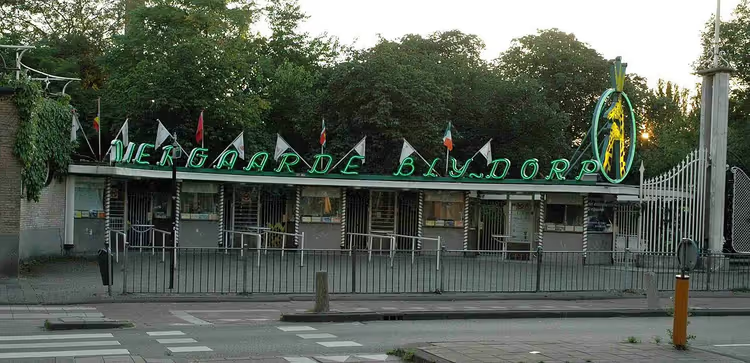
Diergaarde Blijdorp Zoo is considered one of the best in Europe. The animal collection is extensive, with rare species grouped into themed zones: Amazonica, Africa, Asia, Riviera, the Ice Cave, and the Oceanium.
In the indoor Amazonica pavilion, huge and tiny tropical butterflies live, and visitors walk through the Oceanium via a glass tunnel. The open enclosures hold okapis and western lowland gorillas, vicuñas and bison. An adult ticket costs from €27.50, and the price depends on the selected date (as of 09/2026, zoo ticket page).
- Feeding schedule: some presentations take place at fixed times; check the schedule at the entrance.
- Getting there: from Rotterdam Centraal you can reach the zoo by public transport (see map).
- Who it's for: families with children. You should set aside at least half a day for the zoo.
12. Sculpture Terrace on Westersingel
 © Qwertzu111111 · CC BY-SAPhoto: Qwertzu111111, CC BY-SA (https://creativecommons.org/licenses/by-sa/4.0), Wikimedia Commons
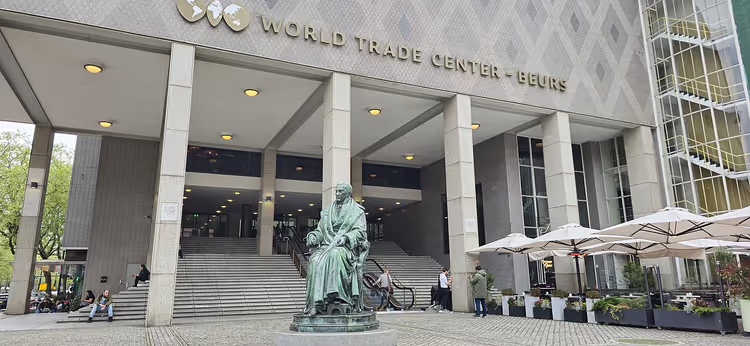
The embankment of the Westersingel canal has been turned into a free open-air gallery. Nearly twenty works are gathered here, and you can see them at any time of day: the low pedestals were deliberately made low so the sculptures wouldn't get lost in the greenery.
Among the artists are Auguste Rodin, Carel Visser, Umberto Mastroianni, and Joel Shapiro. Some pieces, such as "The Walking Man" and "The Large Musician," stand on pedestals, while "Height" with a tree suspended a meter above the ground and the multicolored logs lie right in the middle of the lawn.
Several works once sparked controversy. Shapiro's "Untitled," in the opinion of residents, didn't fit the landscape, and Visser's "Mother and Child," made of railroad ties and a dismantled doll, still divides viewers into two camps.
- Cost: free, open around the clock.
- Getting there: from Rotterdam Centraal, walk along Westersingel for about ten minutes (see map).
- When to go: in the morning the light falls more evenly on the sculptures, so you'll get better photos.
13. Miniworld Rotterdam
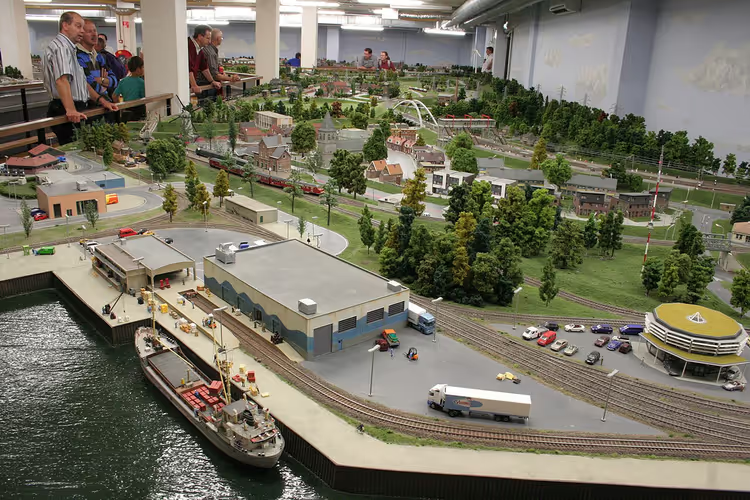
Miniworld Rotterdam shows the city and its surroundings at a scale of 1:87. The model covers more than five hundred square meters and is considered one of the largest in the world, with about two hundred of those dedicated to the city itself.
You can see suburbs, coastal landscapes, green polders, and Kinderdijk, while trains and cars move along the model's roads without stopping. Day and night on the model alternate every twenty-four minutes.
Besides the model, the building houses a restaurant, workshops, and a souvenir shop. Through glass you can watch staff assembling new parts and managing traffic from the control room.
- Tickets: entry is timed, tickets are sold online and at the counter, check the price before your visit.
- Getting there: from Rotterdam Centraal, walk about ten minutes along Weena (see map).
- Who it's for: families with children and anyone who loves miniatures. If models don't interest you, the visit will feel long.
14. Maritiem Museum Rotterdam
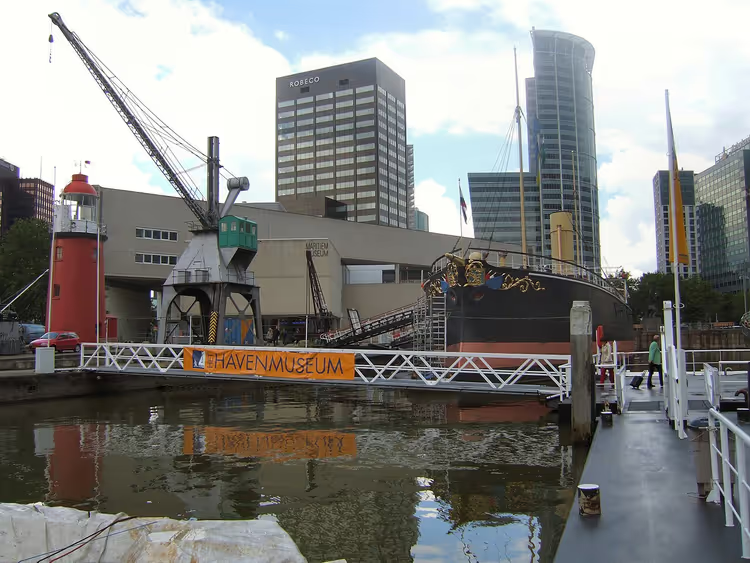
Maritiem Museum Rotterdam is considered the country's oldest maritime museum, and its collection dates back to the late 19th century. The holdings include ship models, navigational instruments, atlases, globes, and ship equipment.
The main part of the exhibition is not in the halls but in the harbor: more than twenty vessels are moored at the open-air site, from modern yachts to ships from the early 19th century. You can board some of the ships and explore them from the inside. On the ram ship "Buffel," the working atmosphere has been recreated, from sounds in the sailors' shower room to music in the officers' cabins.
- Tickets and hours: the museum follows a seasonal schedule, so it's worth checking the times in advance.
- Getting there: from Rotterdam Blaak station, walk about fifteen minutes to Leuvehaven (see map).
- Who it's for: anyone interested in shipping and port history.
15. Kinderdijk Village
 © Lucas Hirschegger · CC BY-SAPhoto: Lucas Hirschegger, CC BY-SA (http://creativecommons.org/licenses/by-sa/3.0/), Wikimedia Commons
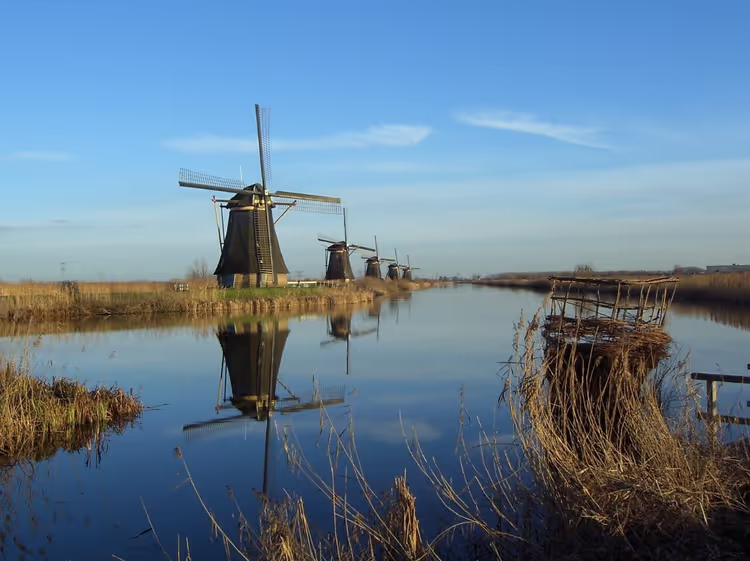
Kinderdijk Village is a UNESCO World Heritage site and is considered the most recognizable landscape in the Netherlands. Nineteen windmills were built in the mid-18th century to pump water out of the polders, and they are still in working order: if the modern pumps fail, the mills will be started up again. One mill is residential, and another houses a museum.
An adult ticket costs €21, a child ticket for ages four to twelve costs €9, toddlers enter free, and there's a discount online (as of 09/2026, official ticket page). The ticket is valid only on the selected day and includes the museum mills, a boat tour, the Wisboom pumping station, a film, and an exhibition.
- Getting there: from Rotterdam, take the waterbus from the Erasmusbrug pier to the Kinderdijk stop; the trip takes about half an hour (see map).
- Tours: Kinderdijk tours with a guide should be booked in advance; spots run out in summer.
- The catch: the ticket is tied to a date and is non-refundable, so choose your day carefully.
16. Wereldmuseum Rotterdam
 © F.Eveleens · CC BYPhoto: F.Eveleens, CC BY (https://creativecommons.org/licenses/by/3.0), Wikimedia Commons
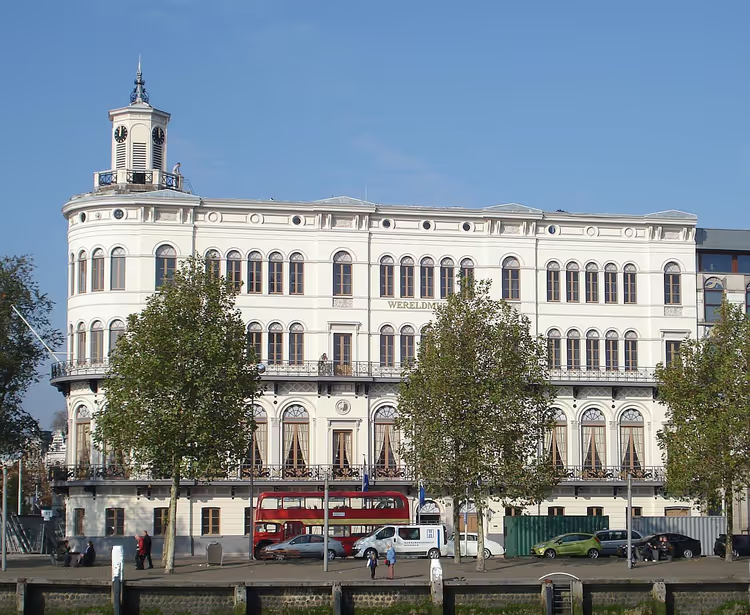
Wereldmuseum Rotterdam grew out of the collections of Royal Yacht Club members: sailors brought back rarities and unusual objects from their voyages, which later became exhibits. The museum officially opened in the late 19th century.
The exhibitions tell the story of the customs and traditions of the peoples of Asia, America, Africa, and Oceania. Among the exhibits are maps, atlases, reconstructions of dwellings and transport, objects made of feathers and bronze, and ritual items. Some of the halls are designed as palaces and temples, and the atmosphere is supported by a musical soundtrack.
- Tickets and hours: the schedule changes by season, check it on the museum's official website.
- Getting there: from Leuvehaven metro station it's a five-minute walk to Willemskade (see map).
- Who it's for: for those looking for context and history rather than painting masterpieces.
17. Rotterdam Centraal
 © Sjaak Kempe · CC BYPhoto: Sjaak Kempe, CC BY (https://creativecommons.org/licenses/by/2.0), Wikimedia Commons
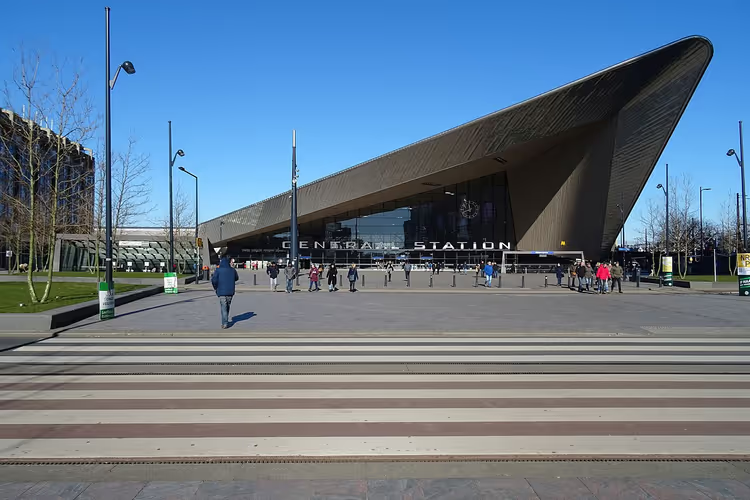
The old station could no longer handle passenger traffic, so it was completely rebuilt. The new building was made primarily of wood and glass: the ceiling beams are wooden and the roof is transparent, so the hall is bright for most of the day and they managed to save on lighting.
Pedestrian tunnels with shops run under the railway tracks, and you get to the platforms through turnstiles using a smart card. A canopy overhangs the south exit, protecting you from sun and rain. Solar panels sit on the roof, and the station generates part of its own electricity.
The service hall and platforms are united under one roof, so transferring from train to metro takes just a few minutes. Signs help you find your way, and they are duplicated in English.
- How to get there: the station is connected to the city by trams, buses, and metro, and trains from Schiphol Airport run every few minutes.
- The catch: during the morning rush hour the platforms are overcrowded, so arrive for your train early.
- Who it's for: anyone arriving in the city by train; most routes start here.
18. The White House
 © Fred Romero from Paris, France · CC BYPhoto: Fred Romero from Paris, France, CC BY (https://creativecommons.org/licenses/by/2.0), Wikimedia Commons
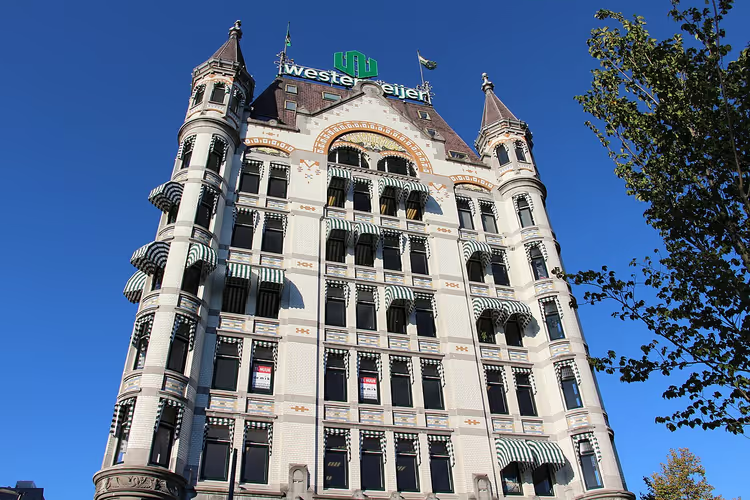
The White House (Witte Huis) appeared at the end of the 19th century and is considered the first skyscraper in Europe. Eleven floors with a steeply pitched roof looked bold: skeptics claimed the weak soil would not bear the load, but the building was constructed after reinforcing the piles and foundation.
The White House survived the war and has been preserved almost in its original form. The Art Nouveau facade is decorated with the inscription "Het Witte Huis," and from the top floor you get a view of the old Oudehaven harbor and the office high-rises across from it, which contrast with it.
- How to get there: take the metro to Blaak station; from the exit to Wijnhaven it's a five-minute walk (see map).
- Cost: the observation deck is not open every day; check access on site.
- Who it's for: those interested in turn-of-the-century architecture and the history of the first high-rise buildings.
19. Natuurhistorisch Museum Rotterdam
 © Tukka · CC BY-SAPhoto: Tukka, CC BY-SA (https://creativecommons.org/licenses/by-sa/4.0), Wikimedia Commons
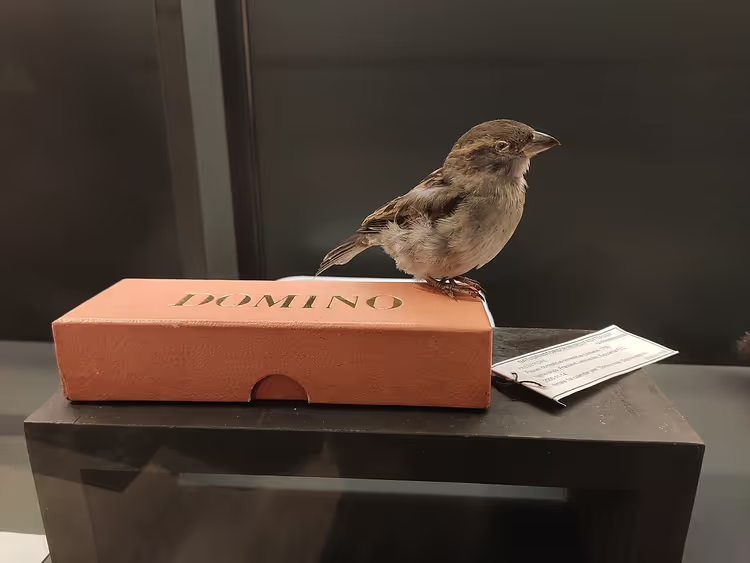
Natuurhistorisch Museum Rotterdam operates in the Dijkzigt villa, which was built in the mid-19th century for the Van Hoboken family. The museum opened at this location in the 1920s, and the collection was assembled from private collections of Dutch philanthropists and patrons.
The museum's holdings number hundreds of thousands of objects, and it ranks among the top city museums by attendance. A separate theme of the exhibition is urban ecology: animals and plants that live alongside humans are not an add-on here but the core of the story.
The dynamic ecological focus has become an example for other institutions, so specialists come here too.
- Tickets and hours: the schedule is limited and changes by season; check it before your visit.
- How to get there: the museum is located in the Museum Park, about a fifteen-minute walk from Rotterdam Centraal (see map).
- Who it's for: families and anyone interested in urban nature.
20. Kunsthal Rotterdam
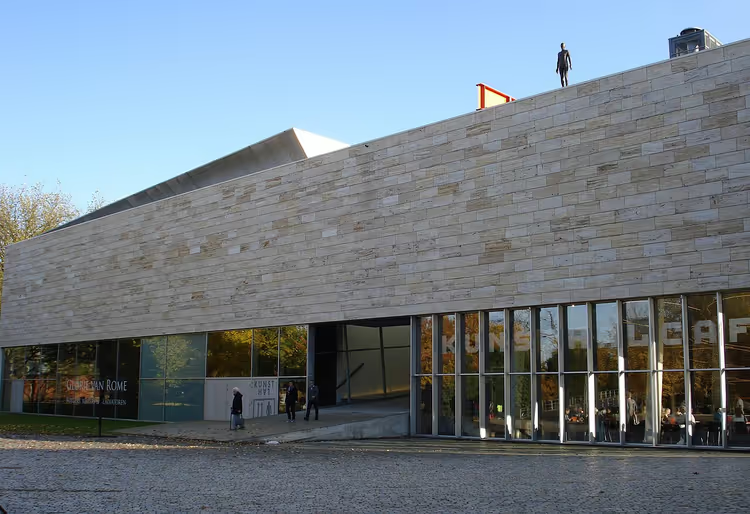
Kunsthal Rotterdam is an exhibition venue in the Museum Park where shows change several times a year. The building was designed by Dutch architect Rem Koolhaas, and the entrance is on the Westzeedijk side. Simply walking through the park, you end up at a new exhibition every time.
The museum is known for more than just exhibitions. In 2012, seven works were stolen from here, including "Head of a Harlequin" by Pablo Picasso and "Woman with Closed Eyes" by Lucian Freud, after which security was tightened.
Kunsthal has no permanent collection; it shows only temporary exhibitions. The shows are mostly devoted to contemporary art.
- Tickets: Kunsthal Rotterdam tickets depend on the exhibition; check the price before your visit.
- How to get there: about a twenty-minute walk from Rotterdam Centraal, or take the metro to Eendrachtsplein (see map).
- The catch: between exhibitions the halls are closed for installation, so check the changeover dates.
21. Mevlana Mosque
 © AgainErick · CC BY-SAPhoto: AgainErick, CC BY-SA (https://creativecommons.org/licenses/by-sa/4.0), Wikimedia Commons
You can see the Mevlana Mosque from the train window: two tall minarets stand right by the railway tracks, so you notice it a few minutes before the central station. In style, the building resembles Istanbul mosques, only smaller and with two minarets instead of six.
The mosque belongs to the Dutch-Turkish community, and there is parking in the courtyard. A similar building stands on the way out toward Dordrecht, on the right side of the road.
- Visiting: this is an active place of worship, so check guest hours on site.
- How to get there: from Rotterdam Centraal, walk along the tracks for about fifteen minutes (see map).
- Who it's for: those interested in contemporary urban architecture of different communities.
22. Chabot Museum
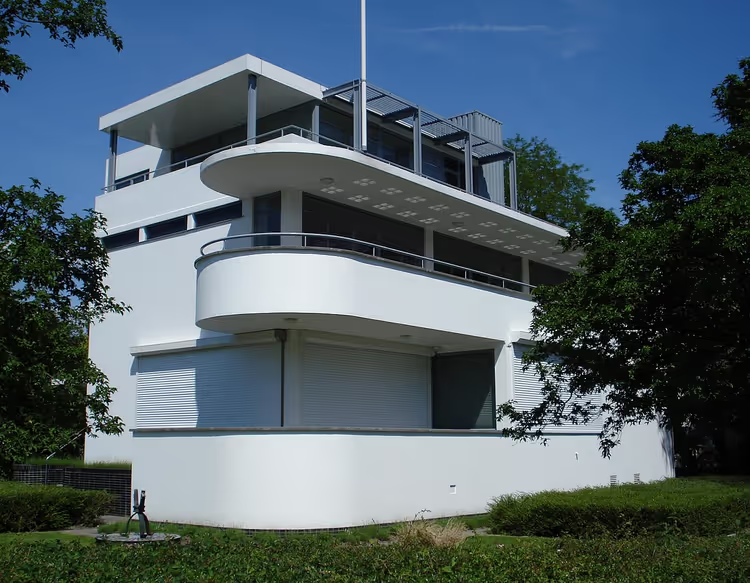
The Chabot Museum occupies a white villa next to the Museum Park. It houses the largest collection of sketches, graphic works, paintings, and sculptures by Hendrik Chabot, although the artist himself did not manage his own works and did not collect them deliberately.
Chabot is considered an innovator of European art in the first half of the 20th century. The most famous pieces in the collection are "Fire of Rotterdam" and "The Greengrocer." In addition to the permanent part, the halls show local, Dutch, and European artists.
- Tickets and hours: the museum is small and opening hours are limited; check them before your visit.
- How to get there: from Eendrachtsplein it's a five-minute walk toward the Museum Park (see map).
- Who it's for: those who want to see Dutch Expressionism without queues. An hour is enough for your visit.
23. Het Park
 © Hanhil at Dutch Wikipedia · CC BY-SAPhoto: Hanhil at Dutch Wikipedia, CC BY-SA (http://creativecommons.org/licenses/by-sa/3.0/), Wikimedia Commons
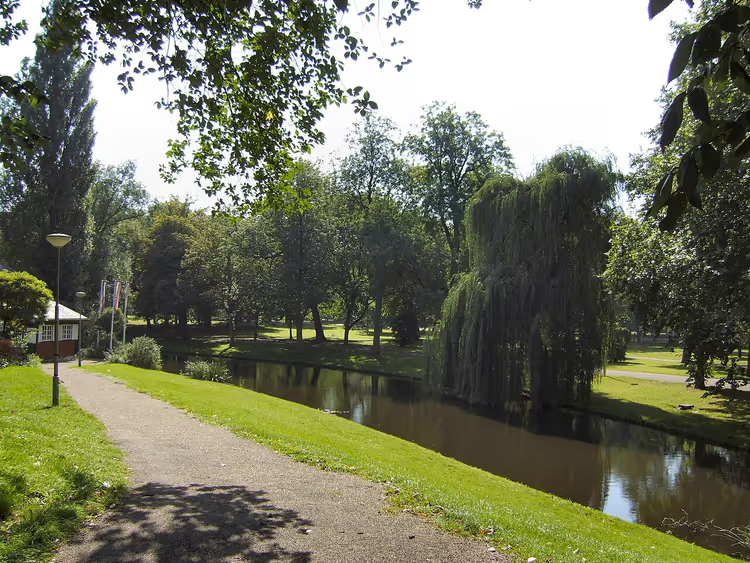
Het Park was laid out in the English style back in the mid-19th century, and it is one of the greenest areas of the city. Lawns, flower beds, barbecue spots, and cafeterias make it convenient for family weekends: the park has been open to residents and tourists for over a century and a half.
You'll have plenty to do besides walking. There are tennis courts, running and cycling paths, and on the east side the park adjoins the decorative Tuin Schoonoord garden. In summer the park is lush with greenery, in autumn it bursts with color, and the conifers are visible even in winter.
The local restaurant stays open in the cooler months too, when fewer people are out walking.
- Cost: admission is free, and the park is open year-round.
- How to get there: from Dijkzigt metro station it's a five-minute walk to the entrance near the Euromast (see map).
- The catch: on weekends the barbecue areas are crowded; if you want quiet, come on a weekday morning.
24. Plaswijckpark
 © Donald Trung Quoc Don (Chữ Hán: 徵國單) - Wikimedia Commons - © CC BY-SA 4.0 International . ( Want to use this image? ) Or · CC BY-SAPhoto: Donald Trung Quoc Don (Chữ Hán: 徵國單) - Wikimedia Commons - © CC BY-SA 4.0 International . ( Want to use this image? ) Or, CC BY-SA (https://creativecommons.org/licenses/by-sa/4.0), Wikimedia Commons
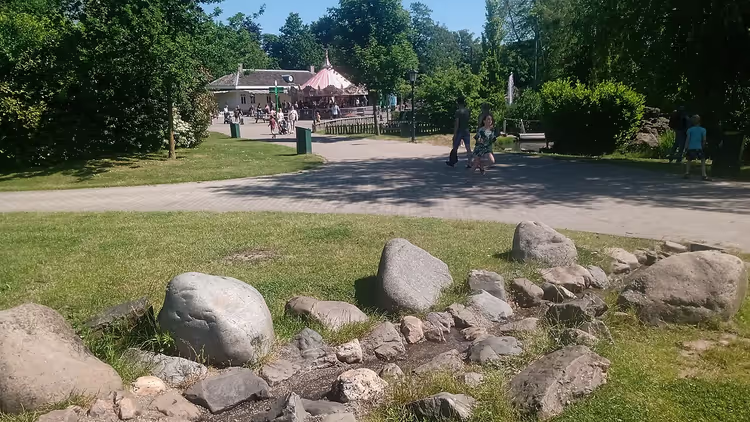
Plaswijckpark, a family amusement park: it has playgrounds, rides, and entertainment programs for different ages. Adults will also find places to relax: gazebos, benches, and lawns are designed for a long stay.
The park's main feature is a lake with waterfowl. Swans and pelicans come close to the shore, and even people who didn't plan to take photos end up taking pictures with them. There's a mini zoo nearby, and the grounds are small, so you can cover everything in half a day.
The city bustle is barely noticeable here. For kids, that's convenient: there's no traffic or cars nearby.
- Tickets: paid entry, rides are included in the ticket, check the price on site.
- Getting there: from the center by tram along Schieweg, then about a ten-minute walk (see map).
- Who it's for: families with children. Adults without kids will find it boring here.
25. Dakpark rooftop park
Dakpark is laid out on the roof of a shopping complex, so you can go up here directly from the shopping area. From the top, you get a panorama of the port and city blocks, and the space is so large that you'll forget there's a working building under your feet.
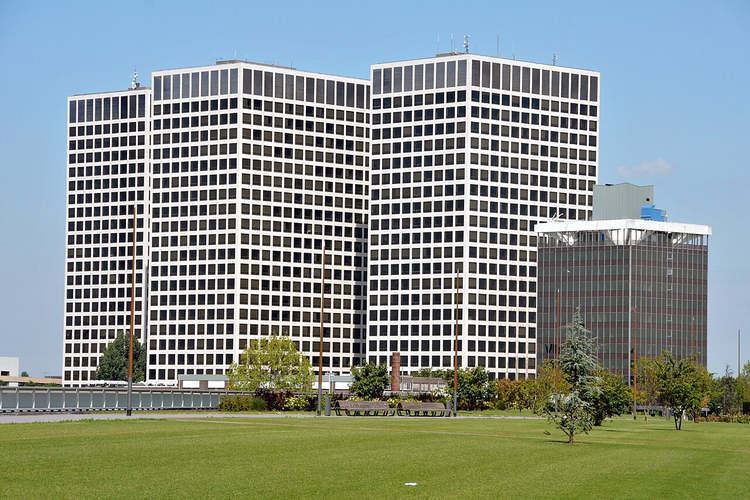
Grasses, shrubs, and paths on a roof once seemed like fantasy, but today it's an example of greening for a densely built city. Pick a day without wind: at height, air currents are immediately noticeable.
- Cost: free entry, the park is open during the shopping complex's opening hours.
- The catch: in windy weather, the roof is uncomfortable, so look for a calm day for a picnic.
- Getting there: by tram along Vierhavensstraat, then go up to the roof from the shopping complex side (see map).
Tours and tickets in Rotterdam
Guided tours, skip-the-line tickets and activities — most offers can be cancelled free of charge.
See offers on TiqetsThe widget loads once you give your consent.
⁉️🤔 Frequently asked questions
How many days should you set aside for Rotterdam?
One day is enough for the center: the Erasmus Bridge, City Hall, the White House, Cube Houses, and Delfshaven are all close to each other. Give the second day to the Museum Park, where Depot Boijmans Van Beuningen, Kunsthal Rotterdam, and Natuurhistorisch Museum Rotterdam sit side by side. Kinderdijk and Diergaarde Blijdorp are better saved for separate trips.
Which Rotterdam sights can you see for free?
Without tickets you can see the Erasmus Bridge, the White House from the outside, the sculpture promenade on Westersingel, Het Park, and the Delfshaven district. You only pay for museums, the Euromast with the rope descent, the zoo, and Plaswijckpark. A walk through the center can be planned so your spending is limited to coffee.
When is the best time to visit Rotterdam?
The city runs year-round, and museums only close on certain holidays. For Het Park and Arboretum Trompenburg, pick May and June, when everything is in bloom. In Kinderdijk, the windmills and boats operate in the warm season; some locations are closed in winter, so it's worth checking dates in advance.
How do you get to Kinderdijk without a car?
A water bus runs from Rotterdam, from the Erasmusbrug dock to the Kinderdijk stop, taking about half an hour. A ticket on site costs €21 for an adult and €9 for a child aged four to twelve; online you get a discount (as of 09/2026, Kinderdijk fares and rules). The ticket is valid only on the selected day.
What to see in Rotterdam with kids?
The best options for kids are Diergaarde Blijdorp with its Oceanium and enclosures, Miniworld Rotterdam with its model of the city, and Plaswijckpark with rides and a mini zoo. Museum Boijmans Van Beuningen is worth visiting with teenagers, while Natuurhistorisch Museum Rotterdam will also appeal to younger children. Plan at least half a day for each place.
In short: what's worth booking
Rotterdam is best explored by interest, not by checklist. If you have just one day, take the center: the Erasmus Bridge, City Hall, the White House, and Delfshaven. If you're traveling with kids, plan for Diergaarde Blijdorp or Miniworld Rotterdam, and don't forget Plaswijckpark. If art is more your thing, put Depot Boijmans Van Beuningen, Kunsthal Rotterdam, and Chabot Museum on the same day: they're right next to each other.
If you're short on time: choose the Euromast for the panorama and Het Park for a breather. If you want to get out of the city: go for Kinderdijk, where the windmills and a boat tour are available. Look for accommodation in the center, and you'll barely need transport.
It's convenient to compare hotels and tickets in advance: book a hotel in Rotterdam on Trip.com and trains to Rotterdam. In high season, prices rise closer to the travel date.

A small editorial team writing guides for independent travel. We travel ourselves, but we haven’t been everywhere, so we check prices, opening hours and how to get there against official sources.