
















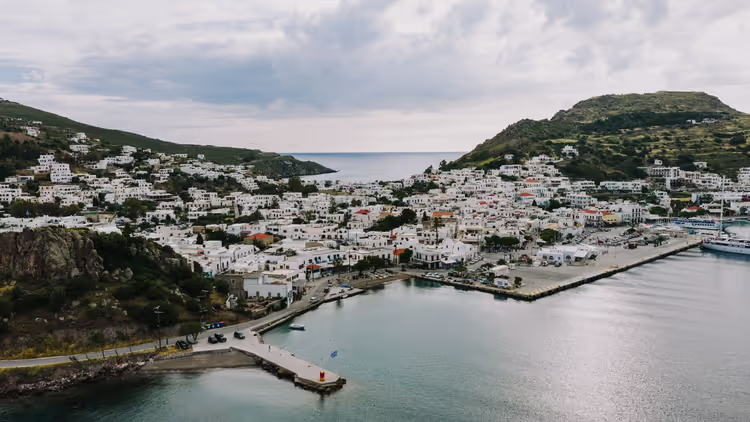
Rhodes by car: twenty places on the island and a three-day route
Rhodes is easier to explore by car. Buses run along the coast and rarely go into the mountains, so half the interesting spots stay out of reach. With a rental car you set your own order of stops: swim in Anthony Quinn Bay in the morning, head up to the Lindos acropolis in the afternoon, and have dinner in Haraki in the evening. Kallithea Springs sits 9 km from the city of Rhodes (as of 09/2026, official Kallithea Springs website), and that's just the start of a big loop. Below are twenty places on the island that are genuinely worth seeing by car, with distances and honest catches.
Ad: this article contains affiliate links, we earn a commission if you book through them, at no extra cost to you.
Car rental on Rhodes: what you need to know
💡 In short:
- Get a car with an automatic transmission: the mountain roads here are narrow and passing opportunities are rare.
- Prices and opening hours: 09/2026, verified on the official Rhodes tourist office website.
A tour bus costs more and ties you to the group's schedule. The island has dozens of villages, and some of them are tucked away in the mountains where buses don't go. With a car you can reach viewpoints, small tavernas, and quiet beaches that guidebooks never mention.
Rental companies usually ask for a driver's license and check the driver's age. The threshold is higher for an SUV than for a compact car, so confirm the terms in advance. International companies operate both at the airport and in the city of Rhodes.

Mountain switchbacks require caution: the turns are narrow, and in places there are no guardrails. Get a car with full insurance and don't overload your day with stops. Gas stations are found near larger villages, but they're scarce in the backcountry, so fill up ahead of time.
- The catch: in season, roads near popular beaches are jammed, so look for parking in advance.
- Who it's for: those who want to see the whole island, not just the beach by their hotel.
Kallithea Springs
 © G. Sawatzky · CC BYPhoto: G. Sawatzky, CC BY (https://creativecommons.org/licenses/by/3.0), Wikimedia Commons
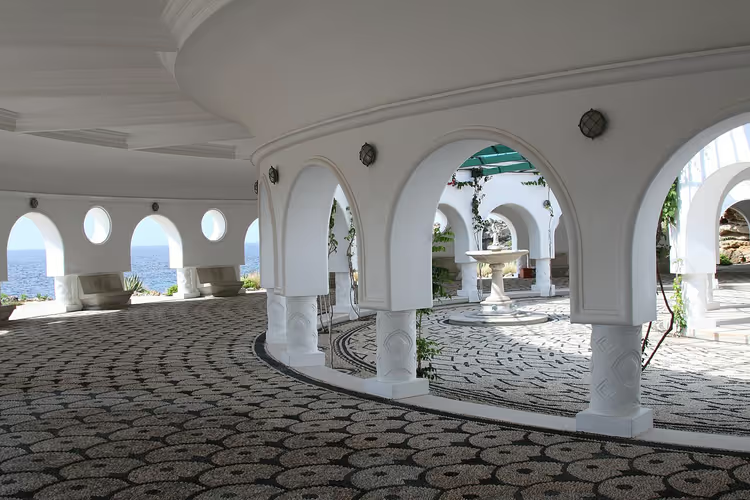
Kallithea is known for its historic seaside spa. The complex was restored in the last century on the model of ancient thermal baths: a large and a small rotunda, a whitewashed art gallery, a museum, and a treatment center. The treatments help with stomach and intestinal conditions, and the gallery regularly hosts exhibitions.
Next to the rotundas lies a sand-and-pebble beach with warm water. Entry to the grounds is paid; check the price on the official website (as of 09/2026, Kallithea Springs website). It's about 9 km from the city of Rhodes, and nearby is the lively Faliraki with its clubs and discos. By car it's easy to combine the springs with Ladiko Bay and the Erimokastro fortress.
- How to get there: 9 km from the city of Rhodes along the coastal road (per the map).
- The catch: the buildings were restored in the last century, so there are no ancient ruins here.
- Who it's for: those who want to combine swimming, architecture, and a museum.
Anthony Quinn Bay
 © Maurizio Ceol · CC BYPhoto: Maurizio Ceol, CC BY (https://creativecommons.org/licenses/by/3.0), Wikimedia Commons
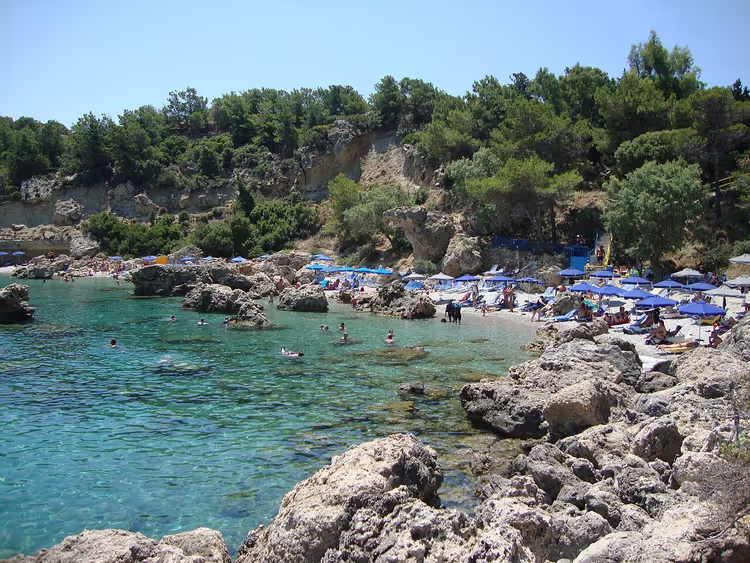
The bay is enclosed by high cliffs, so there are no currents or big waves here. The turquoise water stays warm, and for those who like depth, a pontoon has been installed over the rocks. The shore is covered with fine pebbles and large boulders.
The bay was named after the actor Anthony Quinn, and a local legend links this spot to the birth of the sirtaki dance. Beach entry is free, but there's a charge for a set of lounger and umbrella. Parking is by the cafe at the top of the bay, with a view over the surrounding area.
- How to get there: parking at the cafe above the bay, then walk down (per the map).
- Cost: entry is free, lounger and umbrella are paid.
- The catch: the bottom has lots of slippery rocks, so enter the water carefully.
- Who it's for: those who like calm swimming without waves.
Ladiko Beach
 © Ввласенко · CC BY-SAPhoto: Ввласенко, CC BY-SA (https://creativecommons.org/licenses/by-sa/3.0), Wikimedia Commons
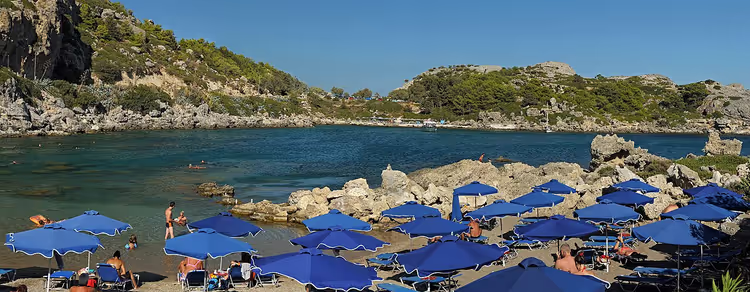
Ladiko hides in a small cove next to Anthony Quinn, with one rock separating the two beaches. Through the clear water you can see a sandy bottom with rocks where fish gather. A ladder has been installed for easy access to the sea.
The beach is divided into two parts: sandy and pebbly. Both have sun loungers and umbrellas, plus toilets, showers, changing cabins, and a cafe. There is parking nearby. If you want some variety, walk over to the neighboring Traganou beach: an underground spring flows through caves there, and a tunnel with cold water leads inside.
- How to get there: the cove next to Anthony Quinn, shared parking (see map).
- Cost: free entry, sun loungers are paid.
- Who it's for: snorkelers who want to see fish close to shore.
Seven Springs
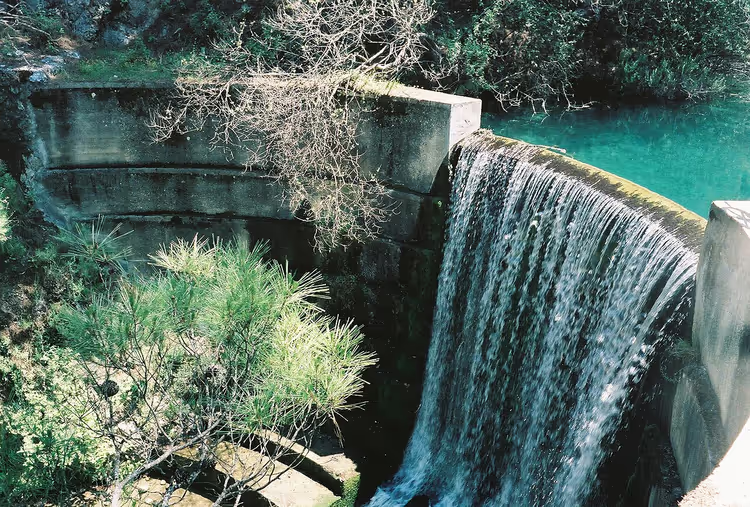 © Rüdiger Stey · CC BYPhoto: Rüdiger Stey, CC BY (https://creativecommons.org/licenses/by/3.0), Wikimedia Commons
Seven Springs lies 30 km from Rhodes Town and 3 km from Kolymbia (see map). Springs with cool water flow out of the mountain, and locals channeled them into an artificial lake: it is the island's only freshwater reservoir.
Visitors are invited to walk through a long, narrow tunnel in the dark. The water inside is cold and shallow, and a ventilation shaft opens in the middle. There is a legend: wash your feet in the springs and your sins will be washed away. A restaurant and a souvenir shop operate at the entrance, and the road sign is called Epta Piges.
- How to get there: drive along the main road to the Epta Piges sign, then parking (see map).
- Cost: free entry.
- The catch: you walk through the tunnel single file, in the dark and through cold water.
- Who it's for: families with children and anyone looking for cool relief in the heat.
Tsambika Monastery
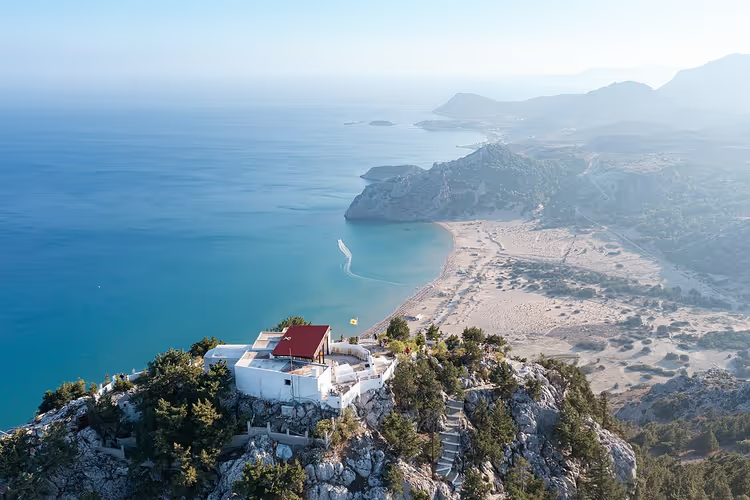 © dronepicr · CC BYPhoto: dronepicr, CC BY (https://creativecommons.org/licenses/by/2.0), Wikimedia Commons
Tsambika stands on a mountaintop, and you can see it from the road long before the turnoff. The upper and lower monasteries are separated by about two kilometers of highway (see map). A steep road and a staircase with hundreds of steps lead to the upper building. Every fifth step is marked with a number, which makes it easier to pace yourself.
A cafe and a souvenir shop operate by the road. They sell blessed belts, candles, and oils. According to tradition, the icon of the Mother of God returned to the mountain three times, which is why the monastery was built here. The original icon is kept in the lower church, and an Orthodox museum tells its story.
- How to get there: along the highway between the two monasteries, parking at the lower one (see map).
- The catch: the climb to the upper monastery is steep, and the staircase is tough in the heat.
- Who it's for: those willing to climb for a panoramic view of the island.
Haraki
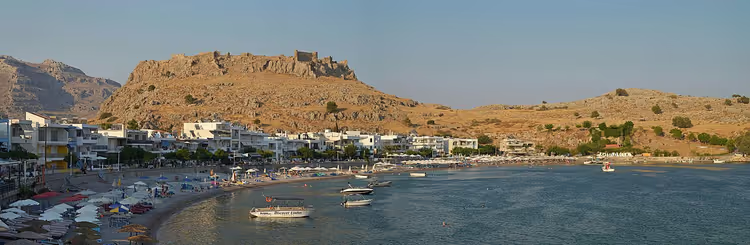 © Ввласенко · CC BYPhoto: Ввласенко, CC BY (https://creativecommons.org/licenses/by/4.0), Wikimedia Commons
The small fishing village of Haraki lies on the east coast, 38 km from Rhodes Town and 13 km from Lindos (see map). Today it is a quiet resort with hotels owned by local families. The beach in the small harbor is crescent-shaped and covered with fine pebbles mixed with golden sand.
The entry into the water is gradual, but the depth comes close to the shore. From your sun lounger you look out at the ruins of a medieval castle and the Feraklos wall. Millstones from a sugar factory that operated before the Knights Hospitaller were found on these slopes. The village has restaurants and water activities.
- How to get there: 38 km from Rhodes Town along the east coast (see map).
- Cost: free beach entry.
- Who it's for: those looking for a quiet getaway away from the big resorts.
Agia Agathi Beach
Agia Agathi continues from Haraki beach and is named after a small chapel on the rocky shore. The cove is sheltered by a pine grove and cliffs, the shore is sandy with fine pebbles, and the water entry is easy even for children. Ducks and turtles swim up to the shore.
The infrastructure is set up for a full day. There are playgrounds, equipment rental for surfing, diving, and water skiing, as well as boat trips. Tavernas serving local cuisine operate on the shore, and a church carved into the rock stands nearby.
- How to get there: just past Haraki along the east coast (see map).
- Who it's for: families with children: easy entry and calm water.
Lindos
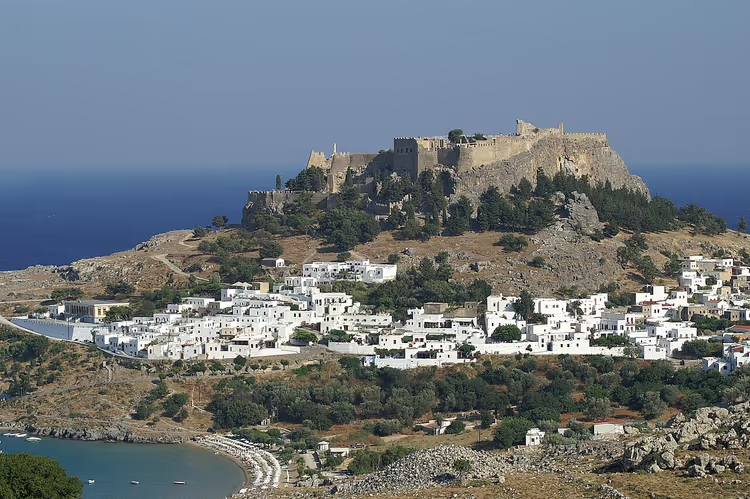 © Böhringer Friedrich · CC BY-SAPhoto: Böhringer Friedrich, CC BY-SA (https://creativecommons.org/licenses/by-sa/2.5), Wikimedia Commons
Lindos is the island's most popular resort, located 56 km from Rhodes Town (by map). The beach has repeatedly received the Blue Flag award, the sand here is silky, and the entry into the sea is gradual and safe for children. Colorful fish swim near the shore and come up for bread crumbs.
The second reason to visit is the acropolis on the cliff above the bay. A steep path leads to the ruins of the Temple of Athena Lindia, and some visitors go up on donkeys. Excavations are ongoing here, and at night the surviving structures are illuminated. The acropolis ticket is paid; in summer, go in the morning: by midday a line forms at the entrance.
- How to get there: 56 km from Rhodes Town along the east coast (by map).
- Cost: acropolis ticket is paid, Rhodes tours on GetYourGuide.
- The catch: the climb to the acropolis in the heat is tough, with almost no shade.
- Who it's for: those who want to combine beach time with history.
Monastery of Saint Panteleimon
 © Hombre · CC BY-SAPhoto: Hombre, CC BY-SA (https://creativecommons.org/licenses/by-sa/3.0), Wikimedia Commons
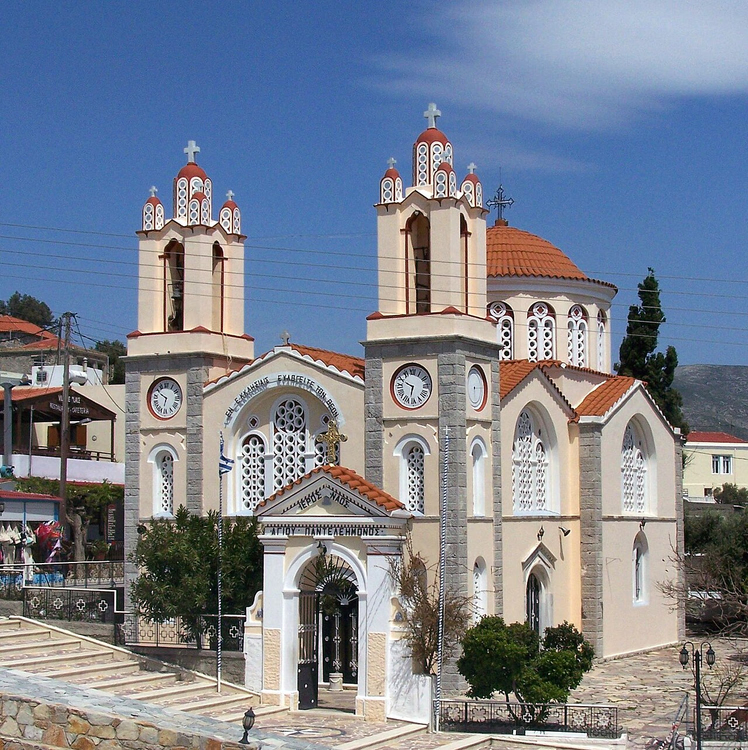
One of the island's most revered monasteries stands in the village of Sianna. It was built on the remains of an early Christian basilica, and relics of the ancient church are still kept inside. Saint Panteleimon was a great martyr and healer, and the monastery holds particles of his relics.
The interior is spacious and ornate: to the left of the iconostasis stands an icon of the saint, and his life is depicted on icons. Two five-tier bell towers rise on the grounds. Many believers come for services, and visitors stop by the souvenir shops on the village's main street.
- How to get there: in the village of Sianna, parking at the monastery (by map).
- Who it's for: those interested in Orthodox architecture.
Cape Prasonisi
 © Vadim Indeikin · CC BY-SAPhoto: Vadim Indeikin, CC BY-SA (https://creativecommons.org/licenses/by-sa/3.0), Wikimedia Commons
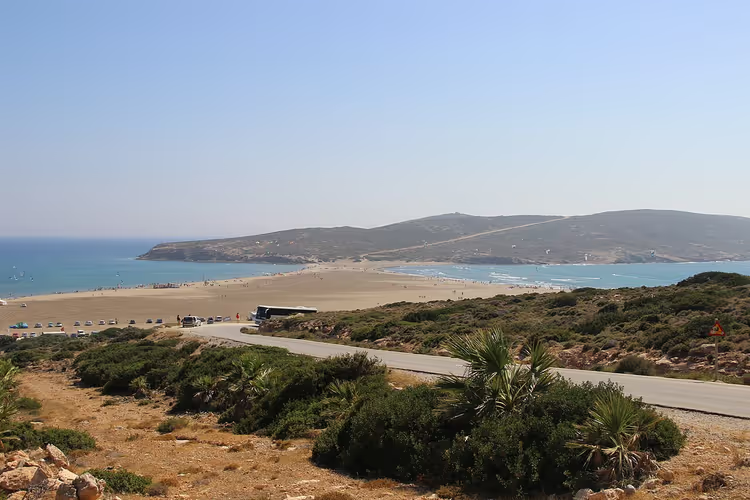
Prasonisi lies at the southern tip of the island, where the Aegean and Mediterranean seas meet. The cape is connected to Rhodes by a sand spit: in summer you can drive across it, while in winter and autumn it gets flooded. Because of the different water densities, the boundary between the two seas is visible by the color difference.
The temperature difference creates wind and waves, which is why windsurfers come here. They rent equipment and ride the swells. Higher up on the hill stands a stone lighthouse built back in the 19th century, along with the keeper's house. There is parking and a cafe nearby, and the nearest village, Kattavia, is not far from Lindos.
- How to get there: south on the island through Kattavia, parking at the beach (by map).
- Cost: free entry.
- The catch: it's constantly windy here, and in winter the spit goes underwater.
- Who it's for: surfers and those who want to see two seas meet.
Gennadi Beach
 © ElenaDAF · CC BY-SAPhoto: ElenaDAF, CC BY-SA (https://creativecommons.org/licenses/by-sa/4.0), Wikimedia Commons
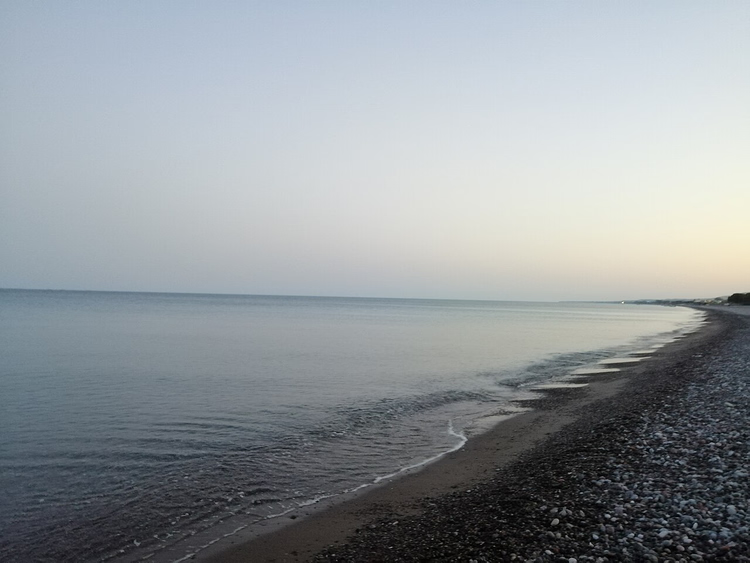
Gennadi grew from a small village into a resort on the east coast, 65 km from Rhodes Town and 18 km from Lindos (by map). Hotels, shops, currency exchange offices, and car rental agencies were built here, while the look of a traditional Greek village was preserved.
The beach stretches along the calm Mediterranean Sea. After a swim, it's nice to stroll through the narrow cobbled streets and sit in family-run tavernas. Among the local attractions are the Church of Anastasia the Roman and the Church of John the Theologian. In the evenings, parties take place on the beach.
- How to get there: 65 km from Rhodes Town along the east coast (by map).
- Cost: free beach entry.
- Who it's for: those who want a resort with local character rather than chain hotels.
Village of Fanes
Fanes became colorful thanks to an idea from local young people: before Easter, the village houses were painted, and a designer supported the project. The bright murals on the walls quickly made the village famous, and now people come here for photos.
Art fairs with ceramics and paintings are also held here. After a walk, you can relax in a cafe, go down to the local beach, and try fish dishes. Souvenirs made by local artisans sell out quickly.
- How to get there: along the main road from the airport to the sign (by map).
- Cost: free entry.
- Who it's for: those who love vibrant photo spots and small villages.
Ostrich Farm
The farm is a hit with children: the enclosures hold camels, ponies, kangaroos, monkeys, and dozens of birds. You can buy a bag of corn and feed the animals, and the bravest can ride a camel. Getting here is easiest by car, and a tour can be booked on site.
Keep your distance from the ostriches. These are strong and curious birds; they can peck and break a phone or camera. The guide warns what to expect from the birds. A taverna nearby serves ostrich egg omelets. The shops sell feather souvenirs and cosmetics made with ostrich fat.
- How to get there: follow the signs in the center of the island, parking at the entrance (by map).
- Cost: ticket and animal feed are paid.
- The catch: ostriches can peck, don't get too close.
Valley of the Butterflies
 © INDALOMANIA · CC BY-SAPhoto: INDALOMANIA, CC BY-SA (https://creativecommons.org/licenses/by-sa/3.0), Wikimedia Commons
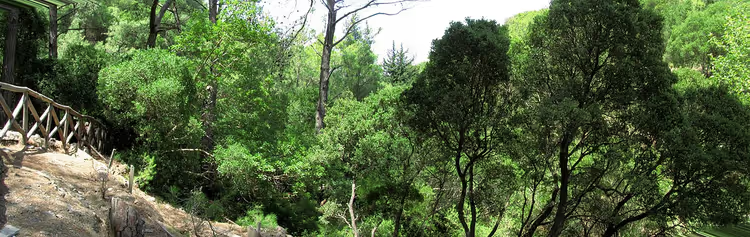
Petaloudes Valley lies in the western part of the island, 26 km from Rhodes Town and 10 km from the airport (as of 09/2026, Valley of the Butterflies website). The Jersey tiger moth flies here, and the slopes turn into a living carpet of moths.
Streams and storax trees with fragrant resin create ideal conditions for the butterflies. Walk through the valley quietly: sudden noise kills the butterflies. Shaded paths and pavilions have been laid out for visitors, there is parking at the lower entrance, and a small natural history museum operates on the grounds. The valley is open daily from 08:00 to 18:00 (as of 09/2026, official park website).
- How to get there: 26 km from Rhodes Town, 10 km from the airport (according to Valley of the Butterflies, 09/2026).
- Cost: paid entry, Valley of the Butterflies tickets.
- The catch: no noise is allowed in the valley, it stresses the butterflies.
- Who it's for: families with children and nature lovers.
Monastery of Saint Nektarios
The island has two churches dedicated to Saint Nektarios, and one of them stands on a hill 3 km from the village of Archipoli (by map). The monastery walls are decorated with frescoes. At the foot of the hill runs a stream with healing water, which pilgrims come to visit.
Nearby grows an oak with a huge hollow, considered the oldest tree on the island. Drive along the east coast to Kolymbia, then turn toward Archipoli. The monastery has parking and a taverna that sells mountain honey. The area is often chosen for weddings and picnics.
- How to get there: through Kolymbia toward Archipoli, parking at the monastery (by map).
- Who it's for: those seeking quiet and hilltop views.
Filerimos Hill
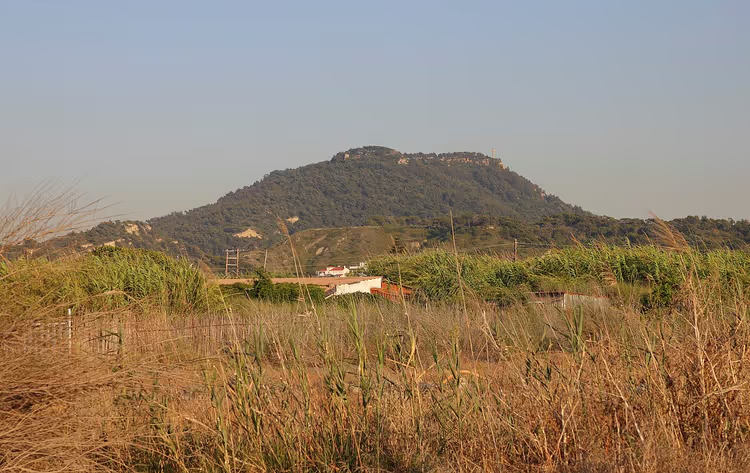 © A.Savin · CC BY-SAPhoto: A.Savin, CC BY-SA (https://creativecommons.org/licenses/by-sa/3.0), Wikimedia Commons
A cypress alley known as the "Path to Golgotha" leads to the top of Filerimos. Stone steles depicting scenes of Christ's suffering line the road, and at the top the monks erected a cross. It was originally wooden, then replaced with a stone one.
The cross is hollow inside, and you can climb to the observation deck via a spiral staircase. The mountain is part of a nature reserve, entry to the grounds is paid, and the path itself is open. An asphalt road leads to the foot, with parking at the entrance. The huge cross is visible long before the turnoff.
- How to get there: an asphalt road leads to the foot, parking at the entrance (see map).
- Cost: entry ticket required (as of 09/2026, Rhodes tourist portal).
- The catch: the spiral staircase inside the cross is narrow, making it hard to pass people.
- Who it's for: those willing to climb for the view of the west coast.
Mandraki Harbor
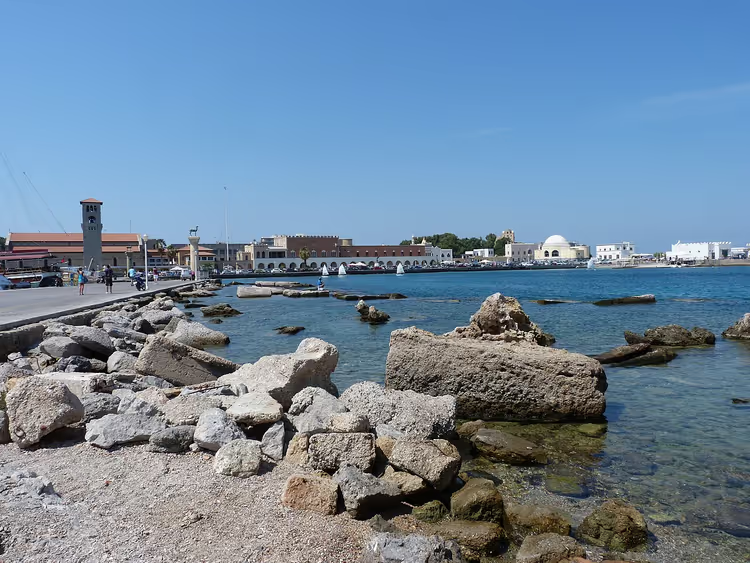 © Karen Jardine · CC BYPhoto: Karen Jardine, CC BY (https://creativecommons.org/licenses/by/3.0), Wikimedia Commons
Mandraki is an old harbor with ancient history. In antiquity, the entrance to the harbor was adorned by the Colossus of Rhodes, and ships passed between its legs. Today vessels are greeted by stone deer, a stag and a doe, while tourist cruise ships dock at a separate pier.
Start your walk along the waterfront at the Church of the Annunciation, built on the model of the Church of St. John. Nearby, a working medieval fountain has survived, and three windmills stand on the old breakwater. There are both paid and free parking lots, for example in front of the market.
- How to get there: in the city of Rhodes, on foot from the Old Town (see map).
- Cost: the walk is free.
- Who it's for: those who want to start the route with city sights.
Ancient Kamiros
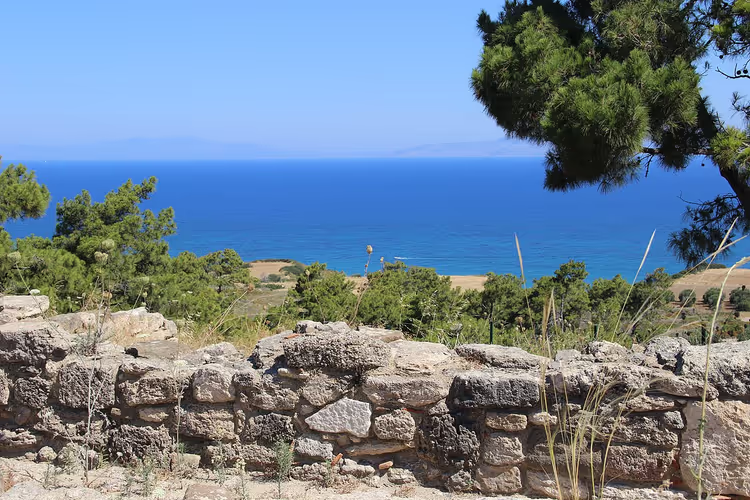 © Vadim Indeikin · CC BY-SAPhoto: Vadim Indeikin, CC BY-SA (https://creativecommons.org/licenses/by-sa/3.0), Wikimedia Commons
Kamiros is called the "Greek Pompeii." Scholars still debate why its residents left the city, but not a single defensive structure has been found there. What has survived are the ruins of temples, reservoirs, and the central square, and excavations began after burial sites were discovered by chance.
Finds from Kamiros ended up in the Louvre, the British Museum, and the Archaeological Museum of Rhodes. In the museum you can see the funerary stele of Krito and Timarista, and the main temples here were built in honor of Poseidon, Artemis, and Zeus. Most of the city still lies underground.
- Getting there: head to the west of the island along the road to Monolithos (see map).
- Cost: paid entry ticket.
- The catch: there is almost no shade, so bring water and a hat.
- Who it's for: those willing to walk through open-air ruins.
Monolithos Castle
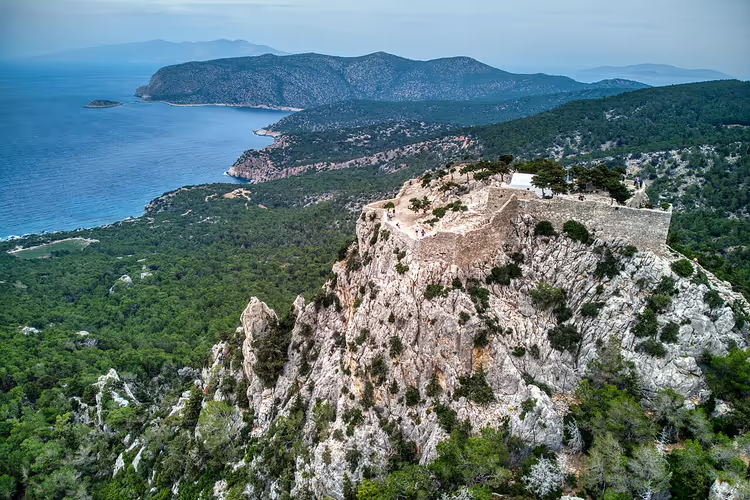 © Hagai Agmon-Snir حچاي اچمون-سنير חגי אגמון-שניר · CC BY-SAPhoto: Hagai Agmon-Snir حچاي اچمون-سنير חגי אגמון-שניר, CC BY-SA (https://creativecommons.org/licenses/by-sa/4.0), Wikimedia Commons
Monolithos stands on top of the Akramitis rock above the Aegean Sea, on the west coast. The castle was built in the 15th century, and once the fortress was no longer needed, the buildings fell into ruin. Today what remains are stone ruins and a functioning chapel of Saint Panteleimon, with ancient water cisterns preserved nearby.
A car can reach the foot of the rock, where there is a parking lot (see map). From there you climb to the castle on foot along a narrow path. From the top there is a view of the sea and the island, and a small beach is nearby.
- Getting there: by car to the parking lot at the foot of the rock, then on foot (see map).
- Cost: free entry.
- The catch: a car cannot drive all the way to the castle itself; the last stretch is on foot only.
Kritinia Castle
Kritinia was founded by settlers from Crete, and the castle on the cliff above the sea was built by the knights. The structure mixes Venetian and Byzantine features. Its original appearance has not survived: what remains are walls, fragments of a chapel, and the coats of arms of two grand masters.
Restoration is being carried out under a separate program. A narrow road leads to the top of the cliff; you can drive it by car, but not in a tour bus. Due to the work, part of the site may be closed.
- Getting there: a narrow road leads to the cliff; access by car is possible (see map).
- Cost: free entry.
- The catch: during restoration, part of the castle is closed to visitors.
Driving route around Rhodes on the map
The route is easy to split into three days and follow a loop from the city of Rhodes. The map below shows the order of stops, and the table helps you plan tickets in advance.
Day | Highlights | Tickets in advance | On foot |
|---|---|---|---|
1 | Kallithea Springs, Anthony Quinn Bay, Ladiko Beach | entry to the springs | up to 1 km |
2 | Haraki, Agia Agathi, Lindos | Lindos Acropolis | up to 2 km |
3 | Valley of the Butterflies, Filerimos | ticket to the valley | up to 3 km |
Driving route around Rhodes
Places on the map
- 1Kallithea Thermal Springs Restored spa with rotundas and a gallery by the sea
- 2Anthony Quinn Bay Bay enclosed by cliffs with warm turquoise water and no waves
- 3Ladiko Beach Sand-and-pebble beach next to Anthony Quinn Bay, access via stairs
- 4Seven Springs Artificial lake and dark tunnel with cold water
- 5Tsambika Monastery Upper and lower monastery on a hill, hundreds of steps to the top
- 6Charaki Quiet fishing village with a view of the Feraklos castle ruins
- 7Agia Agathi Beach Sandy beach by a pine grove, easy access for children
- 8Lindos Resort with an acropolis on a cliff and the Temple of Athena Lindia
- 9Monastery of Saint Panteleimon Revered monastery in the village of Siana with the saint's relics
- 10Cape Prasonisi Southern tip of the island where the Aegean and Mediterranean meet
- 11Gennadi Beach Eastern resort with cobbled streets and local character
- 12Fanes Village Colourful village, houses painted before Easter
- 13Ostrich Farm Enclosures with camels, ponies and ostriches in the island's centre
- 14Butterfly Valley Petaloudes Valley, where Jersey tiger moths gather
- 15Monastery of Saint Nektarios 14th-century monastery with frescoes near Archipoli village
- 16Mount Filerimos Cypress avenue and viewpoint inside a huge cross
- 17Mandraki Port Old port with a deer statue, a fountain and windmills
- 18Ancient Kamiros Greek Pompeii with temple ruins and a reservoir
- 19Monolithos Castle 15th-century fortress on Akramitis cliff, last kilometre on foot
- 20Kritinia Castle Knights' fortress on a cliff, part of the site under restoration
Allow extra time with the car: mountain roads are narrow, and some signs are only in Greek. Keep a supply of water in the car.
- Car rental: compare car prices at Rhodes Airport.
Find hotels
Compare prices across booking sites and filter for rooms with free cancellation.
Compare prices on Discover CarsThe widget loads once you give your consent.
⁉️🤔 Frequently asked questions
Do you need a car to see Rhodes?
Buses mainly connect the coast and major resorts, while mountain villages, monasteries, and viewpoints are served infrequently. If you want to see more than two or three places a day, a car saves time and gives you freedom of route. For the city of Rhodes and the Old Town, a car is not necessary.
How many days does it take to drive around Rhodes?
A relaxed loop around the island takes two to three days. On the first day, see Kallithea Springs, Anthony Quinn Bay, and Ladiko Beach. On the second, head along the east coast through Haraki and Agia Agathi to Lindos. On the third, go to the Valley of the Butterflies and Filerimos. In one day you will only manage one coast.
Where should you stay to tour the island?
The most convenient option is the city of Rhodes or the east coast: from there it is equally close to the northern bays and to Lindos. Resorts like Faliraki suit those who want nightlife. If you are driving, choose a hotel with parking.
When is the best time to drive around Rhodes?
The most comfortable months for a driving trip are May, June, September, and October. In summer, the heat and the flow of tourists make the winding roads and parking lots especially busy. In spring and autumn the roads are quieter, and the butterflies in Petaloudes Valley appear from June to September.
Can you drive to Monolithos Castle?
Yes, a car can reach the foot of the rock, where there is a parking lot. The last stretch to the castle is walked along a narrow path.
In short: what to book
- If you have two days: take the eastern loop with Lindos, Haraki, and Agia Agathi.
- If you are traveling with children: add the ostrich farm and the calm Ladiko Beach.
- If you want quiet: head west, to Monolithos, Kamiros, and Kritinia Castle.
Book your car in advance: in high season, fewer cars are available on the spot. Compare car rental prices before you fly. Choose a hotel with parking and close to the loop: see hotels on Trip.com. Get tickets for the Lindos Acropolis and other sites with a time slot in advance: tickets on Trip.com.

A small editorial team writing guides for independent travel. We travel ourselves, but we haven’t been everywhere, so we check prices, opening hours and how to get there against official sources.