















When to go to Ayia Napa: 27-28 °C sea and rainy season
In Ayia Napa, the sea decides everything, not the calendar. In August, the water stays at 28 °C, but the air heats up above 30 °C during the day, and the beaches are packed. In October, the water is still around 25 °C, and there are noticeably fewer people.
Ayia Napa lies in the southeast of Cyprus, near Cape Greco. The climate here is Mediterranean, with dry, hot summers and mild, rainy winters. The resort welcomes guests year-round, but the weather varies greatly from month to month.
Below you'll find air and sea temperatures by month, the honest catches of each season, and the best weeks for the beach, sightseeing, and family vacations.
Weather in Ayia Napa by month
💡 In short:
- Best time for the beach: June through the first half of October.
- Warmest sea: August and September, around 27-28 °C.
- Fewer people and mild weather: April, May, and October.
- Monthly climate data: 09/2026, verified on the weather2travel.com reference.
Air temperature changes gradually: from 16 °C during the day in January to 33 °C in August. The sea, however, warms up more slowly and holds heat until the end of October. From June to September there is almost no rain, while from November to March the bulk of precipitation falls.
During the day, wind blows in from the sea, so the heat on the beach feels lighter than in the city center. In winter, the water acts like a large radiator: it cools more slowly than the land and keeps nights from getting cold.
Check the table: it brings together air, water, sun, and rain for each month.
Month | Day, °C | Night, °C | Sea, °C | Sun, hrs/day | Rain, days |
|---|---|---|---|---|---|
January | 16 | 7 | 17 | 5 | 11 |
February | 17 | 8 | 16 | 6 | 10 |
March | 19 | 9 | 17 | 7 | 8 |
April | 23 | 12 | 18 | 9 | 5 |
May | 26 | 16 | 20 | 10 | 3 |
June | 30 | 19 | 24 | 12 | 1 |
July | 32 | 22 | 27 | 12 | 1 |
August | 33 | 22 | 28 | 12 | 2 |
September | 31 | 20 | 27 | 10 | 1 |
October | 27 | 17 | 25 | 8 | 4 |
November | 22 | 12 | 22 | 7 | 6 |
December | 18 | 9 | 19 | 6 | 11 |
As of: 09/2026, weather2travel.com based on data from CRU (University of East Anglia), Met Office, and the Royal Netherlands Meteorological Institute.
If warm sea matters most to you, aim for June through the first half of October. For walks and sightseeing, April, May, and October are better: the air is still or already comfortable, and there are few tourists. The UV index reaches 11 in summer, so high-SPF sunscreen is a must even on a cloudy day (as of: 09/2026, weather2travel.com).
Averages help you pick a month, but they don't replace a forecast. One year September turns out cool, another year the heat lasts until the end of October. So take a range of dates, not a single option.
Hotel occupancy also depends on the season. From June to September, rooms by the sea get booked in advance, while in the shoulder season you can calmly choose a hotel and often pay less.
Most rain falls from November to March. If you're not ready to get wet, plan winter as a short 3-4 day trip, not as a beach vacation.
High season: June, July, and August
Summer in Ayia Napa is hot with almost no rain. During the day the air stays at 30-33 °C, and at night 19-22 °C (as of: 09/2026, climate averages). In July, rain falls on average one day per month and brings about 3 mm of precipitation.
The sea in these months is at its warmest: 24 °C in June and up to 28 °C in August. For swimming and water sports, there's no better time.
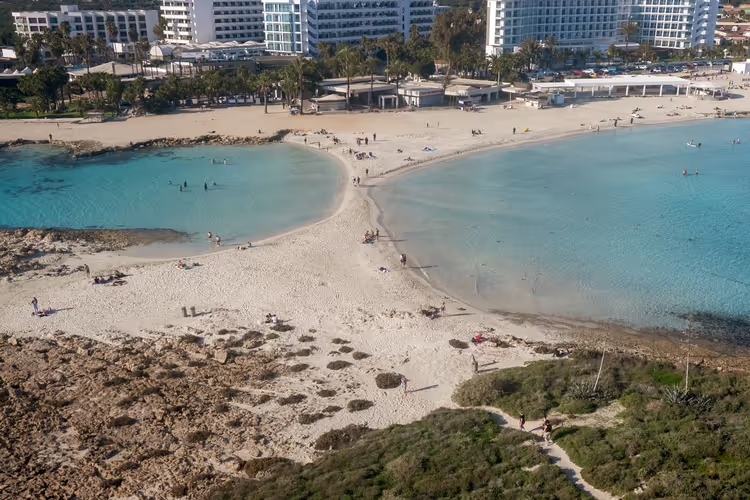
Nissi Beach and the central beaches fill up from early morning in July and August. If you want a spot by the water without the crowds, arrive by 8:00 or choose beaches farther from the center. Sunbeds and umbrellas get more expensive in high season, so bring your own mat if you want to save.
In the evening, life moves to the promenade: cafes and bars stay open late into the night. For those coming for the sea, tan, and evening strolls, summer is the best fit.
- Who it's for: those coming for the sea, tan, and nightlife.
- Not for: those who don't handle heat and stuffiness well.
- The catch: in August, nights stay around 22 °C, and sleeping without air conditioning is hard.
Plan your day properly. From 11:00 to 16:00 the sun is at its strongest, so schedule excursions for the morning or evening. Drink water constantly, not just on the beach.
During the day it's easy to get sunburned, even if you're lying in the shade. Reapply sunscreen every two hours and wear a cap, especially if you're traveling with kids.
Shoulder season: September and October
September in Ayia Napa is often warmer than July in Central Europe. Daytime is around 31 °C, the sea is 27 °C, and rain falls on average one day per month. For those who want warm sea without peak heat, this is the best month.
In October, the air cools to 27 °C, while the sea stays at 25 °C. Swimming is comfortable all month, especially in the first half. In the evening, a light jacket is already needed.
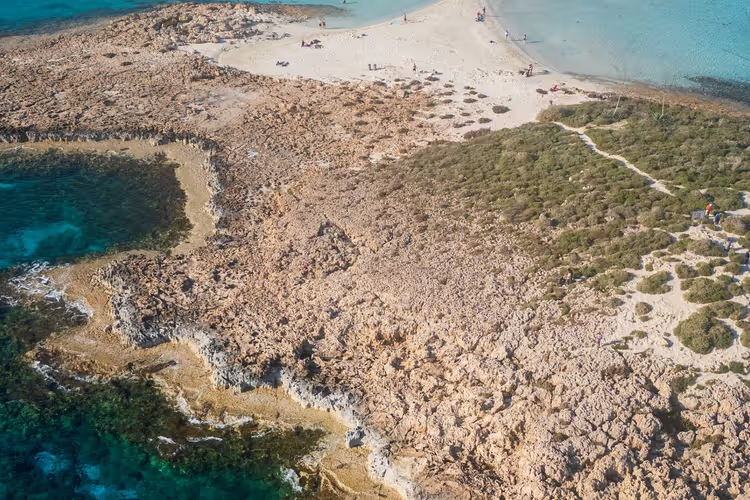
The sea cools more slowly than the air, so even after a cool night the water stays warm. In practice, this means the swimming season in Ayia Napa is longer than the calendar suggests.
Evening swimming here is comfortable almost until the end of October. The sea holds heat even after sunset, and the beach is already empty at that time.
By the end of October, the weather becomes changeable. There are about four rainy days, and short downpours with thunderstorms occur. So keep activities in your plan that don't depend on the sun.
- Who it's for: couples and families who value warm sea and quiet beaches.
- The catch: in September, prices are still high; they only drop by mid-October.
Spring: March, April, and May
In spring, Ayia Napa wakes up. In March, daytime is 19 °C, in April 23 °C, in May 26 °C. Rain decreases: eight days in March and three days in May.
The sea in spring is still cool: 17-20 °C. Many people only swim from mid-May, when the water warms to 20 °C and above.
Spring is great for walks and excursions. On the trails near Cape Greco, it's comfortable even during the day, and grasses and shrubs bloom all around. Bring sneakers, extra water, and a hat.
Beaches in April and May are almost empty. You'll get to see Nissi Beach without the crowds and walk through coves that are packed to capacity in summer.
In March and April, the weather is changeable: warm days alternate with cool ones. Bring layers so you're comfortable both in the morning and at midday.
- Who it's for: those who love hiking and want fewer tourists.
- The catch: the sea is brisk; it's still too early for long swims with kids.
Winter: December, January, and February
Winter in Ayia Napa is mild, but not beach weather. Daytime is 16-18 °C, nighttime 7-9 °C, and the sea cools to 16-19 °C.
This is the rainiest period. In December there are about 11 rainy days and 101 mm of precipitation, in January 11 days and 87 mm (as of: 09/2026, weather2travel.com). Daylight in winter is short, about 10 hours, and the sun appears for 5-6 hours a day.

In winter, it's worth coming for a quiet getaway: prices are low, the beaches are almost empty, and you can see attractions without queues. You can drive around the area because the roads are calm.
Bring a jacket and umbrella, and leave the swimsuit at home. If you want to swim, pick a sunny day and don't count on a long dip.
In winter, the weather often changes during the day: the sun shines in the morning, and rain starts after lunch.
- Who it's for: those who want peace and are ready to give up swimming.
- The catch: some beach cafes and water activities are closed until spring.
What makes Ayia Napa's climate special
Ayia Napa's climate is shaped by latitude, sea, and terrain. The southeast of Cyprus is open to the sun almost year-round. Even in January there are 5 hours of sunlight per day, and in June and July 12 (as of: 09/2026, weather2travel.com).
Cyprus is often called the island of three hundred sunny days a year. The numbers for Ayia Napa confirm this: there are fewer cloudy days here than anywhere in Central Europe.
The summer heat is softened by the north wind, known in the Eastern Mediterranean as the meltemi. It brings coolness, but sometimes kicks up dust, and the air becomes hazy.
Vegetation is adapted to drought. Olives, cypresses, and aromatic herbs easily survive the long dry summer and bloom in early spring.
Inland, summer is usually hotter than on the coast, so the sea air in Ayia Napa eases the heat. In summer, the air cools by 10-11 °C at night compared to daytime.
Water is scarce in the region, so Cyprus conserves it. Turn off the tap and don't let water run unnecessarily.
The coastline and marine life are protected here. After the growth of tourism, the condition of beaches and the seabed is monitored, so the water in the coves stays clean.
Hazardous weather: heat, downpours, and dust storms
Normal weather in Ayia Napa is predictable, but unpleasant phenomena sometimes occur. It's better to know about them in advance so they don't ruin your vacation.
Heat. During the hottest periods, the air heats up well above 35 °C. On such days, avoid the beach in the middle of the day and drink more water.
Downpours and thunderstorms. In autumn, rain can be short but very heavy. Water accumulates quickly in low-lying areas, so don't plan long car trips during a thunderstorm.
Dust storms. Wind from the Sahara sometimes brings dust and worsens air quality. If you have allergies or asthma, it's better to stay indoors on such days.
Winter storms. Windy days with rain also happen in winter. They disrupt walking plans but rarely affect city life for long.
In all these cases, one rule applies: check the forecast a day ahead and keep a plan B.
Also watch the sea. On windy days, waves near the rocks become dangerous, and swimming is closed. If you see a red flag, don't enter the water.
How to choose the time for your trip
Start with your main goal. For beach and swimming, go from June through the first half of October. For excursions and walks, April, May, and October work well.
Compare seasons by purpose:
Goal | Best months | Why |
|---|---|---|
Swimming | June-October | Sea 24-28 °C |
Excursions | April, May, October | Air 23-27 °C |
Peace and quiet | November-February | Few tourists |
Saving money | April, May, November | Low season |
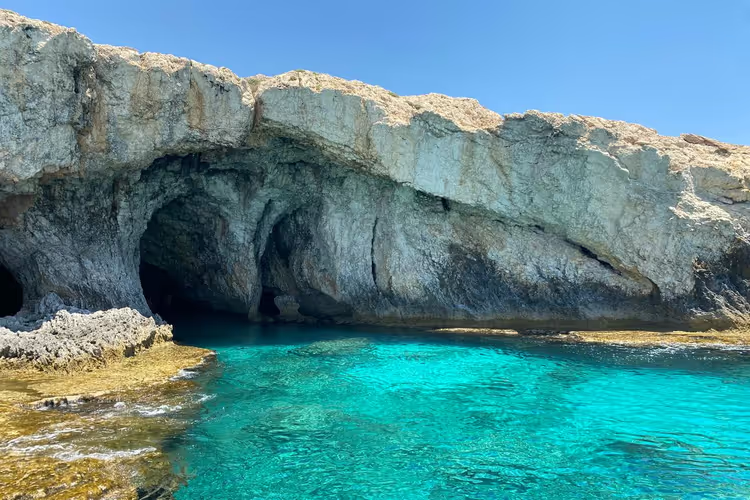
 © Максим Улитин · CC BYPhoto: Максим Улитин, CC BY (https://creativecommons.org/licenses/by/3.0), Wikimedia Commons
Prices for accommodation and tickets rise in high season, peaking in July and August. If your budget is limited, choose late May or the second half of October: the weather is comfortable, and prices are lower.
Check the events calendar. In spring and autumn, there are more local holidays and festivals than in winter, so accommodation gets booked faster for specific dates. See current dates on the Ayia Napa municipality website.
If you're going to a specific festival, confirm the dates before buying tickets: local events are sometimes rescheduled. And book accommodation for your season: in high season, seaside hotels are the first to get more expensive.
For a trip with kids, choose June or September, because the sea is already warm and there's no peak heat. If your goal is maximum warmth, then August is the right choice.
What to do in each season
Weather determines not only the month but also the list of activities. In summer, water activities operate: boats, wakeboarding, diving near the rocks. In spring and autumn, it's more convenient to walk and drive around the island; in winter, excursions and gastronomy remain.
Season | Activities | What to keep in mind |
|---|---|---|
Summer | Beach, water sports | Leave the house in the morning |
Spring | Walks, excursions | The sea is still cool |
Autumn | Swimming, trips | Bring a jacket for the evening |
Winter | Museums, gastronomy | Short daylight hours |
If you're coming for water sports, June, July, or September will suit you. For hiking routes, choose April or October, when the sun isn't as harsh.
⁉️🤔 Frequently asked questions
When is the best time to go to Ayia Napa?
It all depends on your goal. For the beach, June, July, August, September, and the first half of October work: the sea stays at 24-28 °C. For walks and excursions, choose April, May, or October, when the air is 23-27 °C and there are noticeably fewer tourists.
When is the sea warmest in Ayia Napa?
The warmest sea is in August and September, around 27-28 °C. In July, the water is usually 27 °C; in October it stays at 25 °C. These months are best for swimming, because after October the sea cools quickly.
When is the rainy season in Ayia Napa?
The main rains fall from November to March. In December there are about 11 rainy days and 101 mm of precipitation, in January 11 days and 87 mm. In summer, rain almost never falls: in July it occurs on average one day per month.
What to do in Ayia Napa in winter?
Winter here is quiet and inexpensive. Daytime is 16-18 °C, so it's comfortable to walk, see the Ayia Napa Monastery, and drive around the island. Few people dare to swim: the sea cools to 16-19 °C. But there are almost no queues.
Is the heat dangerous in Ayia Napa in summer?
The usual 30-33 °C is manageable if you drink water and stay out of the sun at midday. More dangerous are short periods when the air heats above 35 °C. On such days, go outside in the morning and evening, and stay in the shade or indoors during the day.
In short: what to book
If your vacation is for the sea, choose July, August, or September. If you want to combine beach and excursions, late May, September, and the first half of October work well. If you're coming for peace and savings, choose November-February.
Before you fly, check the forecast 10-14 days ahead and book accommodation in advance: in May and September, there are fewer available rooms than it seems.

A small editorial team writing guides for independent travel. We travel ourselves, but we haven’t been everywhere, so we check prices, opening hours and how to get there against official sources.