
















What to see in Ayia Napa: 11 places from waterpark to Varosha
Ayia Napa is usually remembered for its clubs and parties. But the town has a second, quieter side: sea caves, a lagoon, a monastery, and the abandoned quarter of Famagusta. We put together 11 places around Ayia Napa worth seeing even if you came only for the sea.
Distances here are short: Cape Greco is about eight kilometers from the center, Famagusta is roughly an hour by car (on the map).
Ad: this article contains affiliate links, we earn a commission if you book through them, at no extra cost to you.
What to see in Ayia Napa
💡 In short:
- Plan two or three days: the sights are close to each other, but in summer it's hot and you need breaks by the water.
- Book the water park and a boat trip in advance: in season, good spots go fast.
- Prices and opening hours: 09/2026, checked on the official website
Our pick: below is a summary table so you can see at a glance what to see, how much it costs, and how to get there.
Place | Entry | How to get there |
|---|---|---|
Water World water park | paid | bus, taxi |
Blue Lagoon | free | boat or car |
Forest park at Cape Greco | free | car, bicycle |
Lighthouse | free | on foot along the promenade |
Monastery | free | town center |
Sea caves | free | car, bicycle, on foot |
Lovers' Bridge | free | on foot or by boat |
Cape Greco | free | car, taxi, bicycle |
Pirate caves | free | town center |
Harbor | free | on foot |
Famagusta | paid on a tour | car or tour |
Below we go through each place one by one: what to see there, when it's best to come, and where to wait in the shade.
1. Water World water park
 © Максим Улитин · CC BYPhoto: Максим Улитин, CC BY (https://creativecommons.org/licenses/by/3.0), Wikimedia Commons
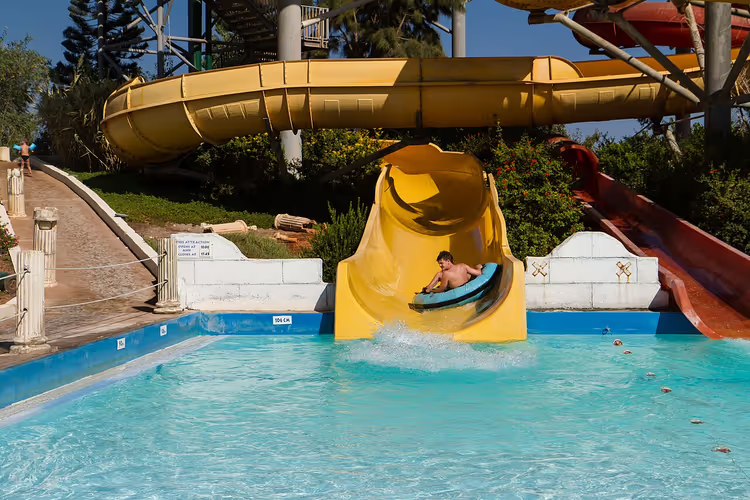
Water World is considered the largest outdoor water park in Cyprus and one of the largest in Europe (as of: 09/2026, water park website). It's themed around Ancient Greece: every pool and attraction has its own mythological name. You can spend a whole day here, and the scenery around you keeps changing.
The park has more than thirty slides (as of: 09/2026, attraction catalog). Some are designed for families with children, some for adrenaline lovers. With a group you can set up a competition: race down parallel "snakes" in pairs or four at a time in the "Chariot Races." The most unusual attraction, "Fall to Atlantis," comes with music and lights.
Those who don't like extreme rides also have plenty to do. By the three pools named Poseidon, Pegasus, and Aphrodite there are loungers, trees, and umbrellas for shade. Children have a separate area with the "Trojan Adventure" and the "Minotaur's Labyrinth". Bars and cafes are open, so you can grab a bite right on the grounds.
Prices here have risen noticeably in recent years. An adult day ticket costs about 48-55 EUR, a child ticket for ages 3-12 about 35-42 EUR (as of: 09/2026, prices and tickets). A nice bonus: when you buy a ticket, the park gives you a free second visit in September and October. Online you get your ticket without waiting at the ticket office (Water World tickets).
- How to get there: the park is on Ayia Thekla road on the outskirts of Ayia Napa; you get there by taxi, rental car, or transfer.
- Who it's for: families with children and groups who want an active day.
- The catch: the ticket isn't cheap, and at the height of the season you'll stand in line for the popular slides.
2. Blue lagoon at Cape Greco
 © Fry72, Karel Frydrýšek · CC BY-SAPhoto: Fry72, Karel Frydrýšek, CC BY-SA (https://creativecommons.org/licenses/by-sa/4.0), Wikimedia Commons
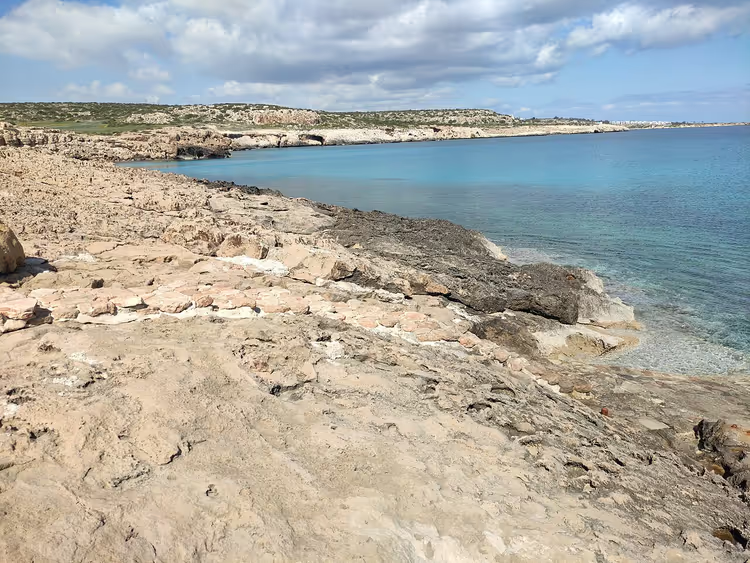
Blue Lagoon lies between Ayia Napa and Protaras, right at Cape Greco. The water here is light and almost sky-colored, and along the shore cliffs sit next to gentle slopes. It's one of the most photographed spots in the area, and you'll understand why from the very first minute.
You can see the lagoon from the water or from the shore. Sightseeing boats leave regularly from Ayia Napa harbor: some head straight to the lagoon, others stop there along the way. Almost all of them pause for a swim. The cost of the trip depends on the route and duration, so there are both affordable group trips and private yacht charters. You can choose an option on the boat trips page.
From the shore it's more difficult: the descent is steep and rocky, so you need sturdy shoes and plenty of energy. Going over the rocks without a guide isn't a good idea. But from the water the lagoon opens up completely, along with the nearby sea caves.
- How to get there: by boat from Ayia Napa harbor or by car along the coastal road toward Cape Greco.
- Cost: swimming in the lagoon is free, you only pay for the boat trip.
- The catch: the descent from the shore is steep and rocky, and it's uncomfortable without proper shoes.
3. Cape Greco forest park
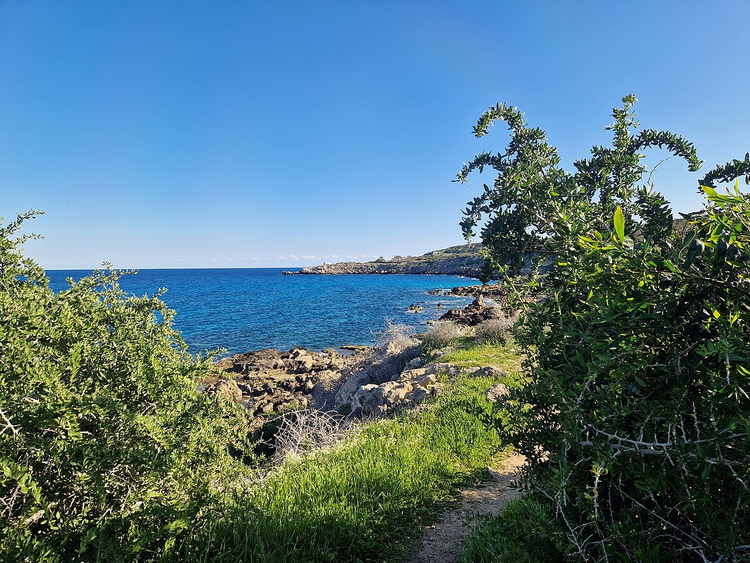
Near Ayia Napa there's a national park where you can mix beach time with sports. It's essentially a forested area on the coast. The park staff fit their projects into the natural landscape: the orchid park and the collection of bulbs, daffodils, crocuses, and irises look completely natural here.
For active visitors, the park has cycling routes and walking trails. They're all graded by difficulty, but the most popular one, the Aphrodite Trail, is manageable for any tourist. Benches and viewing platforms line the route. Along the way you'll see the ruins of the ancient temple of Aphrodite and the white-stone church of Agii Anargiri.
If walking isn't enough, you can go hang gliding and see Cape Greco from above. Getting here is easy: by taxi, private car, or bicycle. Entry is free, and the area is open at any time of day or night.
- How to get there: by car, bicycle, or taxi from Ayia Napa.
- Cost: entry is free, you only pay for vehicle rental.
- The catch: the routes vary in difficulty, so pick a trail that matches your fitness level.
4. The lighthouse on the Ayia Napa promenade
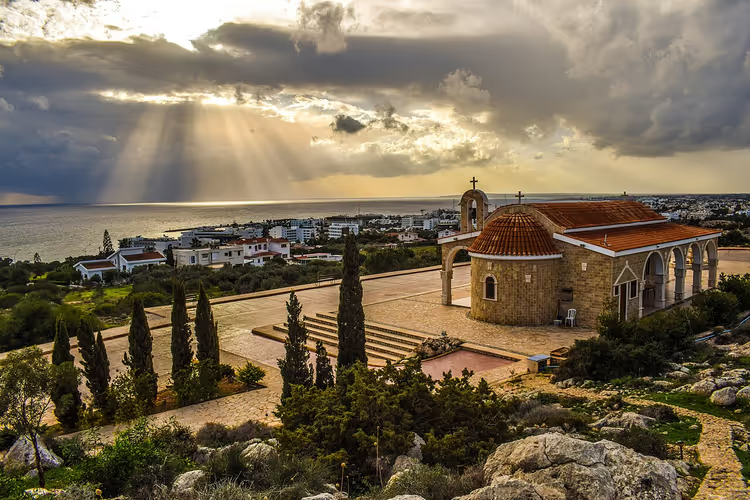
Lighthouses have served as landmarks for ships for centuries. The one in Ayia Napa also saved vessels near the shore, but over time it became popular with tourists too. The snow-white tower on a rocky headland draws romantics and anyone who wants to be alone with the sea and their thoughts. Architecturally it's a simple structure, but it looks impressive.
You can't go up to the top: the lighthouse is operational, and outsiders aren't allowed in. But down below you get a sea view and a view of the town. Karousos Beach, one of the best in Ayia Napa, is right next to it. You can easily combine a daytime walk to the lighthouse with a swim, and in the evening continue along the promenade.
Finding the lighthouse is easy: it stands at the end of the promenade on a small spit jutting into the sea, and it's visible from far away. The area isn't fenced or guarded, and there are no tickets. Visit it at any time you like.
- How to get there: at the end of the promenade, within walking distance from the town center.
- Cost: free, the area is open.
- The catch: you can't climb the tower, it's an operational facility, and any attempts are stopped.
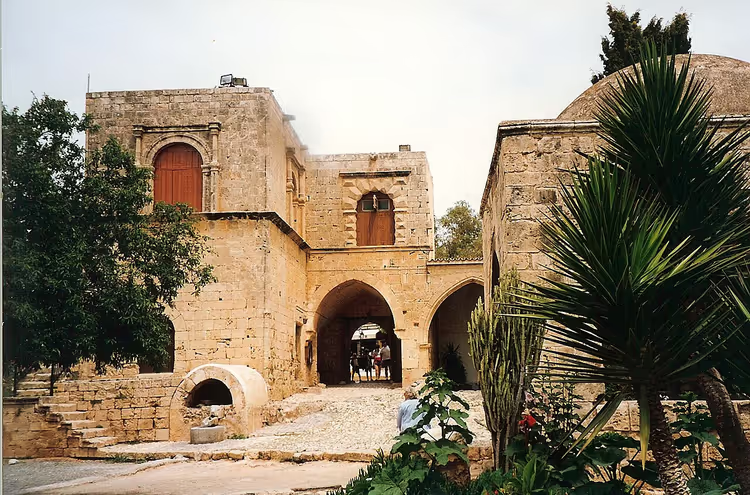
5. Ayia Napa Monastery and its relics
 © Bayreuth2009 · CC BYPhoto: Bayreuth2009, CC BY (https://creativecommons.org/licenses/by/3.0), Wikimedia Commons
Ayia Napa means "Sacred Forests" in Greek. The place was named by people who found an icon of the Mother of God in an abandoned cave and decided to settle nearby. Later the settlement grew into a fishing village, and in the 20th century it became a resort. But the memory of those days is still alive here.
At the site of the discovery, a church was first built, and then a monastery by order of a noble Cypriot woman. After an unhappy love affair, she spent the rest of her days in seclusion here. Today her grave in the marble Fountain House is considered one of the main relics of the complex. Even more highly valued is the veil that, according to tradition, Jesus received from Saint Veronica on the way to Golgotha.
The building dates to around 1500, and the monastery has preserved its appearance almost unchanged (as of 09/2026, official monastery website). In summer it's open on weekdays from 08:30 to 19:30, and on weekends from 11:00 to 19:30. In winter it's open only Monday through Friday, from 10:00 to 15:00. Entry is free, and in September the courtyard becomes the venue for the autumn fair.
- How to get there: the monastery stands in the center of Ayia Napa, enter through the south gate from the central square.
- Cost: entry is free.
- The catch: in winter the monastery is closed on weekends, and on weekdays it's only open until 15:00.
6. Sea caves and grottoes near Ayia Napa
 © dronepicr · CC BYPhoto: dronepicr, CC BY (https://creativecommons.org/licenses/by/2.0), Wikimedia Commons
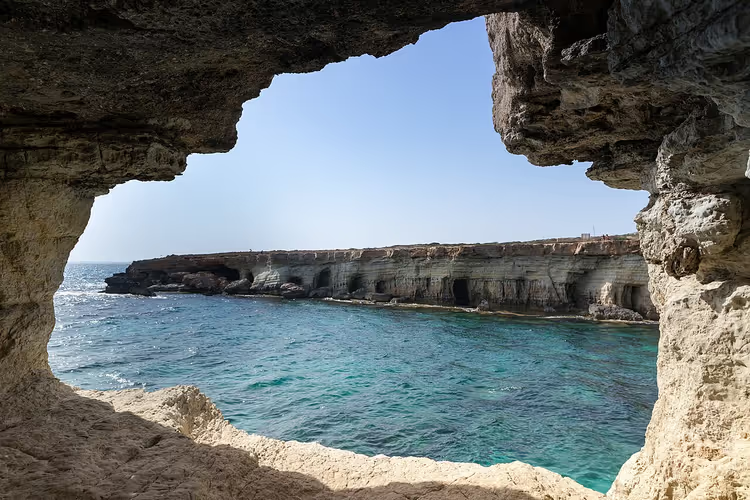
Nature sometimes creates things you can only admire. Around Ayia Napa, it has outdone itself: there are plenty of beautiful spots here. The sea caves and grottoes stand out even against that backdrop. It's hard to believe, but they are all the result of centuries of waves crashing against the rocks.
You can see the grottoes from the water. On a yacht or boat trip, you'll get as close to the shore as possible. Some vessels moor here for a few hours, giving you a chance to see the caves up close. Others stay for just a couple of minutes before moving on.
From the shore, the walk from Ayia Napa takes no more than half an hour, and even less by bike. Either way, wear sturdy shoes: the path down to the water is rocky.
- How to get there: about half an hour on foot from Ayia Napa, faster by bike.
- Cost: free, no entrance tickets.
- The catch: the path down to the water is rocky, uncomfortable without sturdy shoes.
7. Lovers' Bridge over the sea
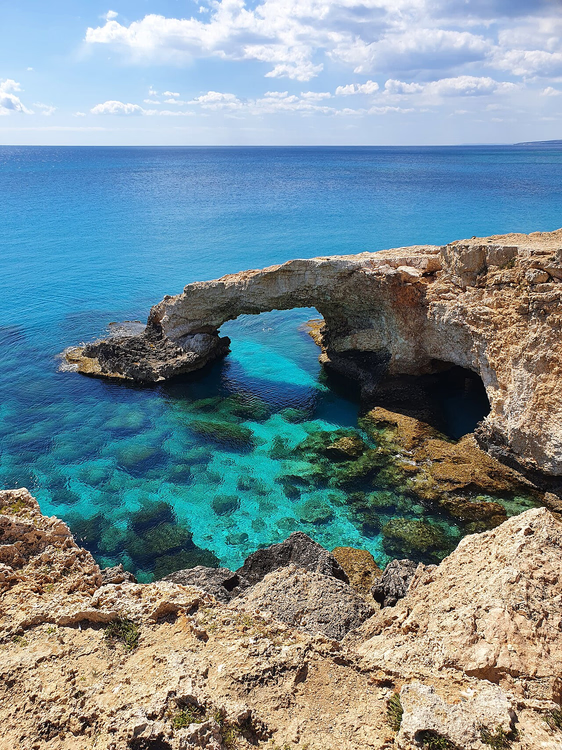
Lovers' Bridge is one of the most popular spots for newlyweds and romantic couples. Nature lovers and curious tourists also stop by. The "bridge" itself is a natural rock arch: one end is connected to the shore, the other dips into the water. Photographers often use it as a backdrop for shoots.
Tourists have their own tradition tied to this place. It's said that if you hold hands and jump from the arch into the water, your feelings will never cool. The activity is safe and not prohibited, but not everyone goes for it. Those who aren't after adrenaline will also enjoy it: the bridge offers some of the best views in the Ayia Napa area.
You can see the arch from the shore or from the sea. Sightseeing boats leave the harbor regularly, and most routes pass right by here. Many make a stop so guests can swim and pass under the stone arch. Walking from Ayia Napa takes about thirty to forty minutes; you'll get there faster by bike or taxi.
- How to get there: on foot from Ayia Napa, by bike, or by taxi.
- Cost: free.
- The catch: not close to town on foot; in summer it's better to bike.
8. Cape Greco and its panoramas
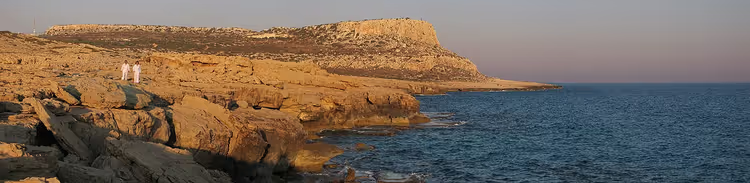 © Anna Anichkova · CC BY-SAPhoto: Anna Anichkova, CC BY-SA (https://creativecommons.org/licenses/by-sa/3.0), Wikimedia Commons
Cape Greco is located near Ayia Napa, and you can visit at any time of day or night. The panoramas are especially stunning at sunset and sunrise. You can sit together at the edge of the land and watch the sun go down without any tickets.
The cape is a favorite not only of couples but also of divers. They're drawn by the rich underwater world. Part of the area is occupied by a protected radar station, so the cape is not fully accessible.
- How to get there: by taxi, rental car, or bike from Ayia Napa.
- Cost: free.
- The catch: part of the cape is closed due to a protected radar station.
9. Pirate caves in the city center
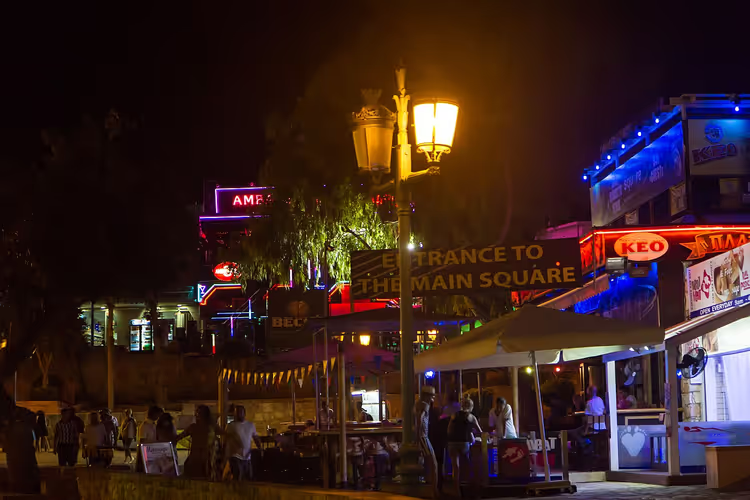 © Максим Улитин · CC BYPhoto: Максим Улитин, CC BY (https://creativecommons.org/licenses/by/3.0), Wikimedia Commons
The Pirate Cave is a complex right in the center of Ayia Napa. It's hard to say today when and why these stone structures were built. Locals insist that many years ago this was a real pirate cove. If you use your imagination, you can picture a primitive defensive line and treasure chests on the seabed.
Today, the ship "Black Pearl" stands near the shore, resembling a vessel from pirate movies. Its cruises are themed: guests are offered seafarer-style snacks, games, and contests. The ship occasionally sets out on night voyages with parties for adults. Day and night, guests are entertained by characters dressed as famous pirates.
Even if a sea voyage isn't in your plans, the caves are worth seeing from the shore. It's easy: just walk to the center of Ayia Napa. As for the Black Pearl's sailing schedule, it's best to check in advance.
- How to get there: center of Ayia Napa, walkable.
- Cost: viewing from the shore is free; sailing on the Black Pearl is paid.
- The catch: the ship's sailing schedule is best checked in advance.
10. Ayia Napa harbor and promenade
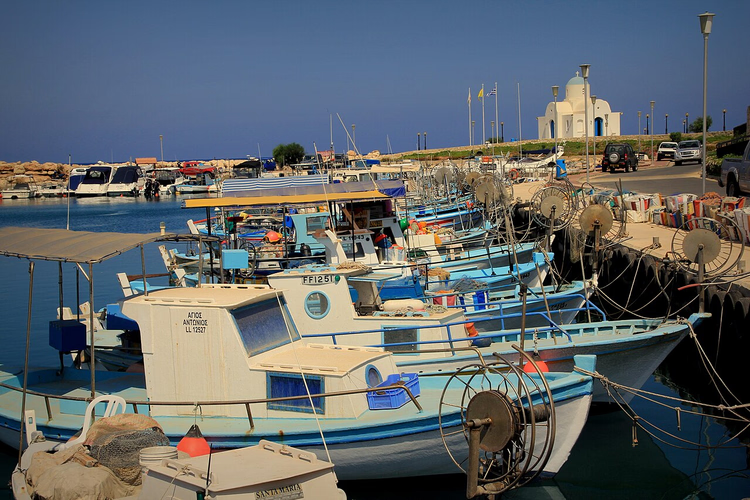 © Wojciech Biegun · CC BY-SAPhoto: Wojciech Biegun, CC BY-SA (https://creativecommons.org/licenses/by-sa/3.0), Wikimedia Commons
The harbor is rightly considered the heart of resort Ayia Napa. Its special atmosphere is valued no less than the beaches. You won't find cruise liners at the pier, but there are authentic fishing boats, small boats, and yachts. The first thing to do at the harbor is book a sea trip: routes and durations vary.
Fishing enthusiasts will also find something to enjoy here. Local fishermen take guests out to sea and share the secrets of their trade. Every morning, an impromptu market with fresh seafood delicacies operates at the harbor.
The streets near the harbor attract tourists just as much. Interesting architecture, colorful cafes, and the chance to try fish meze made from fresh seafood. You can end your walk by admiring the evening sunset. If you're planning trips around the island, compare insurance options in advance.
- How to get there: the harbor is in the central part of Ayia Napa, within walking distance from almost anywhere in the resort.
- Cost: walking around the harbor is free; you only pay for boat trips and food.
- The catch: the fresh fish market operates only in the mornings.
11. Famagusta and the Varosha quarter
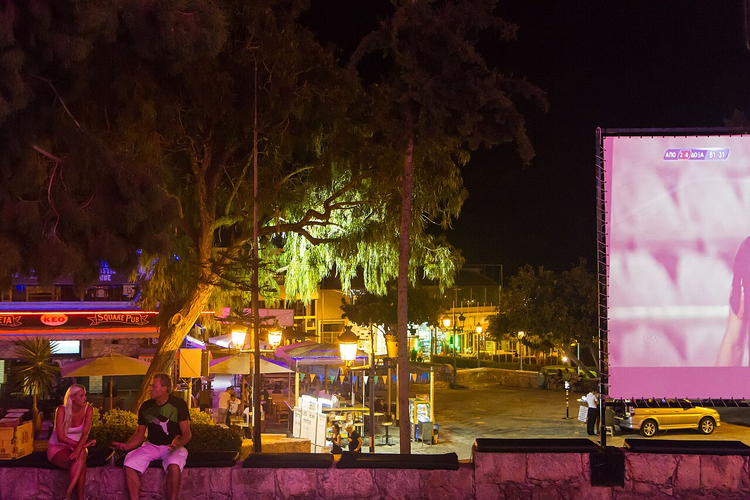 © Максим Улитин · CC BYPhoto: Максим Улитин, CC BY (https://creativecommons.org/licenses/by/3.0), Wikimedia Commons
Near Ayia Napa stands a city that has witnessed both triumphs and tragedies in Cyprus's history. This is Famagusta, founded many centuries ago and once the residence of Richard the Lionheart. Until the mid-seventies, it was considered one of Europe's most elite resorts. Elizabeth Taylor, Richard Burton, and other members of the creative elite vacationed here.
The events of the mid-seventies changed everything: the central Varosha district emptied out and became a ghost town. Locals, inviting visitors on a tour of the quarter, say that traces of its past life remain there, and that clothes from the seventies still hang in the shops. In reality, everything was looted right after the tragedy, and that's more of a legend.
Despite the upheavals, the city has preserved many ancient ruins. First and foremost is the medieval Cathedral of St. Nicholas. The old town is surrounded by a wall: the Venetian-style fortification is considered the best preserved in Europe. A trip to Famagusta is one of the most popular Cypriot excursions, and you can book it at any local agency (Famagusta tours).
- How to get there: on a guided tour or by rental car.
- Cost: a guided tour is paid; going on your own is cheaper.
- The catch: public transport in Cyprus is tricky; you could get stuck on the way back and only be able to leave by taxi.
If you'd find it easier to compare sea trips and excursions in the area in one place, current options are listed below.
Tours and tickets in Ayia Napa
Guided tours, skip-the-line tickets and activities — most offers can be cancelled free of charge.
See offers on GetYourGuideThe widget loads once you give your consent.
⁉️🤔 Frequently asked questions
How many days do you need to see all these places?
Two or three days is enough for a relaxed visit. Spend one day at Water World water park, use the second for Cape Greco, the Blue Lagoon, the sea caves, and the Bridge of Lovers, and the third for the monastery, the harbor, and Famagusta. In summer, make sure to take breaks in the shade between stops, otherwise you'll be exhausted by lunchtime.
Which of these places are free?
Most of the places on this list are free: the Blue Lagoon, the forest park at Cape Greco, the lighthouse, the monastery, the sea caves, the Bridge of Lovers, Cape Greco, the pirate caves, and the harbor. You only pay for the water park, boat trips, and the Famagusta excursion. So you control your own trip budget.
When is the best time to visit the Blue Lagoon and the sea caves?
Early in the morning or closer to evening: during the day it's hot on the open rocks and there's almost no shade. The Blue Lagoon is easier to reach from the water, by boat from Ayia Napa harbor. You can walk to the sea caves in half an hour or get there by bike, and wear sturdy shoes.
Can you visit Famagusta and Varosha on your own?
Yes, but it's better with a rental car. A guided tour saves you the hassle of driving and usually includes the old town and the Varosha quarter.
What should you do if you only have one day?
In the morning, go to Water World water park, after lunch take a boat trip from the harbor to the Blue Lagoon and the sea caves, and in the evening walk to the lighthouse and have dinner on the waterfront. That way you'll fit in an active day, nature, and the city in the evening.
In short: what's worth booking
Ayia Napa offers a rare combination: in a couple of days you can cover a water park, wild nature, and a city with history.
- If you're traveling with kids: spend a full day at Water World, then stroll around the harbor in the evening.
- If you're after peace and photos: head to the Blue Lagoon and Cape Greco in the morning, and save the Bridge of Lovers for sunset.
- If you want experiences with history: plan a trip to Famagusta and stop by the monastery in the center.
Water park tickets and boat trips are easier to book online in advance, so you don't waste time in line (see boat trip options).

A small editorial team writing guides for independent travel. We travel ourselves, but we haven’t been everywhere, so we check prices, opening hours and how to get there against official sources.