








When to go to Azerbaijan: weather by month and region
Azerbaijan fits winter and summer into one trip. While trees are blooming in Baku, snow still lies in the mountains, and rain falls in the south. So the question of "when to go" is decided not by the month, but by your route.
We gathered weather data by region and season so you can pick a window without heat and downpours. The best time for most of the country: April-June and September-October. In spring there is no summer stuffiness yet. In autumn the warmth lingers without exhausting heat. Baku averages about 2,205 hours of sunshine per year (as of 09/2026, Baku climate data).
Ad: this article contains affiliate links, we earn a commission if you book through them, at no extra cost to you.
Best time to visit Azerbaijan
💡 In short:
- Best months for Baku and the Absheron Peninsula: May, June, September and October.
- A balanced window for the whole country: April-June, before the summer heat sets in.
- Beach season on the Caspian: June-September.
- Ski season: December-March.
- Climate and best time: 09/2026, verified against the official tourism portal.
The season here depends on the region more than on the calendar. In the morning you walk around warm Baku, and by evening you are freezing in the foothills. Below we break down the climate zones, months, and windows for beach and skiing.
Nine climate zones in one territory
Azerbaijan has nine of the world's eleven climate zones (according to Climate of Azerbaijan). For a country the size of Austria, that is rare: subtropics near Lankaran, semi-deserts of Absheron, and glaciers of the Greater Caucasus sit side by side.
Precipitation is low almost everywhere. The wet south around Lankaran, where tea and citrus grow, gets more rain. The rest of the territory is dry, so you count cloudy days in single digits, not weeks. Weather rarely derails a whole itinerary.
The Caspian lowland and Absheron have a temperate steppe climate. The foothills and the Greater Caucasus bring cool summers and snowy winters. Nakhchivan lies in a continental belt with the widest temperature swings. This spread makes the word "season" relative.
Weather in Baku and on the Absheron Peninsula
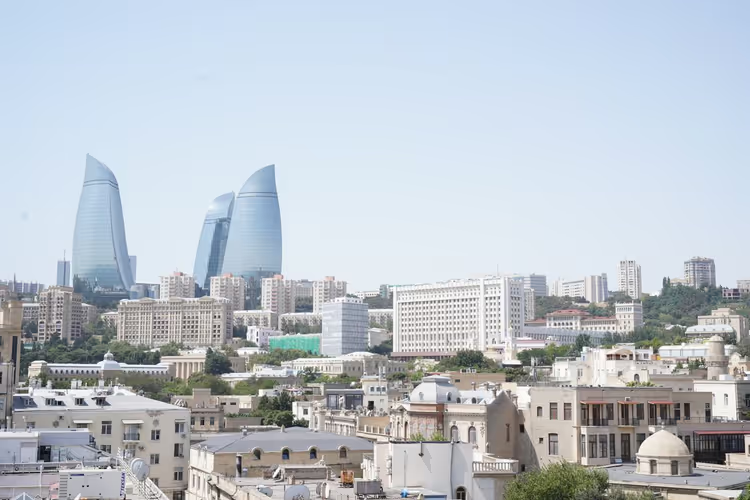
Baku sits on the Absheron Peninsula, where there is plenty of sun and little precipitation all year round. About 274 mm of rain falls here annually, and the wettest months, November and December, bring an average of 40 mm each (as of 09/2026, Weather and Climate). The driest month, August, gets only 6.5 mm.
In summer, rain may not fall for weeks, and the sky stays cloudless. In winter, however, cold air occasionally breaks through from Siberia and brings hard frosts. More often, winter stays mild.
Average daytime highs look like this (as of 09/2026, Weather and Climate):
Month | Average daytime high |
|---|---|
February | 9 °C |
April | 15 °C |
May | 21 °C |
June | 27 °C |
July | 30 °C |
August | 30 °C |
September | 26 °C |
October | 21 °C |
November | 15 °C |
Nighttime temperatures range from 4 °C in February to 24 °C in August (as of 09/2026, Weather and Climate). In July and August you will feel the difference between daytime heat and evening coolness on the waterfront. If your trip falls in these months, look for accommodation with air conditioning: hotels in Baku on Trip.com.
When to go by season
April, May and June offer the most consistent comfort. In April, trees bloom in Baku, and the city becomes pleasant for walks and photos. It is already warm during the day, but there is no heat yet. This window works for both the capital and trips to the foothills.
July and August bring dry heat above 30 °C (as of 09/2026, Weather and Climate). The sea, shady parks, and early departures help you cope with it.
September and October are as comfortable as late spring. The heat subsides, the sea stays warm, and daylight hours are still long. November can also be pleasant, but it often turns cloudy.
 © David Uriarte · CC BY-SAPhoto: David Uriarte, CC BY-SA (https://creativecommons.org/licenses/by-sa/4.0), Wikimedia Commons
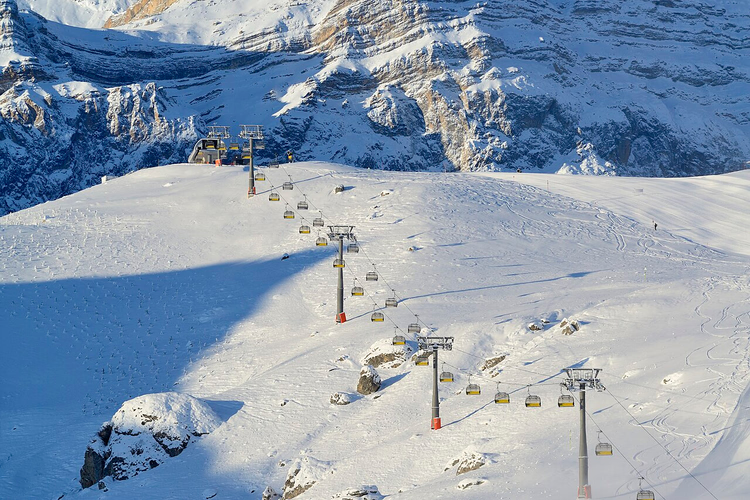
Winter is short and mild, and February, the coldest month, rarely offers much sun. But the ski season opens. The Shahdag resort in the Gusar region and Tufandag in Gabala welcome guests in winter. On the slopes you ski against the backdrop of the Greater Caucasus. The drive back to Baku takes about 3 hours.
Weather by region: where it is cooler in summer
The difference between areas is noticeable even in mild September. Here is the average daytime high for popular destinations:
Region | Average daytime high in September |
|---|---|
Baku | 26 °C |
Lankaran | 26 °C |
Shamakhi | 26 °C |
Sheki | 23 °C |
Guba | 22 °C |
Gabala | 20 °C |
Shahdag | 17 °C |
The higher you climb, the cooler the summer. So you spend July in Baku by the sea, then head to the mountains for fresh air. Nakhchivan behaves differently: it has a continental climate with hot, dry summers and cold winters.
Lankaran stands out for its humidity. It is a green subtropical south with frequent rain, and not everyone likes that climate. If you want dry warmth, stay on Absheron or in the foothills.
What to keep in mind when planning
In July and August, Azerbaijanis are on vacation, and locals themselves head to the sea and the mountains. Accommodation and tours in high season get booked up in advance, so reserve several weeks ahead.
Weather is rarely the same across the whole country. In a couple of days you will swap the sea coast for cool foothills. Bring a light jacket even in summer: evenings in the mountains are chilly.
A car is the most convenient way to travel between cities. A good road leads from Baku to Guba or Gabala, and you can stop wherever you like along the way. Book your rental in advance in high season.
⁉️🤔 Frequently asked questions
When is the best time to visit Azerbaijan for the first time?
For a first trip, choose April, May, June, September or October. In these months you get comfortable temperatures in both Baku and the regions. Summer heat suits experienced travelers, while February is most often cloudy and cool.
What is the weather like in Baku in winter?
Winter in Baku is mild, but not sunny. Snow and ice are rare, but possible. Warm clothes and an umbrella will definitely come in handy.
Can you swim in the Caspian Sea in June?
The swimming season on the Caspian opens in June and lasts until the end of September. The water warms up to comfortable levels, and the heat makes swimming pleasant. On Baku's city beaches, watch the winds: the Caspian quickly builds up waves.
What to do in Azerbaijan in the July heat?
In July and August, plan activities for morning and evening. During the day, take shelter in museums, tea houses, and indoor galleries. If you want cool air, head to the foothills: Gabala and Shahdag are noticeably fresher than the capital.
When should you go skiing in the mountains?
The ski season in Azerbaijan runs from December to March. The slopes keep snow with snowmaking, so the season rarely gets disrupted by warm weather.
In short: what to book
Azerbaijan rewards those who match the region to the season.
If you are short on time: base yourself in Baku and take day trips. See guided tours on GetYourGuide.
If you want to explore the regions on your own, compare car rentals on DiscoverCars. For the capital, book hotels in Baku in advance.

A small editorial team writing guides for independent travel. We travel ourselves, but we haven’t been everywhere, so we check prices, opening hours and how to get there against official sources.