
















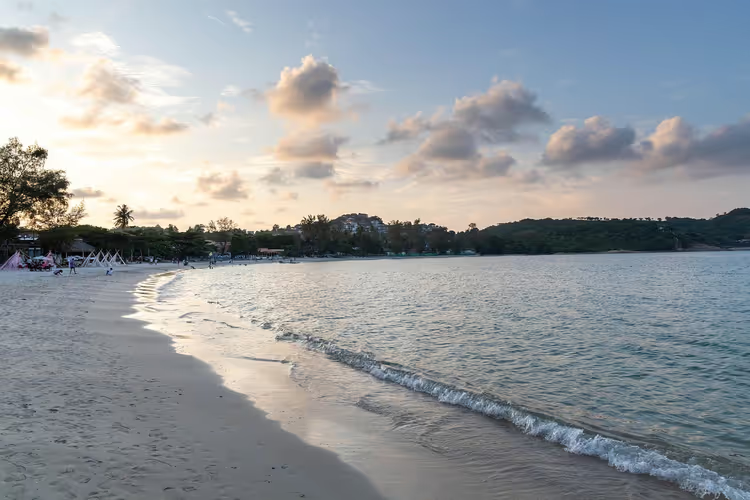
When to go to Koh Samui: seasons, rains and best months
Rain on Koh Samui does not follow the calendar, it follows the monsoon. The island lies in the sheltered part of the Gulf of Thailand, so its seasons are shifted compared to Phuket. In November, Koh Samui gets an average of 445 mm of precipitation over 16 rainy days (as of 09/2026, Koh Samui climate normals). In February, the same rainfall is almost seven times lower. That difference is what decides whether you end up on the beach or in a downpour.
Below you will find the climate by month, the island's four seasons, and the weeks when you should not book your trip in advance. We broke down the long-term climate normals by month, added local details, and kept the honest catches. This way you can pick your dates in a few minutes.
Ad: this article contains affiliate links, we earn a commission if you book through them, at no extra cost to you.
Best time to visit Koh Samui
💡 In short:
- Best window: from the second half of January to April.
- Driest month: February.
- Hottest months: April and May.
- Second high season: from mid-June, July, and the first half of August.
- Transition months: September and January, the weather here is unpredictable.
- Rain peak: October and November.
- Climate normals: 09/2026, based on 1991-2020 normals.
Koh Samui climate by month
Temperatures on Koh Samui are steady all year round, but rainfall varies a lot. During the day the air warms up to 29-33 °C, and the sea water stays around 29 °C (as of 09/2026, average temperatures and precipitation). The difference between months is not about heat, it is about rainfall and wind.
 © Manfred Werner · CC BY-SAPhoto: Manfred Werner, CC BY-SA (http://creativecommons.org/licenses/by-sa/3.0/), Wikimedia Commons
Month | Daytime, °C | Nighttime, °C | Precipitation, mm | Rainy days |
|---|---|---|---|---|
January | 29 | 24 | 125 | 8 |
February | 29 | 25 | 65 | 4 |
March | 30 | 25 | 115 | 5 |
April | 32 | 26 | 85 | 6 |
May | 33 | 26 | 130 | 11 |
June | 33 | 25 | 135 | 10 |
July | 32 | 25 | 115 | 11 |
August | 32 | 25 | 100 | 10 |
September | 32 | 25 | 120 | 11 |
October | 31 | 24 | 295 | 16 |
November | 30 | 24 | 445 | 16 |
December | 29 | 24 | 265 | 12 |
1991-2020 normals (as of 09/2026, island climate data).
The rain peak falls in November, but even that does not mean nonstop downpours. Between short bursts of rain, the sun comes back within a couple of hours. In February there are only four rainy days, and they barely get in the way of plans. Humidity is lower in the dry season and higher in the rainy season, and you will feel that just on a walk.
Treat the table as a guide, not a schedule. No two years are the same, and season boundaries shift. So before buying tickets, always check the latest forecast.
The temperature difference between the coolest and hottest month is small. So choosing your dates comes down to one question: how much rain are you willing to put up with. Dry and clear weather lasts from mid-January to April, summer brings short showers, and autumn brings the monsoon.
Long stretches of cool days are rare here, but fully dry days are still scarce in autumn.
Geography and microclimate of the island
Koh Samui, Koh Phangan, and Koh Tao sit in the sheltered part of the Gulf of Thailand. They form their own microclimate. Because of this, the rainy season on Koh Samui is often milder than in Phuket or Krabi. That is exactly why the island is so popular during European summer holidays.
 © Chi King · CC BYPhoto: Chi King, CC BY (https://creativecommons.org/licenses/by/2.0), Wikimedia Commons
The island's interior is lined with hills covered in dense forest. They split the weather: it can be raining on one beach while the sun shines on another at the same time. Keep this in mind when choosing your hotel area. If you want fewer clouds, look at the east and north coasts.
The wind in the shoulder season is weak, so there are almost no waves and swimming is comfortable. These days are worth booking for longer trips and boat excursions.
For trips to the island's interior, choose the morning, before the clouds rise over the mountains.
The weather within a single day changes quickly. It can be overcast in the morning, sunny by lunchtime, and cloudy again in the evening.
Worst time for Koh Samui
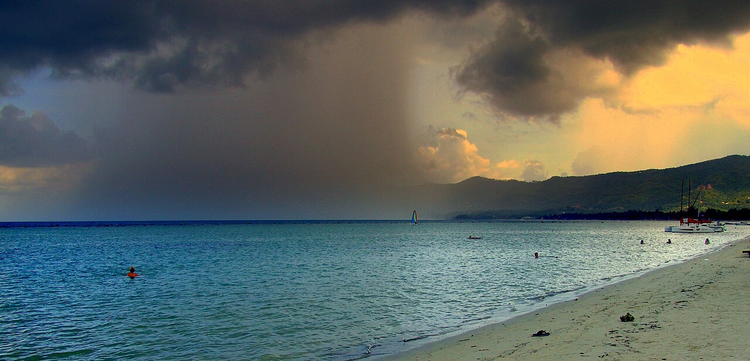
In October and November, the weather on Koh Samui gets worse than at any other time. During these months the monsoon reaches full strength, and rain falls more often than in any other period (as of 09/2026, monthly precipitation totals). Sometimes bad weather lasts all the way into December. September and January remain transition months, and predicting them in advance is nearly impossible.
 © Graham Thomson · CC BYPhoto: Graham Thomson, CC BY (https://creativecommons.org/licenses/by/3.0), Wikimedia Commons
During these months, only short trips make sense to plan. Keep a backup option for every day: if boats do not go out to sea, switch to a spa, a market, or a trip inland.
If your dates fall in this period, look at the Andaman Sea or the islands on the eastern side of the gulf. The season there follows a different schedule, and there is usually less rain.
Four seasons on Samui
Monsoon winds divide the year into four distinct periods. We described each of them with pros and cons so you can compare them. We rated every season on three things: weather, prices, and resort occupancy. That makes it easier to find a compromise between comfort and budget.
Cool dry season: high price
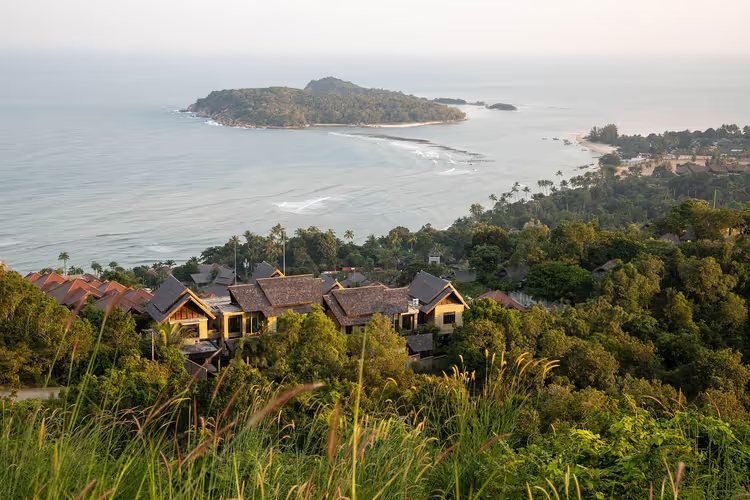
The dry season starts in mid-January and lasts through March. January often remains a transitional month, and heavy downpours still happen from time to time. Reliable good weather arrives in February and March: plenty of sun, little rain, and low humidity. Temperatures stay around 30 °C, the wind is light, so it is comfortable both for swimming and for excursions.
- Plus: high chance of clear weather and plenty of sun.
- Plus: the sea is almost without waves and jellyfish, beaches are clean.
- Plus: low humidity, pleasant to walk around all day.
- The catch: hotel and flight prices rise sharply.
- The catch: the main beaches are overcrowded, especially Chaweng Beach and Lamai Beach.
- The catch: popular hotels sell out several months in advance.
Even in high season, the island still has quiet areas with few tourists.
February and March give you the most sunshine hours of the year (as of 09/2026, monthly sunshine hours). If the beach and a calm sea matter to you, book exactly these weeks.
Hot dry season and shoulder season
The hot dry season begins in late March. April and May are the hottest months, with average highs reaching 33 °C (as of 09/2026, average monthly highs). Rain and humidity increase, but they grow slowly. There are noticeably fewer tourists than in high season, and swimming is still good.
- Plus: fewer tourists than in high season.
- Plus: the weather stays dry and sunny.
- Plus: hotel and flight prices drop.
- The catch: some days become very stuffy and hot.
- The catch: the chance of short downpours gradually increases.
- The catch: popular hotels are still booked in advance.
The sea stays warm and calm, so you can swim without restrictions.
 © Chi King · CC BYPhoto: Chi King, CC BY (https://creativecommons.org/licenses/by/2.0), Wikimedia Commons
A long midday break saves you from the heat. Move excursions to the morning and evening, and spend lunch in the shade or by the pool.
Summer holidays: the second high season
From mid-June, through all of July, and into the first half of August, Samui gets its second high season. Good weather sometimes holds until September. At this time, the island benefits from the microclimate in the western part of the gulf.
While the Andaman Sea side, Phuket and Krabi, gets rain, the weather on Samui often stays stable. That is why families with children come here. Downpours are usually short and arrive in the evening, but rainy days become more frequent than in spring. Tropical storms are also possible.
- Plus: the weather is noticeably better than on other islands in Thailand.
- Plus: plenty of sun and a very warm sea.
- The catch: high demand from families with children.
- The catch: hotel prices rise, and you need to book in advance.
- The catch: more rainy days than in February and March.
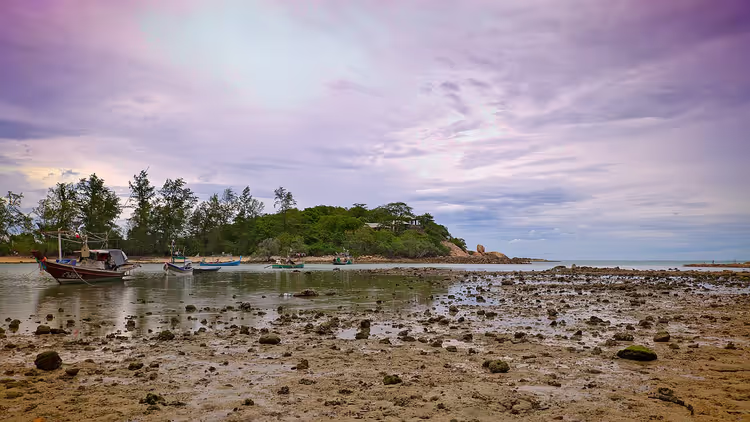
In summer, there may be no rain for several days in a row, but in other years downpours come often.
 © Damian Moore · CC BY-SAPhoto: Damian Moore, CC BY-SA (https://creativecommons.org/licenses/by-sa/2.0), Wikimedia Commons
If you are tied to school holidays, Samui remains one of the best options in Thailand. Aim for the first half of June, before demand peaks.
Rainy season: spontaneous trips only
The rainy season on Samui starts in September and peaks in October and November. These two months bring the most rainfall of the year (as of 09/2026, annual rainfall distribution). In some years, the monsoon stretches into mid-December. Heavy downpours alternate with clouds and sun, and long dry spells are rare. Storms, waves, and flooding are possible.
Humidity is very high during this period. Waves and jellyfish more often get in the way of swimming, and diving and snorkeling are frequently canceled. Because of the hills inside the island, rain does not fall everywhere at once. When it pours in one area, another may stay dry.
- Plus: accommodation prices drop the most.
- Plus: you can book at the last minute.
- Plus: very few tourists.
- The catch: high chance of bad weather and many rainy days.
- The catch: after storms, beaches have more debris.
- The catch: diving and snorkeling are often unavailable.
- The catch: days with sun from sunrise to sunset are rare.
It is also worth remembering the islands. Mu Ko Ang Thong National Park closes for several weeks in November, sometimes until early December. Park entry is paid, and adult and child tickets differ in price (checked on 11.09.2026 on the official website of the Tourism Authority of Thailand). If the park is closed, you will still have plenty of alternative excursions on the island itself.
Our advice for this period is simple. Plan a trip to Samui only spontaneously, when the forecast promises sun. If your dates are fixed, choose another destination or book a rate with free cancellation.
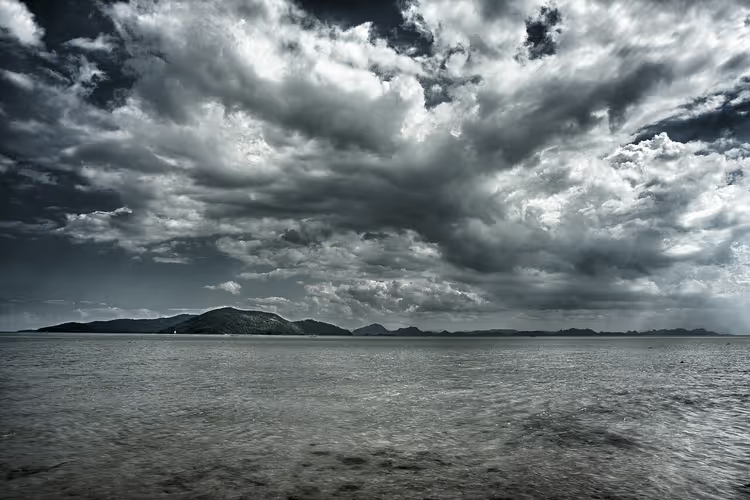 © Jakub Michankow · CC BYPhoto: Jakub Michankow, CC BY (https://creativecommons.org/licenses/by/2.0), Wikimedia Commons
Even in rainy weeks, you will still find things to do. Spas, local cuisine, and short trips around the island do not depend on the sun.
What to see on Samui in any season
The weather changes, but the island's attractions stay in place. The list below does not depend on the month.
Mu Ko Ang Thong, an archipelago of 42 islands northwest of Samui, is part of a marine national park (as of 09/2026, Thai National Parks). Full-day boat tours go there, usually with a stop at a viewpoint and a lagoon.
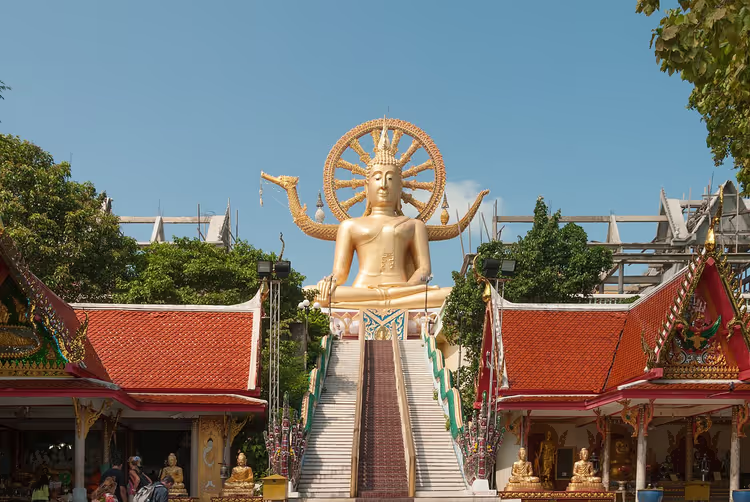 © Abrget47j · CC BY-SAPhoto: Abrget47j, CC BY-SA (https://creativecommons.org/licenses/by-sa/3.0), Wikimedia Commons
Chaweng Beach and Lamai Beach are the most famous beaches on the island. In high season they get crowded, but all the infrastructure is right at hand.
Inland, you'll find hills covered in dense tropical forest. It's worth heading there for half a day if you want some quiet and a view from above.
Before the trip, it helps to study the island on a map and mark the spots you need in advance.
The island's inland roads are open year-round, so the hills and viewpoints are accessible in any season. Rain only affects visibility, not the route itself.
When to book hotels and flights
Demand on Samui comes in two waves: February-March and June-August. During these months, the best hotels near Chaweng Beach and Lamai Beach sell out months in advance. If you're traveling in high season, book your accommodation and flights early.
In the rainy season, it's the opposite. From October to December, prices drop and you can find accommodation at the last minute. Here it pays to keep your dates flexible and decide based on the forecast.
Early booking is especially important for family rooms and direct flights. Flexible rates with free cancellation cost a bit more, but in the off-season they're completely worth it.
⁉️🤔 Frequently asked questions
When does the rainy season start on Koh Samui?
The rainy season on Koh Samui starts in September and peaks in October and November. In some years, heavy rains last until mid-December. In January, the weather gradually returns to the dry season, but the month itself remains unpredictable.
When is the best time to vacation on Koh Samui?
The best time starts in the second half of January and lasts until April. February is the driest month of the year here. The second good window comes from mid-June and lasts until mid-August. These are the windows worth planning around.
Is it worth going to Koh Samui in October?
October is one of the two rainiest months on the island. Downpours are frequent, storms and waves are possible, and swimming and snorkeling are often limited. On the plus side, accommodation prices drop and there are very few tourists. If your dates are fixed, choose a different destination.
When is high season on Koh Samui?
The most tourists arrive in January, February, and March. In April and May, things quiet down due to the heat. From June, and especially in July and August, the influx returns. During these months, it is better to book hotels and flights in advance.
Where to go instead of Koh Samui during the rainy season?
In December, choose the Andaman Sea: Phuket, Khao Lak, and Phi Phi. On the eastern side of the gulf, Ko Chang, Ko Mak, and Ko Kut are calmer at this time. Rain there follows a different schedule and often ends earlier.
What is the sea water temperature on Koh Samui?
The sea around Koh Samui is warm year-round, with an average water temperature of about 29 °C (as of 09/2026, island climate by month). Swimming here is comfortable in almost any season. There is only one exception: waves and jellyfish during the rainy season, when swimming is sometimes restricted.
Can you swim during the rainy season?
Yes, you can swim, but with caveats. Waves and jellyfish sometimes make getting into the water difficult, and diving and snorkeling are often canceled. On calm days, the sea remains warm, so check the forecast and choose the island's sheltered bays.
When is the cheapest time to vacation on Koh Samui?
The lowest prices for accommodation and flights fall during the rainy season, from October to December. At this time, hotels lower their rates, and you can book at the last minute. The catch: the weather often disrupts plans, so choose a rate with free cancellation.
In short: what to book
Weather on Koh Samui depends more on the month than on the year. If your dates are fixed, choose a good window and book in advance. If your dates are flexible, wait for the forecast and fly spontaneously.
- If you have February or March: book your hotel in advance, the best options at Chaweng Beach and Lamai Beach sell out.
- If you have July or August: aim for July and the first half of August, book in advance.
- If you have October or November: wait for the forecast, book at the last minute, and choose a rate with free cancellation.
Compare current prices for Koh Samui hotels on Trip.com and choose dates that fit your vacation.

A small editorial team writing guides for independent travel. We travel ourselves, but we haven’t been everywhere, so we check prices, opening hours and how to get there against official sources.