
















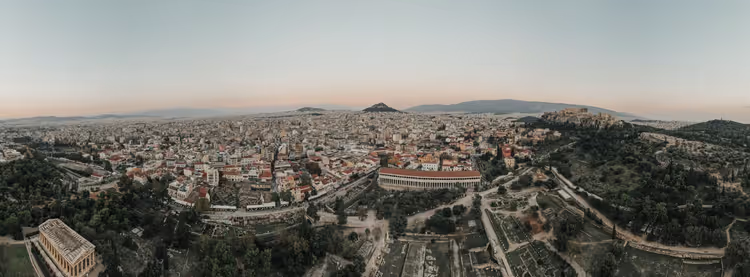
Athens in November: how to buy an Acropolis ticket without queues
In November, Athens shows its calm side. The summer crowds thin out, there is no long line at the Acropolis entrance, and you can still sit at an outdoor taverna without a windbreaker. We recommend planning your trip for late October or early November.
Rain is more common this month than in September. But museums empty out, and the halls are left almost without tour groups. The Acropolis and city museums stay open all November, and almost nothing closes for the season.
Ad: this article contains affiliate links, we earn a commission if you book through them, at no extra cost to you.
Weather in November and why the crowds disappear
💡 In short:
- In November it is warm during the day, but by evening you will need a jacket.
- Get a ticket to the Acropolis for a specific entry time.
- Three days in the city is enough if you start with the Acropolis and museums.
- Prices and opening hours: 09/2026, verified on the official Acropolis Museum website.
The main reason to go in the fall has to do with the port of Piraeus. When several cruise ships are docked, passengers are bused to the center, and the Acropolis gets crowded even in October. In November the ship schedule is lighter. So you stand at the ticket office for five minutes, not forty.
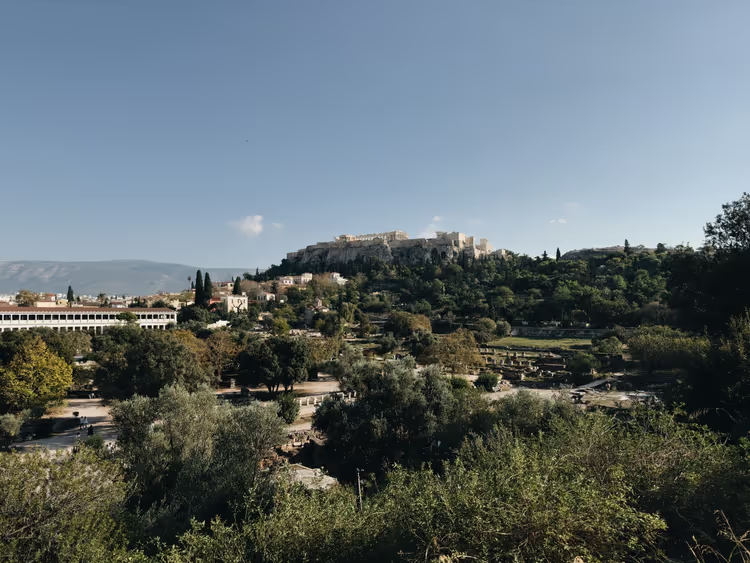
The weather in Athens in November is mild: the sun still warms during the day, but it cools down quickly in the evening. Rain comes in waves, so bring an umbrella and shoes with non-slip soles: marble slabs get slick from moisture.
Hotel and flight prices in the fall are lower than in summer. Greek airline Aegean keeps calm fares in November, and city hotels more often offer discounts for long weekends. You should still book in advance: the center fills up quickly over long weekends.
Acropolis and Acropolis Museum
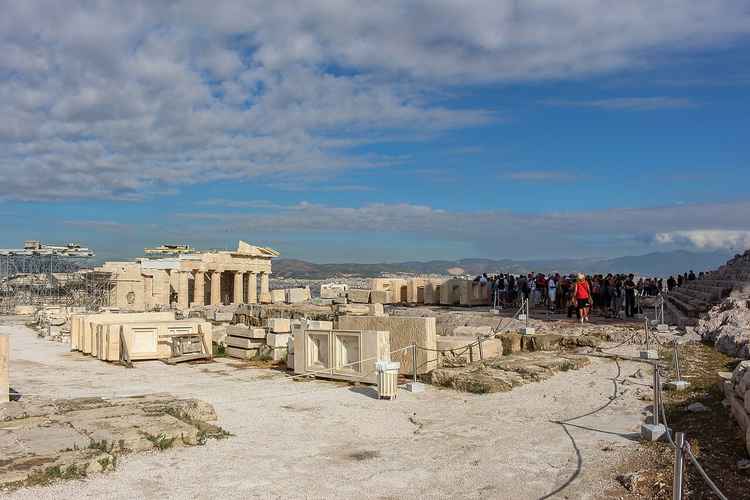
The Acropolis remains the city's main symbol and the best starting point. Go up at opening time: at the Propylaea you get ahead of the bus groups, and at the top you see the Parthenon almost without people.
 © HerrAdams · CC BY-SAPhoto: HerrAdams, CC BY-SA (https://creativecommons.org/licenses/by-sa/4.0), Wikimedia Commons
Entry is paid, and the ticket is tied to a specific time, so buy it in advance on the official portal etickets.tap.gr. In summer morning slots sell out a week ahead, but in November time slots are easy to get. Also check the combined ticket: it covers the Acropolis and nearby excavation sites, and the price depends on the season.
The Acropolis Museum opened in 2009, designed by architect Bernard Tschumi. Entry costs about 20 € (as of 09/2026, official website), and a separate Acropolis ticket is not included. Starting in November the museum may switch to a winter rate, so check the price on the website. On a rainy day the museum becomes the best shelter in the city.
On the plateau you pass through the Propylaea to the Parthenon and the Erechtheion. The temple columns stand unevenly, but you can see the Caryatid porch almost in full: six statues of maidens hold up the roof. Take photos from the staircase side, where fewer people end up in the frame.
From the viewing point on the plateau you can see the city all the way to the sea.
Monuments around the Acropolis
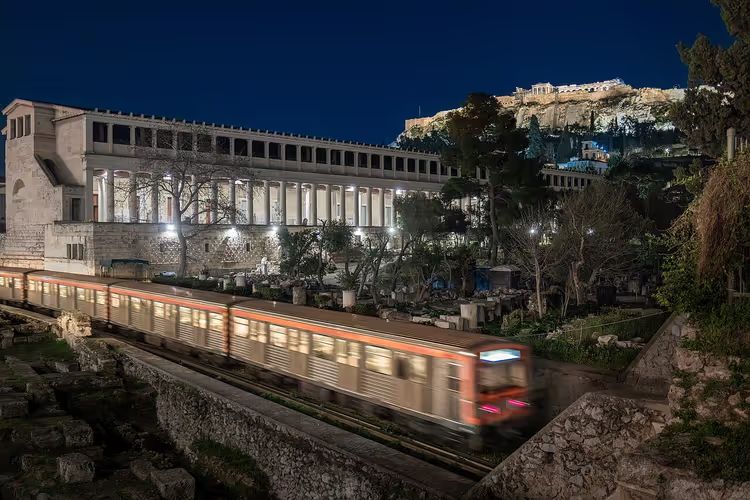
From the plateau, head down to the Agora: the Stoa of Attalos stands right on the ancient square, and its portico is a convenient place to wait out a downpour. The combined ticket includes these excavation sites too.
To the southeast you will find Hadrian's Arch and the Temple of Olympian Zeus. Only part of the giant columns remains, but you immediately grasp the scale of the structure. Northwest of the Agora lies Kerameikos, the old Athenian necropolis with tombstones and the road to Plato's Academy.
 © Aneza Palaiou · CC BY-SAPhoto: Aneza Palaiou, CC BY-SA (https://creativecommons.org/licenses/by-sa/4.0), Wikimedia Commons
The Areopagus and Pnyx stand right next to the Acropolis: the court convened on the rock, and the popular assembly gathered on the hill. The climb to the Areopagus takes a couple of minutes, and the view of the city is free. If you prefer quiet, come here in the morning.
Museums of Athens: antiquity and the trilogy
The National Archaeological Museum rounds out the sculpture, bronze, and ceramics theme. A ticket costs 20 € (as of 09/2026, official website). A winter rate may apply from November, so check the price before your visit. The Mycenaean gold room and the bronze statues take two to three hours.
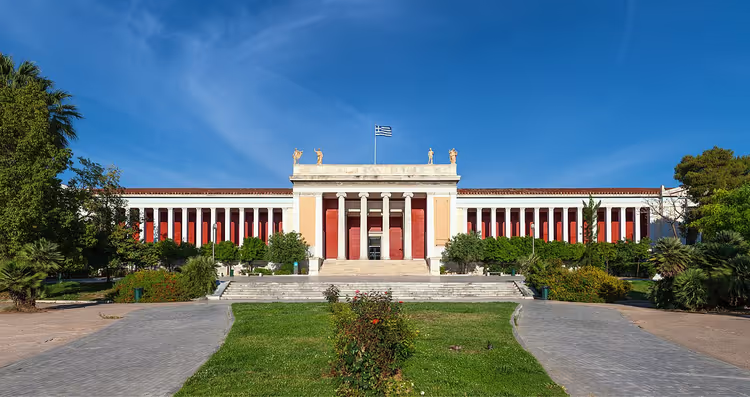 © Thomas Wolf , www.foto-tw.de · CC BY-SAPhoto: Thomas Wolf , www.foto-tw.de, CC BY-SA (https://creativecommons.org/licenses/by-sa/3.0/de/deed.en), Wikimedia Commons
The Athenian trilogy consists of three neoclassical buildings on Panepistimiou Street: the library, the university, and the academy. Walk along the facades at least once: you cannot enter everywhere, but from the outside the ensemble looks cohesive.
The Byzantine and Christian Museum takes a couple of hours and works well on a cool day. You look at mosaics, icons, and frescoes, then head back to the center and the tavernas of Plaka.
Syntagma Square, the guard, and the National Garden
Syntagma Square is home to the parliament and most of the ministries. The city center lives here around the clock: metro, buses, cafes, and a constant flow of people.
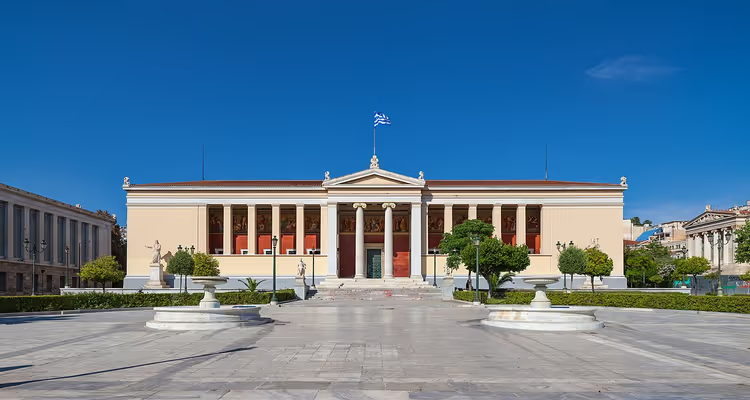 © Thomas Wolf , www.foto-tw.de · CC BY-SAPhoto: Thomas Wolf , www.foto-tw.de, CC BY-SA (https://creativecommons.org/licenses/by-sa/3.0/de/deed.en), Wikimedia Commons
The changing of the guard at the Tomb of the Unknown Soldier takes place every hour. Evzones in traditional uniform march in front of spectators, and there are always plenty of photographers. On Sundays the ceremony is longer, so arrive twenty minutes before it starts.
A stone's throw from the square lies the National Garden: admission is free, paths wind past ponds and rare trees, and the Zappeion stands at the edge of the garden. With children you can easily spend half a day here.
Plaka, Monastiraki, and the Varvakios Agora market
From Syntagma you walk down into Plaka. Narrow streets, shady courtyards, and small tavernas: order ouzo and a meze to feel the rhythm of the neighborhood.
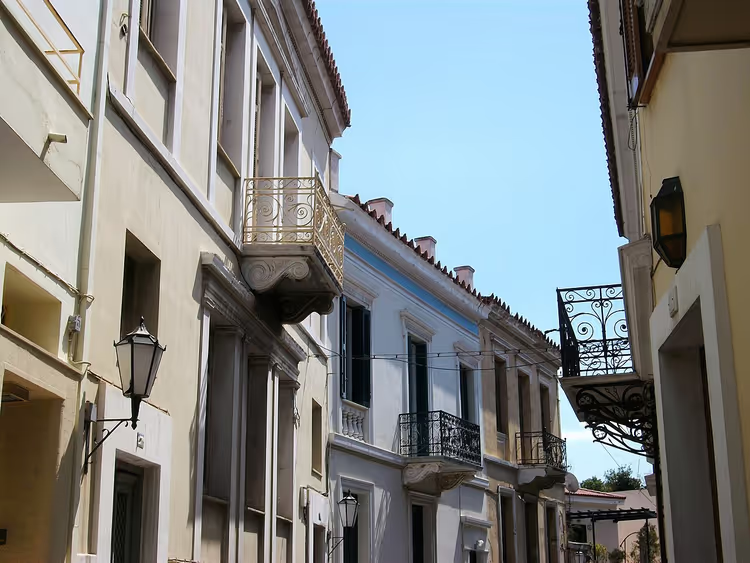 © Joanbanjo · CC BY-SAPhoto: Joanbanjo, CC BY-SA (https://creativecommons.org/licenses/by-sa/3.0), Wikimedia Commons
In Anafiotika the houses cling to the slope of the Acropolis, and the quarter looks older than the neighboring streets.
The flea market operates in Monastiraki. Coins, records, old porcelain, and copper cookware sit right on the stalls. Near Syntagma, Voukourestiou and Stadiou streets begin, lined with jewelry stores and designer boutiques.
Shopping in the center does not end with boutiques: in the alleys of Monastiraki you can buy souvenirs cheaper. On the way to the market you pass a glass figure on one of the central squares.
The Varvakios Agora food market opens early: before noon the fish, meat, and spice trade is in full swing, and after lunch the stalls empty out.
In the morning, guided groups walk through the market. You are shown the fish rows, spices, and local cheeses, and at the same time they explain what Athenians buy for dinner.
Lycabettus hill and the chapel of St. George
Lycabettus rises 277 meters above the center, and it is the highest point in the city (as of 09/2026, official funicular website). On foot you walk up the switchback path in about half an hour; by funicular you get up in a couple of minutes.
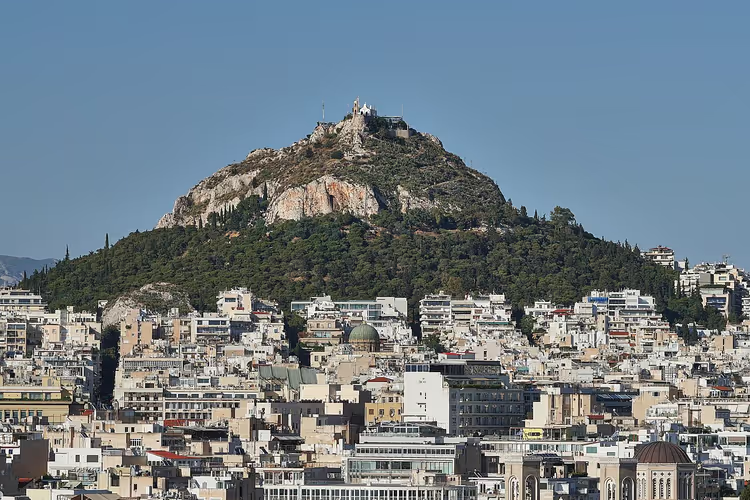 © George E. Koronaios · CC BY-SAPhoto: George E. Koronaios, CC BY-SA (https://creativecommons.org/licenses/by-sa/4.0), Wikimedia Commons
The funicular runs from 9:00 to 2:30, a ticket costs 10 € one way and 13 € round trip (as of 09/2026, official funicular website). Come at sunset: in November the sky is often clear, and you can see the city all the way to the Saronic Gulf.
At the top stands the Chapel of St. George, with cafes and a viewing platform nearby. After dark the city below turns into a scattering of lights, and the Acropolis is lit up by floodlights.
You can walk down along the lit road, which takes another half hour. Down below, in Plaka and Monastiraki, bars and tavernas stay open late into the night.
Tickets and prices (as of 09/2026)
Site | Ticket | Notes | Source |
|---|---|---|---|
Acropolis | price depends on the season, timed entry slots | buy in advance, summer morning slots sell out quickly | |
Acropolis Museum | around 20 € | ticket is not included in the Acropolis ticket, winter rate possible from November | |
National Archaeological Museum | 20 € | winter rate possible from November | |
Lycabettus Funicular | 10 € one way, 13 € round trip | runs from 9:00 to 2:30 |
We checked prices in September 2026 on the museums' official websites. The Acropolis ticket is easier to buy online: that way you pick your entry time right away. Time slots and museum tickets are sold on Tiqets.
Tours and tickets in Athens
Guided tours, skip-the-line tickets and activities — most offers can be cancelled free of charge.
See offers on TiqetsThe widget loads once you give your consent.
From the airport to the center: metro, bus, taxi
The blue metro line runs from the airport to the center. The train goes to Syntagma without transfers, and a ticket costs 9 € (as of 09/2026, Athens Airport). The metro is closed at night, but express buses run around the clock.
Taxis to the center operate on a fixed fare, so you won't have to negotiate the price. During the morning rush hour, the drive takes longer than the train.
If you're arriving late, it's easier to book a car in advance. The form below will find a transfer from the airport to your hotel.
Tours and tickets in Athens
Guided tours, skip-the-line tickets and activities — most offers can be cancelled free of charge.
See offers on KiwitaxiThe widget loads once you give your consent.
⁉️🤔 Frequently asked questions
Is Athens worth visiting in November?
Yes, November offers mild weather and uncrowded museums. There are almost no lines at the Acropolis, hotels are cheaper than in summer, and it doesn't rain every day. The catch is the short daylight hours and slippery paving stones after a downpour. Bring a jacket for the evening.
Do I need to buy Acropolis tickets in advance?
It's a good idea: entry to the plateau is by time slot, and online you can pick a convenient time right away. Buy your ticket on the official portal and arrive at opening time: there are no tour groups at the Propylaea yet.
How many days do you need for Athens?
Three days is enough for the Acropolis, the Acropolis Museum, the National Archaeological Museum, and a walk through Plaka. If you want to add Cape Sounion with the Temple of Poseidon, plan a fourth day. In November it gets dark early, so leave the big sites for the morning.
What to do in Athens on a rainy day?
Take shelter in the museums: the Acropolis Museum, the National Archaeological Museum, and the Byzantine and Christian Museum cover antiquity and the Middle Ages. In between, you can have lunch at a taverna in Plaka. Wet marble is slippery, so it's better to postpone the climb to the Acropolis.
How to get from the airport to the center?
The blue metro line goes straight to Syntagma, and the trip takes about forty minutes.
In short: what to book
November in Athens is a good time for a first visit to the city: fewer people, mild weather, uncrowded museums.
- If you're short on time: a hotel near Syntagma or in Plaka, the Acropolis in the morning, museums after lunch.
- With kids: the National Garden and Zappeion during the day, the Acropolis Museum on a rainy day.
- For panoramic views: head up Lycabettus at sunset and have dinner in Plaka.
Book a central hotel in advance: a selection of Athens hotels on Trip.com. Look for an Acropolis and Plaka guide on GetYourGuide.

A small editorial team writing guides for independent travel. We travel ourselves, but we haven’t been everywhere, so we check prices, opening hours and how to get there against official sources.