




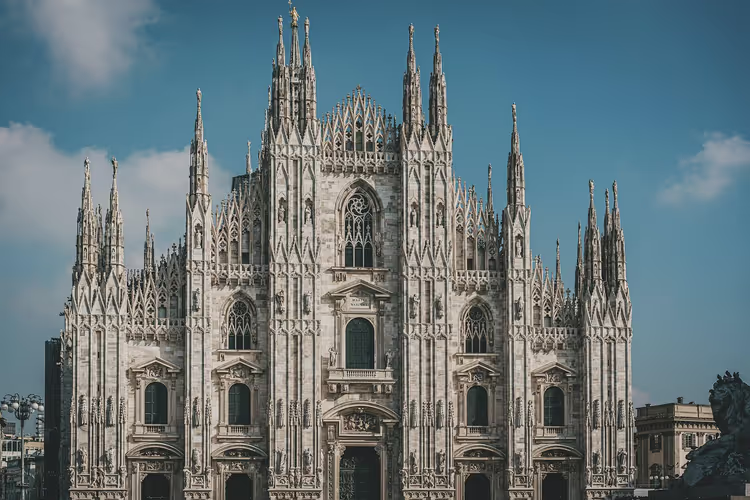
When to go to Milan: weather, prices and the fashion week trap
May and September give Milan its best weather of the year. Cafe terraces stay open late into the evening, lines at the Duomo are short, and the air does not press down with humidity. In July you get scorching stone and stuffiness, in December a gray blanket of fog. The choice of month here matters more than the hotel and the itinerary.
Two major dates change prices dramatically. Fashion weeks in February and September and Salone del Mobile in April drive hotel rates up sharply.
A short answer for those in a hurry. The best months to visit: May, September, and the first half of October. April and late October come second. We checked the weather and the number of rainy days by month on 09/12/2026 at the Milano Brera weather station (ARPA Lombardia).
Milan's climate: continental, fog, and humid summers
💡 In short:
- Best time: May, September, first half of October.
- Second choice: April outside Design Week and late October.
- Without booking early, avoid fashion weeks (February, September) and Salone del Mobile (April).
- Hottest in July and August, foggiest in November and December.
- Weather by month: 09/2026, checked on the official ARPA Lombardia website.
Milan's climate is continental, not Mediterranean. There is no mild Roman winter or Genoa sea breeze here. In summer the air heats above thirty degrees and at the same time picks up moisture, so long walks through the center become hard to handle. In spring and early autumn you cover the same streets comfortably.
In autumn and winter, fog settles over the Po Valley. In November and December it can linger for days, and distant views disappear. But on those days you win in museums: Pinacoteca di Brera and Pinacoteca Ambrosiana have few visitors, and tickets are always available. Spring and early autumn work well for both the city and the lakes.
Average daytime highs and number of rainy days (as of: 09/2026, long-term observations by ARPA Lombardia):
Month | Daytime high | Rainy days | In short |
|---|---|---|---|
January | 6 °C | 6 | Cold, fog in places |
February | 9 °C | 6 | Fashion week |
March | 14 °C | 7 | Warming up, often damp |
April | 19 °C | 9 | Salone del Mobile, rain |
May | 23 °C | 9 | Best month |
June | 28 °C | 8 | Hot by the end of the month |
July | 31 °C | 6 | Humidity and thunderstorms |
August | 30 °C | 7 | Ferragosto, closures |
September | 26 °C | 7 | Best month, fashion week |
October | 19 °C | 8 | A good choice |
November | 12 °C | 8 | Cool, fog |
December | 6 °C | 6 | Holidays and markets |
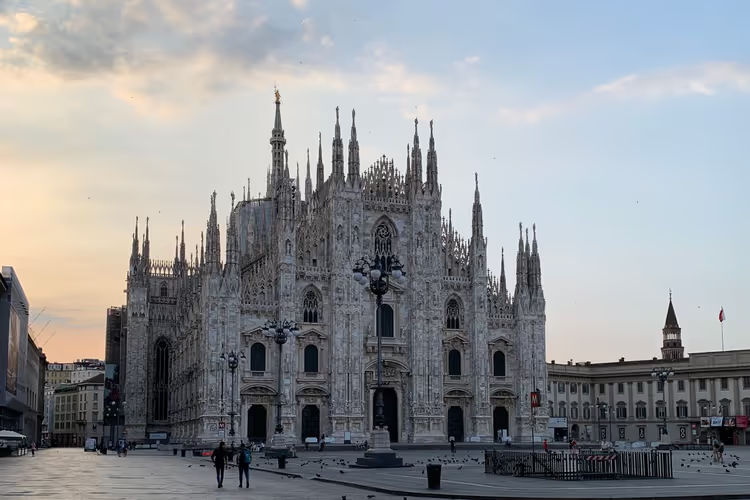
Milan's weather is shaped not by the sea but by the plain. That is where the sharp swings between morning and afternoon in April and October come from. It is also where the fog comes from, which in those months does not yet get in the way of sightseeing.
January: empty museums and low prices
January in Milan is cold and quiet. Daytime temperatures sit around six degrees, the sky is mostly gray, and the holiday lights go out in the first week. For walking around it is the worst month, but for museums and shopping it is one of the best: no lines, and the halls are almost empty.
Winter sales start in early January. In the Quadrilatero della Moda you will find past collections at a discount. Hotels cost less than at any other time of year outside the holiday week.
January suits those who come for art and shopping rather than weather. A warm down jacket and comfortable shoes matter more than a light wardrobe: you will be walking through slush every day.
February: the city wakes up and gets expensive
Daytime temperatures are around nine degrees, but life returns. The month's main event, the women's fashion week Milano Moda Donna, takes place in late February. The winter edition usually lasts five days and draws press, buyers, and photographers from all over Europe.
Hotels on those dates climb to several hundred euros per night, and bars in Brera are packed. If you are not attending shows, it is better to avoid those dates. Carnival also falls in February or early March, although the Milan version is more modest than Venice's.
Outside fashion week, February remains convenient. City museums operate without lines, and hotel rates stay at their minimum along with January's.
March: damp and inexpensive
In March the weather changes every week. Daytime temperatures are around fourteen degrees, there are no major events, and hotel prices stay in the mid range. The month's main risk is prolonged rain: the city can stand gray and wet for a week.
On a sunny day the marble of the Duomo and the Brera district look completely different. March is convenient for visiting The Last Supper: slots on the museum's official website get taken more slowly than in summer.
Bring a waterproof jacket in March and plan a backup museum day. That way the rain will not ruin your trip.
April: before Design Week and after
April splits into two parts. The first half is good: daytime highs up to nineteen degrees, gardens in bloom, fewer tourists than in May. The second depends on the dates of Salone del Mobile and Fuorisalone, when installations spread through the city and showrooms and parties open up.
In 2027 the fair is scheduled for April 13-18 (official Salone del Mobile website). On those days hotel prices multiply.
If design is not your thing, plan your trip around those dates. The start of the month gives you the same spring but at calm prices.
May: the best month for the city
May is one of the two best months. Daytime temperatures are around twenty-three degrees, warm without humidity, terraces are open, parks are green, and light lasts late into the evening. Design Week is behind you, and school holidays have not started yet.
Hotels cost more than in the off-season, but not at event rates. Tickets to The Last Supper go fast, so book ahead. The lakes look their best in May: at Lake Como Villa Carlotta is in bloom, and on Isola Bella in Lake Maggiore the azaleas are flowering.
June: a mild start and a hot finish
June splits by weather. The first half repeats May and stays comfortable. By the third week the air heats to thirty and above, humidity rises, and walking in the open sun during the day becomes hard.
But the days are at their longest. Cultural events run until night, and the evening aperitivo in the Navigli district peaks in June and July. June is also convenient for the lakes: the water has warmed up, and boats run on the summer schedule.
The first half of June gives you almost May-like weather. If your dates are flexible, choose the start of the month rather than the end.
July: heat, thunderstorms, and empty neighborhoods
July is the hottest month of the year, with daytime temperatures regularly above thirty degrees. Locals leave for the sea and the mountains, so residential neighborhoods empty out. The main sights stay busy, while neighborhood trattorias operate more calmly.
Thunderstorms often pass through in the afternoon. They sharply bring the temperature down and do not last long. Bring a light jacket and plan walks before noon or after six in the evening.
July works best for the lakes: the water is warm, and boats and beaches run on full schedules. That is exactly why some travelers shift the focus of their trip out of the city.
August: Ferragosto and closed doors
In August Milan empties out the most. Around Ferragosto, the main midsummer holiday, many neighborhood restaurants, small shops, and services close for one to three weeks. If your favorite trattoria is not open, that is the reason.
That said, August is not bad if you know the rules. Hotels are cheap outside the holiday days, museums are open, and tourist-oriented places operate as usual. The temperature is slightly lower than in July, and the lakes are warmed better than at any other time of year.
Plan August with a buffer for restaurants. Choose places in the center and near Navigli; they cater to city visitors and almost never close.
September: the best month for culture and lakes
September rounds out the list of the two best months. Daytime temperatures are around twenty-six degrees at the start of the month and around twenty by the end. The city fills with returning Milanese, and the cultural season opens. The La Scala season starts later, on December 7.
There is one complication: the women's fashion week Milano Moda Donna. According to the organizer's calendar, the 2026 edition runs September 22-28 (Camera Nazionale della Moda Italiana). If your dates fall on it, be ready to pay more.
September is excellent for the lakes: the water is warm, the light is soft, and there are fewer people. That combination is rare in Milan, so the last week of the month is better spent at the lakes than in the city.
October: the best off-season month
October works well for sightseeing in the city. Daytime temperatures are around nineteen degrees, the leaves turn yellow, there are no major events, and hotel prices are reasonable. Fog is still rare at this time; the first prolonged spells arrive at the end of the month.
October is also good for the lakes. Keep in mind that the boat schedule on Lake Como thins out toward the end of the month, and some hotels and restaurants by the water close. The Borromean Islands on Lake Maggiore are worth seeing at least until the end of October.
Bring a thin sweater and a light jacket in October. The morning is cold, the day is warm, and the difference is strongly felt.
November: fog, atmosphere, and museums
November is changeable. Daytime temperatures are around twelve degrees, and from mid-month fog arrives and hangs over the city for long stretches. Walking the streets loses its appeal, but museums become the best plan: Pinacoteca di Brera, Pinacoteca Ambrosiana, and The Last Supper museum are quiet, and tickets are easier to get.
Hotels in November are cheap. The city looks cinematic, but you will only get good photos at close range. The month is weak for the lakes: damp, dark early, and part of the boat service is closed.
December: Christmas lights and holiday prices
December suits those who love the Christmas atmosphere. Markets operate on Piazza del Duomo, and the shop windows on Via Montenapoleone glow. On the feast of Saint Ambrose on December 7, the season opens at La Scala.
The first two weeks of the month are calm and inexpensive. From the last ten days of December through New Year, hotel prices rise sharply. If budget matters to you, come in the first half of the month.
Fashion weeks and Design Week: honest advice
If you are not attending shows and do not work in the industry, there is no reason to plan a trip around fashion week. Outsiders are not allowed into shows, closed parties are inaccessible, and the city gets expensive. Watching the crowd is amusing: unusual outfits and a lively street atmosphere. But choosing those dates just for that spectacle is not worth it.
Salone del Mobile and Design Week are structured differently. Fuorisalone events are open to everyone: installations in courtyards, open showrooms, temporary exhibitions in galleries and squares. If design, architecture, and modern aesthetics are close to your heart, it is worth building a trip around Design Week.
The rule for both weeks is the same. Book your hotel in advance, otherwise you pay top rates or look for lodging on the outskirts.
When to go: a summary by season
Rating | Months |
|---|---|
Best time | May, September without the last week, first half of October |
Good choice | April outside Design Week, first half of June, October |
Possible with caveats | hot July, February with fashion week, first half of December |
Avoid | late August, November, last ten days of December, fashion weeks without a booking |
The worst options for a first trip: late August with closed trattorias and foggy November. For warm water choose July or August, for comfortable walks May or September.
What the season means for lakes and museums
Weather determines what makes sense outside the city. In summer the lakes are at their best for swimming, while Milan itself is uncomfortable for long walks. That is why a trip to Lake Como is easiest to fit into a July or August visit.
In November and December, when fog lingers for days, museum plans work better than outings. The Last Supper requires advance booking in any season, and in the off-season slots are easier to find. In spring and autumn both scenarios are available, lakes and museums, which is why May and September get such high marks.
Keep both options in your plan. Then you can swap rain or fog for a museum, and heat for a trip to the water.
What to pack by season
The off-season requires layers. In April, May, October, and November the difference between morning and afternoon reaches ten degrees, so a light jacket is more useful than a heavy coat.
In summer breathable clothing matters more than just sun protection: humidity is harder to handle than heat. Sidewalks and the terraces of the Duomo heat up so much in July that closed shoes with cushioning are more comfortable than sandals.
In winter prepare for damp cold: a warm layer with wind protection is more useful here than heavy wool. An umbrella comes in handy in any month, because rainy days almost everywhere range from six to nine, and there is no dry season.
⁉️🤔 Frequently asked questions
When does Milan have the fewest tourists?
The fewest people are in January and February, excluding fashion week, and in the second half of August, when locals leave on vacation. In those months hotels cost less than at any other time of year, and museums have almost no lines. The catch is well known: January is cold and gray, and in August some neighborhood places close for Ferragosto.
Is August a good time to visit Milan?
It depends on your plans. Hotels are cheap, the main sights are open, and the city feels relaxed. But many family trattorias and small shops close around Ferragosto, sometimes for several weeks. If you plan to eat at neighborhood places, check their schedules in advance and keep a backup option in the center.
When do Milan fashion weeks take place?
The women's weeks Milano Moda Donna run twice a year, in late February and late September. The men's week Milano Moda Uomo usually falls in January. Exact dates shift every year, so check the Camera Nazionale della Moda Italiana calendar.
When does Design Week take place in Milan?
Salone del Mobile and the related Fuorisalone take up the second or third week of April. Dates change from year to year, and organizers announce them in advance on the official Salone del Mobile website. On those days hotels cost noticeably more. If design is not your thing, it is better to avoid those dates.
Is it too hot in Milan in July?
It is hot: daytime air regularly rises above thirty degrees, and humidity makes it feel worse. But the heat is manageable. See the city before noon, take a long break indoors with air conditioning, and go back outside after six. Evening Milan in summer is pleasant, and thunderstorms quickly bring the temperature down.
When are hotels in Milan most expensive?
The most expensive times are fashion weeks in February and September and April's Design Week. The holiday week in late December and New Year's Eve also push prices up noticeably. The lowest rates are in January and February outside fashion week. August outside the holiday days is also cheap.
Is it worth going to the lakes in autumn?
It is. September and October are good for the lakes: the light is soft, the water stays warm through September, and there are fewer people. Keep in mind that by late October the boat schedule on Lake Como thins out, and some hotels and restaurants close.
Is Milan good at Christmas?
Yes, if you come in the first half of December. The markets on Piazza del Duomo, the lights on Via Montenapoleone, and the feast of Saint Ambrose create the atmosphere, and prices still stay in the mid range. The last ten days of December and New Year's Eve cost significantly more. On a limited budget, it is better to skip those dates.
What is the rainiest month in Milan?
The most rainy days fall in April and May, nine per month each. At the same time, precipitation is distributed fairly evenly through the year, and there is no pronounced dry season, so an umbrella is worth bringing on any trip. In summer, instead of steady rain, short afternoon thunderstorms are more common.
What is better for Milan: spring or autumn?
Both seasons are excellent and run almost neck and neck. May is slightly ahead thanks to the long days and blooming gardens at the lakes. September wins with a lower risk of rain and the start of the cultural season. Both dates are safe if they do not coincide with fashion week.
In short: what to book
If you are after a calm city and the lakes, choose May. If you want the cultural season and warm water, choose September. If budget matters more than weather, choose January or February outside fashion week. If you love design, plan your trip around Salone del Mobile.
The main practical advice: on event dates, especially fashion weeks and Design Week, book your Milan hotel in advance. In other months you will easily find an option a few weeks out.

A small editorial team writing guides for independent travel. We travel ourselves, but we haven’t been everywhere, so we check prices, opening hours and how to get there against official sources.