
















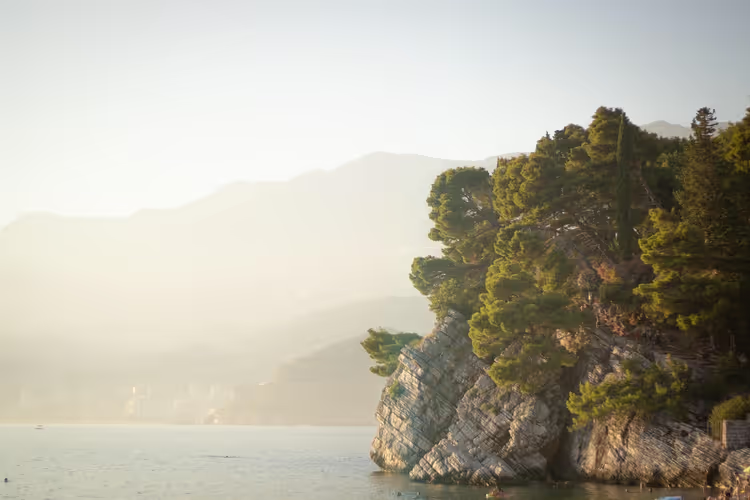
Montenegro in October: the sea is still warm, but the season is already empty
Many people write off October in Montenegro. It seems like the season ended back in September and there is no reason to go anymore. We checked the facts and saw a different picture.
In the first half of October, the sea along the coast averages around +21...+22 °C (according to seatemperature.info, 09/2026), there are no lines at the fortress walls, and accommodation and cars cost two to three times less than in July. During the day on the coast it is usually +22...+24 °C (according to climate statistics, 09/2026).
Below is a rundown of what is worth catching this month, how the weather changes by region, and which places close earlier than others.
Ad: this article contains affiliate links, we earn a commission if you book through them, at no extra cost to you.
What to do in Montenegro in October
💡 In short:
- The first half of the month is for the sea and short walks along the coast.
- The second half is for the mountains, wine, and old towns without the crowds.
- Prices and opening hours: 09/2026, verified on the official national parks website.
Below we break it down point by point: where to get a car, where to go for fall colors, what to see by the sea, and which places only get better in October. The plan works if you have a week and one base on the coast.
If you have more time, split your base: a few days by the sea and two nights in the mountains. In the first half of October you can still swim, in the second you catch the peak colors in Durmitor, so the route should be planned week by week rather than for the whole trip at once. We describe both scenarios so you do not have to choose in advance.
Plan your days so you get up early. Daylight hours shrink toward the end of the month, and it gets dark faster in the mountains than on the coast. Half a day on the road and a couple of hours on site is a normal pace if you do not want to drive switchbacks at dusk.
Car rental: cheaper in the fall
Car rental drops in price the most in October. In summer rental fleets are booked solid, but in fall the same model goes for two to three times less. Rental companies at Tivat and Podgorica airports do not shrink their fleets, so the selection is wider and there are no lines at the counter.
Roads are empty in October. Parking lots at the Kotor fortress and along the coast are almost empty, and mountain switchbacks are open. October is usually the last month you can drive to the north of the country without winter tires; after that, winter tires are required on the passes.
It makes sense to pick up a car in Tivat if you are going around the Bay of Kotor, and in Podgorica if your route heads into the mountains. Compare car rental prices in advance: demand is low, but specific models get snapped up quickly. Go for a higher class if you plan to drive switchbacks in the north; the roads there are narrow with sharp turns.
Get insurance with a zero deductible. On coastal roads it is easy to scrape a car in a parking lot, and nobody wants to pay for repairs out of pocket. Gas stations are frequent along the coast and less so in the mountains, so fill up in advance.
Durmitor and Kolasin: golden mountains
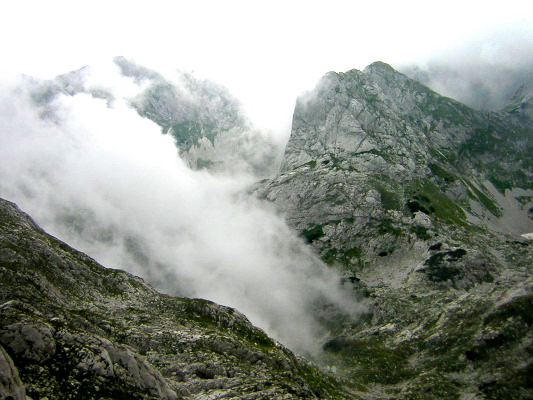
The second and third weeks of the month bring peak fall colors. Durmitor and Kolasin look their best at this time: beech forests glow gold, easy trails are passable without any training, and there are no buses at the viewpoints. Come on weekdays; on weekends locals head up here.
 © Unknown author · CC BY-SAPhoto: Unknown author, CC BY-SA (http://creativecommons.org/licenses/by-sa/3.0/), Wikimedia Commons
Durmitor has 25 marked hiking routes (according to Durmitor National Park, 09/2026). For a short walk, the trail around Black Lake is enough: it is flat, takes a couple of hours, and works even with no experience. Go in the morning; by midday on clear days open areas warm up, and the shade in the forest becomes more pleasant.
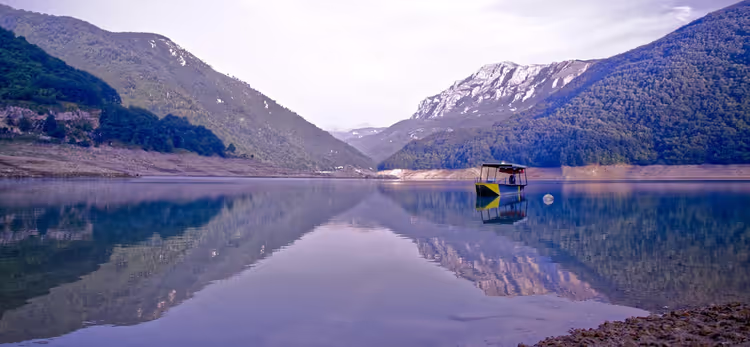
An overnight stay in the mountains is cheaper and quieter in the fall. Cabins that are booked months in advance in summer sit empty in October, and prices fall along with demand. Prices at Eco Village Nevidio near Durmitor stay at fall levels; it is a quiet spot away from the main road.
Nearby is Green Heaven Cabin, another option with a view of the massif. Both require a car; without one you cannot reach the trails and viewpoints from here. Fog and rain are more common in the mountains than on the coast, so bring warm clothes and a waterproof jacket.
Why October in Montenegro is special
October sits on the border between seasons, and that is exactly its strength. The first half of the month is usually warm, the second brings cooler weather. Because of this, the month suits two different kinds of trips at once, and you do not have to choose between the sea and the mountains.
 © Milica Buha · CC BY-SAPhoto: Milica Buha, CC BY-SA (https://creativecommons.org/licenses/by-sa/4.0), Wikimedia Commons
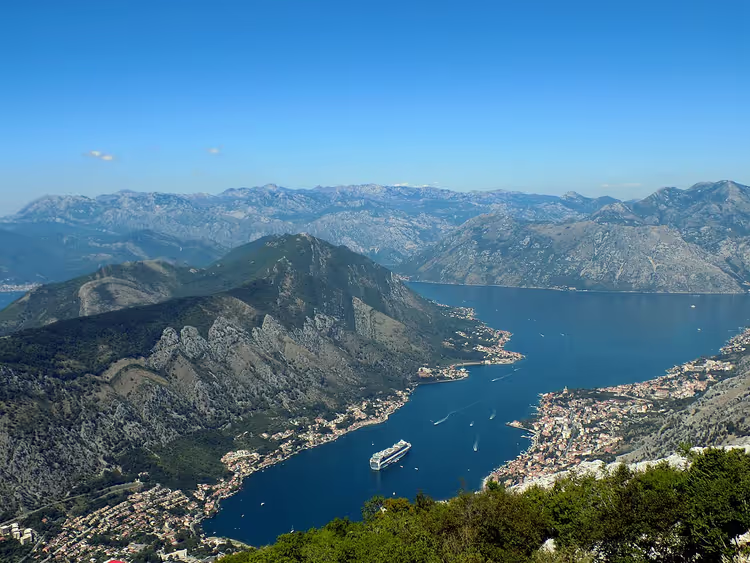
Nature changes quickly at this time. Durmitor, Lovćen, and Biogradska Gora reach peak fall color in October (according to the official Durmitor website, 09/2026). In Biogradska Gora and Lovćen, the color often holds until the end of the month, so arriving late is not a problem.
If rain sets in over the mountains, it is easy to switch regions. Stay in the south, around the Bay of Kotor or near Herceg Novi, take boat trips on Lake Skadar, and hike in Lovćen. Rain there is usually short-lived.
Swimming in October is also realistic. Not every day, but the chances are high, especially in the first half of the month. Even at the end of October, the Adriatic is often warmer than the lakes of Northern Europe, so for someone from Scandinavia the water will feel comfortable. Money-wise, October is noticeably better value than summer, and by November there would be fewer options because of the weather.
Where to stay by the sea
Coastal accommodation gets cheaper in October along with the drop in tourist traffic. Hotels that keep high rates in peak season lower their prices from October, and occupancy falls from nearly full to wide open. For a quiet stay by the water, this is the best window of the year.
It is worth looking at Lazure Hotel & Marina in Herceg Novi, Porto Palace in Tivat, and Splendid in Budva. All three sit right by the water, but in fall the price difference between them evens out. You pay for the location, not for peak season. Hotels by the sea in Montenegro are easy to compare in a single list.
Booking far in advance is not necessary, but you should not put it off either. Some hotels close for the off-season, and the choice gradually narrows. If a working pool and spa matter to you, check their October schedule ahead of time.
In the off-season, it is worth looking not only at hotels but also at apartments and guesthouses: in October they are cheaper and often available by the night. In small towns around the bay, some houses close for the winter, so check opening dates before booking and ask whether the heating works.
The second point is proximity to the water and parking. A hotel on the waterfront is convenient for evening walks, but in the old quarters there is nowhere to park a car. If you have a rental car, check in advance whether parking is included in the rate, otherwise you will have to leave the car a few blocks away.
A day in Podgorica
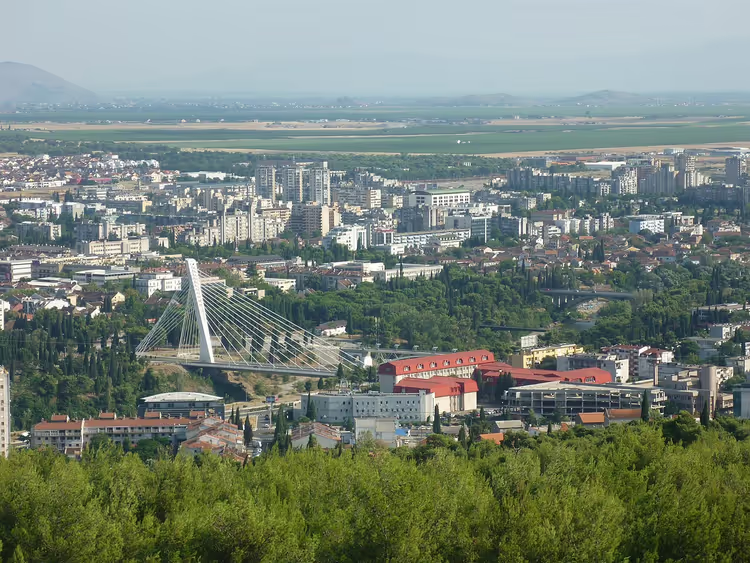
The capital is almost unusable for walking in summer. In July and August the air heats up, and the city empties out until evening. In October the heat eases, and Podgorica turns into a comfortable city for walking, cafés, and green parks.
 © Milos58 · CC BY-SAPhoto: Milos58, CC BY-SA (https://creativecommons.org/licenses/by-sa/3.0), Wikimedia Commons
Spend a day here on the way to the mountains or back. In the morning, walk through the center, in the afternoon sit at a café on the square, and toward evening go up to a viewpoint. That way the city opens up without the heat and crowds, and you save on a separate trip.
The center of Podgorica is compact, and all the main sights can be covered on foot in half a day. In the morning it is quiet here, by lunchtime the square comes alive, and in the evening cafés and restaurants are open. After lunch it is convenient to move on: the coast is about an hour by highway, the mountains a bit more.
If you are passing through, set aside half a day for the city between the sea and Durmitor. That way Podgorica fits into your route without taking a separate day from your vacation, and you get a change of scenery between the beach and the mountains. Bring comfortable shoes: the center is flat, but the distances around the city add up.
Boat trip to the Blue Cave
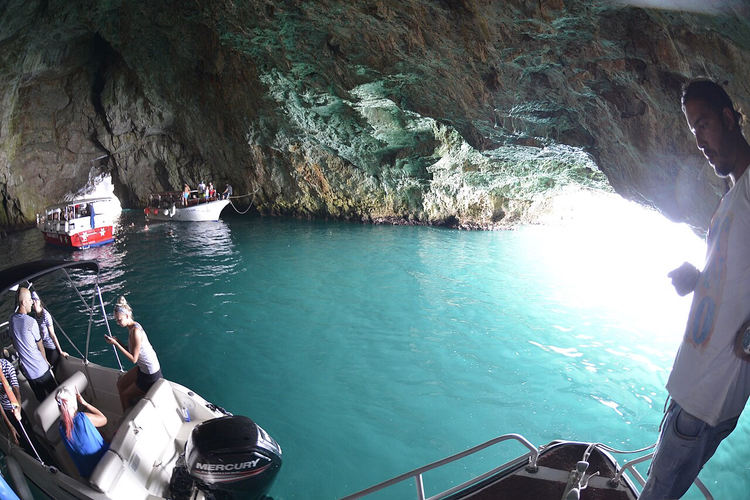
The Blue Cave at the entrance to the Bay of Kotor is more accessible in autumn than in summer. The sea stays calm in October, there is less wind, and there are almost no boats on the route. In high season boats come here in a caravan; in October you can go inside at your own pace and swim without rushing.
 © Miomir Magdevski · CC BY-SAPhoto: Miomir Magdevski, CC BY-SA (https://creativecommons.org/licenses/by-sa/4.0), Wikimedia Commons
A three-hour route usually includes a loop around the bay, a stop at the island of Our Lady of the Rocks, and a swim inside the cave itself. The boat trip around the bay with a visit to the Blue Cave departs from Kotor. Take the morning departure: the water in the cave is brighter at that time, and the sun has not yet stirred up the waves.
When heading to the cave, bring a windbreaker and a towel. It is cool inside even on a warm day, and after swimming the wind on the way back feels stronger. Children usually handle the trip well, but the rocking can be noticeable on open water.
Mamula and the submarine tunnels
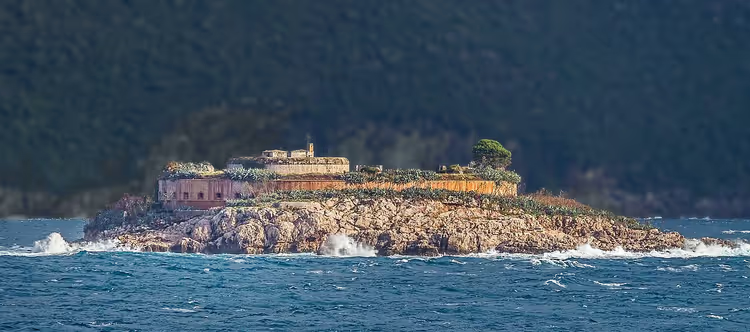
The second boat route goes to the abandoned fortress on Mamula Island and to the submarine tunnels built during World War I. The place is interesting for its history and the open-sea view rather than for a beach, so swimwear is secondary here.
The tour to Mamula Island and the submarine tunnels takes half a day and follows the same coastline. October works well for it because you do not have to share deck space with a crowd, and guides have time to tell the island's story without rushing.
 © Bengt Nyman from Vaxholm, Sweden · CC BYPhoto: Bengt Nyman from Vaxholm, Sweden, CC BY (https://creativecommons.org/licenses/by/2.0), Wikimedia Commons
There are no cafes or shops on the island, so bring water and food with you. You need closed-toe shoes: the paths are rocky and get slippery after rain. If you are prone to seasickness, choose morning departures, when the sea is calmer.
The boat ride to the island takes about an hour, and half the way you travel along the coast. The open-sea view here is wider than on the cave route, so photos come out with more contrast. On the way back the boat usually makes a loop around the bay, and you see Kotor from the water.
You can enter the fortress freely, but the route is uneven: steps, staircases, and dark passages. Bring a phone flashlight, and wear closed-toe shoes; sandals slip on the rock.
Lake Skadar: birds and wine
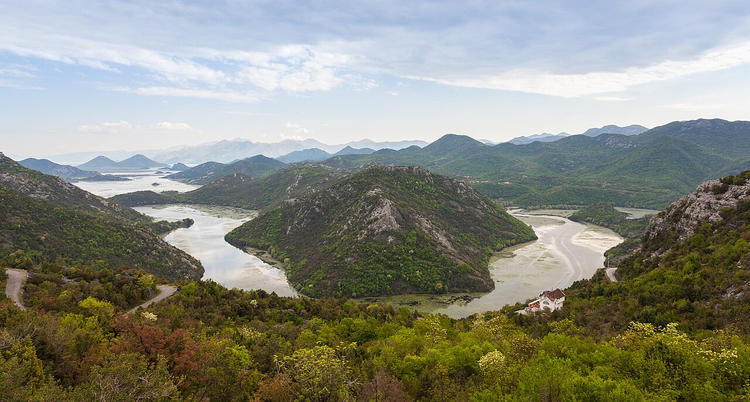
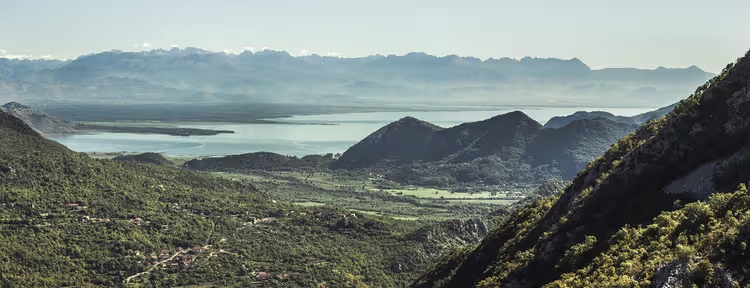
Lake Skadar comes alive in autumn. In October bird migration is underway, and this is the best month for watching: local boatmen point out pelican and heron colonies right from the water. The usual route goes through channels and lotus thickets.
 © Diego Delso · CC BY-SAPhoto: Diego Delso, CC BY-SA (https://creativecommons.org/licenses/by-sa/3.0), Wikimedia Commons
Entry to the national park is paid; tickets are bought online on the Montenegro national parks website (as of 09/2026). Check whether the fee is included in the boat trip price: some operators charge it separately, and they do not always warn you in advance.
The lake tour with birdwatching and wine tasting combines both. The route starts in Virpazar and ends at a winery on the shore. Bring a camera with a zoom lens; birds keep their distance from the boat.
The lake is large, and you cannot cover it in one trip: choose a route from Virpazar or from the Rijeka Crnojevića area. Boats go through channels between the reeds, and birds stay along the shores, where there is less traffic. Bring a windbreaker on board; it is always fresh on open water, even on a warm day.
The best time for birdwatching is early morning. During the day some routes include a stop at island monasteries, and by evening boats return to Virpazar.
Rijeka Crnojevića
Rijeka Crnojevića is considered one of the most photogenic places in the country, and it is especially beautiful in autumn. The river makes several calm loops here, stone bridges hang over the water, and the surrounding hills turn golden. In the morning fog often lies over the water, and that is the best time for a shot.
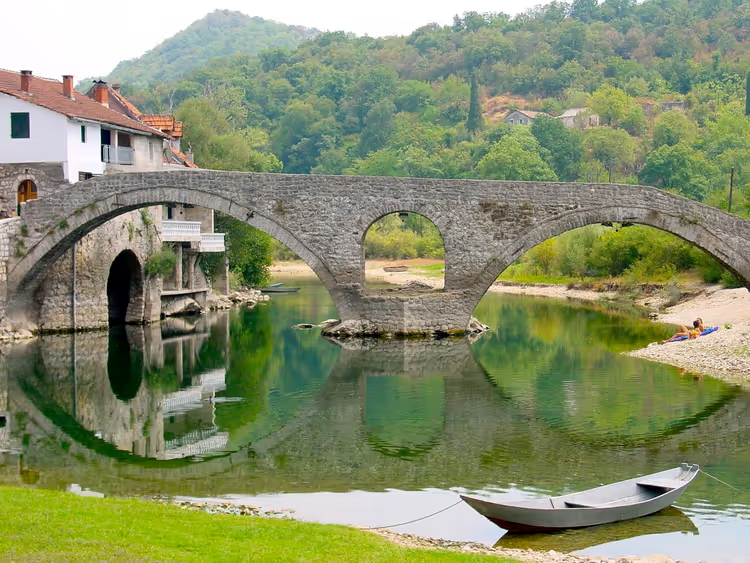 © Darij & Ana · CC BYPhoto: Darij & Ana, CC BY (https://creativecommons.org/licenses/by/2.0), Wikimedia Commons
Formally it is part of Lake Skadar, but in atmosphere it feels like a separate little town with its own rhythm. You can get here by car or with a tour from Podgorica that includes Cetinje. The viewpoint over the river is right by the road, so allow time for a stop.
The town itself has little to offer: a waterfront and a couple of cafes by the bridge. An hour is enough to see it, so it makes sense to combine the trip with a stop at the viewpoint on the road to Cetinje. Bring water and snacks: the local cafes open whenever they feel like it, especially on weekdays.
The road here is narrow and winding, in places with no shoulder. Drive carefully, and better yet, come in the morning, when the fog still lies on the water and there are almost no cars. The view of the river bends is the reason people come here, so set aside time to stop and take photos.
Wine tasting and the olive harvest
October is the peak of the grape and olive harvest. Around Lake Skadar, wineries are open with views over the vineyards, and in Bar and Ulcinj some producers offer olive tours. In Bar, the olive harvest runs from October through December, depending on the variety and the weather (as of Montenegro Spirit, 09/2026).
Among the wineries by the lake, Kalimut Winery and Marovic Estate are worth a visit: tastings are held with a view of the water, and you can also stay overnight nearby. If you would rather not arrange everything yourself, there are tours of wineries and wine cellars with transfers and tastings.
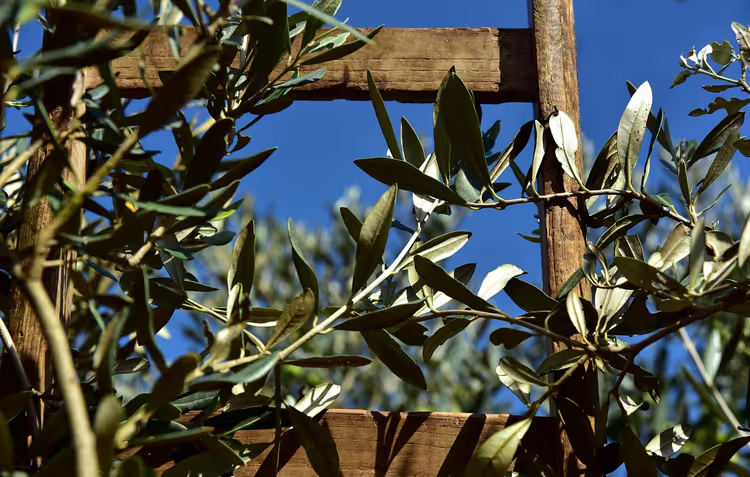
Tastings usually take an hour and a half to two hours and include several samples. Book in advance: small estates take groups by appointment, and weekdays are less busy than weekends.
October weather in Montenegro
October weather does not repeat the previous year. One October turns out almost like summer, another brings wind and rain from the first week. Do not plan based on someone else's experience; it is more reliable to check the forecast a week before your trip.
On the coast, in Budva, Tivat, Kotor and Bar, daytime temperatures are usually +22...+24 °C, but values range from +20 to +28 °C (as of weather-and-climate.com, 09/2026). Nights are 7-9 degrees colder, so a light jacket will come in handy in the evening.
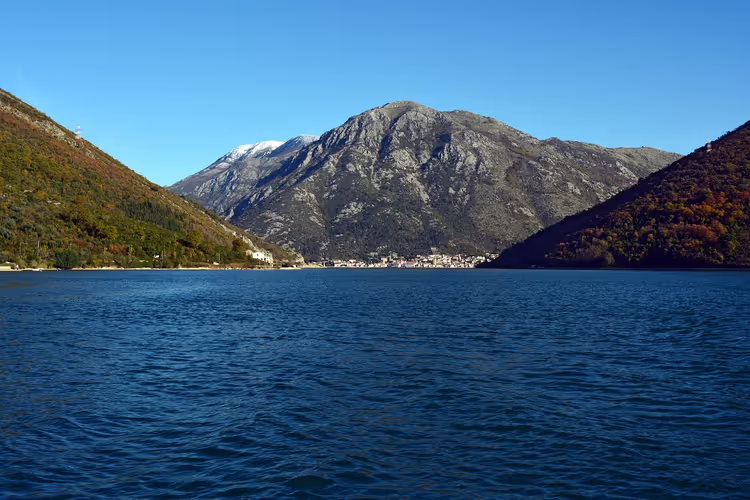
The sea temperature in October ranges from +19 to +24 °C depending on currents and proximity to river mouths (as of seatemperature.info, 09/2026). The water in the Bay of Kotor is warmer, and colder on open beaches. In the first half of the month, expect around +21...+22 °C; after that the water gradually cools.
In the north and in the mountains it is already cool. Around Zabljak, daytime temperatures are about +11...+15 °C, and at night the thermometer drops to +2...+8 °C. Kolasin is milder, and a light walk in the surrounding area is still possible there, but in the high mountains it is better not to plan long routes if rain is forecast.
Once during your trip, check the forecast for the mountain roads, not just for the beach. In the mountains the weather changes faster, and a morning in Zabljak can be clear while fog already hangs over the pass. Keep extra time in the car for the return journey.
An annual pass for all parks costs €13.50 (as of the Montenegro national parks website, 09/2026). It pays for itself if you plan to visit Durmitor, Lake Skadar and Lovcen on one trip. Buy a single-entry ticket only for a specific park.
Swimming, beaches and the coast in October
In October the country slows down. The summer rush is over, and Kotor is left with quiet cobblestone streets, while the Budva promenades are almost empty. The traffic jams are gone, the beaches are free, and cruise ships call every couple of days instead of two or three times a day.
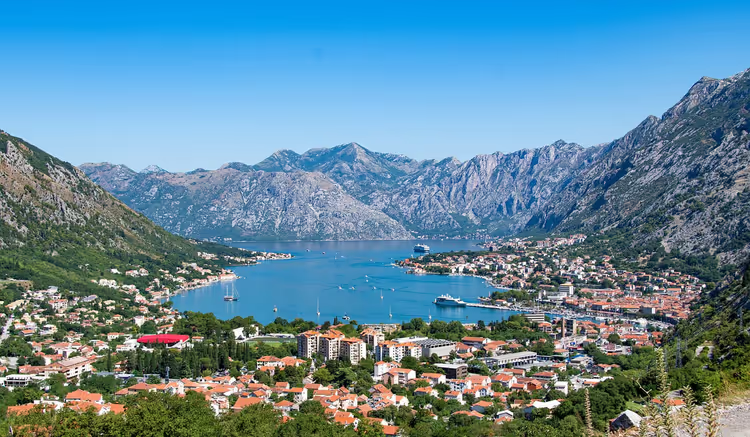
In the morning you can wake up to the smell of wet pines after a short overnight rain, and in the afternoon still swim under the warm autumn sun. Inland, the mountains turn gold and red, and villages sit in fog in the mornings. Cafes are open, ferries are running, life along the coast does not stop, but without the summer chaos.
In the last week of the month some cafes start closing for the winter, although many stay open. Aim for the middle of the month if you want to catch the largest number of places still operating.
Beaches are open in October. This applies to those maintained by local authorities; wild beaches are available year-round. In many places sunbeds become free or much cheaper, but some beach clubs close after the middle of the month.
Swimming is comfortable in the first half of October. In the second half it all depends on the year, and if you are used to cold lakes or northern waters, the Adriatic will feel warm to you. Watch the waves: toward the end of the month the sea is more often rough, and that becomes a matter of safety, not comfort.
Pros and cons of October
The first half of the month usually delivers beach time and walks, while the second half is better suited to mountains, wine and old towns. Below is what you get and what you should be prepared for.
No crowds. Montenegro is small, and in July it feels like everyone has come here. Beaches are packed, Kotor is overflowing, and traffic jams stretch along the coast. In October it is the opposite: you walk calmly through historic streets and photograph views without hundreds of people in the frame.
Prices drop. Accommodation, car rental, boat trips and excursions get cheaper compared with summer. Boutique hotels in Budva cut their rates by almost half in autumn, and prices at Zeta Hotel in October are often lower than in September.
Paid beaches become free. Milocer Beach near Sveti Stefan charges an entrance fee in summer, but in October the sunbeds are removed and you can sunbathe there for free.
Fruit season. The shelves are bursting with figs, pomegranates, persimmons, grapes, mandarins and kiwi. Prices are low, stalls are on almost every corner, and this is the best moment to stock up on real fruit before winter.
Olive harvest and wine festivals. The olive harvest is underway in Bar, and wine festivals take place around Lake Skadar. For those who love local cuisine, wine and events, the month is ideal.
The weather is unpredictable. Some years you can swim even in early November, while in others it is already cool by the first week of October. In the mountains about a third of the days are cloudy or rainy, and a sudden wind on the coast makes the air feel colder than the thermometer shows.
Mountain activities are limited. In Durmitor and Prokletije the end of October is already a bad time: trails turn muddy, fog and wind are frequent, and temperatures sometimes drop below freezing at night. Driving north after heavy rains is also tricky because of the switchbacks.
The industry slows down. By mid-October some seasonal restaurants, bars and beach clubs close, and organized tours run on reduced schedules, especially in small coastal towns.
Shorter daylight hours. By the end of October the sun sets earlier, so there is less time for long trips and hikes. This is important to factor into your daily planning.
For us, the cons do not outweigh the pros. You get quiet towns, golden mountains, a still-warm sea and low prices, all without the summer bustle.
Is it worth going to Kotor in October
Yes, and October is a good month for Kotor. Cruise ships still call, so the old town comes alive for a few hours when passengers come ashore. But it is no longer the endless summer flow.
When the ships leave in the early evening, Kotor becomes calm and real again: quiet corners, empty streets, room to walk without groups.
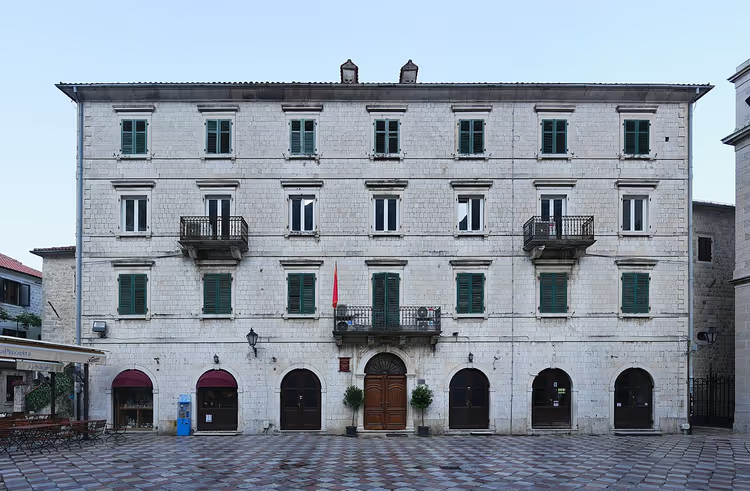 © Ingo Mehling · CC BY-SAPhoto: Ingo Mehling, CC BY-SA (https://creativecommons.org/licenses/by-sa/4.0), Wikimedia Commons
The weather in early October is still comfortable: warm enough to sit outside, but not hot for climbing up to the San Giovanni fortress. Shops, bakeries and restaurants are open. If you stay overnight in Kotor, accommodation is cheaper in autumn than in September, and this is a chance to see one of the most beautiful towns on the bay without overpaying. In November many places already close, so it is better not to put the trip off until the last moment.
What else to fit in during October
In October almost everything you would do in summer is available, just without the crowds and the heat. Old towns are a different experience: Bar and Ulcinj, among the hottest cities in the country, become comfortable for walking their fortress streets in autumn.
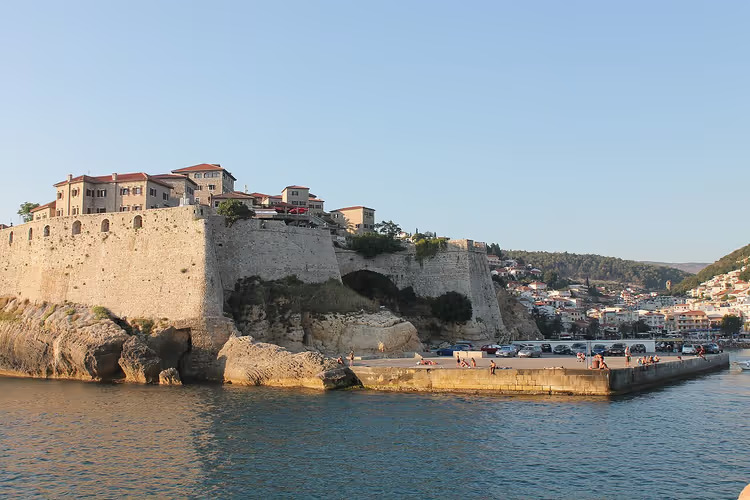 © Mjuzikxhankej · CC BY-SAPhoto: Mjuzikxhankej, CC BY-SA (https://creativecommons.org/licenses/by-sa/3.0), Wikimedia Commons
Monasteries and historic sites are also open, and autumn is the best time for them. It is worth stopping in Perast, Stoliv and Godinje, or simply driving along the coast and stopping wherever you like.
A special pleasure in October is eating with a view of the water. On the Bay of Kotor there is Verige 65 with a view of the bay, in Budva Vista Vidikovac, and oyster farms are nearby everywhere. It is pleasant to sit by the water, drink local wine and eat fresh fish without the summer crush.
Tours and tickets in Montenegro
Guided tours, skip-the-line tickets and activities — most offers can be cancelled free of charge.
See offers on GetYourGuideThe widget loads once you give your consent.
⁉️🤔 Frequently asked questions
Is it worth going to Montenegro in October?
Yes, October is one of the best months for a trip. In the first half you can still swim, there are almost no crowds, and prices for accommodation and transport drop by two to three times compared with summer. For a relaxed seaside holiday and for the mountains, this is a good window if you are ready for changeable weather.
Can you swim in Montenegro in October?
In the first half of the month swimming is usually comfortable, with water around +21...+22 °C. In the second half it all depends on the year: in a warm October people swim until the end of the month, in a cold one the water cools down earlier. Watch for storms, as the sea is more often rough at the end of October.
What is the weather like in Montenegro in October?
On the coast it is usually +22...+24 °C during the day, and 7-9 degrees colder at night. In the mountains it is already cool: around Zabljak it is about +11...+15 °C during the day, with nighttime values around freezing possible. One October turns out almost summery, another brings rain from the first week.
What to do in Montenegro in October if it rains?
Head south, to the Bay of Kotor or toward Herceg Novi: rain there is shorter than in the mountains. In bad weather, wineries near Lake Skadar, museums, old towns and tastings are all available. In the mountains, it is better to skip long trails in the rain.
Is a holiday in Montenegro cheaper in October?
Yes, almost everything gets cheaper: accommodation, car rental, boat trips and excursions. Boutique hotels in Budva cut their rates by almost half compared with summer, and sunbeds on paid beaches become free. The exception is flights, which are worth booking in advance.
Is it worth going to Kotor in October?
It is. During the day the old town can be busy because of the cruise ships, but by evening everything quiets down. Accommodation is cheaper in autumn than at peak season.
In short: what to book
If you have a week by the sea: take a hotel in Budva or Tivat, add one boat trip around the Bay of Kotor with a stop at the Blue Cave, and a day at Lake Skadar. Compare seaside hotels in advance, before they close for the off-season.
If you want mountains and wine: rent a car and spend a night in a cabin near Durmitor, and book a winery tour with a transfer. Find excursions around the country and compare car prices before the trip: in autumn the choice is wider, but specific dates get booked up quickly.

A small editorial team writing guides for independent travel. We travel ourselves, but we haven’t been everywhere, so we check prices, opening hours and how to get there against official sources.