







When to go to Prague: weather, crowds and seasonality by month
Prague runs year-round, but the month you visit changes everything: the weather, the prices, and the length of the lines. In April you can cross Charles Bridge without the crowds, while in July you'll be looking for a spot at the railing. The difference between seasons here is more noticeable than in most European capitals.
We've gathered verified facts for each season: temperatures, market dates, crowd behavior, and practical tips. You'll understand when to go for peace and quiet, and when to go for the Christmas market.
The short answer for a first trip: May and September. Warm, dry, and still tolerable in terms of tourist numbers. If you want markets and snow, plan for late November and December.
Ad: this article contains affiliate links, we earn a commission if you book through them, at no extra cost to you.
When to go to Prague: a quick breakdown
💡 In short:
- Best months for weather: May, June, and September, with daytime temperatures around 18-24 °C (as of 09/2026, Climate to Travel).
- Quietest time in the city: January, February, and the first half of March.
May and September offer the best balance between weather and tourist numbers. The air is warm enough to be comfortable, and rain is less frequent than summer downpours. September also coincides with the start of the grape harvest, so evenings in Vinohrady feel lively.
In summer, Prague runs at full capacity: cafe terraces are open, sightseeing boats cruise the Vltava, and people picnic in Letna Park. The flip side: stuffiness and crowds in the center. If you don't handle heat well, come in the first half of June.
In winter, the city empties out after January 6, and you can walk through the Old Town almost alone. The catch is the short daylight: it gets dark around 4:30 PM. On the plus side, museums, galleries, and churches operate without the summer lines.
Weather by month: table
Long-term averages will help you pick the right window for your trip. The data refers to the city center.
Month | Daytime | Nighttime | Tourists |
|---|---|---|---|
January | around 2 °C | around -3 °C | minimum |
February | around 4 °C | around -2 °C | minimum |
March | around 9 °C | around 1 °C | few |
April | around 14 °C | around 4 °C | moderate |
May | around 19 °C | around 9 °C | moderate |
June | around 22 °C | around 12 °C | many |
July | around 24 °C | around 14 °C | maximum |
August | around 24 °C | around 13 °C | maximum |
September | around 19 °C | around 10 °C | many |
October | around 13 °C | around 5 °C | moderate |
November | around 7 °C | around 2 °C | few |
December | around 3 °C | around -1 °C | many due to markets |
Temperatures are rounded (as of 09/2026, WeatherSpark). The tourist column reflects our planning experience and market dynamics.
Pick your month based on your goal. If you want to walk all day, go with May or September. If you're fine with freezing for the markets, then December. If you hate lines, go with February.
Prague in spring: March, April, May
 © Deror_avi · CC BY-SAPhoto: Deror_avi, CC BY-SA (https://creativecommons.org/licenses/by-sa/4.0), Wikimedia Commons
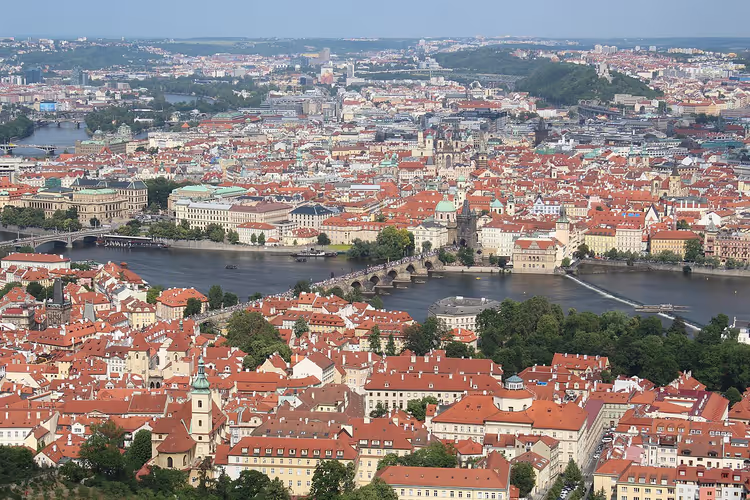
Spring in Prague starts with blossoms. In the gardens around Prague Castle, in Valdštejnská zahrada, and on Petrin Hill, tulips, daffodils, and cherry trees come into bloom. The city looks softer and greener at this time than in any other season.
You can walk the streets without the summer crush of crowds. Cafes put out their first outdoor tables, street musicians return to Charles Bridge, and the first sightseeing boats head out on the Vltava. In May, temperatures climb to around 19 °C, making it one of the best months for long walks through the Old Town.
April in Prague is changeable: around 14 °C by day, around 4 °C at night (as of 09/2026, WeatherSpark). Bring a light raincoat and comfortable shoes, because the cobblestones get slippery after rain. For photos, Petrin Hill is great in the morning, when the light is soft and there are almost no people around.
March in Prague is still chilly, and the wind off the river is quite noticeable. But there are no crowds, and you can buy museum tickets without waiting in line. By late April, the city is fully green, and the cherry trees on Petrin Hill are in bloom.
Open-air wine evenings start as early as May, and menus begin featuring fresh greens and young vegetables. Give your mornings to Charles Bridge: the sun lights up the towers from the east, and there are almost no people in the frame. During the day, head to the parks; in the evening, come back to the Vltava embankment.
If you're visiting in March, add museums and concerts to your itinerary: they run year-round and don't depend on the weather. Keep a raincoat handy, because spring showers come often and pass quickly.
The catch: March is still cold, around 9 °C during the day, and the gardens look gray (as of 09/2026, WeatherSpark).
Who it's for: those who want quiet walks and blooming parks.
Easter markets in Prague
 © Bahnfrend · CC BY-SAPhoto: Bahnfrend, CC BY-SA (https://creativecommons.org/licenses/by-sa/4.0), Wikimedia Commons
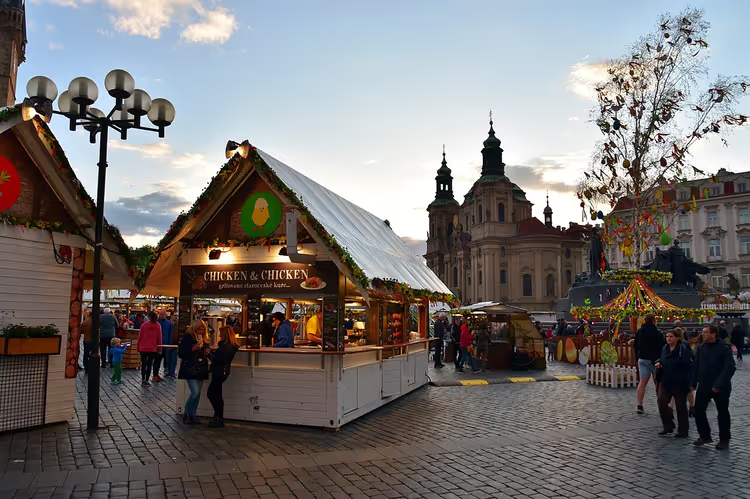
Easter markets run from March 13 to April 4, 2027, on Old Town Square and Wenceslas Square (as of 09/2026, Prague Experience). Two weeks before the holiday, dozens of wooden stalls spring up on the squares.
They sell kraslice, hand-painted eggs, and weave pomlázka from willow twigs. Try mazanec, a sweet yeast bread, and beránek, a lamb-shaped cake. Orchestras perform on Old Town Square, and hot mead keeps you warm in the evening.
During Holy Week, St. Vitus Cathedral hosts organ concerts. Some Baroque churches hold free candlelit Easter evenings, and they are worth visiting after the market.
Come in the morning before 10:00. There are no lines at the stalls then, and you can photograph the square without strangers' heads in the frame.
Admission to the Easter markets is free; you only pay for food and souvenirs. Young Moravian white wine is served with mazanec and beránek.
If you are traveling with kids, they will enjoy the egg race held right on the square.
Check the dates before your trip: Easter changes every year, and the markets shift with it.
- The catch: on holidays, Old Town Square gets crowded, especially after lunch.
Trinity and long weekends in June
Trinity Sunday is not a public holiday in Czechia, and its date changes every year. If you have three free days in early June, the city shows its liveliest, sunniest side. The summer heat has not arrived yet, but the air is already warm.
Parks and gardens are open for picnics: Letná Park, Kampa Island, and Petřín draw both locals and visitors. Bring a blanket. Musicians play along the embankments, and small craft and flower markets pop up in the neighborhoods. For a quieter part of your itinerary, step into St. Nicholas Church in Malá Strana or St. Vitus Cathedral.
Practical tip: the first week of June is usually calmer and cheaper than the second half of July, and the weather is almost the same. Check the concert listings in advance, because June is packed with events for every taste. Two days are enough for the center; spend the third day on a day trip.
Prague in summer: June, July, and August
 © This Photo was taken by Miha Peče . Feel free to use my photos, but please mention me as the author. I would much apprec · CC BY-SAPhoto: This Photo was taken by Miha Peče . Feel free to use my photos, but please mention me as the author. I would much apprec, CC BY-SA (https://creativecommons.org/licenses/by-sa/4.0), Wikimedia Commons
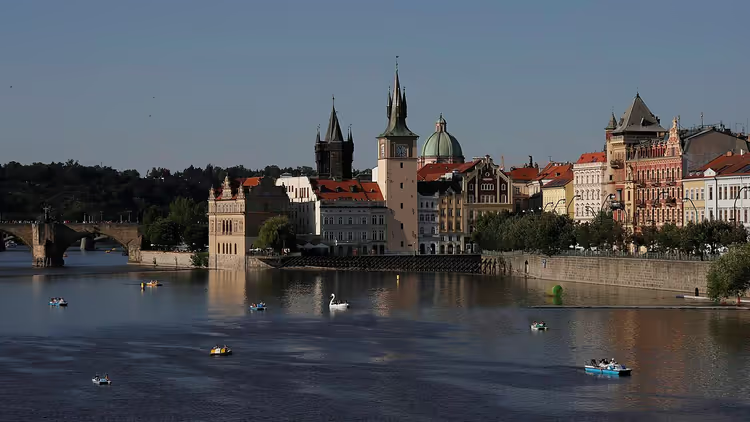
In summer, Prague opens its season of terraces, boats, and street music. July is the warmest month: the average daytime high is around 24 °C, and around 14 °C at night (as of 09/2026, WeatherSpark). The center gets crowded by midday.
In the evening, Prague reveals a different side. The sun drops behind the towers of the Old Town, squares fill with musicians, string lights illuminate beer gardens, and parks host free cultural programs. If you want it quieter, head to Vyšehrad or the vineyards outside the city.
If it is hot, the Žluté lázně swimming area helps, or a boat trip on the Vltava with a view of Prague Castle. The Náplavka embankment works as an urban beach for evening hangouts. Bring water and a hat. For timed-entry tickets and tours in July, book several days ahead: Prague tours on GetYourGuide.
The catch: in July and August, hotel prices are at their peak, and the line on Charles Bridge lasts all day.
Who it's for: those who love long evenings, music, and water.
Prague in fall: September, October and November
Fall makes Prague quieter and cheaper. Crowds thin out after September, and temperatures stay around 19 °C until early October (as of 09/2026, WeatherSpark). In Petřín Park, Stromovka and Valdštejnská zahrada the leaves turn yellow, and fog over the Vltava adds atmosphere to your photos.
September is good for museums and galleries: lines are shorter than in summer, and you can get up to viewpoints with almost no waiting. The food gets heartier, with pubs serving soups, pork knuckle and apple strudel with cinnamon. In fall, Czech vineyards harvest grapes, so small wine festivals take place in Vinohrady.
Museum and viewpoint tickets are best bought online in advance: prices and time slots on Tiqets.
Chestnuts fall right at your feet in the parks, and viewpoints offer the best panoramas of the year. Sunset over Prague Castle is especially good in fall, when fog settles on the Vltava and the Old Town fades into soft light.
September and October are good for day trips: you can reach Český Krumlov, Kutná Hora or Karlovy Vary by bus or train without transfers. In November, it's better to stay in the city and catch up on museums, because the weather turns and the days get short.
The fall events calendar is packed: the International Jazz Festival, exhibitions and classical concerts in historic halls. Tickets for popular evenings sell out in advance, so check the dates before booking your hotel.
The catch: in November, daylight hours are short and there's often a light drizzle.
Who it's for: people coming for museums, wine and golden foliage.
Prague in winter: December, January and February
 © Ray Swi-hymn from Sijhih-Taipei, Taiwan · CC BY-SAPhoto: Ray Swi-hymn from Sijhih-Taipei, Taiwan, CC BY-SA (https://creativecommons.org/licenses/by-sa/2.0), Wikimedia Commons
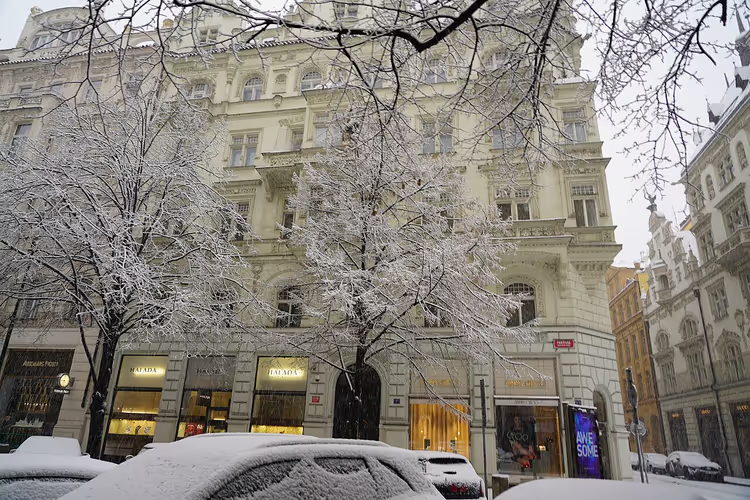
Winter Prague looks like a film set: string lights, breath in the cold air, warm light in shop windows. In January, average nighttime temperatures drop to -3 °C, with daytime around 2 °C (as of 09/2026, WeatherSpark). Snow doesn't stick every year, but the holiday lights stay up until early January.
You get something rare: the Old Town almost empty. After January 6, when the markets close, walking across Charles Bridge takes minutes, not half an hour. If you get cold, step into museums, galleries and the historic libraries of Prague Castle. Museums are open.
The sunset over Prague Castle in clear, frosty air deserves special attention. From above, you can watch the city's windows light up. Dress warmly and bring a thermos of tea, because cafes at viewpoints are closed in winter.
The catch: daylight hours are short, about 8 hours in December, and the wind off the Vltava feels colder than the actual temperature.
Who it's for: people who want an empty city and Christmas lights.
Christmas markets and Advent
 © House of Larl · CC BYPhoto: House of Larl, CC BY (https://creativecommons.org/licenses/by/4.0), Wikimedia Commons
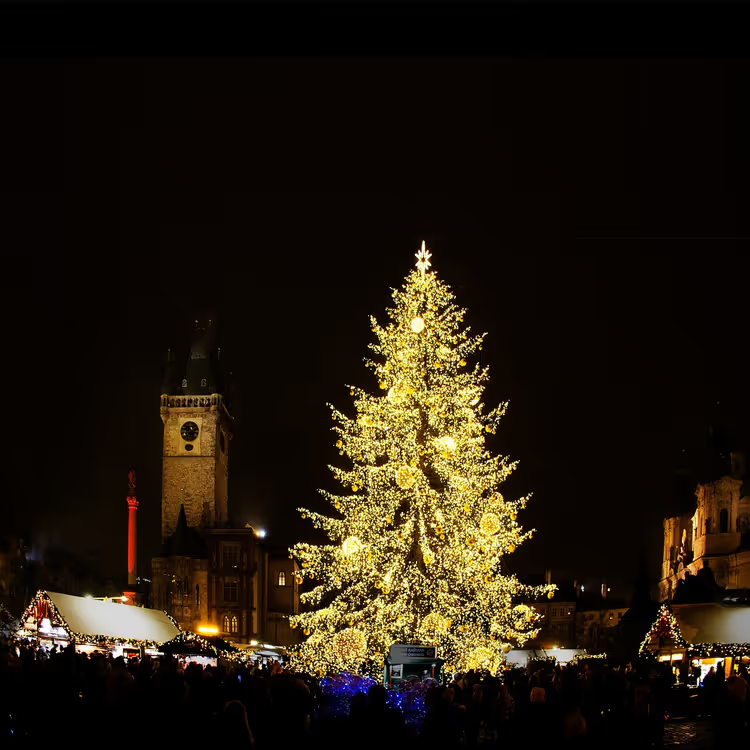
Christmas markets at Old Town Square and Wenceslas Square run from November 28, 2026 to January 6, 2027 (as of 09/2026, Prague Experience). This is the winter peak for travel to Prague, so hotels get booked months in advance.
The market smells of trdelník, vanilla rolls and roasted almonds. Artisans sell wooden toys, Christmas ornaments and painted candles. A huge Christmas tree stands in the square, and both kids and adults take photos around it.
Beyond the center, check out the smaller markets in Vinohrady at Náměstí Míru and in Smíchov. They're calmer, with live music and fewer tour groups. Go during the day. Christmas concerts take place in December at St. Nicholas Church and St. Vitus Cathedral, and tickets are best bought in advance.
The catch: in the evening at Old Town Square, you move in a dense crowd.
Not for: people who can't handle crowds and cold.
New Year's in Prague
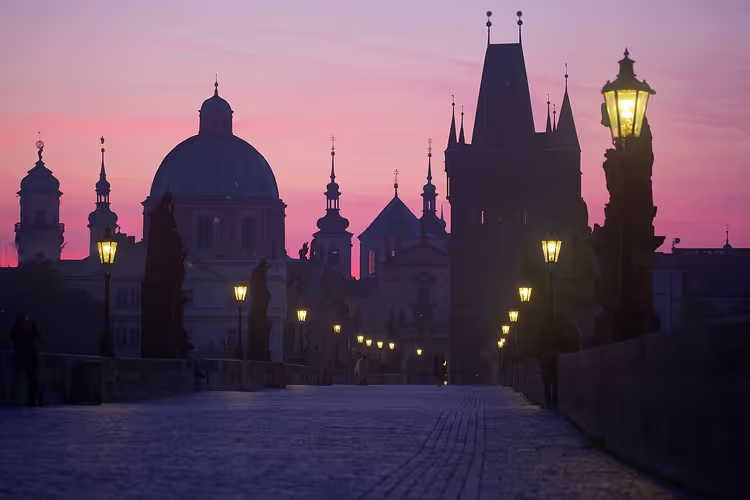 © Bradley Weber · CC BYPhoto: Bradley Weber, CC BY (https://creativecommons.org/licenses/by/2.0), Wikimedia Commons
On New Year's Eve, Prague turns into one big celebration. During the day, streets fill with visitors from Germany, Austria and Poland, and the air smells of punch and fresh pastries. Many restaurants offer holiday menus, and hotels sell two-night packages.
Closer to midnight, everyone heads to the bridges over the Vltava, Letná Park or Petřín. From there you can watch fireworks over the city and the central Christmas tree. After midnight, clubs, bars and parties with live DJs keep going.
The practical side is simple: book your table and hotel well in advance, because rooms in the center are almost gone. If you don't like noise, go 2-3 stops out of the center and ring in the year in a neighborhood like Vinohrady.
If you want to watch the fireworks from Petřín, go up early and claim your spot. Walk back down, because trams after midnight are packed.
On the last day of the year, get to museums and galleries before evening, while there are almost no lines.
- The catch: on New Year's Eve, hotels raise prices, and taxis after midnight take a long time to arrive.
Valentine's Day in Prague
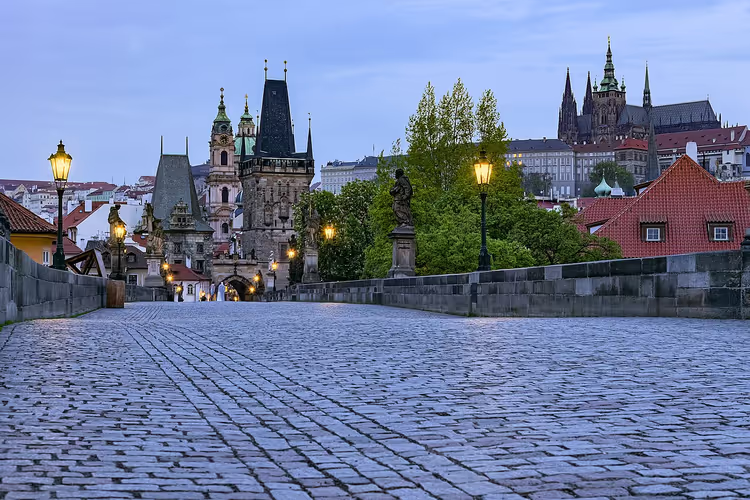 © Jorge Franganillo · CC BYPhoto: Jorge Franganillo, CC BY (https://creativecommons.org/licenses/by/2.0), Wikimedia Commons
February in Prague is better for romantic trips than it seems. On the fourteenth, couples fill the city, restaurants offer special menus, and hotels add spa packages. The weather is chilly, around 4 °C during the day (as of 09/2026, WeatherSpark), but the center is free of summer crowds.
The classic route is simple: a walk through Malá Strana, a kiss under the Charles Bridge tower at dawn, and a candlelit dinner with a view of Prague Castle. On Petřín there's the "Garden of Love" with a statue of Karel Hynek Mácha, the Czech poet of love. The funicular takes you up in a few minutes.
The catch: on the fourteenth, popular restaurants need to be booked weeks in advance.
Who it's for: couples who want a quiet city and beautiful views.
What to book in advance and how to save
In Prague, you pay either with time or with comfort. Want to avoid lines? Come in January, February or the first half of March. Want the markets? Be ready to book your hotel months ahead. Want the best weather? Aim for May or September.
A single metro and tram ticket is valid for 30 minutes, and a 90-minute ticket covers the trip from the airport (as of 09/2026, kdycojede.cz). Validate your ticket in the yellow validator, otherwise a fare inspector will fine you. It's easier to buy tickets in the PID Lítačka app, where they're cheaper than at the machine.
Choose your hotel based on your goal: Old Town for a first visit, Vinohrady for cafes and quiet, Žižkov for bars. Trip.com is a convenient way to compare options and check dates. Book online.
The official Prague Visitor Pass city card gives you access to museums, galleries, tours, and unlimited public transport. Current prices were verified on 12.09.2026 on the official Prague City Tourism website. For a 2-day trip, the card usually doesn't pay off.
Here's how to buy tickets to the main museums and observation decks in advance:
Tours and tickets in Prague
Guided tours, skip-the-line tickets and activities — most offers can be cancelled free of charge.
See offers on TiqetsThe widget loads once you give your consent.
Getting to Prague by train is convenient from Berlin, Dresden, and Vienna: the journey takes a few hours and runs without transfers.
⁉️🤔 Frequently asked questions
Which month should I choose for a first trip to Prague?
For a first trip, go in May or September. Daytime temperatures are around 19-20 °C, rain showers are short, and lines at the main sights are still shorter than in summer. If you want to see the city almost without tourists, add late February. Plan three full days and schedule your Old Town walks for the morning, while the streets are empty.
When does Prague have the fewest tourists?
The fewest tourists are in January, February, and the first half of March. After January 6, the Christmas markets close and the center empties out. You can walk across Charles Bridge almost alone. Keep in mind the short days: it gets dark around 4:30 PM, so plan museums for the second half of the day.
How many days do you need for Prague?
Three full days are enough for the main sights, Old Town, Prague Castle, Vyšehrad, and Malá Strana. On the fourth day, add a day trip, for example to Kutná Hora or Karlovy Vary. If it's your first visit, don't spend more than four days on the city itself: you'll get tired of the crowds and cobblestones.
Is Prague worth visiting in December for the markets?
Yes, if you don't mind the crowds and cool weather. In December it gets dark early, but the city is beautifully lit. Book your hotel several months ahead, because hotels in the center fill up quickly during market season.
What to do in Prague on a rainy day?
Head to museums, galleries, and churches. Concerts are often held in St. Vitus Cathedral and St. Nicholas Church, and the historic libraries of Prague Castle offer shelter for half a day. Another option: lunch at a tavern that serves soups and pork knuckle. Rain in Prague is usually short, so bring a raincoat rather than an umbrella.
Do I need the Prague Visitor Pass?
The pass pays off if you visit three or four paid sights a day and use public transport a lot. Current prices and the list of included sights were checked on 09/12/2026 on the Prague Visitor Pass page. For a short two-day trip, regular tickets are usually a better deal.
In short: what to book
Pick the scenario that fits your trip, and book in the right order.
If it's your first trip: May or September, hotel in Old Town.
If you want markets and lights: late November and December, book months ahead.
If you're looking for quiet and low season: January, February, first half of March.
If you're going for a long weekend: the first week of June.
If you're going for museums: late September and October.
Plan your trip in advance: hotels in Prague on Trip.com and museum tickets on Tiqets.
City tours and day trips are easy to find on GetYourGuide.

A small editorial team writing guides for independent travel. We travel ourselves, but we haven’t been everywhere, so we check prices, opening hours and how to get there against official sources.