
















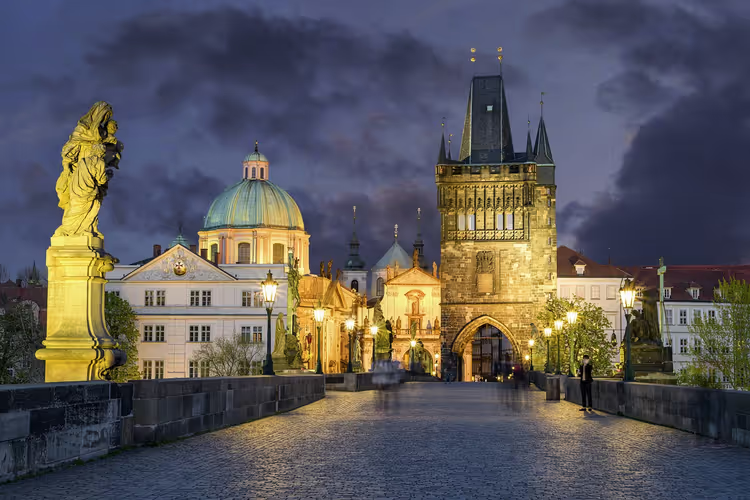
Prague in 3 days on your own: day by day itinerary, tickets and queues
Prague is more compact than guidebooks make it seem. You can walk across the historic center in half a day, but in three days you can fit in the Old Town, Prague Castle, and one castle outside the city. Lines and closed halls easily eat up time if you don't plan the order of sights in advance.
Prague Castle is open year-round, entry to the grounds is free, and you only pay for the indoor exhibitions (as of 09/2026, official website). The Astronomical Clock chimes every hour, and you can watch it from the square without a ticket. That's enough to plan three days without rushing or unnecessary travel.
Below is a working plan: what to see, in what order, and how much tickets cost. Sights are grouped by neighborhood, so you won't be crisscrossing the Vltava back and forth. You spend day one in the Old Town and New Town, day two at Prague Castle and Malá Strana, and on day three you head out of the city. This order saves you at least half a day of travel time.
Ad: this article contains affiliate links, we earn a commission if you book through them, at no extra cost to you.
Prague itinerary for 3 days: each day in brief
💡 In short:
- Day 1: Wenceslas Square, Powder Tower, Old Town Square, Charles Bridge.
- Day 2: Prague Castle, Malá Strana, Petřín Tower, Strahov Monastery.
- Day 3: one castle or spa town outside the city, from Mělník to Karlovy Vary.
- Prices and opening hours: 09/2026, verified on the official Prague Castle website and the Prague tourist portal.
The route profile is simple. On the first two days you barely use public transport; day three requires a train or bus ticket. Trams and the metro run between neighborhoods: a thirty-minute ticket costs about 40 crowns (as of 09/2026, PID).
Day | Main focus | Book tickets in advance | On foot |
|---|---|---|---|
1 | Old Town and New Town | no | six to seven km (on the map) |
2 | Prague Castle and Malá Strana | yes, Prague Castle | five to six km (on the map) |
3 | castles and spa towns outside the city | yes, per sight | two to four km (on the map) |
Day 1: Old town and new town
Wenceslas Square
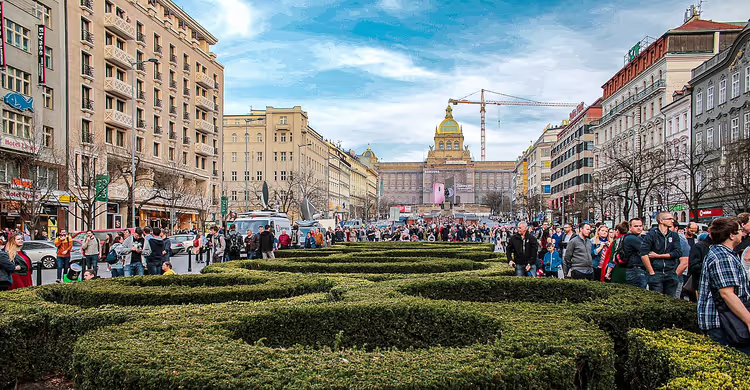 © VitVit · CC BY-SAPhoto: VitVit, CC BY-SA (https://creativecommons.org/licenses/by-sa/4.0), Wikimedia Commons
Wenceslas Square is the main hub of New Town and a convenient starting point. You exit the metro at Muzeum or Můstek station and immediately step into the flow of people and trams. The square grew out of the medieval Horse Market and received the name of Saint Wenceslas in the mid-19th century. At the far end stands the equestrian statue of the Czech patron saint, and behind it rises the neo-Renaissance building of the National Museum with its grand staircase and allegorical sculptures.
For you, the logistics matter here. From the square to the Powder Tower is about a kilometer along Na Příkopě Street, a relaxed twelve-minute walk (on the map). In the morning the square is almost empty; during the day it is crowded. The square itself will take half an hour, and the museum inside will require another two hours.
- Landmark: Muzeum and Můstek metro stations, lines A and C.
- How much time: about thirty minutes for the square.
- Who it's for: for a first introduction to the city and a quick start to the route.
Bredovský Dvůr beer restaurant
After the walk, lunch makes sense. The Bredovský Dvůr beer restaurant is located near the Main Railway Station and brews beer on site: the drink is served from a tank, so it is fresh. Outside it is a strict two-story building; inside there are vaulted ceilings and gray stone walls.
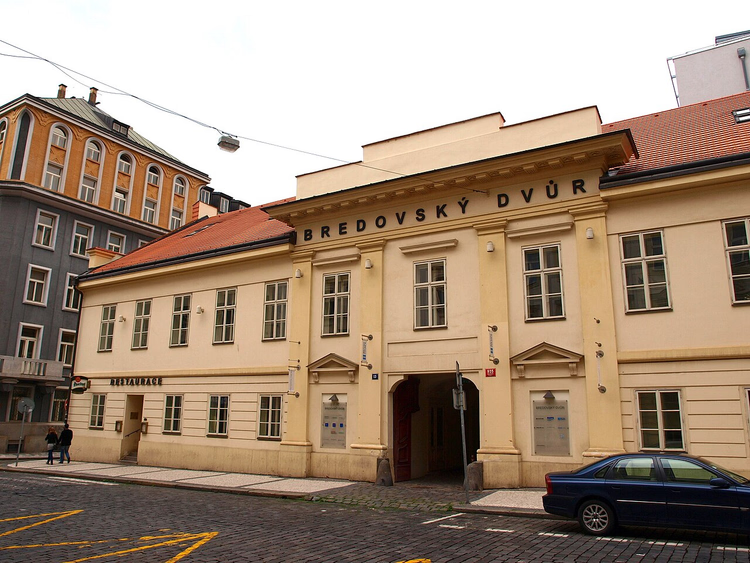 © VitVit · CC BY-SAPhoto: VitVit, CC BY-SA (https://creativecommons.org/licenses/by-sa/4.0), Wikimedia Commons
The menu features Czech classics: pork knuckle on a spit, fried ribs, venison, salads, and desserts. The interior is enlivened by signed T-shirts of Czech athletes, so the restaurant does not look like a tourist showcase. Book a table in advance; in the evening there are many groups here. If you don't like noise, come at opening time.
- What to order: fresh beer and pork knuckle.
- How much time: about an hour for lunch.
Jindřišská Tower
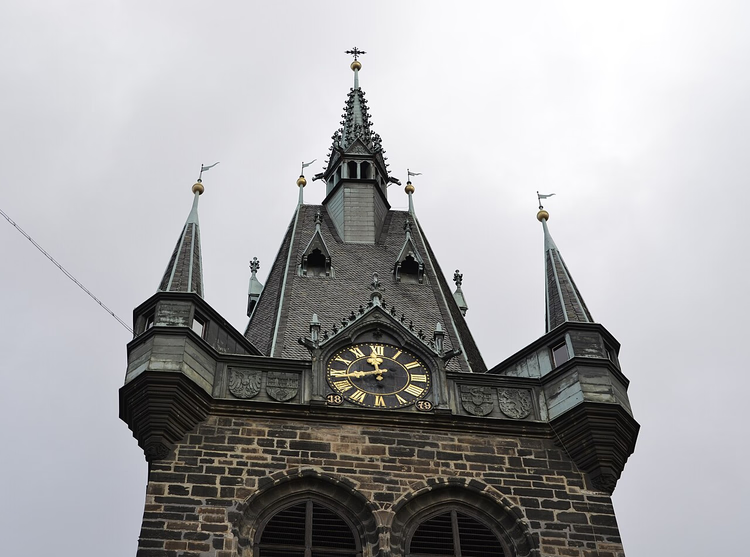 © High Contrast · CC BYPhoto: High Contrast, CC BY (https://creativecommons.org/licenses/by/3.0/de/deed.en), Wikimedia Commons
Jindřišská Tower (Jindřišská věž) is the former bell tower of the Church of Saints Jindřich and Kunhuta. It is the same age as New Town and remembers the cemetery, the priests' house, and the parish school that once stood around it. All that remains of the complex are the bell tower and the church rebuilt in the Baroque spirit.
Today a leisure center operates inside: on the lower levels there is a cafe and exhibitions, higher up clubs and dance floors, and at the very top a museum of Prague towers. You go up to the observation deck by elevator or walk up a staircase of more than two hundred steps. From the top there is a panorama of New Town and Prague Castle.
- Ascent: elevator or stairs, more than two hundred steps.
- Inside: cafe, exhibitions, museum of Prague towers.
Municipal House
 © Diego Delso · CC BY-SAPhoto: Diego Delso, CC BY-SA (https://creativecommons.org/licenses/by-sa/4.0), Wikimedia Commons
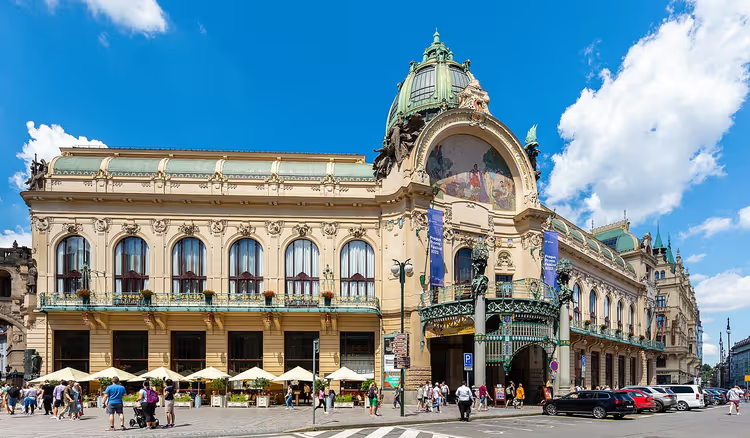
Municipal House (Obecní dům) stands on Republic Square where the royal palace once stood. Construction took seven years, and the result was intended as a symbol of the revival of Czech culture. The facade is decorated with a mosaic panel, and the concert halls bear the names of Czech composers.
Today concerts of classical and jazz music, competitions, and applied art exhibitions take place here. You can visit one of the exhibitions or simply have coffee in the local cafe. Entry is free; only a concert or exhibition requires a ticket.
- Location: Republic Square, next to the Powder Tower.
- How much time: thirty to forty minutes.
Powder Tower
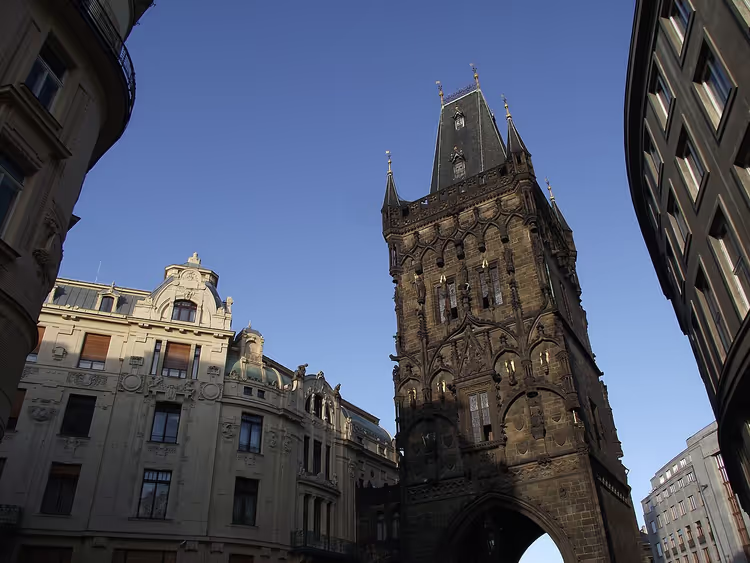
The Powder Tower (Prašná brána) began as the Powder Gate between the Old and New Towns. Royal processions to the Castle passed through it, but over time the gate fell into disrepair and earned the nickname "the ragged one." In the 15th century a new ceremonial tower was built in its place, and it received its current name in the 18th century, when it served as a gunpowder warehouse.
 © Fred Romero from Paris, France · CC BYPhoto: Fred Romero from Paris, France, CC BY (https://creativecommons.org/licenses/by/2.0), Wikimedia Commons
The tower's decoration, which tourists admire, was created in the 19th century in the neo-Gothic style. These are not medieval sculptures but later finishing work, and it is useful to know this so as not to be misled by expectations. Inside there is an exhibition, and a spiral staircase with an observation deck leads to the top.
- Nearby: Municipal House and the beginning of Celetná Street.
- How much time: about thirty minutes.
Old Town Square
 © Bahnfrend · CC BY-SAPhoto: Bahnfrend, CC BY-SA (https://creativecommons.org/licenses/by-sa/4.0), Wikimedia Commons
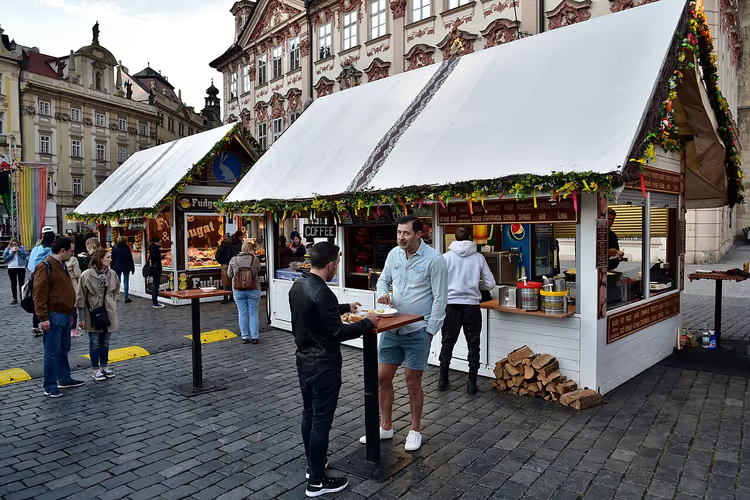
Old Town Square (Staroměstské náměstí) has been a market since the 12th century, and today it is the center of the Old Town. The space is surrounded by buildings from Gothic to Art Nouveau, from the town hall to the Church of St. Nicholas. Here also stands the Prague Astronomical Clock, or Orloj, with figures of the apostles that take turns appearing in the windows.
You can watch the apostle show from the square for free: people gather a few minutes before it starts and raise their phones. The figures move in two windows, and next to them a skeleton with a bell and hourglass works, reminding of death. In the morning the crowd is smaller, so the best time for photos is nine o'clock. You enter the town hall and its tower with a ticket; lines most often form specifically for the tower (as of 09/2026, Prague guide).
The square's ensemble took shape over centuries, so styles are mixed here. Gothic sits alongside Renaissance and Baroque, and Art Nouveau appears in places. The Old Town Hall grew in parts: buildings were gradually added to one tower, and the facades show how the city changed. It is best to examine the square slowly, walking around it in a circle.
In the evening people come here for the same illumination, only the color is different. If you find yourself here around dinner time, leave half an hour for a walk around the perimeter. In winter a Christmas market operates on the square; in summer cafes open, and in both cases the central part is occupied. This way you will have time to choose a spot for evening shots and won't have to push through the crowd.
- How to watch the astronomical clock: every hour from 9:00 to 23:00, free from the square (as of 09/2026, Prague tourist portal).
- Town hall tickets: town hall tickets and observation tower on Tiqets.
Charles Bridge
 © Jorge Franganillo · CC BYPhoto: Jorge Franganillo, CC BY (https://creativecommons.org/licenses/by/2.0), Wikimedia Commons
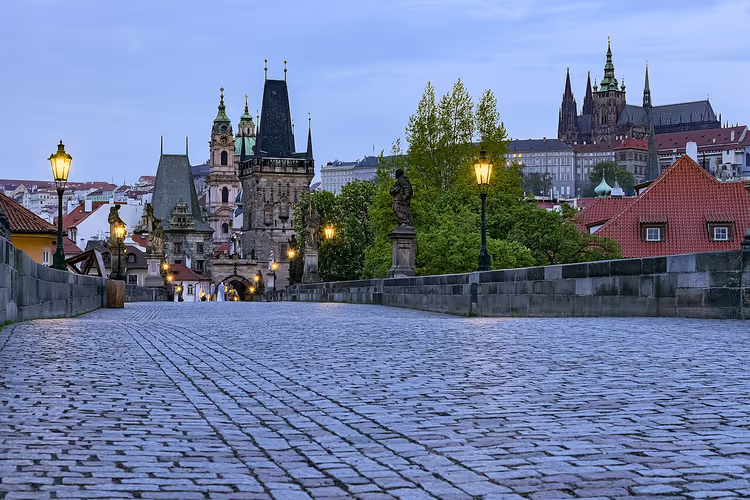
Charles Bridge connects Staré Město and Malá Strana and stands on the site of the Judith Bridge, which was destroyed by a flood in the mid-14th century. The structure was designed by Peter Parler, the architect of St. Vitus Cathedral. According to legend, eggs and milk were added to the mortar to make the masonry stronger.
The parapets support about thirty Baroque sculptures, and it's customary to rub the relief on the statue of John of Nepomuk for good luck. Both bridge towers are open to visitors, and one has an observation deck. In summer the bridge is packed with people during the day, so come at dawn or after eight in the evening.
- When to go: at dawn or after eight in the evening; it's very crowded during the day.
- Cost: entry to the bridge is free around the clock.
Kafka Museum
The Franz Kafka Museum occupies a low-rise former brick factory building near the Vltava riverbank. The exhibition in its current form opened in Prague in the early 21st century; before that it was shown in Barcelona and New York. At the entrance you're greeted by a sculptural pair of "peeing" young men, and it immediately sets the museum's tone.
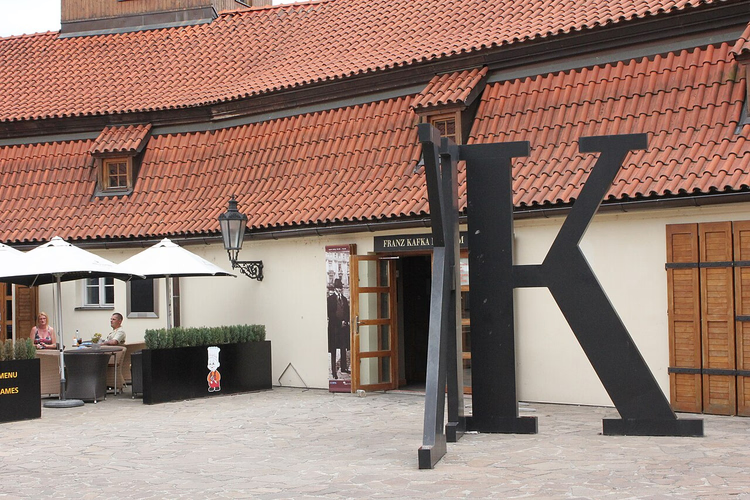
Inside you see black-and-white photographs against a backdrop of pebbles imitating a river, and a film about Prague in Kafka's era. Behind the building, swans stay on the water and can be fed by hand. A ticket costs several hundred crowns; check the exact price on site or on the museum's official website.
- Who it's for: those who have read Kafka and want to see the context of the era.
- How much time: about an hour.
Wallenstein Garden
 © Vadim Zhivotovsky · CC BYPhoto: Vadim Zhivotovsky, CC BY (https://creativecommons.org/licenses/by/3.0), Wikimedia Commons
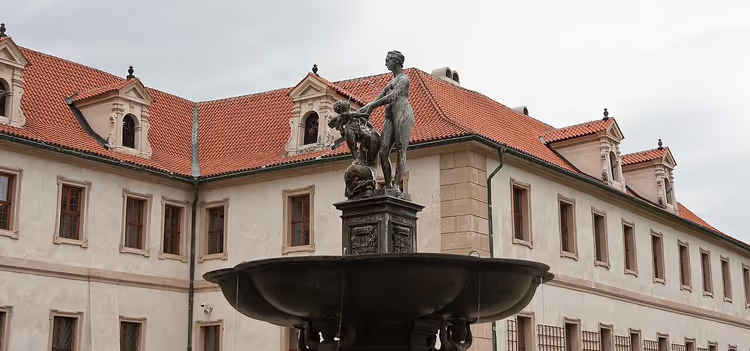
Wallenstein Garden lies four hundred meters from the Kafka Museum, and the same street leads to it. The palace and garden complex was laid out in the 17th century by the wealthy Count Wallenstein, who brought in Italian architects and gardeners. The Baroque palace sits next to an artificial pond, an island in the middle, and a "stalactite wall."
The garden is open to visitors in the warm season, and entry is free. It's quieter here than on the neighboring streets, and it's a convenient place to rest between two stops on the route. The palace is occupied by the senate, so some of the rooms are closed to guests.
- Cost: entry to the garden is free in season.
- How much time: twenty to thirty minutes.
Day 2: Prague castle and malá strana
Prague Castle
 © Diego Delso · CC BY-SAPhoto: Diego Delso, CC BY-SA (https://creativecommons.org/licenses/by-sa/4.0), Wikimedia Commons
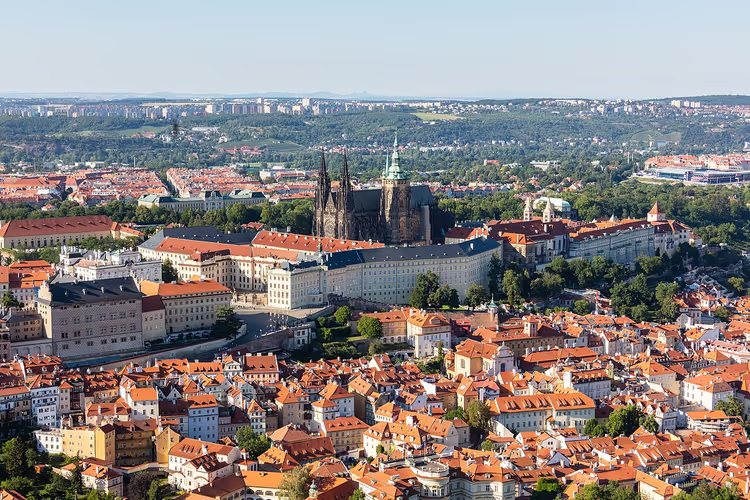
Prague Castle (Pražský hrad) is the presidential residence and the most visited site in the country. It is essentially an entire architectural complex that includes St. Vitus Cathedral, St. George's Basilica, the Old Royal Palace, the Rosenberg Palace, and Golden Lane. Entry to the grounds is free; you only pay for the indoor exhibitions.
The full-circuit ticket covers the main halls and the cathedral, and it is valid for two days (as of 09/2026, tickets and routes on the Castle website). The changing of the guard at the main gate takes place at noon, and you can watch it without a ticket. To avoid standing in line, arrive by nine in the morning or after three in the afternoon.
Inside the complex there are three circular routes, and they differ in the halls they include. Route A covers the most important rooms and the cathedral; routes B and C are shorter and cheaper. If you are short on time, take the first one and do not try to cover everything in a single visit.
St. Vitus Cathedral, St. George's Basilica, and Golden Lane are located in different parts of the grounds, so you walk between them through the inner courtyards. Golden Lane is packed with tiny houses where craftsmen and castle guards once lived. A panorama of the city opens up along the walls on the way, and it is worth making a separate stop there.
- Tickets: full circuit for two days, check the price on the official website.
- Getting there: tram to the Pražský hrad stop or metro to Malostranská.
- How much time: three to four hours.
Old Castle Stairs
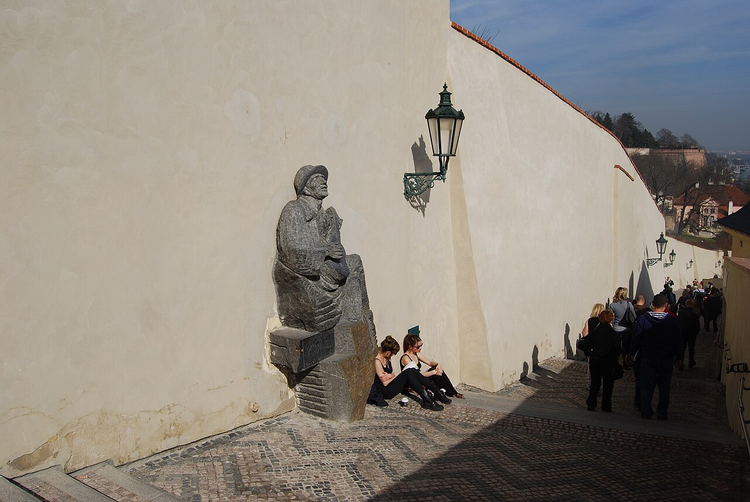
The Old Castle Stairs lead from Malá Strana up to the eastern entrance of Prague Castle. They took their current form after a reconstruction in the 1830s, although the stairs themselves are considered a 16th-century rarity. Tourists climb up and down here, and it is noticeably calmer in the morning.
 © Sztudva Gyöngyi · CC BY-SAPhoto: Sztudva Gyöngyi, CC BY-SA (https://creativecommons.org/licenses/by-sa/3.0), Wikimedia Commons
The staircase is about two hundred thirty meters long, and the steps are squeezed between tall yellow walls (according to the map). From the upper steps there is a view of Malá Strana and its tiled roofs. At the foot of the stairs stands a monument to the singer Karel Hašler.
- How many steps: more than a hundred historic steps.
- When to go: in the morning, while the slopes are in shadow.
U Hrocha Pub
 © Jorge Franganillo · CC BYPhoto: Jorge Franganillo, CC BY (https://creativecommons.org/licenses/by/2.0), Wikimedia Commons
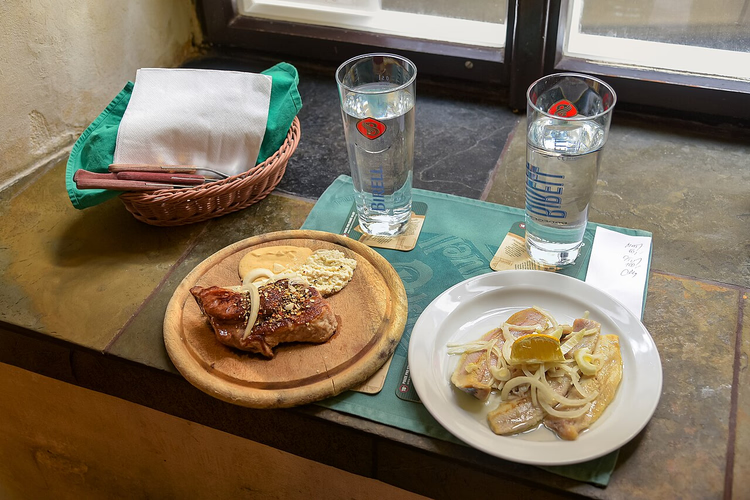
The U Hrocha pub opened in the early nineties on an unremarkable street running parallel to the Royal Route. The place quickly became a cult favorite among locals, although it cannot boast a centuries-long history. The sign is modest, and from the outside you can easily walk right past it.
Inside there are vaulted rooms, heavy tables, and a simple setting with no frills. Workers, journalists, and researchers all sit here over their mugs. The menu features Czech pub food: fried ribs, pork knuckle, and pickled Hermelín cheese. At peak hours it is better to book a table in advance.
- The catch: an easy-to-miss sign and cramped at peak hours.
- Who it's for: those who want a pub without the tourist window dressing.
Malostranské Square
 © David Short from Windsor, UK · CC BYPhoto: David Short from Windsor, UK, CC BY (https://creativecommons.org/licenses/by/2.0), Wikimedia Commons
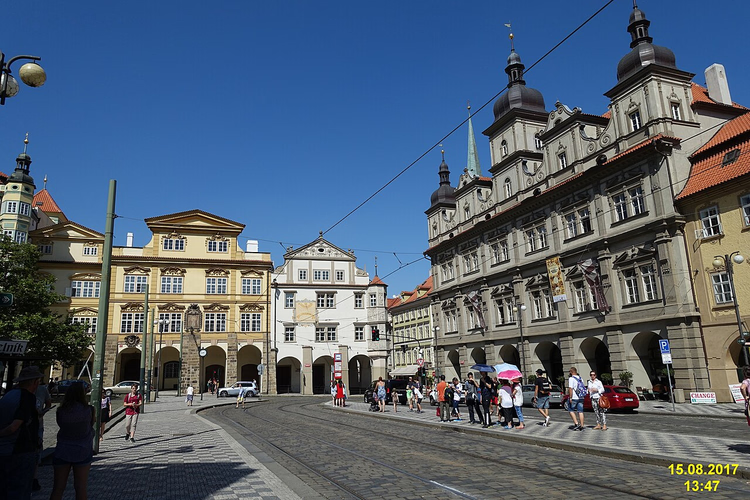
Malostranské Square is the center of the historic Malá Strana district. This wide street-square is surrounded by palaces and churches, and its lower part remembers the medieval market and public executions. After the Hussite Wars, many buildings here were rebuilt in the Baroque style.
Today the square works as an open-air museum. The dominant landmark is St. Nicholas Church, and next to it stands the Plague Column, erected in gratitude for deliverance from the epidemic. From here you can walk to Charles Bridge and the funicular up to Petřín in ten minutes.
- Nearby: Charles Bridge and the funicular to Petřín.
- How much time: about thirty minutes.
St. Nicholas Church
 © Michael92126 · CC BY-SAPhoto: Michael92126, CC BY-SA (https://creativecommons.org/licenses/by-sa/3.0), Wikimedia Commons
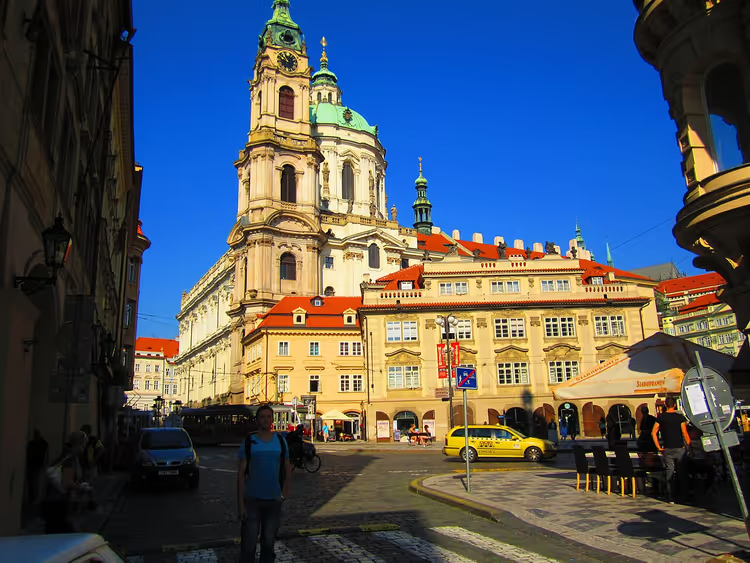
St. Nicholas Church (Kostel svatého Mikuláše) is a Baroque church that took about eighty years to build. The site belonged to the Jesuits, as the adjoining building of their college reminds visitors. The twenty-meter dome is visible even from Charles Bridge.
Inside you will find frescoes covering three thousand square meters, an altar, and dozens of sculptures. The dome fresco "The Apotheosis of St. Nicholas" was painted by the Viennese artist Kracker. The works of Karel Škréta and the sculpture work of the Platzer workshop are considered the church's main treasures.
- What to see: the dome fresco and the altar.
- How much time: twenty to thirty minutes.
Kostel panny marie vítězné
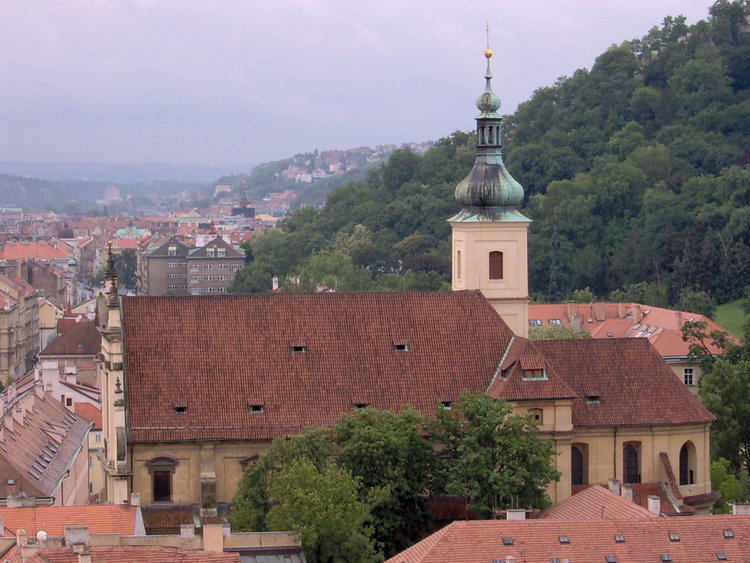
Kostel panny marie vítězné is another Baroque monument in Malá Strana, known far beyond the Czech Republic. It was built on the site of the Chapel of the Holy Trinity, which was first given to the Lutherans and then, after the Catholic victory, handed over to the Order of Discalced Carmelites. This is where pilgrims come to see the small statue of the Infant Jesus.
According to one legend, the statue was owned by Saint Teresa of Ávila; it later came to Princess Maria Manrique de Lara, who gave the relic to the church. The miraculous power of the infant is attested by numerous inscriptions of gratitude on the walls of the altar. The statue blesses with its right hand and holds a globe in its left; statues of the Virgin Mary and Joseph stand near the altar.
- What to see: the altar with the Infant Jesus of Prague.
- How much time: about twenty minutes.
Petřín Lookout Tower
 © Diliff · CC BY-SAPhoto: Diliff, CC BY-SA (https://creativecommons.org/licenses/by-sa/3.0), Wikimedia Commons
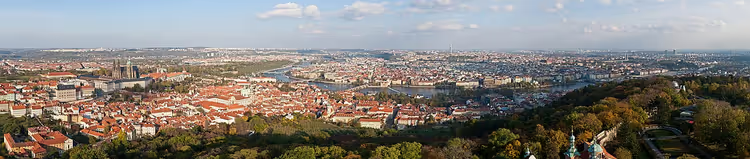
The Petřín Lookout Tower rose on the hill at the end of the 19th century, modeled on the Eiffel Tower. It was built for the Prague Provincial Exhibition, and the structure was erected in a few months using private donations. The height of the hill makes the tower taller than the Parisian one relative to the ground, so the panorama from here opens up over the entire city.
The climb to the observation deck goes up a staircase of nearly three hundred steps or by elevator. The easiest way to reach the hill is by the funicular at the Újezd stop. Opening hours vary by season; check the exact schedule on the Prague tourism portal.
- Getting there: funicular from Újezd or tram to the same stop.
- Ticket: you pay separately for the tower and the funicular.
Strahov Monastery
 © Matěj Baťha · CC BY-SAPhoto: Matěj Baťha, CC BY-SA (https://creativecommons.org/licenses/by-sa/2.0), Wikimedia Commons
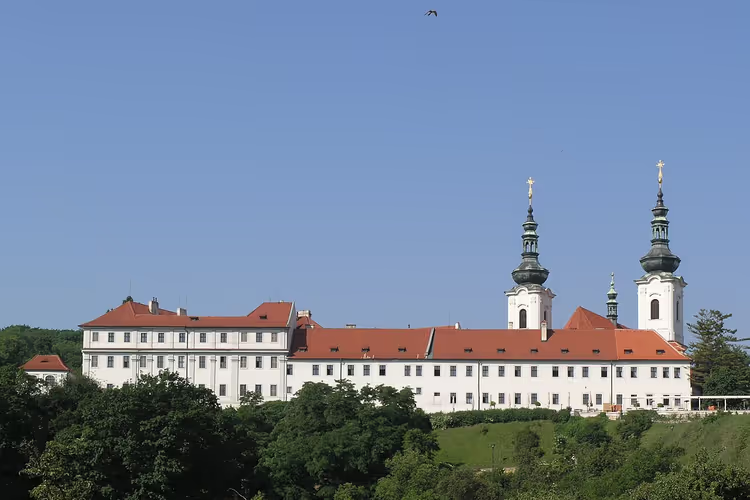
Strahov Monastery was founded in the 12th century on the site of a border outpost that guarded the city. The monastery still belongs to Premonstratensian monks. It is one of the oldest Christian structures in Czechia, although its original appearance has not survived.
Step inside the Church of the Assumption of Our Lady with its stucco decorations and carved furniture, then head to the library. The Philosophical and Theological Halls of the library are considered its main treasure: they hold thousands of volumes and manuscripts. The monastery has a brewery that makes Saint Norbert, and tables at the Strahov Monastery Brewery pub should be booked in advance.
- Must-see: the library halls, admission by ticket.
- Brewery: Saint Norbert, book a table in advance.
Prague Loreta
 © VitVit · CC BY-SAPhoto: VitVit, CC BY-SA (https://creativecommons.org/licenses/by-sa/4.0), Wikimedia Commons
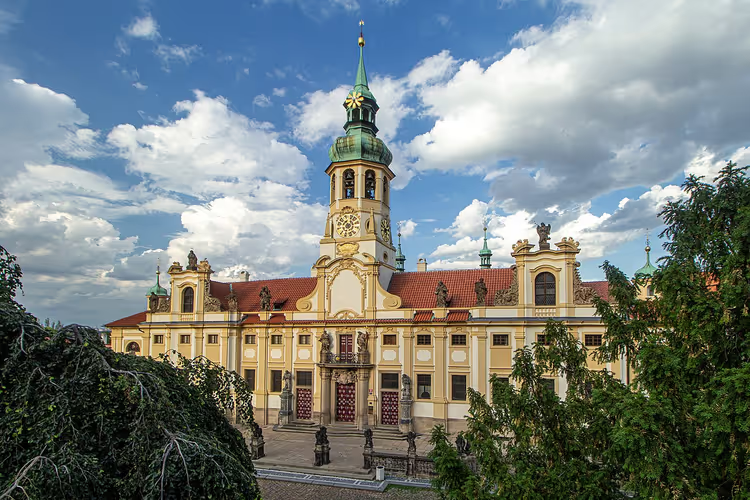
Prague Loreta is a Baroque pilgrimage complex that grew out of the legend of the Virgin Mary's holy hut. According to tradition, angels carried the house from Nazareth to the Italian town of Loreto, hence the name of shrines across Europe. In the middle of the courtyard stands the small house itself, symbolizing that hut.
Inside, you are struck by stucco bas-reliefs, a silver altar, and a 17th-century wooden sculpture of Our Lady of Loreto. The complex is surrounded by galleries and service buildings, and a bell tower plays above the facade. The decoration of the chapels outshines much of what you have already seen in the city.
- What to see: the silver altar and the sculpture of Our Lady of Loreto.
- How long to spend: about forty minutes.
Hradčany Square
 © Natalia Semenova · CC BYPhoto: Natalia Semenova, CC BY (https://creativecommons.org/licenses/by/3.0), Wikimedia Commons
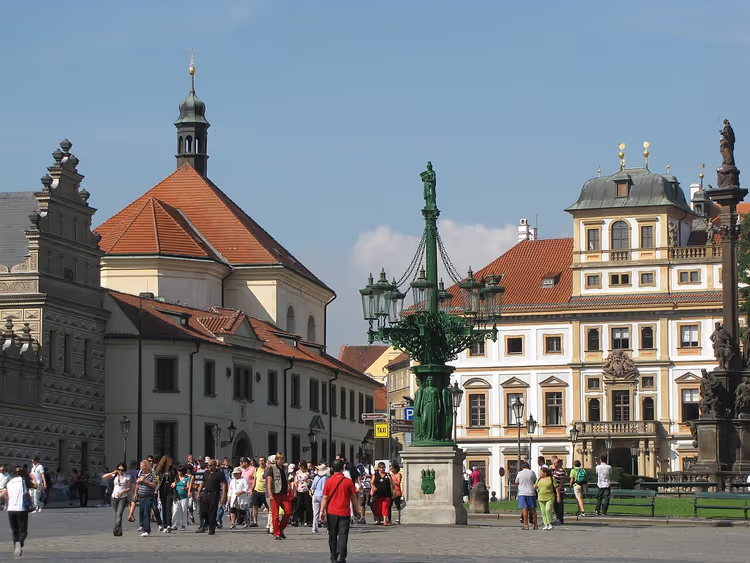
Hradčany Square lies directly in front of the main entrance to Prague Castle. The daily changing of the guard that protects the presidential residence takes place here. The square is surrounded by palaces, and each one represents its own style.
Schwarzenberg Palace is the largest of them and is done in Renaissance style. The Archbishop's Palace showcases Rococo, while Sternberg Palace is decorated with Baroque elements. People come here at noon for the changing of the guard.
- When to come: for the changing of the guard at noon.
- Nearby: the main entrance to Prague Castle.
Marian Column
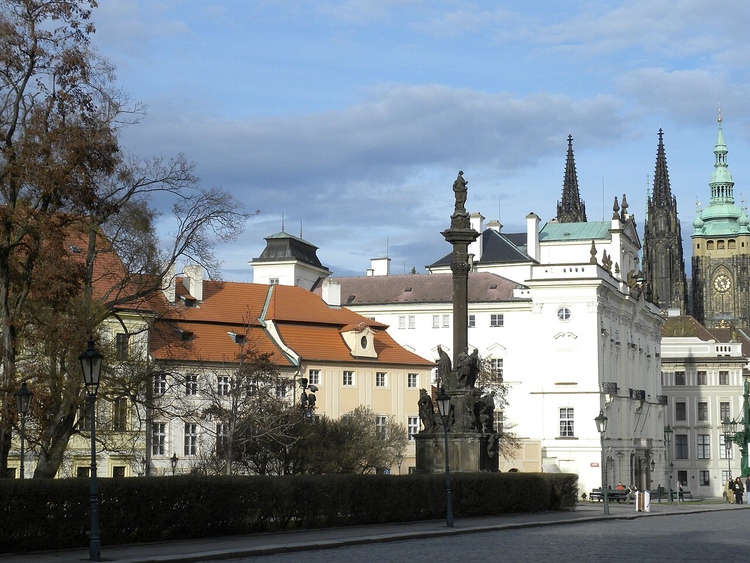 © Jiří Bernard · CC BY-SAPhoto: Jiří Bernard, CC BY-SA (https://creativecommons.org/licenses/by-sa/3.0), Wikimedia Commons
The Marian Column on Hradčany Square was erected in gratitude for saving the city from the plague. A two-meter statue of the Virgin Mary crowns the top, and the pedestal is surrounded by sculptures of Czech patron saints. The work combines the art of carving and casting.
The column stands on the spot where services and prayers used to take place. You will see it on your way to the Castle, and it does not require a separate visit. Nearby there is a view over the rooftops of Hradčany.
- How long to spend: five to ten minutes along the way.
Day 3: castles and resorts outside the city
Mělník Castle
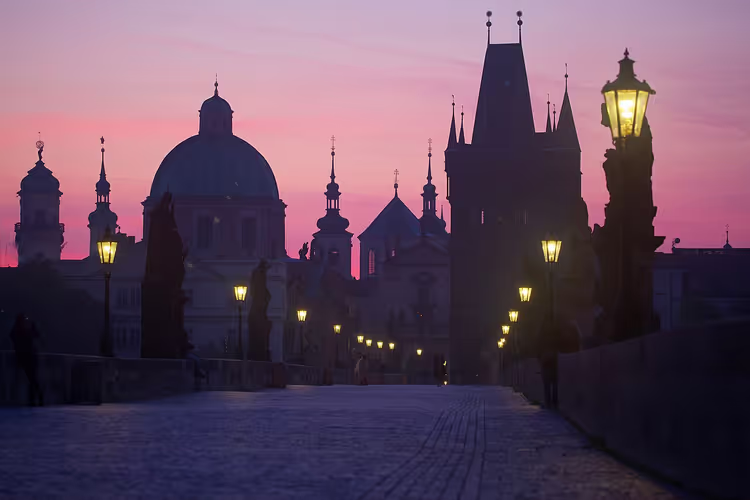 © Bradley Weber · CC BYPhoto: Bradley Weber, CC BY (https://creativecommons.org/licenses/by/2.0), Wikimedia Commons
Mělník Castle stands about thirty kilometers north of Prague, above the confluence of the Vltava and Labe rivers (on the map). It is the only castle in the country where descendants of the Lobkowicz counts still live. Half of the rooms are open to visitors, while the owner's family lives in the other half.
The halls hold paintings, hunting trophies, glass, and furniture from past centuries. Mělník is also a wine region, so a tasting of local wines is often part of the program. Sometimes the tour is led by Count Lobkowicz himself.
- Getting there: by train or bus from Prague, about an hour.
- Who it's for: anyone interested in lived-in castles and wine.
Karlštejn and Konopiště castles
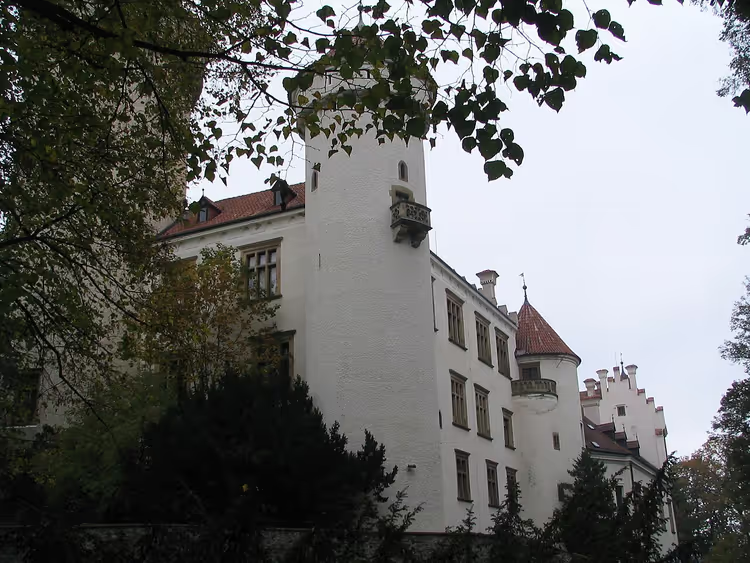 © Maxx · CC BY-SAPhoto: Maxx, CC BY-SA (https://creativecommons.org/licenses/by-sa/3.0), Wikimedia Commons
Karlštejn was built in the mid-14th century by King Charles IV as a fortress for storing relics. It has preserved wall paintings from that era, portraits of Bohemian rulers, and a copy of the Crown of Saint Wenceslas. The walls and towers still convey the look of a royal residence.
Konopiště looks different: it is romantic Gothic in the English style, as left by Franz Ferdinand. Inside you will see collections of weapons and armor, hunting trophies, paintings, porcelain, and chandeliers, with a large park laid out around it. The two castles are easy to combine into one day.
- Logistics: Karlštejn is further south, Konopiště stands closer to Benešov.
- How much time: a full day for both.
Sychrov Castle
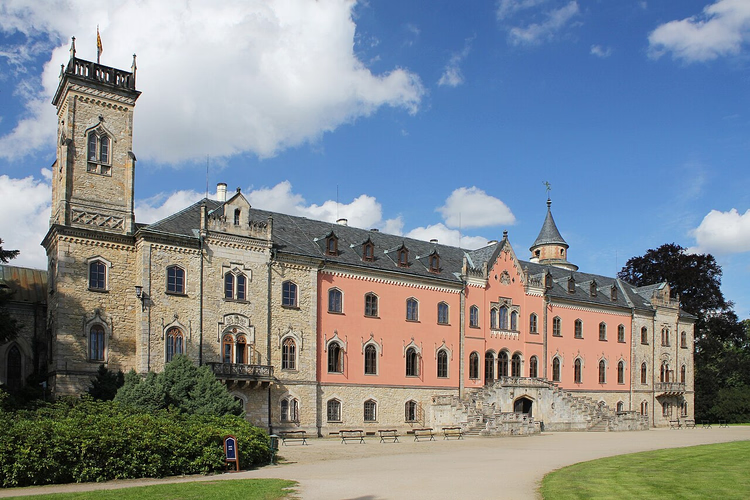 © This image is a work by Miloslav Rejha ( User:M.Rejha ). When reusing, please credit me as: Miloslav Rejha, Wikimedia Co · CC BY-SAPhoto: This image is a work by Miloslav Rejha ( User:M.Rejha ). When reusing, please credit me as: Miloslav Rejha, Wikimedia Co, CC BY-SA (https://creativecommons.org/licenses/by-sa/3.0), Wikimedia Commons
Sychrov Castle lies about one hundred kilometers from Prague, and the trip takes about two hours (on the map). It took its current form in the 19th century, when it was owned by the family of Duke Rohan. Today the castle belongs to the state and is open to visitors.
The main draw here is the park with rare plants and an avenue of pyramidal oaks leading to the local church. The grounds include an arboretum with greenhouses, a stone water tower, an orangery in the spirit of the Italian Renaissance, and "Arthur's Castle" with two towers. The castle building itself is in the neo-Gothic style.
- Getting there: by train to Sychrov station, then on foot.
- Who it's for: lovers of parks and romantic castles.
Orlík castle and Velkopopovický Kozel
Orlík Castle stands on a cliff above the Vltava and once guarded a river crossing where tolls were collected. Over several centuries it changed hands many times, and for the last few centuries it belonged to the Schwarzenberg princes. Today it houses a museum with the family's history.
In the exhibition you will see awards, weapons, knight's armor, stained glass, and gifts from monarchs. Nearby, Velkopopovický Kozel comes to mind, the beer brand from Velké Popovice: a little goat became its symbol, and a live goat is shown to guests at the brewery.
- Getting there: by car or bus, about an hour from Prague.
- Nearby: the Velkopopovický Kozel brewery.
Český Krumlov and Hluboká nad Vltavou castle
 © DXR · CC BY-SAPhoto: DXR, CC BY-SA (https://creativecommons.org/licenses/by-sa/4.0), Wikimedia Commons
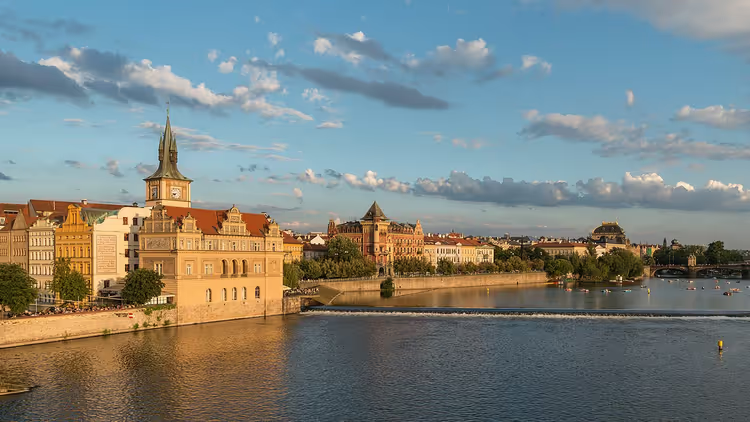
Český Krumlov in southern Bohemia is a UNESCO World Heritage Site. The castle grew here in the 13th century, and the town built up around it and preserved its old appearance. The streets above the Vltava are still narrow, and in summer the Five-Petaled Rose festival takes place with a theatrical procession.
The town has its own Eggenberg brewery, and you can have lunch at a restaurant on the riverbank. Hluboká nad Vltavou Castle looks different: snow-white, it was rebuilt in the 19th century on the model of England's Windsor and became one of the most beautiful in the country. One day for both sites is a packed but realistic program.
- Getting there: by bus or train, about three hours (on the map).
- Book tickets in advance: for the castles in season, otherwise you will stand in line.
Moravia
 © Björn Ehrlich · CC BY-SAPhoto: Björn Ehrlich, CC BY-SA (http://creativecommons.org/licenses/by-sa/3.0/), Wikimedia Commons
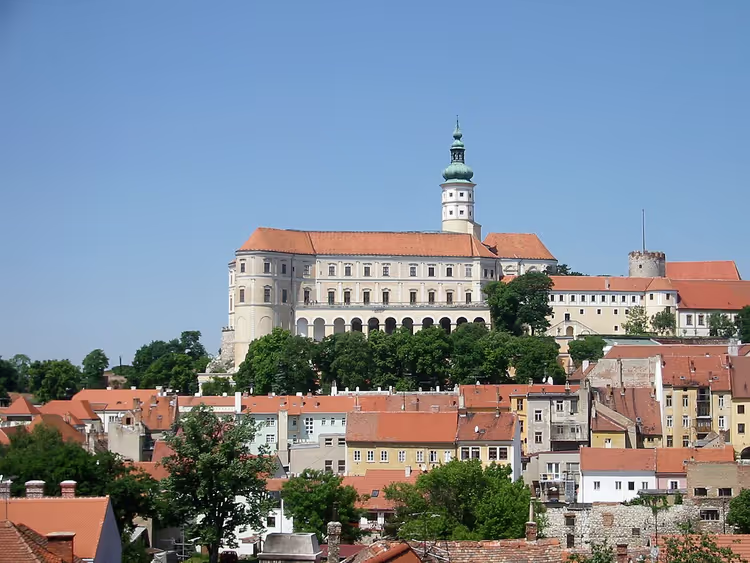
Moravia is the eastern part of the Czech Republic with vineyards, old towns, and castles. Celtic tribes lived here, and later the first Slavic state emerged and Cyril and Methodius worked here. A trip here gives you a different rhythm: fewer crowds, more landscape.
In Brno, Olomouc, Zlín, and Vizovice you will see the Cathedral of Saints Peter and Paul, the Church of the Holy Cross, and the churches of Saint Maurice and Saint Michael. Nature is also a strength of the region: the Moravian Karst and Litovelské forest parks, caves, and rock formations. The castles of Buchlov, Lednice, Slavkov, Pernštejn, Mikulov, and Kroměříž cover the architecture from Gothic to Baroque.
- How much time: at least two days for the region.
- Who it's for: for wine, nature, and quiet towns.
Karlovy Vary
 © rboed* · CC BYPhoto: rboed*, CC BY (https://creativecommons.org/licenses/by/2.0), Wikimedia Commons
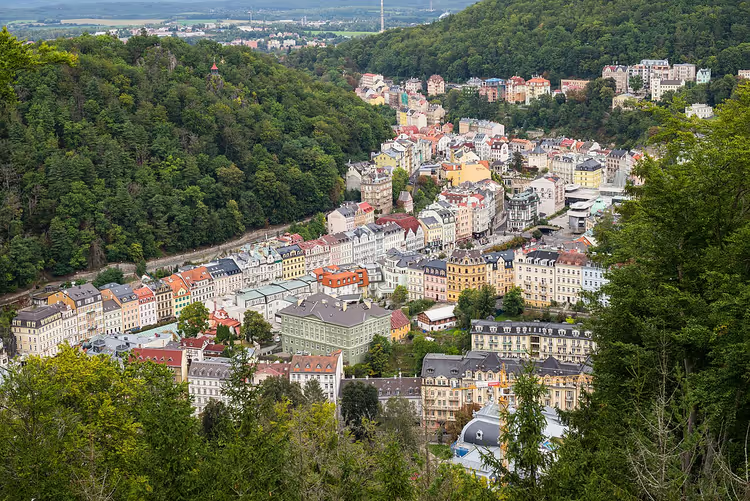
Karlovy Vary is a spa resort with mineral springs and 19th-century architecture. The town became a retreat for many famous people: Goethe, Beethoven, and Chopin all spent time here. The atmosphere of the old colonnades has survived to this day.
You will walk along the drinking colonnades and try mineral water straight from the spring. The local brands include Becherovka liqueur. Popular souvenirs include crystal, wafers, and salt-based cosmetics.
- Getting there: by train or bus, about two hours (on the map).
- Who it's for: for therapeutic rest and leisurely walks.
Bohemian Paradise nature reserve
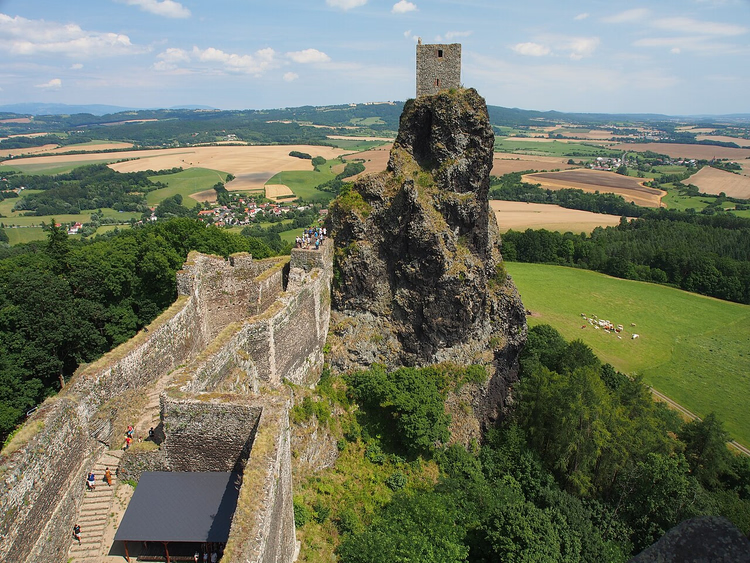
The Bohemian Paradise nature reserve (Český ráj) spreads northeast of Prague, among forests and sandstone cliffs. Massive boulders and stone blocks form a natural labyrinth here. Small towns with churches and minor castles are scattered between them.
 © Dcpeets · CC BY-SAPhoto: Dcpeets, CC BY-SA (https://creativecommons.org/licenses/by-sa/4.0), Wikimedia Commons
The Prachov Rocks deserve special attention, as do the Bozkov Caves with stalactites and an underground lake. Hiking routes of varying lengths run through the area, so you can easily choose the right level of effort. In summer, bring water and comfortable shoes.
- Getting there: by train to Turnov, then on foot.
- Who it's for: for hiking and rock scenery.
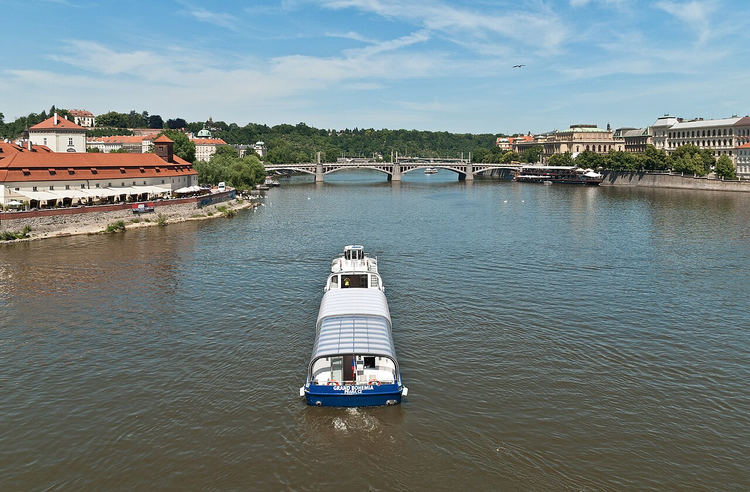
Kutná Hora, the Sedlec ossuary, and Šternberk castle
 © Jacek Halicki · CC BY-SAPhoto: Jacek Halicki, CC BY-SA (https://creativecommons.org/licenses/by-sa/3.0), Wikimedia Commons
Kutná Hora grew up on silver mining and was one of the richest towns in the kingdom. Its symbol is the Cathedral of Saint Barbara, which took several centuries to build. Nearby stand the Plague Column and the Stone Fountain, reminders of the town's former status.
The main draw is the Sedlec Ossuary, the All Saints Chapel, where the decoration is made of human bones. When the old cemetery became overcrowded, the bones were dug up, washed, and arranged in the underground vault. Šternberk Castle on a cliff above the Sázava River adds collections of paintings, engravings, furniture, and porcelain to the route.
- Getting there: by train from Prague, about an hour.
- Book tickets in advance: for the Ossuary, demand is high in season.
Saxon Switzerland
 © Thomas Wolf , www.foto-tw.de · CC BY-SAPhoto: Thomas Wolf , www.foto-tw.de, CC BY-SA (https://creativecommons.org/licenses/by-sa/3.0/de/deed.en), Wikimedia Commons
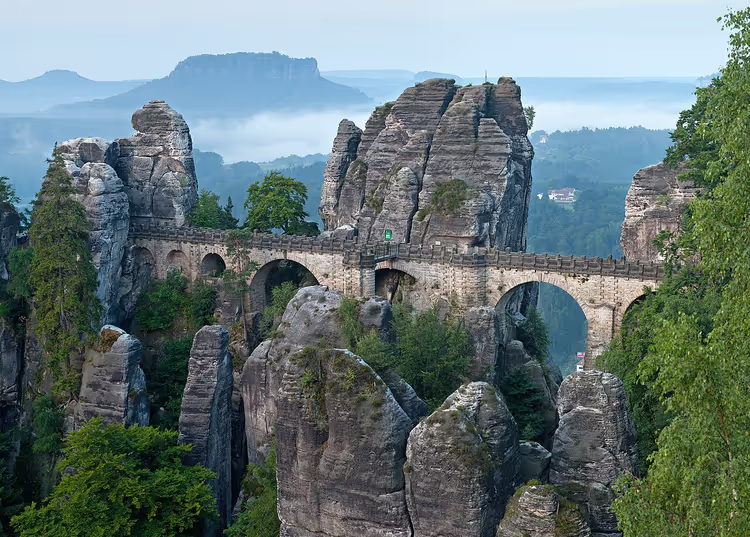
Saxon Switzerland is a national park in Germany on both sides of the Elbe. The most famous spot is the Bastei rock formation and the bridge of the same name between the rocks, rising above the river. The "Painter's Path" offers views that draw photographers and painters here.
Further on, you'll find the ten-meter rock gate of Kuhstall and the ruins of a medieval fortress above it. The Kirnitzschtal narrow-gauge railway can take you to the Lichtenhain Waterfall, where the trail ends. From Prague, it's convenient to take a train to Děčín and then continue through the park on foot.
- How to get there: train to Děčín, then ferry and on foot.
- Who it's for: rock formations and day hikes.
How to get from the airport and get around Prague
Václav Havel Airport is connected to the center by city buses and the metro. Buses take you to metro stations, and you continue on the same PID ticket at no extra charge. A taxi or transfer is more convenient if you have luggage and a late arrival.
book an airport transfer to the center
In the city, a thirty-minute ticket costs about 40 crowns, and a day pass pays off if you ride frequently (as of 09/2026, Prague transit website). It works on the metro, trams, buses, and the ferry, so transfers within your paid time cost you nothing. Validate your ticket once when you enter and keep it until you exit, otherwise a fare inspector will fine you.
The metro in the center is shallow, and between neighboring stations you only go down a couple of levels. Trams are convenient for short trips along the Vltava, and during rush hour they run more often than buses. If you're staying in the center, you'll barely need transit: the walking routes for the first two days can be done in half a day.
Tours and tickets in Prague
Guided tours, skip-the-line tickets and activities — most offers can be cancelled free of charge.
See offers on GetYourGuideThe widget loads once you give your consent.
⁉️🤔 Frequently asked questions
How much money do you need for three days in Prague?
The main expenses are accommodation, tickets to Prague Castle and the Old Town Hall, and food. The walking routes on the first two days cost almost nothing, you only pay for entry tickets. The third day adds a train ticket and a castle ticket, so budget with some margin and check prices on the official websites of the sites.
Which day is the busiest?
The second day is the most packed. Prague Castle, Malá Strana, Petřín, and Strahov Monastery are close to each other, but they require a lot of walking. The first day is easier: you can walk around the Old Town sights in a couple of hours. On the third day you leave the city and move at your own pace.
Do you need to buy Prague Castle tickets in advance?
In high season, yes. The full-circuit ticket is valid for two days, but ticket offices and entrance groups already have lines by ten in the morning in summer. Come at opening time or after three in the afternoon. Check the exact hours and price in advance on the official Prague Castle website.
Can you visit a castle outside the city in one day?
Yes, any third-day destination is realistic to visit in one day. Karlštejn, Mělník, Kutná Hora, and Sychrov are closer, while Český Krumlov and Saxon Switzerland require more travel time. If you only have one free day, pick one destination, not two.
When is the best time to see the Prague Astronomical Clock?
The apostle figures appear in the windows every hour from nine in the morning to eleven at night, and you can watch them for free from the square. The crowd is smaller in the morning, so the best photos happen at nine. In winter it gets dark early, but the lighting makes the show more visible.
In short: what to book
The choice depends on how you spend your free time, so here is a quick matrix.
- If this is your first trip and you have three full days, get a ticket to Prague Castle and the Old Town Hall tower, and dedicate the third day to Karlštejn.
- If you are traveling with children, choose Český Krumlov and the Petřín funicular.
- If nature matters more to you, plan for Bohemian Paradise or Saxon Switzerland.
- If you are into wine and peace, put Mělník or Karlovy Vary on your itinerary.
Accommodation in the center gets booked quickly, so reserve your hotel in advance: Prague hotels on Trip.com.

A small editorial team writing guides for independent travel. We travel ourselves, but we haven’t been everywhere, so we check prices, opening hours and how to get there against official sources.