














When to go to Rome: weather, lines and prices by month
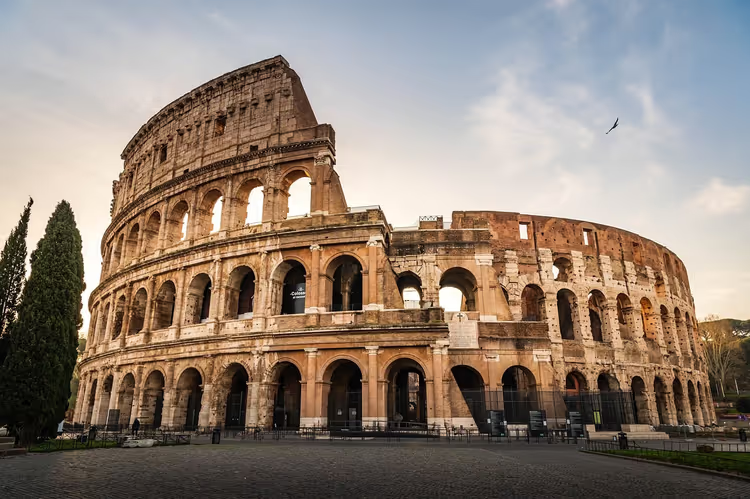
Rome is open year-round, but how comfortable your trip is depends on the month. In July the city bakes, in April you stand in line at the Colosseum, and in late November you walk through the center almost alone.
A full ticket to the Vatican Museums costs 20 €, and every last Sunday of the month admission is free (as of: 09/2026, official website). Below we break down the weather, crowds, and prices by season so you can pick your travel dates without surprises.
When to go to Rome
💡 In short:
- Best compromise: April-May and September-October, warm without exhausting heat.
- Quietest time: mid-November through late February, except holidays.
- Hottest and most expensive period: July and August.
- Want it cheaper: go November-February, when hotels lower their prices.
- Prices and opening hours: 09/2026, verified on the official website.
Rome barely has an off-season. Tourists come year-round; only the weather, lines, and prices change. If calm walks matter to you, pick the cold months. If mild weather for long routes matters, choose the shoulder season. You can walk the longest during the day in April and October, when the heat doesn't get in the way yet. In July it's better to head out early in the morning or after sunset.
Rome's climate by month
Rome's climate is Mediterranean: hot, dry summers and mild, wet winters. The difference in average highs between January and August reaches 19 degrees (as of: 09/2026, climate statistics). Here's what the year looks like.
Month | Jan | Feb | Mar | Apr | May | Jun | Jul | Aug | Sep | Oct | Nov | Dec |
|---|---|---|---|---|---|---|---|---|---|---|---|---|
Average high, °C | 13 | 13 | 16 | 19 | 23 | 28 | 31 | 32 | 28 | 23 | 18 | 14 |
Hours of sunshine per day | 4 | 4 | 5 | 7 | 8 | 10 | 11 | 10 | 7 | 6 | 5 | 4 |
Rainy days | 7 | 7 | 6 | 5 | 5 | 3 | 2 | 2 | 5 | 6 | 10 | 6 |
Table data: climate normals from the Beste Reisezeit portal, source (09/2026).
The most rain falls in November: up to 10 days with precipitation. From June through August, though, rain barely gets in the way, and you don't need an umbrella. The mildest weather is in April, May, and October. In winter, high humidity makes 13 degrees feel cooler than it looks in the table. In summer the dry air is easier to handle, but at midday it's better to head into a museum or the shade.
Late fall and winter: quiet, mild, and cheaper
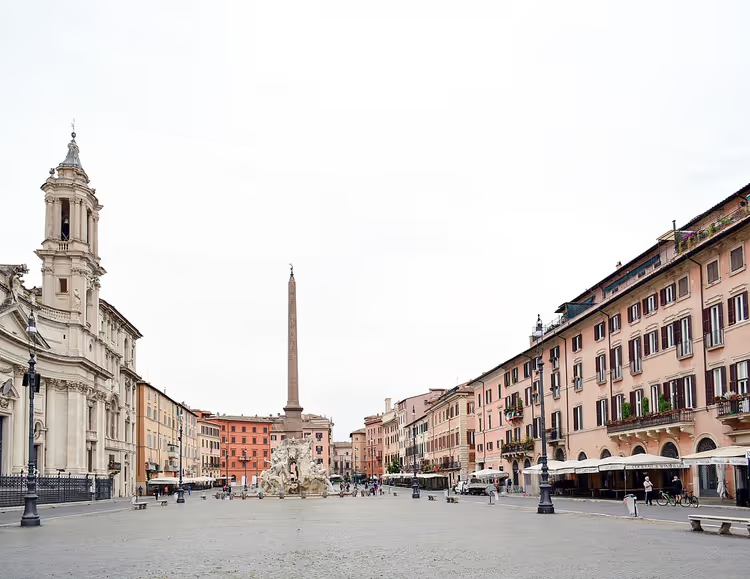
From mid-November until Easter, Rome runs in a calm mode. Daytime temperatures are usually 10-15 degrees, rain showers are short, and the lines at the main sights are noticeably shorter. You can walk right into St. Peter's Basilica, stroll through the Roman Forum, and catch the sunset over the Tiber without tour groups waving flags.
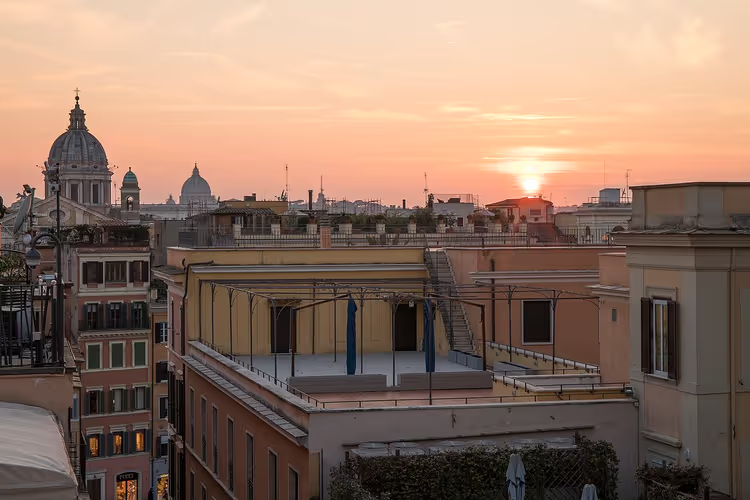 © Luigi Guerrieri4 · CC BY-SAPhoto: Luigi Guerrieri4, CC BY-SA (https://creativecommons.org/licenses/by-sa/4.0), Wikimedia Commons
Hotels lower their prices at this time, and tickets to the Vatican Museums and the Colosseum are easier to get for a convenient time slot. Late fall and winter suit most travelers: you get the city with almost no crowds. In winter it gets dark early, around 5 pm, so plan your main walks for the first half of the day. In the morning there is often fog over the Tiber, and by midday it clears.
 © Cm9462 · CC BY-SAPhoto: Cm9462, CC BY-SA (https://creativecommons.org/licenses/by-sa/4.0), Wikimedia Commons
Christmas and New Year: the exception
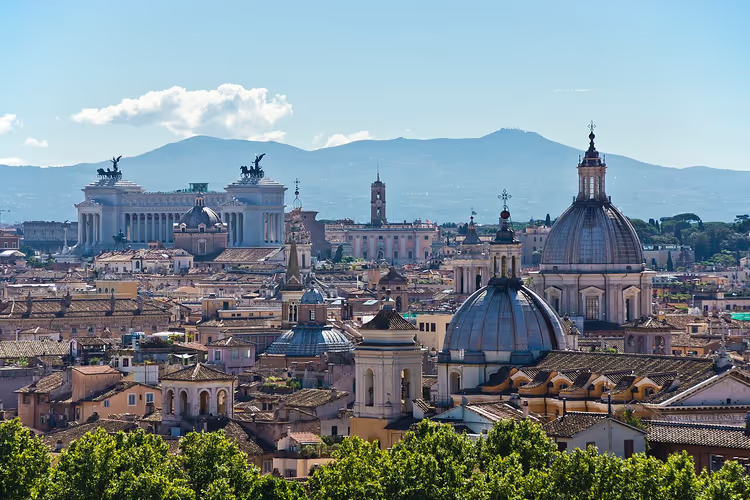
From December 20 to January 6, Rome changes. A Christmas tree stands in St. Peter's Square, the center is flooded with lights, and the streets are full of people. Both tourists and Italian families arrive, so book your hotel and tickets for these dates a couple of months in advance. Festive Rome is beautiful, but it is not quiet at all.
 © Bert Kaufmann from Roermond, Netherlands · CC BY-SAPhoto: Bert Kaufmann from Roermond, Netherlands, CC BY-SA (https://creativecommons.org/licenses/by-sa/2.0), Wikimedia Commons
Spring and fall: beautiful, but crowded
April, May, and October offer the best weather for walking: 18-25 degrees, parks in bloom, long evenings. The price for this is high. In spring tour groups arrive from all over Europe, and around Easter the central squares are packed.
If you choose these months, book entry tickets in advance and arrive at opening time. That way you avoid the morning lines. This is especially true for Easter and the holidays on April 25, May 1, and June 2. May is great for parks and terraces, but it is the most expensive spring month. In October the crowds thin out, and the weather still holds.
Summer in Rome: heat that makes you want to leave
From June through August, the average high stays around 30 degrees, and in July and August it reaches 32 (as of 09/2026, climate normals). It is also stuffy at night. The heat is intensified by the dry sirocco wind from North Africa.
In August many Romans leave on vacation. The streets become emptier, there are fewer cars, and some restaurants close for a summer break. The city's drinking fountains and air conditioning in museums are lifesavers. If you do not handle heat well, it is better to skip Rome in summer.
Holidays and events: when the city is packed
Besides the weather, the calendar also affects the crowds. The busiest periods fall on Easter, April 25, May 1, June 2, Christmas, and New Year. On these days hotels get more expensive, and long lines form at the Colosseum and the Vatican Museums.
On April 21, Rome celebrates the city's birthday, Natale di Roma (as of 09/2026, official Rome tourism portal). Parades and historical processions take place in the center, and the squares are full of people. On Catholic holidays the Vatican receives more pilgrims than usual, so it is worth checking the dates for visiting St. Peter's Basilica in advance. If you want a calm city, it is better to avoid these days.
Weather and prices by season
September is still warm, the air is mild, and the light becomes softer. October brings about 23 degrees, November about 18, and the city is calmer at this time than in May (as of 09/2026, climate data for Rome). In winter it is usually 13-14 degrees during the day, and humidity is high, so the cold feels stronger. Pack layers: it is cool in the morning and noticeably warmer during the day. In winter you will need a jacket, a warm sweater, and an umbrella; in summer, light clothing, a hat, and a water bottle.
Hotel prices depend on the season no less than the weather. In high season from May to mid-September, rooms get more expensive, and in November-February many hotels lower their rates. Short weekend trips are always more expensive than weekdays. Book your room one to two months in advance if you are traveling for Easter, April 25, May 1, June 2, or New Year.
Rome and the sea: when to combine the city with the beach
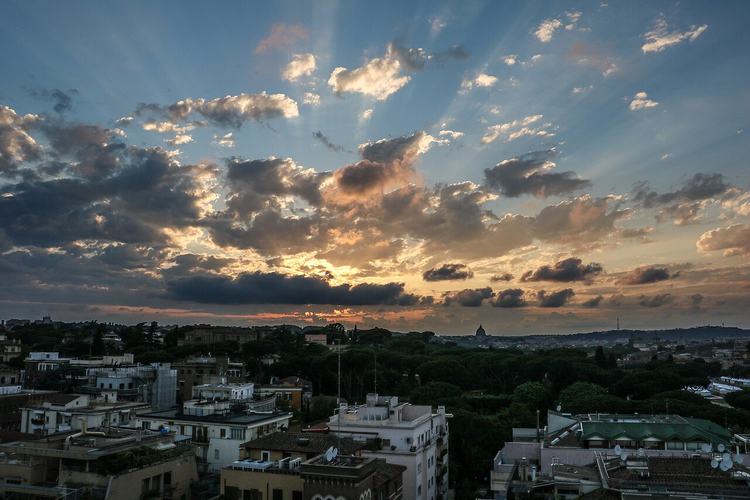
If you want to add the sea to your city trip, go from June through September. The Metromare suburban train runs to Ostia from Porta San Paolo station near the Pyramid of Cestius, and the FL5 line goes to Santa Marinella. The trip takes less than an hour (according to Trenitalia). Loungers and an umbrella at a beach club cost more in high season than in spring.
 © Diego Baglieri · CC BY-SAPhoto: Diego Baglieri, CC BY-SA (https://creativecommons.org/licenses/by-sa/4.0), Wikimedia Commons
⁉️🤔 Frequently asked questions
When does Rome have the fewest tourists?
Rome has the fewest tourists from mid-November to late February, except for the Christmas holidays. During these months, lines at museums and the Colosseum are short, and hotels offer discounts. It does rain, but rarely all day long. For a relaxed trip, this is the best window (as of 09/2026, Rome tourist office).
Which months are best for a trip to Rome?
April, May, September, and October are considered the best. It is warm during the day but without exhausting heat, and the city is comfortable for long walks. The catch is that these are the most popular months.
Is it worth going to Rome in August?
August in Rome is hot, above 30 degrees during the day. On the other hand, many Romans leave on vacation, so there are fewer cars and people on the streets. Some restaurants close for a summer break. If you handle heat and humidity well, August will work for you.
When is high season in Rome?
High season in Rome runs from May through mid-September. These months bring the most tourists, hotels and tickets are more expensive, and there are long lines at the main sights.
Can you combine Rome with the beach?
Yes, from June through September. Ostia and Santa Marinella are on the coast, about an hour from the center. The Metromare train goes to Ostia, and the FL5 line goes to Santa Marinella. Bring a swimsuit, a towel, and water, and buy your train ticket in advance.
What should you do about winter rain?
Rome does get rain in winter, most often in November. Downpours are rare; it usually drizzles. Bring a compact umbrella and waterproof shoes. You will spend many hours in museums, cathedrals, and cafes, so the weather will not ruin your trip.
In short: what to book
Rome works for a trip in any month, but the dates you choose change the experience. If your vacation falls in July, plan early starts and museum days during the heat. If your dates are flexible, go in the shoulder season.
- If you want a quiet city: November-February, except holidays.
- If you want the best weather: April, May, September, October.
- If you want the sea: June-September, Ostia or Santa Marinella.
Book your hotel and entry tickets online in advance, especially for Easter and Christmas. That way you will enter museums at your reserved time, without waiting for hours.

A small editorial team writing guides for independent travel. We travel ourselves, but we haven’t been everywhere, so we check prices, opening hours and how to get there against official sources.