

















Where to eat in Singapore: hawker centres, street food and Michelin restaurants
Singapore eats around the clock. Hawker centers feed the whole city cheaply and well, while Michelin-starred restaurants operate right next door. Figuring out where to go for breakfast, lunch, and dinner is easier than it seems.
One restaurant here earned a Michelin star for Peranakan cuisine (as of 09/2026, Michelin guide). A portion of chicken rice at a food court, meanwhile, costs several times less. We've rounded up tried-and-true spots: from Maxwell Food Centre to Candlenut, from the satay street at Lau Pa Sat to vegan burgers.
You'll find honest catches here, plus tips on how to eat like a local. Every neighborhood worth eating in is broken down below.
Ad: this article contains affiliate links. We earn a commission if you book through them, at no extra cost to you.
How hawker centers work in Singapore
💡 In short:
- Go to the stall with the longest line: the food there is always fresh.
- Grab a fork and spoon; knives aren't served at food courts.
- Prices, dishes, and hours of hawker centers: 09/2026, verified on the Singapore tourism board website.
A hawker center is set up like an open-air food court: dozens of stalls gathered under one roof, each making its own specialty. Satay, laksa, chicken rice, grilled dishes.
How people eat here
You line up at a stall, order your dish, and pick up your portion a couple of minutes later.
The menus of neighboring stalls barely overlap. One cook makes satay, another boils laksa, a third grills meat over charcoal. So in one pass you can assemble a tray with several cuisines at once: Malay, Chinese, and Indian.
Locals come here for lunch with colleagues and in the evening with family. Portions are small, so you can grab several dishes and try everything. That way you'll get to know the city's cuisine in one evening and figure out which flavors suit you best.
Hygiene and safety
Cleanliness in Singapore is tightly controlled. Every stall is inspected regularly and displays a hygiene grade. An A rating is considered the best, but a B is also a normal score. The sign hangs in plain view at the stall, so you see it before you order.
- The catch: napkins aren't handed out at stalls; bring wet wipes from home.
How much it costs to eat
A hawker center gives you the cheapest lunch in the city. A simple dish here costs a few Singapore dollars, and that's the main reason street food is so popular. Expensive dishes at a food court rarely exceed ten dollars, so lunch won't blow a hole in your budget.
The quality is still high. For the same money in tourist areas, you'll get less and simpler food.
Ready-made food at a food court helps you understand the city. Schoolkids, office workers, and taxi drivers all eat here, at neighboring tables. Come during the day, grab a spot at the counter, and watch what your neighbors order. That's the fastest way to find your favorite stalls.
Where to find the best street food
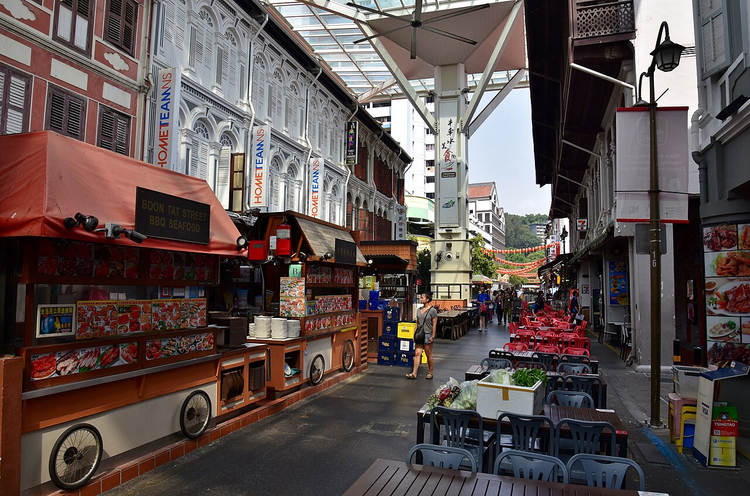
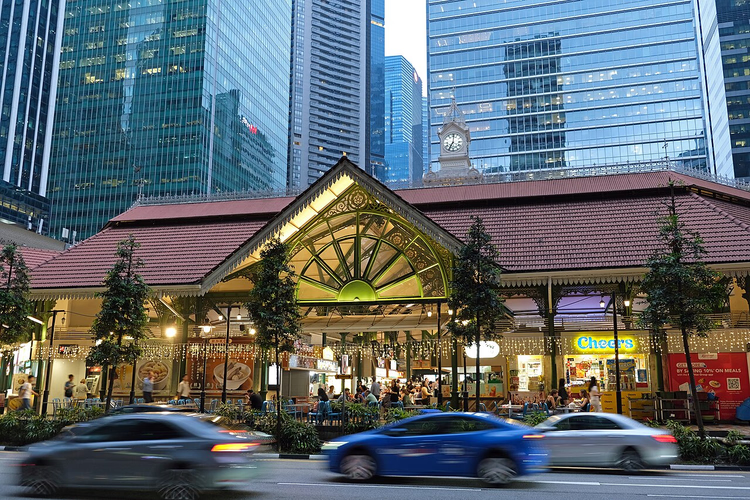
Lau Pa Sat occupies a standalone building in the business district. In the evening, a satay street opens up nearby with rows of grills, and the smell of roasted meat spreads through the area. Satay is made from marinated pieces of chicken or beef and served with peanut sauce, so order plenty.
 © Bahnfrend · CC BY-SAPhoto: Bahnfrend, CC BY-SA (https://creativecommons.org/licenses/by-sa/4.0), Wikimedia Commons
They also pour cold beer and serve spring rolls here, and the tables sit right under the skyscrapers of the business district. Come around seven in the evening, when the grills are lit and smoke rises over the rows.
Michelin-starred restaurants
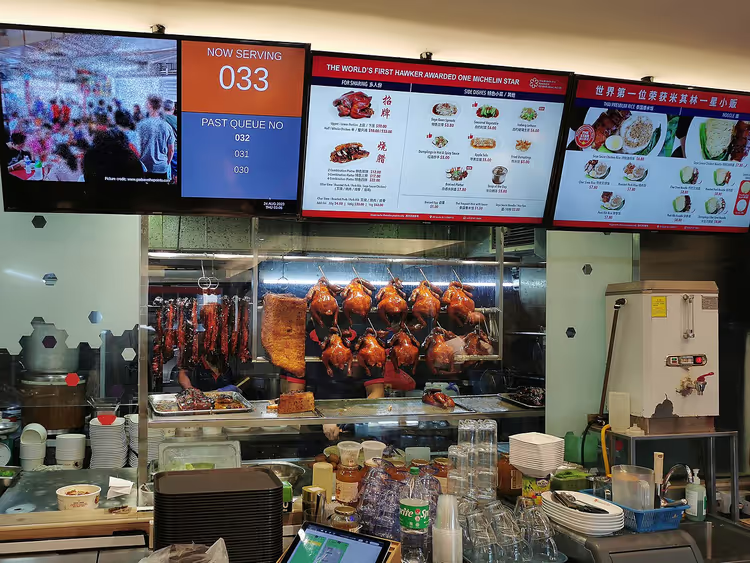
Michelin stars in Singapore go not only to big restaurants but also to street stalls. Hawker Chan was the first street stall to earn such a star, though it later lost it. That story became the city's calling card: fine dining and street food stand side by side here, not at opposite poles. Today the list of strong restaurants in the city is broader than it seems.
One such restaurant is named Candlenut. It's the world's first Peranakan restaurant with a Michelin star (according to the Michelin guide, 09/2026). Chef Malcolm Lee combines family Straits-Chinese recipes with modern presentation. Dishes here come in large portions meant for sharing, so you can try more flavors in one visit.
If you don't want to argue over the choice, check out the Bib Gourmand category. Michelin awards these restaurants for good value for money. That way you get fine dining at reasonable prices without overpaying for a big name.
 © Rainer Halama · CC BY-SAPhoto: Rainer Halama, CC BY-SA (https://creativecommons.org/licenses/by-sa/4.0), Wikimedia Commons
Breakfast at Chinatown Complex
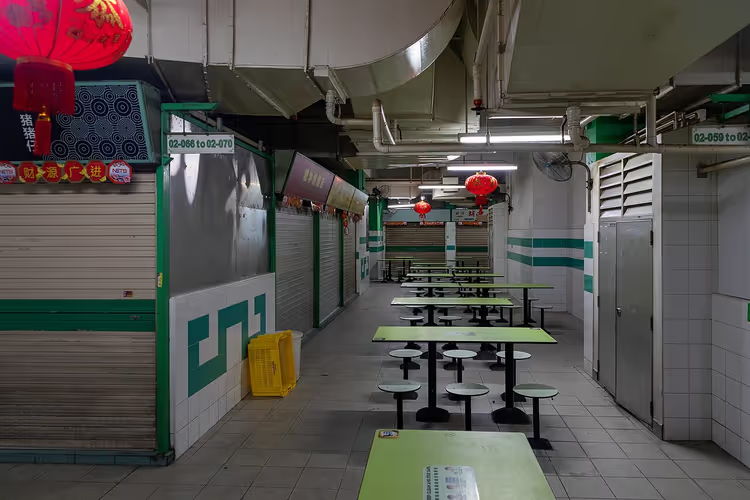
Chinatown Complex is considered the city's largest hawker center. It has over two hundred stalls, and you'll need to search for your own. For breakfast, get chicken rice with char siu pork at Hawker Chan and a strong local coffee at Wu Shi Nian Dai. The center opens early in the morning, so you can eat before walking through Chinatown while the streets are still empty.
 © Aaaatu · CC BY-SAPhoto: Aaaatu, CC BY-SA (https://creativecommons.org/licenses/by-sa/4.0), Wikimedia Commons
Dinner by the sea: Long Beach
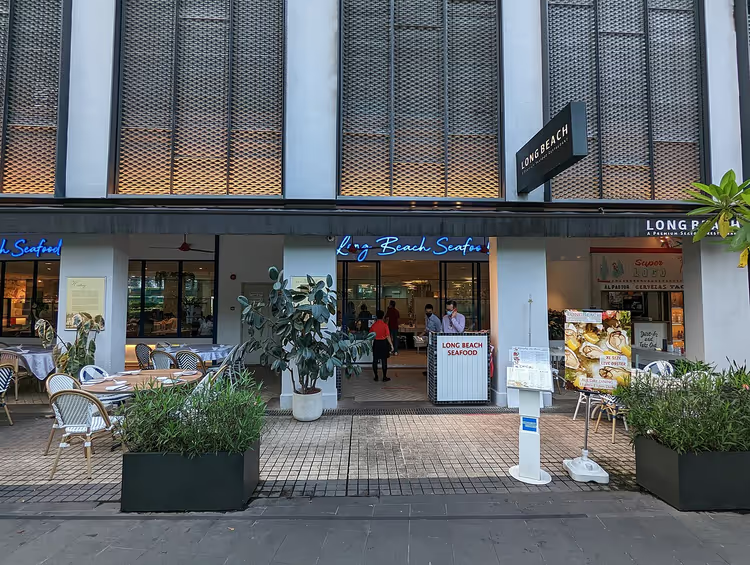
In the evening, it's worth heading out to Long Beach on the east side of the island. They serve seafood here, and most guests order the black pepper crab.
 © Long Beach Seafood · CC BY-SAPhoto: Long Beach Seafood, CC BY-SA (https://creativecommons.org/licenses/by-sa/4.0), Wikimedia Commons
Little India and Indian cuisine
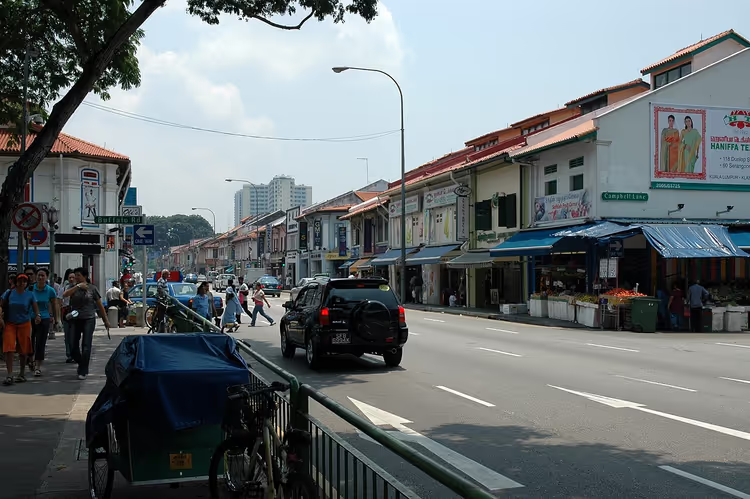
Little India deserves its own evening. Narrow streets, spice shops, and the smell of curry at every step. You can eat here in any alley. The Banana Leaf Apolo stall serves food on a banana leaf, and eating with your hands here isn't for show but by tradition. Portions are large, one dish is enough for two, and the bill will pleasantly surprise you.
 © Nachoman-au · CC BY-SAPhoto: Nachoman-au, CC BY-SA (http://creativecommons.org/licenses/by-sa/3.0/), Wikimedia Commons
The centrepoint on orchard road
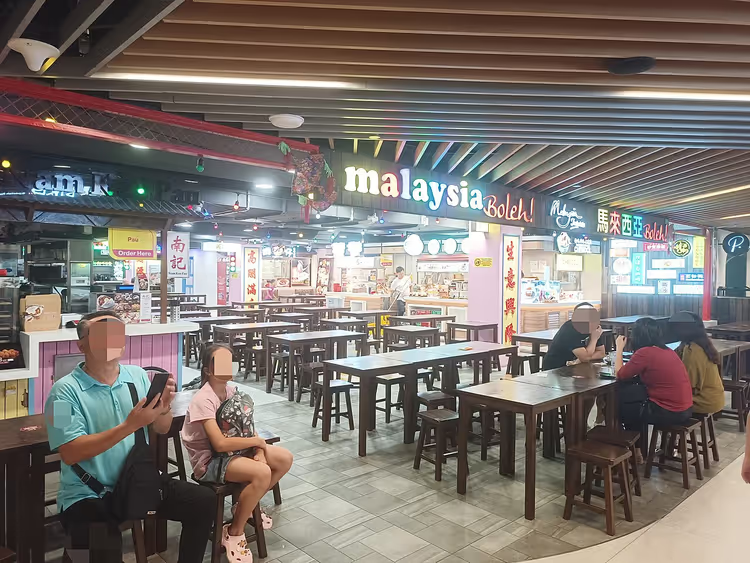
The Centrepoint on Orchard Road occupies an entire block dedicated to food. Three zones (Gastro+, Food Hall, and Food Street) spread across six floors and bring together more than thirty concepts. There are family restaurants and small chef-driven spots, so you can pick a place for any mood.
The list of venues here is long: steaks at Astons Steak & Salad, Chinese hotpot at Beauty in The Pot, Taiwanese dumplings at Din Tai Fung, Japanese grill at Gyu-Kaku, Malaysian cuisine at Malaysia Boleh!, and bak kut teh at Song Fa. Individual spots like Fire Ramen, LA Bird, Misato, and The Dim Sum Place keep a narrow menu and serve their own crowd of regulars.
For dessert, head to Tsujiri, where they serve soft serve with matcha. It's the most famous matcha spot in the city, and the line forms quickly.
 © *angys* · CC BY-SAPhoto: *angys*, CC BY-SA (https://creativecommons.org/licenses/by-sa/4.0), Wikimedia Commons
Snacks at the food court are ordered by following your neighbors' lead: first look at other guests' trays, then order the same thing. The center stays open until late evening, so you'll have time for dinner after shopping.
Manhattan bar at conrad singapore orchard
For cocktails, stop by the Manhattan bar at the Conrad Singapore Orchard hotel. The bar holds a high standard of service, and people order the namesake cocktail, made according to the classic recipe.
If you want something quieter, head to the Ann Siang Hill area and Club Street. There are plenty of bars tucked away on rooftops where expats gather, and the evening passes quietly, without crowds. That's a calm way to end the day after a hearty dinner.
- The catch: alcohol in Singapore is expensive; a glass of beer costs around ten euros.
Vegetarian and vegan options
Singapore is convenient for vegetarians. Plant-based dishes are made at almost any food court, and certain neighborhoods have entire streets of such cuisine. You won't have to hunt for a special menu, since many dishes here are vegetarian by default.
Little India
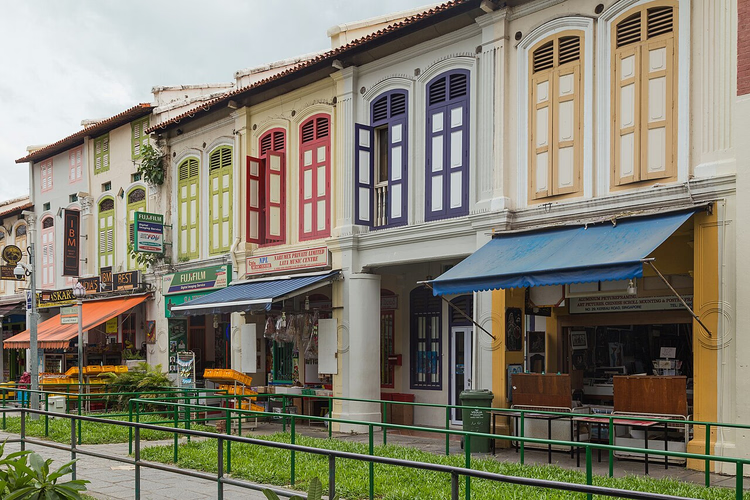
Little India serves South Indian vegetarian cuisine. Restaurants Komala Vilas and Ananda Bhavan serve dosai, idli, and vada, and these dishes have been vegetarian for centuries, not created as a menu adaptation. Portions are large, spices are bold, and they're served in bustling halls with simple tables. Order the dosai: a thin, crispy flatbread with a potato filling.
 © Marcin Konsek · CC BY-SAPhoto: Marcin Konsek, CC BY-SA (https://creativecommons.org/licenses/by-sa/4.0), Wikimedia Commons
Lau Pa Sat
Lau Pa Sat has dedicated vegetarian stalls, which is convenient if you come to the food court with a big group. The Maya Indian Veggie Delight stall makes nasi briyani, naan, and samosas. Some dishes can be made vegan on request; mention it at the counter in advance.
 © kallerna · CC BY-SAPhoto: kallerna, CC BY-SA (https://creativecommons.org/licenses/by-sa/4.0), Wikimedia Commons
Vegan restaurants
Among vegan spots, NomVNom and VeganBurg stand out. VeganBurg makes burgers without animal products and carefully monitors ingredients, serving the burger with fries or broccoli. It's a quick option if you want a bite between sightseeing stops.
Restaurant Loving Hut keeps a fully vegan menu: Asian dishes, local flavors, and European variations. In Chinatown, Afterglow serves a raw food menu. The dishes here are light but filling, and you won't leave hungry.
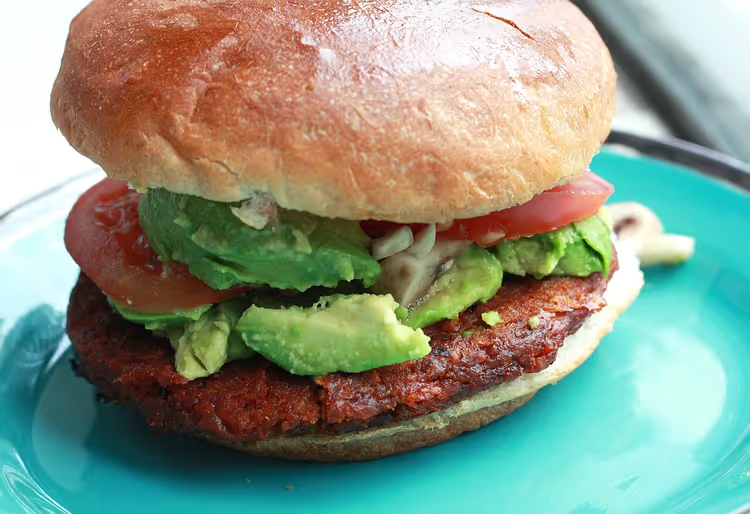 © Jennifer from Vancouver, Canada · CC BYPhoto: Jennifer from Vancouver, Canada, CC BY (https://creativecommons.org/licenses/by/2.0), Wikimedia Commons
What to drink in Singapore
Drinks in Singapore deserve their own conversation. The morning starts with coffee, iced juice saves the afternoon, and craft beer takes over in the evening. Figuring out the local names isn't hard if you know how to order.
Kopi
Order Kopi-O if you want it without milk, and Kopi-C with condensed milk. This coffee is sold at every hawker center and in small coffee shops across the city, and it costs less than any cappuccino.
Teh Tarik
Teh Tarik is brewed as strong black tea with condensed milk. The name translates as "pulled tea": the drink is poured back and forth between two vessels from a height so it froths up and cools slightly. From the outside it looks like a short performance, and the master pulls off the trick quickly with barely a drop on the table. Watching it is no less enjoyable than drinking it.
Fruit shakes
Food courts make shakes from tropical fruits: mango, papaya, and dragon fruit. They're made in front of you and served ice-cold, and the flavor depends on the season. Look for them at Maxwell Food Centre and Lau Pa Sat, where the stalls run all day. It's a cheap and healthy break from the heat, especially if you're exploring the city on foot.
Sugarcane juice
Sugarcane juice also saves you from the heat. It's pressed in front of you and served over ice, and on a hot day a glass disappears in a couple of minutes. The taste is sweet and clean, without the cloying sweetness of soda. Try it at least once, especially if you're walking through a market at midday.
Craft beer
The craft brewing scene in the city is growing, and local varieties can be found even at food courts. RedDot BrewHouse brews its own beers and runs a tasting room where you can try several at once. In Chinatown Complex there's a Smith Street Taps stall with a dozen beers on tap. Another option is the Timbre+ food court with live music: food, beer, and a concert in one place.
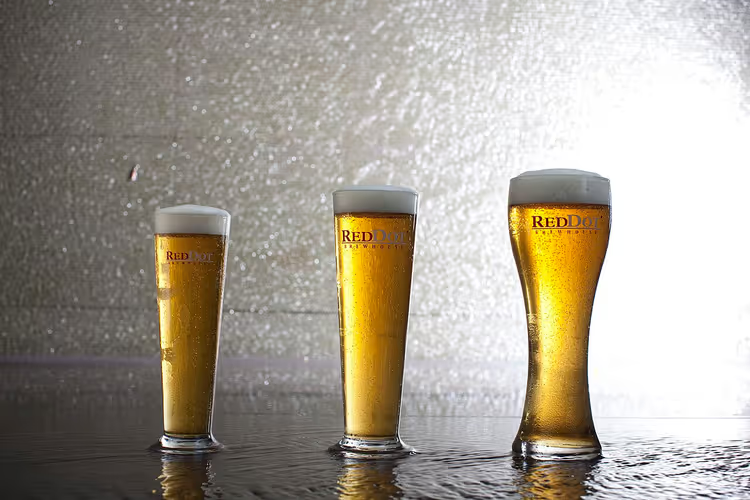 © Hongreddotbrewhouse · CC BY-SAPhoto: Hongreddotbrewhouse, CC BY-SA (https://creativecommons.org/licenses/by-sa/3.0), Wikimedia Commons
⁉️🤔 Frequently asked questions
What is a hawker center in Singapore?
A hawker center is set up like a large food court under one roof, with dozens of small stalls gathered together. They cook Asian dishes at low prices, and both locals and tourists come here. The place runs all day, entry is free, and you pay separately at each stall.
How do you reserve a table at a hawker center?
The easiest way is to place a pack of paper napkins on the table. That shows others the spot is taken while you stand in line for food. The trick works at every hawker center in the city, and locals use it every day.
How much does food cost at a food court?
A simple dish here costs a few Singapore dollars, so lunch at a hawker center is the cheapest option. Prices depend on the area: slightly higher in the center, lower in residential neighborhoods. Some stalls accept cards, but cash comes in handy.
Are there vegetarian and vegan options?
Yes. Vegetarian stalls are found at almost every food court, especially Indian and Chinese ones. Little India has classic vegetarian restaurants, and some spots serve a fully vegan menu. Some dishes can be made without milk and eggs on request.
How is Singaporean coffee different from regular coffee?
Kopi is brewed from beans roasted with sugar and margarine and served with condensed milk. That makes the flavor denser and sweeter than Western coffee. The drink is cheap, and you taste the local roast rather than the familiar bitterness of espresso.
In short: what's worth booking
If you're visiting Singapore for the first time, start with hawker centers. It's cheap, fast, and delicious. Fans of fine dining should try Candlenut or any spot from the Bib Gourmand list. Vegetarians will feel at home in Little India, and for evening experiences head to Long Beach or the satay street at Lau Pa Sat.
A quick guide by request:
Want cheap and local: a hawker center and chicken rice.
Want a star: Candlenut or Bib Gourmand.
Want an evening by the water: Long Beach and black pepper crab.
Want no meat: Little India, VeganBurg, NomVNom.
A food tour of the city helps you pull the route together. A local guide will show you stalls you wouldn't find on your own.
Tours and tickets
Guided tours, skip-the-line tickets and activities — most offers can be cancelled free of charge.
See offers on GetYourGuideThe widget loads once you give your consent.

A small editorial team writing guides for independent travel. We travel ourselves, but we haven’t been everywhere, so we check prices, opening hours and how to get there against official sources.