
















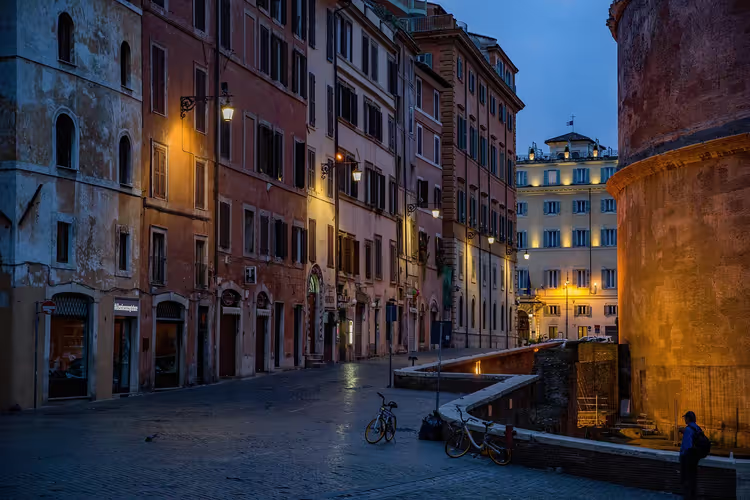
Where to stay in Rome: 10 districts from Termini to the Vatican
Choosing a neighborhood in Rome decides half your trip. It determines how much you walk and how much you spend on transport.
Rome's metro is small, and not every neighborhood is connected to it. A single BIT ticket costs €1.50 and is valid for 100 minutes (verified 09/2026, ATAC). So being near a station saves you time on every trip across the city.
We've put together ten neighborhoods where tourists most often stay. Below you'll find transport, sights, price level, and the honest catches of each. That makes it easier to pick a neighborhood for your own itinerary, not for someone else's review.
Ad: this article contains affiliate links, we earn a commission if you book through them, at no extra cost to you.
1. Roma Termini station
💡 In short:
- The station area works for transit and short trips.
- Two metro lines, trains, and buses meet here.
- You save on accommodation, but you pay with the noise of the square.
- Transport and tourist tax: verified 09/2026 on the ATAC website and the Rome tourist portal
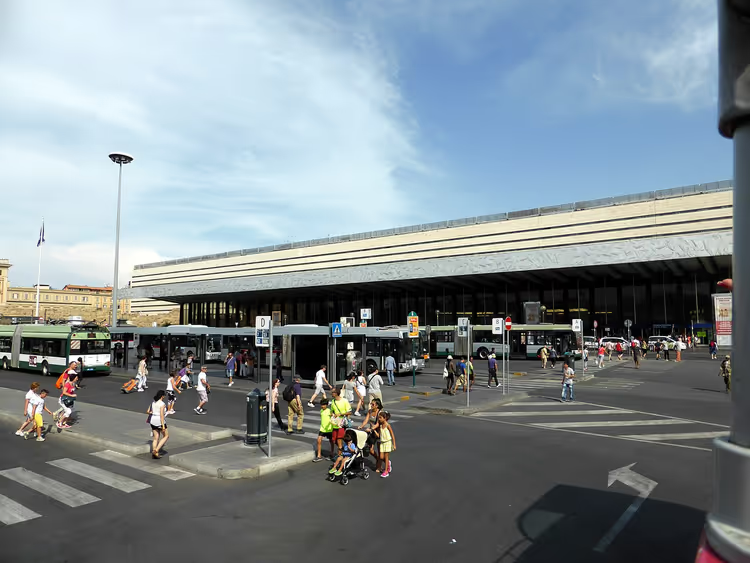 © Sean MacEntee from Monaghan, Ireland · CC BYPhoto: Sean MacEntee from Monaghan, Ireland, CC BY (https://creativecommons.org/licenses/by/2.0), Wikimedia Commons
Roma Termini is the capital's main station and one of Europe's largest hubs. Long-distance trains, intercity buses, and two metro lines meet here. You step off the train and a couple of minutes later you're in your room.
Accommodation near the station is cheaper than in the center. The infrastructure is there too: ATMs, pharmacies, souvenir shops, cafes, and grocery stores. What you pay for is the noise of the station square and the small number of sights in the immediate area.
- Who it's for: transit, early trains, and day trips.
- How to get there: direct train from Fiumicino Airport to Termini.
- The catch: the noisy station square.
2. Basilica of Santa Maria Maggiore
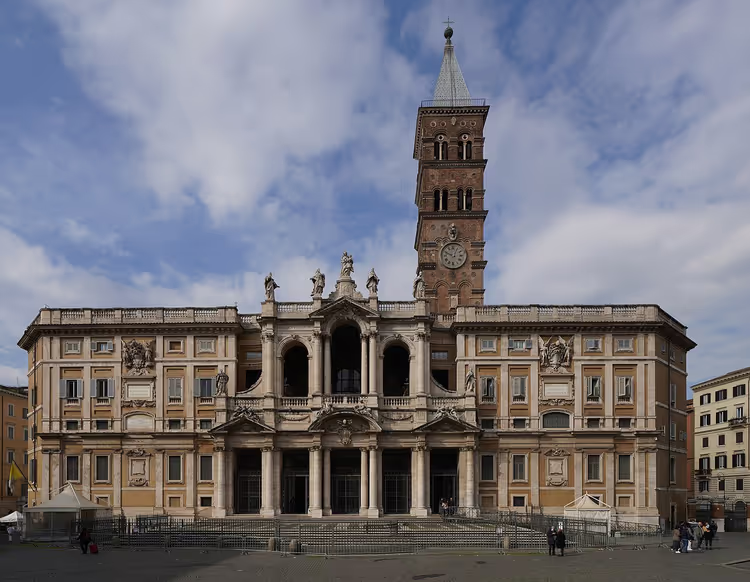 © NikonZ7II · CC BY-SAPhoto: NikonZ7II, CC BY-SA (https://creativecommons.org/licenses/by-sa/4.0), Wikimedia Commons
The Basilica of Santa Maria Maggiore stands on the Esquiline Hill near the station. It's one of Rome's major papal basilicas, and many people choose this neighborhood for it alone.
The area combines old buildings with everyday city services. You can walk to Termini, and reach the Imperial Forums and the Colosseum by metro or on foot. That way you can fit more into a short stay.
- Who it's for: those who want history outside their window and the station nearby.
- Location: between Termini and the Colosseum, on the map it's the city center.
- The catch: busy streets, few quiet courtyards.
3. Via Nazionale
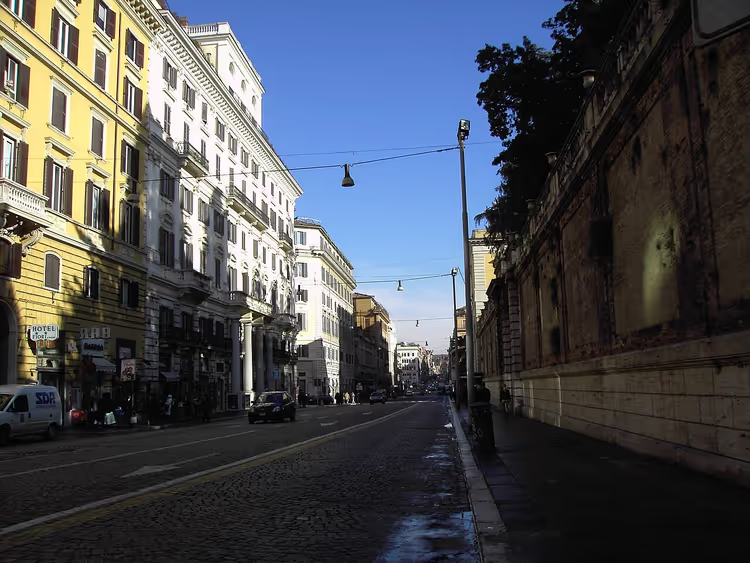
Via Nazionale connects Termini with Piazza Venezia. It's the city's shop window: boutiques, leather stores, shoe shops. Guess and Max Mara have stores here, and you won't cover everything in a day.
The street runs in a straight line, so you'll know where you're going even without a map. Hotels here are pricier than those near the station, but cheaper than those in the historic center. From here it's close to the Colosseum, the forums, and the Trevi Fountain.
You can compare options for different dates here: see hotels on Via Nazionale on Trip.com.
- Who it's for: shopping and long walks.
- How to get there: from Termini on foot or by metro.
- The catch: noisy during the day, parking is difficult.
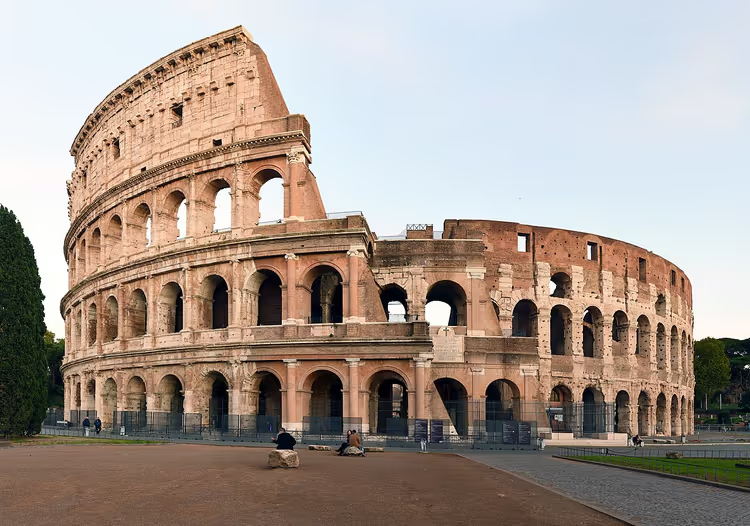
4. Colosseum area
 © FeaturedPics · CC BY-SAPhoto: FeaturedPics, CC BY-SA (https://creativecommons.org/licenses/by-sa/4.0), Wikimedia Commons
The streets around the Colosseum are made up of old buildings. Some hotels occupy buildings from past centuries, so you live inside history rather than next to it. Upper-floor rooms have views of the amphitheater itself.
The neighborhood is lively and noisy: cafes, restaurants, souvenir shops, transport hubs. You can walk to the forums and the Palatine Hill in a few minutes.
It's better to buy tickets in advance: buy Colosseum tickets with a time slot.
- Who it's for: those who came for the antiquities.
- How to get there: Colosseo metro station, line B.
- The catch: crowded in the evening, cafe prices are above average.
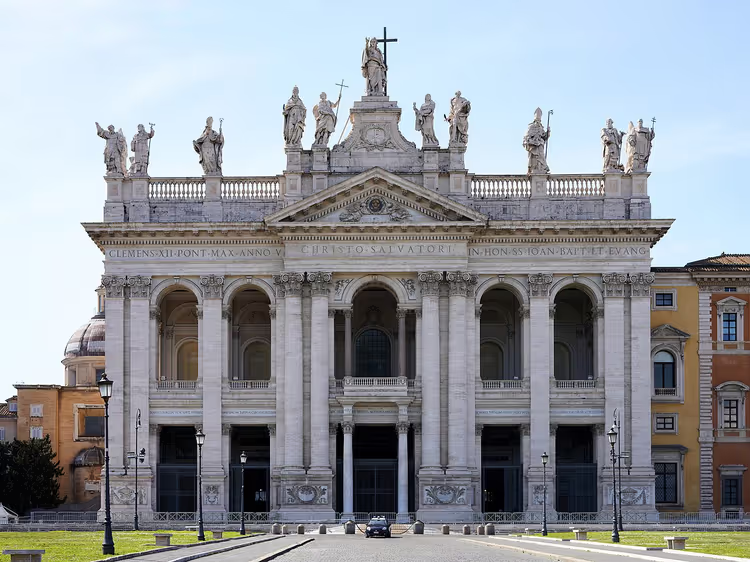
5. Lateran district
 © NikonZ7II · CC BY-SAPhoto: NikonZ7II, CC BY-SA (https://creativecommons.org/licenses/by-sa/4.0), Wikimedia Commons
The Lateran, or Laterano, lies farther from the center. This is where the Basilica of San Giovanni in Laterano, the main cathedral of Rome, stands, along with the Lateran Palace, the former residence of the popes.
Because of the distance, prices are lower than in the center. There are noticeably fewer tourists than near the station or the Colosseum. The catch is obvious: you'll need to take the metro or walk to reach the main squares.
- Who it's for: budget-conscious visitors and those who dislike crowds.
- How to get there: metro line A, San Giovanni station.
- The catch: far from the historic center.
6. Via Veneto
 © Mauro Codella · CC BYPhoto: Mauro Codella, CC BY (https://creativecommons.org/licenses/by/2.0), Wikimedia Commons
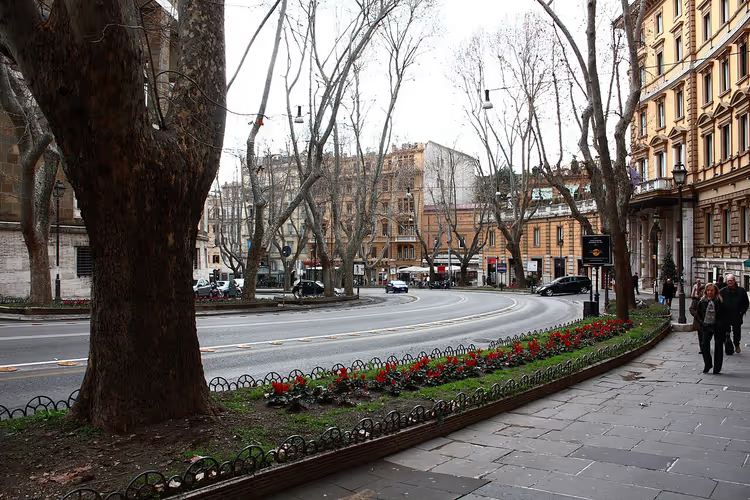
Via Veneto holds a reputation as a prestigious Rome address. It's lined with expensive hotels, embassies, and old cafes. The street connects Piazza Barberini with the Porta Pinciana gate.
In the middle of the last century, this was the city's social hub. The cafes on Via Veneto appeared in the film "La Dolce Vita." You pay for the address and the quiet: Villa Borghese park is nearby, and you can walk to the Spanish Steps.
Hotel options here are limited and pricey: see hotels on Via Veneto on Trip.com.
- Who it's for: those seeking a quiet, prestigious neighborhood.
- How to get there: metro line A, Barberini station.
- The catch: the highest price level in this selection.
7. Historic center and the Pantheon
 © NikonZ7II · CC BY-SAPhoto: NikonZ7II, CC BY-SA (https://creativecommons.org/licenses/by-sa/4.0), Wikimedia Commons
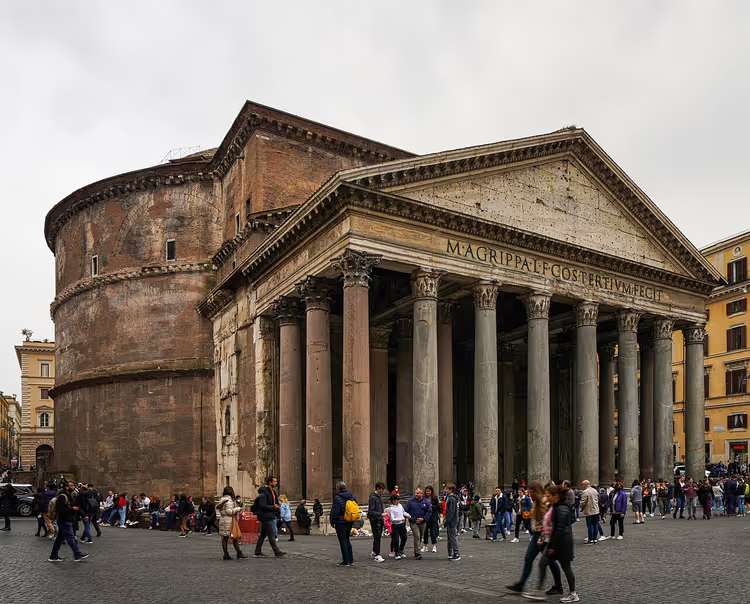
The historic center covers the area around the Pantheon. Most of the city's landmarks are concentrated here: the Pantheon itself, Piazza Navona, the Trevi Fountain, the Spanish Steps.
From a hotel in the center, you can walk to the Colosseum and to Trastevere. Termini is farther, but the metro is close by. You pay for this with noise: visitors stroll the streets until late at night, and quiet is hard to find here.
Compare room prices in the center: see hotels in the historic center on Trip.com.
- Who it's for: short trips and having the most sights nearby.
- How to get there: metro line A, Spagna and Barberini stations.
- The catch: crowded and expensive in high season.
8. Trastevere district
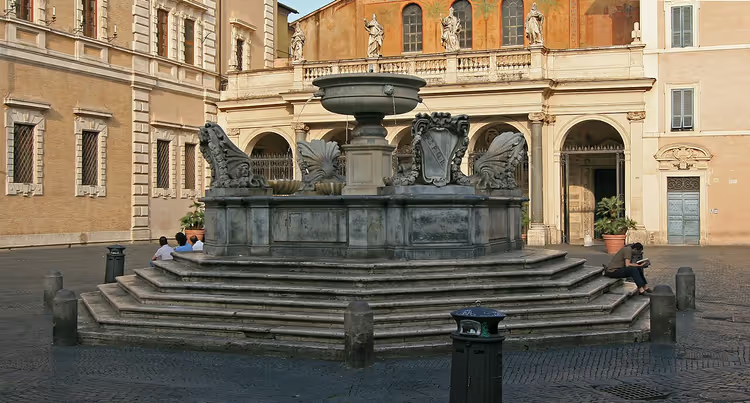
Trastevere lies on the other bank of the Tiber. Locals live here, and the city's rhythm feels stronger than in the center. Narrow streets, old buildings, trattorias serving Roman cuisine.
The district is home to basilicas of various styles, including Santa Maria in Trastevere and San Crisogono. You can walk to the center or take the tram.
- Who it's for: evening strolls and dinners in trattorias.
- How to get there: tram or on foot across the Tiber.
- The catch: no metro station of its own.
9. Campo de' Fiori
 © Carlat82 · CC BY-SAPhoto: Carlat82, CC BY-SA (https://creativecommons.org/licenses/by-sa/4.0), Wikimedia Commons
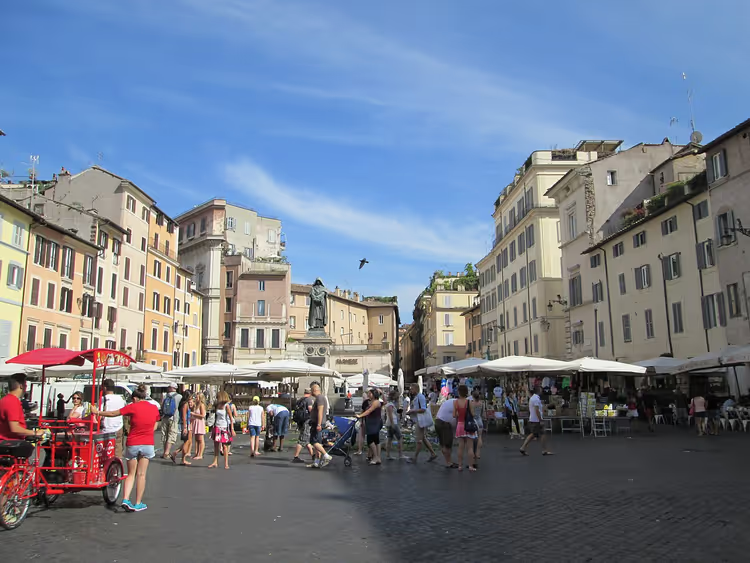
Campo de' Fiori is recognizable by the statue of Giordano Bruno in the center. Around it are restaurants serving Roman cuisine: carbonara, amatriciana, thin-crust pizza.
In the morning, a market operates on the square, and it's noisy. If you're a light sleeper, book a room deeper in the block rather than one facing the square. Piazza Navona and Piazza Farnese are nearby, so the center is right at your fingertips.
- Who it's for: food lovers and market enthusiasts.
- Location: historic center, within walking distance of the Tiber embankment.
- The catch: the morning market wakes you up early.
10. Vatican district
 © Alvesgaspar · CC BY-SAPhoto: Alvesgaspar, CC BY-SA (https://creativecommons.org/licenses/by-sa/4.0), Wikimedia Commons
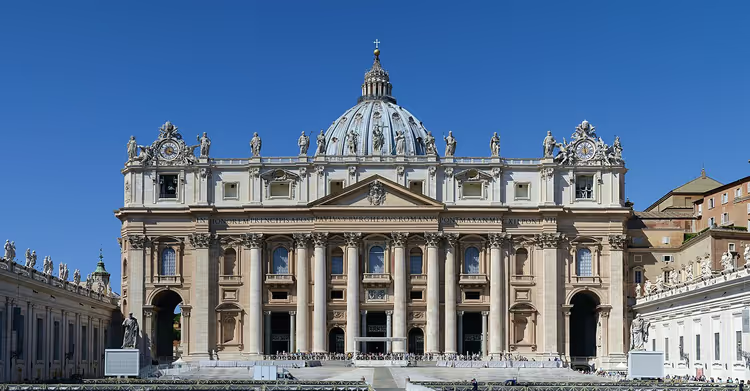
Vatican City lies inside Rome as a separate state. Pilgrims and tourists come here for St. Peter's Basilica, the Sistine Chapel, and the Vatican Museums.
The pace in this area is calmer than in the center. It sits away from the historic center, but the distance pays off with views and landmarks right on your doorstep. You can reach the center on metro line A, Ottaviano station, or take a walk along the Tiber.
It's best to get tickets in advance: buy Vatican Museums tickets online.
- Who it's for: a quiet stay and a packed cultural itinerary.
- How to get there: metro line A, Ottaviano station.
- The catch: far from the Colosseum and the center, quiet in the evening.
Best neighborhoods in Rome on the map
See how the neighborhoods sit relative to each other. The map shows that Termini and Vatican City are on opposite ends of the center, while Trastevere lies across the Tiber.
Room rates depend on the date more than on the neighborhood. In high season, the gap between weekdays and weekends widens, so compare several options in advance.
Find hotels in Rome
Compare prices across booking sites and filter for rooms with free cancellation.
Compare prices on Trip.comThe widget loads once you give your consent.
⁉️🤔 Frequently asked questions
Which area of Rome should I stay in for a first visit?
For a first trip, choose the historic center or Termini. From the center you can walk to the Pantheon, Trevi Fountain, and the Colosseum. Near Termini, accommodation is cheaper and day trips to other cities are more convenient. Pick based on what matters more to you: transport or being close to the sights.
Where is it cheaper to stay in Rome?
The cheapest areas are around Termini station and the Lateran. In Termini, prices are lower because of the noise and dense development. The Lateran is farther from the center, but quieter. In high season, compare dates: the difference between spring and fall is noticeable even for the same hotel.
Which area of Rome is quiet?
The quietest areas are Via Veneto, near the Vatican, and in the Lateran. Via Veneto is home to embassies and upscale hotels. Near the Vatican the pace is calm, but there is little going on in the evening. If you want bars and street music, these areas won't work for you.
Which area of Rome is convenient for the Colosseum?
The Colosseum area and the neighborhood near Santa Maria Maggiore. From the Colosseum you can walk to the forums and the Palatine Hill. From Santa Maria Maggiore to the amphitheater, you can take the metro or walk. Both areas are noisy, and in summer they are also expensive.
How much is the accommodation tax in Rome?
The city accommodation tax depends on the property category and the number of nights (according to the Rome tourist office). The exact amount is given at check-in and added to the bill. The rate is lower in hostels than in high-category hotels, and even lower at campsites.
In short: what to book
If you're visiting for the first time and want to walk everywhere, choose the historic center. If price and transport matter more, go with Termini. For quiet, the Lateran and the Vatican are good options; for evening dinners, Trastevere.
A convenient way to compare options by area is on one page: Rome hotels on Trip.com.

A small editorial team writing guides for independent travel. We travel ourselves, but we haven’t been everywhere, so we check prices, opening hours and how to get there against official sources.