
















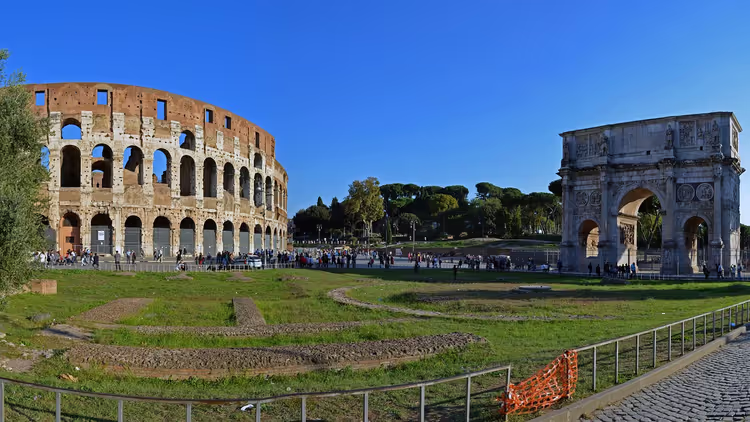
Rome in two days: a walking route from the Colosseum to the Vatican
Two days in Rome sounds like a challenge. You want to see the Colosseum, the Vatican, and at least one sunset over the domes, but time is short. We put together a route that you can walk and that doesn't turn into a race with a bus. You spend the first day on the ancient center and Baroque squares, and the second goes to the Vatican and the green Villa Borghese.
The Colosseum, Roman Forum, and Palatine Hill are visited with one ticket from 18 € (as of: 09/2026, official website of the Rome tourist office). In summer, time slots get booked up in advance, so you should buy the ticket online. Below we break down both days by the hour, with current prices and honest catches.
Ad: this article contains affiliate links, we earn a commission if you book through them, at no extra cost to you.
Two-day route plan
💡 In short:
- Day 1: Santa Maria Maggiore, Basilica of St. John Lateran, Colosseum, Roman Forum, Trajan's Column, Capitoline Hill, Pantheon, Trevi Fountain, and Piazza Navona.
- Day 2: Castel Sant'Angelo, Vatican Museums, St. Peter's Square and St. Peter's Basilica, Villa Borghese.
- You walk between the points; take transport only for long stretches.
- Prices are current as of 09/2026, the source is listed next to each price. Vatican tickets were checked on the official website of the Vatican Museums.
Both days are connected by 15-25 minute walks. This is what the core of the route looks like:
Day | Main sights | Book tickets in advance | On foot |
|---|---|---|---|
Day 1 | basilicas, Colosseum, Forum, Pantheon, Trevi | Colosseum and Forum | about 7 km (on the map) |
Day 2 | Vatican, St. Peter's Basilica, Villa Borghese | Vatican Museums, Borghese Gallery | about 5 km (on the map) |
How to get around Rome
The advice is simple: walk. The center of Rome is compact; between the Colosseum and Piazza Navona you'll walk about two kilometers (on the map). Take transport only for a long stretch, for example to Villa Borghese.
The metro and buses run on ATAC tickets. A single ride costs 1.50 € and is valid for 100 minutes; a 24-hour pass costs 7 €, a 48-hour pass 12.50 €, and a 72-hour pass 18 € (as of: 09/2026, ATAC). Tickets are sold at metro vending machines and newsstands.
Buy a pass only if you plan to take many rides. In two days on foot you'll see more and won't wait for a bus. During the morning rush hour, line B is packed, so long transfers are better scheduled outside 8:00-9:30.
Day 1: basilicas, the Colosseum, and Baroque squares
The first day starts at Termini station. Trains and bus transfers from both Rome airports arrive there. From Termini to the Basilica di Santa Maria Maggiore you can walk in 10 minutes (on the map).
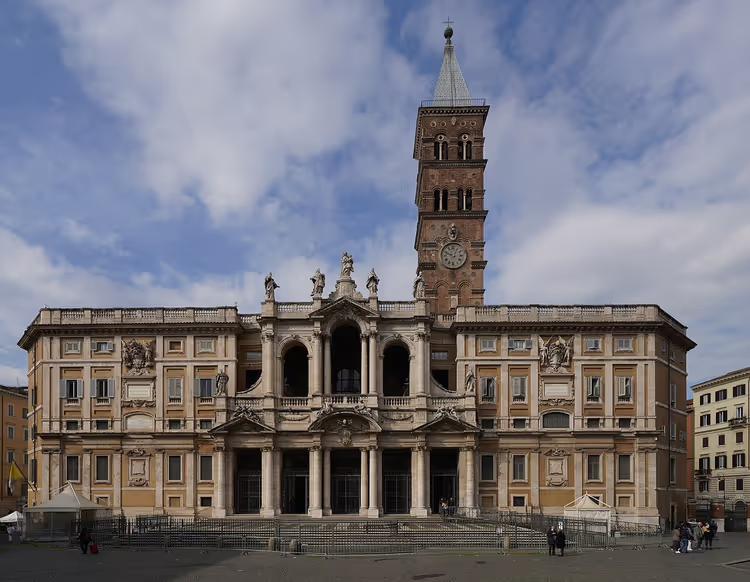
Basilica di Santa Maria Maggiore
Santa Maria Maggiore stands on the Esquiline Hill and is one of the four papal basilicas. The first church was built here in the 4th century, so the mosaics and columns you will see are still ancient (as of 09/2026, official Vatican portal).
According to tradition, the patrician John built the basilica after the Virgin Mary appeared to him in a dream and told him to build a church where snow would fall in the middle of summer. Snow was found exactly on the Esquiline, a plan was drawn on it, and the church was built. Since then, on August 5, white petals are scattered in the basilica in memory of the miracle.
Admission is free. At the entrance you will be asked to cover your shoulders and knees, so keep a scarf or wrap handy.
 © NikonZ7II · CC BY-SAPhoto: NikonZ7II, CC BY-SA (https://creativecommons.org/licenses/by-sa/4.0), Wikimedia Commons
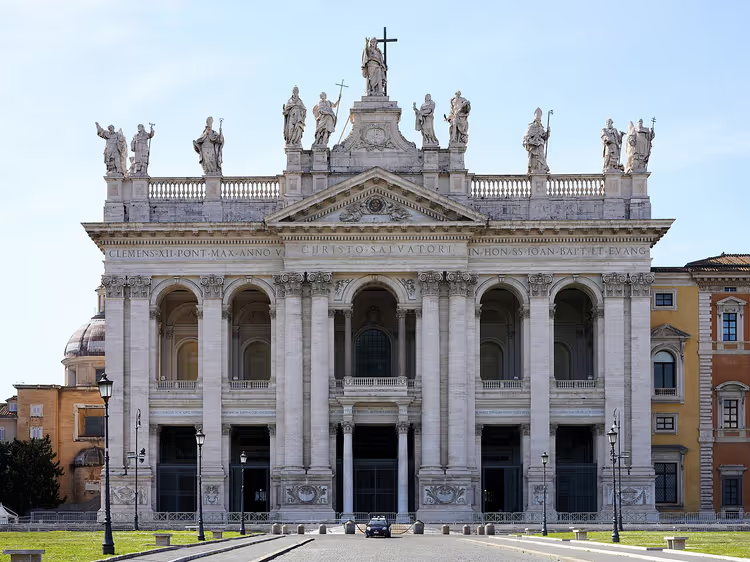
Basilica of St. John Lateran
The Basilica of St. John Lateran appeared in the early 4th century and holds the same papal rank as Santa Maria Maggiore. It grew up next to the Lateran Palace, which Emperor Constantine the Great gave to the church (as of 09/2026, Rome tourist office guide).
Until the 14th century, the palace was the residence of the popes, and the basilica itself hosted five ecumenical councils. Admission is free. Separately, see the Holy Stairs next door and the Chapel of the Holy Mysteries with a board believed to be part of the table of the Last Supper.
From the Colosseum you can walk here in 20 minutes (on the map).
 © NikonZ7II · CC BY-SAPhoto: NikonZ7II, CC BY-SA (https://creativecommons.org/licenses/by-sa/4.0), Wikimedia Commons
Colosseum
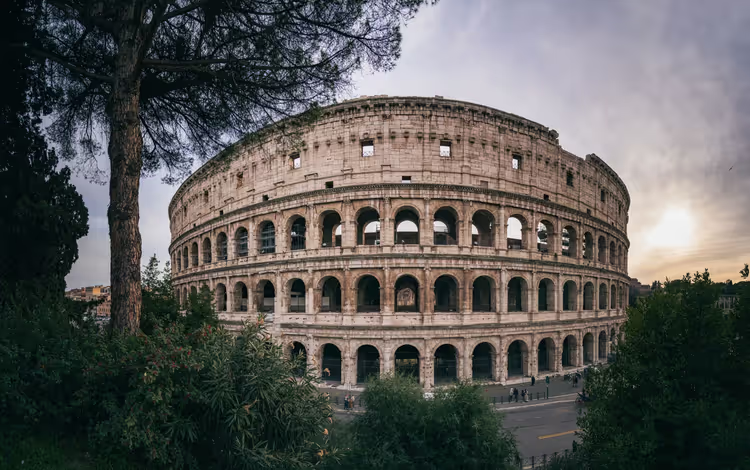
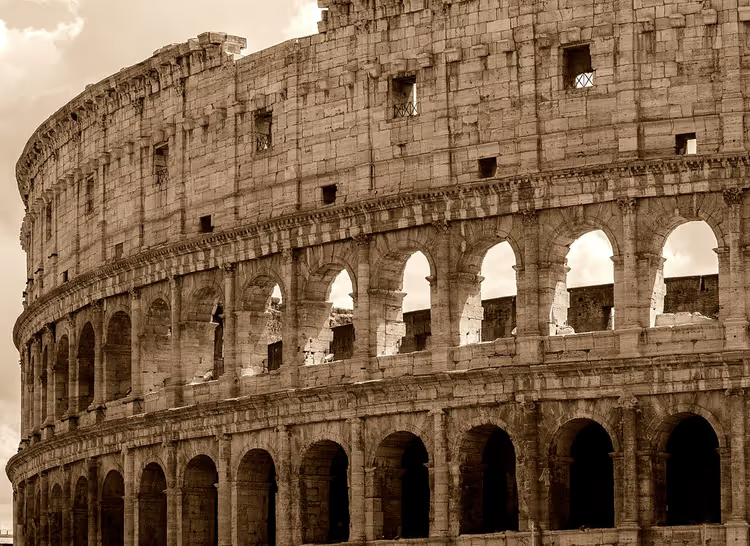
The Colosseum also goes by the name Flavian Amphitheatre and remains the most recognizable landmark in Rome. It was built by order of Emperor Vespasian and opened by 80 AD. The stands could hold up to 87,000 spectators (as of 09/2026, Colosseum section on the tourist office website).
In the 14th century, an earthquake collapsed part of the outer wall, and the stone was taken apart for city palazzos. That is why one side of the amphitheatre looks cut away. Look for this cut from the south, from the Arch of Constantine, where there are fewer people and you can see the full volume.
 © Jon Gudorf Photography · CC BY-SAPhoto: Jon Gudorf Photography, CC BY-SA (https://creativecommons.org/licenses/by-sa/2.0), Wikimedia Commons
A combined ticket costs from 18 € and includes the Roman Forum and the Palatine Hill, and it is valid for 24 hours (as of 09/2026, tickets and time slots page). Book your slot online: in summer, available windows sell out a week in advance. If you want a guide, take a small-group tour of Rome.
The catch: there is almost no shade on the stands, and in the heat the stone gets scorching. Bring water and come at opening time or after 5:00 PM.
Roman Forum
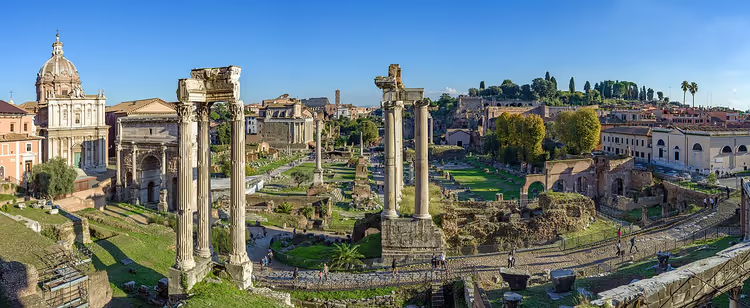
The Roman Forum was once the city marketplace, and today it is a kaleidoscope of eras. Here the pagan Temple of Saturn and a Christian church stand side by side, and between them the Romans held trials and executions. Later, triumphal arches were erected on the same spot.
 © This Photo was taken by Wolfgang Moroder . Feel free to use my photos, but please mention me as the author and send me a · CC BY-SAPhoto: This Photo was taken by Wolfgang Moroder . Feel free to use my photos, but please mention me as the author and send me a, CC BY-SA (https://creativecommons.org/licenses/by-sa/3.0), Wikimedia Commons
The oldest structures date back to the 5th century BC (as of 09/2026, Rome tourism office website). Look for the Temple of Castor and Pollux, the Temple of Vesta, and the Temple of Venus: they show how the future metropolis grew. The ticket is the same one used for the Colosseum, so don't throw it away after the arena.
From the arena to the Forum entrance is a 5-minute walk. Allow about two hours to explore the ruins and the Palatine Hill, which is enough time to climb up to the panoramic viewpoint.
Trajan's Column
Trajan's Column rises 38 meters and resembles a comic strip carved in stone. It features 2,662 figures and 155 military scenes (as of 09/2026, Rome tourism office materials). This is how the emperor was immortalized, under whose rule the empire stretched from Mesopotamia to Britain.
The statue of Trajan himself is no longer on top: in the 16th century it was replaced with a figure of the Apostle Peter. There is a staircase inside, but access to the viewing platform is rarely open, so focus on the external relief.
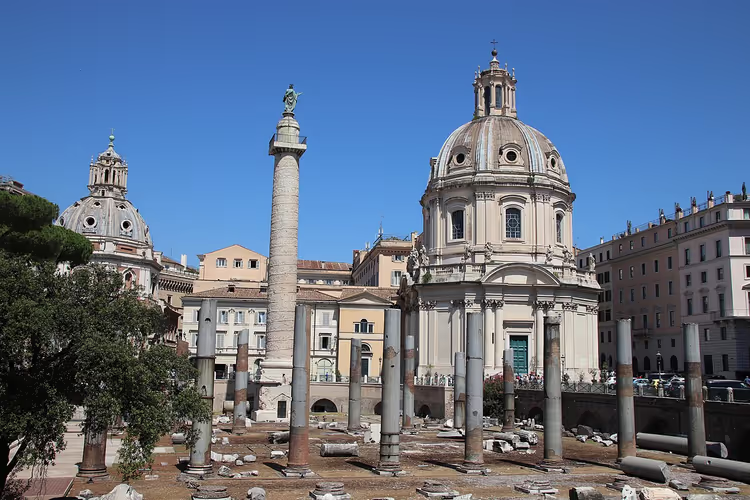
The catch: the relief was designed to be viewed from above, so the details are hard to make out from ground level. Bring a camera with zoom if you want to examine the scenes.
Vittoriano and the Capitoline Hill
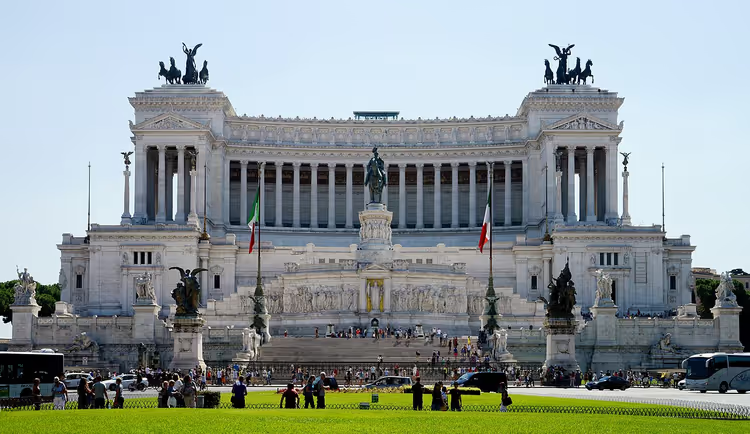
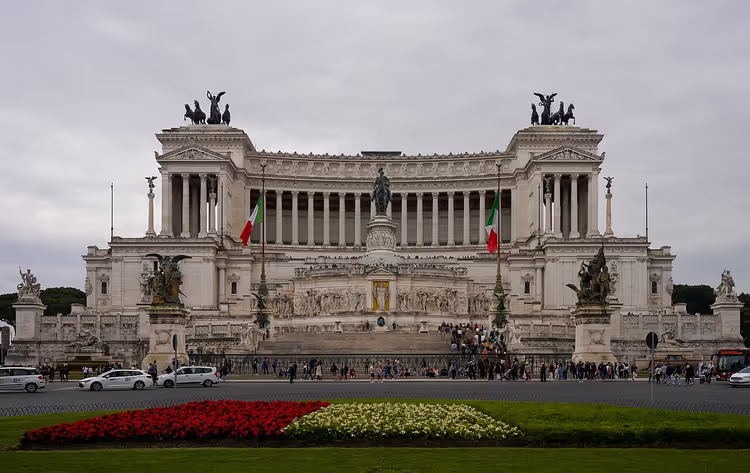
The Vittoriano looks like a newborn next to the ancient ruins, but it remains one of the city's symbols. It is a monument to Victor Emmanuel II, the king who unified Italy in 1861.
 © Alvesgaspar · CC BY-SAPhoto: Alvesgaspar, CC BY-SA (https://creativecommons.org/licenses/by-sa/4.0), Wikimedia Commons
The monument occupies the Capitoline Hill, the most famous of Rome's seven hills. According to legend, the she-wolf nursed Romulus and Remus on the neighboring Palatine Hill, in the Lupercal grotto. The statue of the she-wolf itself can be found in the Capitoline Museums, the world's first public museum, which opened back in the 15th century (as of 09/2026, official museum website).
 © ThePhotografer · CC BY-SAPhoto: ThePhotografer, CC BY-SA (https://creativecommons.org/licenses/by-sa/4.0), Wikimedia Commons
Museum admission is paid and operates on timed entry slots; check the website for prices and available windows. Climb up to the Vittoriano observation deck: admission is free, and the view of the Forum opens up from above.
Pantheon
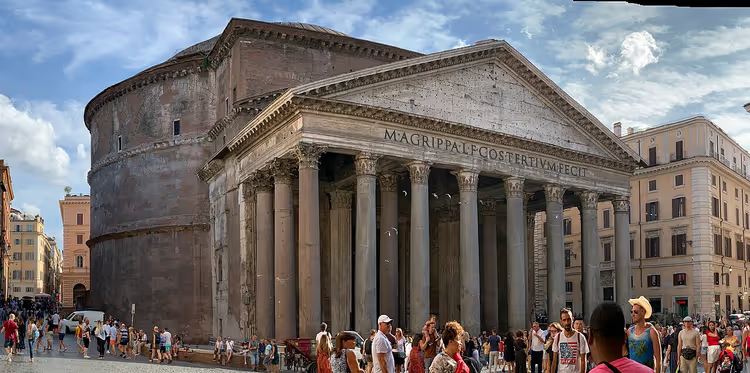
The Pantheon was built in 128 AD as a temple to all gods. The ancient Romans prayed to all of them at once, so the building reflected their pragmatic faith. Later the temple became a Christian basilica.
An oculus gapes in the dome, a circular opening through which the sun travels across the upper hemisphere. On the equinoxes, the beam of light hits the doorway, and the building turns into a symbolic axis of the world.
 © Nicholas Hartmann · CC BY-SAPhoto: Nicholas Hartmann, CC BY-SA (https://creativecommons.org/licenses/by-sa/4.0), Wikimedia Commons
Until recently, admission was free; now it is paid (as of 09/2026, Rome tourism office portal). It's easier to buy tickets online, as a line forms at the entrance. The square in front of the Pantheon is small, and the cafes around it charge high prices.
The catch: at midday, groups crowd around the oculus. Come in the morning light, when the hall feels more spacious.
Trevi Fountain
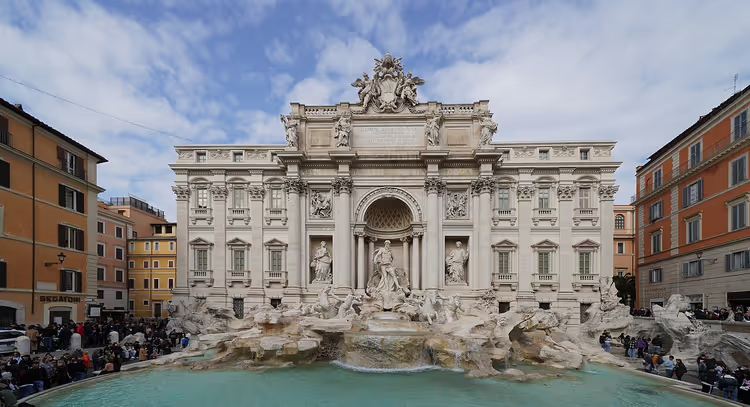
The Trevi Fountain was built by architect Nicola Salvi between 1732 and 1762 (as of 09/2026, Rome tourism office). At the center stands Oceanus on a shell chariot pulled by two sea horses. One horse is rearing, the other is calm: this is how the sculptor depicted the stormy and the tranquil sea.
 © NikonZ7II · CC BY-SAPhoto: NikonZ7II, CC BY-SA (https://creativecommons.org/licenses/by-sa/4.0), Wikimedia Commons
The fountain is called the richest in Rome: according to city services, several thousand euros are thrown into it every day. During the day the area around the basin is packed, so come before 8:00 AM or after 10:00 PM.
Piazza Navona
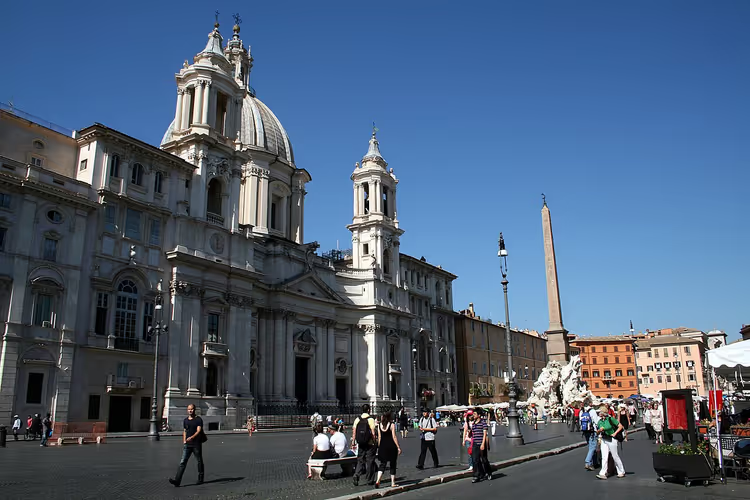
Piazza Navona holds three fountains, and one of them was created by Bernini. It is easy to recognize by the 16-meter Egyptian obelisk in the center (as of 09/2026, tourism office portal). The fountain is called the Fountain of the Four Rivers, and its statues symbolize the Nile, the Ganges, the Danube, and the Río de la Plata.
 © Jean-Pol GRANDMONT · CC BYPhoto: Jean-Pol GRANDMONT, CC BY (https://creativecommons.org/licenses/by/4.0), Wikimedia Commons
Every building on the square deserves its own walk, and in the evening people come here for the light and gelato. From the Trevi Fountain you can get here in 10 minutes on foot (according to the map), so both places are convenient to visit together.
Day 2: Vatican and Villa Borghese
On the second day you head to the Vatican, a separate state inside Rome. In the morning you see Castel Sant'Angelo, in the afternoon the Vatican Museums, and by sunset you make it to Villa Borghese.
Castel Sant'Angelo
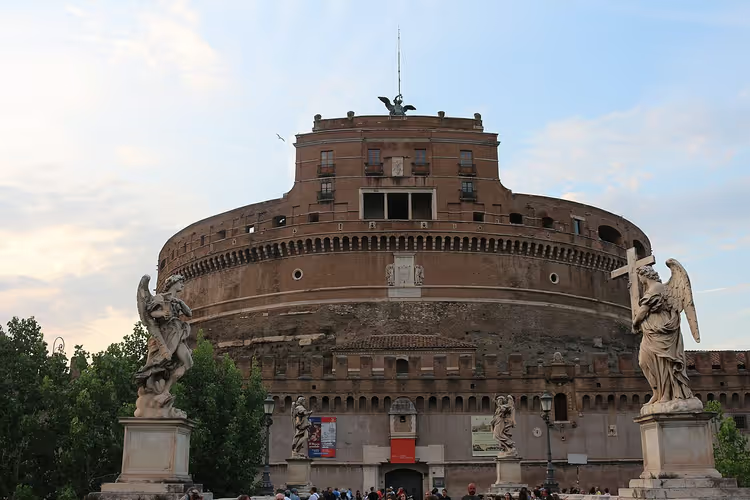
Castel Sant'Angelo was originally the mausoleum of Emperor Hadrian. It got its name in 590: during a plague, Pope Gregory the Great saw the Archangel Michael on top of the fortress, sheathing his sword (as of 09/2026, Rome tourist office website).
In the Middle Ages the fortress became the residence of the popes. Next to the papal apartments there were torture chambers, and one of its occupants, Alexander VI Borgia, liked to watch executions. For this the castle was nicknamed the Sad Castle.
 © DiegoBonacina1997 · CC BY-SAPhoto: DiegoBonacina1997, CC BY-SA (https://creativecommons.org/licenses/by-sa/4.0), Wikimedia Commons
Entry to the castle is paid; check the tourist office website for tickets and time slots. The terrace offers a view of St. Peter's Basilica, so the castle is a convenient first stop of the day.
Vatican Museums
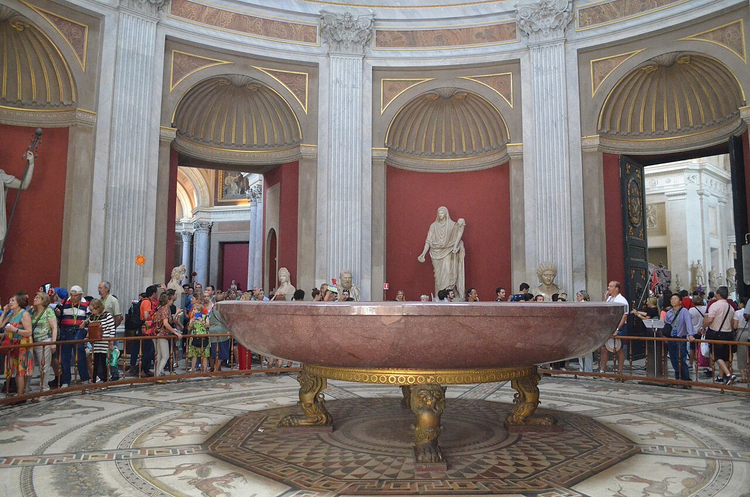
The Vatican Museums are among the most visited in the world, and the lines here match that. A ticket costs 20 € at the ticket office and 25 € online, and it is valid only on the day of your visit (as of 09/2026, official Vatican Museums website).
Right at the entrance you are greeted by "Laocoön and His Sons". Next comes the Pinacoteca with Giotto, Raphael, da Vinci, and Caravaggio. The final stop on the route, the Sistine Chapel, awaits in the last hall of the exhibition.
 © Darafsh · CC BY-SAPhoto: Darafsh, CC BY-SA (https://creativecommons.org/licenses/by-sa/3.0), Wikimedia Commons
Michelangelo painted the chapel ceiling in 1508-1512, and on the altar wall he created "The Last Judgment". From time to time the conclave of cardinals gathers here to elect a new pope. According to museum rules, photography is not allowed in the chapel, and shoulders and knees must be covered.
On the last Sunday of the month entry is free, but the crowd is at its maximum then. Get a Vatican Museums ticket with a time slot and go in at opening time, and you will see the Sistine Chapel without the crush.
St. Peter's Square
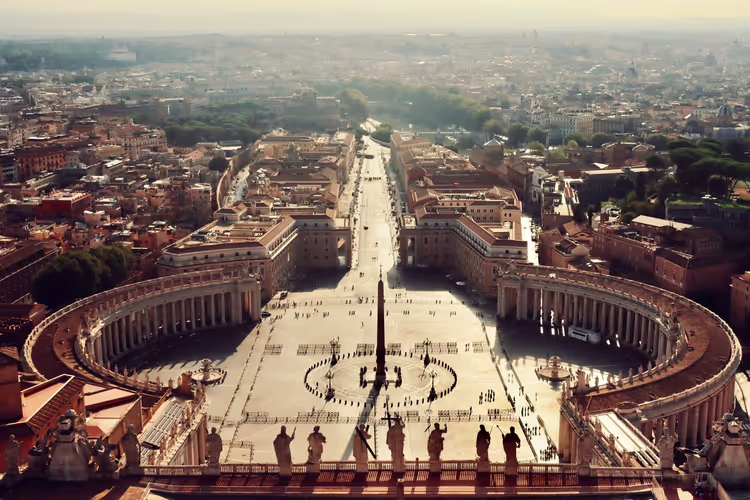
The composition of St. Peter's Square was designed by Bernini. In front of the basilica stands a 350-ton obelisk: in 1586 it was moved here from the Circus of Nero (as of 09/2026, Vatican portal).
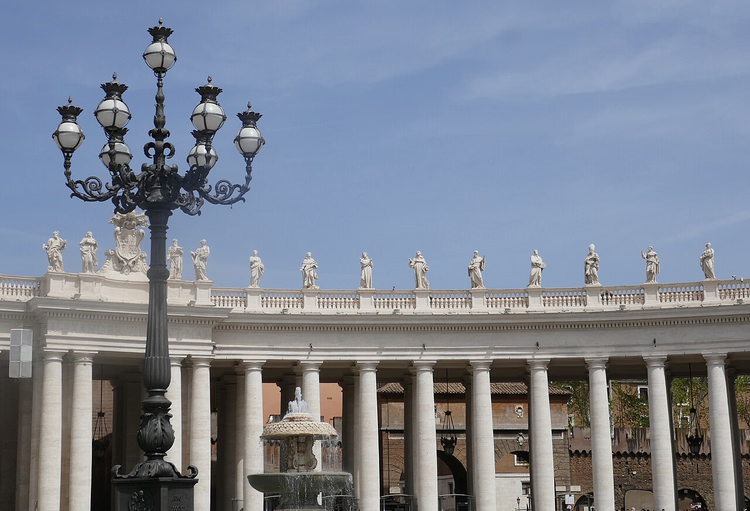
The square is framed by semicircular colonnades: 284 columns support a canopy with 140 statues. Find the two marble disks inscribed Centro del Colonnato: if you stand on them, the three back rows of columns disappear. This is the simplest optical trick in Rome, and it is free.
St. Peter's Basilica
St. Peter's Basilica holds 60,000 people and remains the largest Christian church in the world. It stands 136 meters tall, and no building in Rome rises higher. Ninety-one popes are buried here (as of 09/2026, basilica section on the Vatican website).
Construction began in 1506 and took 120 years. Inside, look for Bernini's 29-meter baldachin, which required more than 6 tons of bronze, and the frescoes under the dome.
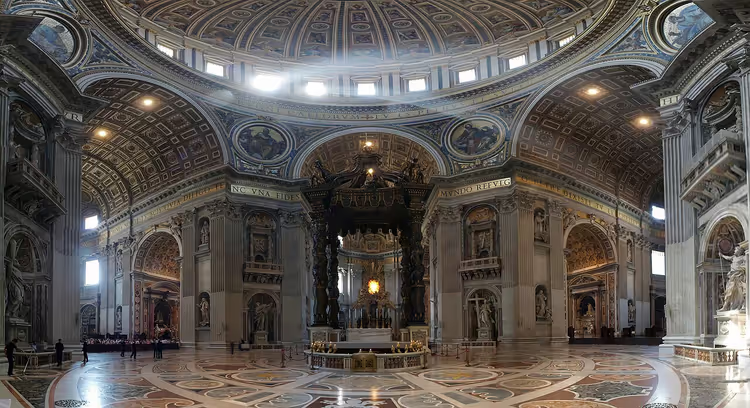 © Patrick Landy ( FSU Guy ( talk )) · CC BY-SAPhoto: Patrick Landy ( FSU Guy ( talk )), CC BY-SA (https://creativecommons.org/licenses/by-sa/3.0), Wikimedia Commons
Entry to the basilica is free, but climbing the dome is paid. One of the five doors, the Holy Door, opens once every 25 years, on Christmas Eve. The catch: there is almost always a line to get in, so arrive at opening time.
Villa Borghese
Villa Borghese takes you beyond the Vatican into a large landscaped park. For four centuries it has given the city air and shade: there are ponds, Italian gardens, palaces, and temples (as of 09/2026, park description on the tourist office website).
The park is home to the Borghese Gallery with works by Bernini and Caravaggio. Tickets are sold by time slot and sell out in advance, so book your slot before the trip. In the evening, head up to the Pincio Terrace and catch the sunset.
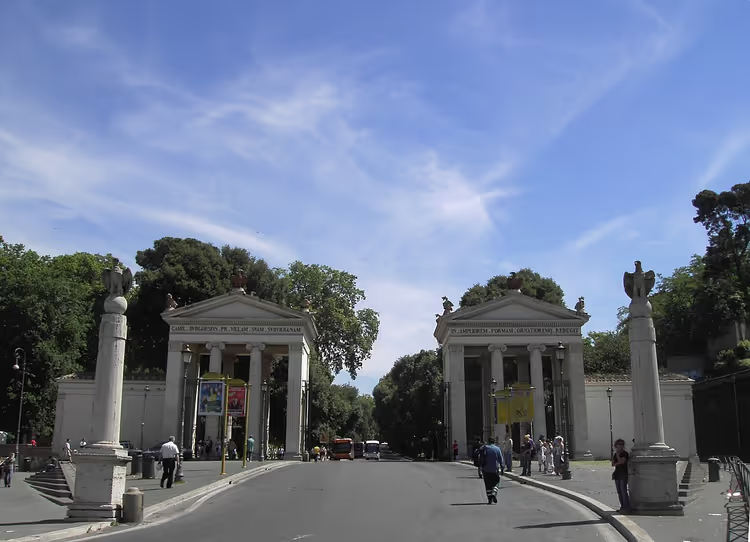
From St. Peter's Square you can walk here or take the metro to Spagna station. The sunset at the Pincio is worth saving for your last evening.
Tickets: what to book in advance
Some tickets are better to buy before the trip. Here is the picture for September 2026:
Site | Ticket (as of 09/2026) | Source |
|---|---|---|
Colosseum, Roman Forum, Palatine Hill | from €18 | |
Vatican Museums | €20 at the ticket office, €25 online | |
Capitoline Museums | by time slot, check the price online | |
Borghese Gallery | by time slot, book in advance | |
ATAC transport | €1.50 per ride, €7 / €12.50 / €18 for 24 / 48 / 72 hours |
You can enter St. Peter's Basilica, the Lateran Basilica, Santa Maria Maggiore, Piazza Navona, the Trevi Fountain, Capitoline Hill, and the Vittoriano terrace for free. For paid sites, book by time slot so you don't lose hours in lines.
Tours and tickets in Rome
Guided tours, skip-the-line tickets and activities — most offers can be cancelled free of charge.
See offers on TiqetsThe widget loads once you give your consent.
⁉️🤔 Frequently asked questions
Can you see the main sights of Rome in two days?
Yes, if you don't try to cover everything. Our route covers the ancient center, the Vatican, and Villa Borghese, with about 7 km of walking on the first day and 5 km on the second.
How much does a Colosseum ticket cost and what does it include?
The ticket costs from 18 € and includes the Colosseum, the Roman Forum, and the Palatine Hill (as of 09/2026, Colosseum tickets from the tour office). It is valid for 24 hours from the moment of entry, so you can split the arena and the Forum across different times. In summer, time slots sell out in advance, so buy online.
Do you need to book the Vatican Museums in advance?
Yes. Prices and available slots are published on the Vatican Museums website. In high season, slots are gone weeks ahead. On the last Sunday of the month, entry is free, but the line is at its longest then. Take a morning slot.
Is one day enough for the Vatican?
The Vatican Museums and St. Peter's Basilica will take you about half a day. We gave the Vatican the entire second day, adding Castel Sant'Angelo in the morning and Villa Borghese at sunset. If you're short on time, keep the museums, the basilica, and the square.
What's the cheapest way to get around Rome?
The center is easiest to cover on foot. If you need transport, buy ATAC tickets; current ATAC fares are on the operator's website. For two days in the center, a pass often doesn't pay off.
In short: what to book
If you only have two days, take one slot per day and don't spread yourself thin. Put the Colosseum and the Forum on the morning of the first day, and the Vatican Museums on the morning of the second. Add the Borghese Gallery only if you're ready to move fast.
If you're traveling with kids, start with the Vittoriano and Villa Borghese: there's open space, a park, and shorter lines. If you came for art, give the first day to the basilicas and the Pantheon, and the second entirely to the Vatican.
For accommodation, choose the area around Termini or the Pantheon: from there you can walk to all the points on the route. Check hotels in central Rome on Trip.com and compare options just steps from the route.

A small editorial team writing guides for independent travel. We travel ourselves, but we haven’t been everywhere, so we check prices, opening hours and how to get there against official sources.