



Winter Crete and Rhodes: where everything works, but resorts stay closed
In winter, the Greek islands split into two worlds. Cities keep going all year round, while resort towns shut down from November, sometimes until Easter. Tour operator catalogs don't mention this.
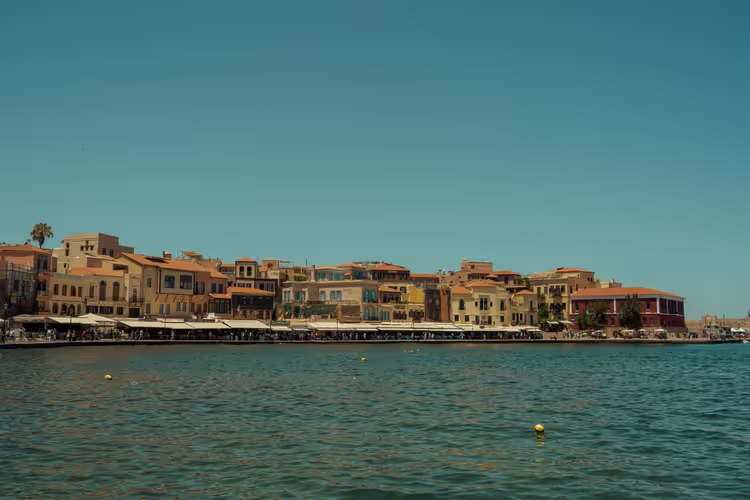
On Crete and Rhodes, this divide is most pronounced. In Heraklion, Chania, Rethymno, and the new part of Rhodes, hotels, museums, markets, and tavernas stay open because people actually live there. In Malia, Faliraki, Elounda, and Hersonissos, you won't find a single open hotel or bar.
The Palace of Knossos and the Acropolis of Lindos welcome visitors even in January, just on a winter schedule. Now for the practical details: what's open, how much tickets cost, how to get to each island, and what to expect if you're wintering there.
Ad: this article contains affiliate links, we earn a commission if you book through them, at no extra cost to you.
What's open in January and what isn't
💡 In short:
- Cities operate year-round: Heraklion, Chania, Rethymno, Agios Nikolaos, and the new part of Rhodes.
- Resort towns are closed: Malia, Faliraki, Elounda, Hersonissos, Kolymbia, Ixia, Kiotari.
- Both major ancient sites are open; the Samaria Gorge is closed in winter.
- Prices and hours: 09/2026, verified on the Ministry of Culture website
The rule is simple. Where people live in winter, there's plenty for a visitor to do. Heraklion is a major port city with a university, Chania and Rethymno run year-round, and the new part of Rhodes relies on permanent residents, not tourists.
Resort towns work the opposite way. Hotels, tavernas, and scooter rentals open for the season and close with it. Book a room in Faliraki in winter and you'll arrive to an empty street with shuttered windows.
That's why the key decision comes before you even buy a ticket: city or resort town. Getting this wrong can ruin the whole trip.
January weather: what it means in practice
January is the coldest and rainiest month of the year on both islands. On Crete, expect 10-15 °C during the day and around 12 rainy days per month (as of 09/2026, Incredible Crete). Rhodes is warmer, 15-17 °C, but gets more precipitation.
January on the two islands, 09/2026; Crete data from the official Crete tourism website:
January metric | Crete, Heraklion | Rhodes |
|---|---|---|
Daytime temperature | 10-15 °C | 15-17 °C |
Monthly precipitation | around 92 mm | up to 150 mm |
Rainy days | around 12 | 13-16 |
Hours of sunshine per day | around 4 | 5-6 |
Water temperature | around 16 °C | 16-17 °C |
Rain doesn't last all day. A typical January on Crete looks like this: heavy downpour in the morning, a thunderstorm, then long clear spells. Storm winds that halt ferries happen a few times a month.
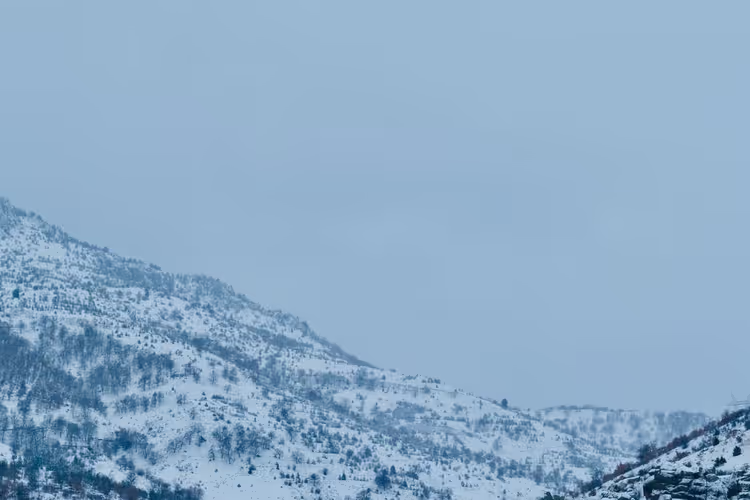
Mountainous Crete in winter looks nothing like the summer photos. Mount Psiloritis (2,456 m) and the Lefka Ori (2,454 m) are snow-capped, the peaks visible from the coastal road, while almond trees bloom below (elevations per the Region of Crete). These views only come in January and February.
Then there are the Halcyon Days (alkyonides). That's what Greece calls a sustained warm spell in the second half of January: several days in a row noticeably warmer than usual, with air temperatures reaching comfortable levels. No guarantees. But keep the last ten days of the month in mind if you're planning walks and trips into the mountains.
How to get to Crete and Rhodes in winter
In winter, the islands differ not in weather but in flight schedules. Crete has winter flights, though not many. Aegean Airlines usually flies from Munich to Heraklion with a connection in Athens (as of 09/2026, Visit Greece).
The schedule is noticeably shorter than in summer, and prices are higher than you would expect from the low season. Before New Year's and in the first days of January, tickets are expensive: families who live in other countries fly to Greece at this time.
Rhodes has no such option. From late October until about mid-April, resort airlines do not serve the island. You can get there via Athens or by ferry from Piraeus: the crossing takes about 13-15 hours, winter sailings are few, and they are canceled in storms (as of 09/2026, Blue Star Ferries).
For a short trip in January, Crete is more convenient. For a long one, the difference evens out: you pay for the journey only once.
What is open on Crete in January
Four cities on the northern coast operate year-round: Heraklion, Chania, Rethymno, and Agios Nikolaos. City hotels do not close, restaurants and markets are open, and universities hold classes.
The Palace of Knossos is open from November 1 to March 31 daily from 8:30 to 17:00. Admission costs 20 €, reduced ticket 10 € (as of 09/2026, Knossos Palace page). Tickets are also sold online through the official ticket service.
In winter, a Greek rule applies: on the first Sunday of every month from November to March, admission to state monuments is free, including the Palace of Knossos (as of 09/2026, free admission rules).
Among museums, the Archaeological Museum of Heraklion with its Minoan collection, the Historical Museum, the Maritime Museum in Chania, and the Venetian fortresses in Heraklion and Rethymno are open. With the onset of winter, museums switch to winter hours and close earlier than in summer.
The Samaria Gorge is closed in winter. The national park usually opens only in May; in winter, entry is blocked due to rockfalls and high water. The short Imbros and Agia Irini gorges are partially passable in dry weather, but you should not go there after rain.
What actually works: hiking routes along the coast and hills, olive harvesting from November to February, birdwatching at Lake Kournas and the Elafonisi lagoon, trips south to Sfakia, Loutro, and Plakias, where some tavernas are open year-round.
Book a car in advance if you want to reach the southern coast. Buses between villages run rarely in winter, and you can easily get stuck in a village until the next morning.
Tickets to the Palace of Knossos and other museums on Crete are easier to buy online.
Tours and tickets in Knossos
Guided tours, skip-the-line tickets and activities — most offers can be cancelled free of charge.
See offers on TiqetsThe widget loads once you give your consent.
What is open on Rhodes in January
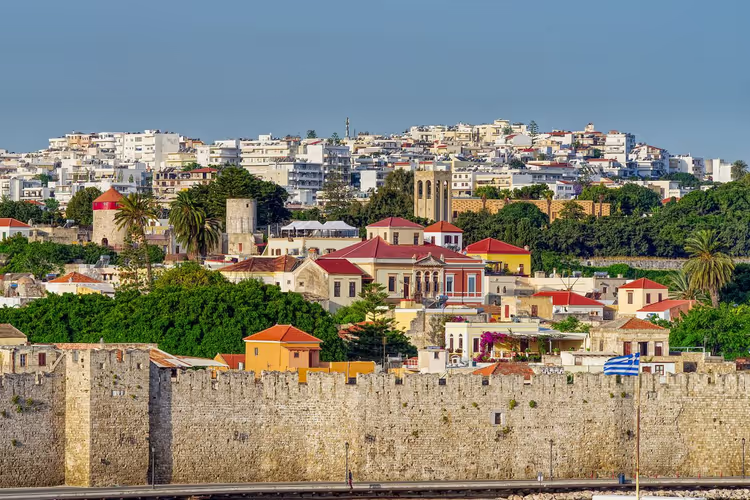
The new part of Rhodes is livelier in winter than you would expect. Almost all city hotels, shops, cafes, and restaurants are open because they serve locals, not tourists.
The Palace of the Grand Master in the old town is open year-round. A summer ticket costs 20 €, and the winter rate is lower (as of 09/2026, Palace of the Grand Master on the ministry website).
The main reason to come in January: the medieval old town and the Archaeological Museum in the building of the Hospital of the Knights. You are looking at one of the best-preserved medieval built environments in the Mediterranean, and in winter there are no cruise ship groups here.
The Acropolis of Lindos is open from November to March from 8:30 to 15:10, closed on Tuesdays (as of 09/2026, Lindos Acropolis schedule). The village of Lindos below is almost closed in winter: shops, restaurants, and rooftop terraces open toward spring. Bring food and water with you; you will find neither a cafe nor a shop there.
The rest of the island is literally empty in winter. Faliraki, Kolymbia, Ixia, and Kiotari stop operating. The Valley of the Butterflies has no butterflies in winter and is usually closed, and the Kallithea Springs operate partially. On the other hand, the interior of the island turns green: Monolithos, Embonas, and Profitis Ilias look completely different than in August.
What is closed on both islands
A short and not very romantic list:
All purely resort villages and most beach hotels, beach bars, and water sports stations.
Many small car rental agencies in coastal villages; you can still rent a car at airports and in cities.
Sightseeing boats, water taxis to Balos or Symi, dive centers.
A significant share of tavernas in mountain villages, but usually one place on the square stays open.
If you are traveling in winter, check this in advance. A call or email to the hotel takes five minutes and saves you from an empty week.
Wintering in Crete: costs and heating
For a long winter stay, Crete is the number one choice in Greece. Winter rental rates from November to March are noticeably lower than summer rates, and you almost always find a place on the ground: many owners don't post listings, they just put a sign in the window.
The main thing people underestimate is heating. The apartments are the same as in summer: concrete with no insulation, single-pane windows, often no stove or fireplace. With winter temperatures and high humidity, an apartment like that is cold and damp.
Before you agree to anything, check three things: whether there's an air conditioner with a heating mode, who pays for electricity, and whether there's an oil radiator or fireplace. Electricity in Greece is expensive, and with round-the-clock heating the bill runs into three figures.
The second thing is a car. Without a car, winter on Crete gets tiring: buses between villages run infrequently. Long-term winter rental of a small car costs noticeably less than the summer rate.
What to do on the islands in January
January on Crete and Rhodes is not a beach vacation or a sightseeing program. It's about living in the city: museums and ancient sites with no lines and at winter rates, hiking trails in cool weather rather than heat, walks through Chania and the old town of Rhodes.
The local seasonal cuisine is also in full swing: horta, artichokes, citrus. Another reason to come specifically in January is the Greek feast of Epiphany on January 6, when a cross is thrown into the sea in every port and young men dive in after it (as of: 09/2026, Greek holidays).
What doesn't work: swimming, island hopping, boat trips, and reliable day-by-day planning. In January you should always have a bad-weather backup. Check the forecast in the morning.
⁉️🤔 Frequently asked questions
Can you swim on Crete and Rhodes in January?
Water temperature is around 16 °C, air 10-17 °C (as of: 09/2026, climate of Greece). Only a handful of people swim, and usually not for long. If you want the sea, plan your trip for late April or May: winter swimming turns into a brief test of endurance rather than relaxation.
Is the Samaria Gorge open in winter?
No. The national park is closed in winter and usually opens only in May.
What to see on Rhodes in January if the resorts are empty?
The old town with the Palace of the Grand Masters, the Archaeological Museum in the Hospital of the Knights, and the Acropolis of Lindos. The newer city neighborhoods with cafes and restaurants are open.
Are there direct flights to Rhodes in winter?
No, roughly from late October to mid-April. You're left with a flight via Athens or a ferry from Piraeus (as of: 09/2026, Blue Star ferry schedule).
Do you need a car in winter on Crete?
Yes, if you want to get out of the city. Rental agencies at the airport and in the cities operate year-round.
In short: what's worth booking
If you're on a short trip and want a city, go for Heraklion or Chania: everything works there in winter, from museums to markets.
If you need more sun, choose Rhodes and the old part of the city.
If you're staying for the winter, look for an apartment with heating and book a car in advance.
Buy tickets for the Palace of Knossos, the Archaeological Museum, and the Acropolis of Lindos online: there are almost no lines in winter, but opening hours are short, and it's better to have a time slot in hand.

A small editorial team writing guides for independent travel. We travel ourselves, but we haven’t been everywhere, so we check prices, opening hours and how to get there against official sources.