
















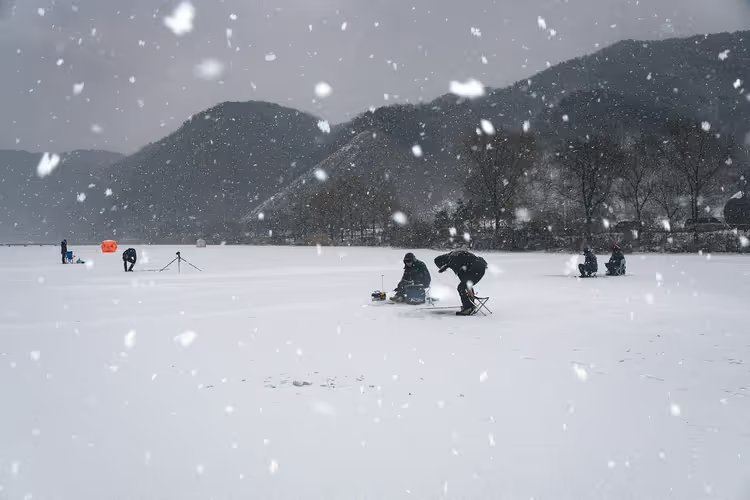
Ice fishing for beginners: gear, ice, and your first hole
Winter fishing starts with the first sustained frosts. The water cools down, and fish barely take the bait. The angler, meanwhile, sits for hours in the wind and risks freezing through.
The most common beginner mistake: stepping onto unfamiliar ice without checking its thickness.
Below is a breakdown of the season, gear, safety, and trips to winter countries where ice fishing has long been part of the tourist offering. You will put together your first box and spend a day on the ice without unnecessary risk.
Ad: this article contains affiliate links, we earn a commission if you book through them, at no extra cost to you.
When ice fishing season opens
💡 In short:
- Take an ice auger, ice chisel, depth gauge, and slotted spoon for your first trip onto the ice.
- Check the ice with the chisel every few steps on the way to your fishing spot.
- Ice safety rules: 09/2026, checked against DLRG recommendations.
The season starts with the arrival of sustained frosts, usually in early winter. In mild years, the first solid ice forms later, and in northern countries you can fish as early as late autumn. It all depends on how many nights in a row the temperature stays below freezing.
In Lapland, ice fishing is considered part of winter culture. The Rovaniemi tourist office includes it in the city's list of top winter activities (as of: 09/2026, Visit Rovaniemi). You can reach the lake by car, snowmobile, or on snowshoes.
Do not go onto the ice alone if there are no local anglers nearby. First ice is deceptive, and confidence in every step matters more than the catch.
- The catch: during a thaw, the ice loses strength, and it is better to postpone your day on the water.
Ice fishing gear
Warmth and comfort matter more than expensive tackle, because you spend most of the time sitting and barely moving, so hypothermia creeps up unnoticed. Dress in layers and cover your face from the wind.
A basic set is inexpensive and sold in any fishing store.
Gear | Purpose |
|---|---|
Ice auger | Drills a hole in the ice |
Ice chisel | Checks ice thickness ahead of you |
Depth gauge | Shows the depth under the hole |
Slotted spoon | Removes slush from the hole |
Each item serves its own purpose: without a slotted spoon, the snow after drilling turns into slush and gets in the way of dropping your line, and without a depth gauge you cannot tell which water layer the fish are in.
Experienced anglers add a fish finder and scanner. These devices map the bottom relief and show schools of fish, but they are not necessary for your first outings.
For a trip abroad, arrange connectivity in advance: an eSIM for a trip north works without a local SIM card or roaming.
What to catch in winter
The cold noticeably shortens the list of species, so in winter you are more likely to catch predators: perch, zander, pike, and trout. Whitefish also come out to feed, but behave more cautiously: roach, bream, and crucian carp.
Look for areas with dense vegetation and places where small rivers flow into the body of water: that is where food gathers and predators come in. Large fish often hold at shallow depths, so do not head straight for the deepest spot.
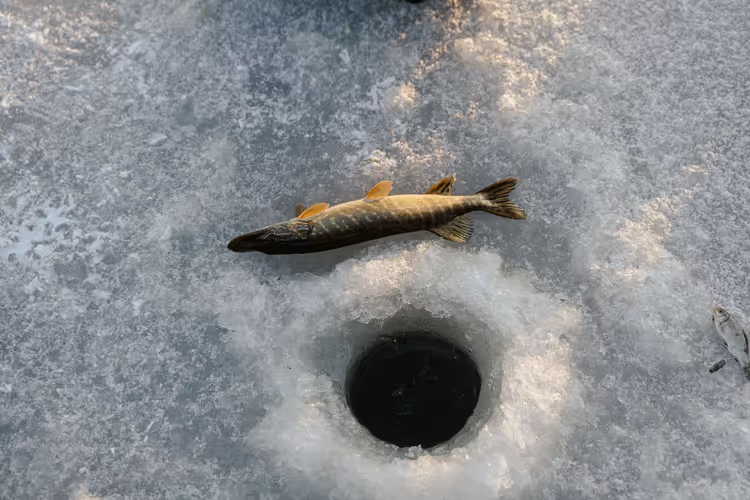
Perch stay in schools and are the first to find the bait. To locate them, drill several holes at different depths and move your line around. Pike and zander lie in ambush and take a large jig.
Do not sit for long over an empty hole: change location and depth until you find a school.
How to get onto the ice safely
Check ice thickness with the chisel as you move, following official rules rather than the calendar.
Body of water | Safe thickness |
|---|---|
Lake and pond | 15 cm (as of: 09/2026, DLRG values) |
River and current | 20 cm (as of: 09/2026, DLRG values) |
Dark spots, cracks, and open water mean you must not go there. On an unfamiliar body of water, you have to drill holes at random, and you will make several over the course of a day.
Do not drill many holes close together: this weakens the ice field and increases the risk of falling through. Holes are best shaded, because fish are scared off by bright light and move away from the edge. Sprinkle snow over the hole to fish in the shade.
Put on a life jacket before stepping onto the ice. Take ice rescue spikes (Eiskrallen) and a rope in case you fall through.
Return to shore by the same route you came, and do not drive onto the ice, even if other tracks are already packed down.
For a trip abroad, compare insurance options for active recreation in advance.
Where to fish: Lapland and the Baltic
Ice fishing has long become a winter tourism niche. In Finland, it is called one of the locals' favorite pastimes (as of: 09/2026, Visit Finland). From Rovaniemi, you will be taken to a frozen lake with a guide.
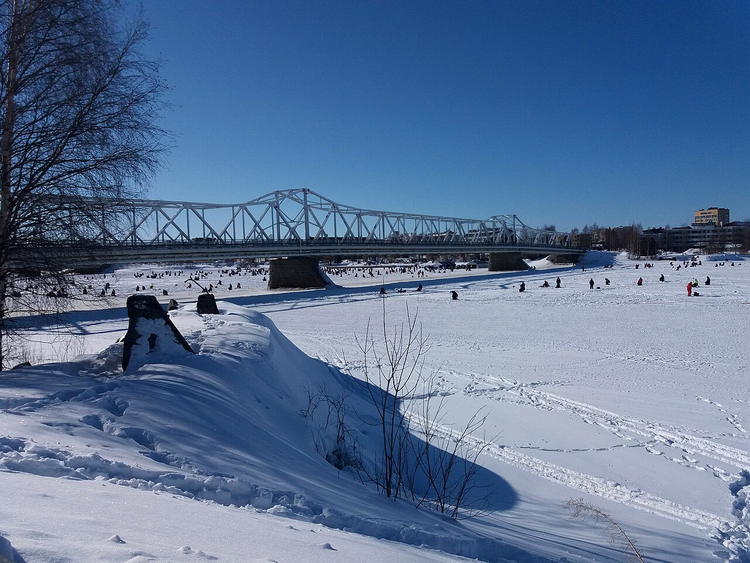 © Methem (Mikko J. Putkonen) · CC BYPhoto: Methem (Mikko J. Putkonen), CC BY (https://creativecommons.org/licenses/by/4.0), Wikimedia Commons
The guide will show you how to drill a hole and move safely on the ice. The program usually includes tackle, a warm drink, and a campfire, so a beginner does not need to buy their own gear. Look for programs in ice fishing tours on GetYourGuide.
Besides Finland, people fish in Norway, Sweden, Estonia, and Iceland. There, heated wooden cabins are set up by the water, where whole groups come to stay.
Where to stay for a winter fishing trip
Winter in Lapland is expensive and crowded, so book accommodation in advance. On Thursdays and Fridays, groups, families, and people with dogs head out to the lakes. Organizers often take groups to marked areas where nobody will disturb you.
The choice of accommodation depends on your budget. Rovaniemi has hotels, cottages, and glass igloos (as of: 09/2026, Rovaniemi tourist office). If you are fishing by car, choose an option with parking by the water.
Compare options in advance: hotels in Rovaniemi on Trip.com.
What experienced anglers recommend
Experienced feeder fishing competitor Igor Matyushkov calls winter fishing the cheapest kind. You only need an ice auger, a box, and a rod, and he recommends small lures: "kozochki", "chertiki", jigs.
He considers the process itself difficult, because you have to choose the right weight, understand the bottom relief, and figure out which water layer the fish are in. Without that, you will sit over an empty hole.
Modern anglers come onto the ice with a fish finder and scanner. The devices show depth and schools of fish, so finding a spot takes less time.
According to him, teams from Eastern Europe lead at world ice fishing championships, along with Norway, Denmark, Estonia, and Finland. Summer fishing is more popular overall, and not all countries send teams to winter competitions.
- The catch: on open ice you freeze even in warm clothing, and the bite depends entirely on the frost.
⁉️🤔 Frequently asked questions
When can you go onto the ice?
Go by thickness, not by the calendar. Step onto a lake at 15 cm, onto a river at 20 cm (as of: 09/2026, DLRG rules). The first frosts do not produce solid ice, so wait for a sustained period of below-freezing temperatures. Check every step with the chisel, especially near the shore and where rivers enter.
What fish do you catch in winter?
In winter, predators are more active: perch, zander, pike, and trout. Among whitefish, you will catch roach, bream, and crucian carp. Look for areas with vegetation and the mouths of small rivers, where food gathers. Large fish often hold at shallow depths, so check different water layers.
What should you buy for your first ice fishing trip?
Buy an ice auger, ice chisel, depth gauge, and slotted spoon. Take warm layered clothing and a life jacket. An experienced mentor would add a fish finder, but you do not need one on your first day. A full set is inexpensive, and some of the gear is provided on beginner tours.
Is a guide necessary for ice fishing?
No, but it is safer with a guide. In Lapland, tours are run by locals who know where the ice is reliable and provide tackle. For a beginner, a guide saves time finding a spot. In an unfamiliar country, take a tour rather than heading onto the ice at random.
Is ice fishing dangerous?
The main risks are hypothermia and falling through the ice. Do not drill many holes close together, wear a life jacket, and return by the same route. Avoid dark areas and going onto the ice alone. According to DLRG rules, you can go onto a lake at a thickness of 15 cm or more, and onto a river at 20 cm or more (as of: 09/2026, German lifeguard service DLRG).
In short: what to book
If you are going for the first time, start with a short guided tour: tackle is provided and the ice is checked. If you are short on time, book a hotel in Rovaniemi and fish on the city lakes. For trips by car, choose a cabin by the water.
Remember the main rule firmly: do not go onto the ice without checking it with a chisel, and book your ice fishing tour in advance on GetYourGuide before the season starts.

A small editorial team writing guides for independent travel. We travel ourselves, but we haven’t been everywhere, so we check prices, opening hours and how to get there against official sources.